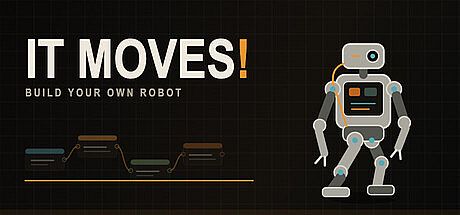


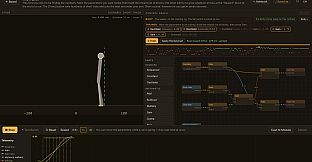
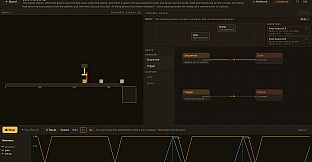

IT MOVES! - Build Your Own Robot is a strategy, indie, and simulation title for PC that centers on constructing and refining robotic machines through a visual programming approach. Players connect components in a signal graph to create functional systems, then observe how those systems perform under test conditions. The experience emphasizes iterative design, where each adjustment stems from reading live data and understanding mechanical behavior rather than following preset instructions.
Gameplay
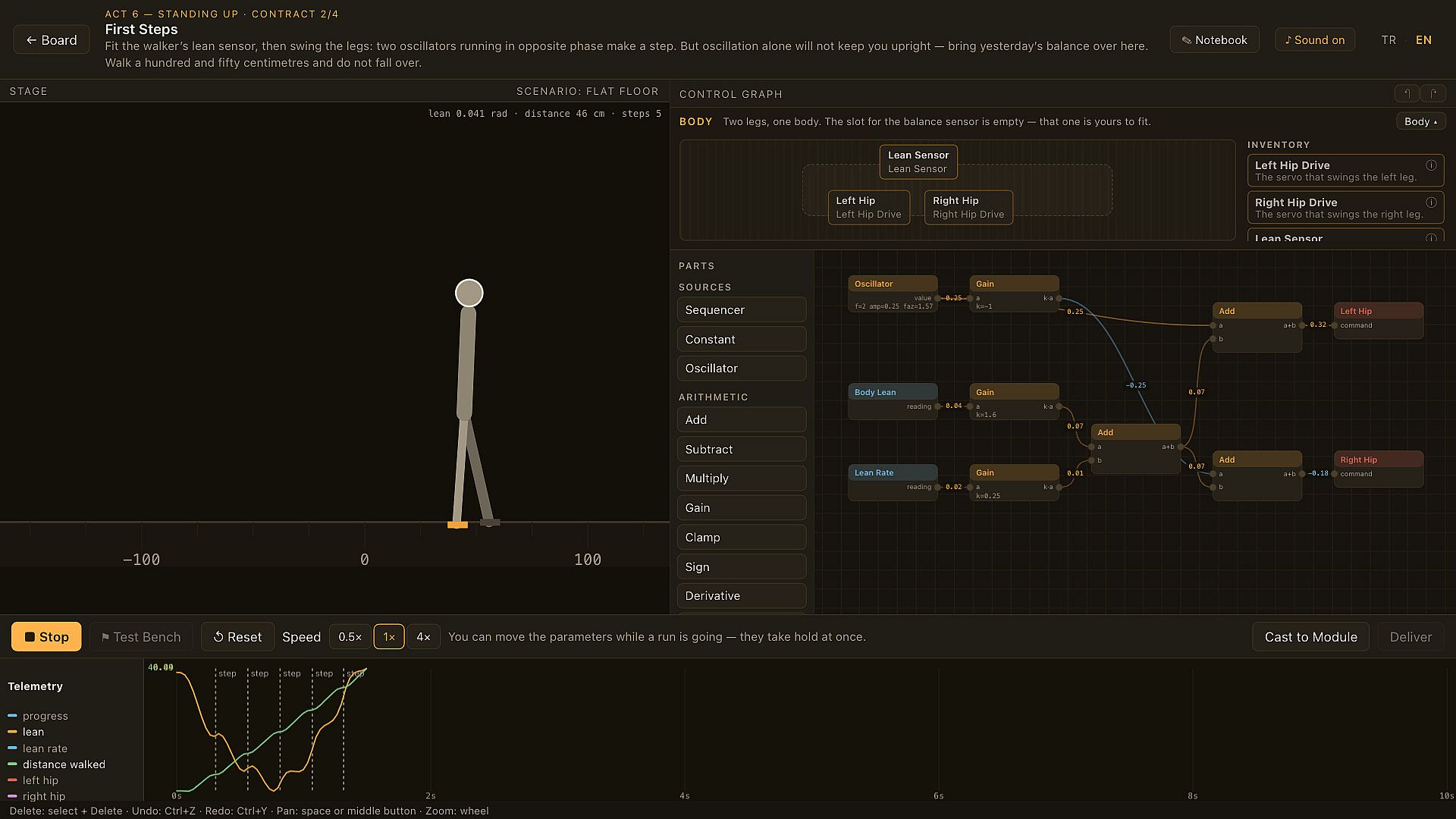
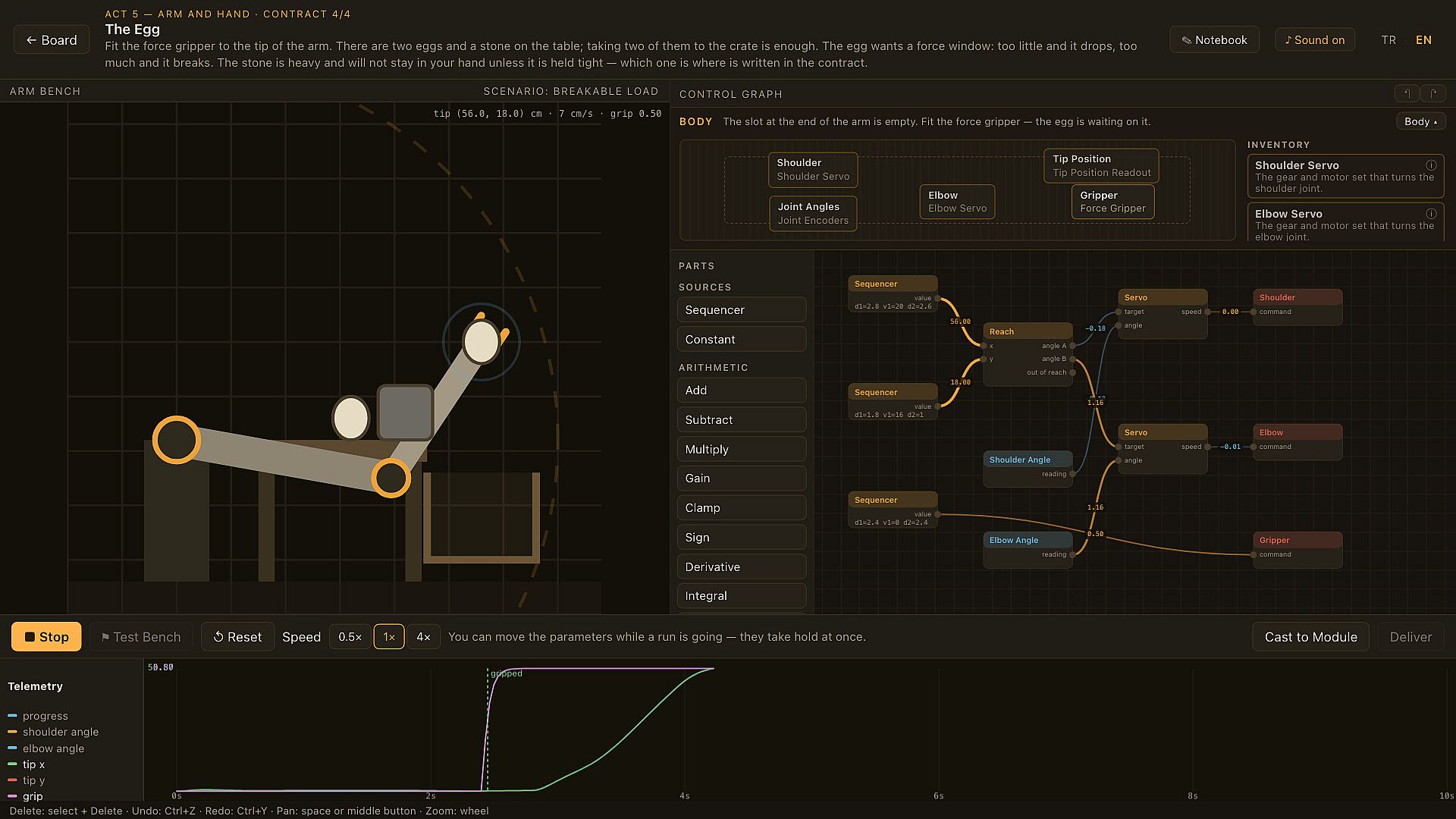
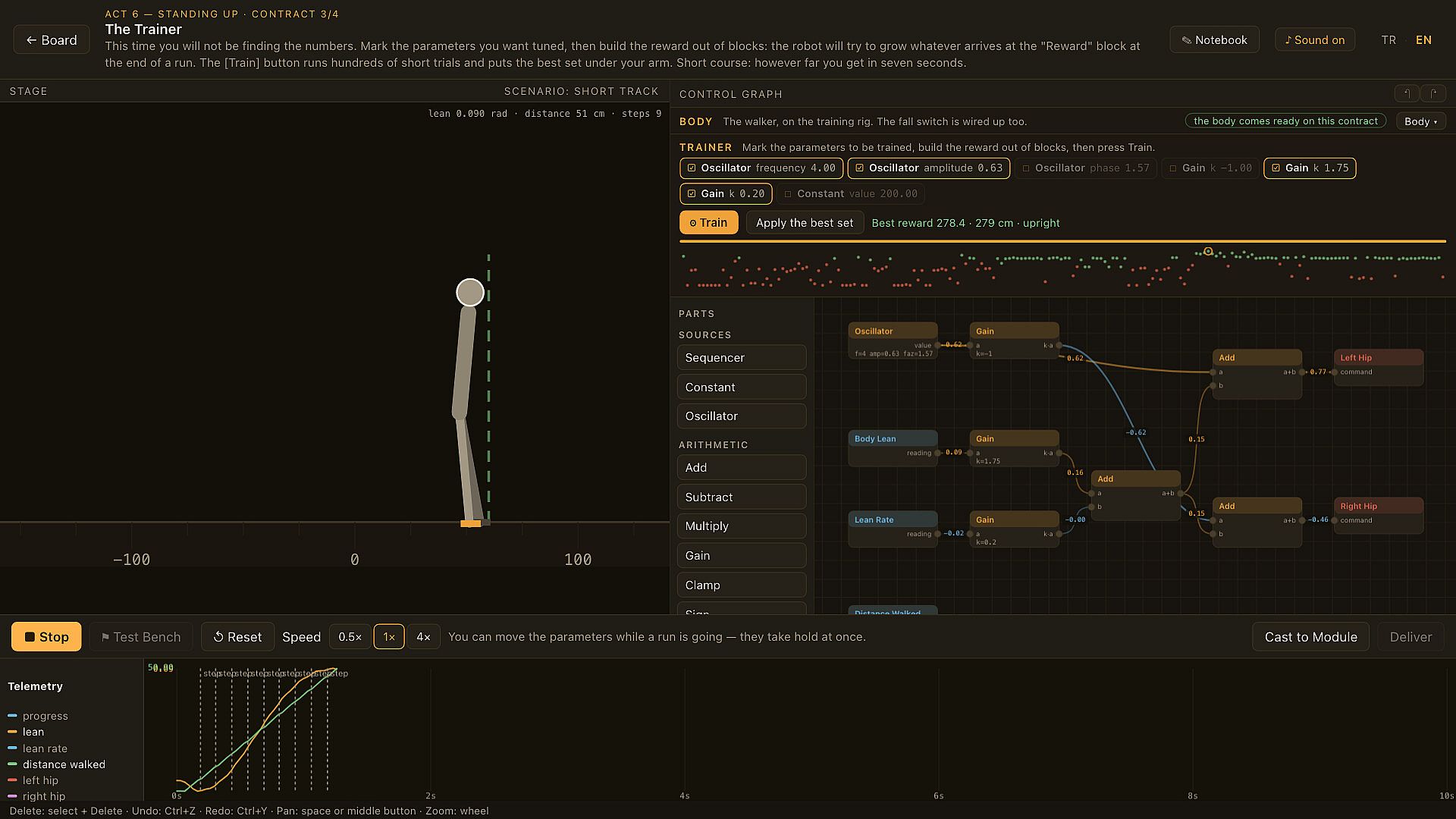
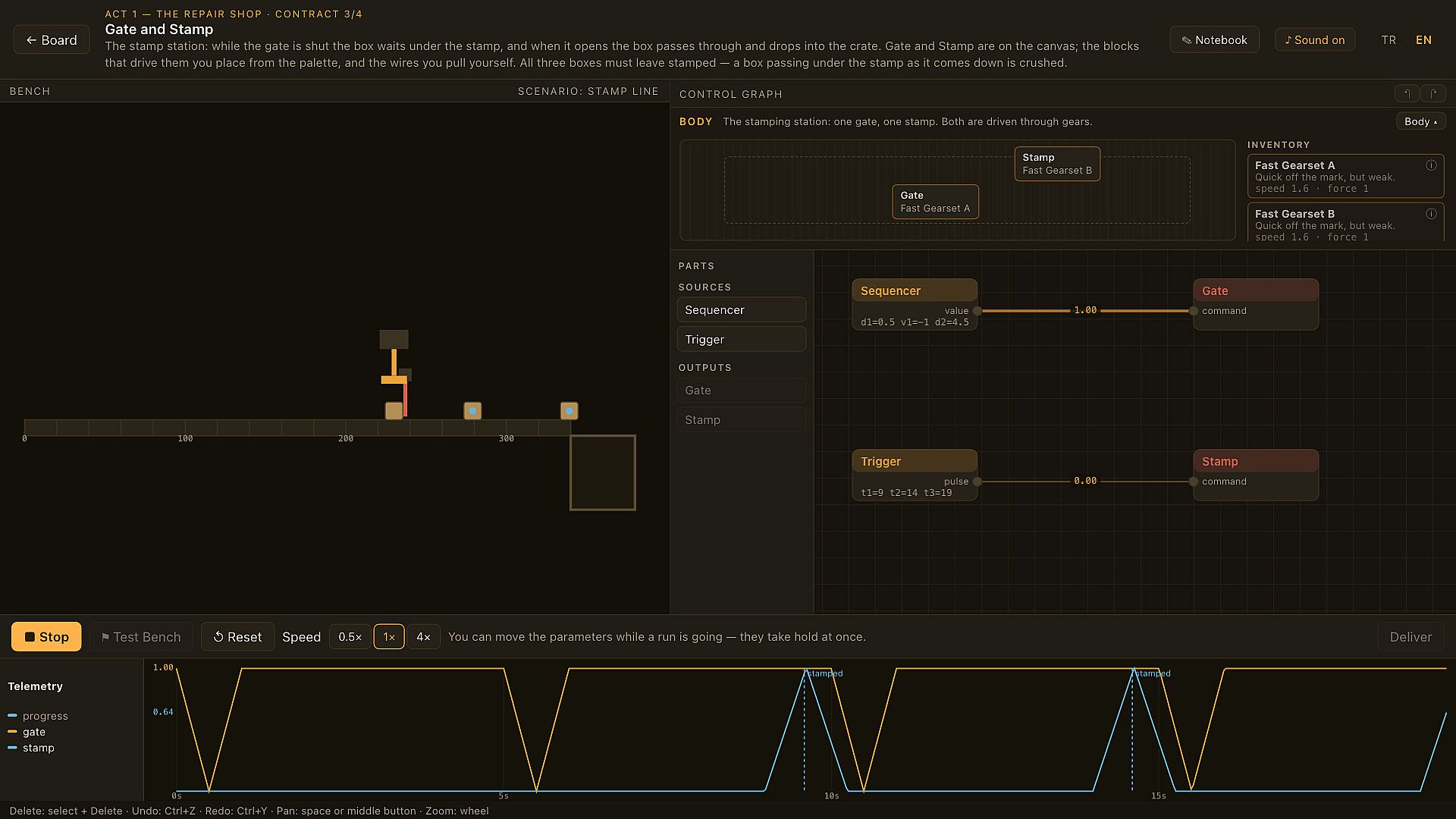
The core loop involves wiring sensors, filters, controllers, and motors into a node-based graph that defines how a machine processes inputs and produces outputs. After building the graph, players run deterministic simulations to watch the robot attempt its tasks while monitoring telemetry streams that reveal timing, errors, and performance metrics. Failures often trace back to issues such as sensor noise, actuator saturation, or unstable feedback loops, prompting targeted tweaks to the design.
Progression begins with basic mechanisms like a single conveyor piston and expands across multiple stages of increasing mechanical complexity. Concepts emerge naturally through hands-on work: simple proportional responses evolve into full PID controllers, wheel rotation data leads into odometry calculations, and multi-joint setups introduce inverse kinematics for coordinated movement. The same principles scale up to balancing systems and full gait generation for legged robots. Each solution can be packaged as a reusable module for later contracts, encouraging players to refine and repurpose control logic rather than starting from scratch every time.
Game Modes
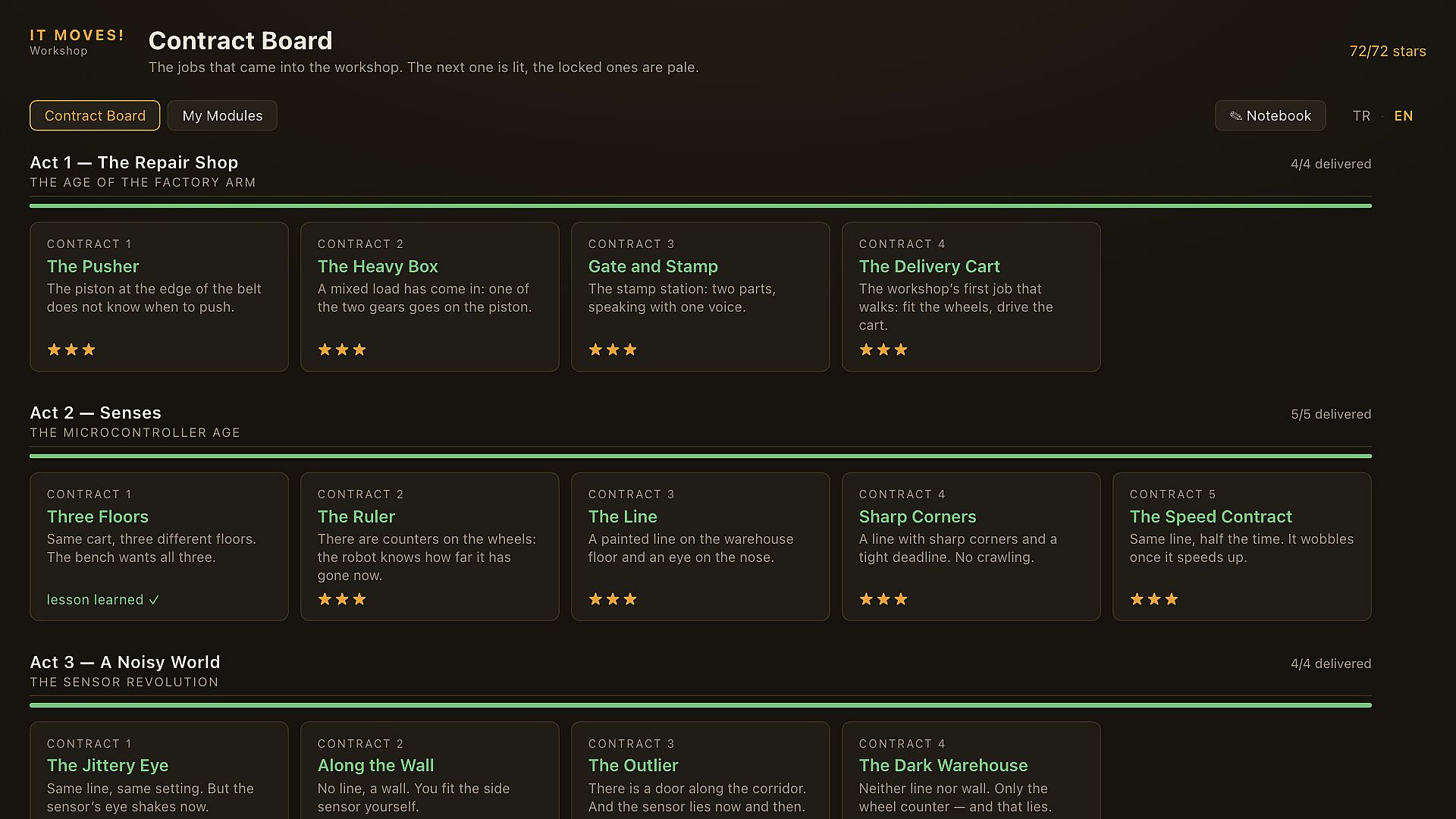
The primary structure consists of a sequence of handcrafted contracts that guide players through six distinct eras of robotics development. Early contracts focus on simple linear motion and basic actuation, while later ones demand coordinated navigation, articulated manipulation, and stable locomotion on varied surfaces. There are no separate competitive or multiplayer modes; the emphasis remains on single-player experimentation within the workshop setting.
Each contract presents one or more test scenarios that must be cleared before moving forward. Players can iterate on a single design across those scenarios, comparing results to identify weaknesses under different loads, sensor conditions, or environmental factors. Successful graphs become building blocks for future work, creating a cumulative library of proven subsystems.
Progression and Learning
Advancement follows a clear path from isolated components to complete machines capable of independent operation. The first machines handle repetitive shop tasks, while final projects involve two-legged humanoids that must maintain balance and execute precise movements on a stage. Because every element builds on prior understanding, players develop intuition for control theory through repeated cycles of construction, observation, and refinement rather than abstract study.
Telemetry inspection forms the heart of the learning process. Graphs display real-time values for joint angles, motor currents, and error signals, allowing players to diagnose problems such as drift in position estimates or reward hacking in autonomous behaviors. This feedback loop rewards careful observation over trial-and-error guessing.
Is It Worth Playing?
IT MOVES! suits players interested in systems thinking, mechanical simulation, and the satisfaction of making complex machines behave reliably. Its visual node editor lowers the barrier compared with traditional coding while still exposing the underlying principles of feedback control and sensor fusion. The 25 contracts provide a structured yet flexible path that scales from basic pistons to full humanoid gait, making the experience accessible without requiring prior engineering knowledge.
Those who enjoy iterative design and reading performance data will find repeated value in refining modules for reuse across contracts. The game remains a focused single-player workshop experience with no additional seasonal content or live-service elements confirmed at this time. If the appeal of watching a robot succeed after methodical tuning matches your preferences, the title delivers a consistent and self-contained simulation challenge.