






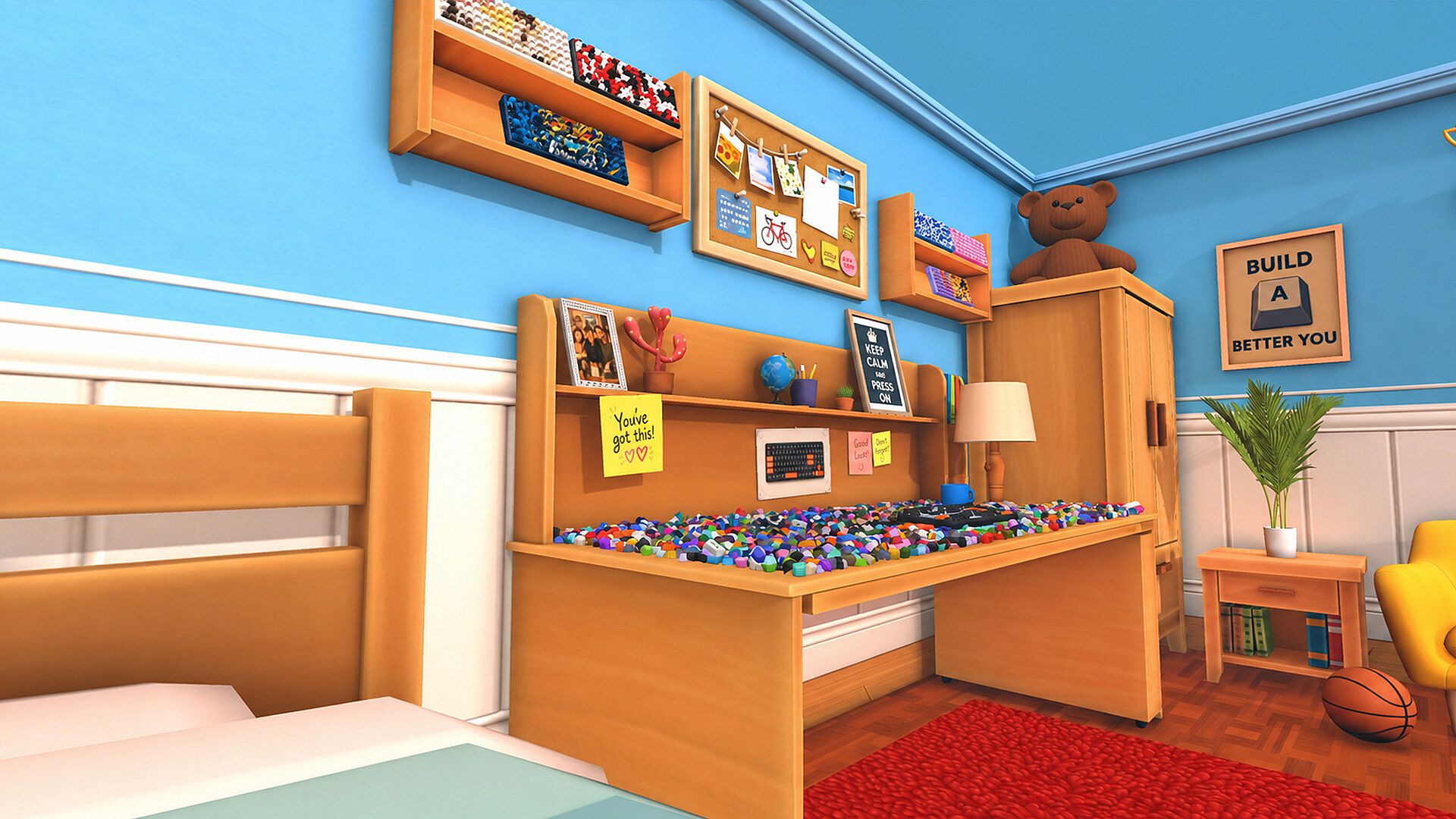
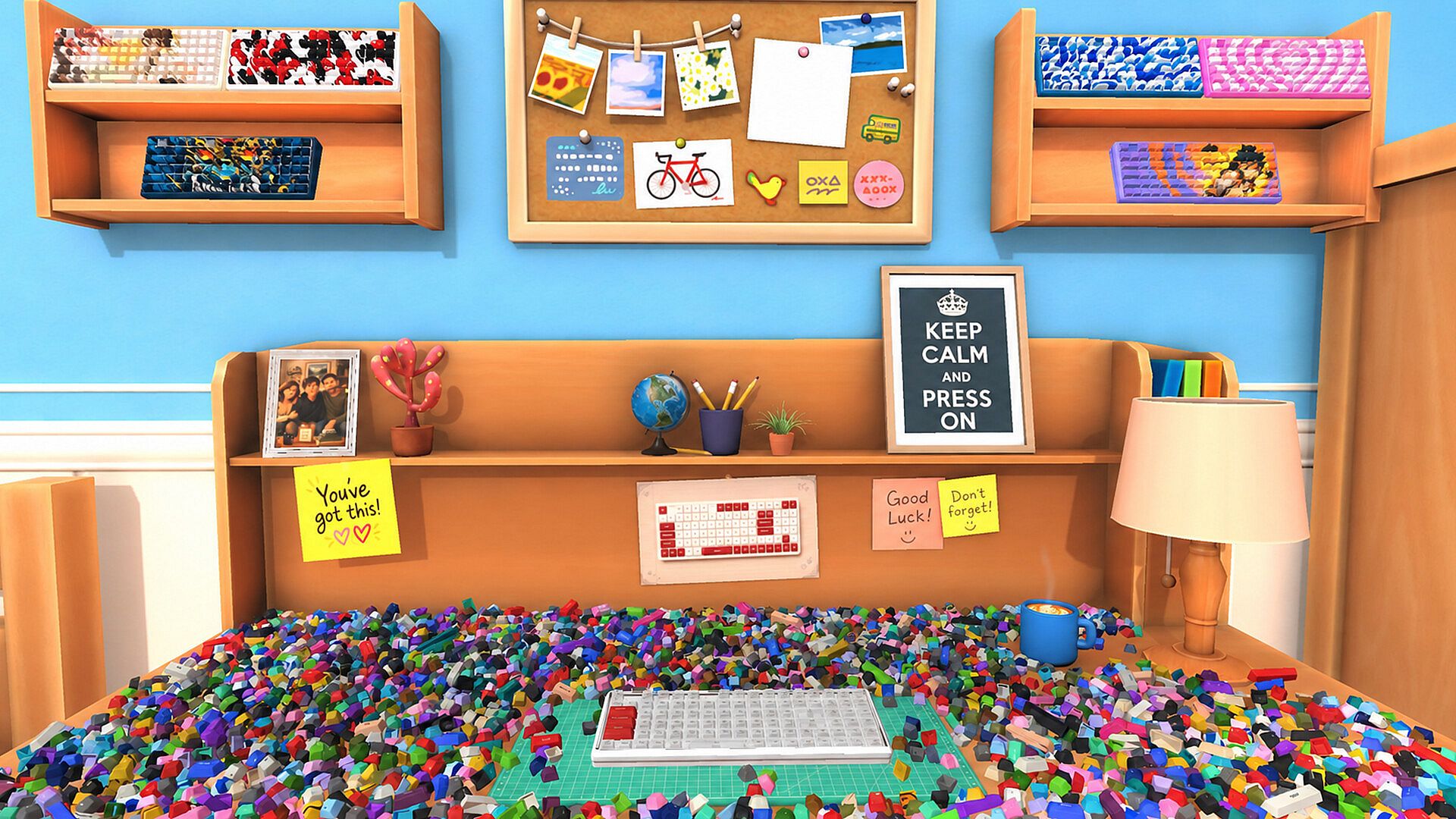
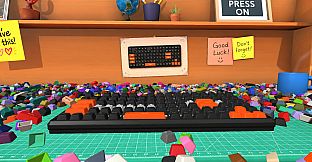
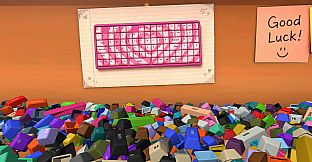
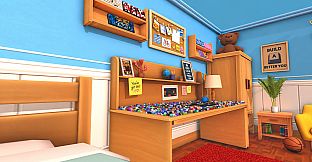
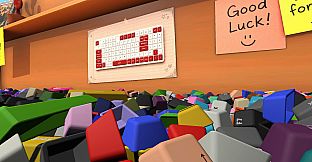
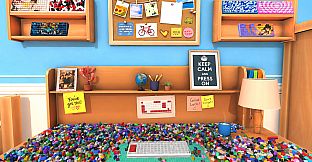
Keyboard Chaos is an indie casual simulation game focused on the meticulous task of assembling mechanical keyboards from scattered components. Players work through a cluttered workspace to locate and correctly position thousands of individual keycaps across multiple distinct keyboard layouts. The experience emphasizes careful observation and methodical placement rather than speed or competition, creating a steady rhythm of discovery and completion.
Gameplay
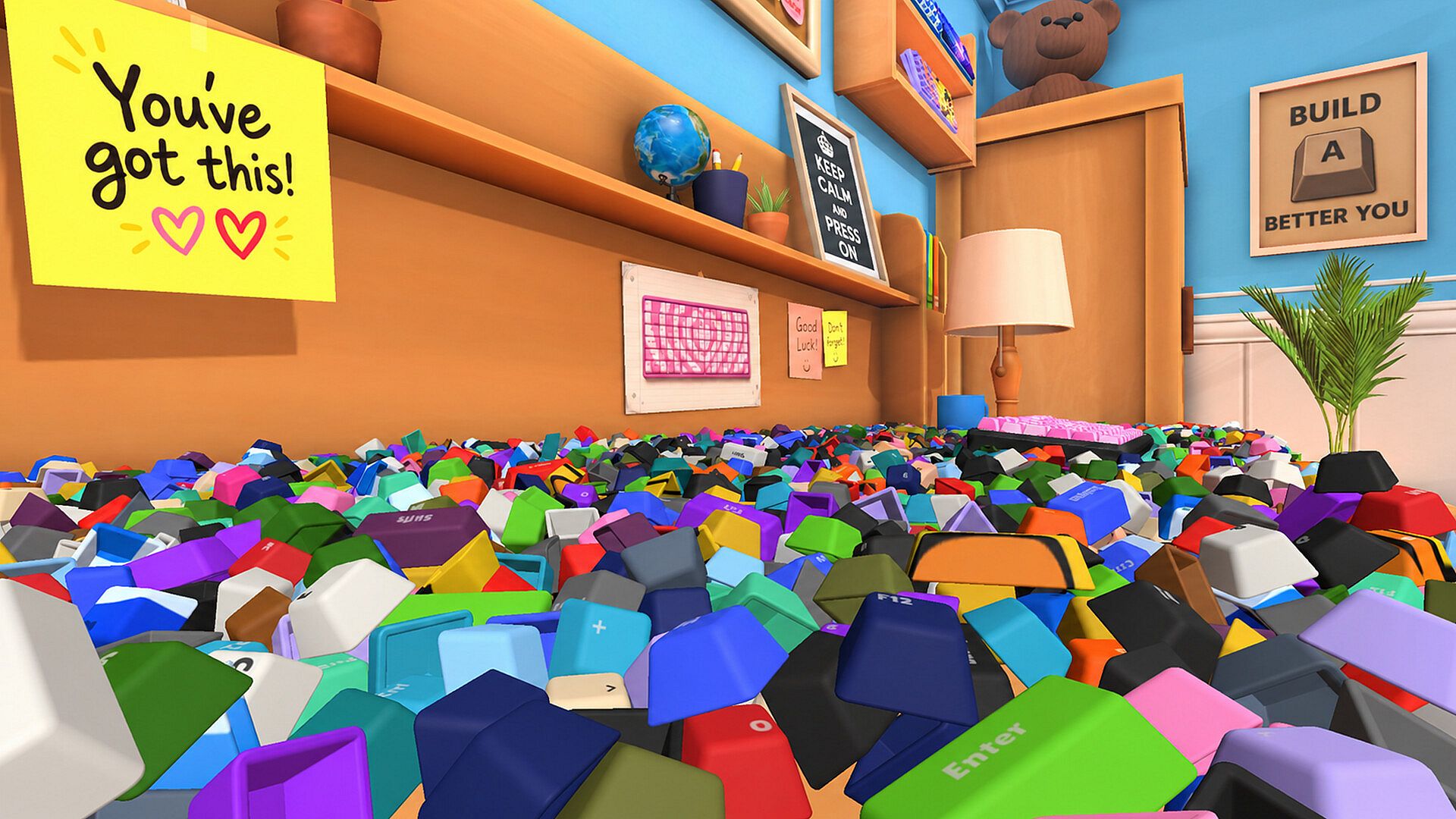
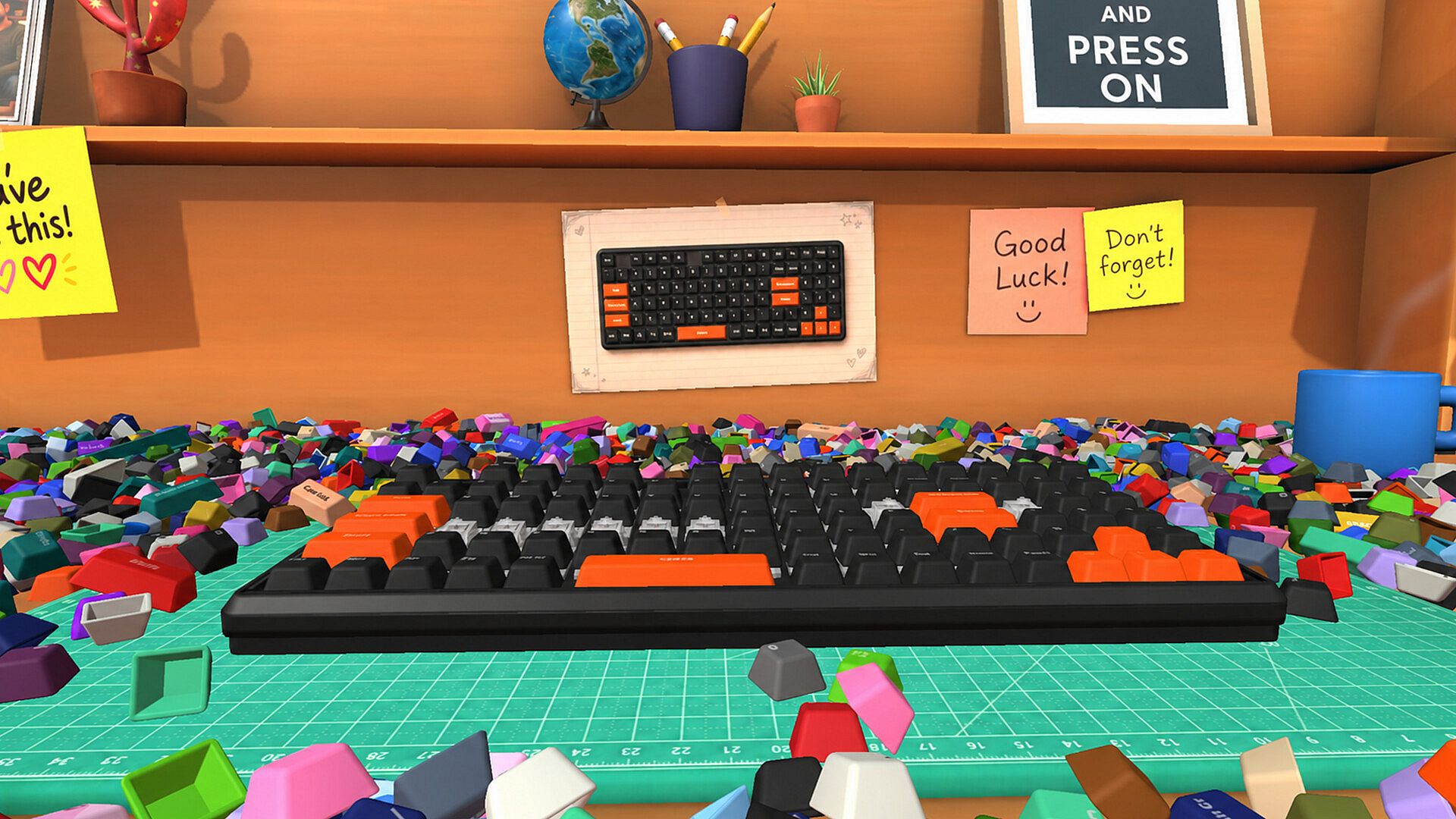
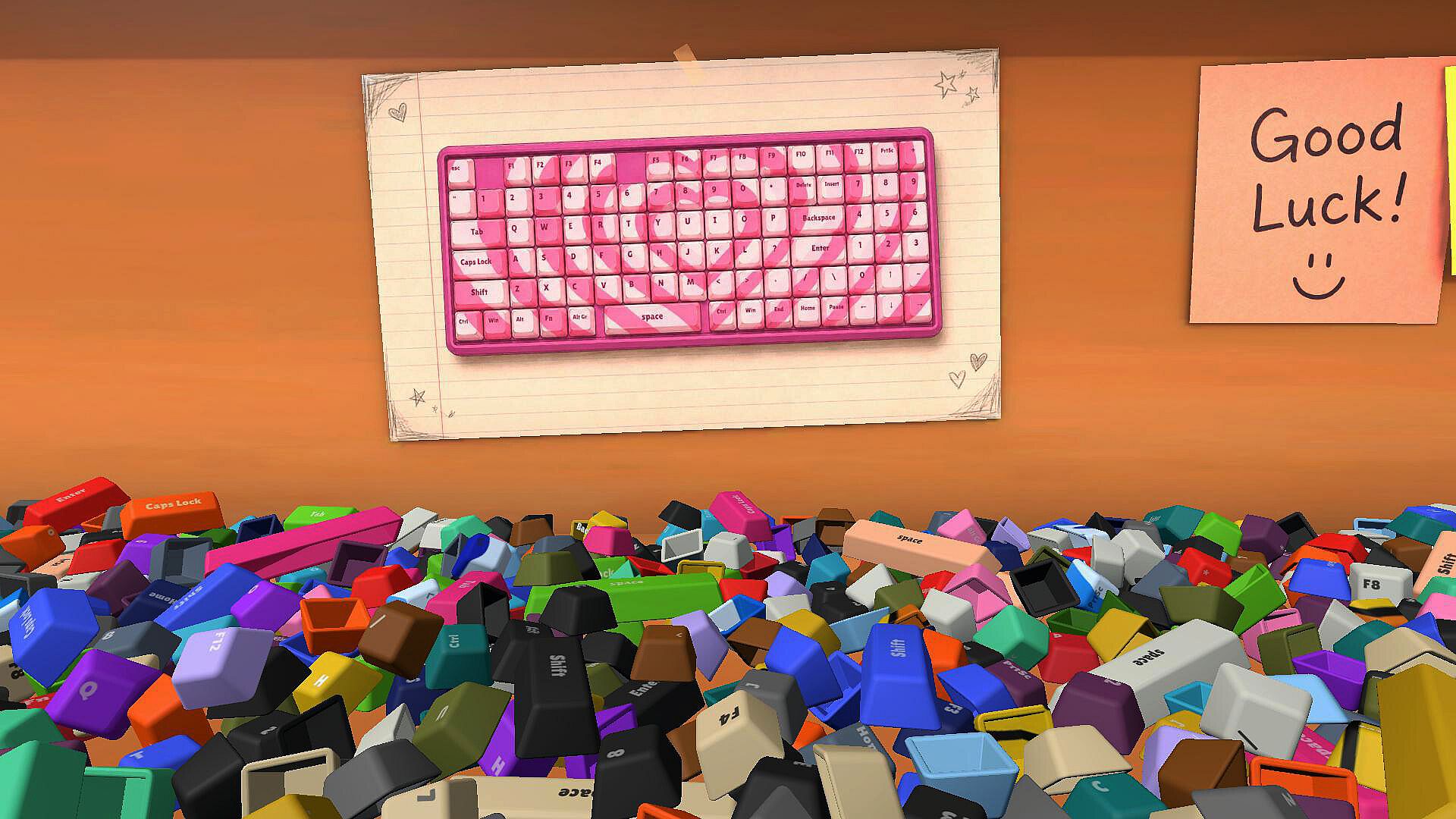
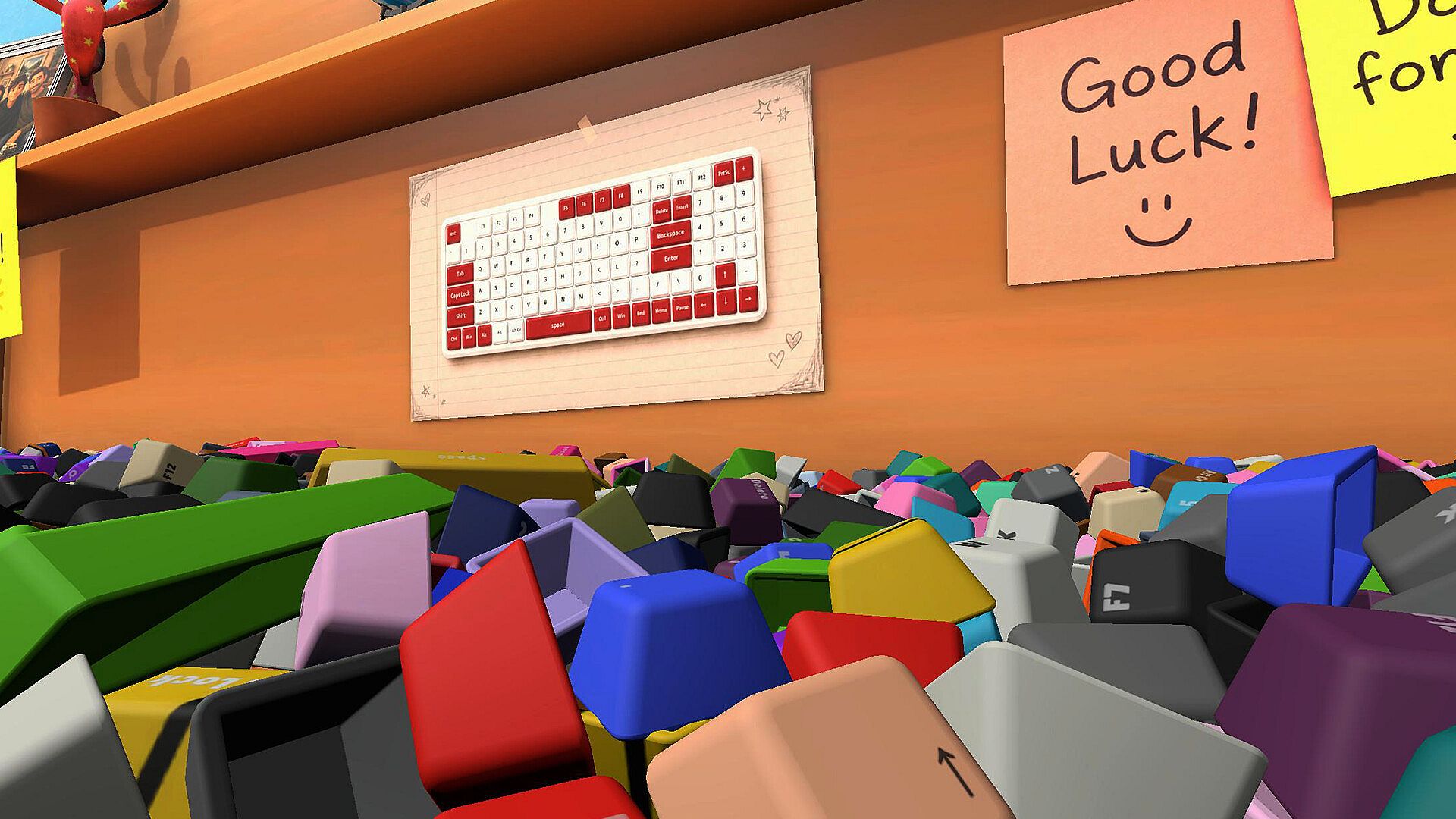
The core loop centers on searching through large piles of colorful keycaps to identify the precise pieces needed for each keyboard. With 2,760 unique keycaps available in total, players must examine shapes, colors, and markings closely because many pieces appear similar at first glance. Each of the 30 keyboards features its own layout and style, requiring attention to specific positions and designs. Progress involves clearing sections of the messy desk as keycaps find their places, gradually transforming disorder into orderly, functional assemblies. The mechanics stay simple and accessible, relying on visual matching and spatial awareness without timers, complex controls, or failure states that interrupt the flow.
Players move between different workstations or areas within the workspace, sorting through the accumulated items while keeping track of which keyboards remain incomplete. The satisfaction comes from the gradual reveal of completed boards, where every correctly placed keycap contributes to a sense of order restored. Different keyboard designs introduce variety in the arrangement of keys, encouraging repeated close inspection of the available pool of components.
Game Modes
Keyboard Chaos operates entirely in a single-player format with no separate competitive or cooperative modes. The primary activity involves progressing sequentially through the collection of 30 keyboards, each presenting a new set of layout challenges and keycap requirements. There are no branching paths, difficulty settings, or alternate scenarios confirmed beyond this central assembly process. The game maintains a consistent focus on the same search-and-place loop across all keyboards, allowing players to tackle them at their own pace in one continuous session or across multiple sittings.
Key Features and Mechanics
The title highlights a relaxing approach to organization and completion. Observation plays a central role as players scan piles for matching keycaps, while the act of placement provides immediate visual feedback on the workspace. No advanced systems such as crafting, upgrades, or procedural generation appear in the available details. Instead, the emphasis rests on the fixed collection of keycaps and keyboards, with success measured by fully assembling each board. The absence of complicated rules keeps the experience approachable for those seeking a low-pressure activity centered on pattern recognition and tidying.
Visual variety comes from the range of keyboard styles and the assortment of keycap colors and shapes. Players benefit from paying attention to subtle differences that distinguish otherwise similar pieces, building familiarity with the layouts over time. The overall design supports repeated playthroughs for those who enjoy refining their approach to locating specific components efficiently.
Who the Game Appeals To
This simulation suits individuals interested in puzzle-like tasks involving sorting and matching, as well as anyone drawn to the aesthetic of mechanical keyboards and desk organization. The casual pacing and lack of pressure make it suitable for short sessions or longer focused periods of play. Fans of other organization or completion-driven games will find familiar satisfaction in watching the workspace evolve from chaos to a set of finished keyboards. The single-player structure keeps the experience personal and uninterrupted.
Is It Worth Playing?
Keyboard Chaos delivers a straightforward, satisfying loop of searching and assembling that aligns well with players who enjoy methodical, visual tasks. Its relaxing nature and emphasis on completion without added complexity position it as a niche title for casual simulation enthusiasts. Since the game remains in a pre-release state with no user reviews available, potential players should consider their interest in keyboard-themed organization activities when deciding to follow its development. The confirmed features of 2,760 keycaps and 30 keyboards provide a substantial volume of content for those who appreciate the core premise. For the right audience, the steady progression toward fully assembled boards offers consistent, low-stress enjoyment.











