
















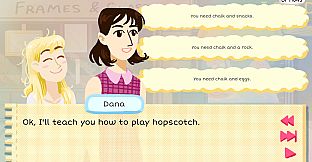
Kimmy is an indie visual novel set in late 1960s Massachusetts that follows a summer of babysitting and neighborhood exploration. Players take on the role of Dana, a young woman who encounters a solitary child named Kimmy and chooses to look after her. The story unfolds through conversations, small daily activities, and gradual revelations about the characters and their lives.
Gameplay
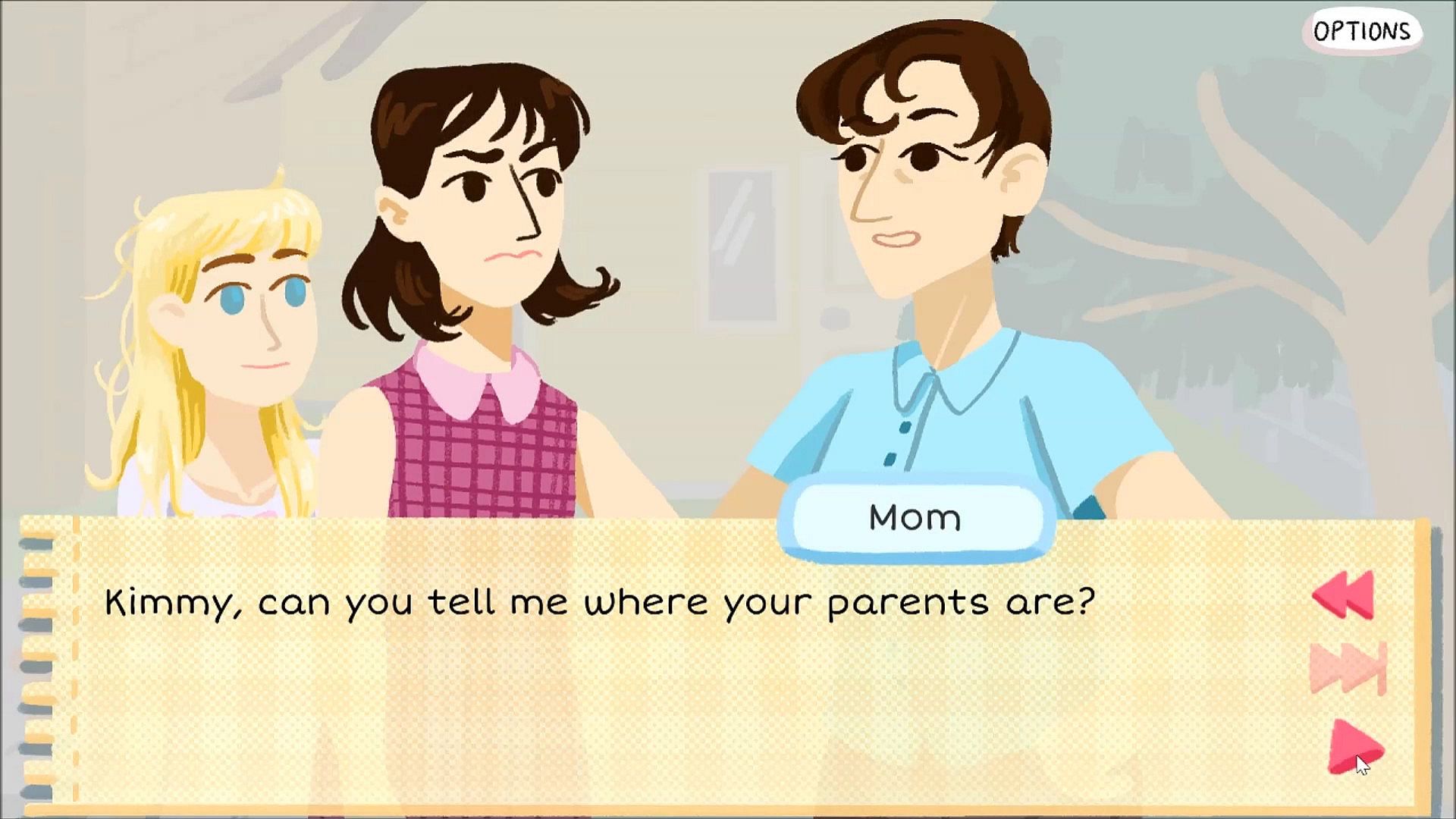
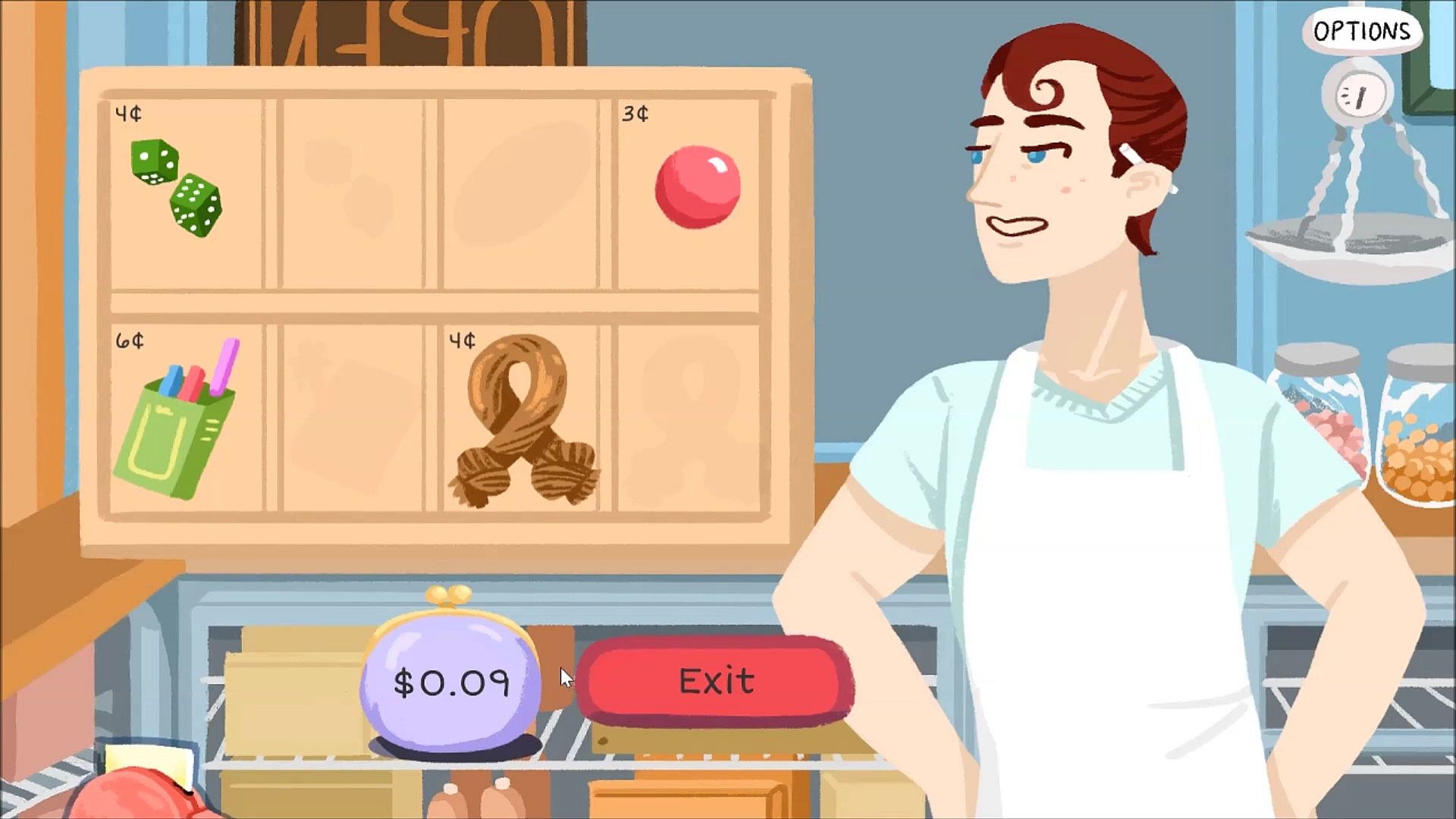
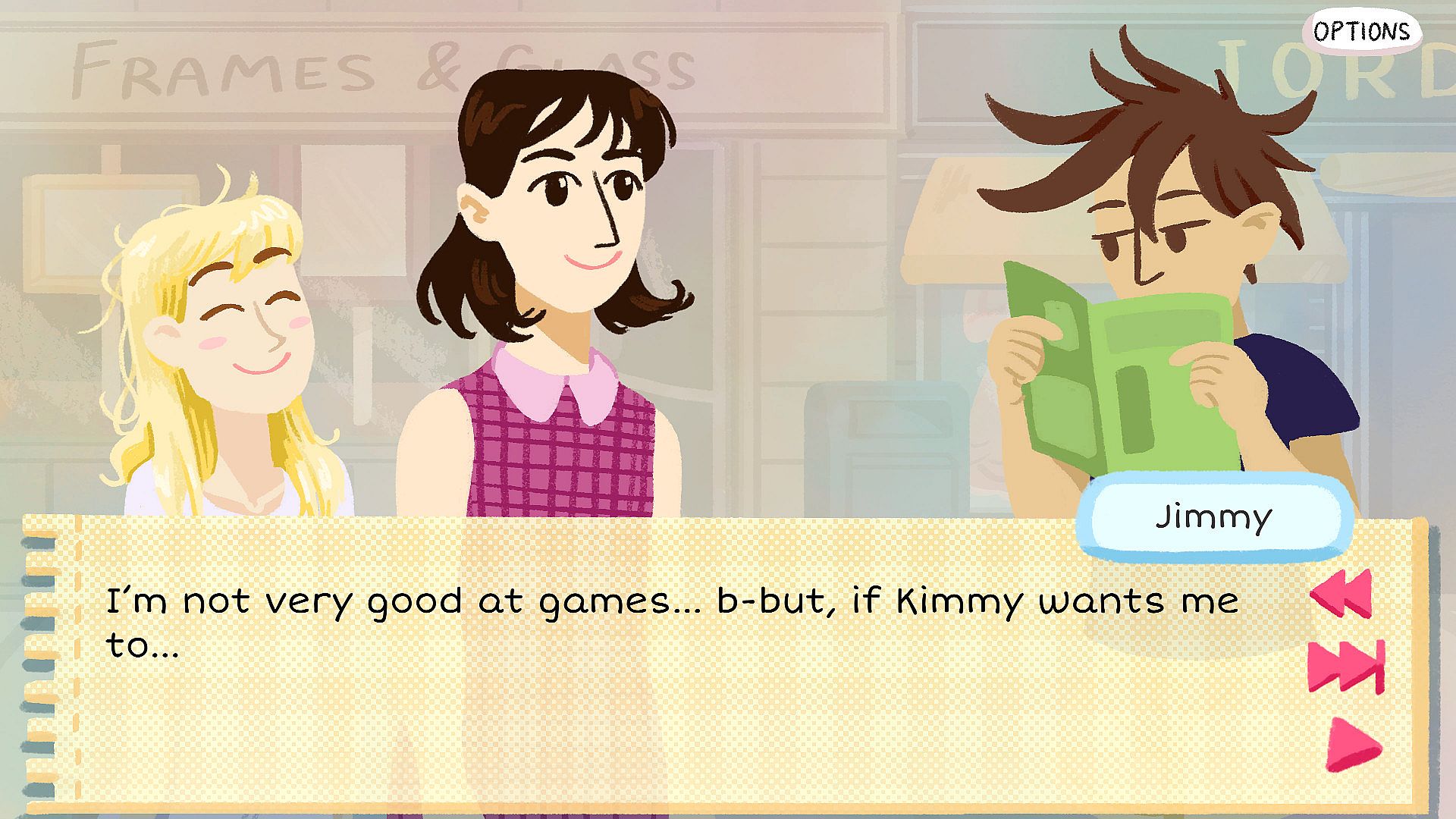
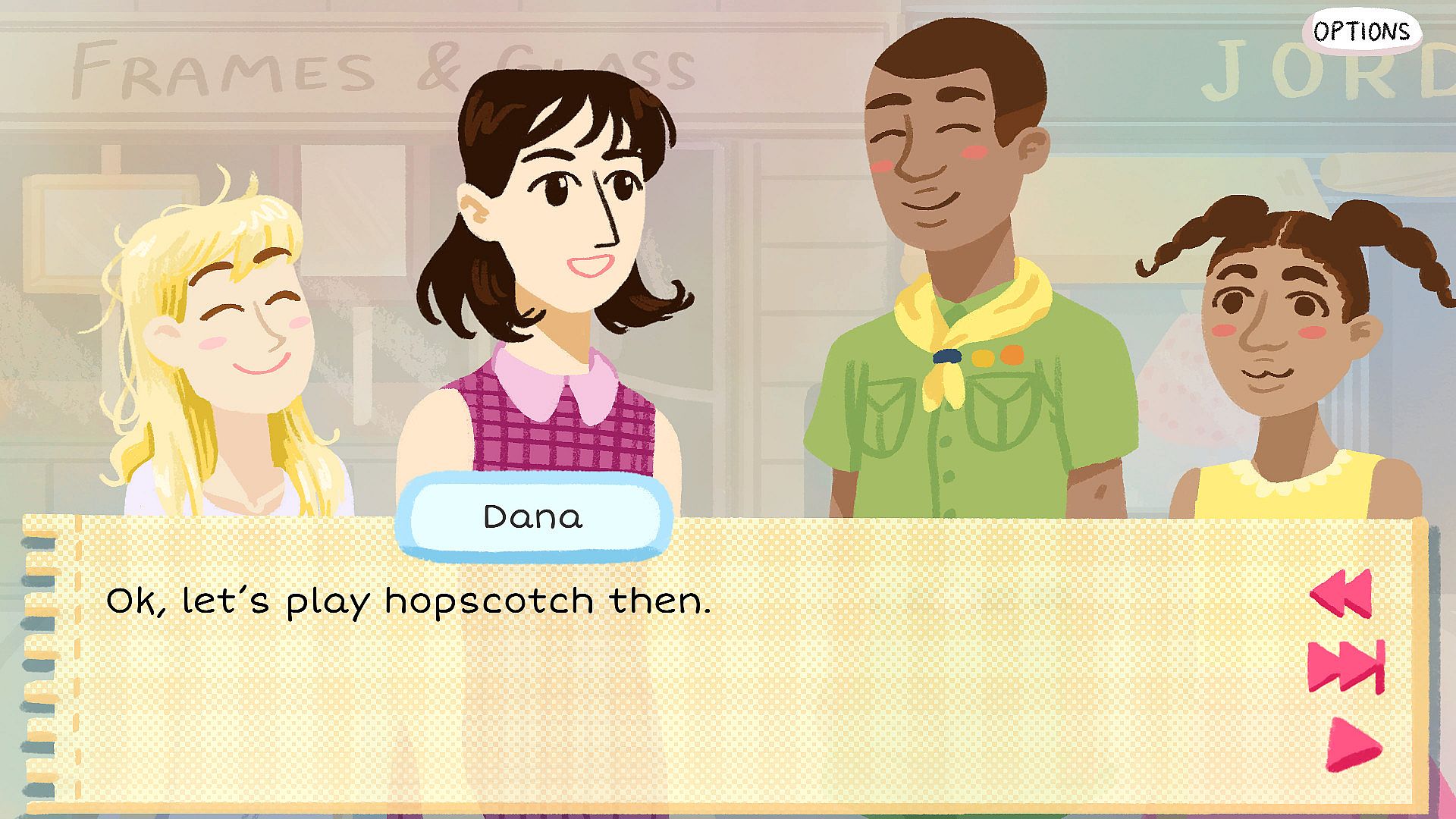
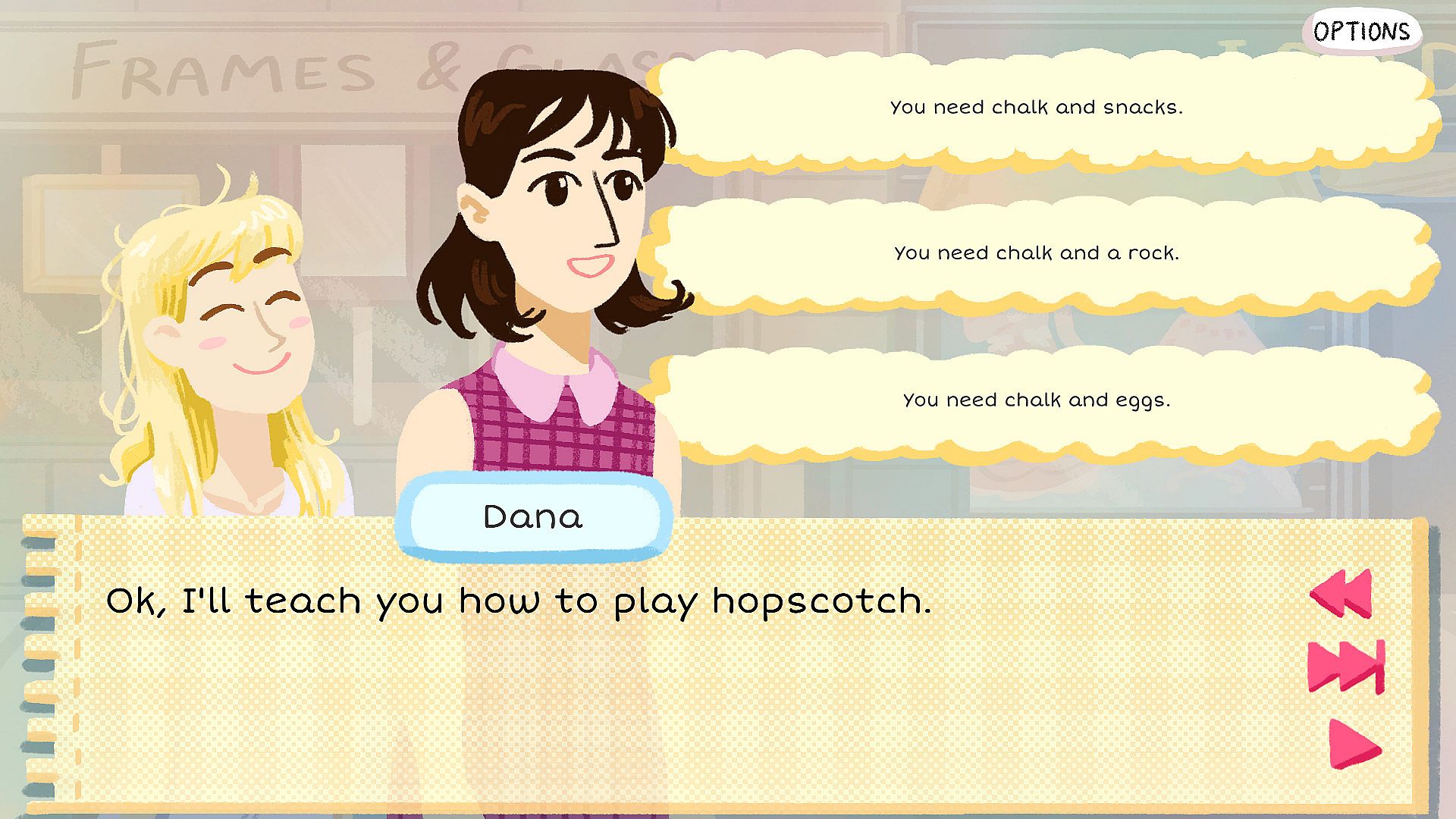
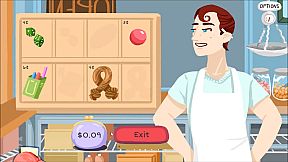
The core loop centers on progressing through a narrative divided into five acts. Each act advances the summer timeline as Dana spends time with Kimmy and meets other neighborhood residents. Interaction comes primarily through selecting which characters to approach on a given day, which unlocks additional dialogue lines and background details without altering the main story path or conclusion. Players also collect trinkets scattered around the area and participate in simple street games such as hopscotch and Double Dutch. These activities serve as brief interludes that reinforce the period setting and the relationships forming between the characters. The painterly illustrations accompany key moments, including several illustrated cut scenes that highlight emotional beats. A single complete playthrough lasts roughly two to three hours, and the game encourages repeat sessions to uncover every conversation thread.
Game Modes
Kimmy offers no separate modes or branches beyond its single narrative experience. The structure remains consistent across playthroughs, with the only variation coming from the order in which players choose to speak with the more than ten available characters. This choice-based element reveals extra dialogue and personal histories but leaves the overall sequence of events and ending unchanged. The focus stays on the dialogue-driven progression through the five acts, supported by the art and occasional minigame moments that break up the conversations.
Story and Setting
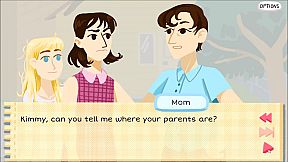
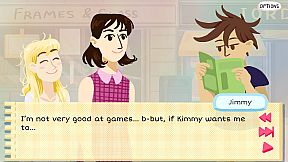
The game places its characters in a quiet suburban neighborhood during a specific historical period, using everyday routines to explore themes of childhood, honesty, and personal growth. Dana's decision to watch over Kimmy opens doors to interactions with family members and other local children, each bringing their own perspectives. The narrative touches on more serious subjects such as loss and family dynamics through natural conversation rather than direct exposition. Content warnings note the presence of profanity and references to alcohol, positioning the title primarily for adult audiences despite its focus on childhood experiences.
Visual and Audio Presentation
Hand-painted artwork defines the look of Kimmy, giving characters expressive faces and environments a soft, nostalgic quality. Multiple illustrated sequences punctuate the dialogue to emphasize important scenes. The original soundtrack composed for the game complements the intimate tone with understated melodies, while sound design adds subtle environmental details that enhance the sense of place. Headphones are suggested to fully appreciate these layers during longer dialogue stretches.
Is It Worth Playing?
Kimmy suits players who value character-focused stories and atmospheric writing over mechanical depth or branching paths. Its short length makes it easy to finish in one or two sittings, and the limited interactivity keeps attention on the conversations and small daily activities. Reviews from the time of release praised the emotional resonance and the way the game handles heavier topics through implication rather than graphic detail. Those seeking a reflective, dialogue-rich experience set against a period backdrop will find the title rewarding, while anyone looking for extensive player agency or replay-driven variety may prefer other options. The game remains available as a standalone PC title with no ongoing updates or additional content layers.