


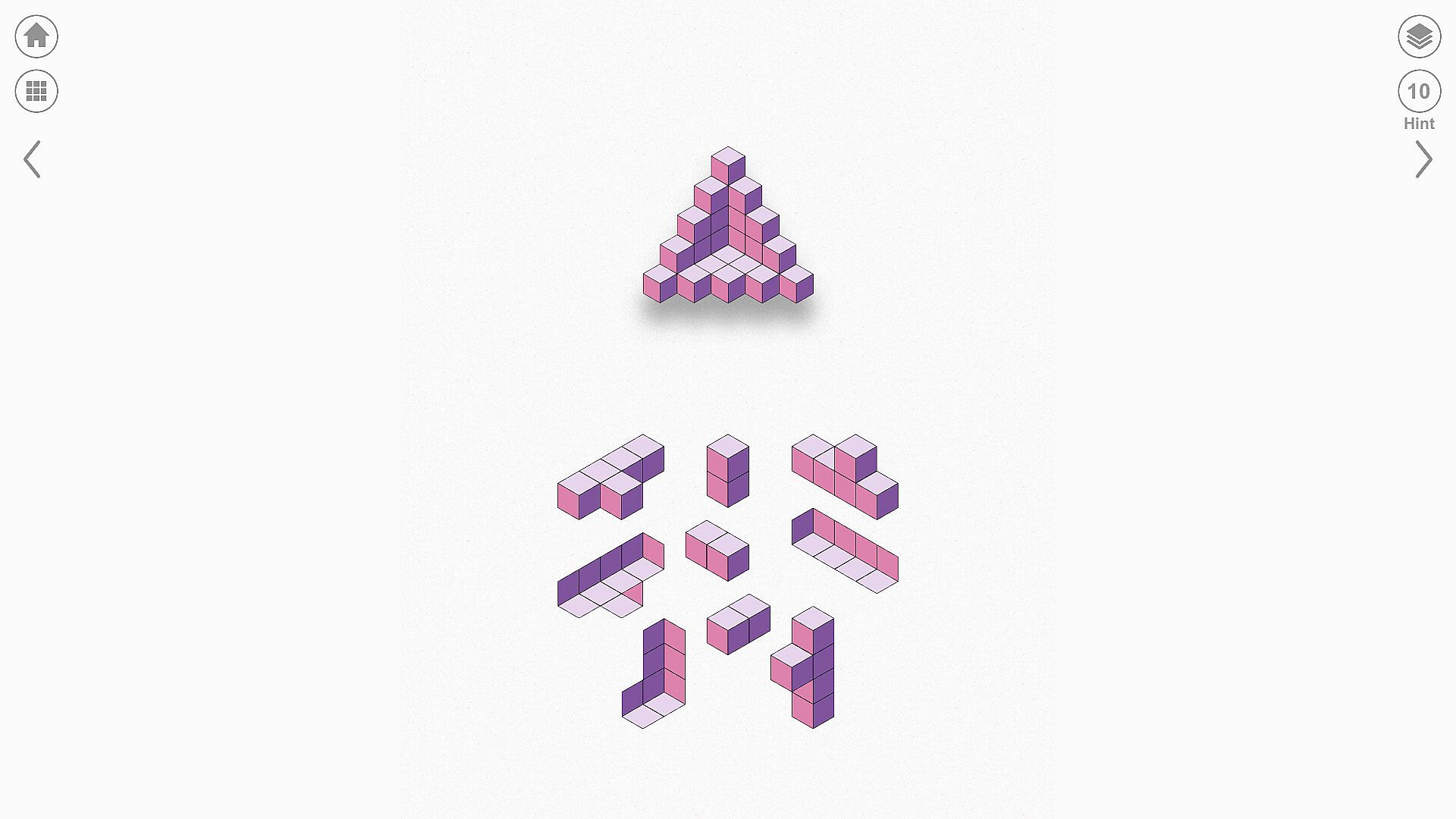
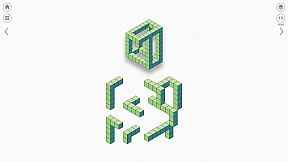
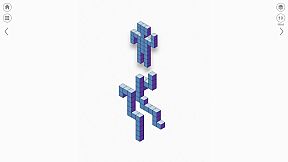
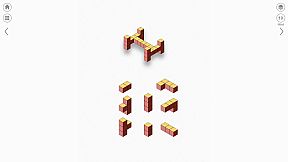
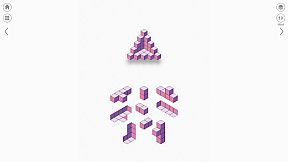
Kubic stands out as an optical illusion puzzle game that draws heavily from M.C. Escher's mind-bending artwork and impossible geometric designs. In this indie casual title for PC, you tackle challenges by arranging pieces to match specific configurations, testing your perception and spatial reasoning in a clean, minimalistic style.
Gameplay
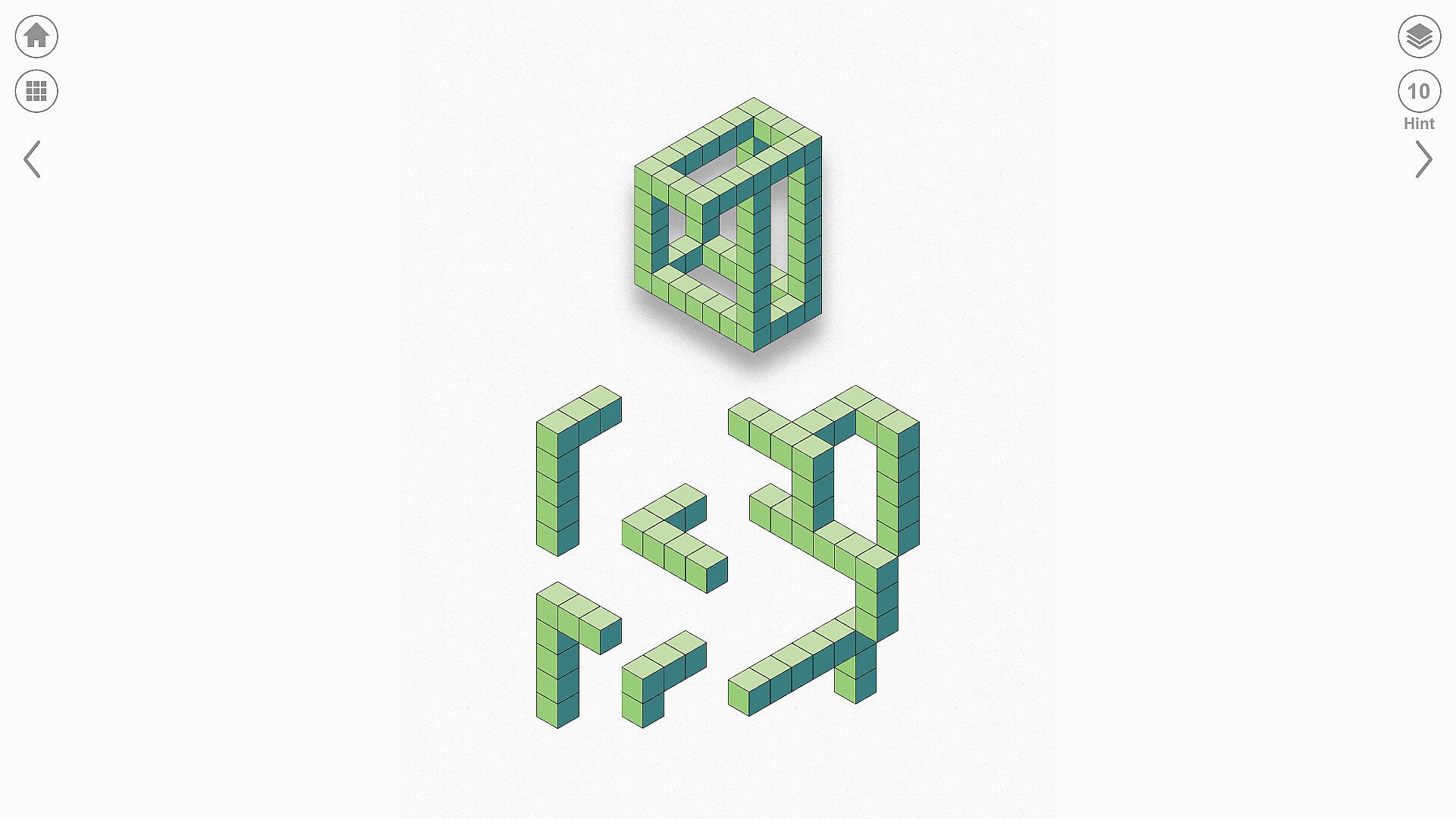
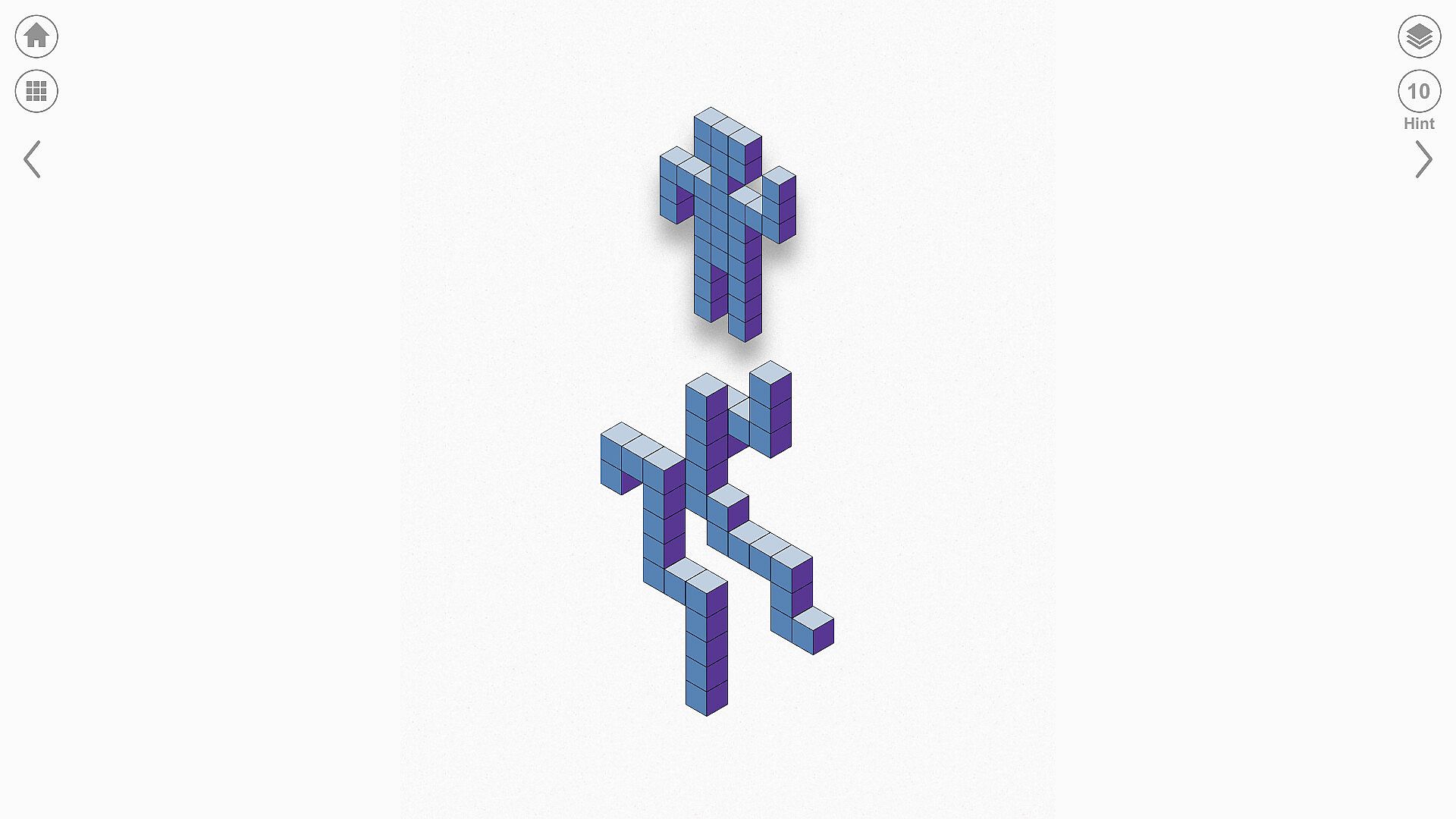
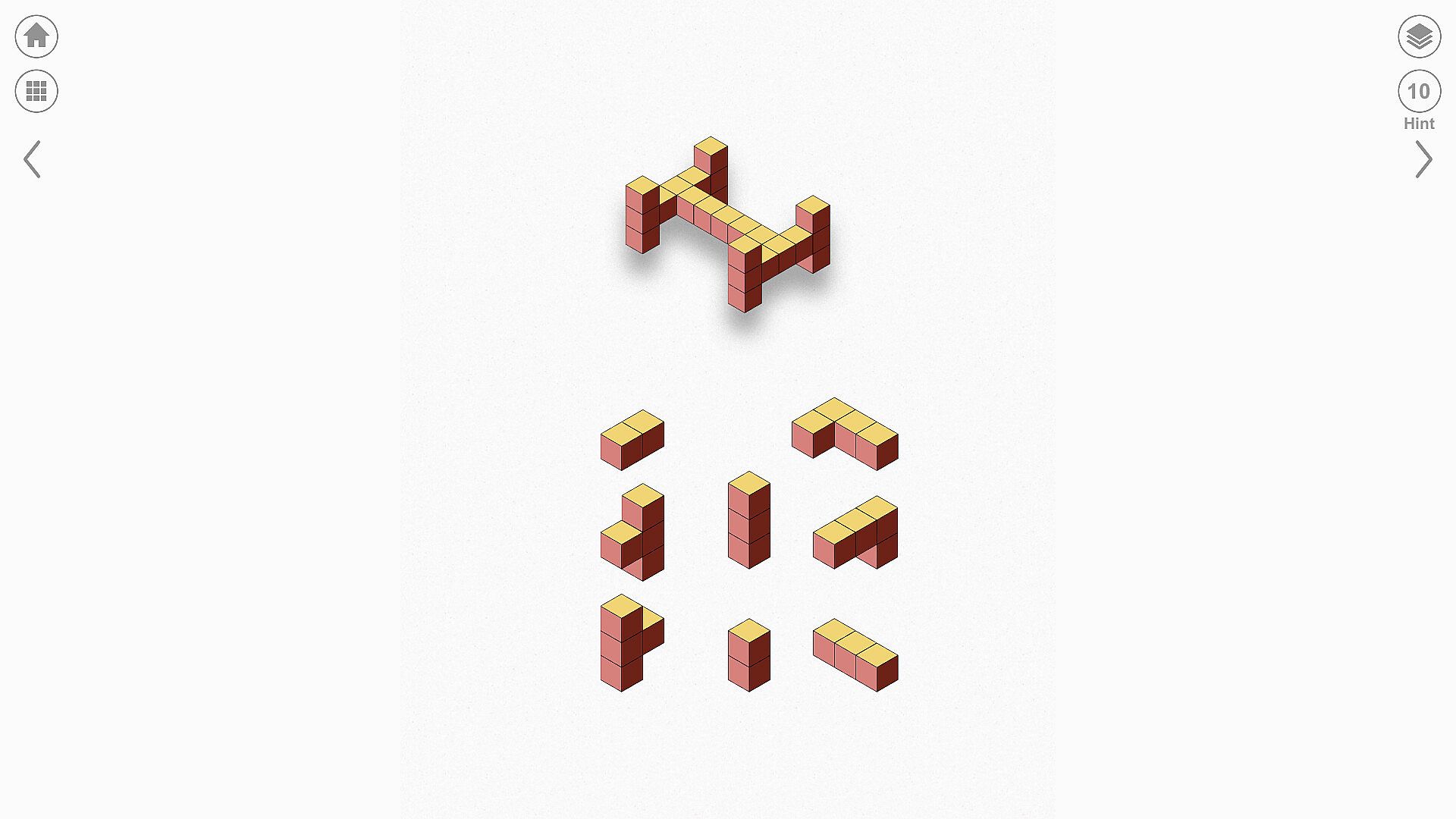
The core mechanic revolves around manipulating pieces on a 2D plane to form optical illusions that appear three-dimensional. When you select a piece, it jumps to the front layer, allowing it to overlap others without merging them. Extra pieces can be tucked behind for hiding, and you have the option to lock layers to keep the order intact while dragging elements around. Controls include pinching with two fingers to zoom in or out and shifting the view for precise adjustments. If a puzzle stumps you, an in-game hint system offers guidance, from subtle nudges to full solutions, ensuring progress without frustration. All challenges encourage thinking ahead, often building from the back layer forward to achieve the desired illusion.
Game Modes
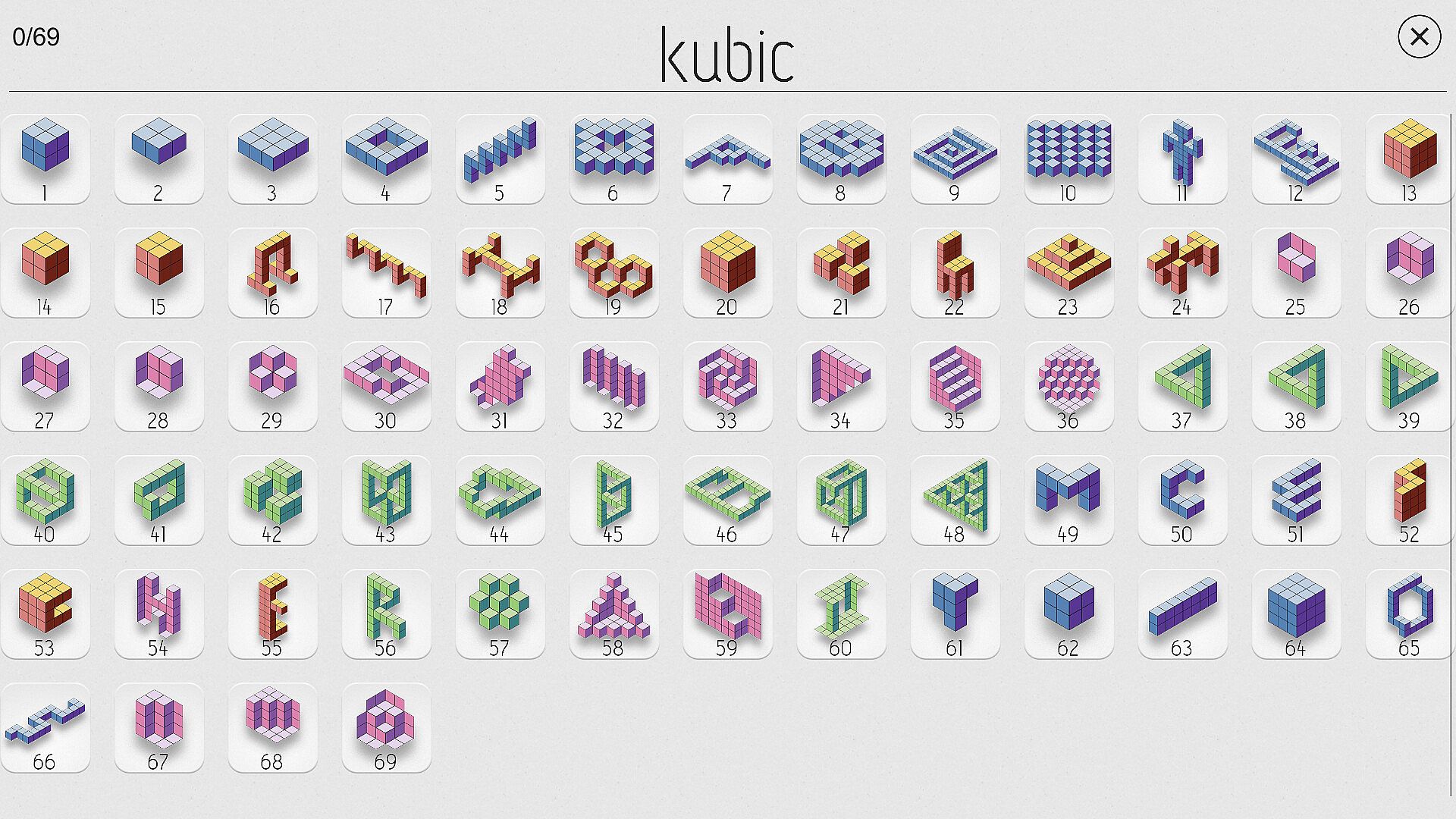
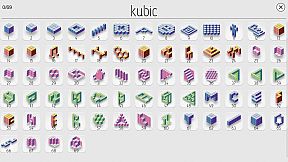
Kubic organizes its puzzles into six distinct groups, each with a thematic focus on different types of optical tricks. The Ocean group deals with basic 2D shapes arranged in two-dimensional patterns. Desert introduces shapes that seem 3D but require flat-plane logic. Mountain puzzles draw from Escher's Convex and Concave concepts, playing with perceptions of depth. Sky explores Up and Down illusions inspired by the Penrose Triangle in Escher's Waterfall. The Escher group uses letter designs that spell out M.C. Escher, while Print adapts printable versions of Convex-Concave puzzles. These categories provide over 60 puzzles in total, progressing from simpler setups to more complex configurations.
Puzzle Design and Features
Every puzzle in Kubic emphasizes clean lines and minimal art, creating a serene environment for problem-solving. The game includes Steam Achievements to unlock as you complete challenges, along with leaderboards for comparing completion times. Steam Cloud support lets you pick up where you left off across sessions, and stats track your progress through the puzzle sets. With no time limits or competitive elements beyond personal achievement, it suits relaxed play sessions. The puzzles vary in difficulty, with some demanding careful layer management to replicate impossible objects accurately.
Is It Worth Playing?
For anyone intrigued by optical illusions and spatial puzzles, Kubic offers a thoughtful experience that rewards patience and creative thinking. Its over 60 challenges provide solid replay value, especially with the ability to skip and revisit tough ones. Player feedback highlights the satisfying "aha" moments when pieces align perfectly, though the limited number of reviews suggests it's a niche gem. Released in late 2024 with no major updates noted since, it remains a straightforward puzzle game without ongoing seasons or live events. If you enjoy brain teasers that bend reality without high-stakes pressure, this title delivers focused, illusion-based fun at a premium level.