







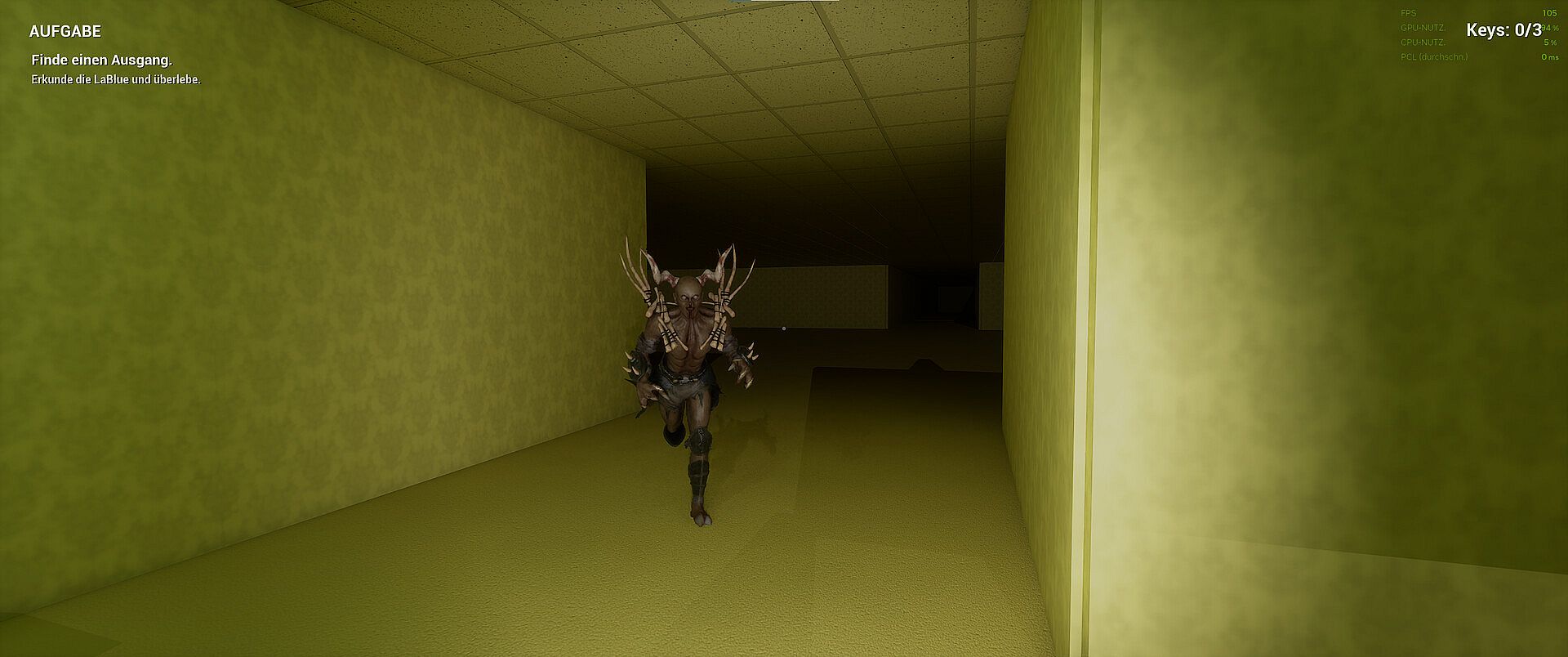

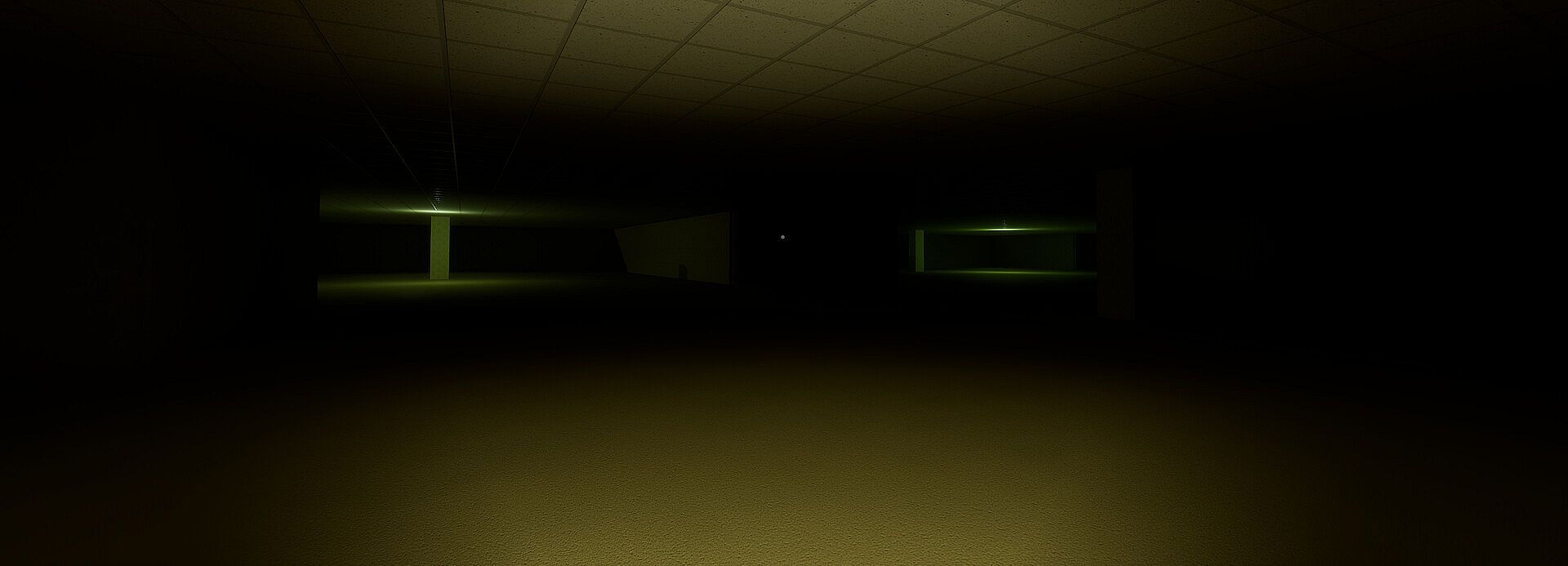
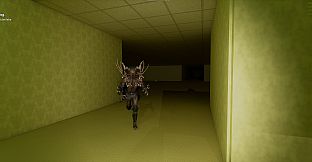
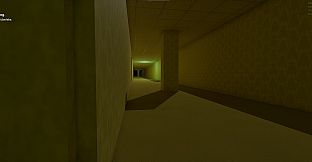
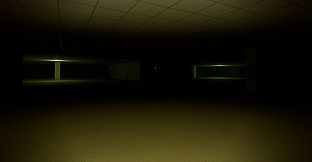
LaBlue Horror is a first-person psychological horror game developed for PC that places players in a Backrooms-inspired labyrinth filled with decaying corridors, flickering lights and constant tension. The experience centers on exploration and evasion rather than direct confrontation, with the core objective of locating an exit while avoiding detection by a hostile creature. Released into Early Access on July 22, 2026, the title currently offers a single playable level that emphasizes atmosphere, sound design and line-of-sight survival mechanics.
Gameplay
Players navigate the environment from a first-person perspective, moving through dimly lit rooms and winding passages while managing limited visibility. The hostile creature patrols the space and reacts to sound or sight, forcing careful movement and strategic hiding behind objects or in shadowed areas. Objective-based progression requires locating key elements or pathways that lead toward escape, with failure resulting in a death screen and success triggering a victory screen. Atmospheric lighting shifts create unease, while unsettling audio cues heighten the sense of pursuit without relying on combat systems.
Survival hinges on maintaining distance and breaking line of sight rather than engaging threats. The early version focuses on these foundational loops, allowing players to test pacing and tension in the initial labyrinth section. Future updates are planned to expand areas, refine enemy behavior and add new scares, but the current build prioritizes the core escape loop in its first level.
Game Modes
The game operates in a single-player format centered on solitary exploration and escape attempts within the labyrinth. No separate competitive or cooperative modes appear in the initial release, keeping the focus on individual survival against the creature. Objective-based gameplay forms the primary structure, where each attempt involves searching rooms, following faint light sources and reaching the exit before being caught. This setup supports repeated playthroughs to improve routes and timing, though the early access build limits content to one level.
Mechanics such as hiding and evasion define the experience across attempts, with no faction systems or team-based elements confirmed at launch. The design encourages careful observation of the environment and creature patterns rather than aggressive actions.
Atmosphere and Level Design
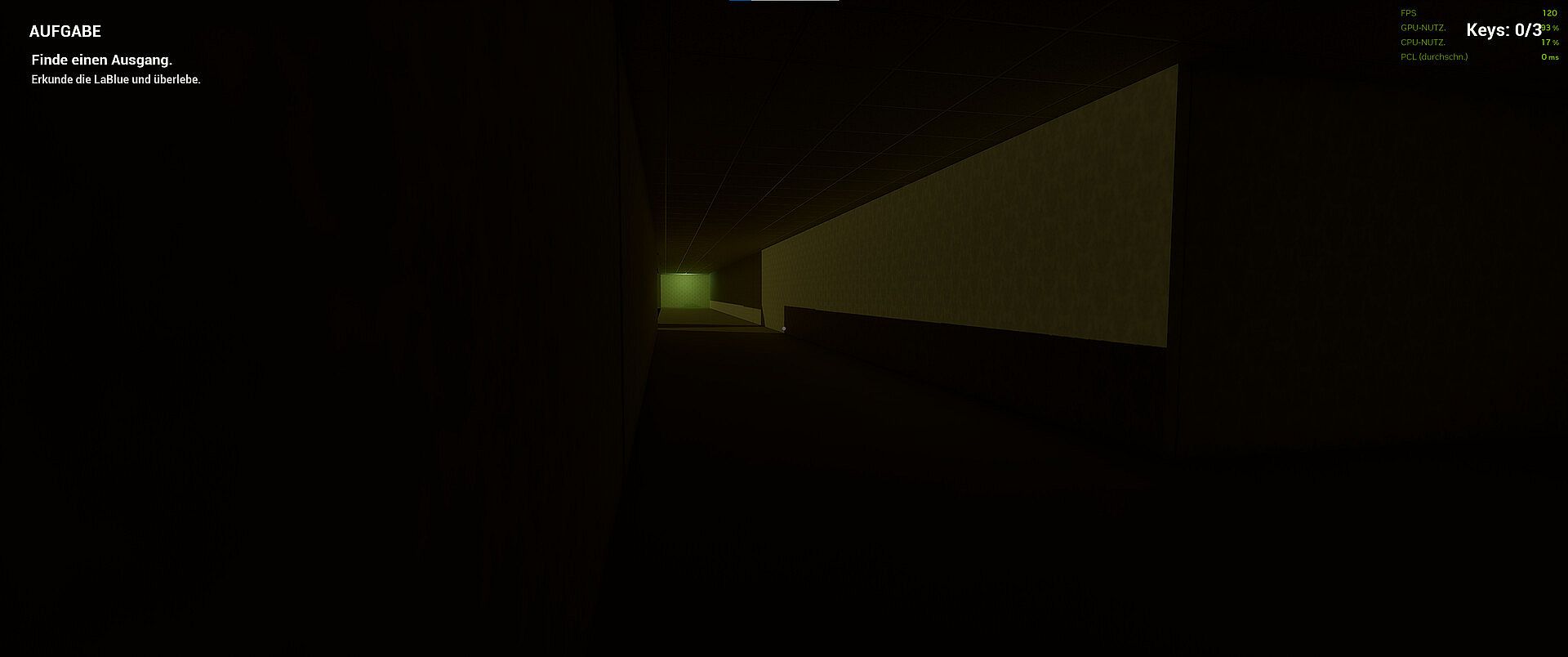
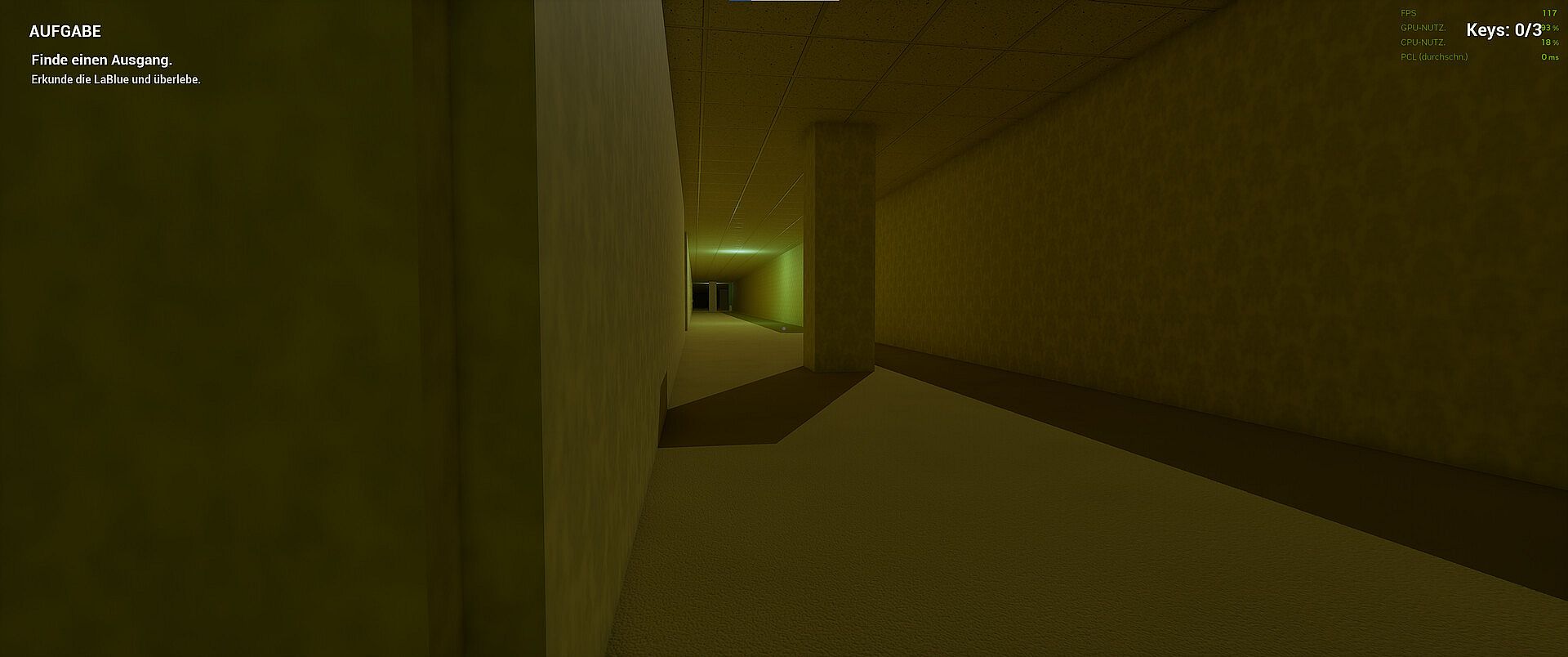
Backrooms-inspired architecture dominates the setting, featuring endless corridors, broken fixtures and an oppressive sense of isolation. Lighting plays a central role, with weak bulbs casting long shadows that players must navigate while listening for audio tells from the pursuing entity. Sound design reinforces the psychological pressure through ambient noises and sudden cues that signal danger without visual confirmation.
The first level serves as a contained test of these elements, blending simulation-style navigation with adventure-driven discovery. Casual accessibility comes from straightforward controls, while action elements emerge during chase sequences that demand quick decisions on where to hide or which path to take next.
Current State and Future Plans
LaBlue Horror entered Early Access with a focus on the initial playable level, basic survival systems and core horror loop. Developers have outlined plans for additional levels, improved creature AI, expanded soundscapes and refined menus over the expected six to twelve months in this phase. Player feedback through discussions and reports will guide adjustments to balancing, performance and new content additions.
The build includes death and victory screens to mark progress, along with Steam achievements and workshop support for potential community contributions later. Single-player remains the primary mode, though co-op options are listed among features for possible future implementation.
Is It Worth Playing?
LaBlue Horror suits players who enjoy atmospheric single-player horror experiences that prioritize tension and evasion over combat or complex progression systems. The early access version delivers a focused taste of the labyrinth exploration and creature avoidance in its first level, making it suitable for those interested in supporting ongoing development. With no reviews available yet due to the recent release, the recommendation rests on the confirmed mechanics of hiding, line-of-sight survival and objective-driven escape in a Backrooms-inspired setting. Fans of psychological horror who value sound design and environmental storytelling may find value in testing the current build and providing input for updates. Those seeking polished full releases or multiplayer variety should consider waiting for further content additions.












