

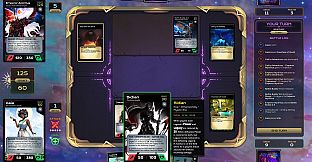
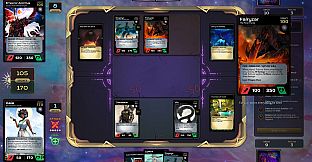
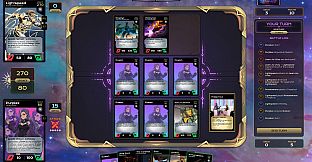
Legacy: The Card Game is a free-to-play strategy card game available on PC that introduces an open-field approach to trading card battles. Players build decks around a central Legend and compete to accumulate more Legacy points than their opponent through careful card placement and targeted attacks.
Gameplay
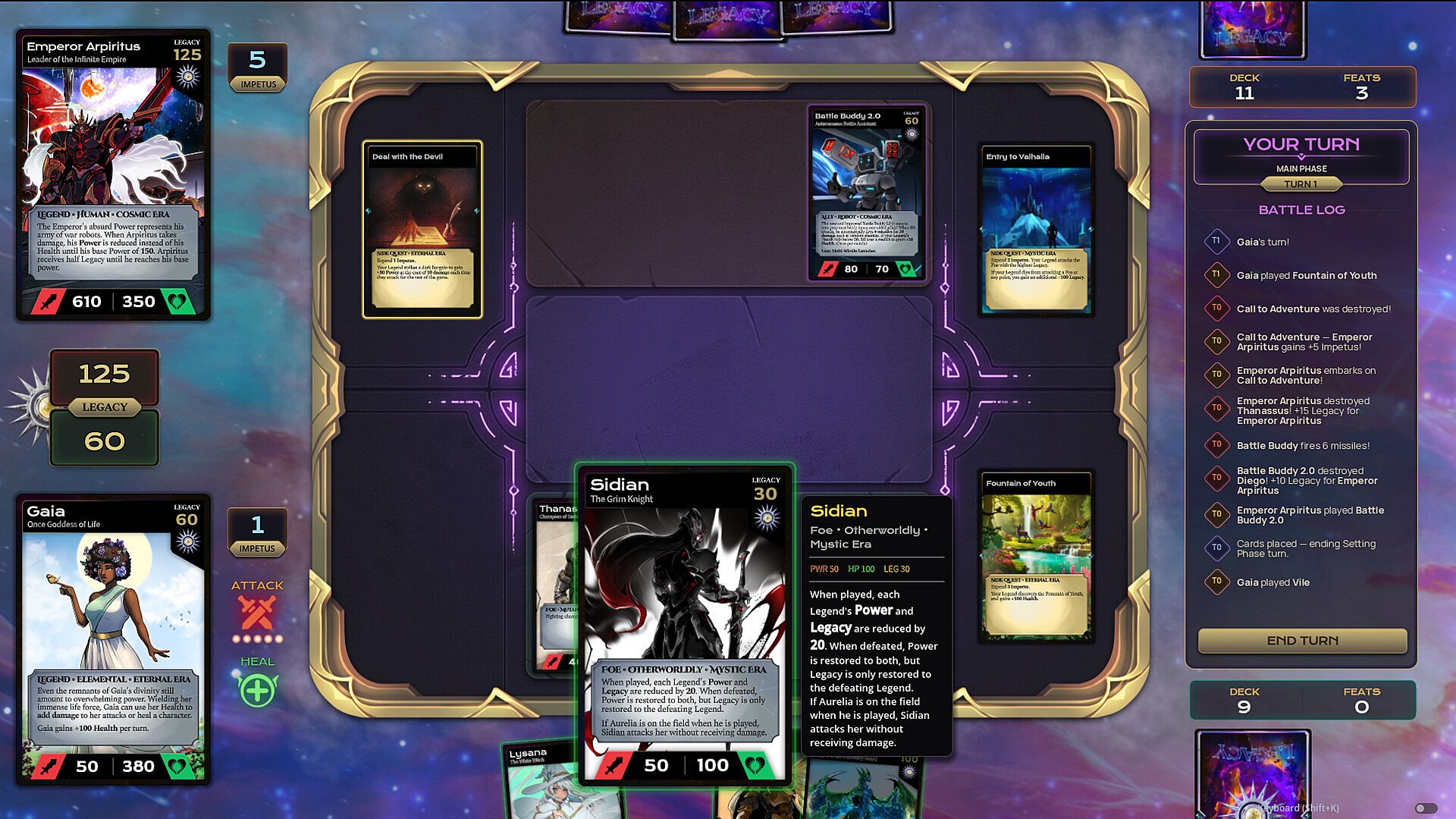
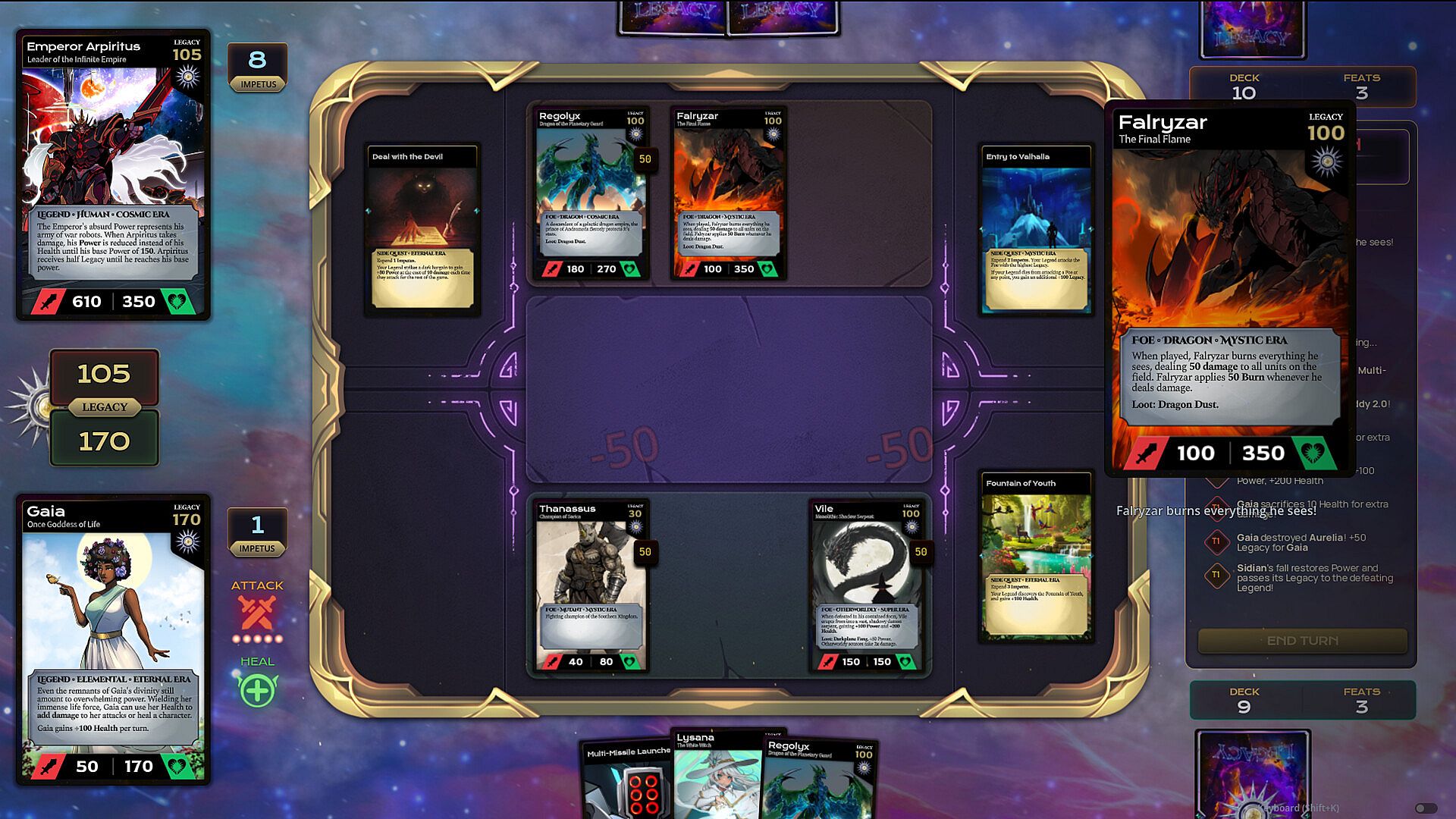
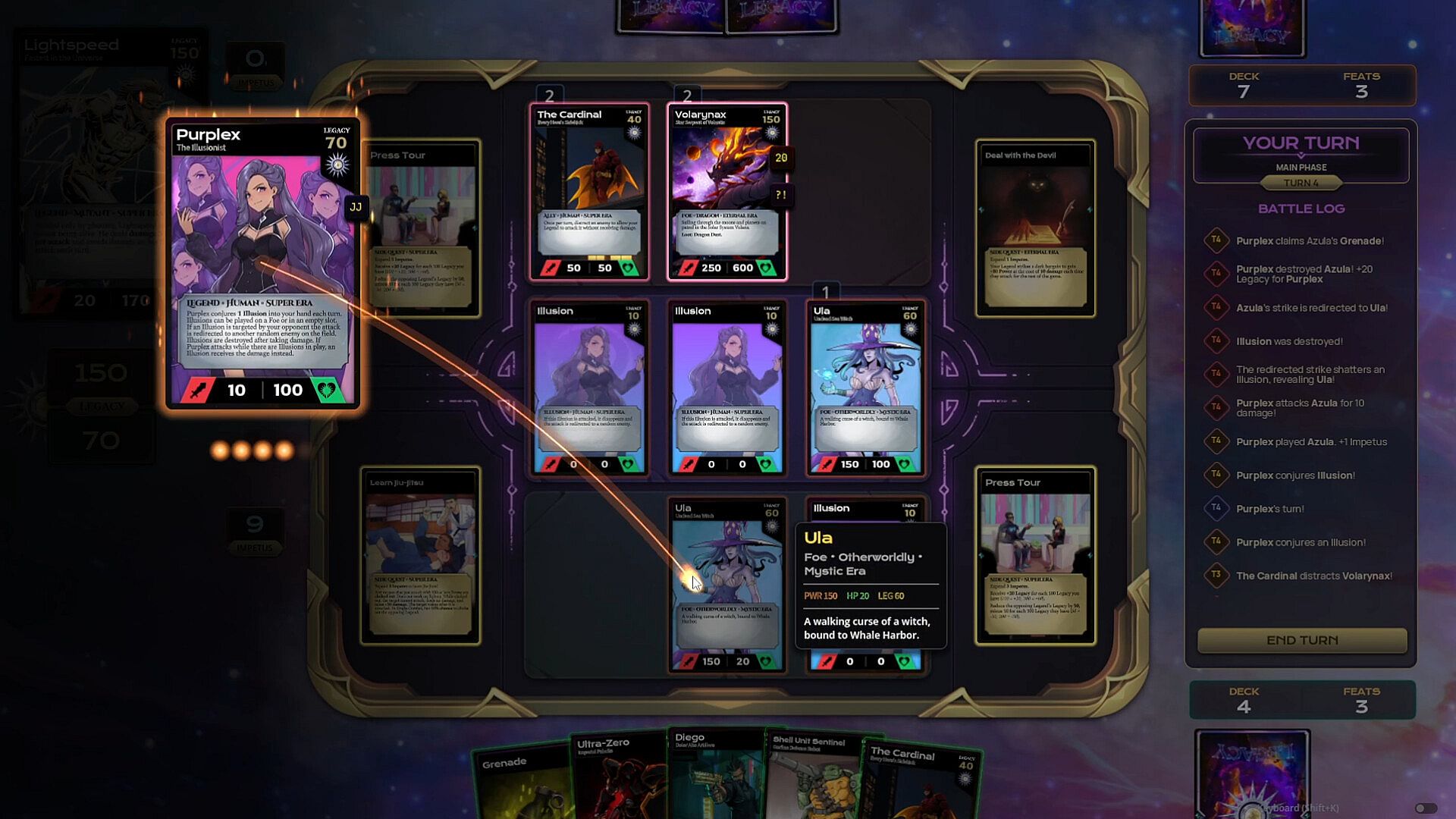
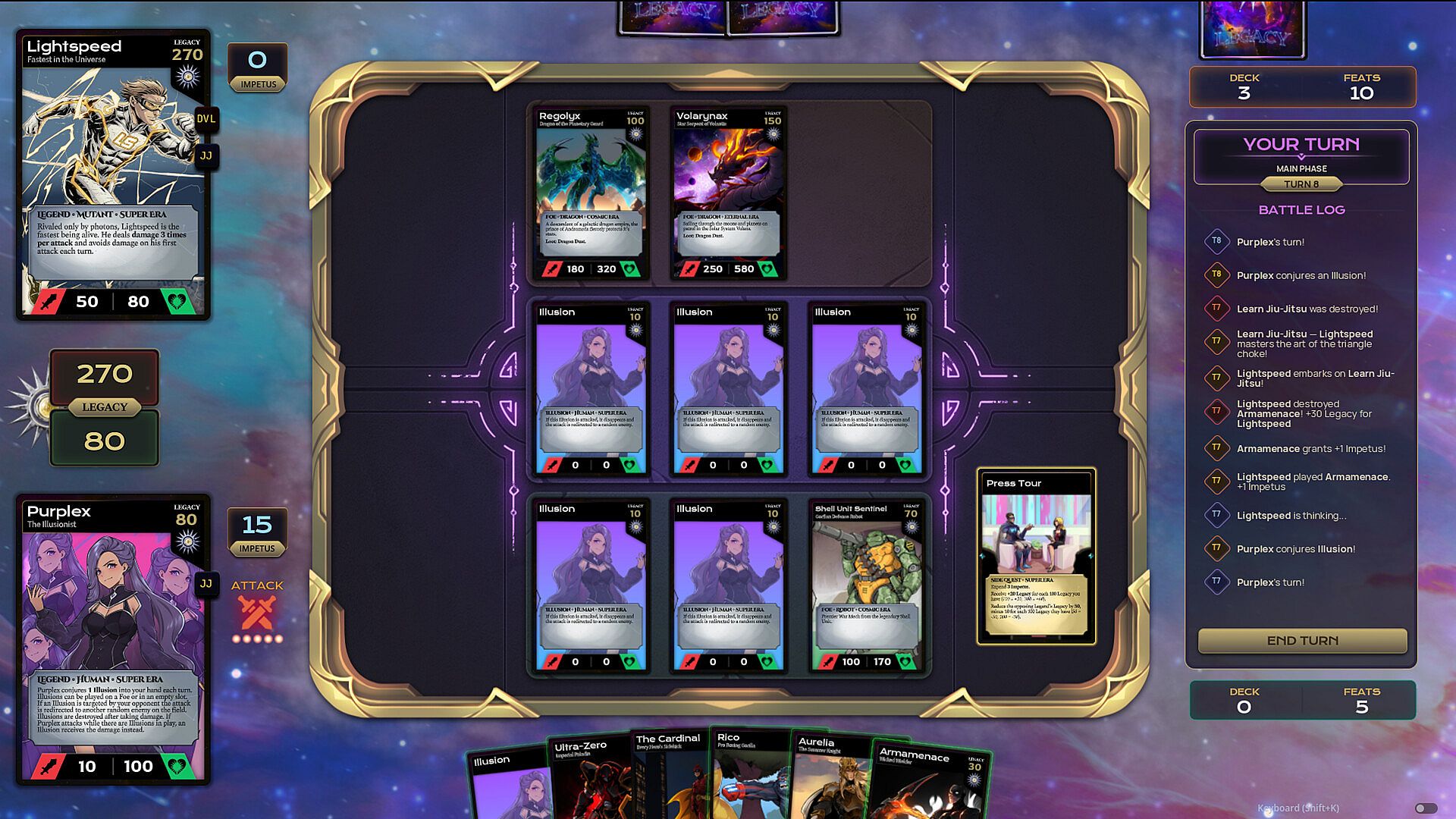
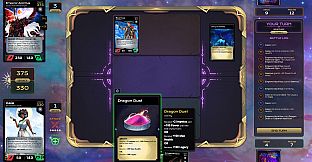
The core loop centers on an open field where every card played becomes a potential target for either player. Each participant controls one Legend that starts on the field and stays there throughout the match. Legends attack Foes placed by either side to earn Legacy points, augments, and loot. Impetus serves as the main resource, generated at one per turn plus one for each Foe added to the field. This resource powers attacks into contested areas, Side Quest completion, Ally deployment, and most ability cards.
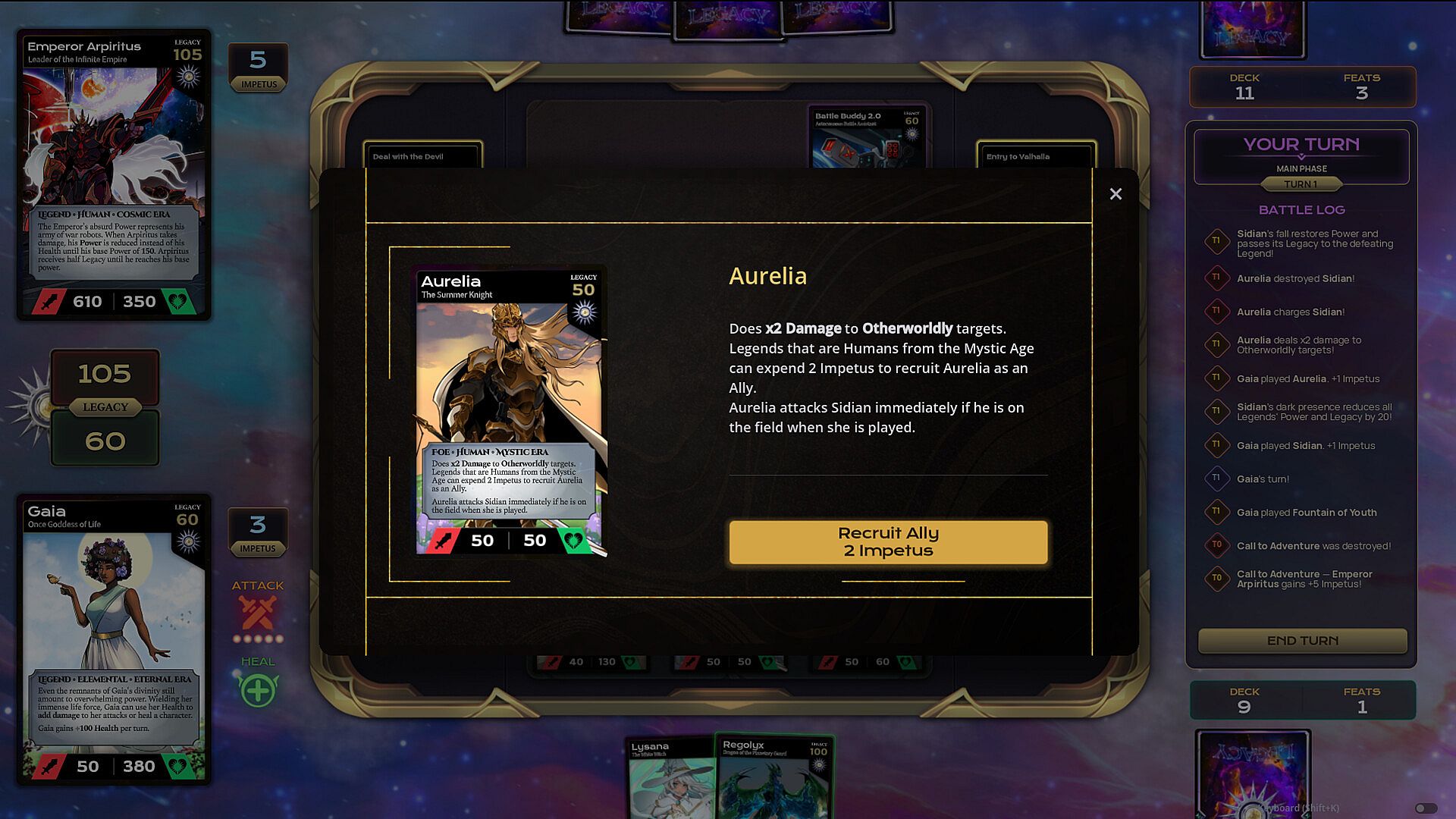
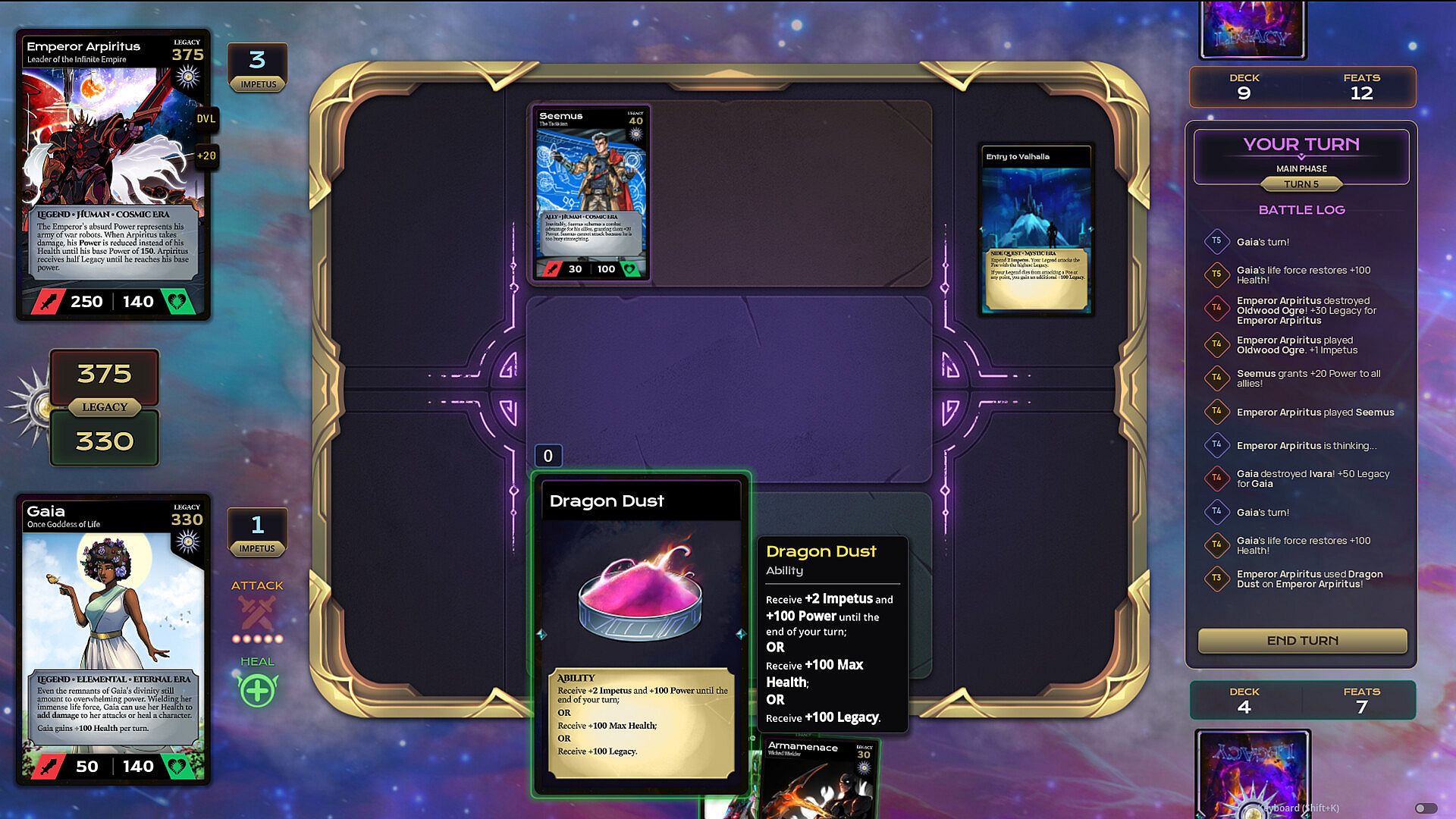
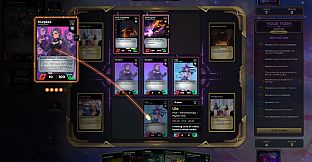
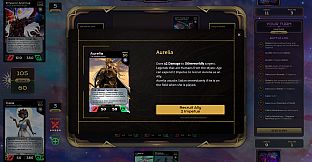
Foes form the bulk of most decks and can be played anywhere on the field. They provide the primary path to Impetus and Legacy while often carrying abilities or loot drops. Allies enter only in the allied territory row and strike at Foes or opposing Allies without costing Impetus to attack, though they require Impetus to play. When an Ally defeats a Foe, the controlling Legend receives only half the Legacy value. Side Quests enter the field automatically upon draw and activate the same turn, offering effects that strengthen a Legend, hinder the opponent, or alter field conditions. Any player can complete a Side Quest on the field, which creates opportunities for disruption.
Matches continue until at least one Legend falls. If both Legends remain after all Foes from both decks are defeated, the game shifts to Single Combat, a direct confrontation between the two Legends that decides the winner.
Game Modes
The primary experience is a head-to-head format built around the open-field rules described above. Players construct decks using four card types and engage in matches that reward strategic Foe placement to gain advantages while denying resources to the opponent. Side Quests add layers of interaction because either Legend can claim them, turning potential opponent advantages into personal gains when timed correctly.
Deck construction emphasizes balance among Foes for Legacy generation, Allies for support and disruption, and Side Quests for situational power. The format encourages experimentation with cards that interact across territories, since attacks can target any eligible Foe or Ally regardless of who played it.
Deck Building and Strategy
Successful decks focus on Foes that generate Impetus efficiently while presenting difficult targets for the opponent. Legends with strong abilities or high stats anchor each build and determine viable strategies for attacking across the field. Side Quests that shift momentum or provide lasting buffs reward players who anticipate opponent moves and leave critical effects exposed.
Ally placement requires timing because these cards occupy allied territory and can be attacked directly, potentially handing Legacy to the opponent upon defeat. The interplay between personal Foes and opponent-placed threats creates constant decision points about which targets to prioritize each turn.
Is It Worth Playing?
Legacy: The Card Game suits players who enjoy strategy card games with direct interaction and resource management. Its free-to-play model and straightforward rules make it accessible for those new to the genre while offering depth through the open-field targeting and Side Quest competition. The emphasis on building Legacy via shared targets and the possibility of Single Combat resolution gives matches a distinct rhythm compared with conventional card battles.
Those who prefer games where every card played affects both participants will find the mechanics rewarding. The focus on deck composition around Foes, Allies, and Side Quests supports repeated play as players refine approaches to outpace opponents in Legacy accumulation. As a casual strategy title on PC, it provides an entry point for gamers interested in tactical card play without upfront cost.