


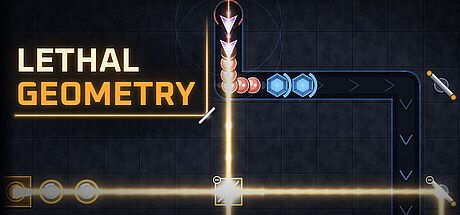


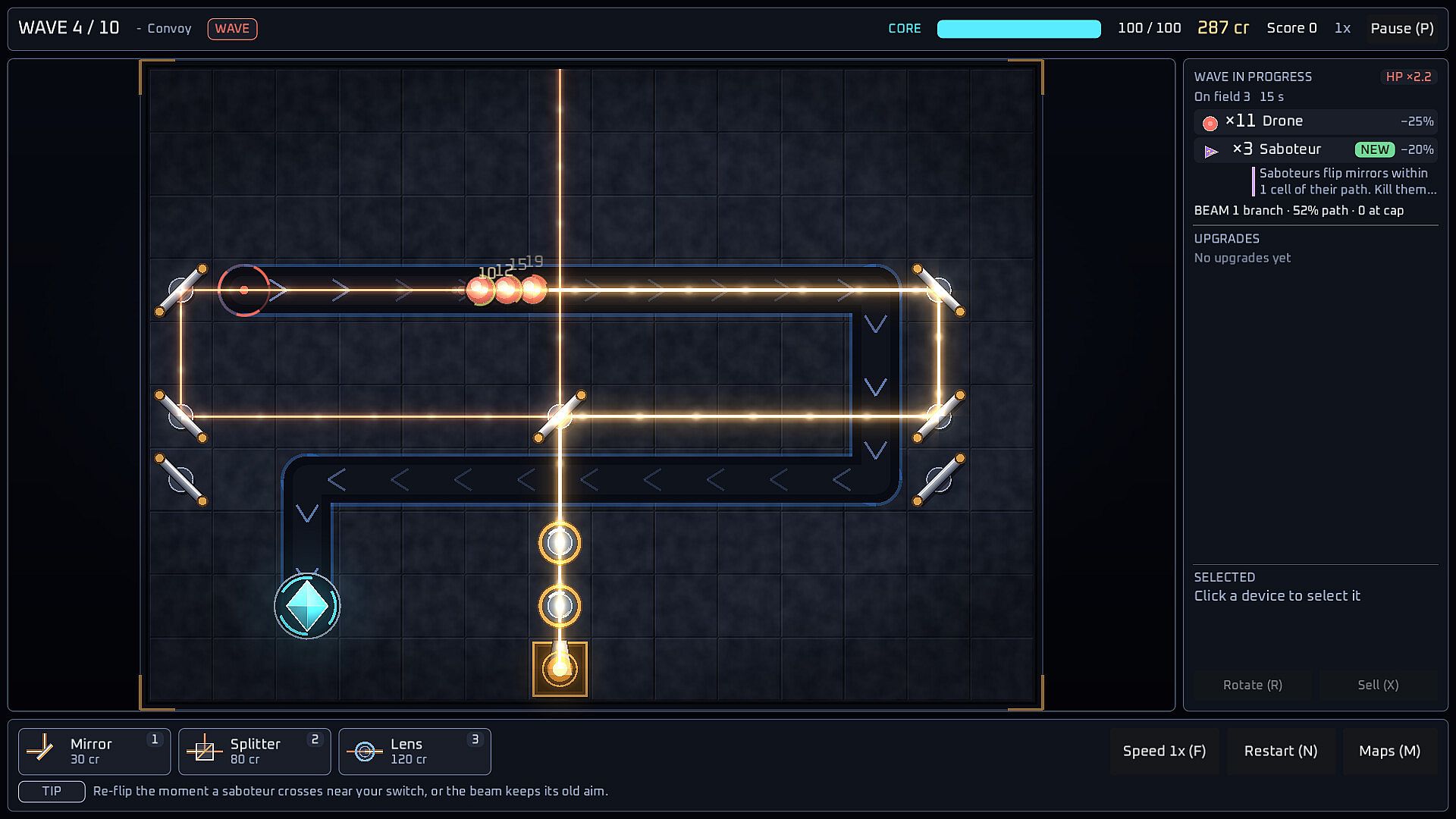
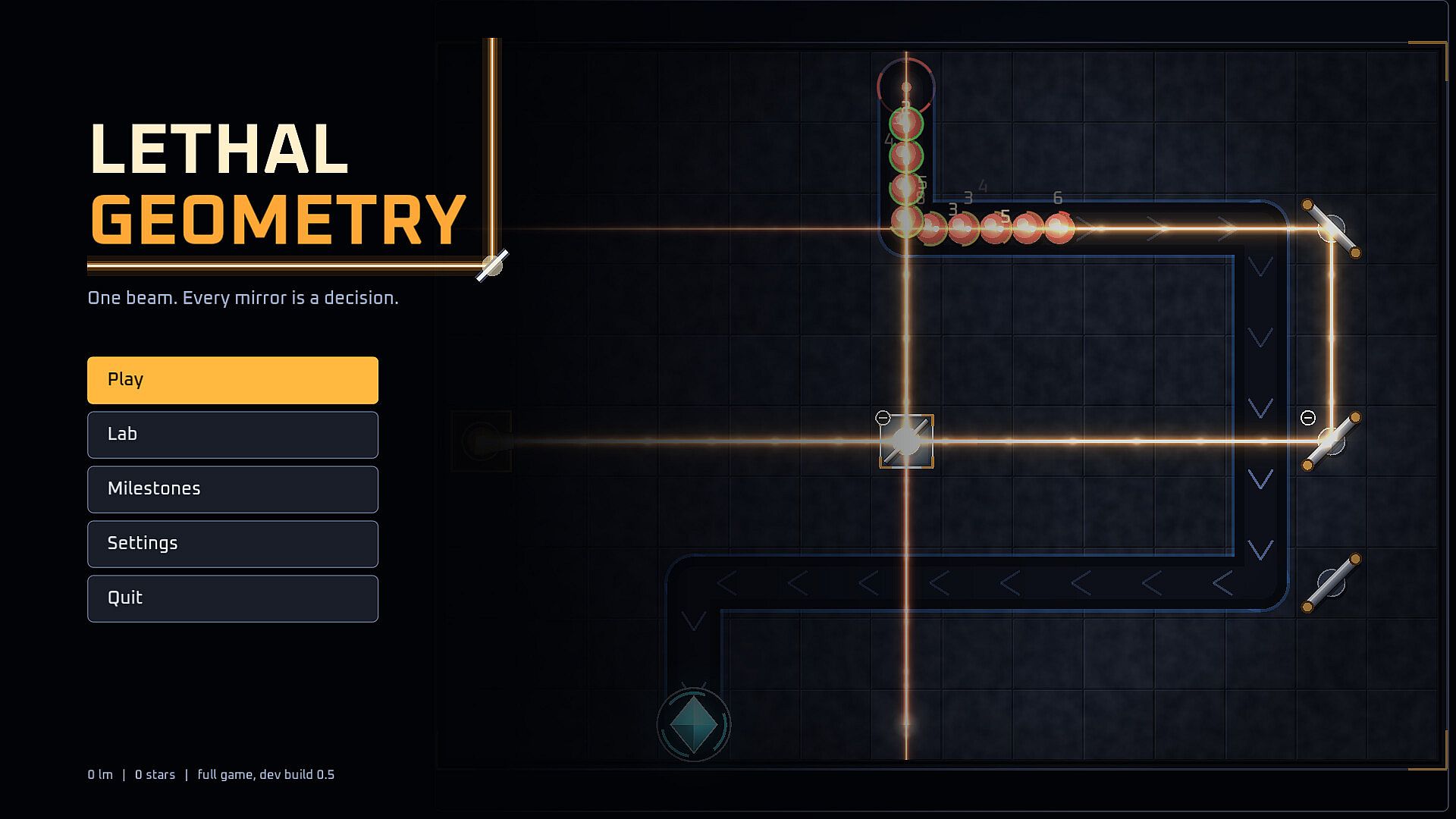
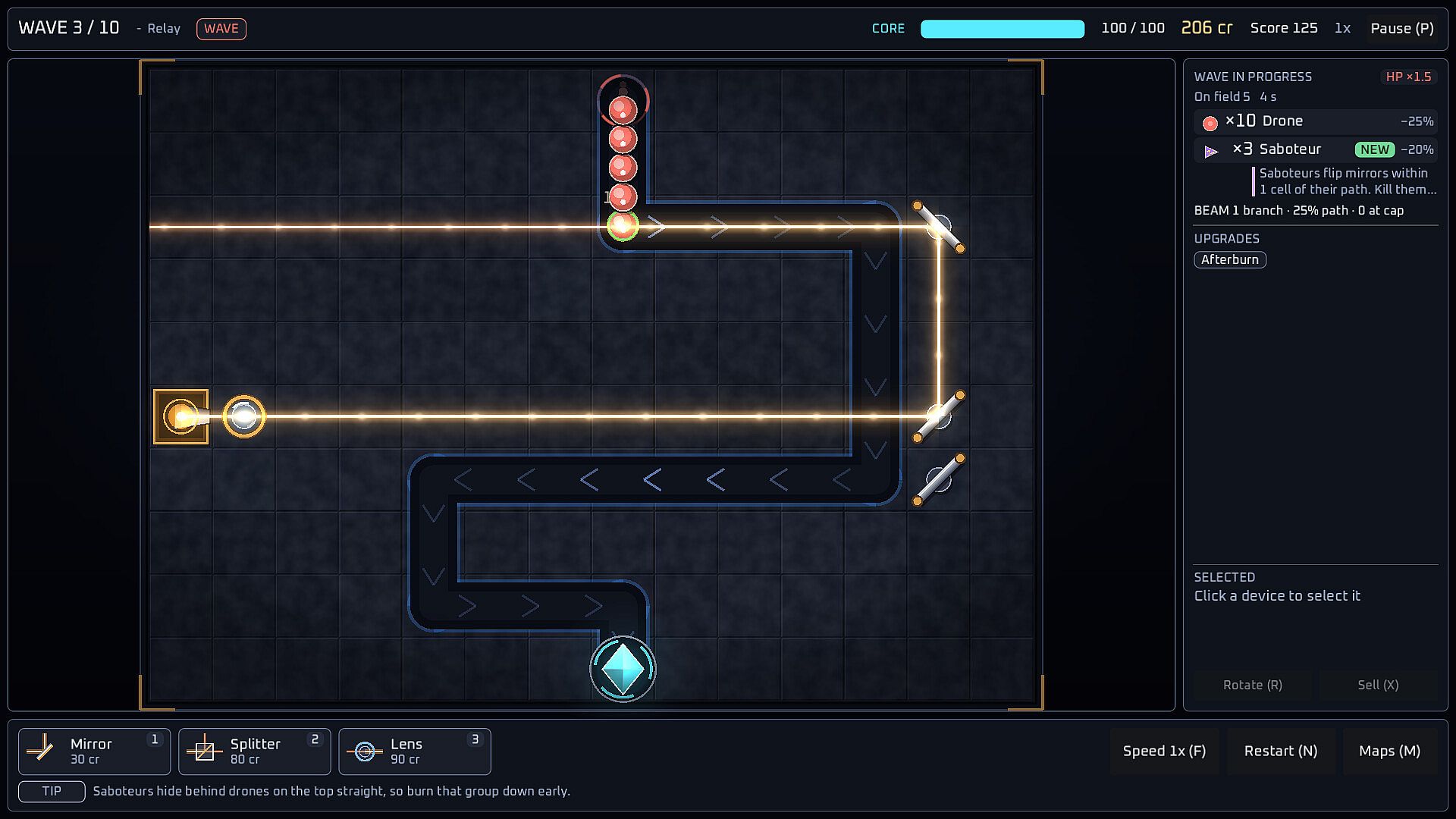
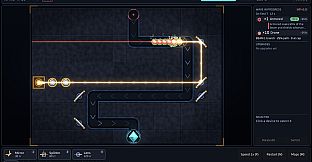
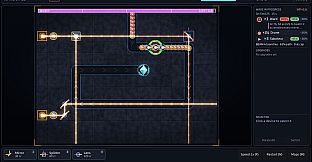
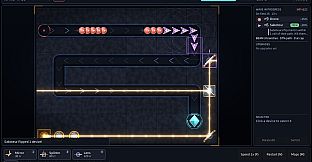
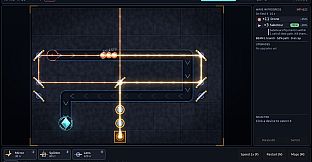
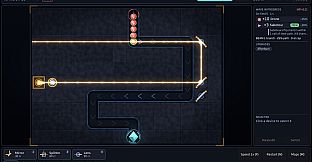
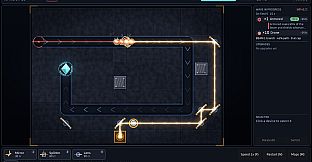
Lethal Geometry is a singleplayer action strategy simulation game for Windows PC that centers on routing a single laser beam across handcrafted maps to stop advancing enemies. Players receive a laser emitter and a limited budget, then position mirrors, splitters, and lenses to direct the beam along enemy paths. The beam itself delivers damage, so placement decisions determine coverage and effectiveness rather than any static defensive structures.
Gameplay
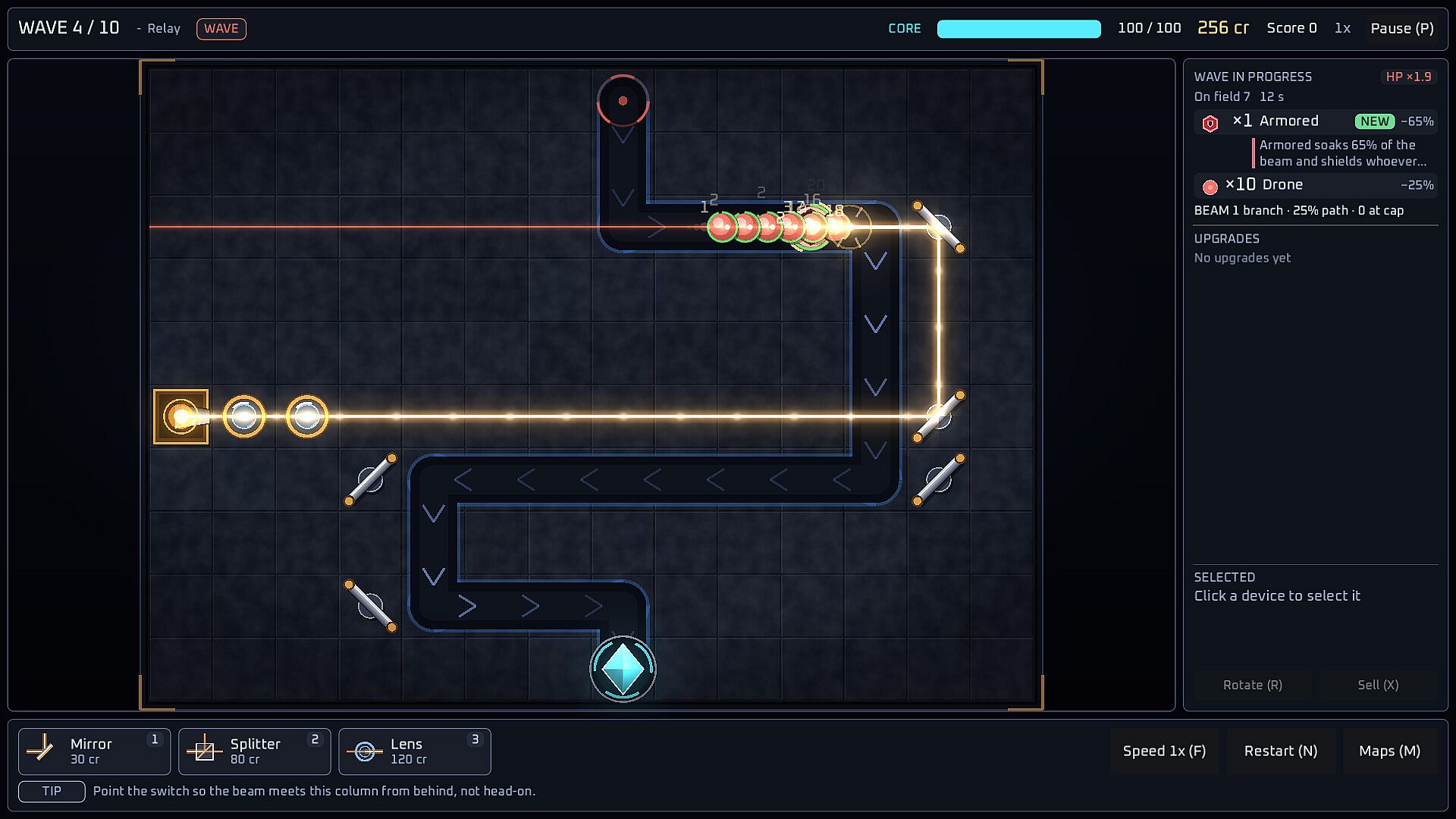
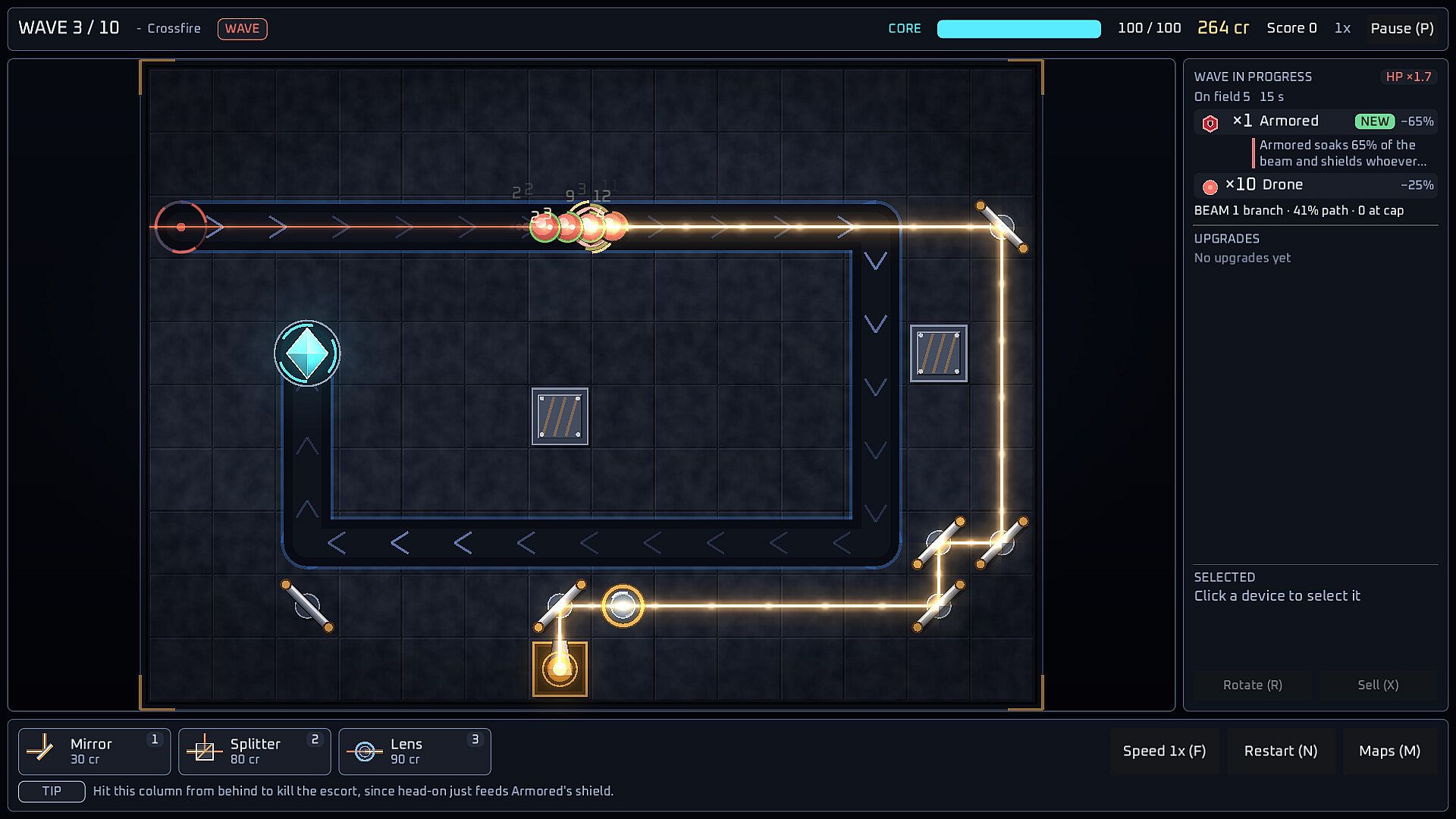
The core loop revolves around managing beam power as it travels. Each enemy the beam encounters reduces its strength, with drones weakening it modestly and armored hulls absorbing most of the energy while shielding units behind them. Mirrors pass losses forward without recovery, while lenses and targeted upgrades restore power. Strategic choices include splitting the beam to strike columns from the rear, where escorts fall first, or accepting head-on hits that waste energy on shields.
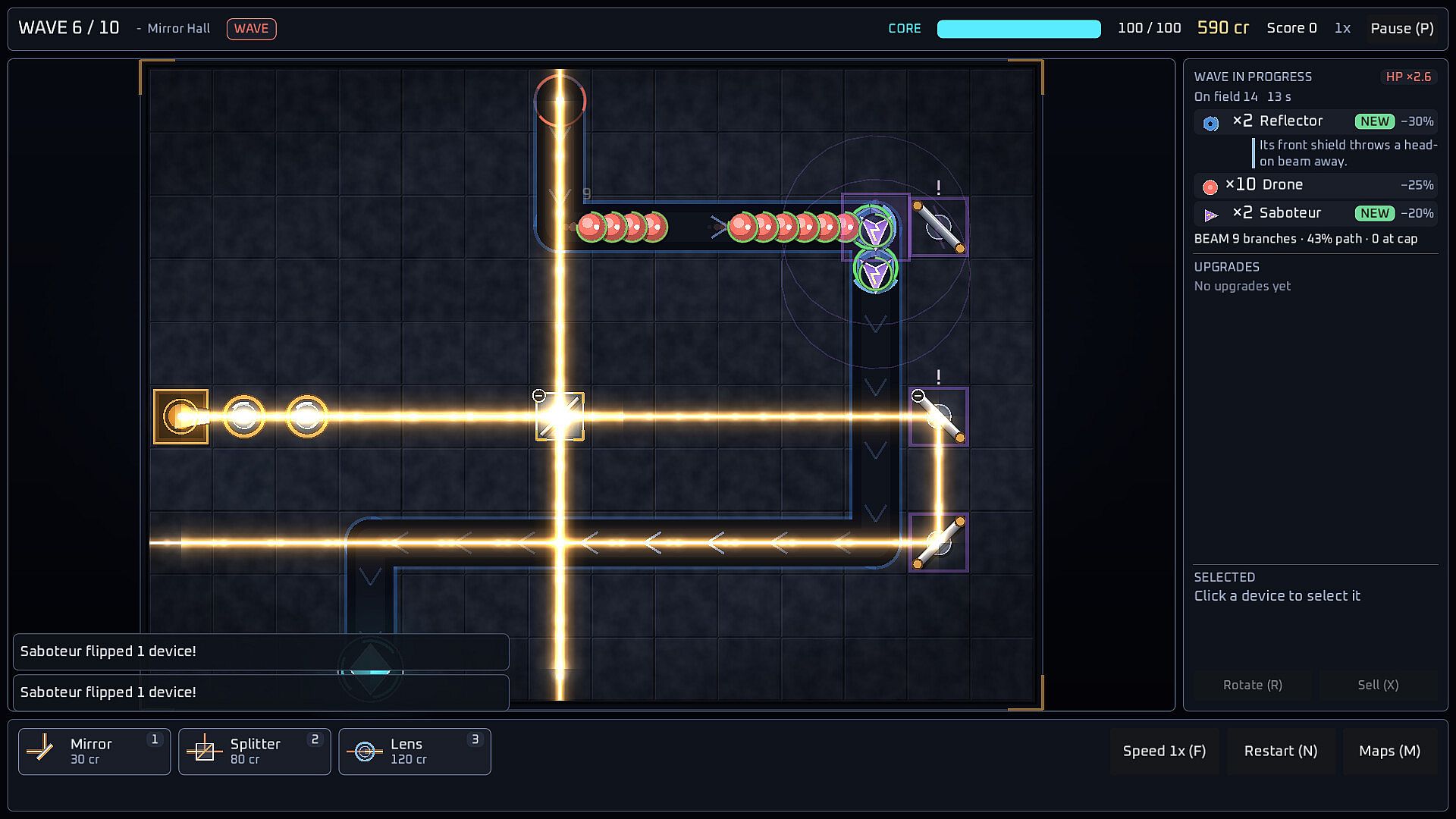
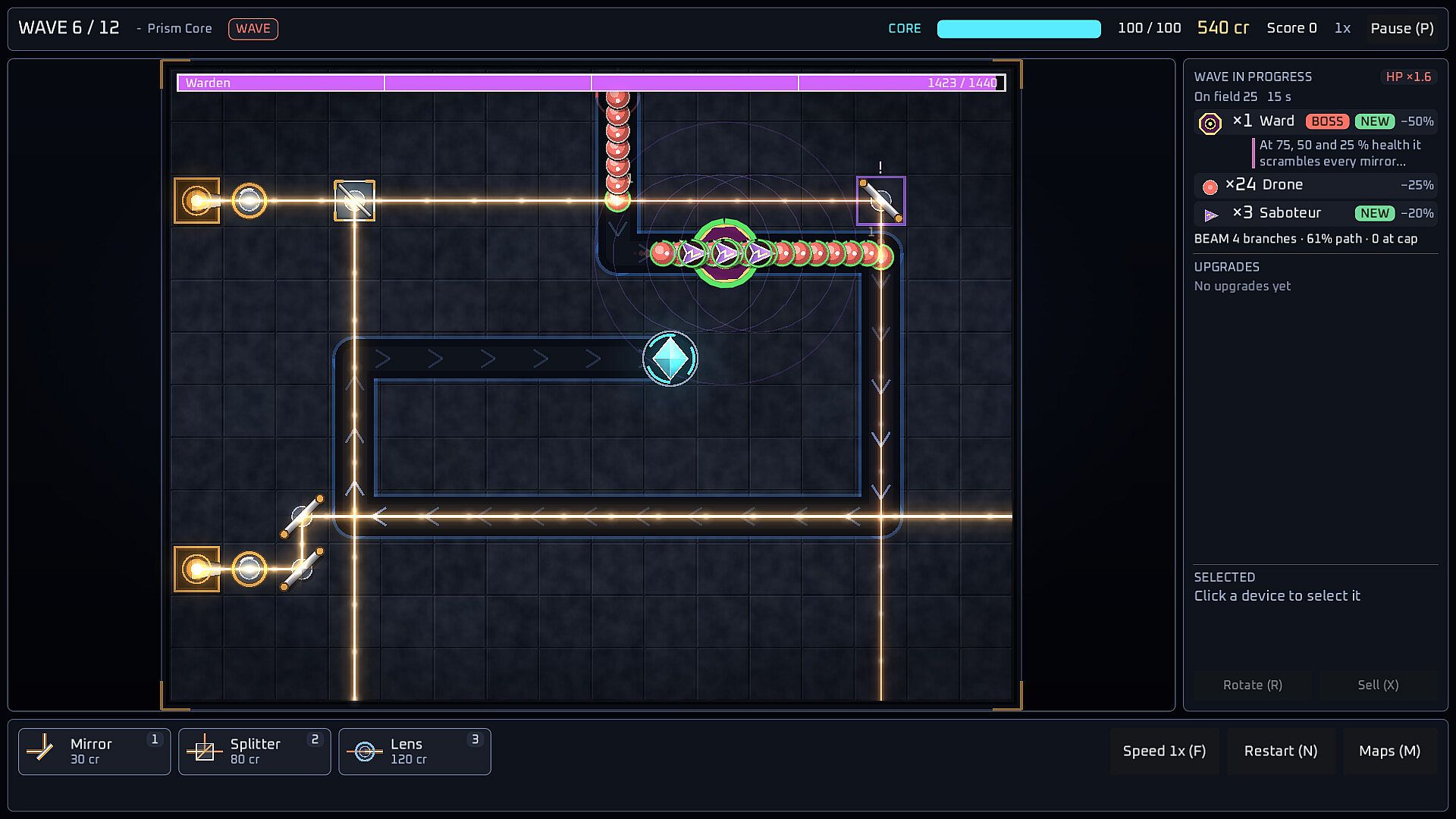
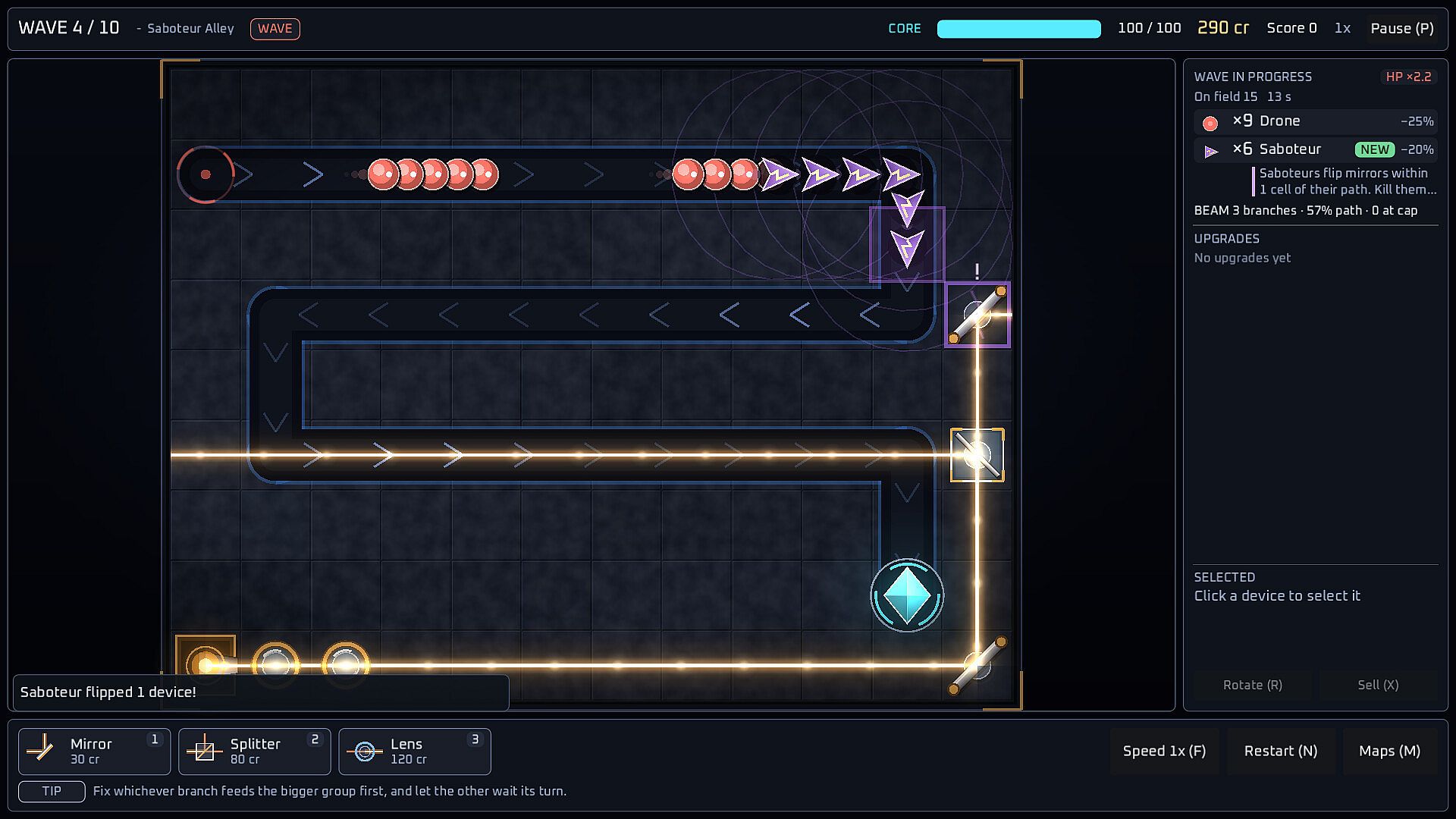
Builds remain flexible during waves. Players can place, rotate, or sell mirrors and splitters mid-wave to redirect the beam toward groups that change direction. Saboteurs passing near structures knock them out of alignment, encouraging either close placement for efficient routes or safer distant positioning. Reflectors deflect incoming beams, requiring side or rear attacks, while jammers consume entire beam branches. The Warden enemy scrambles nearby mirrors each time it loses a quarter of its health, adding dynamic disruption.
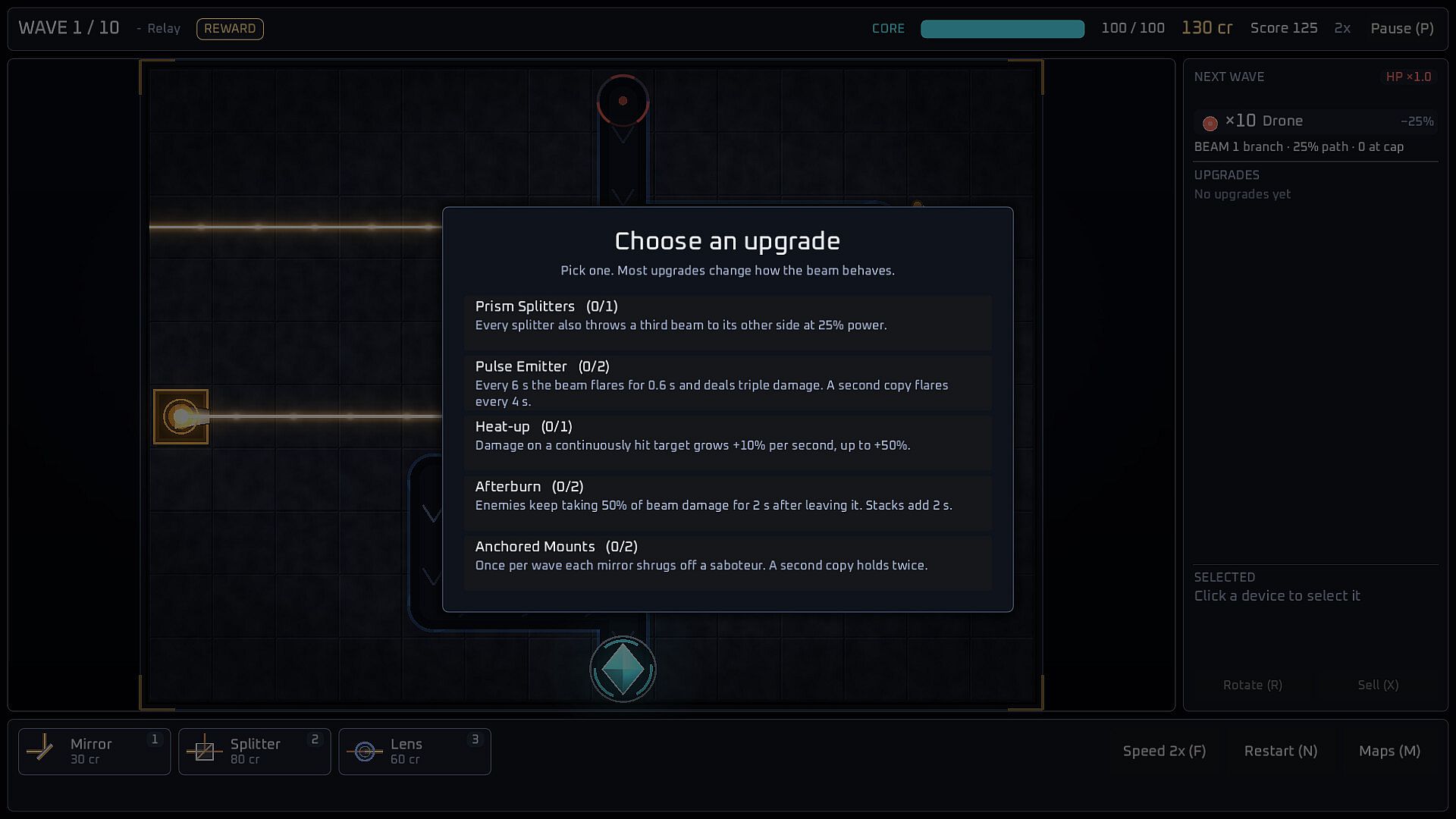
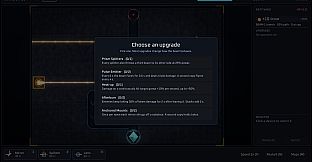
Between waves, a drafting system lets players select one upgrade from a pool of 24 cards that alter light behavior. Options include afterburn effects, arc chains, hot mirrors that gain power on bounces, reflective walls, and more efficient splitters. The Lab unlocks additional cards through play, and loadouts allow trading one advantage for another. Workshop perks and mutators further customize runs for higher scores.
Game Modes
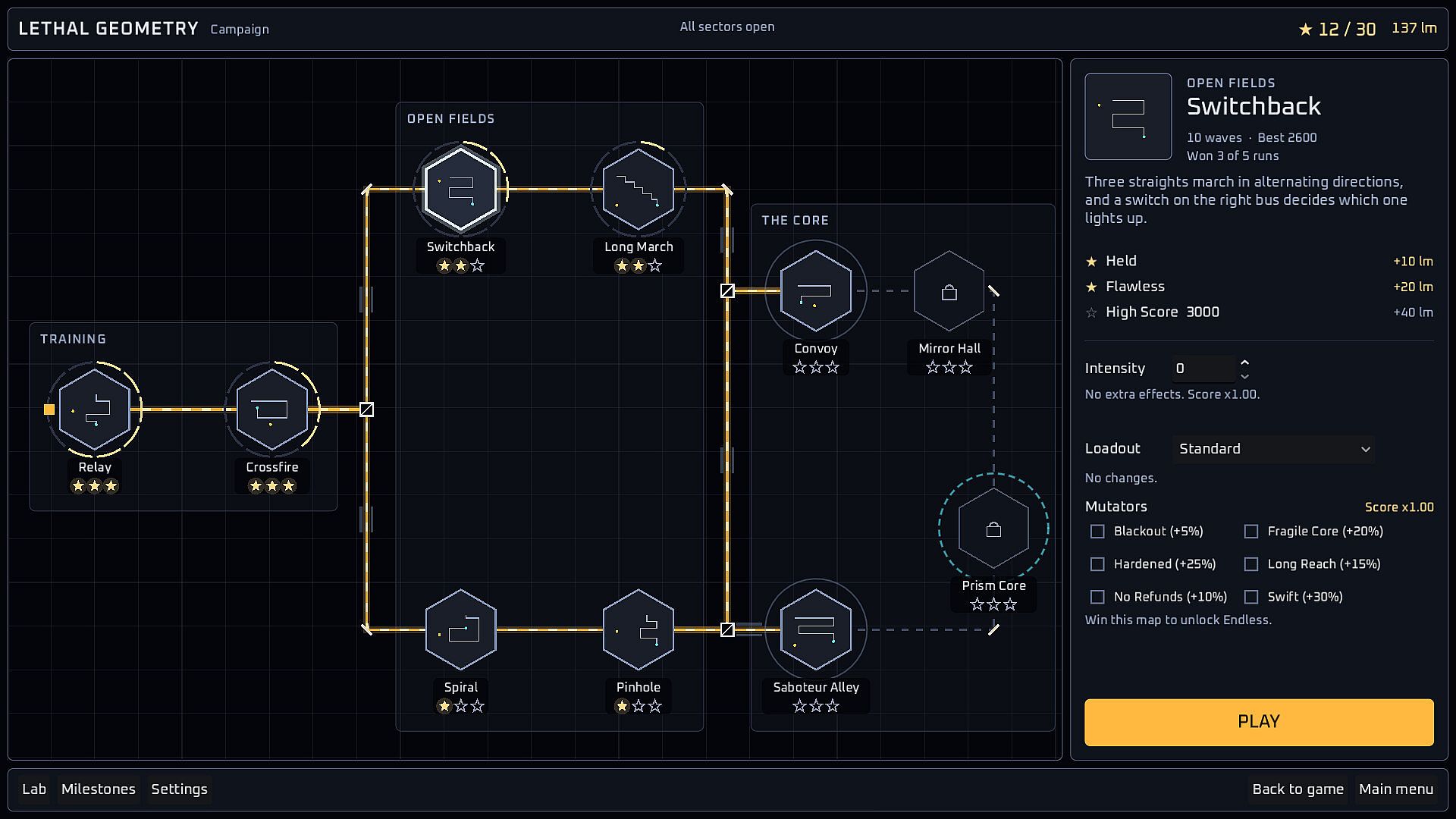
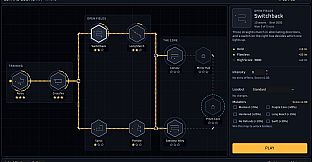
Ten handcrafted maps divided across three sectors present distinct optical challenges. Some feature blocks obstructing direct lines, others include walls with narrow gaps, fixed splitters combined with reflective surfaces, or finales that incorporate two emitters. Each map supports ten intensity levels with progressively tougher enemy waves that reward higher scores upon completion.
Endless mode becomes available on any cleared map. Players can restart with the same drafted upgrades or reshuffle the pool. Speed options range from normal to accelerated playback at 2x, 4x, or 10x. Every run, win or lose, generates lumens based on performance that fund Lab purchases and further customization.
Progression and Customization
Meta progression centers on the Lab, where lumens purchase new cards, loadout variations, and Workshop perks. Mutators stack on top for additional scoring challenges. Thirty-nine milestones track overall accomplishments across maps and intensities. The system encourages repeated attempts on the same maps with different beam configurations to optimize coverage and power retention.
Controls rely exclusively on mouse and keyboard with no controller support. The game runs on Windows and is presented entirely in English. No other platforms or input methods are available.
Is It Worth Playing?
Lethal Geometry suits players who enjoy precise planning and iterative optimization in a singleplayer setting. The absence of towers shifts focus entirely to beam routing and real-time adjustments, creating a distinct puzzle-like strategy experience within action and simulation genres. Replay value stems from the drafting system, map variety, intensity scaling, and endless options that let players test new combinations or push for better scores.
Those drawn to mechanics involving resource management through light propagation, enemy-specific weaknesses, and mid-wave reconfiguration will find consistent depth across the ten maps and their intensity tiers. The fixed controls and platform requirements keep the experience streamlined for mouse-and-keyboard users seeking focused sessions rather than broad accessibility features. Overall, the verified systems deliver targeted replayability for fans of geometry-based defense without extraneous elements.












