


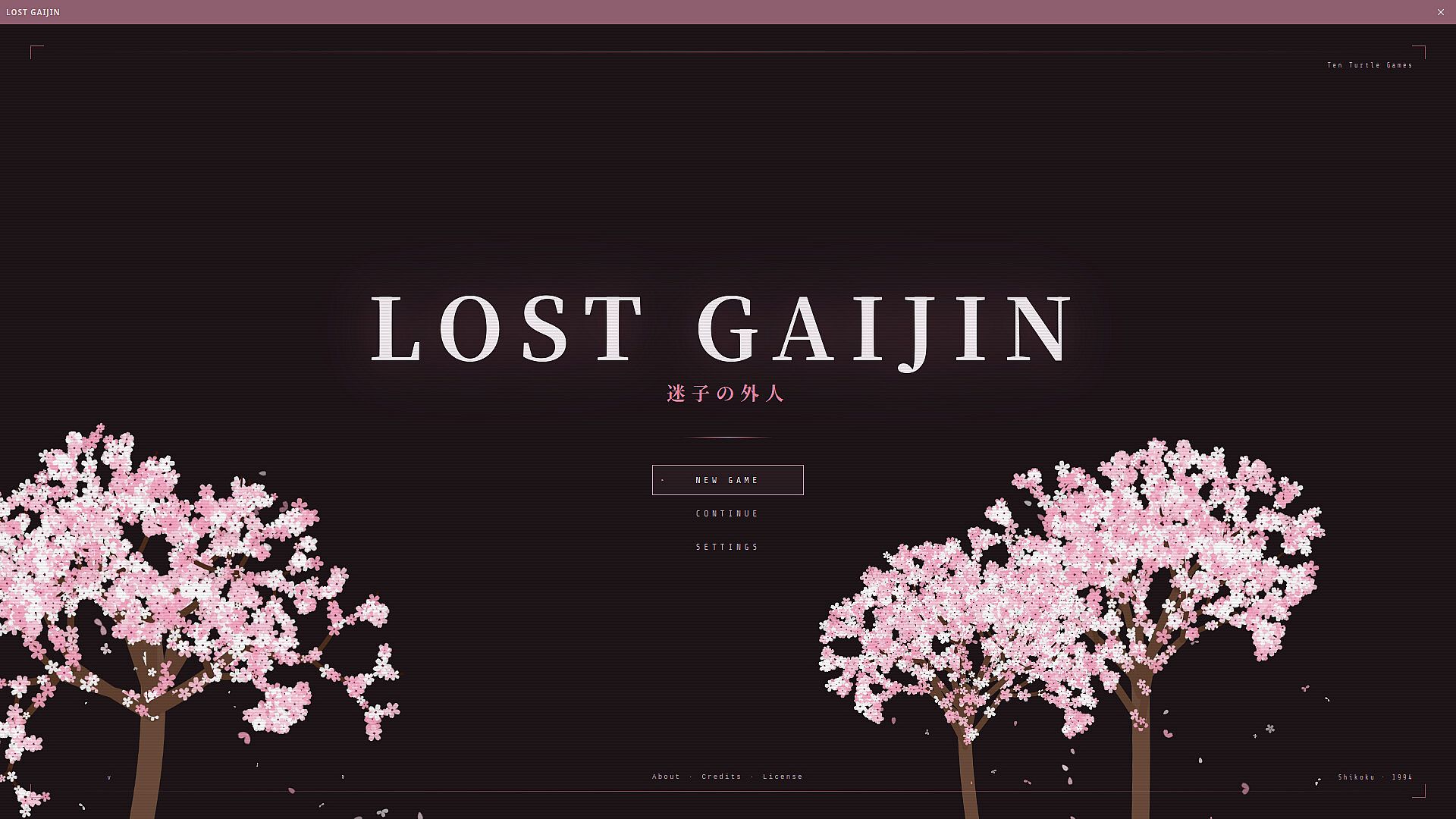







Lost Gaijin is an indie RPG adventure simulation for PC that blends text-based exploration with Japanese language learning inside a detailed recreation of 1994 Japan. Players begin as a traveler arriving in rural Japan carrying limited yen, a paper address, and minimal language skills, then navigate daily life through open-ended text input that drives the narrative forward.
Gameplay
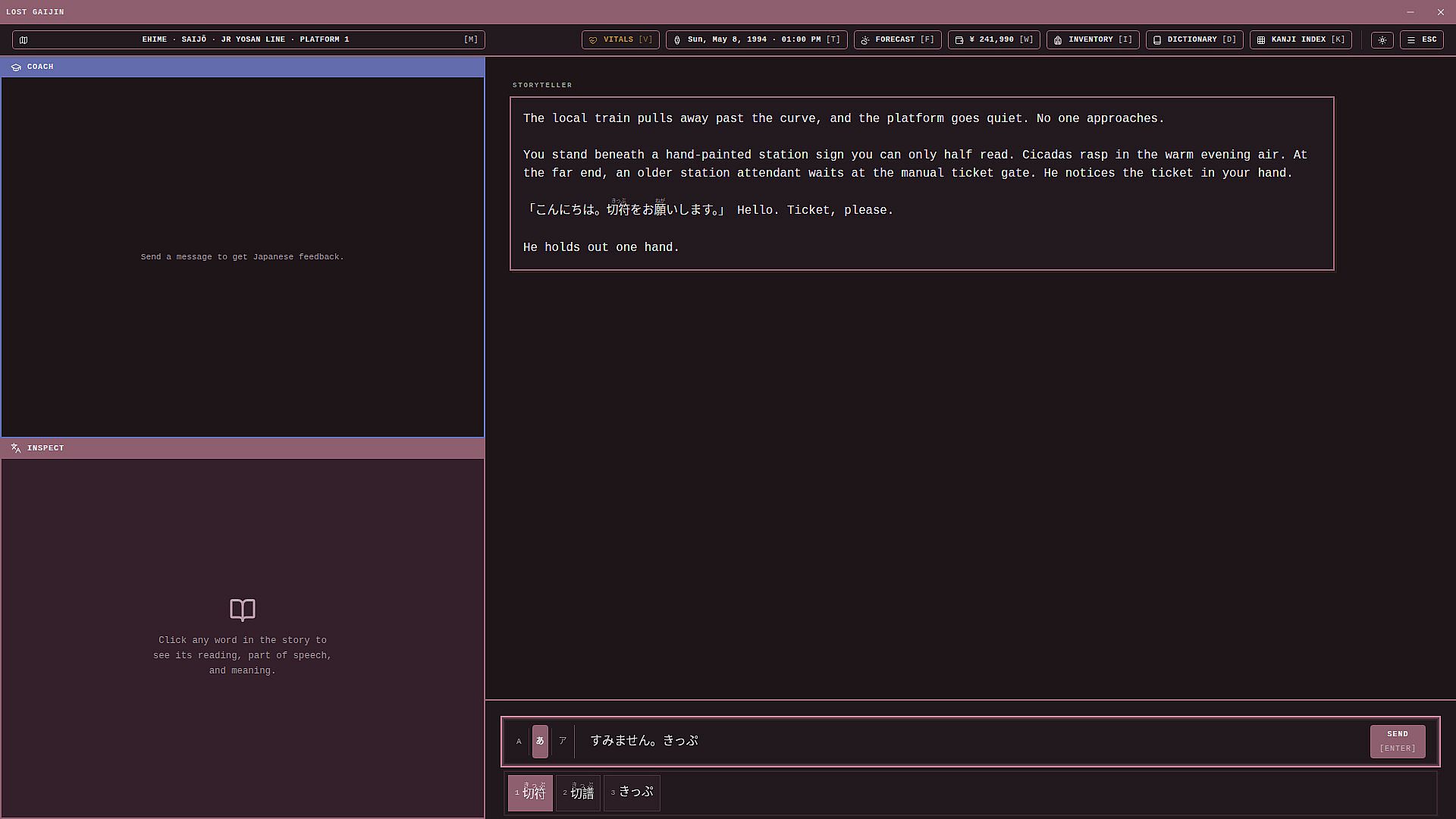
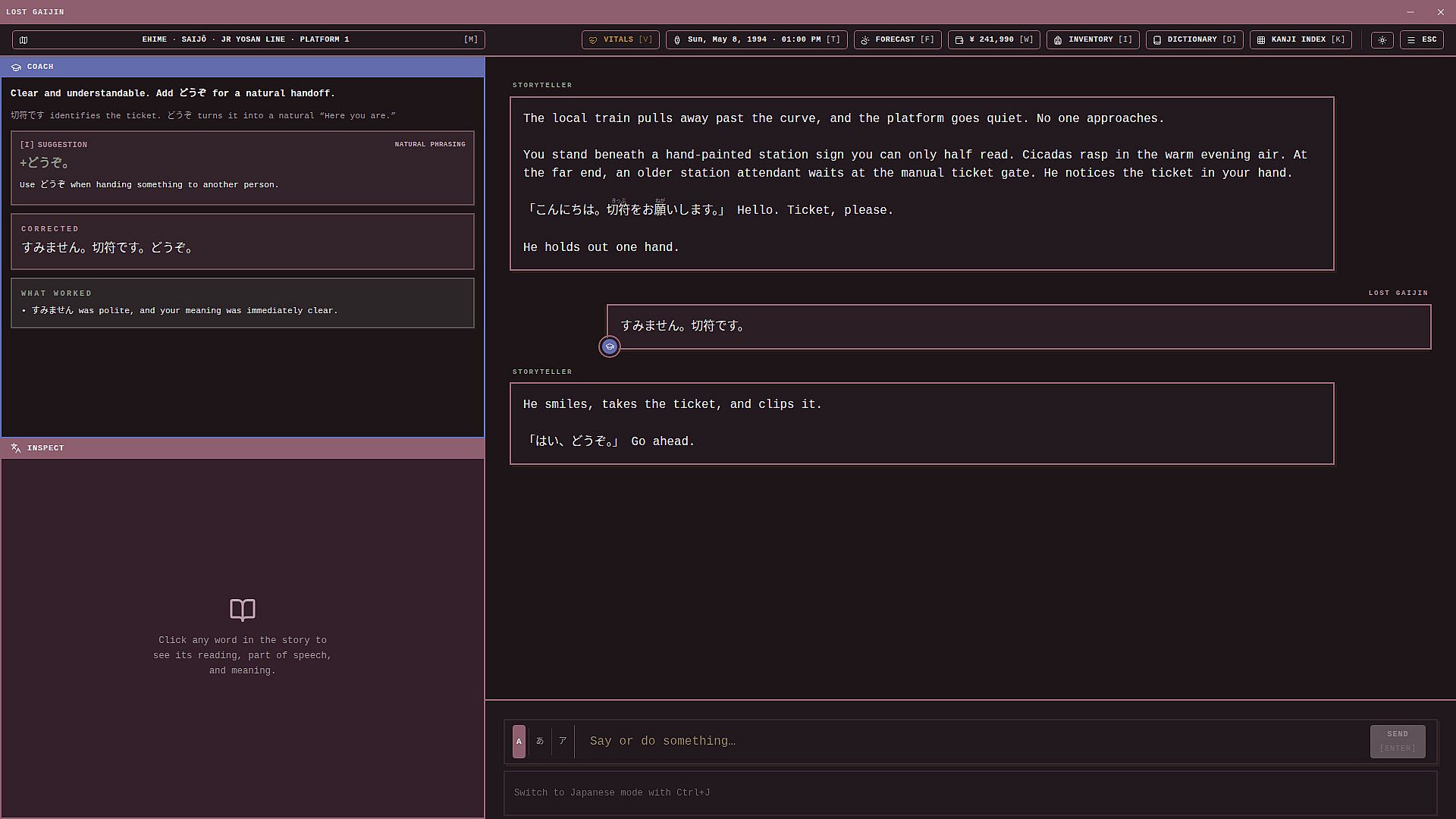
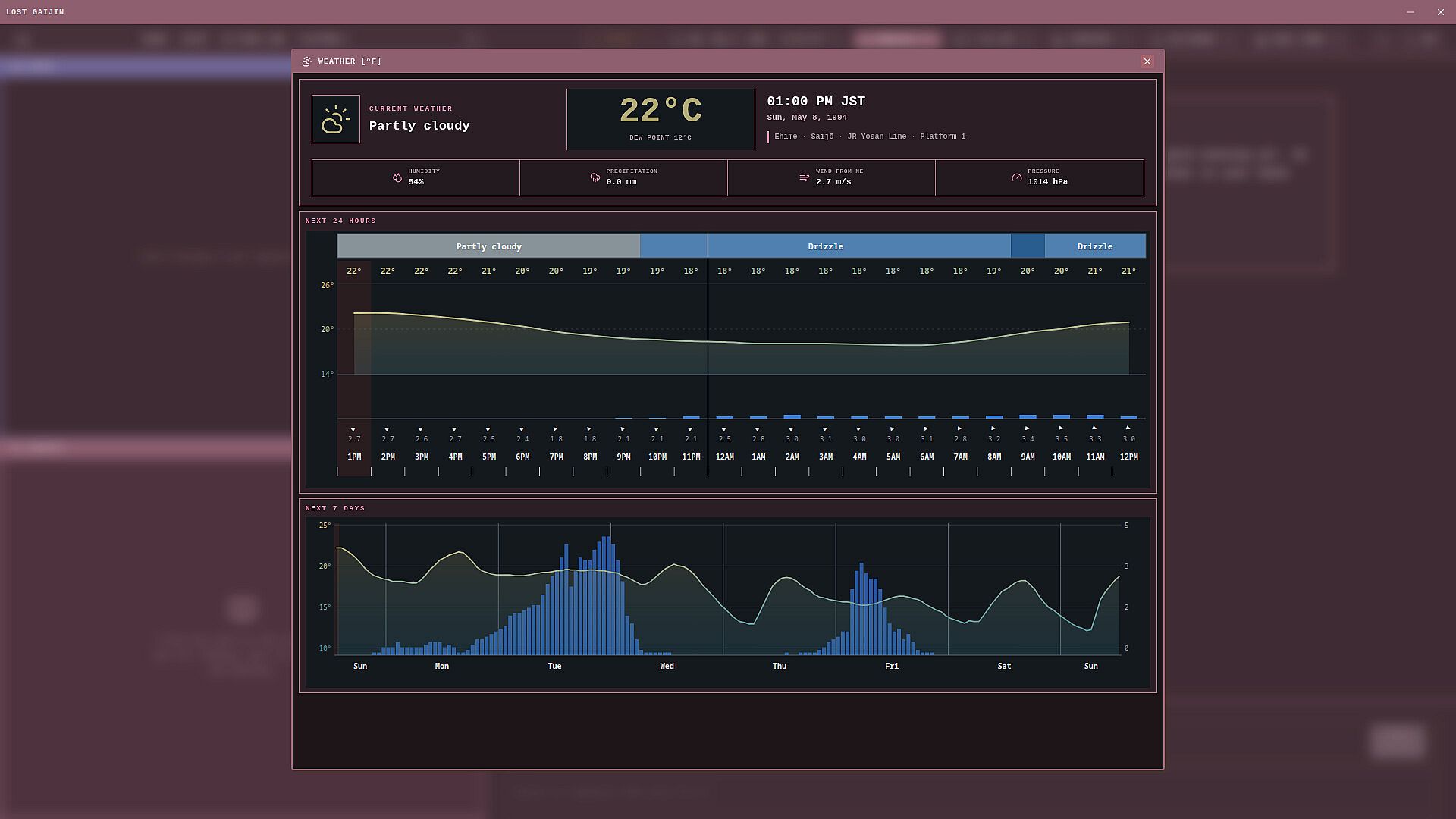
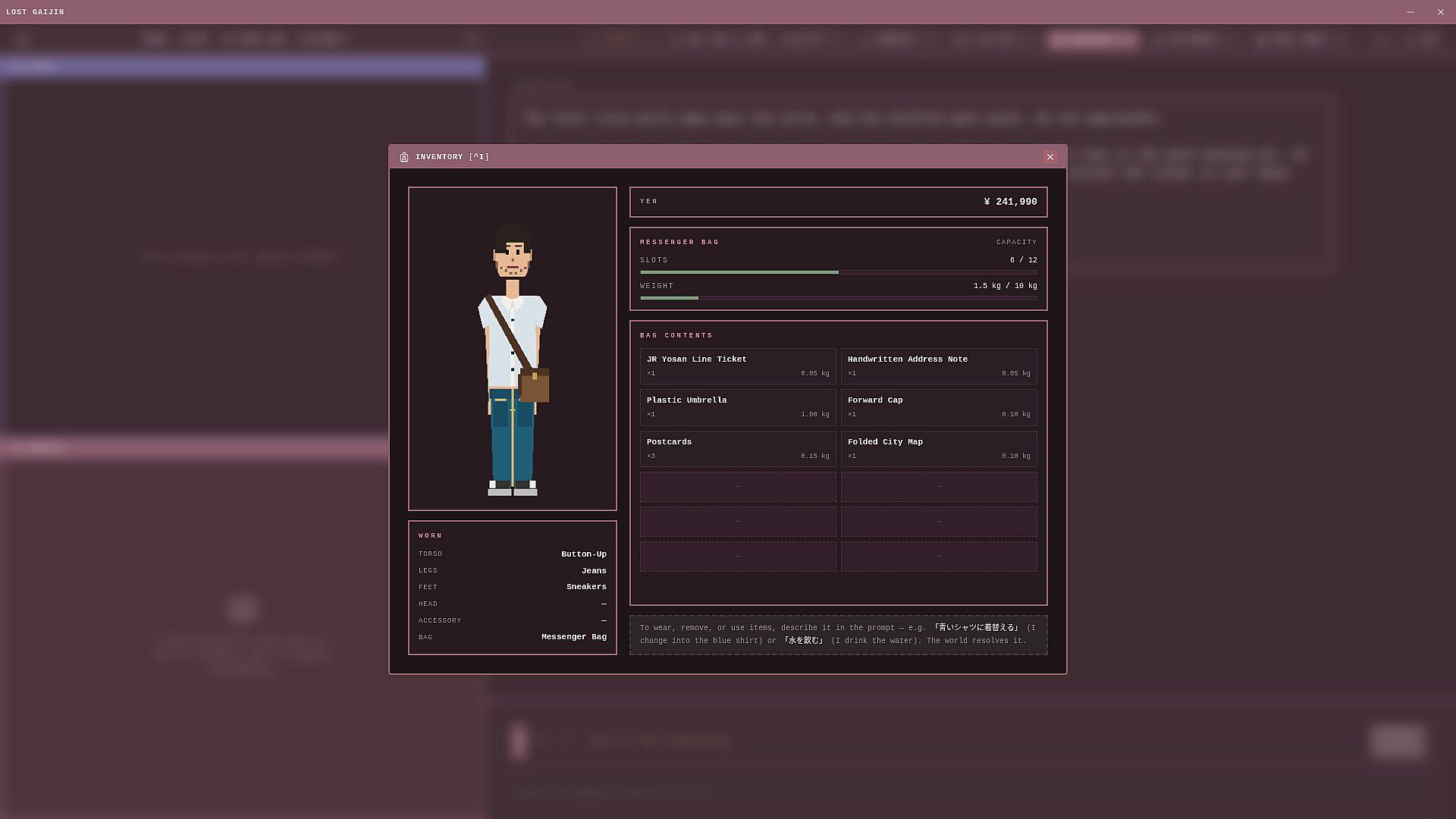
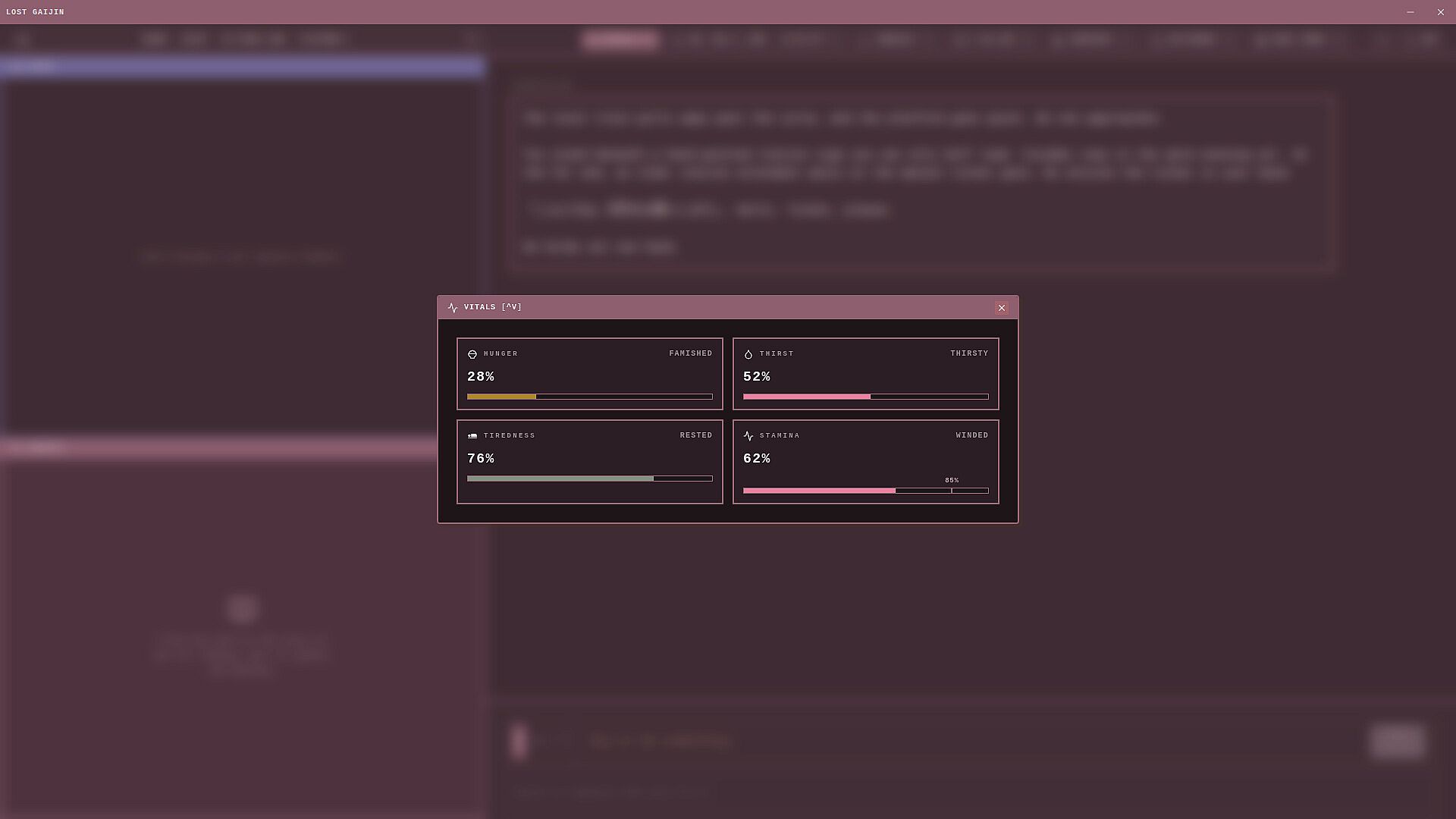
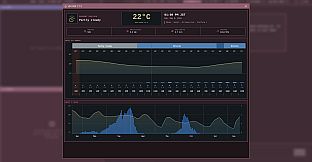
The core loop centers on typing responses to situations that arise naturally in the world. A station attendant might request a ticket, a shopkeeper could discuss prices, or a local resident might offer directions. The system interprets any input, whether starting in English and gradually incorporating Japanese or attempting full sentences from the start. Needs like hunger, thirst, fatigue, and energy levels shift with the in-game clock, while weather drawn from historical records influences travel and comfort. Inventory management tracks limited bag space and item weight, and every expense or earning logs into a personal record. Character creation lets players select appearance and assemble period-appropriate clothing that interacts with environmental conditions during movement across the country.
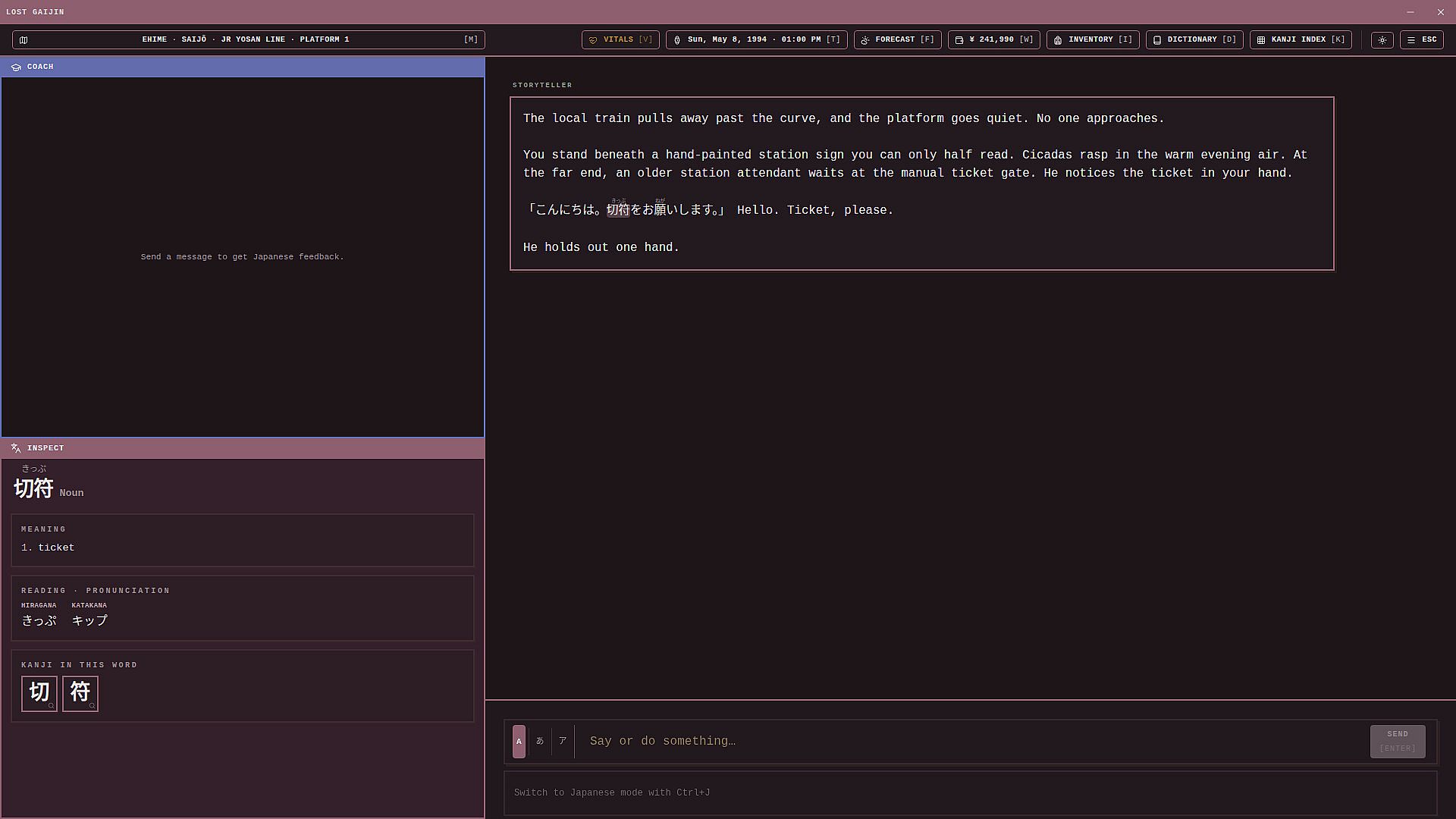
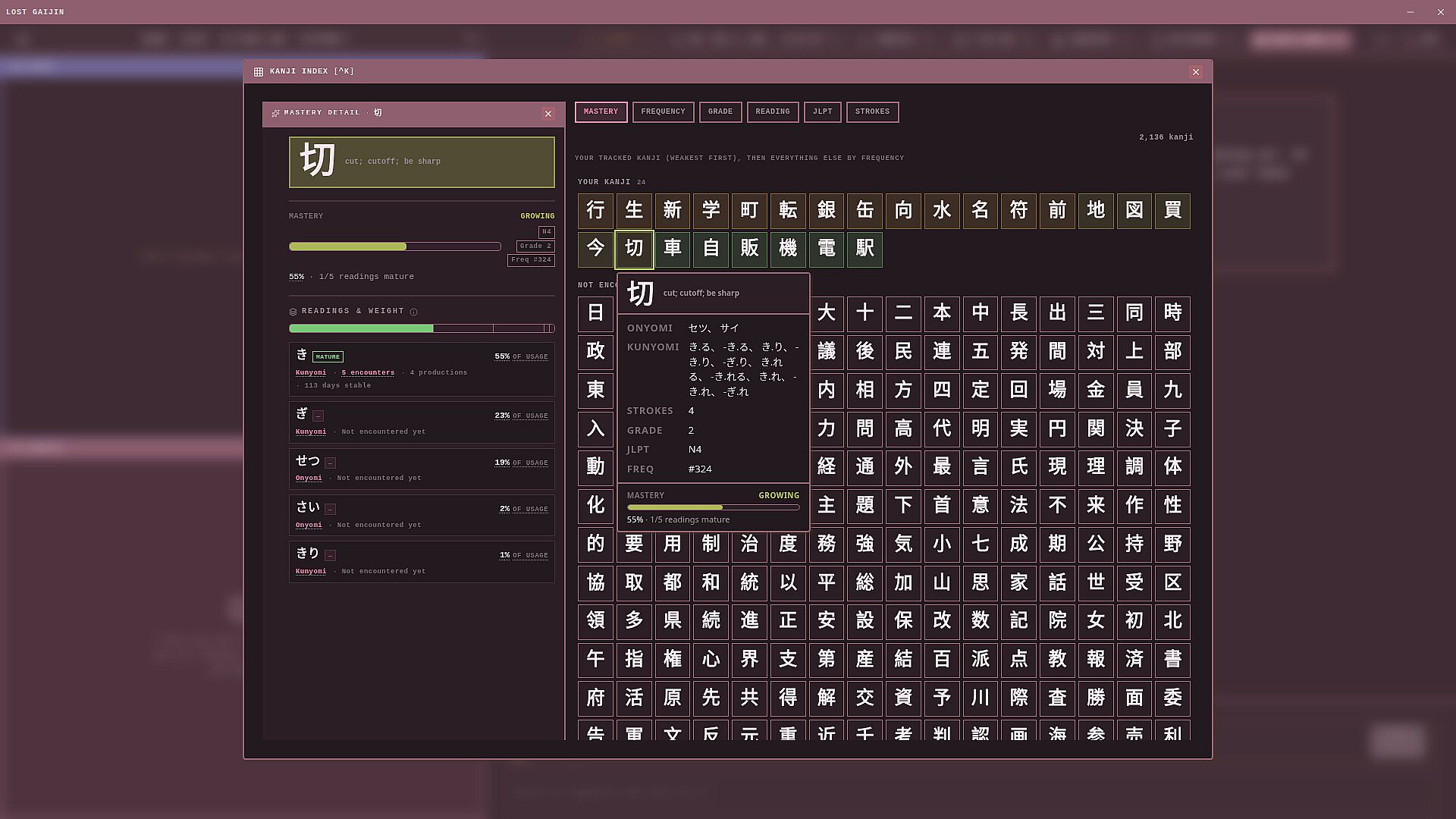
Language support integrates directly into these actions. An offline dictionary with hundreds of thousands of entries allows quick lookups without pausing the flow. Human-recorded audio pronunciations accompany entries, and a word inspector displays readings, meanings, grammar notes, and conjugations on demand. A built-in input method converts romaji to kana and kanji, or players can use external Japanese IMEs. Spaced repetition tracks every kanji encountered, adjusting review timing based on correct or incorrect use, with separate tracking for different readings of the same character.
Game Modes
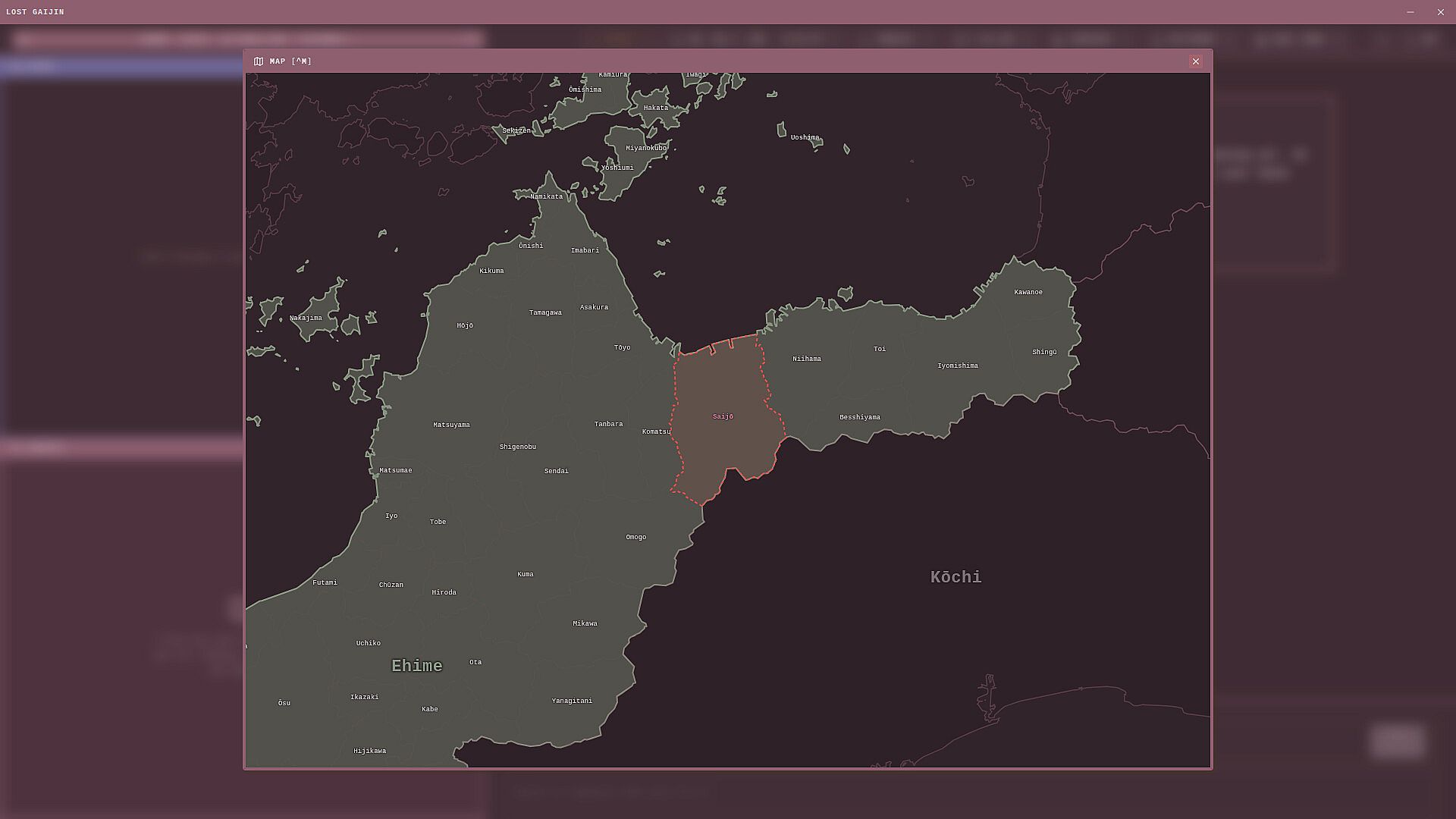
The experience operates as a single persistent simulation rather than offering distinct named modes. Each save file maintains its own independent world state, including travel progress, language acquisition records, finances, clothing choices, and inventory. Players select language models for the narrative driver and the feedback system, or rely on default settings tuned for the setting. Travel occurs through descriptive commands that respect real geographic connections between locations, covering all prefectures and thousands of municipalities based on 1995 boundary information. No branching dialogue trees or predetermined paths exist; outcomes emerge from how the simulation responds to player attempts.
Exploration and Daily Life
Movement across Japan forms a central part of progression. Players describe intentions such as boarding a specific train line or walking in a chosen direction, and the system handles routing along authentic connections. Seasonal and hourly weather patterns affect physical state and require appropriate preparation. Self-care extends beyond basic stats to practical decisions about rest, meals, and purchases that accumulate into the ongoing personal story. Limited carrying capacity encourages thoughtful packing, as items serve functional roles during journeys or interactions.
Is It Worth Playing?
Lost Gaijin targets beginner and intermediate learners who already recognize hiragana and katakana. The combination of contextual language practice, immediate coaching on phrasing, and a living spaced-repetition system tied to actual use makes it suitable for those seeking an alternative to traditional study methods. The single-player format and persistent saves support repeated sessions focused on gradual improvement without external pressure. Those drawn to open-ended text adventures and realistic simulations of everyday Japanese life will find the mechanics align closely with language acquisition goals. The game remains in development with a planned release date to be announced, so prospective players can follow updates through official channels for the latest availability information.