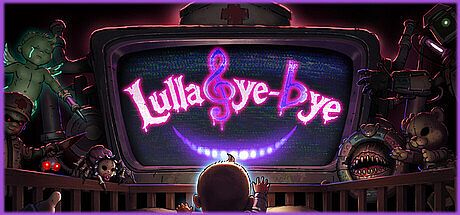


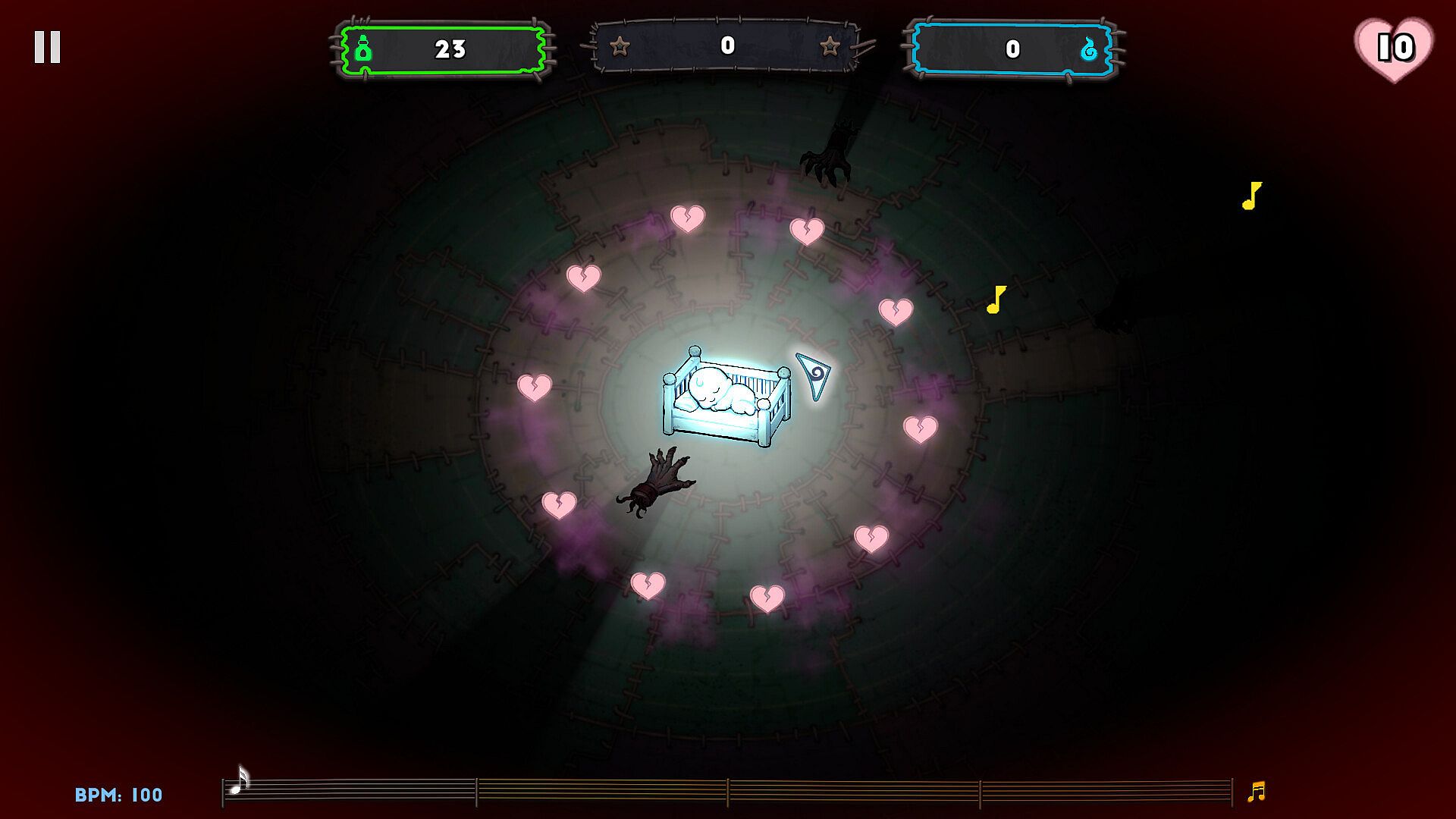
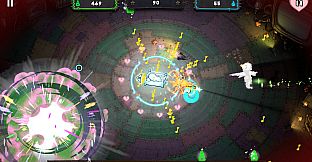
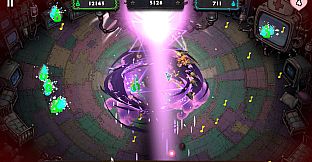
LullaBye-Bye is a single-player action game for PC in which players defend a child from encroaching nightmares using music as the primary weapon. The setting centers on a nursery that darkens progressively as forgotten toys, broken dolls, and other horrors emerge from the shadows. The core premise positions the player as a defender who reshapes a simple lullaby into a powerful sonic barrier capable of pushing back the darkness.
Gameplay
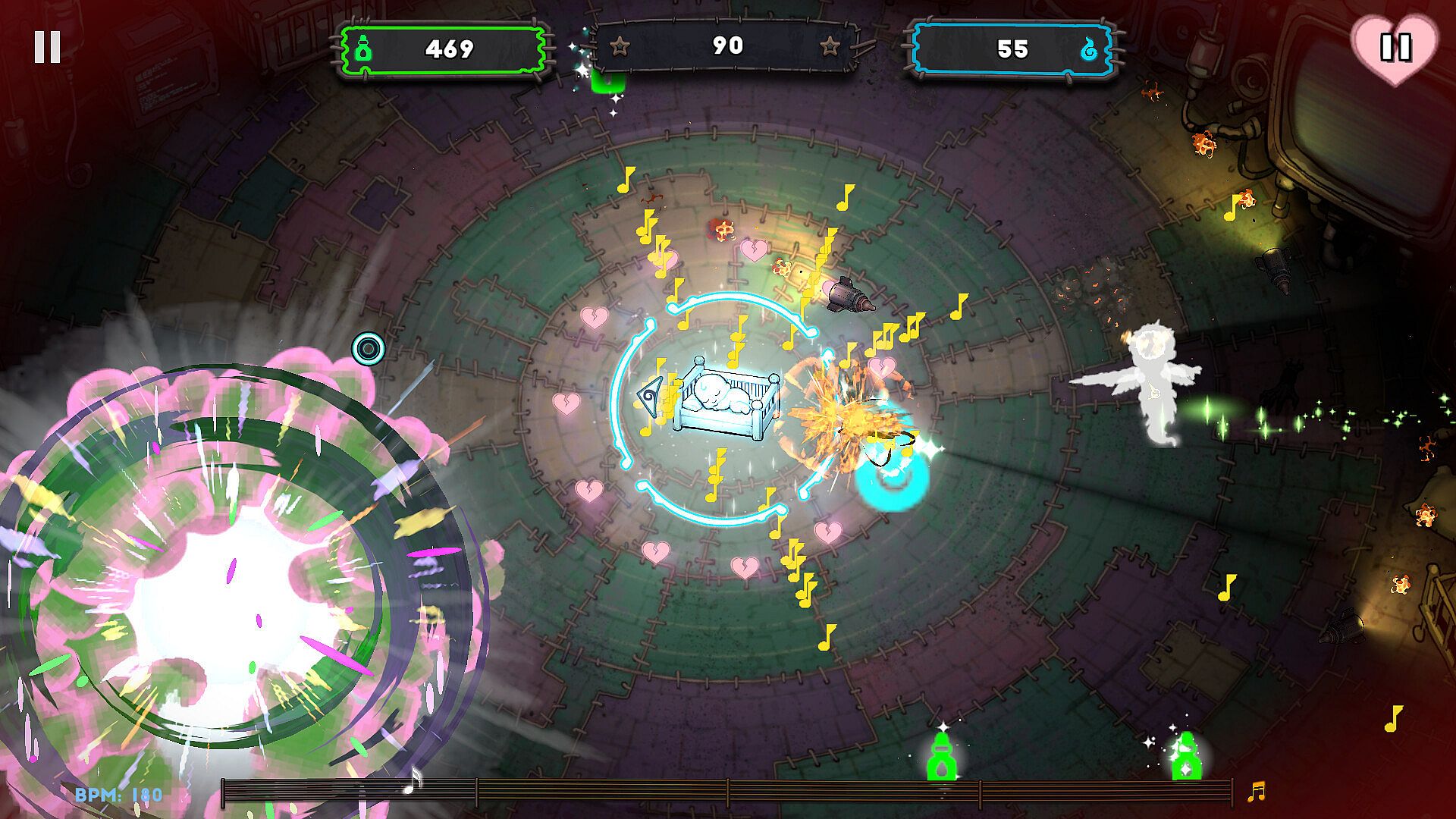
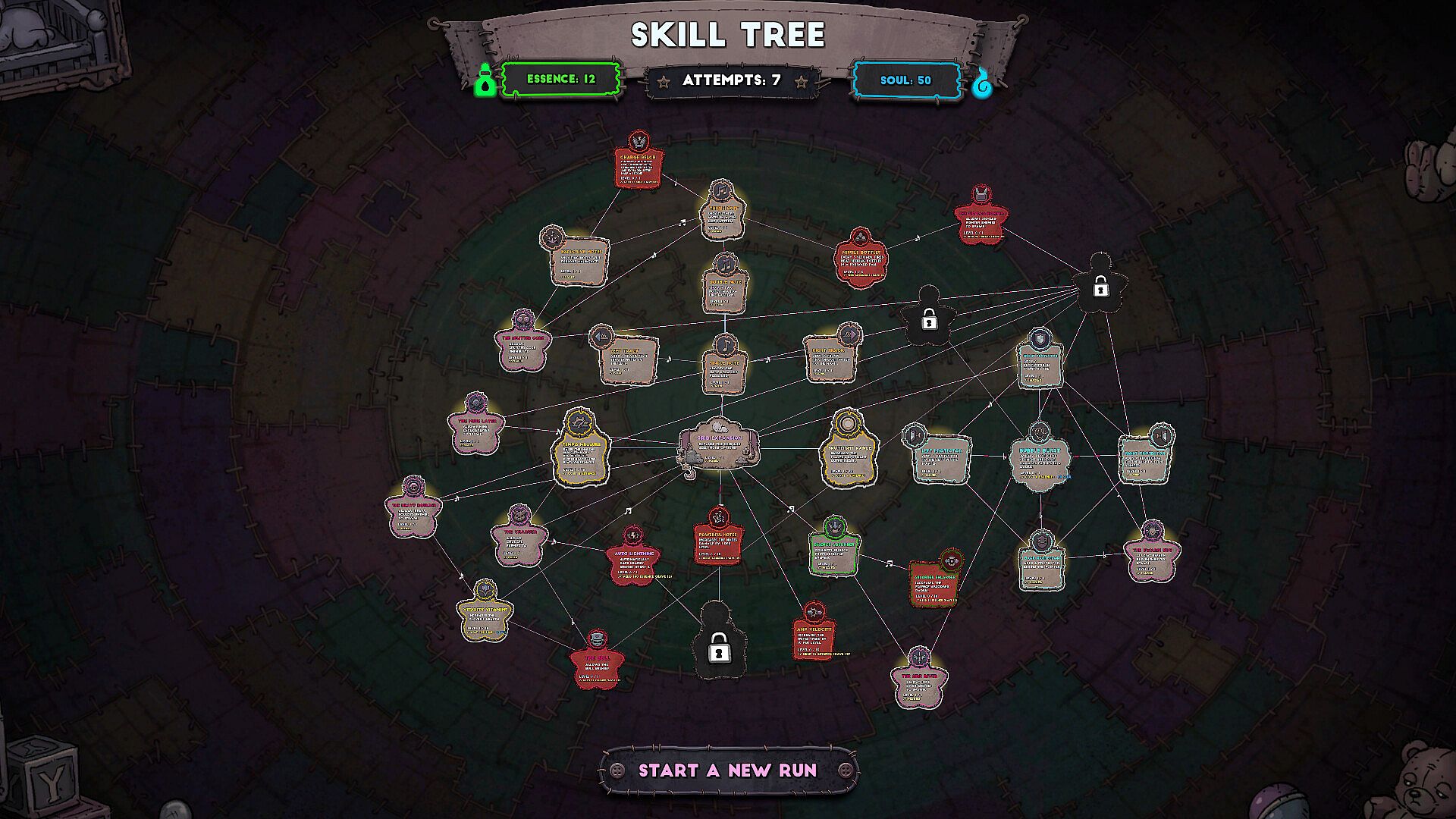
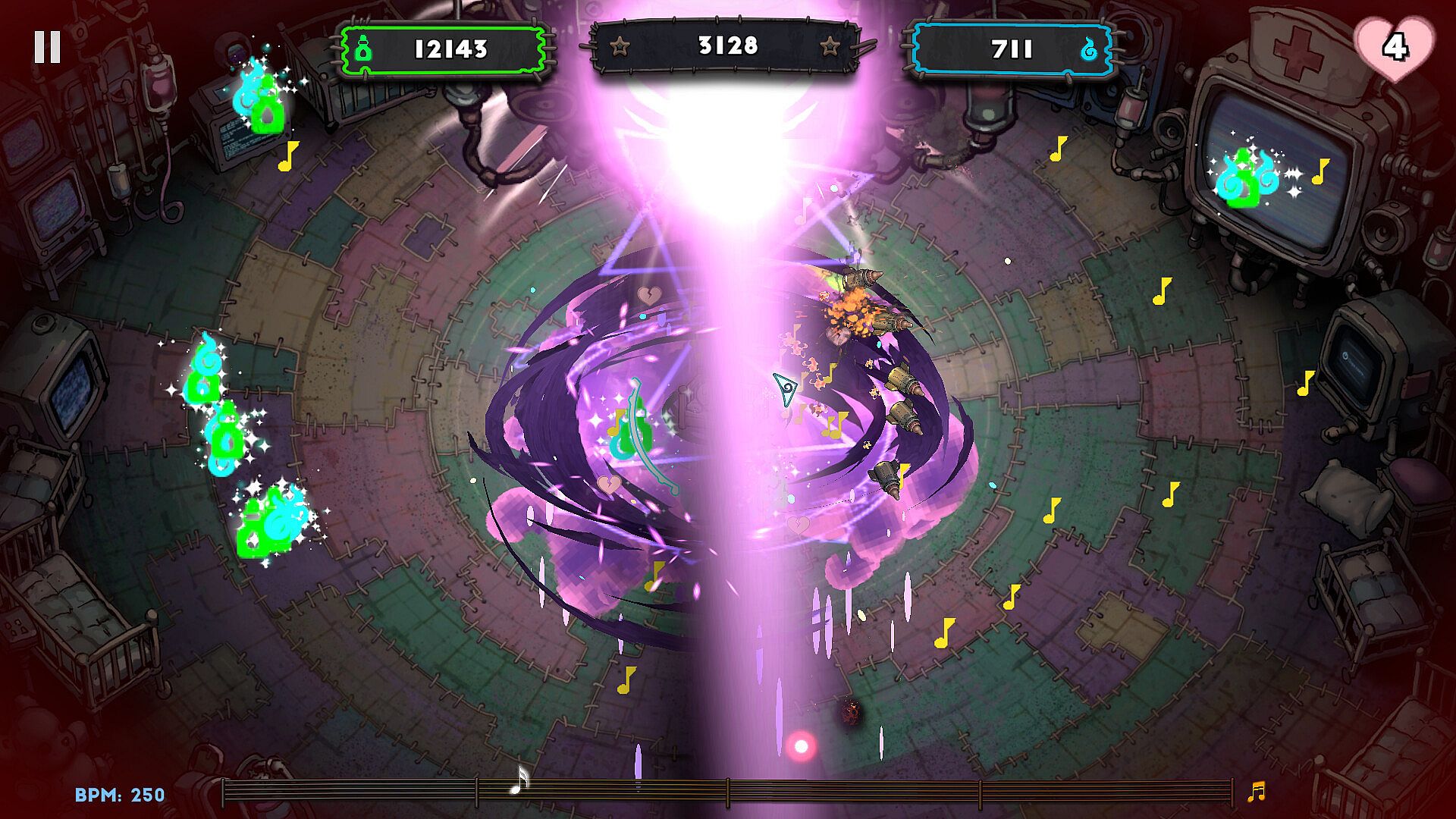
The central loop revolves around building and evolving a musical defense. Players start with a gentle lullaby and modify it through tempo increases, note amplification, and illumination effects that reveal threats and weaken enemies. Upgrades become available as runs progress, allowing the sound wall to gain new properties that deal greater damage or cover larger areas. Movement through the nursery involves navigating tightening spaces while maintaining the sonic barrier against waves of approaching creatures. The system rewards precise timing and strategic layering of musical elements rather than direct combat tools like firearms or spells.
Each attempt advances the player closer to the source of the threat, with the environment growing more hostile as the nursery changes. The single-player structure focuses entirely on this personal confrontation, where success depends on adapting the lullaby in real time to counter different enemy behaviors and environmental shifts.
Game Modes
The game operates in a single-player format centered on repeated runs through the nightmare nursery. These runs serve as the main structure, with each attempt building cumulative progress toward confronting the central antagonist. No separate multiplayer or competitive modes appear in the available details, keeping the experience focused on individual mastery of the music-based mechanics.
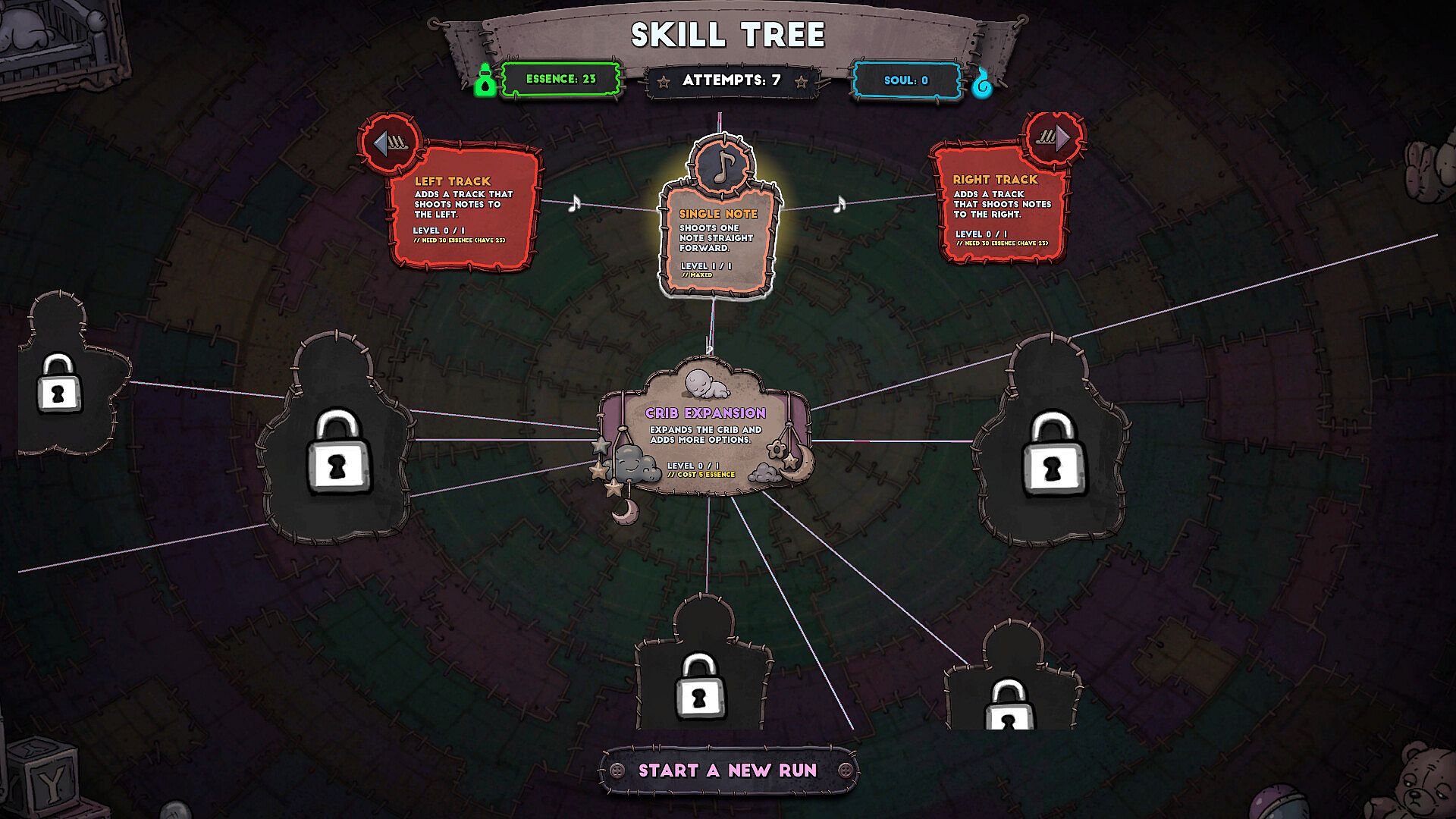
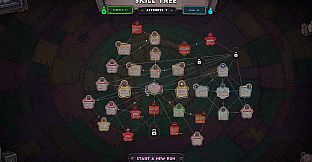
Progression ties directly to the run system, where upgrades and sonic enhancements carry forward in a way that deepens the defensive capabilities over successive attempts. The design emphasizes survival and escalation within this solitary framework rather than branching into distinct mode variants.
Core Mechanics and Progression
Mechanics center on sound manipulation as both offense and utility. Tempo adjustments alter attack speed and intensity, while amplification expands the reach of the protective wall. Illumination upgrades light up hidden dangers and enable more effective targeting of threats. The upgrade path unlocks increasingly potent variations that transform the initial lullaby into a layered, destructive force capable of handling denser enemy clusters.
Enemy encounters involve crawling horrors and animated objects that test the player's ability to sustain and evolve the sonic defense. The nursery layout shifts with each run, presenting new configurations that demand adjustments to the music strategy. This creates a loop of experimentation and refinement tailored to the action genre's emphasis on reactive play.
Is It Worth Playing?
LullaBye-Bye remains in development with a release date listed as to be announced and no user reviews available at this stage. The single-player action experience appeals to players interested in unconventional weapon systems built around music and rhythm elements within a horror-tinged nursery environment. Those who enjoy run-based progression and upgrade-driven defense mechanics may find the unique sound-manipulation loop engaging once the game launches.
Availability on PC includes support for Steam achievements and family sharing features. The current state offers no confirmed post-launch updates or additional content beyond the core described systems, so potential players should monitor official channels for the eventual release to assess fit with their preferences for solitary action gameplay.