


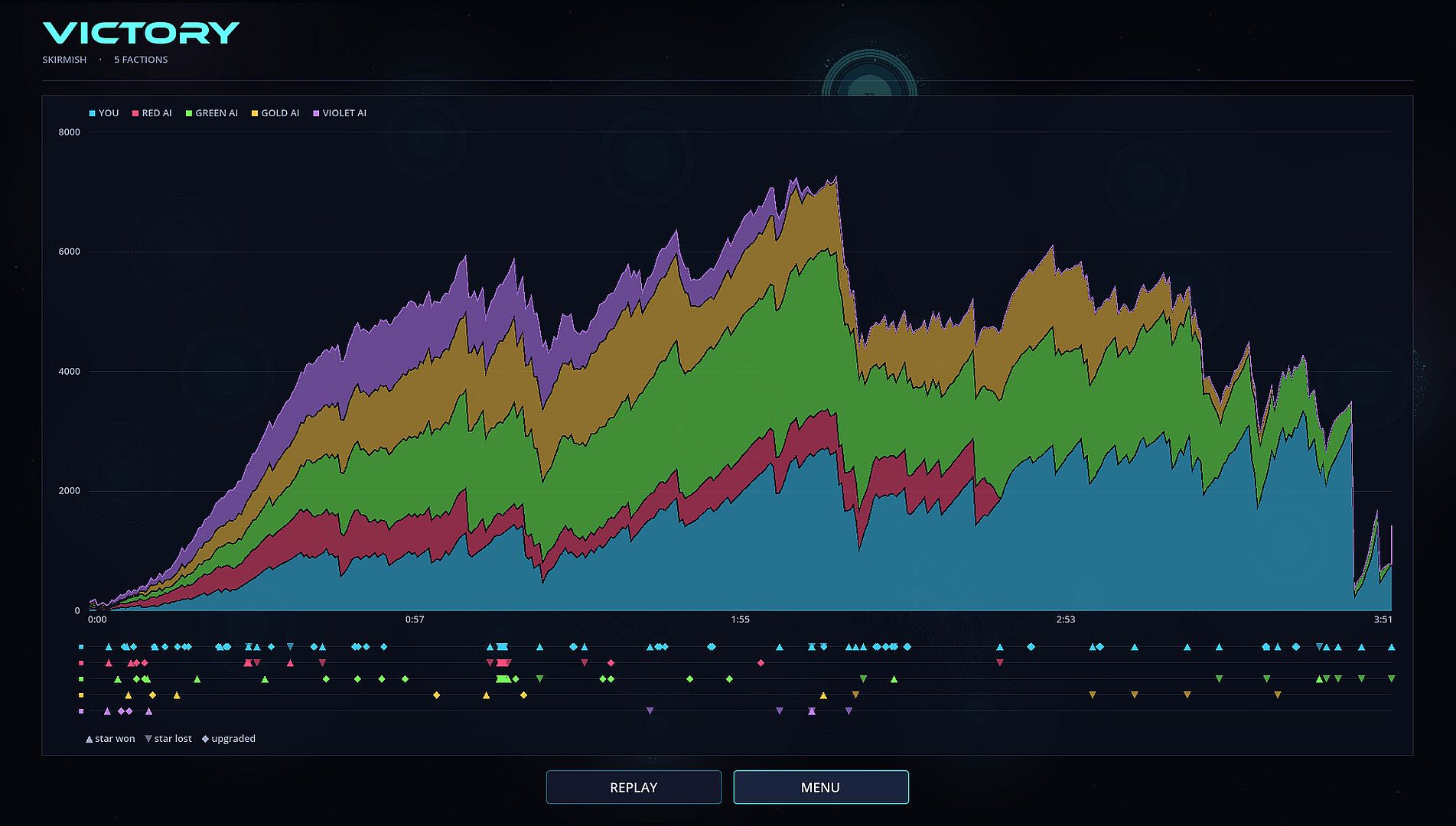




Luminaris is a strategy game built around rapid real-time decisions on the PC platform. Matches unfold in roughly four and a half minutes with support for as many as five participants, delivering a complete real-time strategy experience without the usual layers of menus or progression systems.
Gameplay
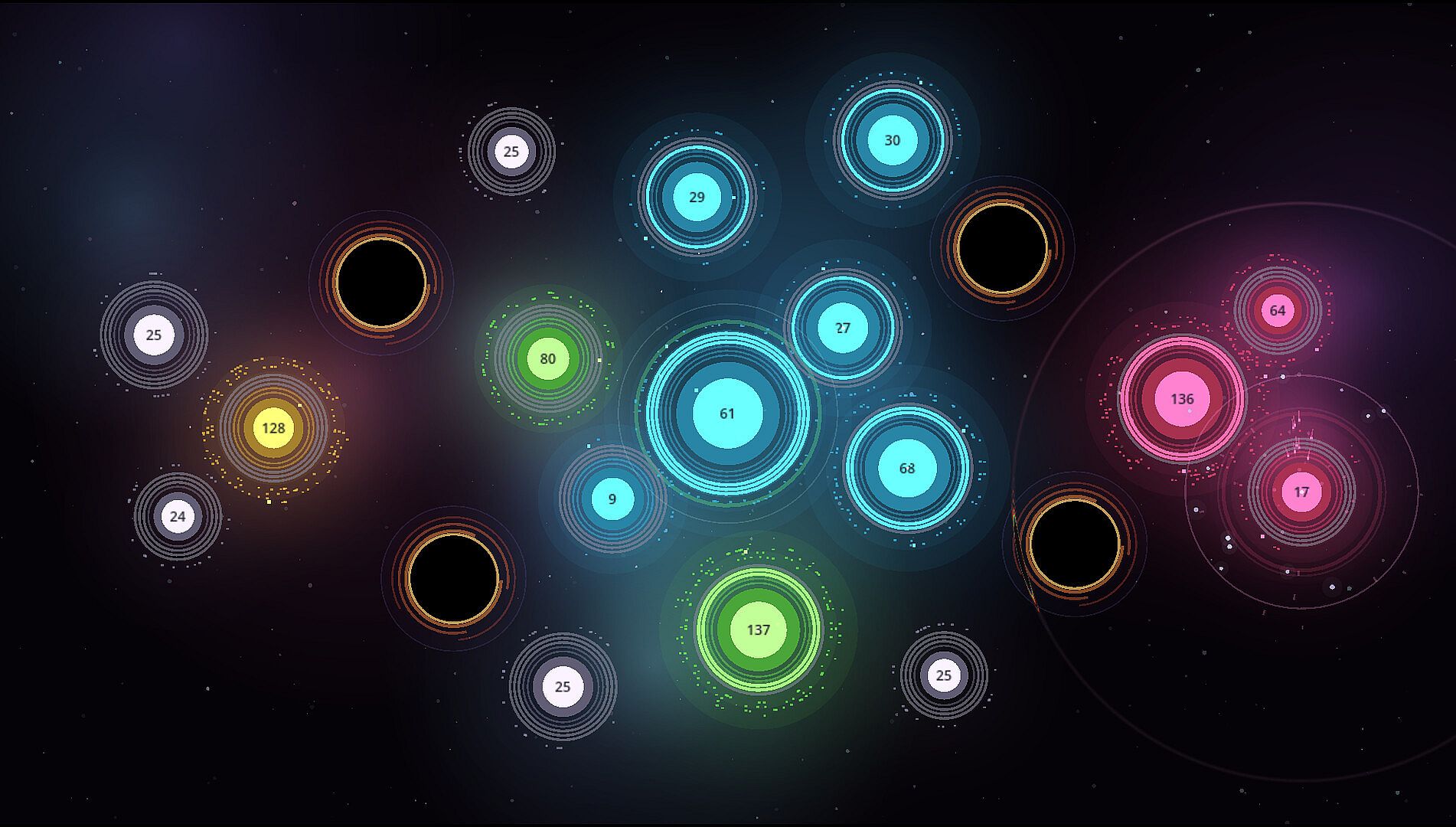
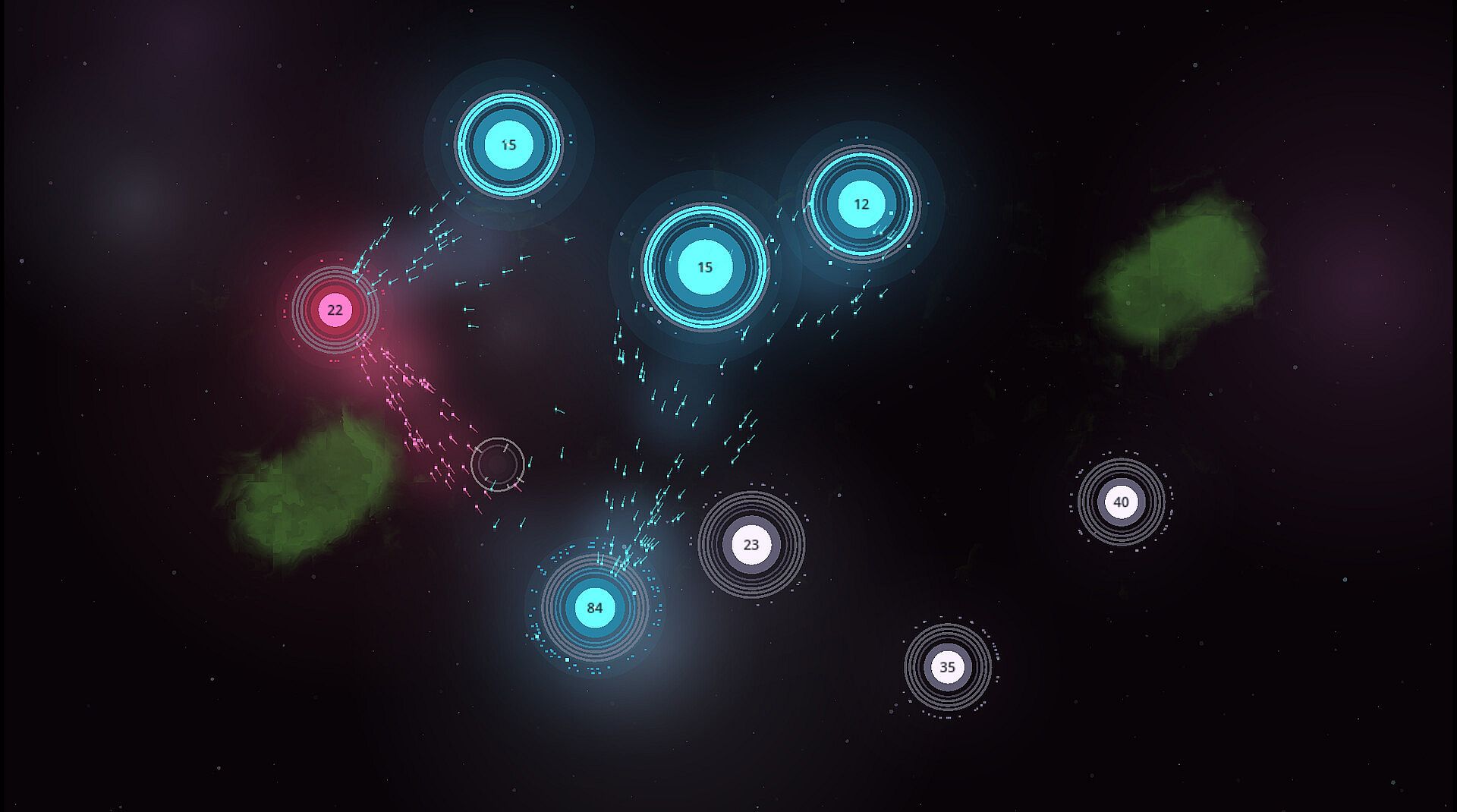
The core loop centers on stars that generate light-motes. These motes serve simultaneously as the sole resource for income, the units that form an invasion force, and the defensive screen around owned stars. Committing motes to an attack leaves home positions vulnerable, while holding them back risks losing ground to opponents. This single-pool economy creates constant tension in every choice.
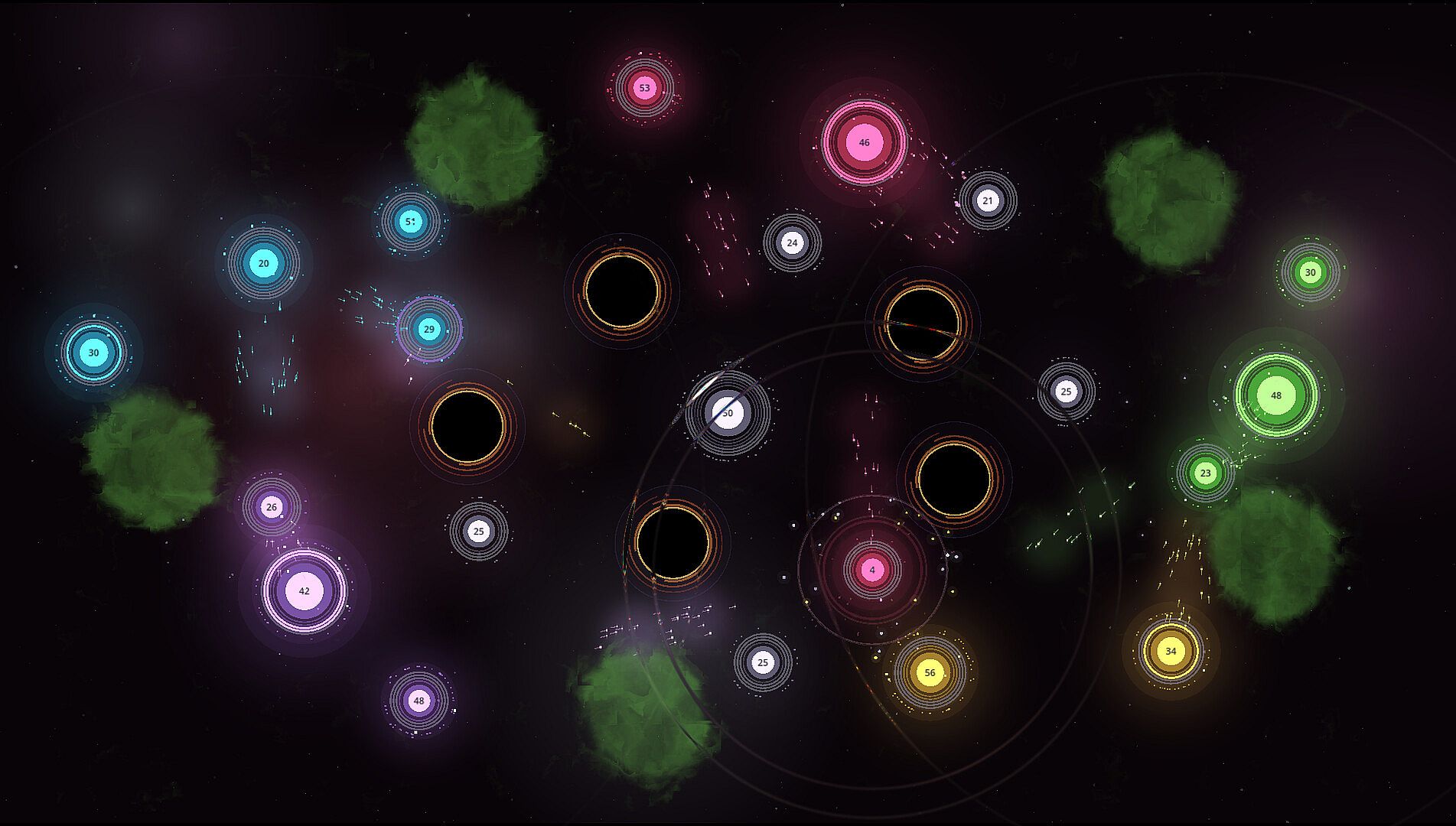
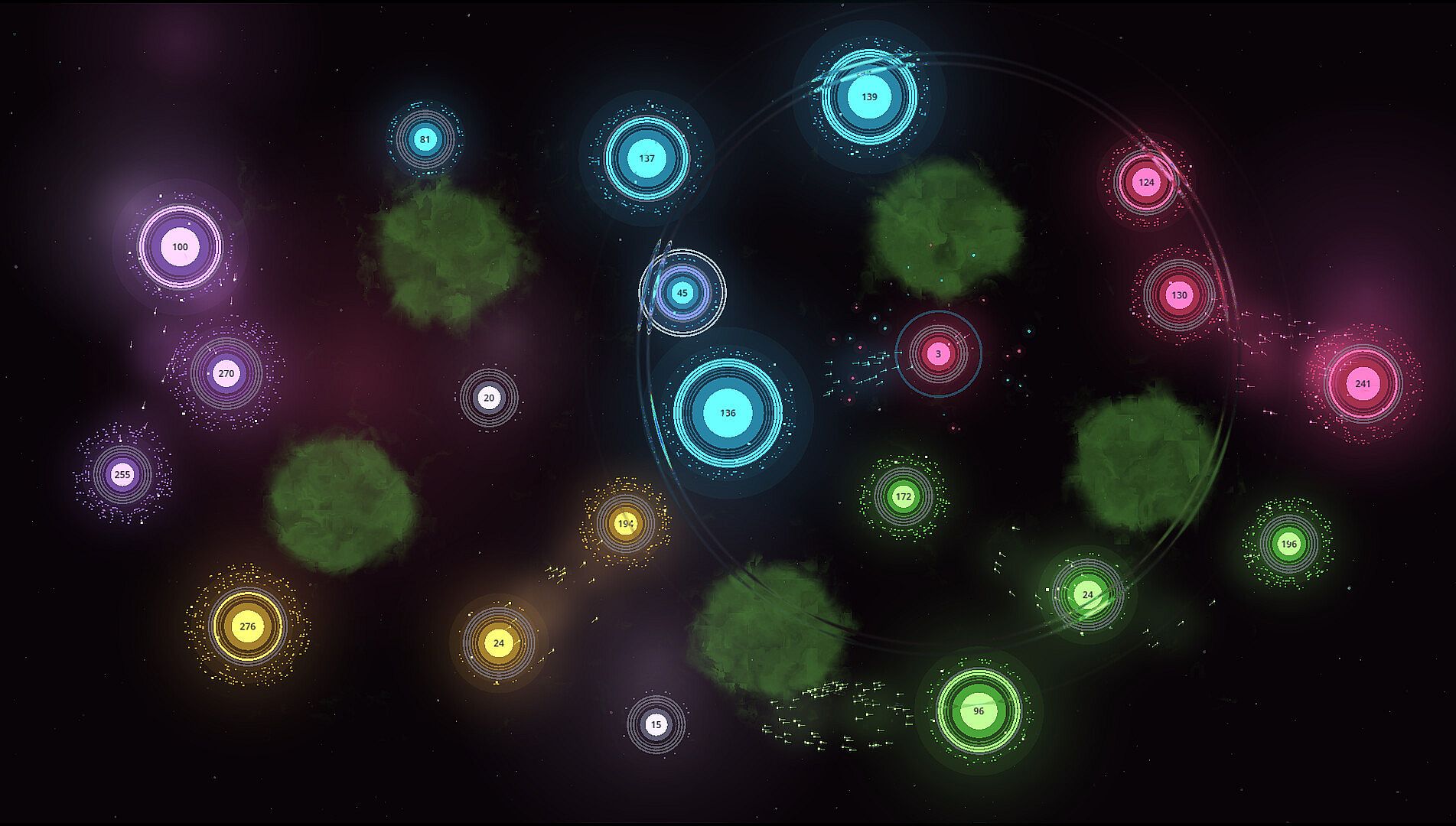
Stars themselves can receive investment in either production growth or fortress-style upgrades, but rarely both at once. Players link stars into rally chains that channel resources forward without constant manual direction of individual motes. Environmental features add further layers: black holes act as gravity wells that pull in anything nearby, forcing routes around them or deliberate redirection of enemy forces into the hazard. Nebula gas slows movement for anything passing through, turning open space into potential cover or self-imposed traps.
All information appears through color, motion, and scale rather than text overlays or hidden statistics. The design allows a player to assess the entire board state from a distance, supporting quick adaptation without pausing to consult detailed interfaces. Every visual element is hand-crafted.
Game Modes
Matches emphasize short, self-contained sessions that fit an entire opening, midgame, and endgame into one sitting. The format supports up to five players in the same session, encouraging direct competition over map control. No separate single-player campaign or extended progression modes appear in the current description, keeping focus on these concise multiplayer encounters.
Because every decision trades offense against defense in real time, the structure rewards players who read the board quickly and adjust commitments on the fly. The absence of build orders or tech trees removes preparation time, so each game begins with immediate pressure to claim and hold stars.
Design and Accessibility
Luminaris strips away common real-time strategy clutter to highlight spatial awareness and resource timing. Terrain elements such as black holes and nebula gas create readable choke points and hazards that influence movement without requiring memorized counters. The visual language carries all necessary state information, reducing the barrier for new players while still rewarding precise execution.
Hand-made assets ensure consistent readability across different zoom levels and match lengths. The short match duration means a full game can conclude before fatigue sets in, making repeated sessions practical for testing different opening commitments or defensive setups.
Is It Worth Playing?
Luminaris targets players who enjoy fast-paced strategy without lengthy setup or complex systems to learn. The emphasis on a single resource pool and immediate map pressure creates a distinct rhythm compared with traditional real-time strategy titles that spread attention across multiple economies and unit types. Those who prefer games that resolve in under five minutes and reward quick spatial reading will find the format aligns closely with that preference.
The game remains in a pre-release state with no published player reviews or rating aggregates available. Its current feature set centers on the described mechanics and short multiplayer sessions, so expectations should match a focused, minimalist approach rather than expansive content libraries. Availability on PC through standard digital storefronts will determine final access once the title launches.