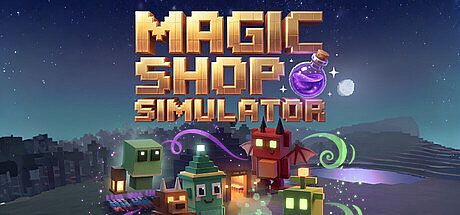



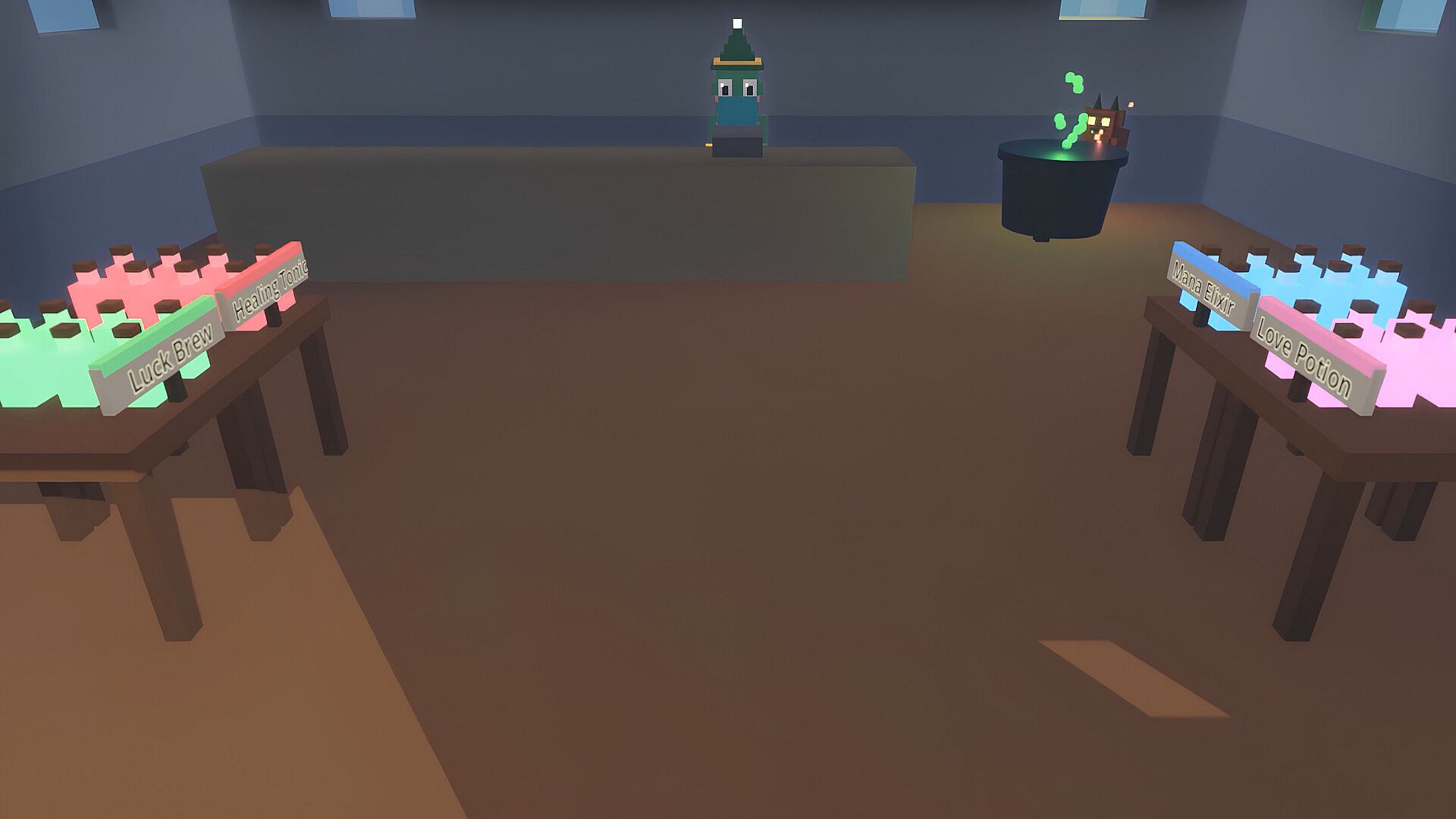










Magic Shop Simulator is a first-person simulation game built in a voxel world on PC. Players take on the role of a shopkeeper who forages ingredients, brews potions, sells to customers, and defends the business from nightly threats. The experience blends cozy shop management with moments of tension when wards fail and creatures attack.
Gameplay
The core loop centers on gathering four specific ingredients from distinct biomes: Firebloom from grasslands, Glowshroom near trees, Moonpetal along beaches, and Crystal Shard in stone hills. Players return to the cauldron to craft potions, beginning with the Healing Tonic and unlocking nine additional recipes through shop progression. Sales happen during open hours, with customers requesting particular potions and showing limited patience while waiting.
Magic scent draws monsters, creating a risk and reward system around four ward stones that require ongoing maintenance. Letting a ward fade triggers breaches where creatures invade, scattering customers and damaging reputation, yet the same monsters drop rare reagents directly at the shop. Players can intentionally weaken wards to farm loot or maintain full protection for steady sales.
Reputation milestones bring escalating threats, including mini-boss encounters and a final multi-phase wyrm siege upon reaching Master Shopkeeper rank. Hired worker familiars handle foraging, brewing, selling, and combat during breaches. Shop expansion moves from small to large sizes, while homestead features like garden plots and creature pens reduce reliance on daily foraging. Permanent upgrades purchased with gold improve efficiency across all systems.
Game Modes
Magic Shop Simulator operates as a single-player experience with no separate multiplayer or competitive modes. The entire game unfolds through the daily cycle of foraging, brewing, selling, and defending, with progression tied to reputation and shop size. Players control the pace by choosing how aggressively to manage wards and when to expand operations or hire staff.
Progression elements function as built-in challenges rather than distinct modes. Early play focuses on basic recipes and small-shop management, while later stages introduce automated workers, larger facilities, and boss-level sieges. The voxel sandbox allows free exploration and building within the open world, but all activity feeds back into the central shopkeeping loop.
Shop Building and Progression
Expansion options let players grow from a cramped starting shop into a large emporium with increased shelf space. Workers can be assigned to automate tasks, freeing the player to explore or gather while the business continues running. Homestead additions such as garden plots and pens provide renewable sources for ingredients, cutting down on repeated foraging trips.
Gold earned from sales funds permanent upgrades that carry forward across days. These improvements affect brewing speed, customer capacity, ward efficiency, and combat performance. The system encourages balanced growth between defensive measures and production capacity.
Is It Worth Playing?
Magic Shop Simulator suits players who enjoy simulation games that combine resource management with light survival elements. The voxel world and first-person perspective provide a tangible sense of running and protecting a business, while the ward system adds meaningful daily decisions about risk versus reward.
As an upcoming title with a planned release in November 2026, the game currently offers a demo for hands-on testing of the core loop. Those drawn to cozy shopkeeping with occasional combat and progression milestones will find the described systems align closely with that preference. Single-player focus means the experience remains consistent without external variables.