


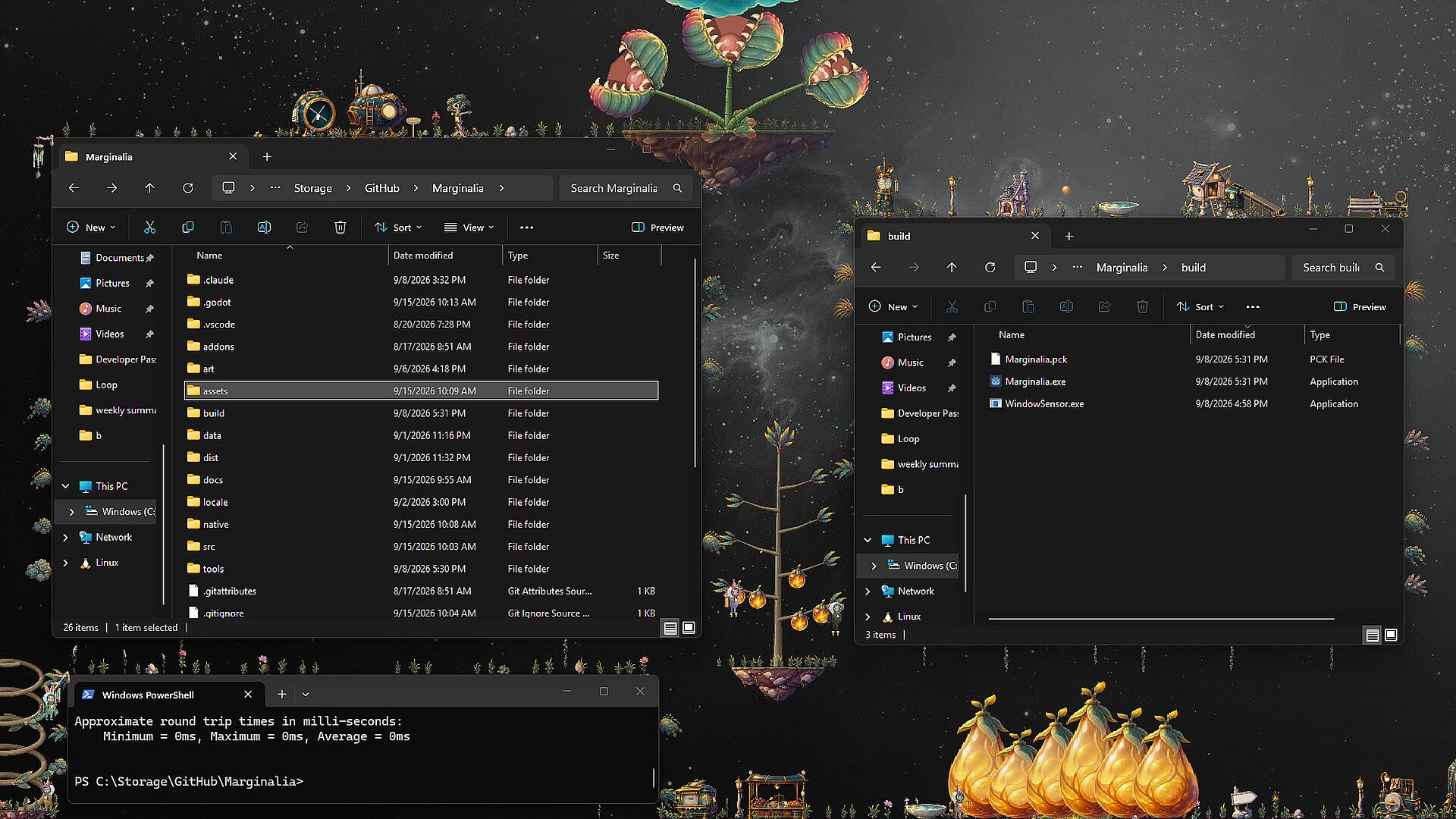
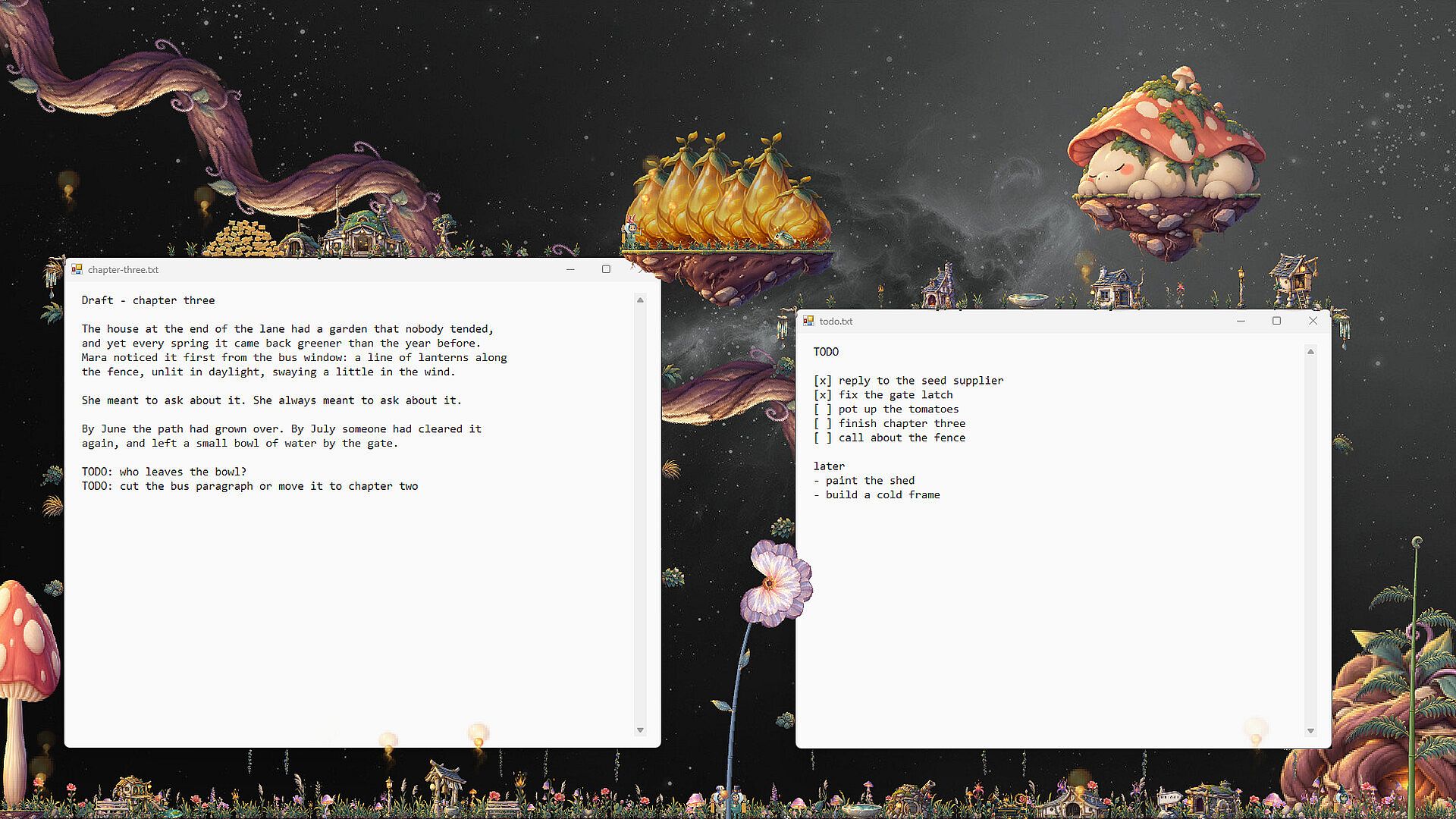
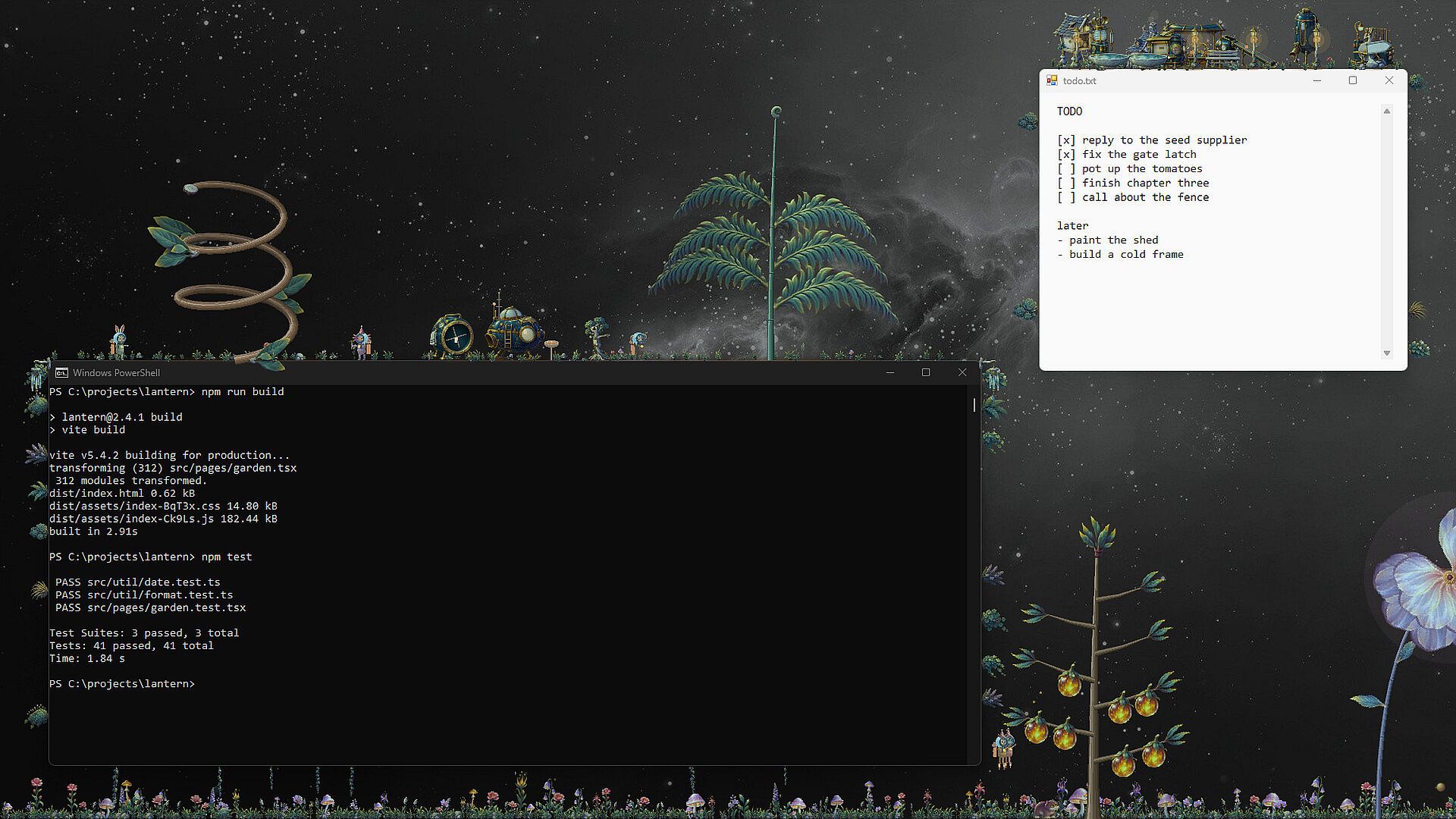
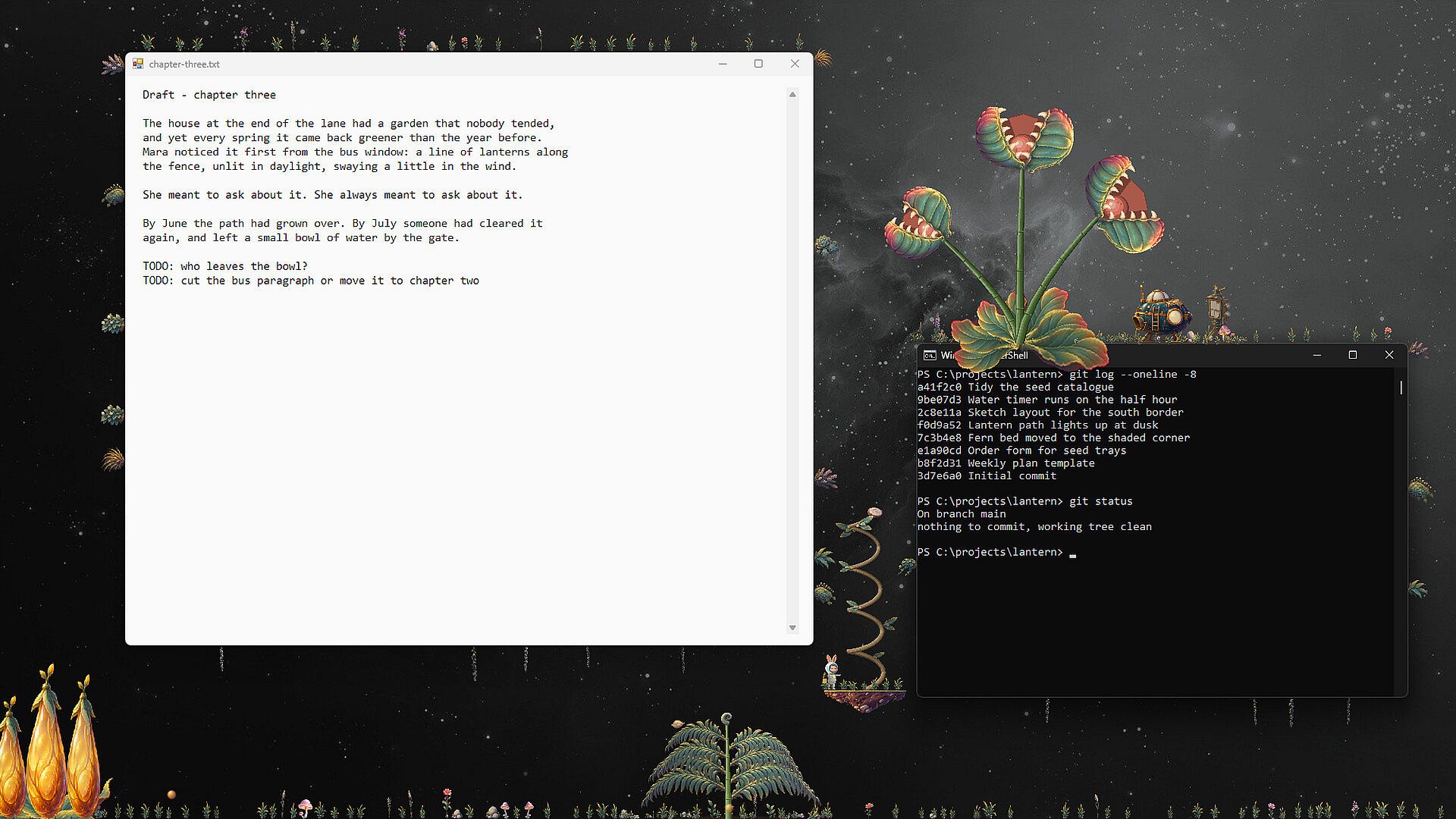
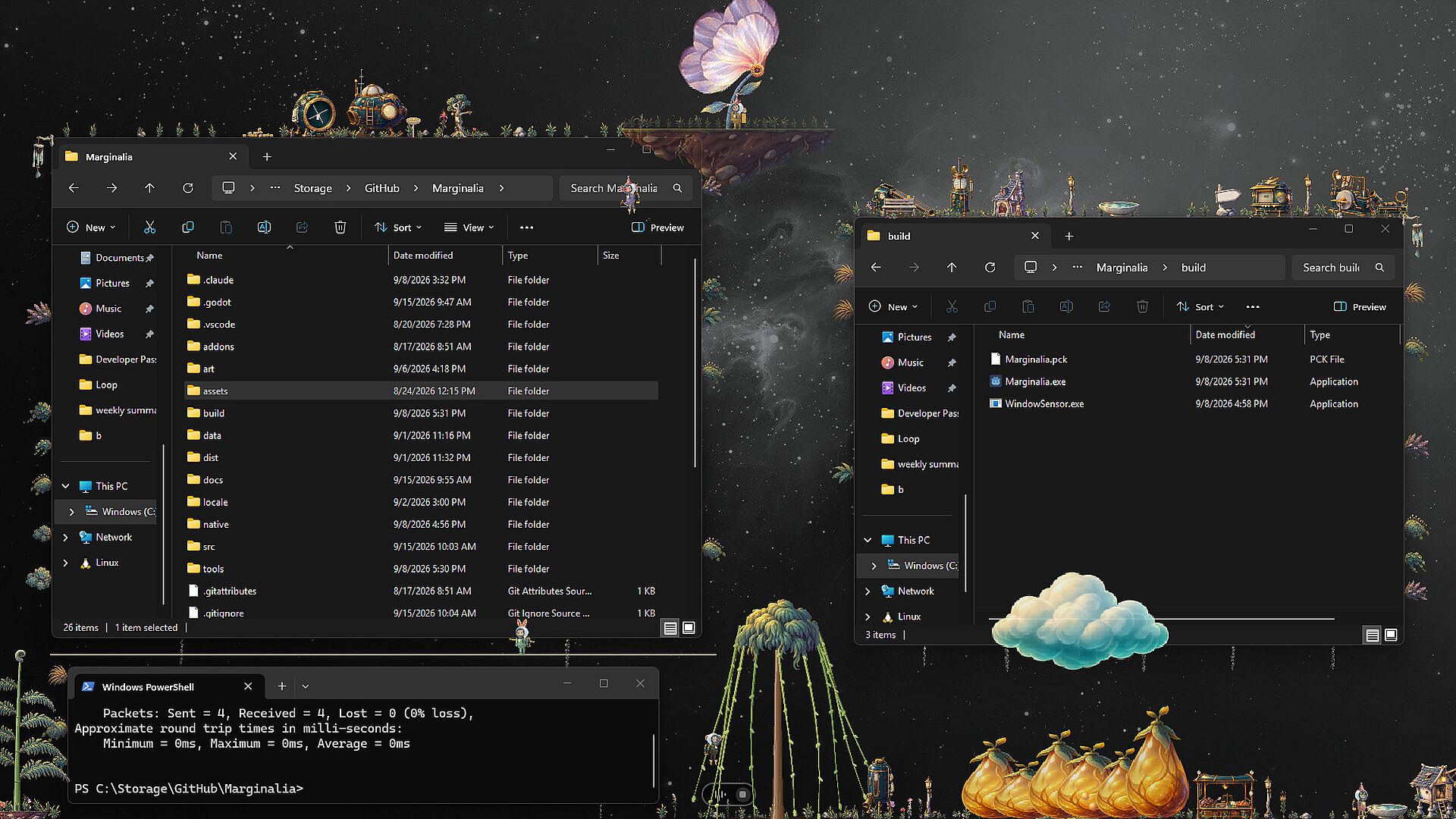
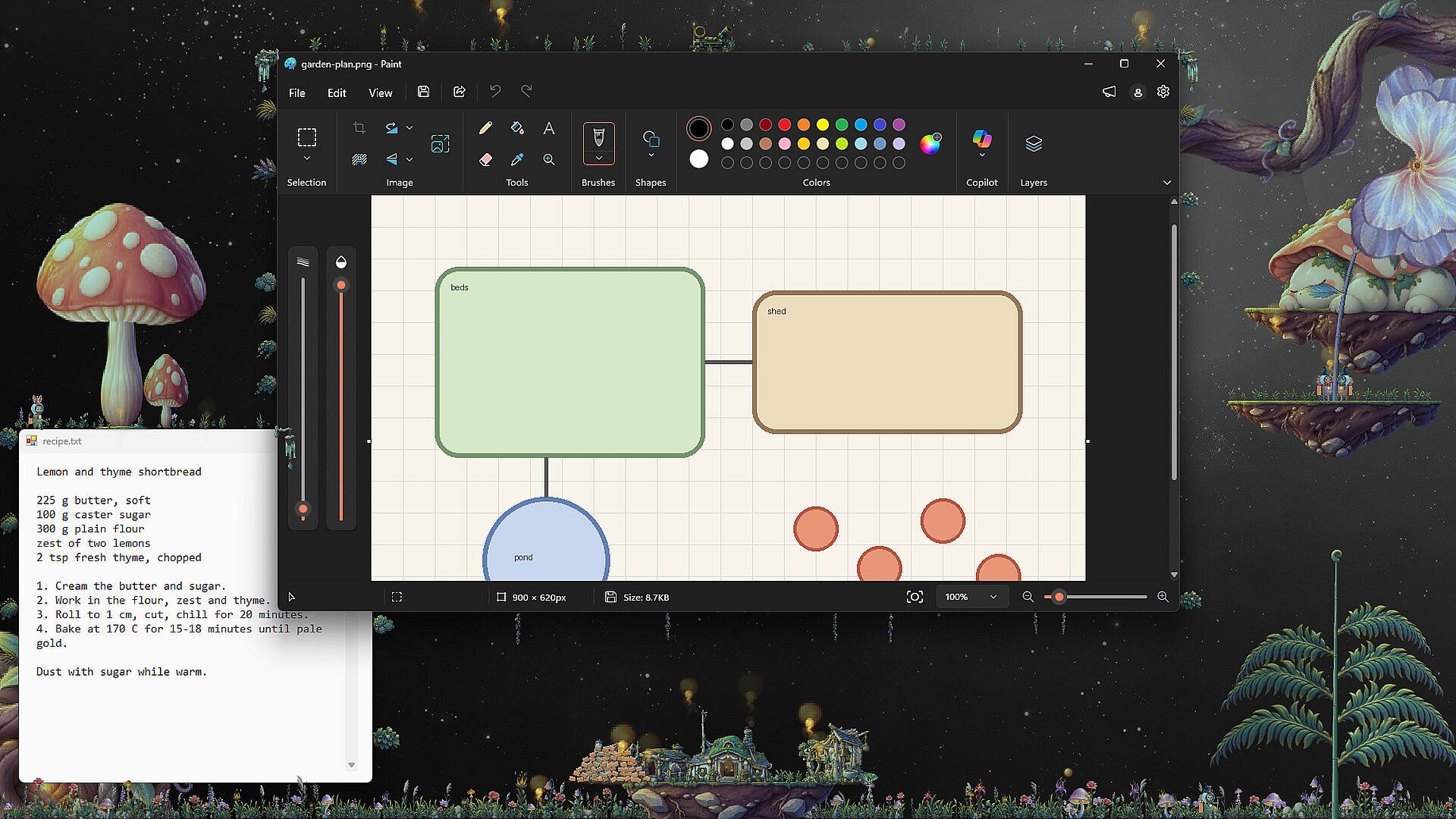
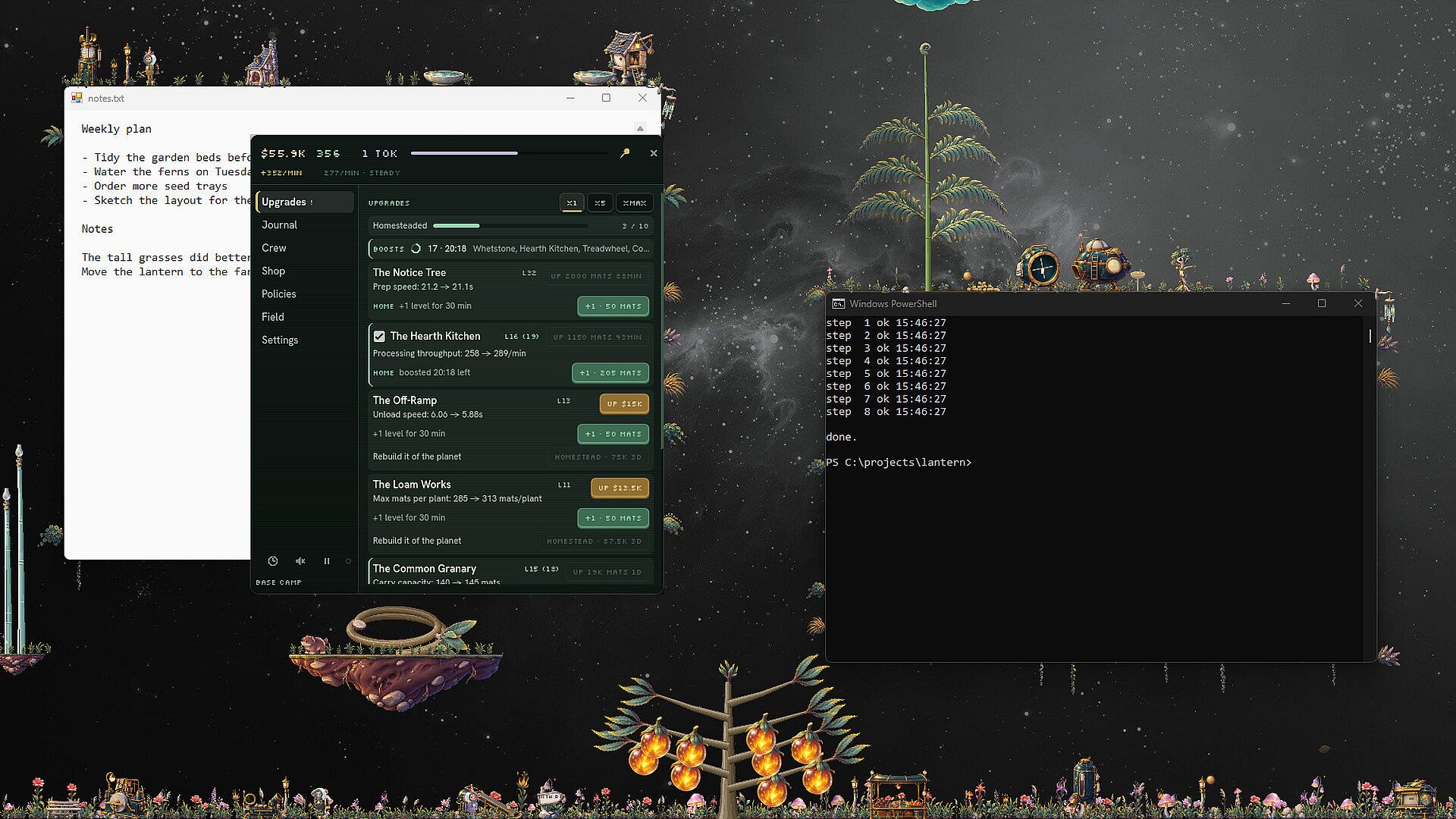
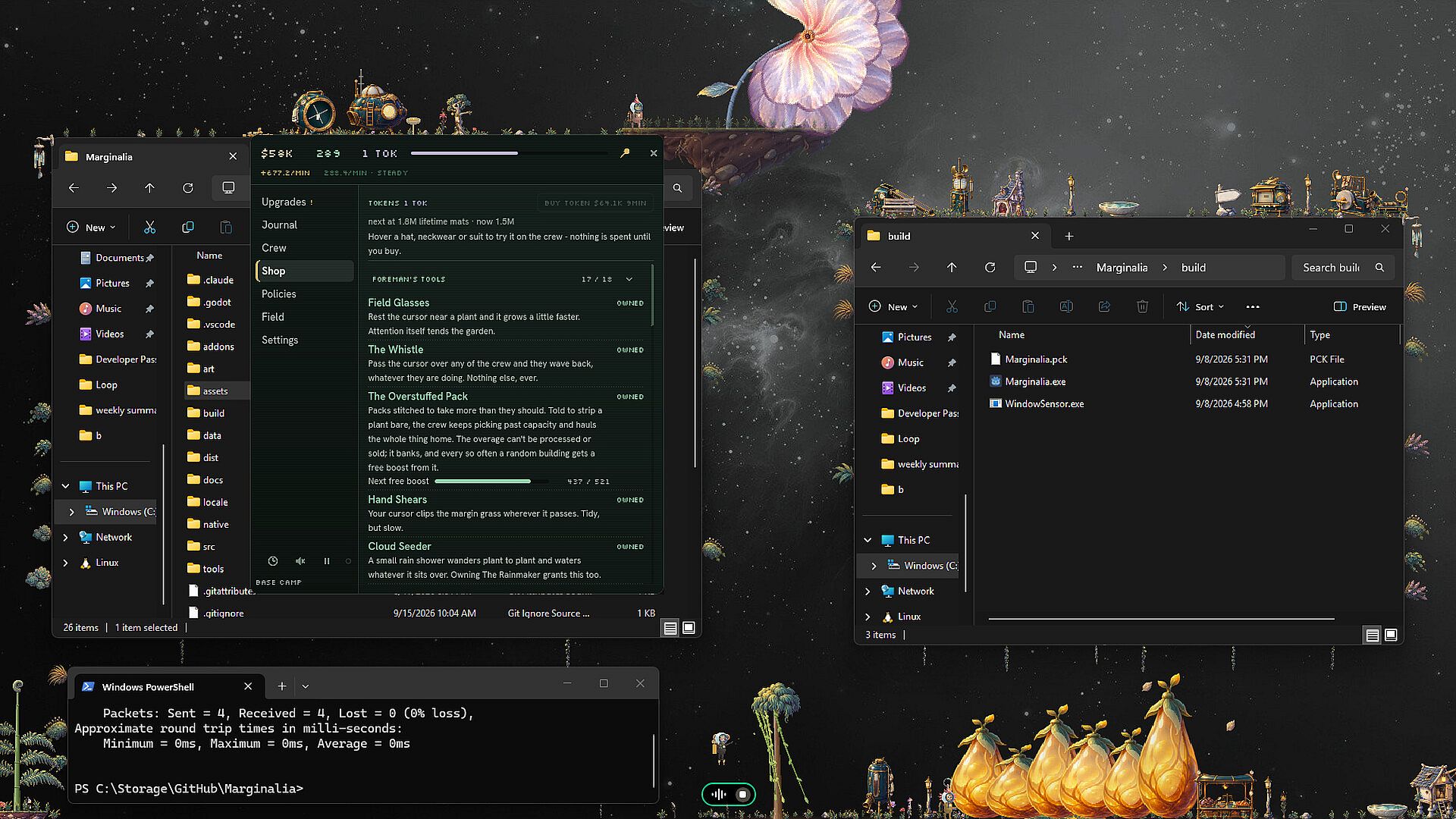
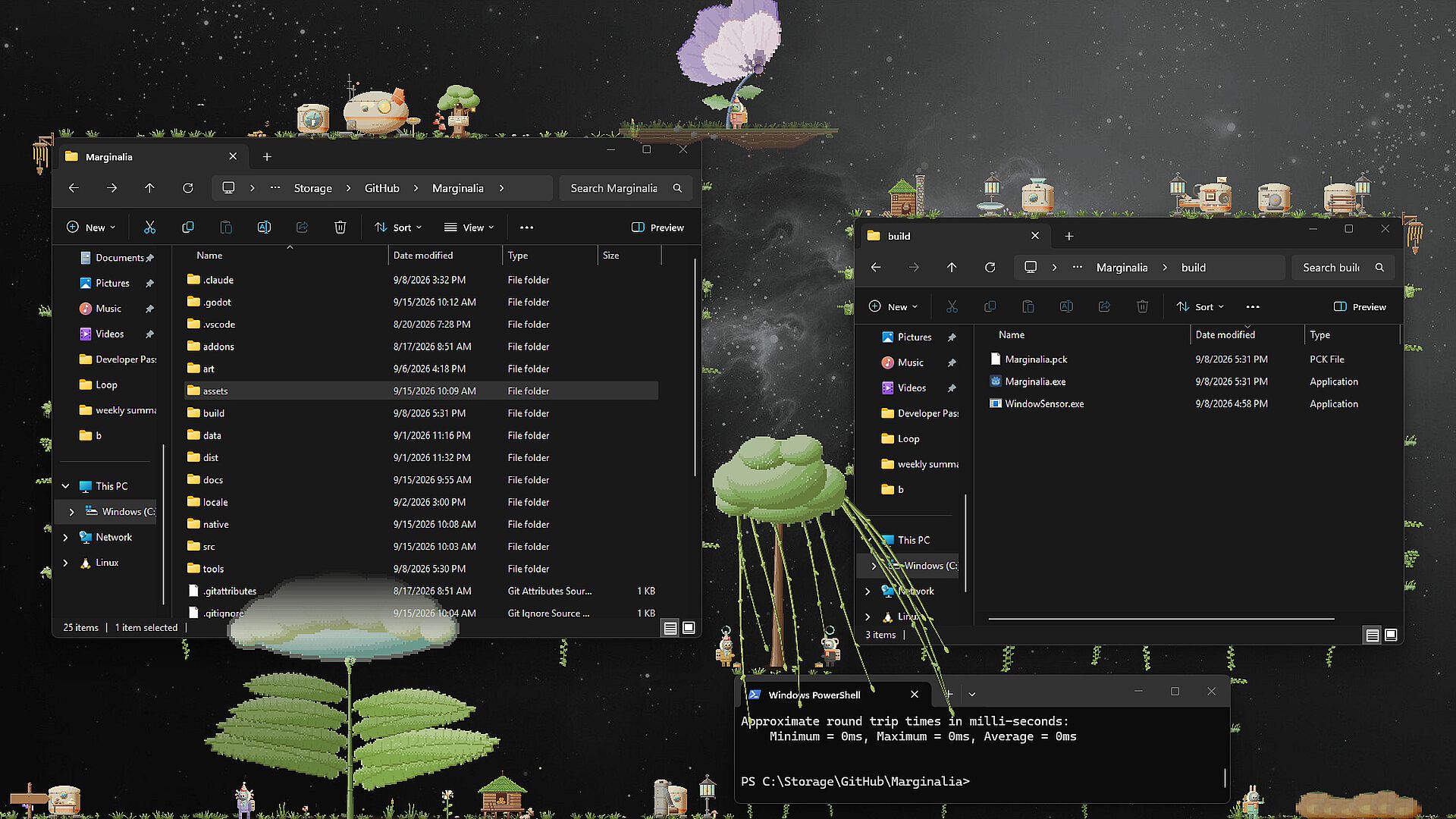
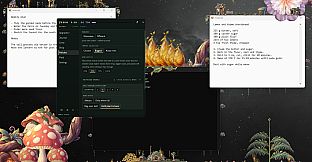
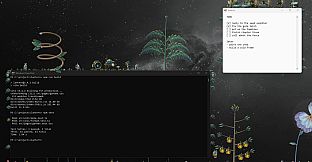
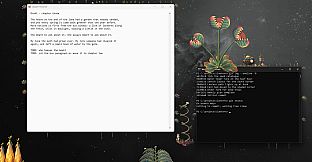
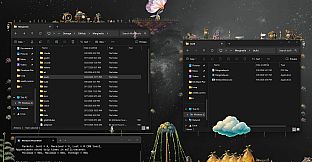
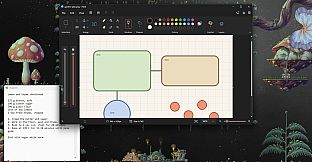
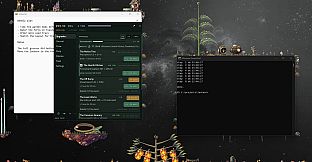
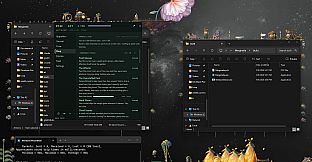
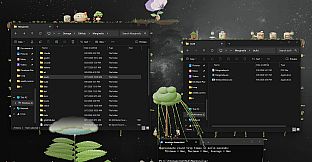
Marginalia: A Desktop Garden is an indie casual simulation game for PC that places a transparent idle experience directly on the desktop. Windows on screen define the terrain where a small crew of astronaut-suited animals tends alien plants in the gaps and on floating soil islands. The game runs always on top without stealing focus or interrupting other work, reading only window positions to shape the garden around them.
Gameplay
The core loop centers on observation and light management. Players rearrange open windows to alter the layout, prompting plants to fade gracefully into new positions. A crew of up to five workers, starting with one, harvests six distinct plant species through varied actions such as shrinking a flytrap with a reversal ray, picking glowing fruit from a spire, tapping sap, clipping fronds, sawing a corkscrew vine turn by turn, or gathering petals from a moon poppy. Harvests return to a landed ship and convert into currency over time spent with the game visible on screen.
Cursor behavior drives interaction. Art fades as the mouse nears, while resting the cursor on the ship or buildings makes them solid and clickable. Motion signals active work, while stillness invites closer inspection. Ten buildings dropped from orbit provide upgrades that raise stats, with workers resting at them between tasks. The Foreman's Log delivers thirty narrative entries gradually through returning crew members, shifting the tone from a resource mission toward something more reflective. Three sprite sets and a day-night palette allow visual matching to the surrounding desk environment.
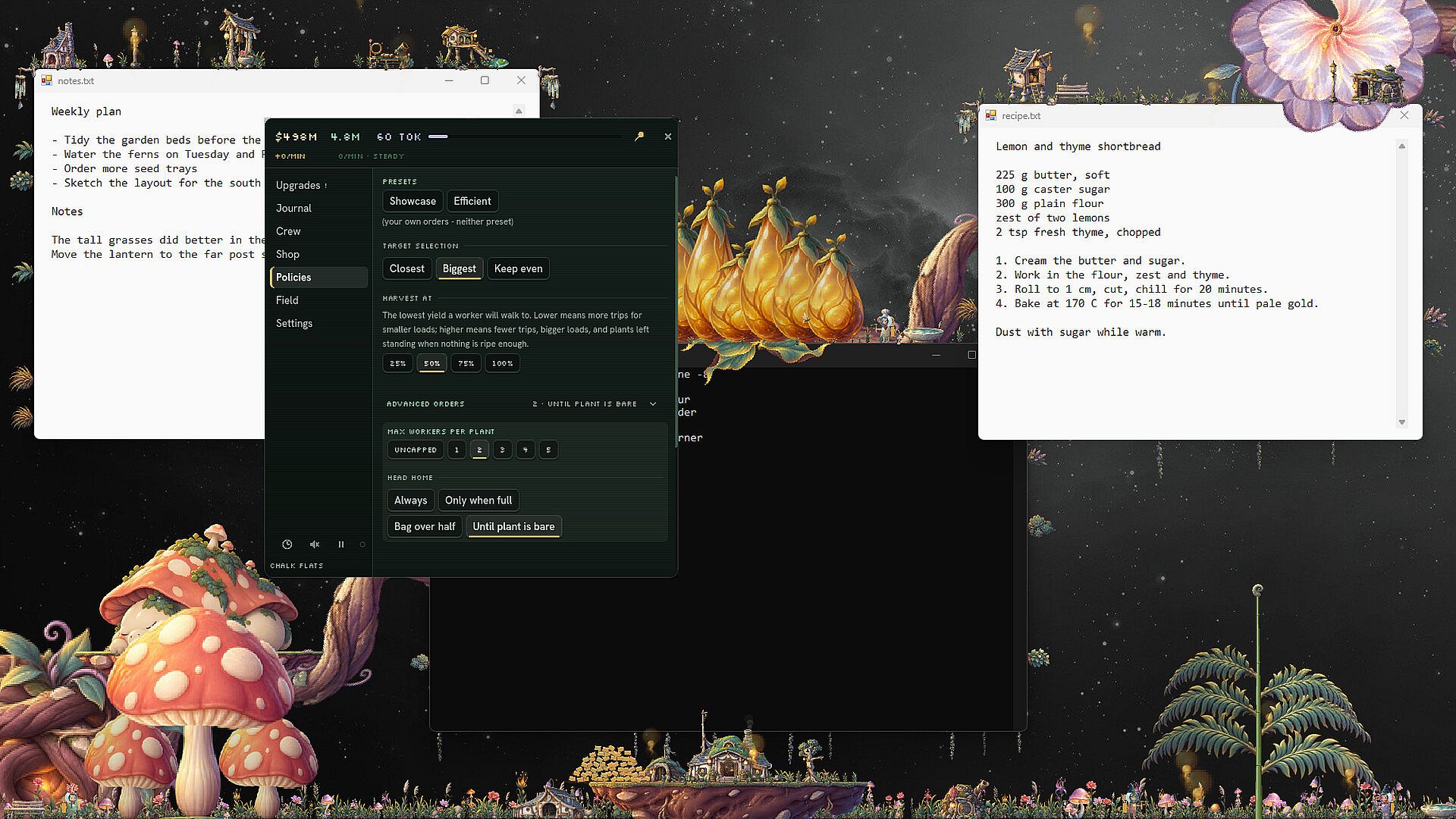
Customization extends to the crew. Workers such as rabbit, frog, axolotl, owl, or ram can be renamed, dressed in hats, neckwear, and suit colors, and assigned policies. Privacy measures ensure the bundled helper reads only window rectangles, order, and monitor layout without accessing titles, contents, keystrokes, or files, and the game makes no network connections.
Game Modes
Marginalia: A Desktop Garden operates as a single continuous idle experience rather than offering distinct named modes. The design emphasizes one core mechanism expressed through different plant species and crew policies, with all activity tied to real-time screen presence. No separate competitive, story, or challenge variants exist beyond the ongoing garden tending and log progression that unfolds during active sessions.
Players influence the pace through window arrangement and upgrade purchases, but the experience remains unified around passive watching and occasional policy adjustments. The absence of offline progress reinforces that value comes only while the game stays on screen alongside other tasks.
Key Mechanics and Features
Everything responds to the cursor without requiring constant attention. Plants and workers occupy marginal spaces around windows, and the system gracefully adapts when layouts change. Upgrades from the ten orbital buildings improve efficiency, while the crew's individual traits and policies add variety to harvesting routines. The day-night cycle and sprite options provide subtle visual tuning without altering core rules.
The game includes built-in safeguards for desktop use. It throttles during battery operation or when fullscreen applications cover the screen, and it never opens windows over active work. These elements support extended background running without interference.
Is It Worth Playing?
Marginalia: A Desktop Garden suits users seeking a low-pressure desktop companion that integrates into existing workflows. Its focus on observation, gentle customization of crew and visuals, and narrative log delivered through field returns creates a pleasant, non-intrusive presence. The design avoids failure states, danger, or mandatory engagement, making it appropriate for those who value ambient simulation over active goals.
Because the game requires the window to remain visible for progress and offers no offline accumulation, it rewards consistent screen time rather than sporadic play. Individuals who enjoy arranging their workspace and watching small systems evolve will find the mechanics align closely with that preference. Those preferring structured challenges or multiplayer elements may find the single continuous format less engaging. The upcoming release positions it as a niche option for casual simulation enthusiasts looking for something that coexists with productivity rather than replacing it.