


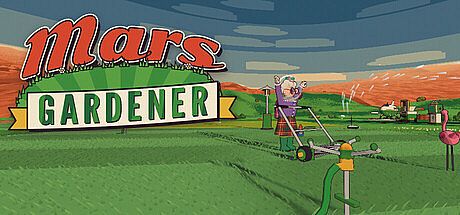


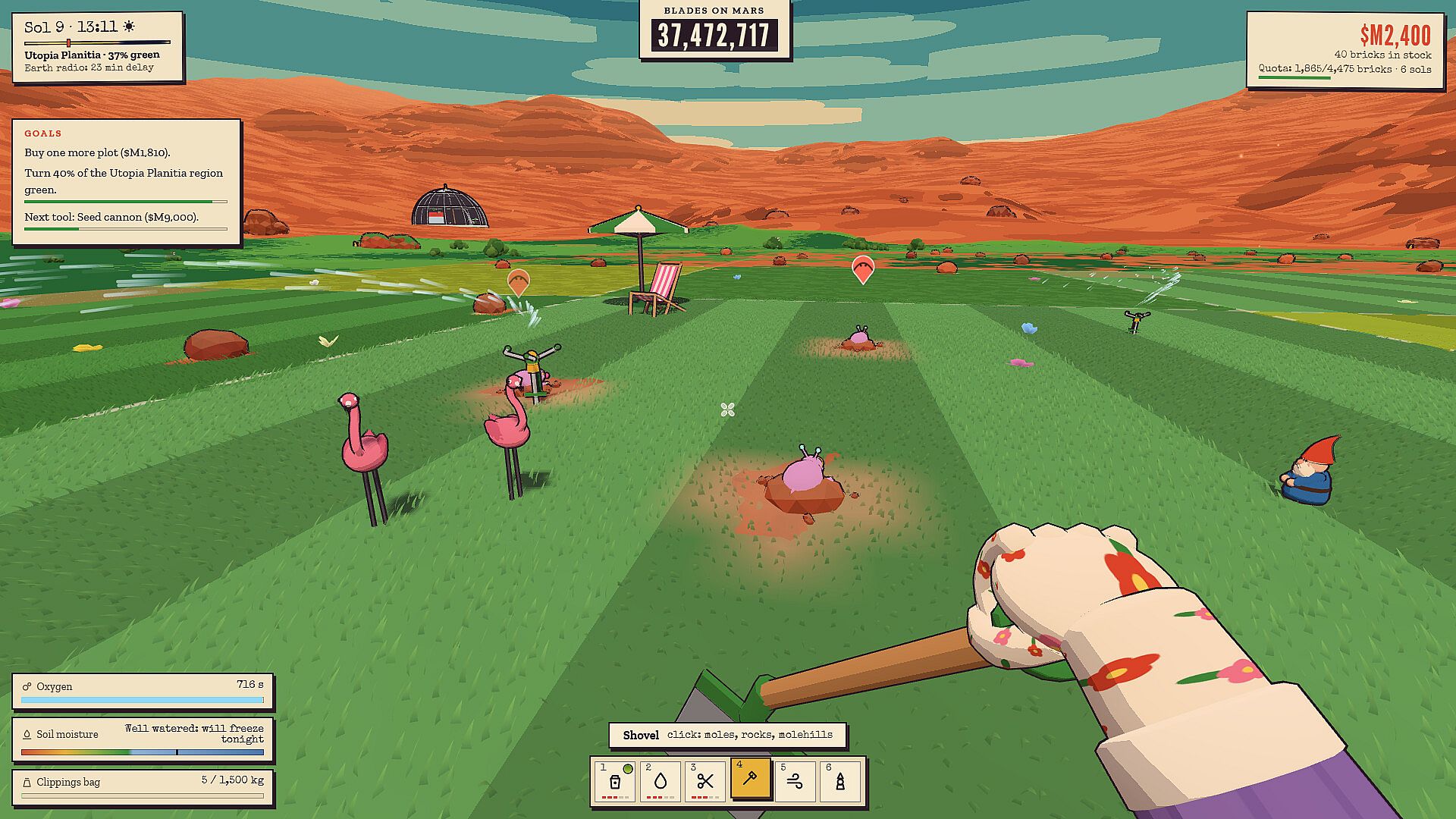
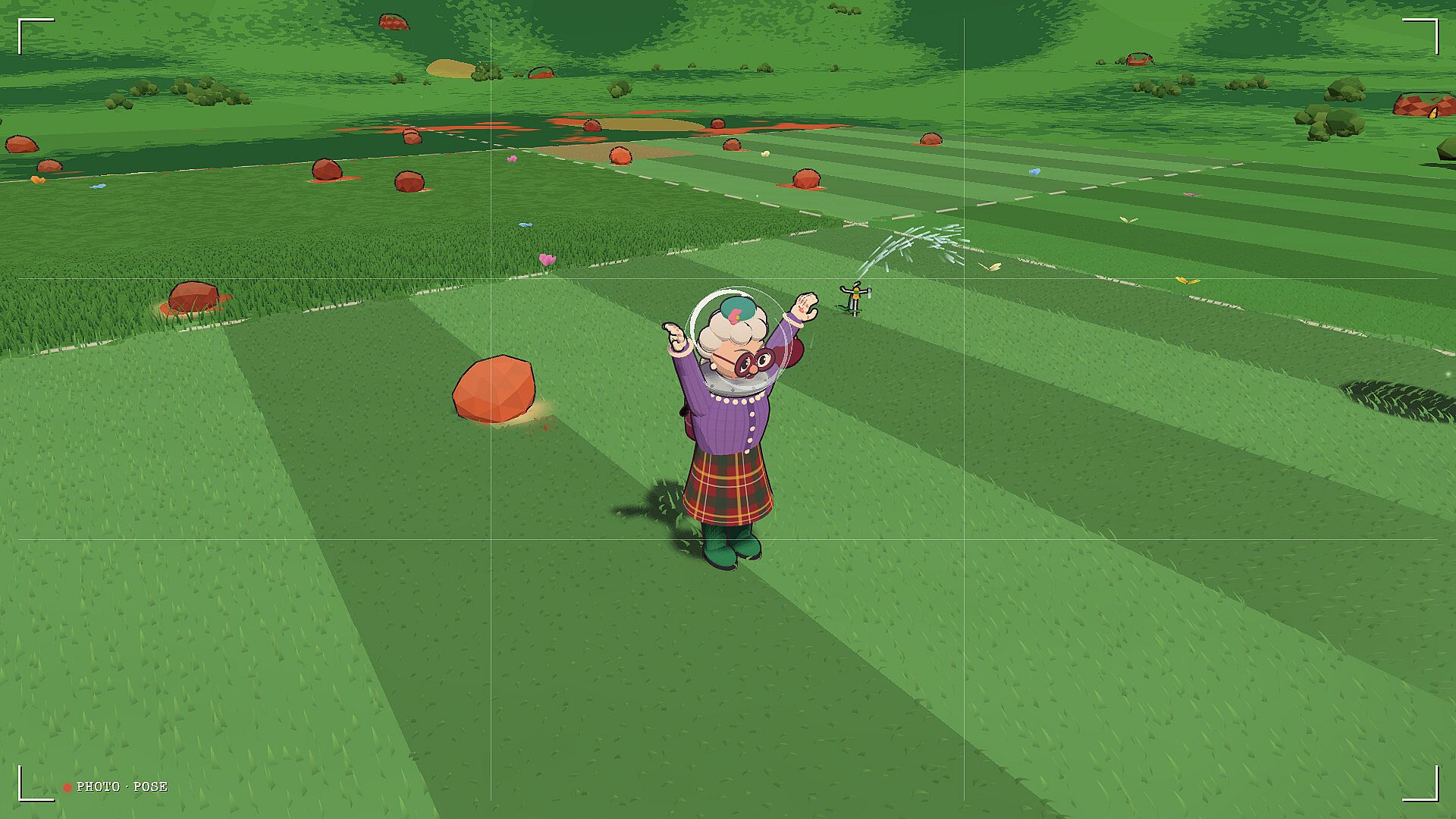


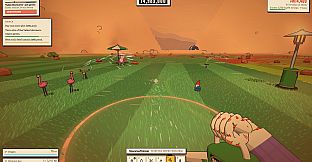




Mars Gardener is a single-player casual simulation game for PC in which players take on the role of Madame Odette, a 74-year-old gardener tasked with establishing lawns on the surface of Mars. The core experience centers on transforming red dust into green turf through sowing, watering, mowing, and selling the results to wealthy colonists living in domes. Developed as an indie title with simulation and casual elements, the game emphasizes methodical lawn care in a low-gravity environment of 0.38 g, where every action from the first seeds planted with a leaky cafeteria cup and nail scissors builds toward larger operations.
Gameplay
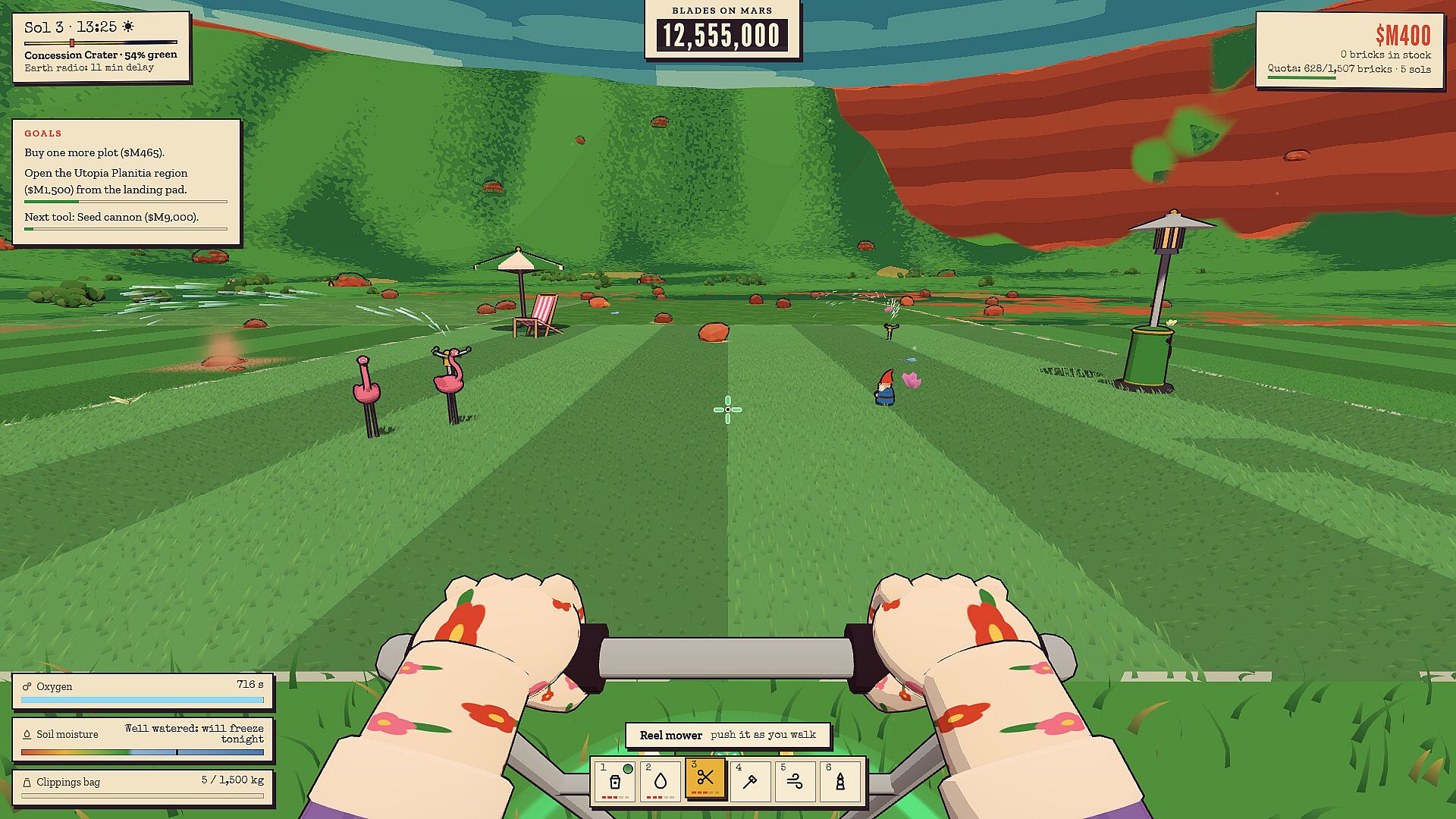
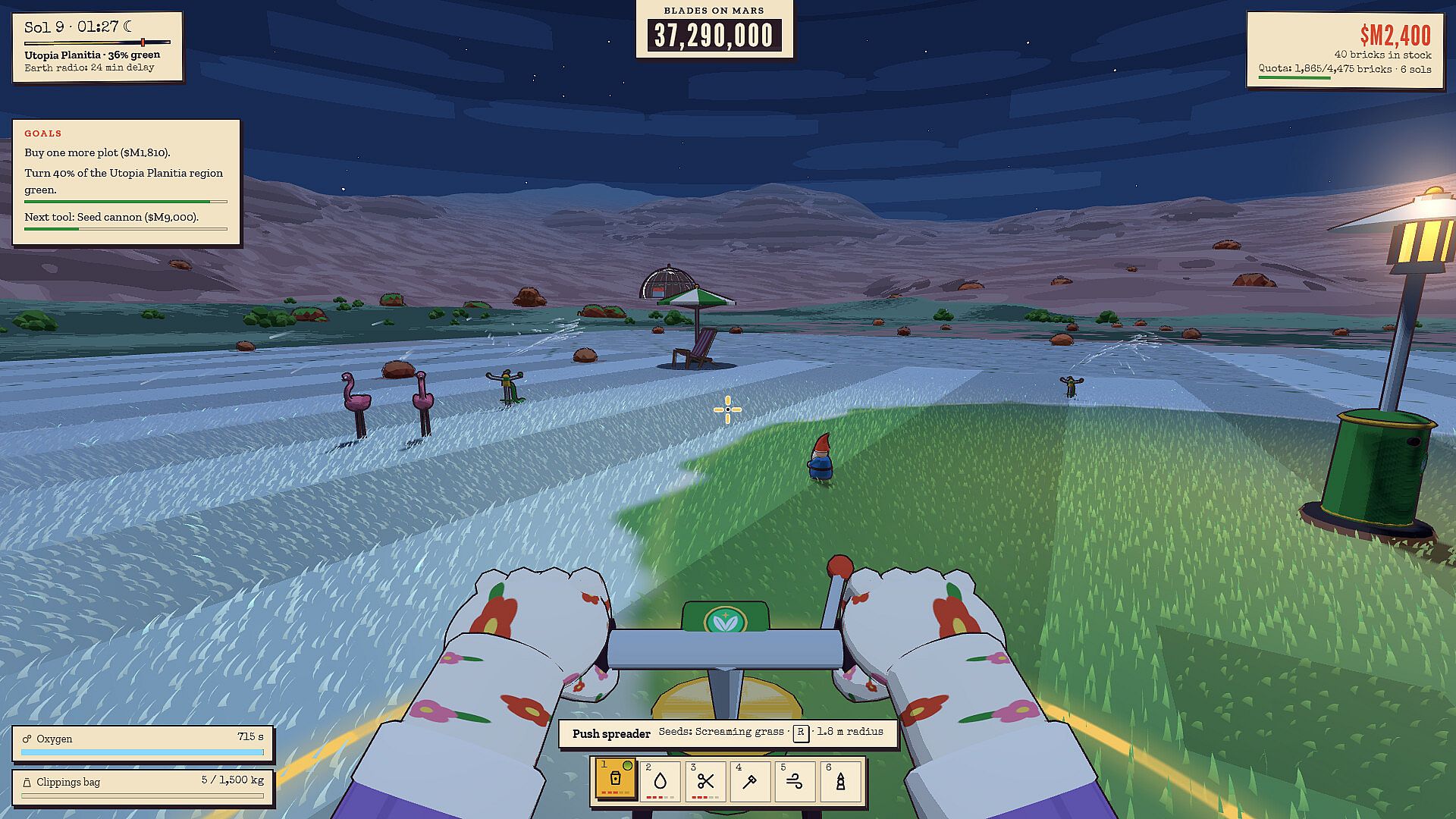
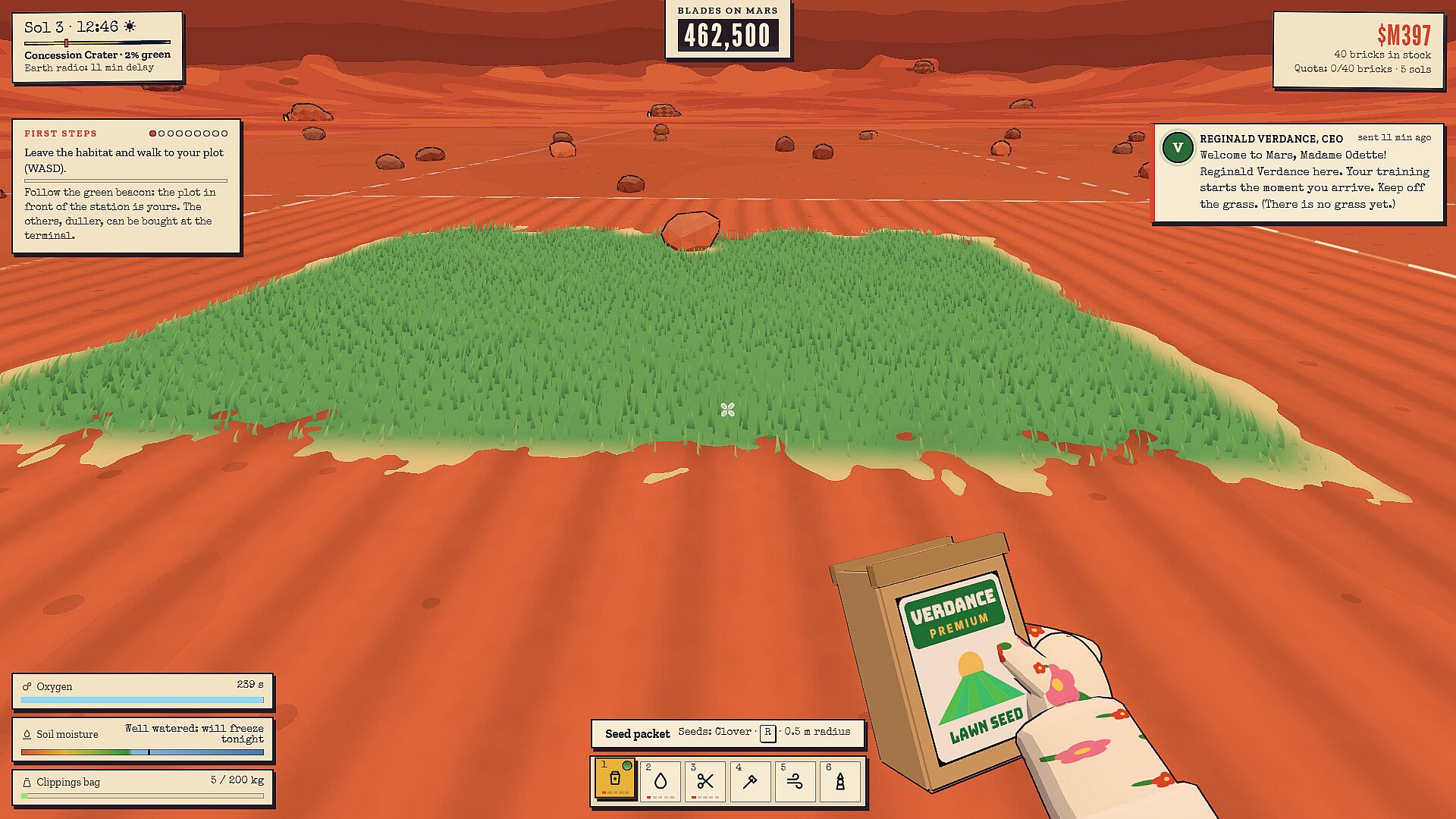
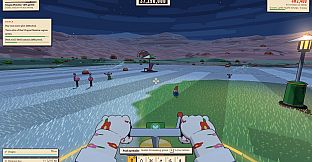
The central loop involves sowing seeds into the Martian soil, watering the patches, and then mowing the resulting grass to produce turf bricks for sale. Mowing creates distinctive light and dark stripes depending on the direction of each pass, and a counter tracks the total blades cut, climbing into the billions over time. Six distinct grass types offer variety in appearance and behavior: classic English lawn, clover, golf green, cactus turf, glow grass that illuminates at night, and screaming grass that produces sound when cut. Orders arrive from named colonists such as those at Château Regolith or Baron von Krater, each with deadlines that add structure to the daily work.
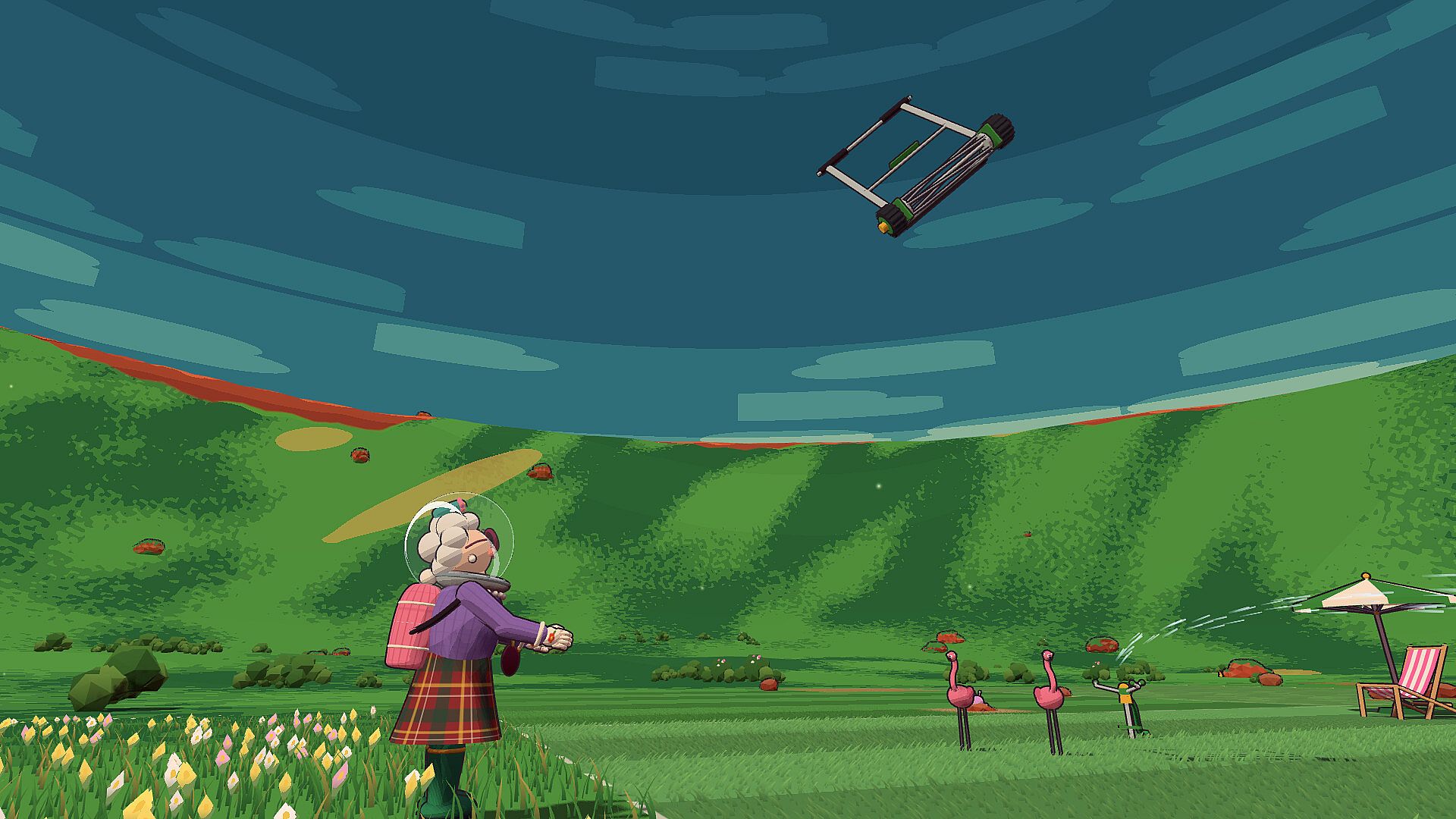
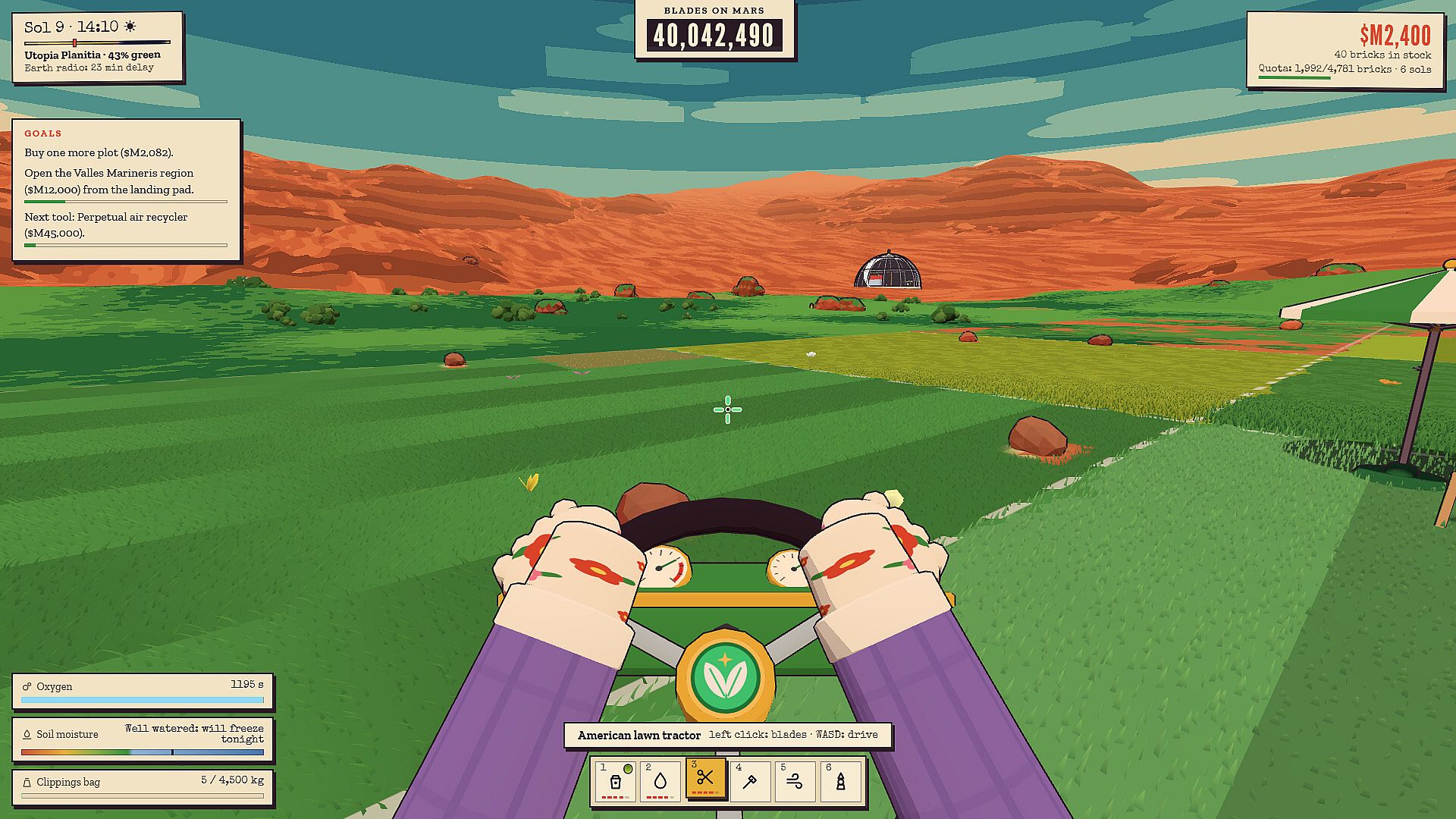
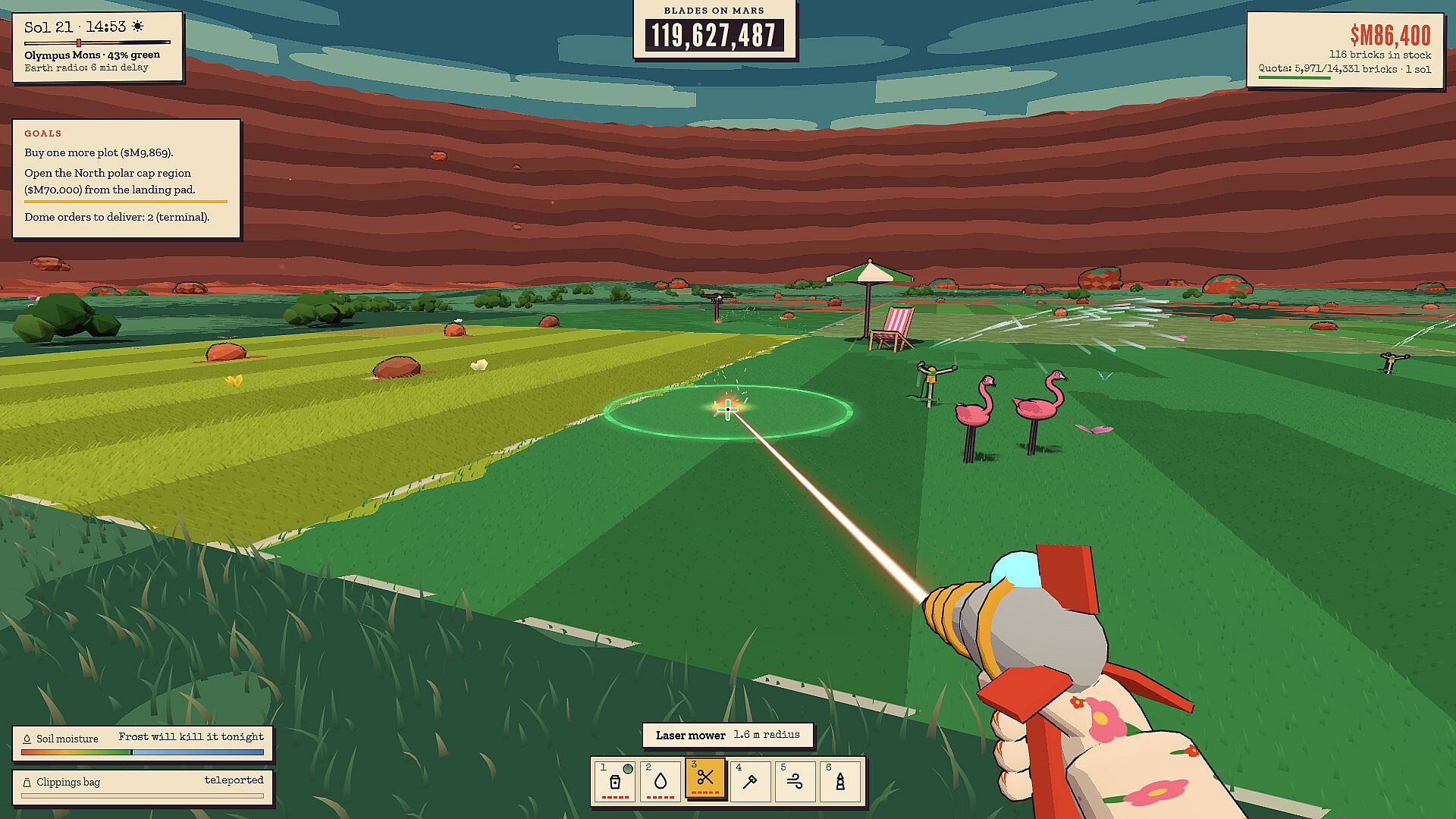
Decorative items including garden gnomes, pink flamingos, a white picket fence, a barbecue, and an inflatable pool increase the value of sold bricks, while fifteen golden gnomes serve as hidden collectibles scattered across the environment. Progression moves through five tool families, each with five tiers ranging from basic options like The Convict up to advanced ones such as The Green God. These upgrades alter core mechanics, introducing items such as a push spreader that sows directly underfoot, a 500-metre hose that trails the player, a reel mower prone to launching on rocks, a rocket shopping cart, an American lawn tractor with chrome exhausts, a seed cannon, and a laser mower supported by drones for orbital seeding. Automated systems like sprinklers, robot mowers, and drones eventually allow lawns to maintain themselves with minimal intervention.
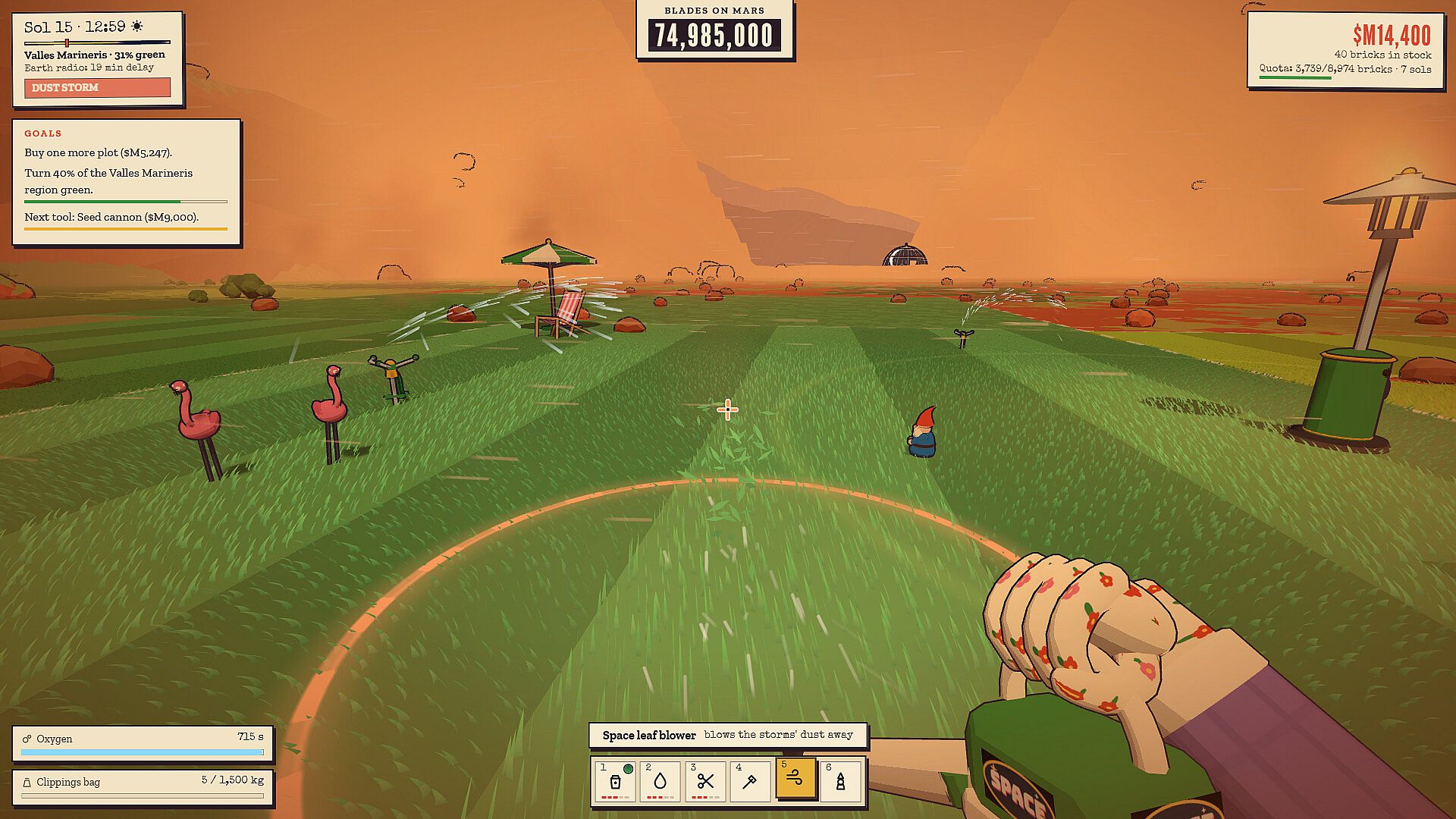
Mars presents ongoing challenges that interrupt the routine. Dust storms redden the grass and require a leaf blower for cleanup. Martian moles burrow through lawns and demand a shovel to address. Nights reaching minus 80 degrees Celsius can freeze overwatered areas, necessitating heat lamps, tarps, and a sprinkler timer. Oxygen limits the duration of each outing outside the habitat, though a drone returns the player upon depletion without permanent loss. Radio communications from CEO Reginald Verdance arrive with a 4-to-24-minute delay, often rendering warnings ineffective after events occur.
Game Modes
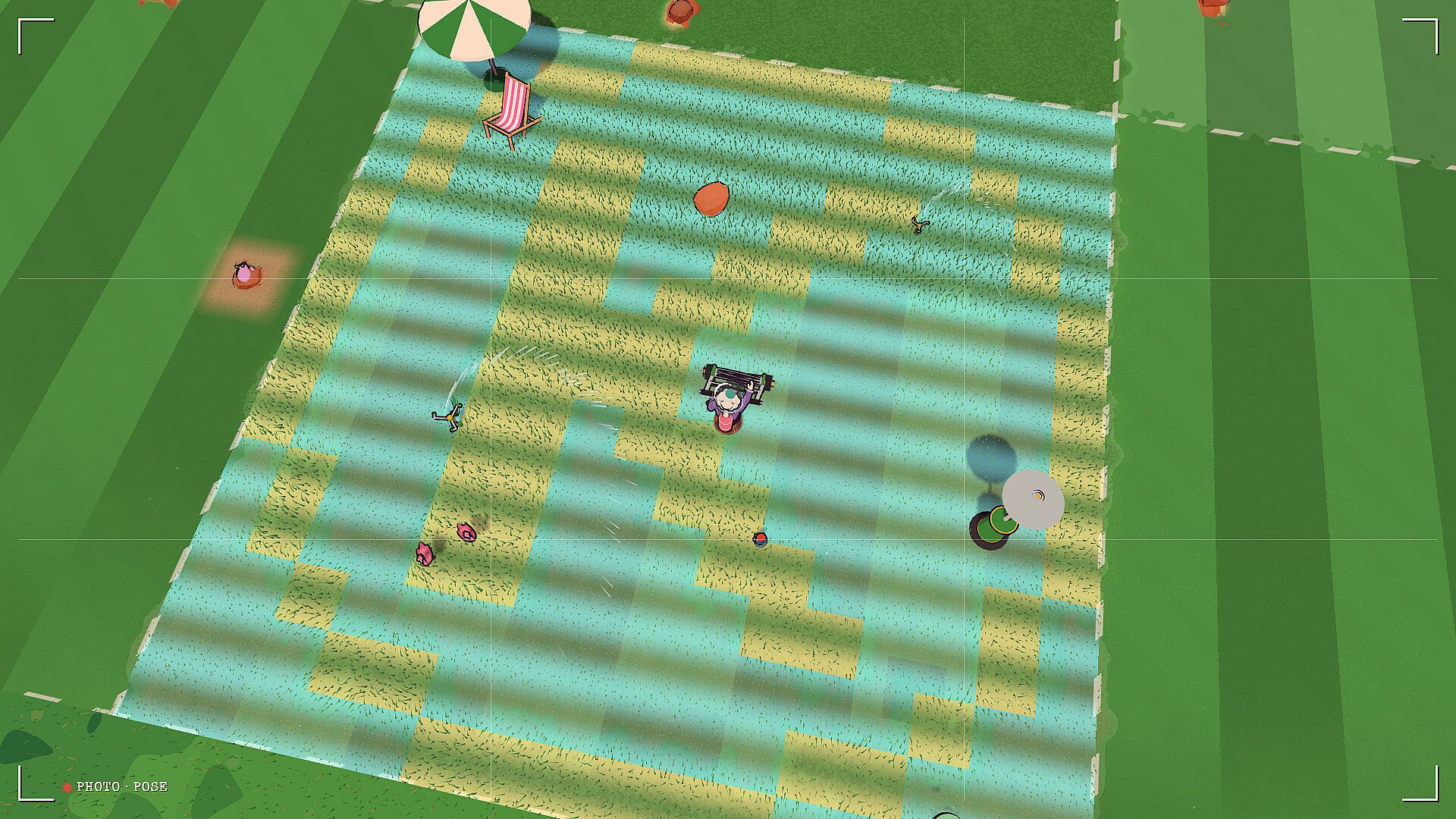
The game operates entirely in single-player format with no multiplayer components. The primary experience is a campaign lasting approximately five hours that guides players through expanding operations from initial small patches to larger regional projects. A third-person photo mode allows capturing images of completed lawns and patterns. Three save slots support multiple playthroughs or experimentation with different approaches to tool upgrades and lawn designs.
Setting and Progression
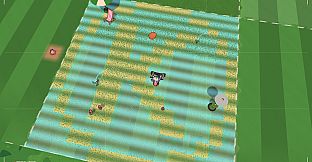
The world expands beyond the initial suburban lawn area to five distinct Martian regions, each featuring unique climate conditions: Utopia Planitia, Valles Marineris, Olympus Mons, and the North polar cap, culminating in the Green Planet project. A rotatable globe of Mars visually tracks the shift from red to green as lawns spread. Fictional brands commission specific mowed patterns such as a smiley face, a rocket, a slice of Pizza Orbitale, or the Krounch Cola logo; players mow to match projector outlines and then photograph the results from orbit for verification and rewards. The entire experience supports both English and French languages and uses keyboard and mouse controls.
Is It Worth Playing?
Mars Gardener suits players who enjoy deliberate, hands-on simulation gameplay focused on resource management, incremental upgrades, and creative lawn design rather than fast-paced action. The campaign provides a self-contained experience with clear progression from basic tools to automated systems, while the photo mode and hidden collectibles add optional depth for those who appreciate completionist elements. Its indie casual simulation style appeals to anyone interested in unconventional settings for everyday tasks like gardening, especially those who value the humorous tool designs and the contrast between suburban aspirations and Martian hazards. With its concise campaign length and straightforward controls, the game offers a focused session without requiring ongoing commitment or additional purchases.











