


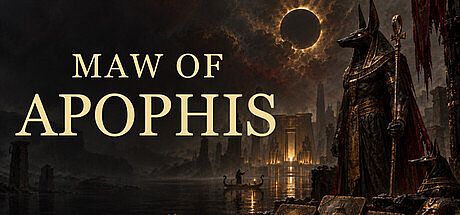


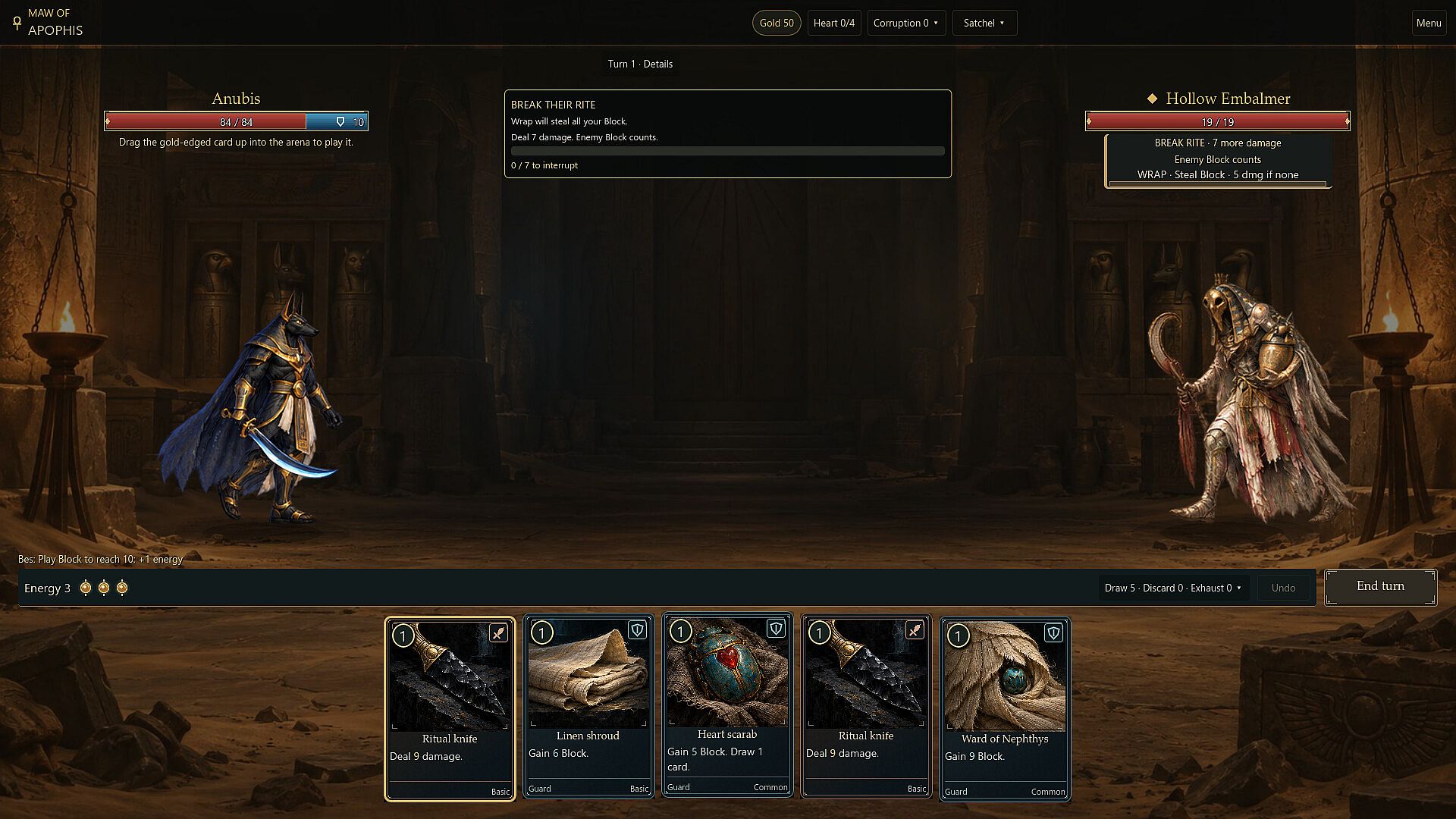
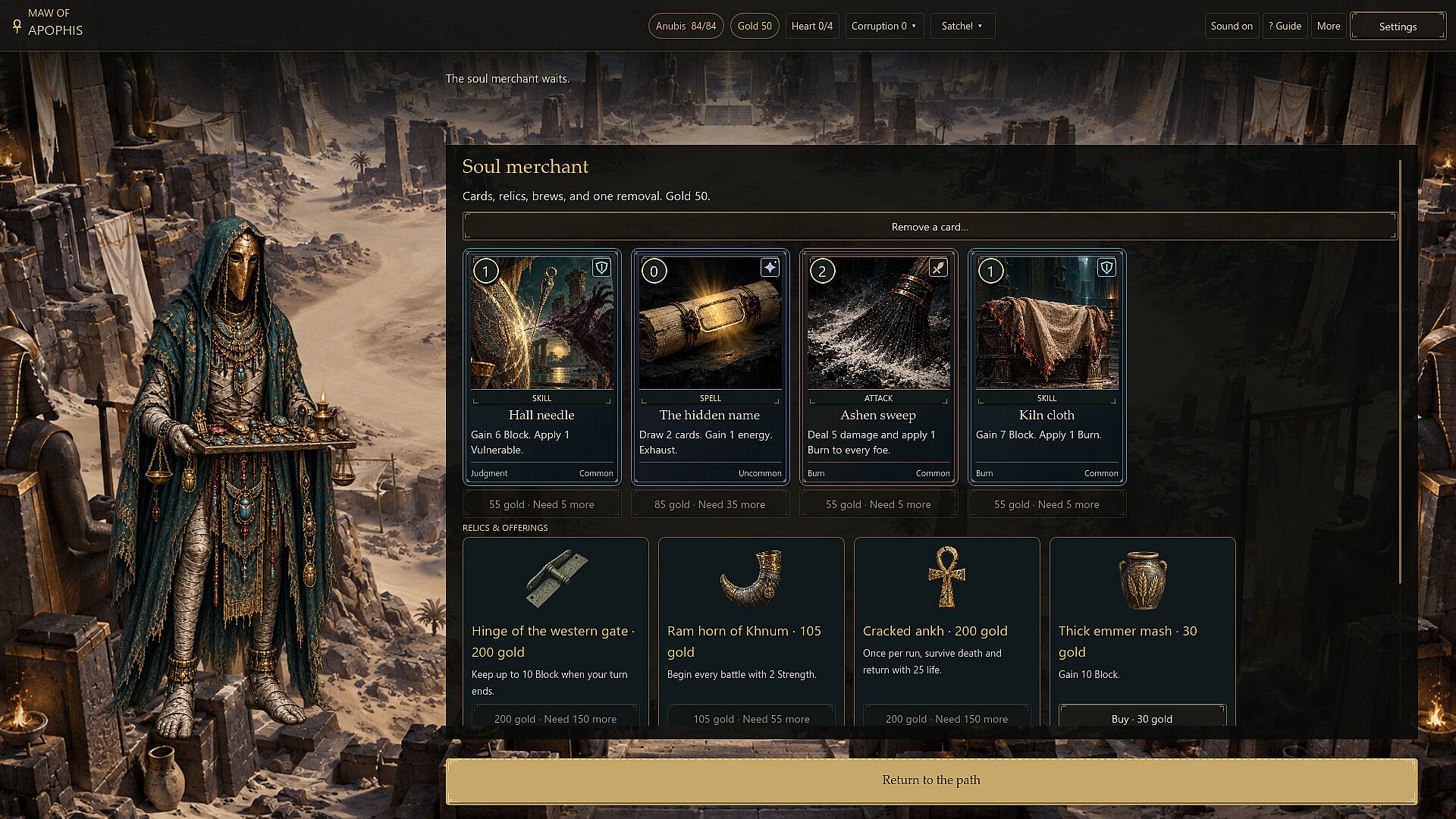




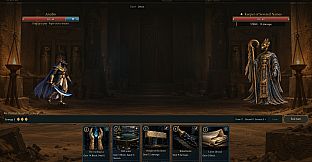
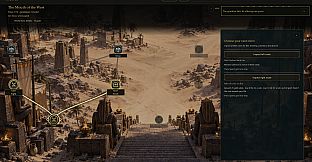


Maw of Apophis is a single-player roguelike deckbuilder that places players in a dark reimagining of the Egyptian underworld. The game combines card construction with tactical decision-making as players select champions, assemble decks, and navigate branching paths through tombs, drowned temples, and ash-covered regions. Combat revolves around anticipating enemy actions and disrupting their rites while managing limited energy and health resources.
Gameplay
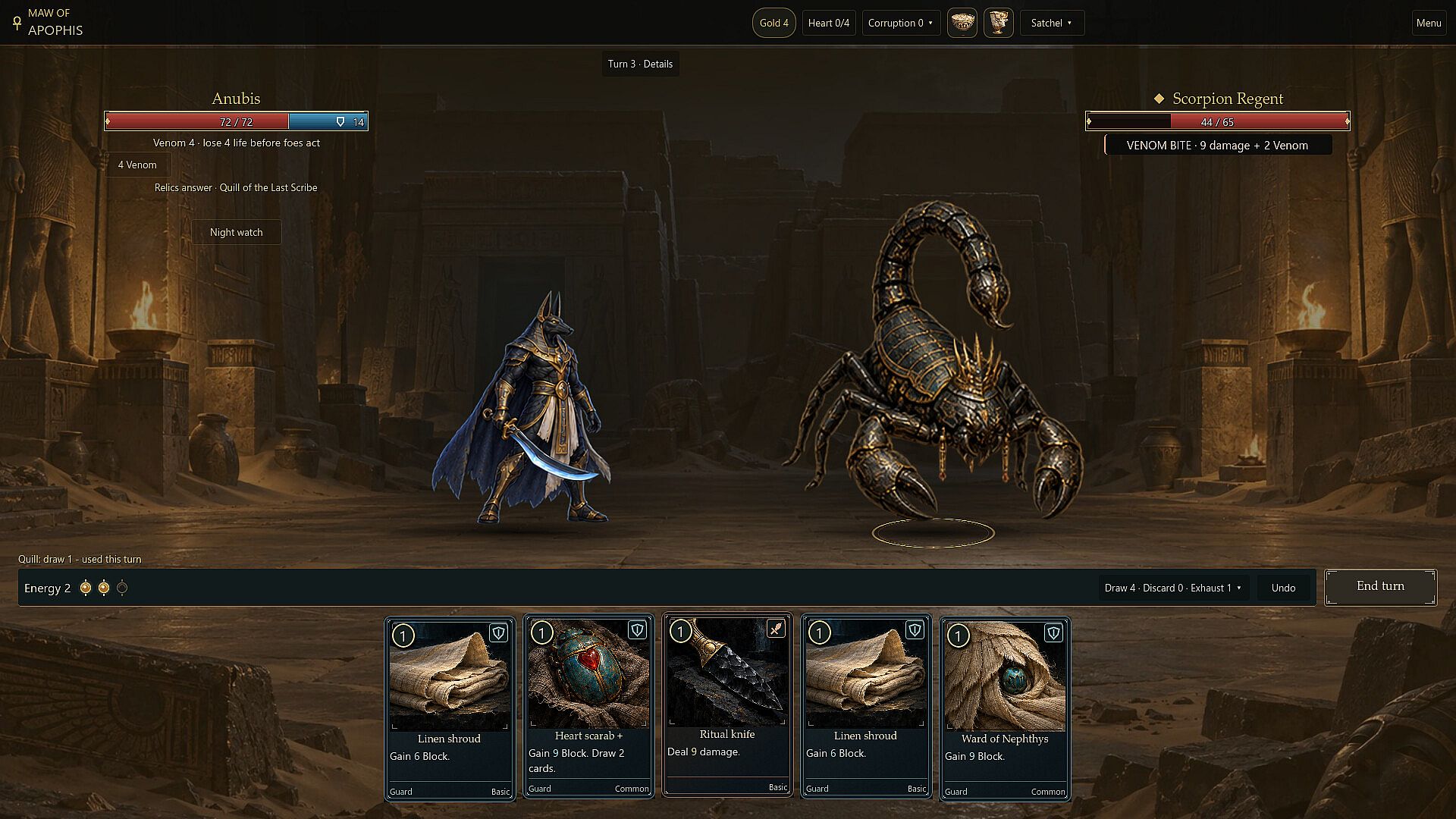
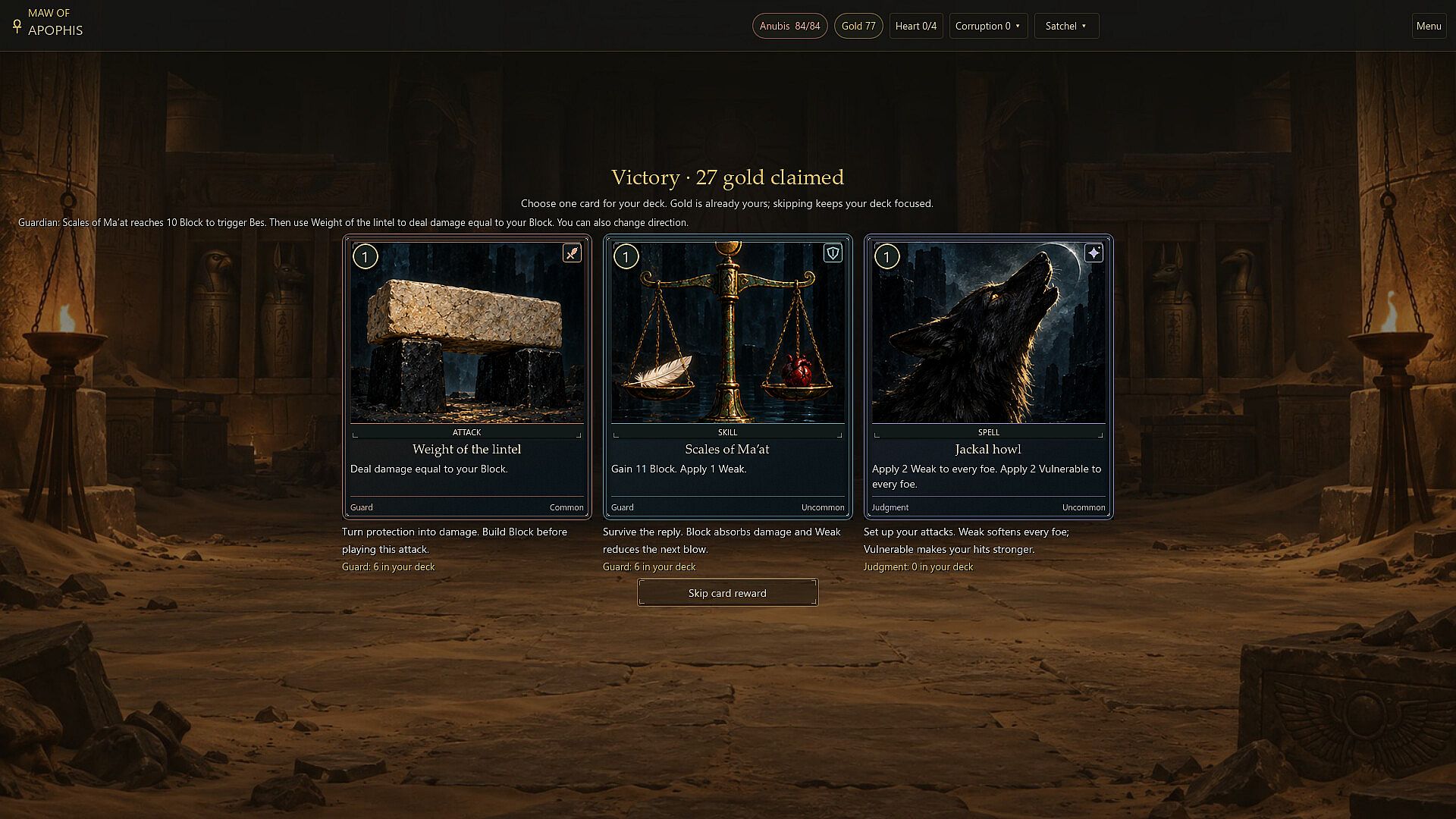
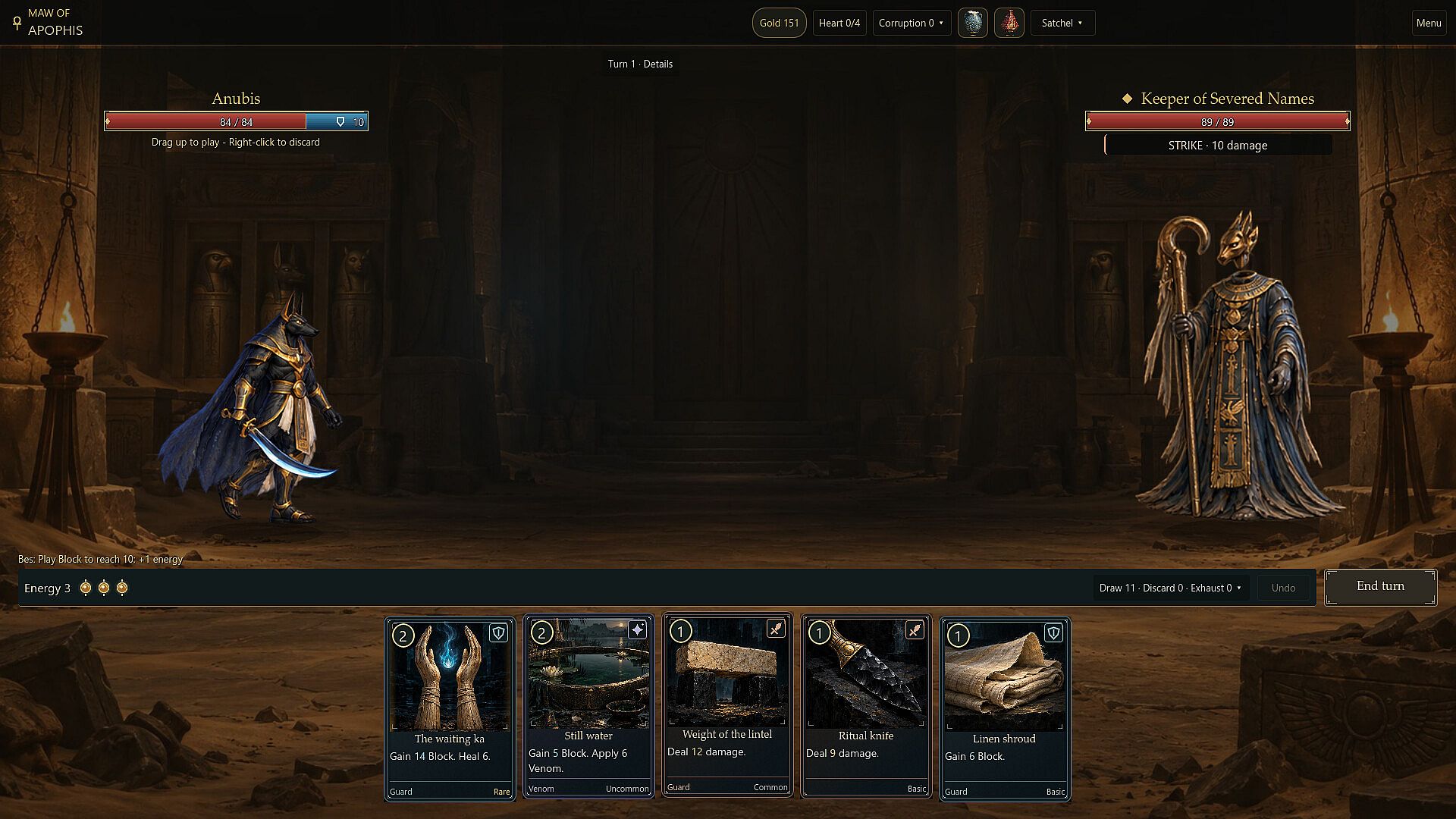
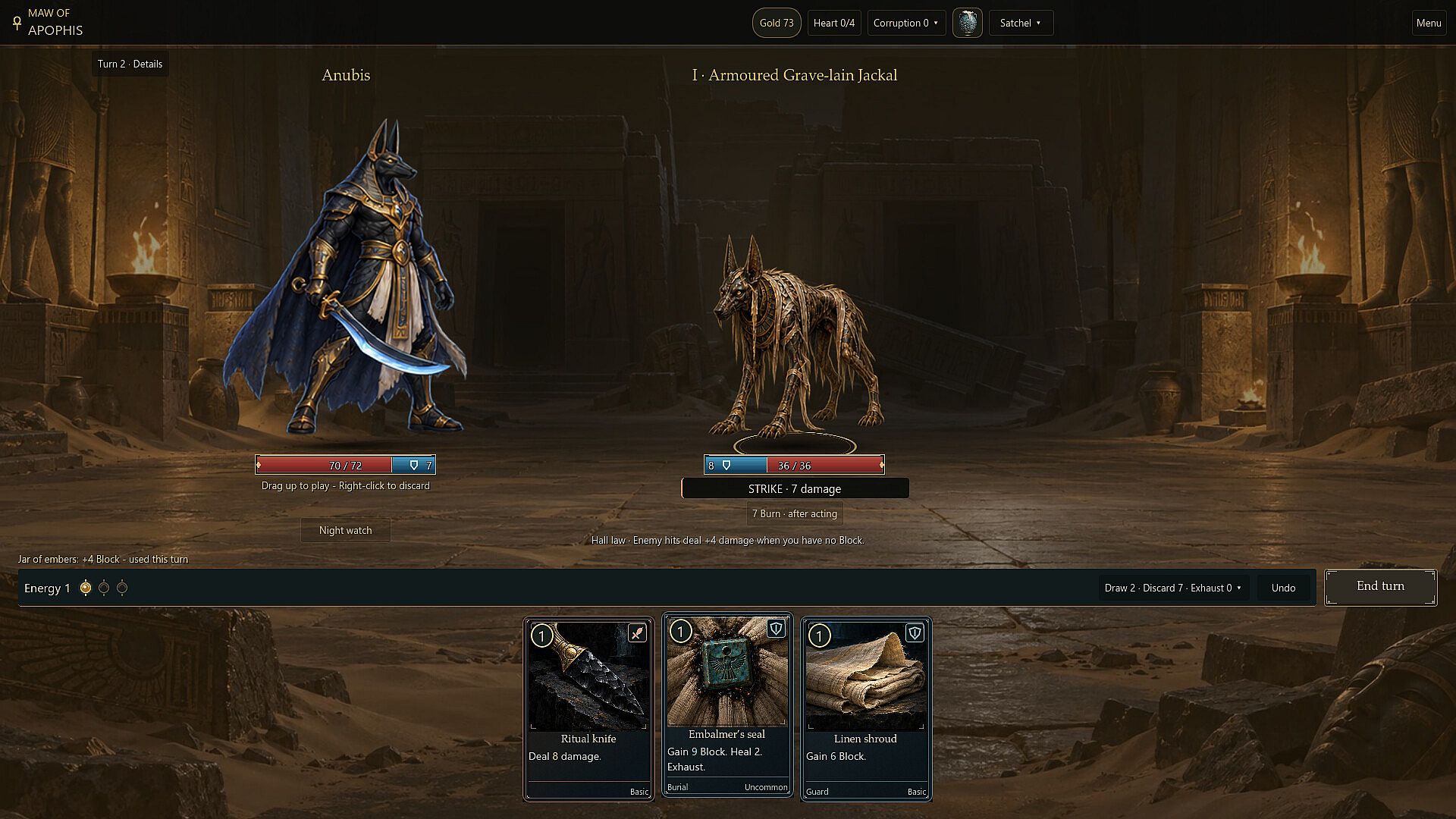
Core play centers on building and refining a deck of attacks, spells, and skills alongside relics and brews. Enemies display their upcoming moves, giving players time to prepare interrupts, defensive options, or aggressive counters. Energy allocation becomes critical during each turn, with the option to sacrifice life points for additional plays. Repeated sacrifices build toward a champion's Divinity state, converting that risk into a temporary surge of power.
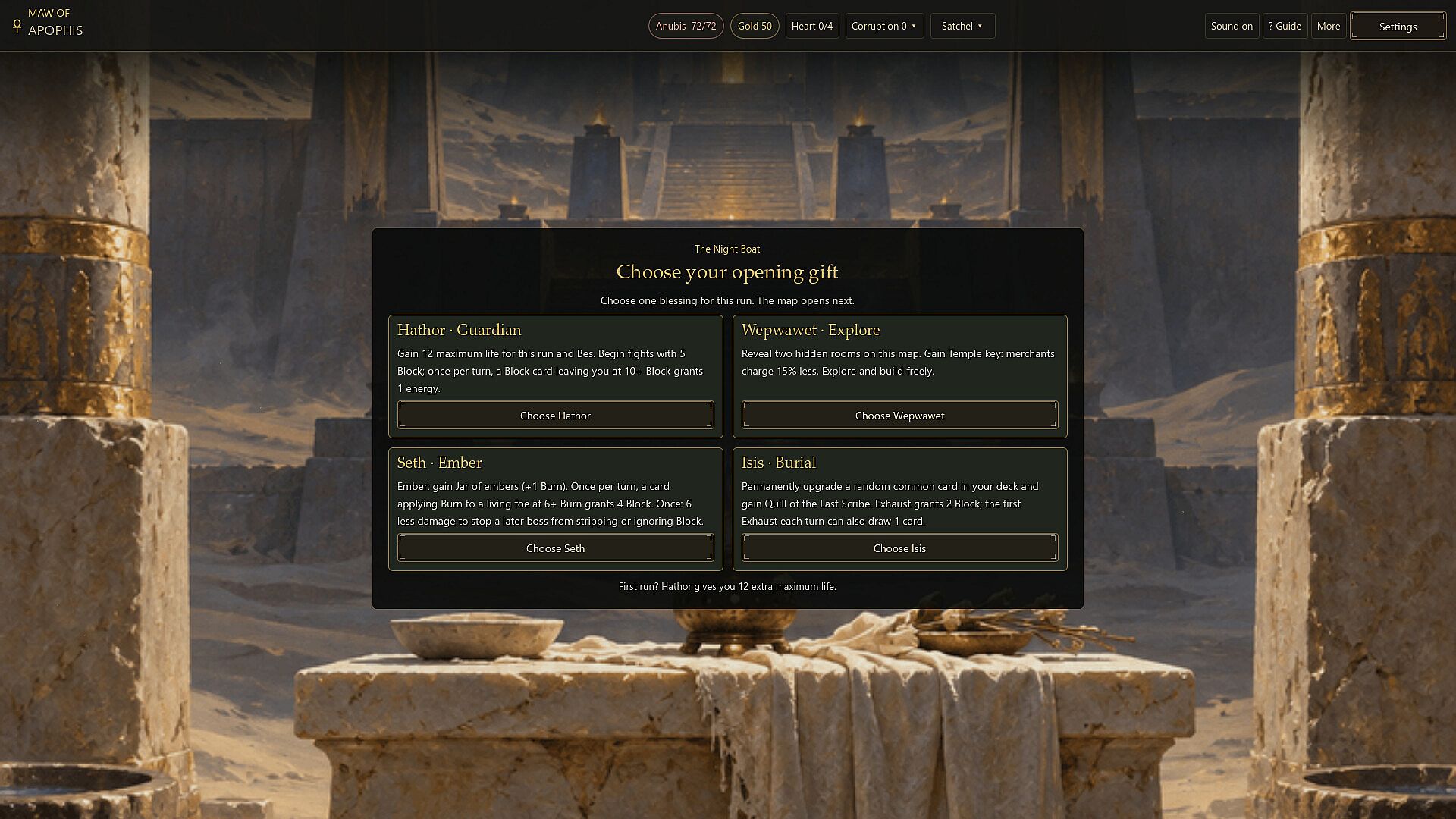
Deck evolution happens through upgrades, removals, and occasional transformations offered by strange rites. Players can copy powerful cards or exchange curses for other effects. Relics and brews add layers of customization that shift based on the chosen champion. Anubis emphasizes defensive setups, Sekhmet focuses on sustained damage output, Thoth provides extra energy generation, and Osiris excels at block and exhaust mechanics. Each champion alters how certain cards perform, encouraging different priorities during runs.
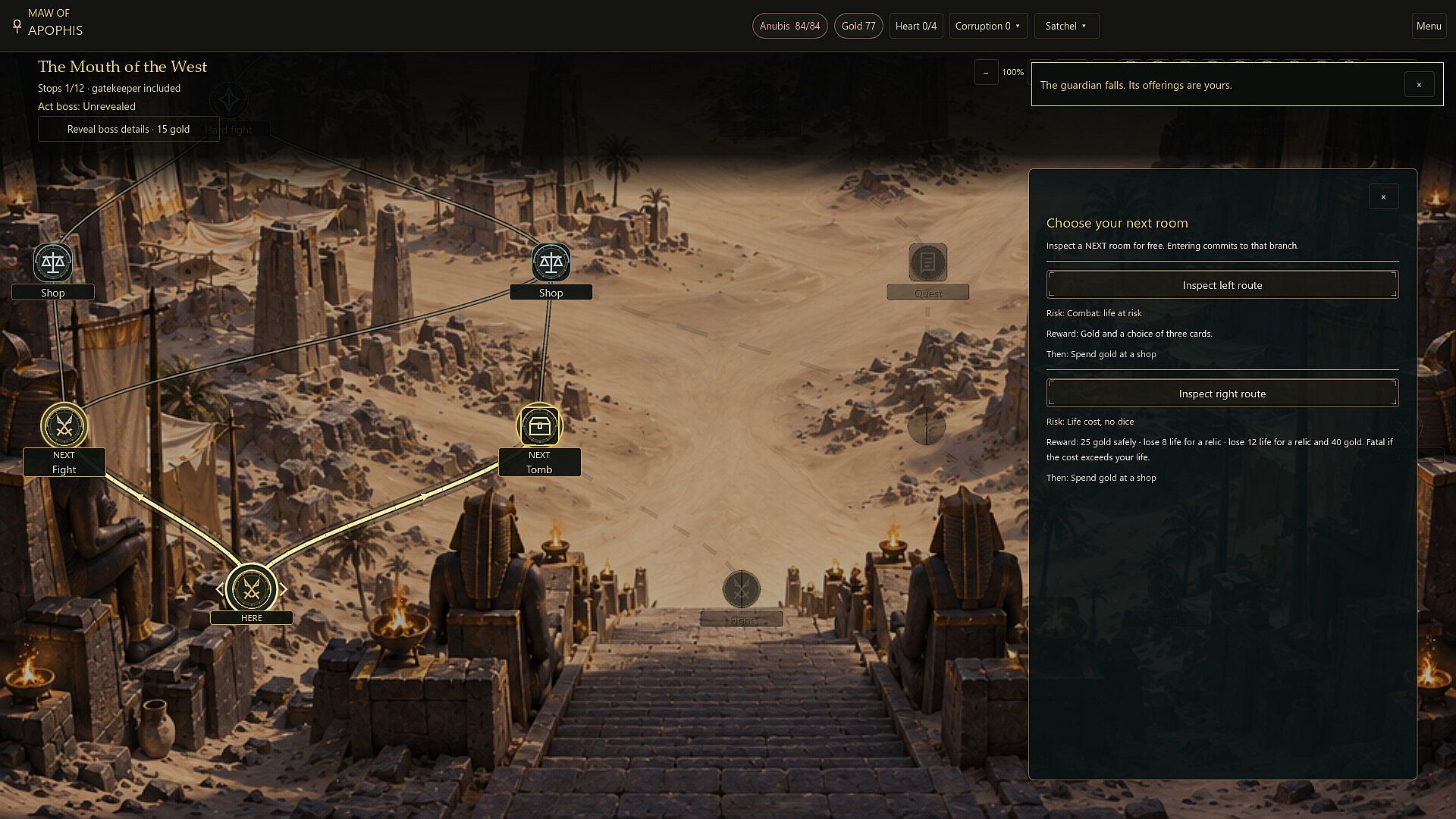
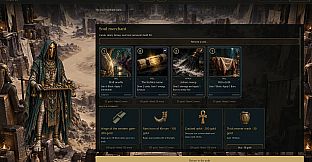
Route planning across maps introduces further choices. Elite encounters yield stronger relics, the Soul Merchant offers trades, sanctuaries provide recovery, and quests for lost souls deliver additional rewards. Bargains that grant immediate benefits can introduce lasting Corruption, increasing the difficulty of later encounters. The loop rewards focused strategies while punishing overly broad decks.
Game Modes
The primary experience is a single-player roguelike run that can be saved and resumed later. Eight difficulty levels scale the challenge for repeated attempts. A daily seeded descent provides a consistent starting point for comparison or competition with others. Custom challenges allow players to adjust parameters for tailored sessions.
Additional tools support varied playstyles. Deck inspection and target previewing help with planning. An in-turn undo feature permits reconsideration of the most recent action. Accessibility options include adjustable text size, faster animations, and a still pictures mode that reduces motion for those who prefer a steadier pace.
Champions and Deck Building
Progression unlocks three additional champions after initial victories with Anubis. Each one redefines card value and encourages distinct approaches to the same card pool. Relics and brews interact differently depending on the champion's strengths, creating meaningful variety across runs without requiring entirely separate systems.
Decisions about which rewards to accept or decline directly shape long-term viability. Removing low-impact cards or upgrading key ones keeps the deck lean. Rite-based events can duplicate rare finds or convert drawbacks into assets, rewarding careful observation of the current state of the run.
Is It Worth Playing?
Maw of Apophis targets players who enjoy single-player roguelike deckbuilders with emphasis on enemy intent reading and resource trade-offs. The structure supports multiple runs through its difficulty tiers, daily option, and custom settings, while quality-of-life features like undo and adjustable pacing accommodate different preferences. As an unreleased title scheduled for April 2027, it currently offers no player reviews or post-launch updates. Those drawn to strategic card play set against mythological themes may find the systems and champion variety worth following until release.











