

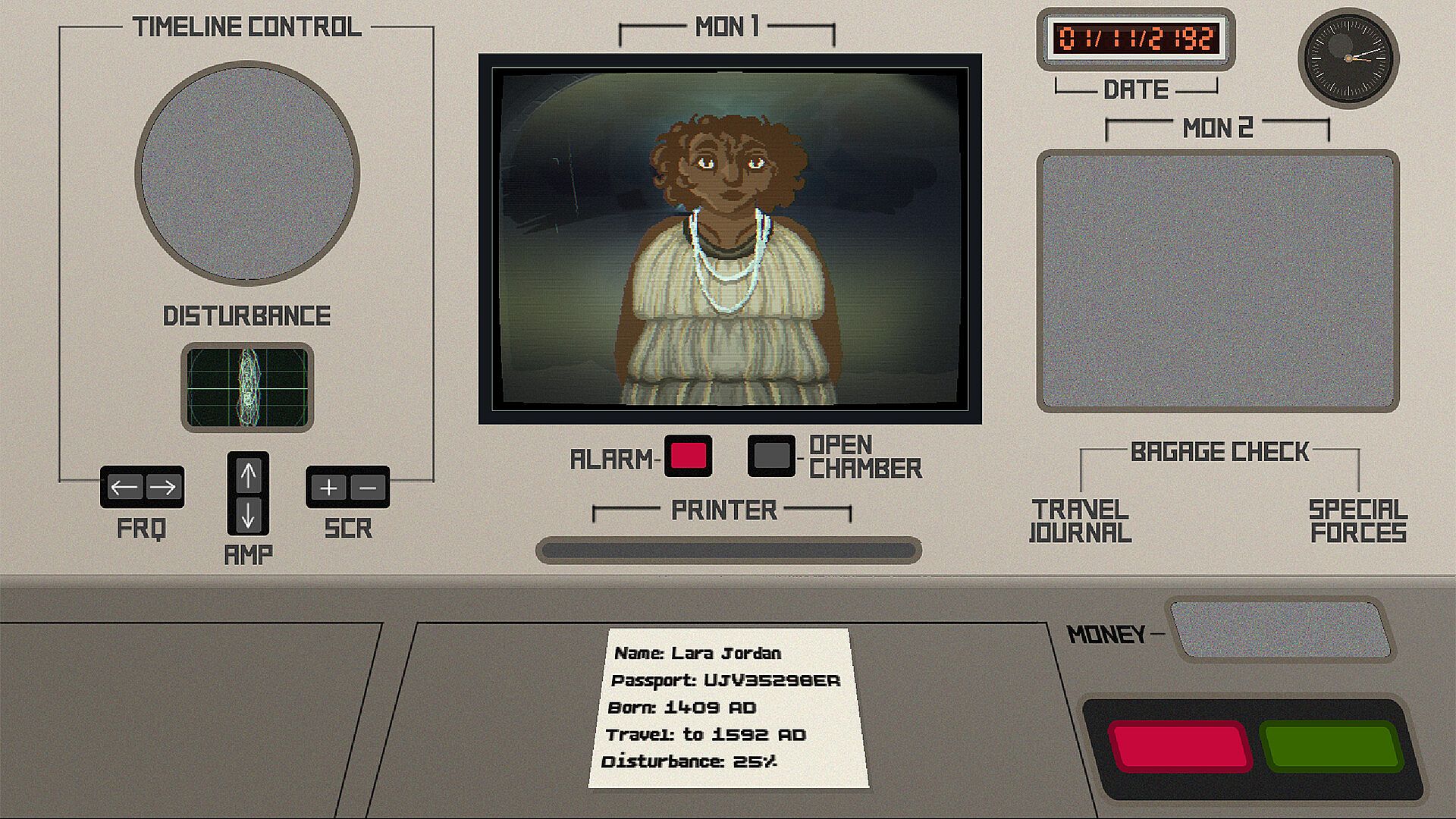
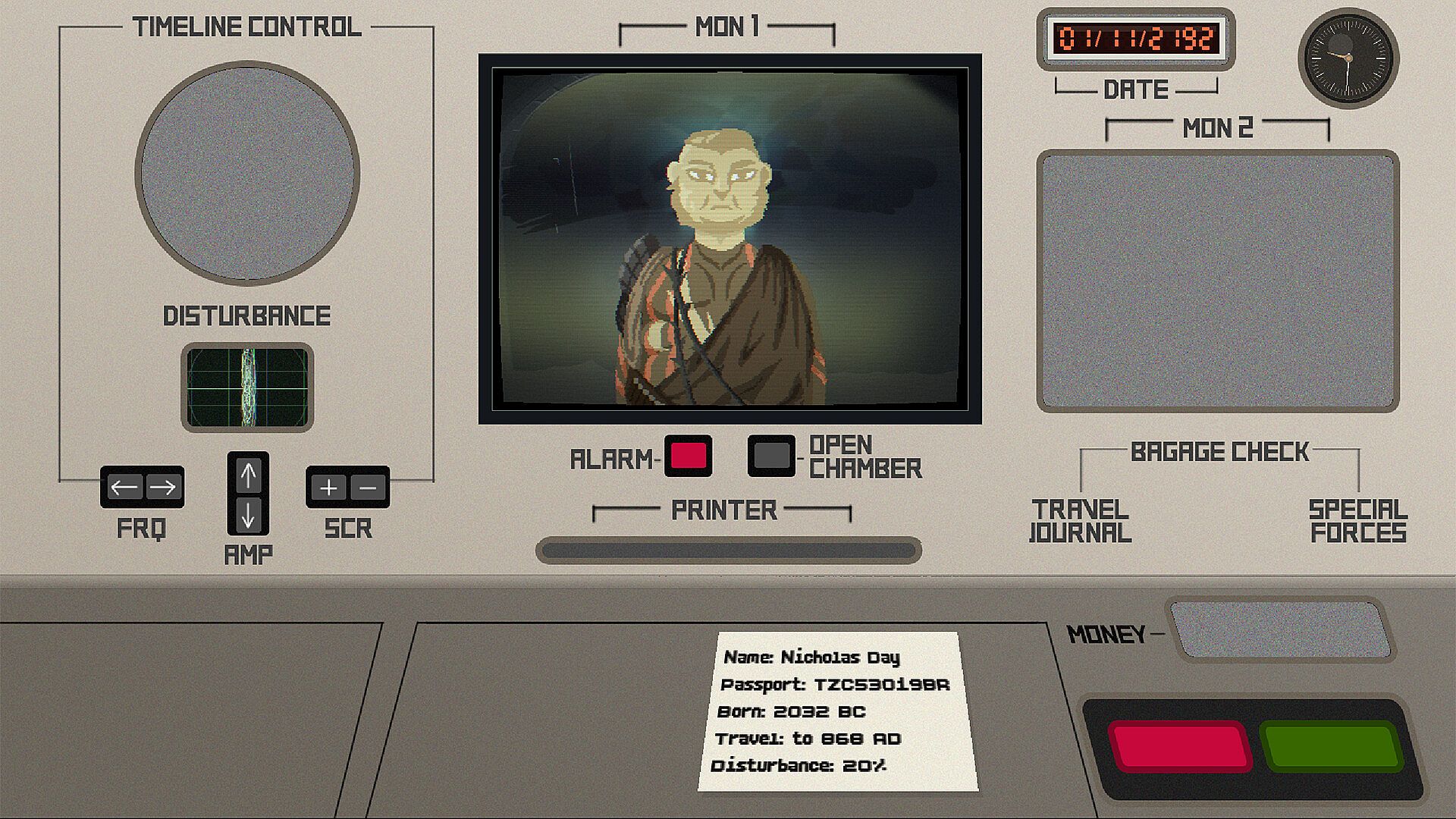
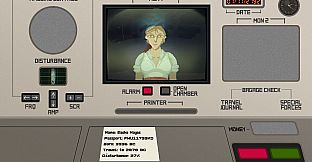
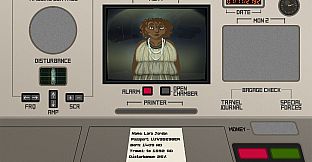
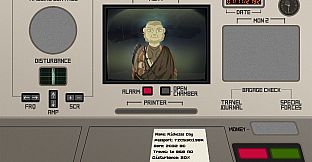
Ministry of Time is an indie simulation adventure game set on PC that places players in the role of a customs officer managing a checkpoint between different historical eras. Travelers from across time pass through daily, and the core task involves verifying documents, examining belongings, and preventing items or individuals from disrupting established history. The experience blends routine inspection work with unexpected complications that arise from time travel itself.
Gameplay
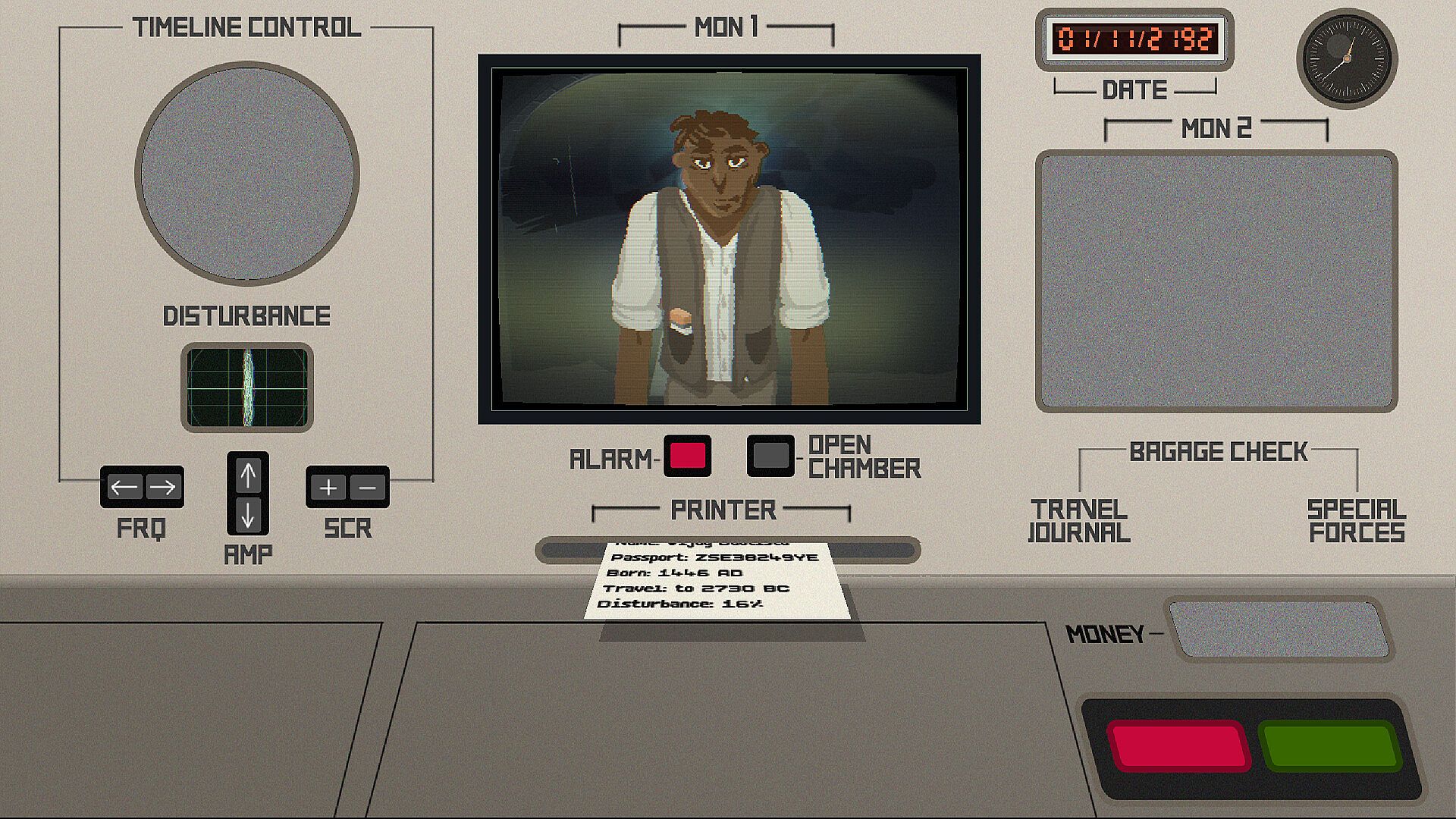
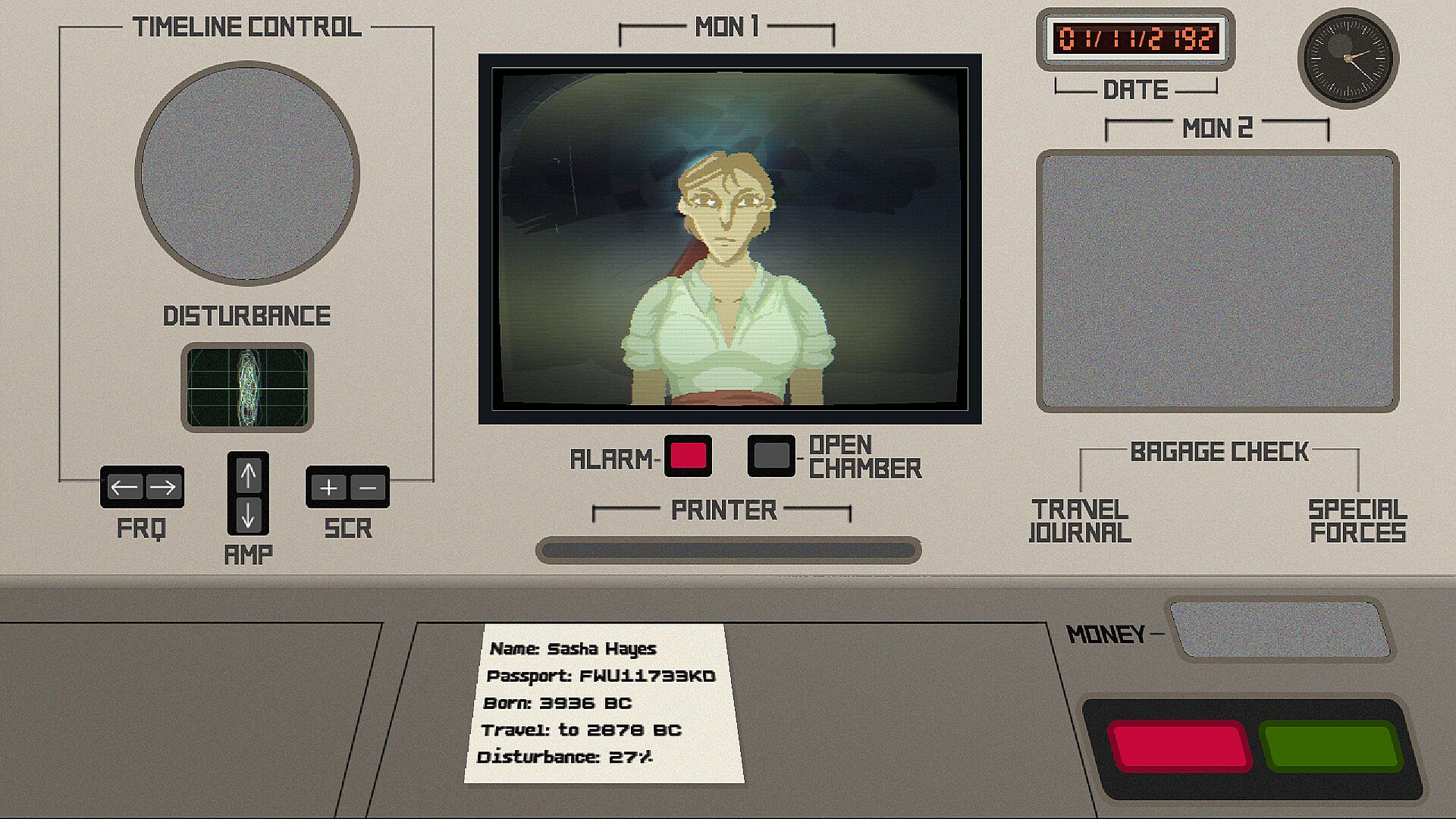
The central loop revolves around processing arrivals at the checkpoint. Each traveler presents paperwork that must be cross-checked against known historical facts, while personal items undergo close scrutiny for anachronisms. Contradictions in stories or mismatched dates signal potential issues that require further questioning. Decisions made at this stage directly influence the stability of later periods in the timeline.
Time Eaters represent a distinct threat that can appear disguised among ordinary visitors. These anomalies consume fragments of history, people, or events, demanding careful observation to identify before they pass through. When anomalies evade detection or history shows signs of damage, response teams become available for deployment into affected eras. Agents handle containment, removal of forbidden technology, and management of witnesses, though each intervention carries the risk of generating new deviations elsewhere.
Complexity builds as cases progress. Early inspections focus on straightforward document mismatches, while later ones involve layered deceptions and objects whose origins blur across multiple periods. The living timeline mechanic ensures that choices reshape events in subsequent eras, creating a chain of consequences that players must track through repeated play sessions.
Game Modes
Ministry of Time operates as a single-player experience centered on sequential checkpoint shifts. The primary mode involves daily processing of travelers with increasing scrutiny as the timeline evolves. No separate competitive or cooperative modes exist; instead, the structure emphasizes progressive difficulty through more intricate cases and expanding responsibilities.
Deployment of response teams adds a secondary layer to the core inspection work. Players shift between checkpoint duties and directing agents in the field, balancing immediate decisions at the station with longer-term cleanup operations. This integrated approach keeps the focus on maintaining historical integrity without branching into unrelated play styles.
Key Mechanics and Features
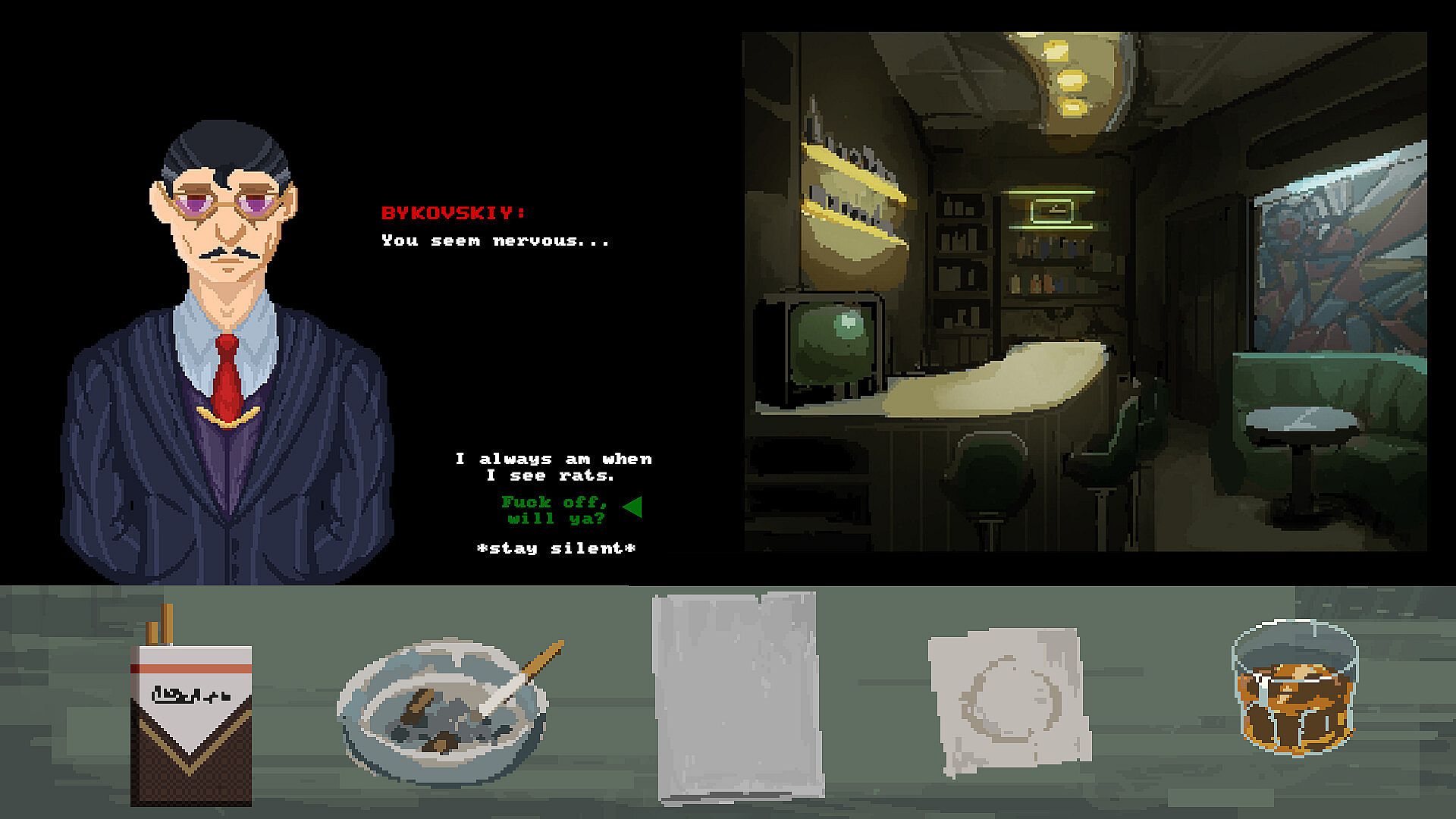
Document and belongings inspection forms the foundation, where every detail from passports to personal stories can reveal clues or contradictions. Questioning suspicious travelers allows deeper investigation before final rulings. The presence of Time Eaters requires constant vigilance, as they blend with regular arrivals and threaten to erase portions of recorded events.
Response team deployment provides tools for addressing violations that slip past the checkpoint. Sending agents into past eras to contain anomalies or remove out-of-place technology introduces strategic choices about resource allocation and risk assessment. The system rewards careful planning while penalizing actions that create fresh timeline fractures.
Dark humor surfaces alongside unsettling revelations, particularly when travelers prove to be something other than human or when routine checks uncover deeper historical threats. The combination keeps the tone grounded in bureaucratic procedure even as the stakes involve entire fragments of the past.
Is It Worth Playing?
Ministry of Time suits players who enjoy methodical inspection gameplay with narrative consequences. The indie simulation adventure format delivers a focused single-player loop that rewards attention to detail and thoughtful decision-making. Those drawn to time-travel concepts tied to procedural tasks will find the checkpoint and response team systems provide consistent engagement across multiple shifts.
The game emphasizes a living timeline where choices matter, making it appealing for individuals who prefer games built around cause and effect rather than action or exploration. Without confirmed updates or additional content beyond the core description, the experience stands on its described mechanics alone. Players seeking a deliberate pace with moments of tension and unexpected twists will likely appreciate the structure, while those preferring faster-paced or multiplayer formats may find the emphasis on paperwork and investigation less fitting.