

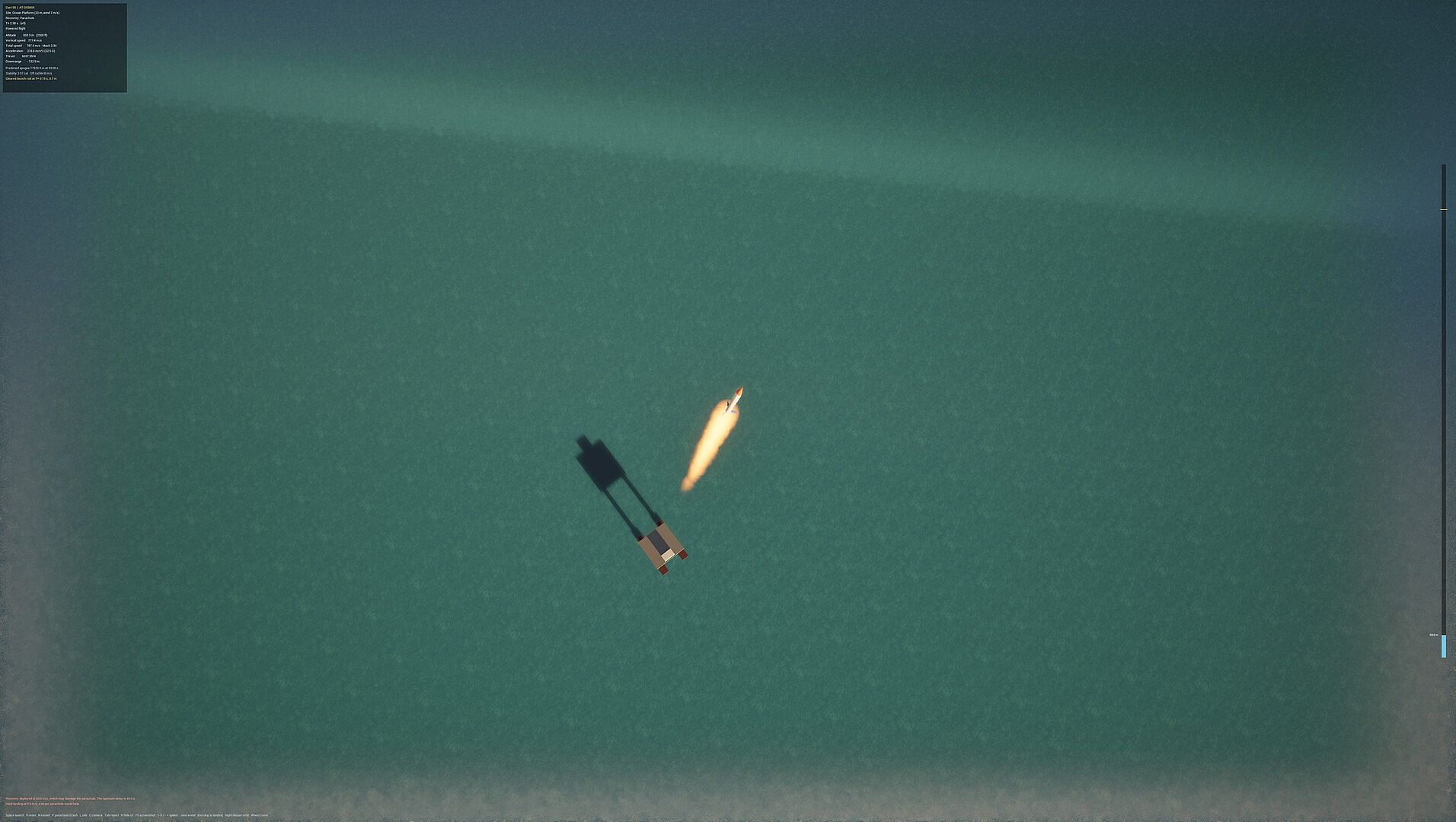
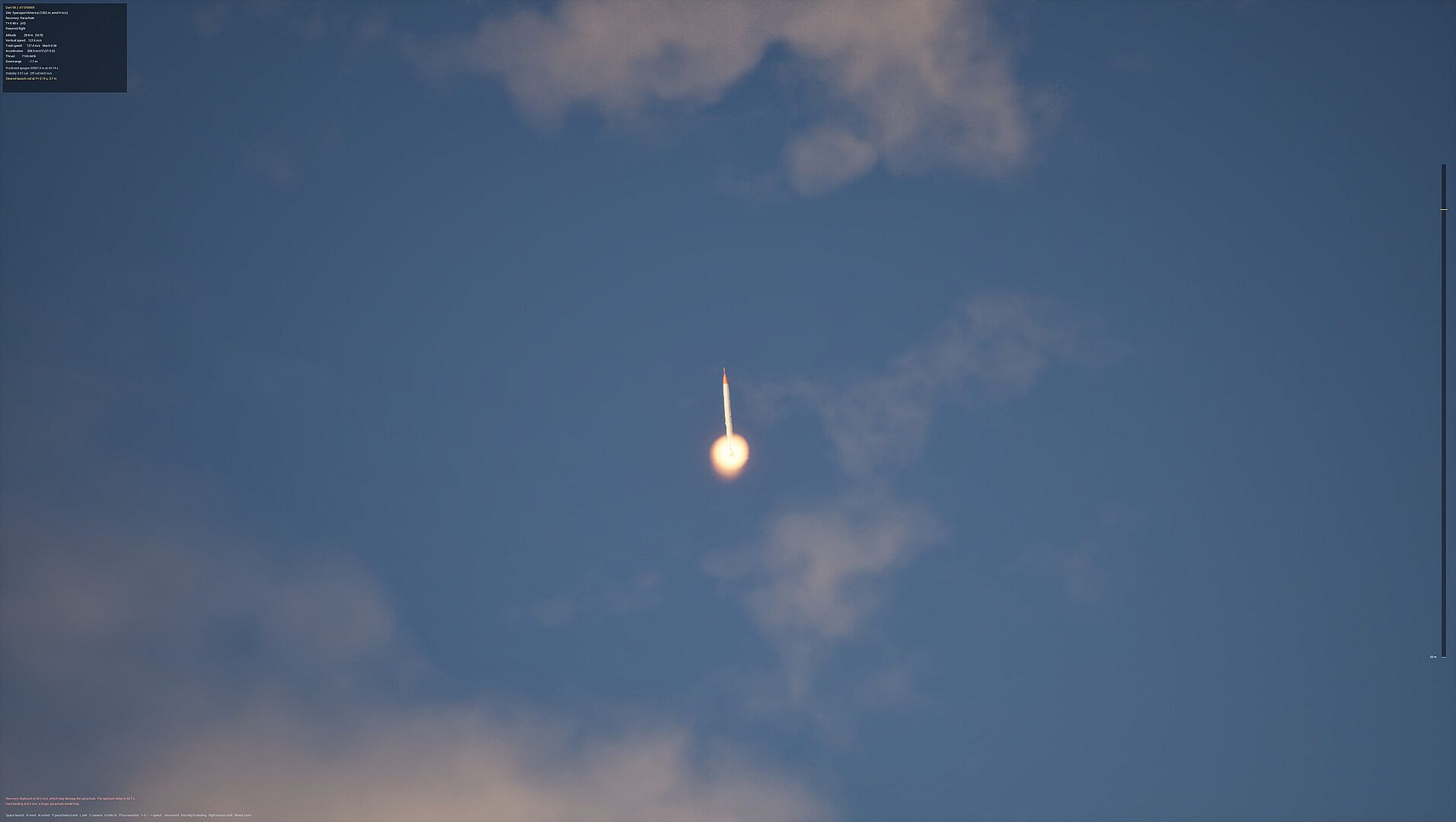

Missile Simulator is a physics-based simulation game for PC where players design, launch, and refine custom missiles in a detailed engineering sandbox. The experience centers on experimentation with real-world physics principles to achieve better performance in speed, altitude, and flight stability.
Gameplay
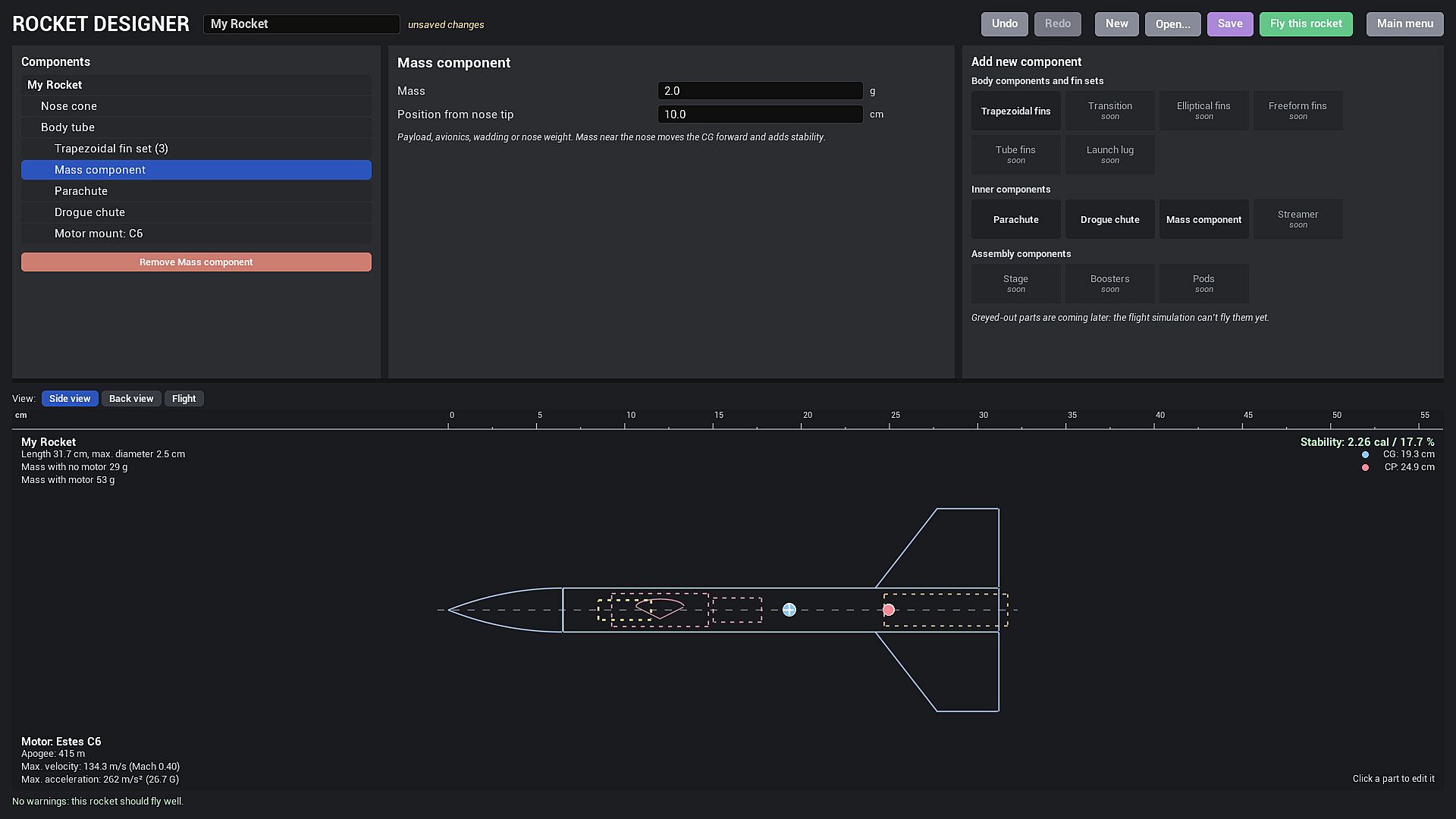
Players begin by selecting components for each missile, including the body, nose cone, fins, and propulsion system. Different choices alter mass, shape, and thrust, which directly influence how the projectile behaves once airborne. The core loop involves launching the design, reviewing the outcome through detailed flight data, and returning to the builder to make adjustments.
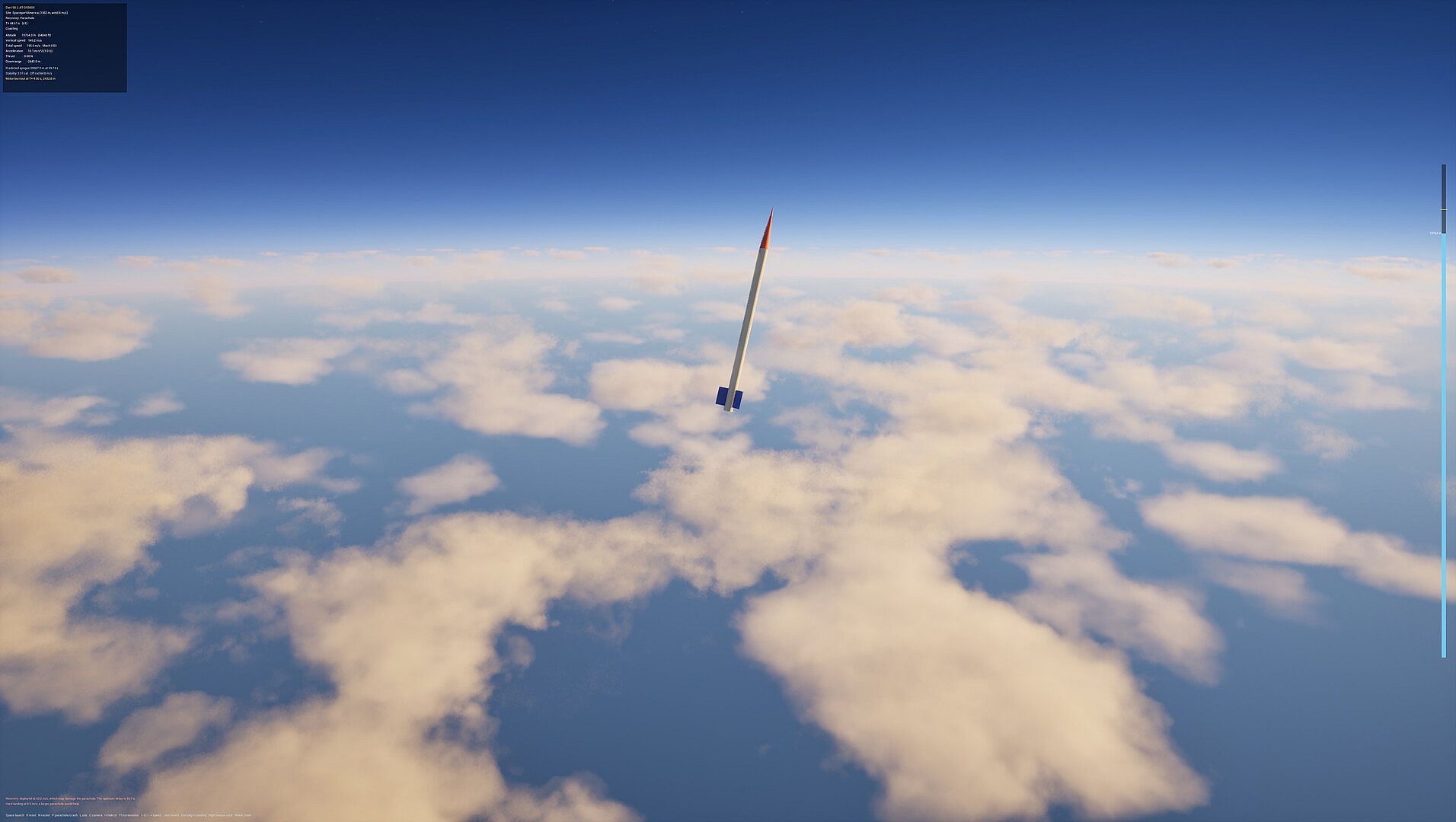
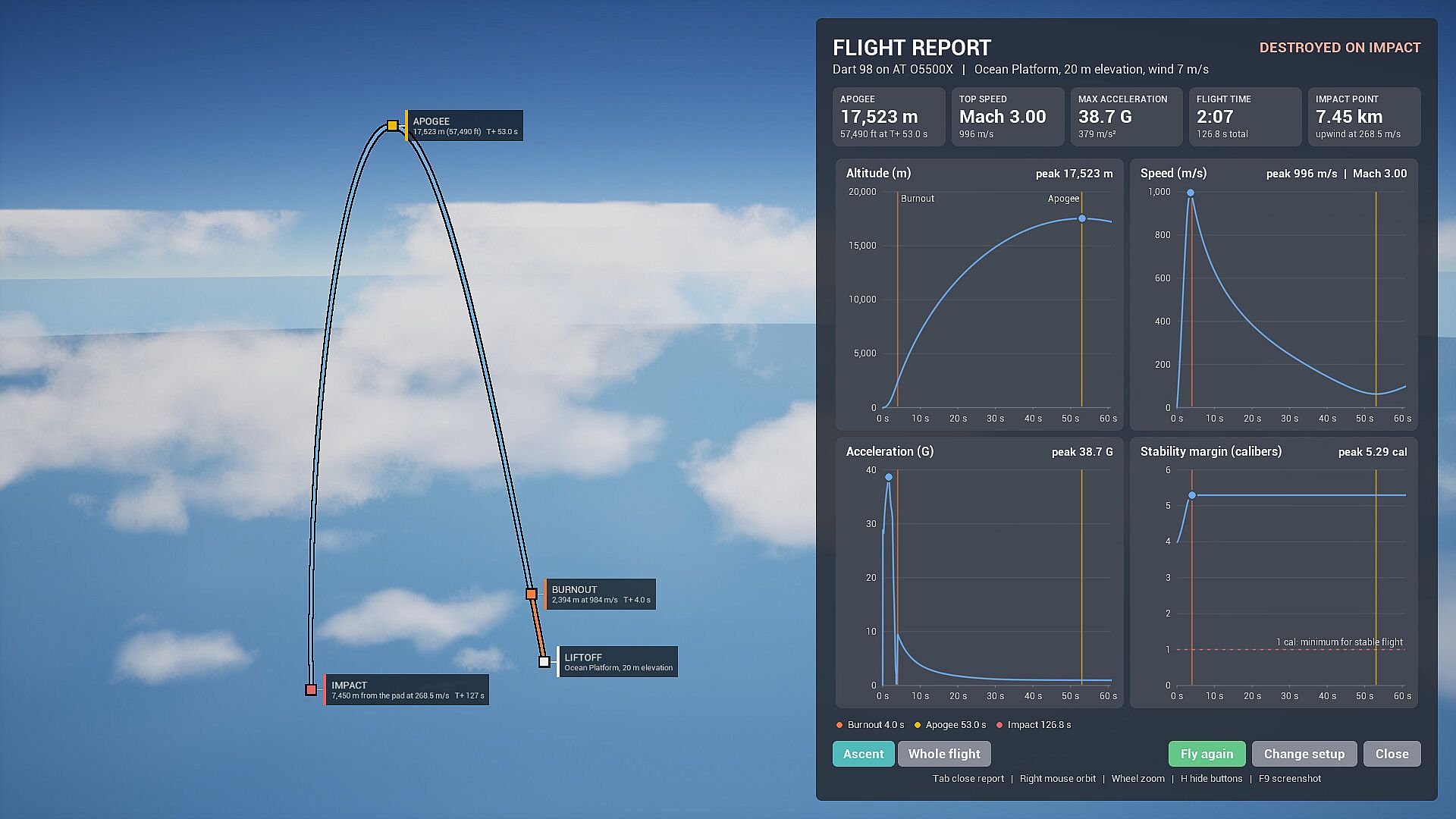
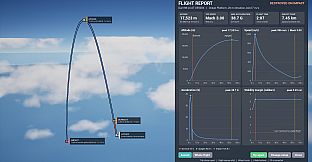
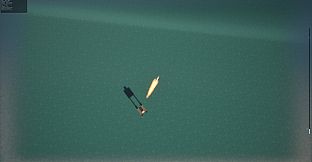
A six-degrees-of-freedom simulation governs movement and rotation in three-dimensional space. Aerodynamic forces, gravity, and shifts in mass during flight determine the trajectory from ignition through burnout. Designs may climb steadily, veer off course, or tumble depending on the configuration chosen. Telemetry tracks speed, altitude, acceleration, and stability metrics throughout each test.
Atmospheric conditions add another layer of variability. Real-world weather data affects how the same missile performs under different wind patterns and environmental factors. This encourages repeated testing to observe consistent versus variable results across launches.
Game Modes
Missile Simulator operates as a singleplayer sandbox focused on iterative design and analysis. There are no separate competitive or story-driven modes. Instead, the entire experience revolves around an open-ended cycle of building, launching, analyzing results, and refining the next iteration.
Progress comes from pursuing personal performance targets or simply exploring how small changes in configuration produce different flight behaviors. The absence of structured levels or objectives keeps the focus on understanding the underlying physics through repeated experimentation.
Design and Testing Process
Configuration options allow players to experiment with airframe elements and propulsion setups to see their effects on overall performance. A visually appealing layout still requires validation in actual simulated flight conditions. Results appear in the form of trajectory paths and numerical data that highlight strengths and weaknesses in each attempt.
Refinement happens through direct comparison of successive launches. Players can adjust parameters and immediately test the impact of those changes. This process supports both goal-oriented improvement and broader curiosity about aerodynamic principles.
Is It Worth Playing?
Missile Simulator remains unreleased with a date to be announced. The described features center on a detailed physics sandbox for missile construction and flight analysis using six-degrees-of-freedom modeling and real-world atmospheric data. Those interested in engineering-style simulation and iterative testing may find the approach engaging once it becomes available. No player reviews or reception data exist yet due to the prerelease status.