







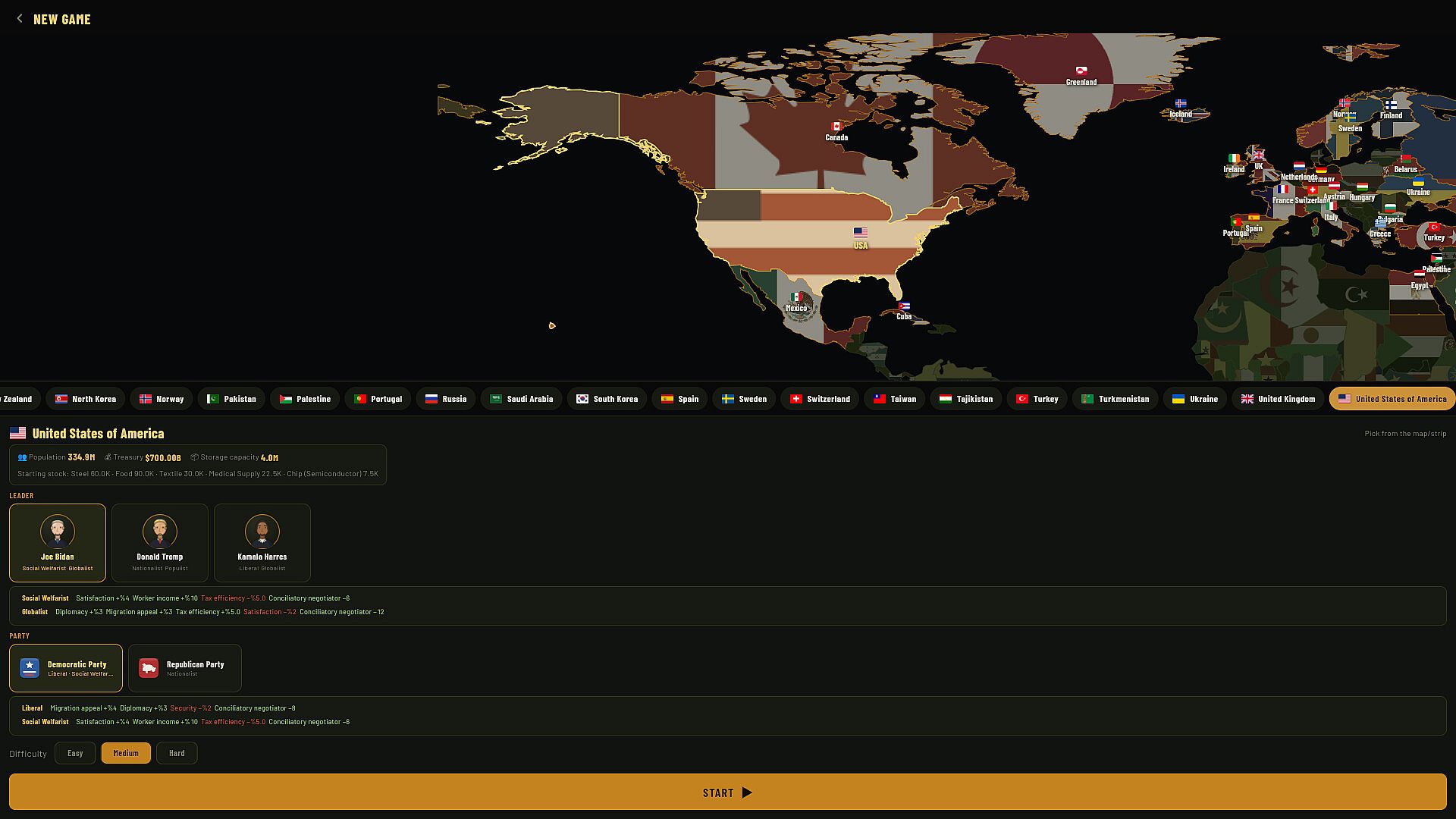





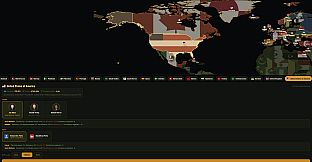

Money Wars: Modern Ages is a strategy and simulation game focused on building national power through economic systems rather than military conquest. Players select from 52 real-world countries and guide their chosen nation across production, trade, and policy decisions on a detailed world map. The experience emphasizes realistic population figures, current diplomatic ties, and resource management in an offline format that requires no internet connection.
Gameplay
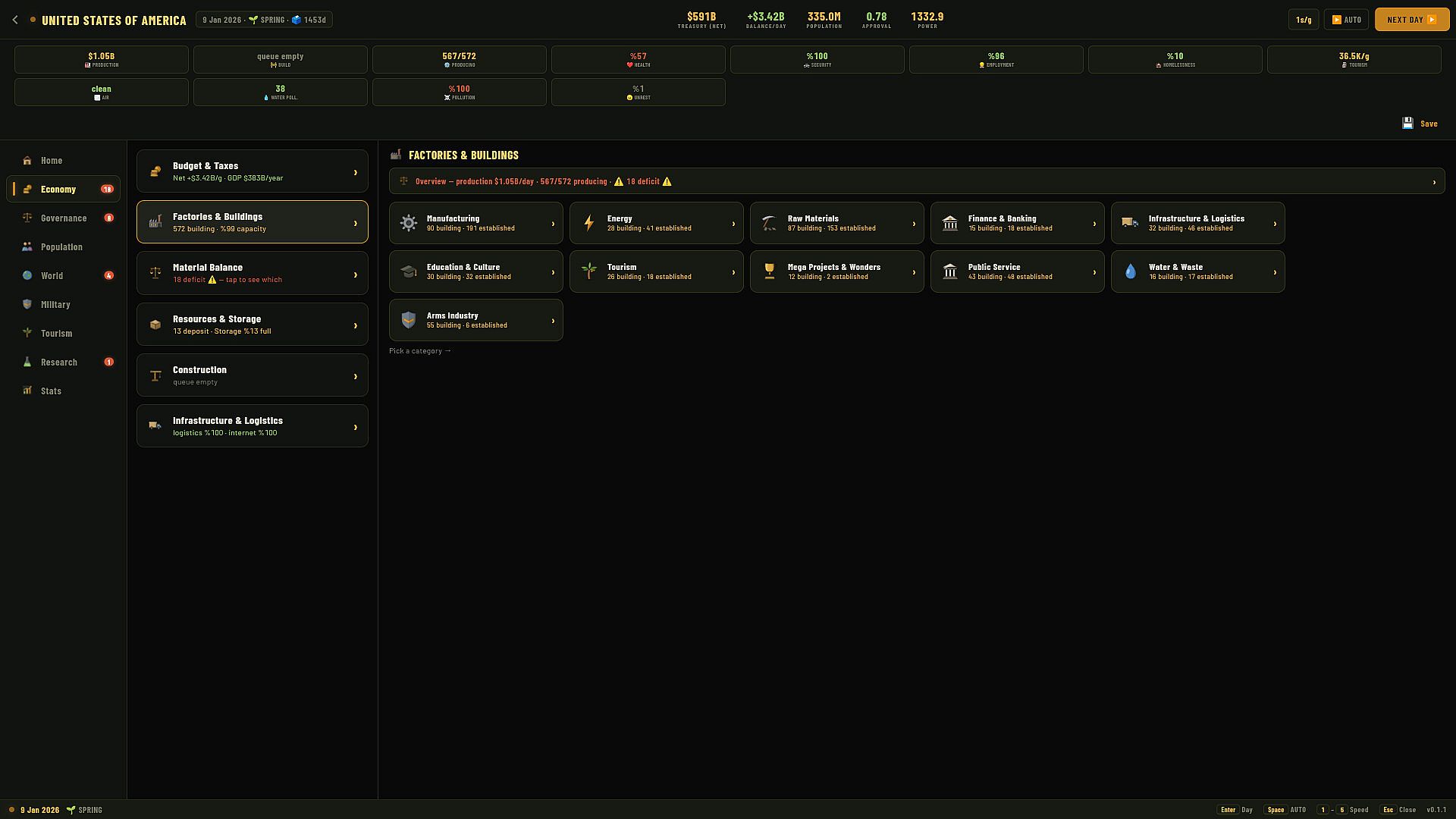
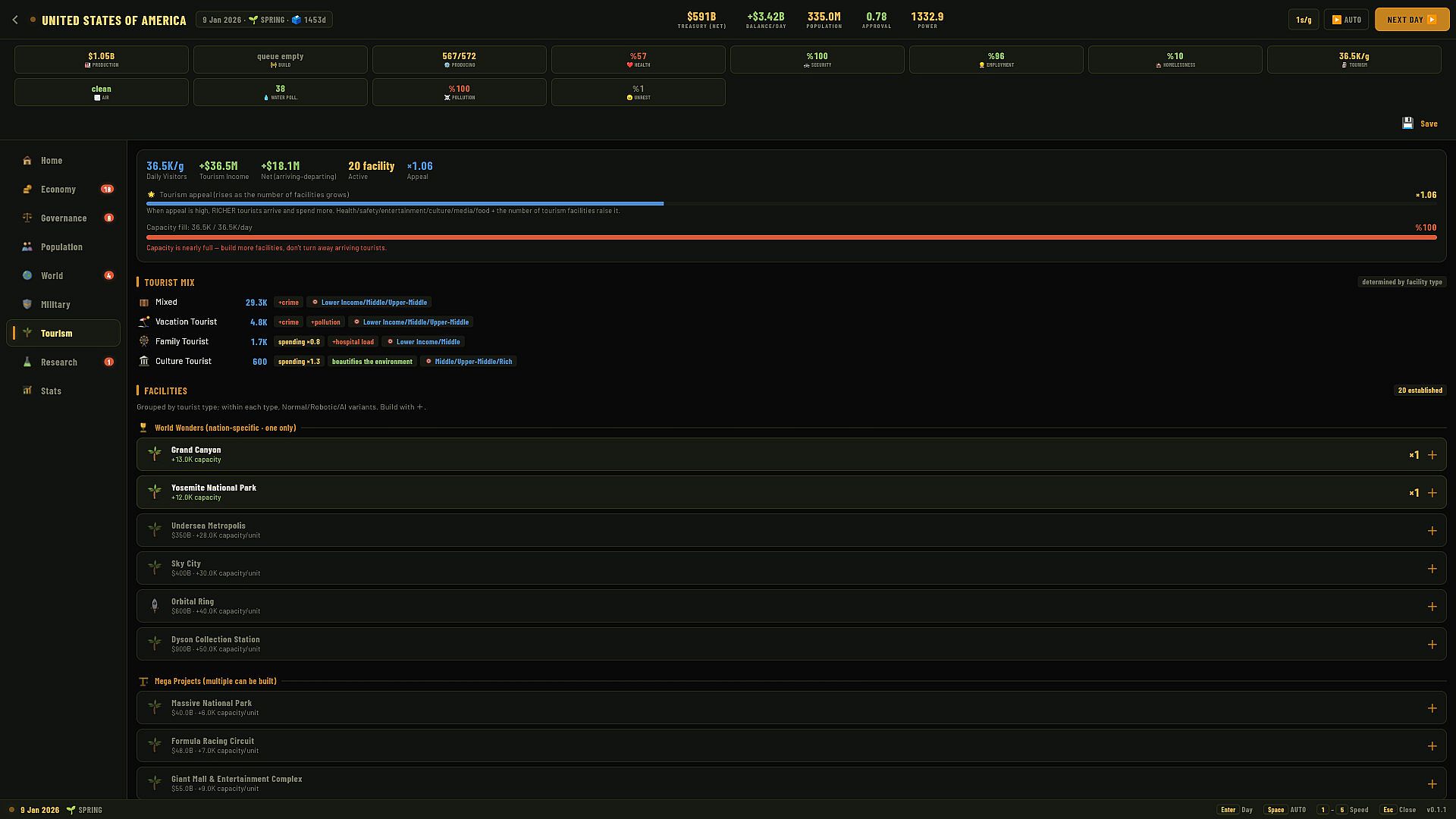
The core loop revolves around constructing and upgrading facilities to create complex production chains. Raw materials such as ore feed into steel production, which in turn supports advanced manufacturing like computer chips and electric vehicles. Over 150 building types expand into more than 440 individual facilities, including specialized robotic, AI, and autonomous variants that improve efficiency over time.
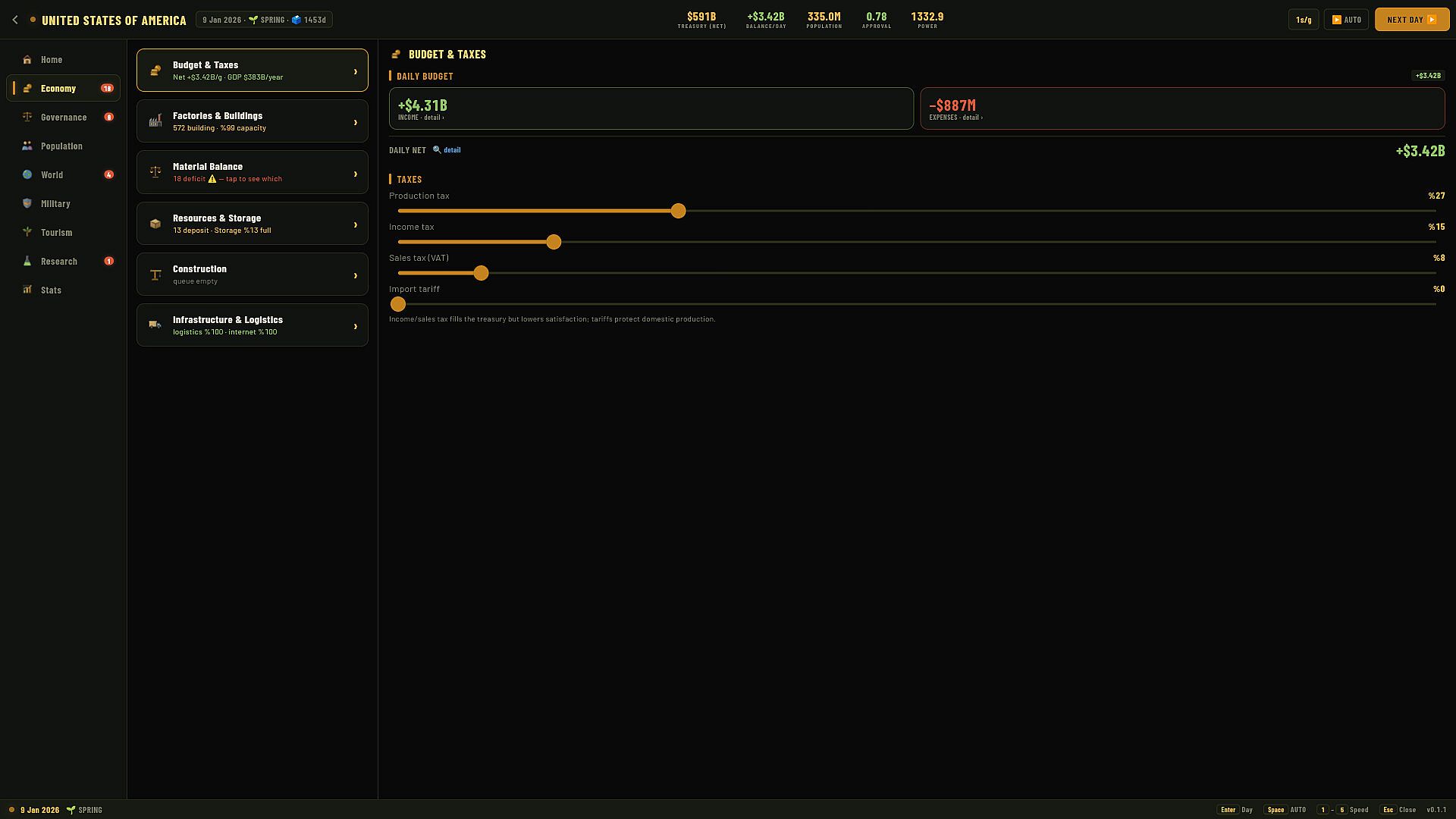
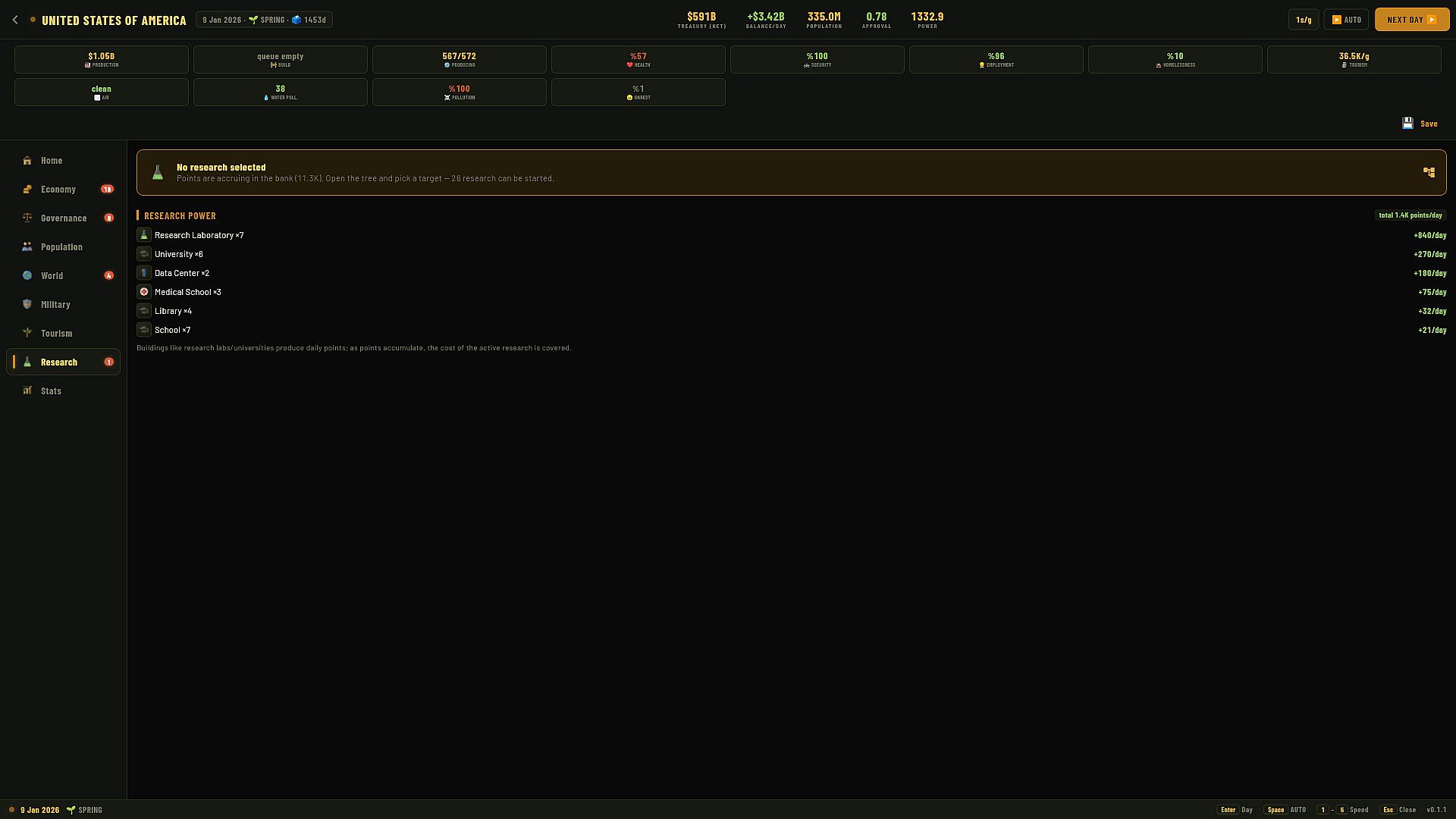
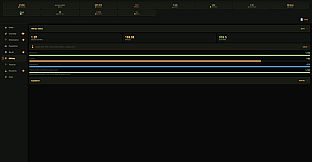
Market dynamics play a central role. Supply and demand shift daily, influencing prices for goods across the global economy. Players handle tariffs, export restrictions, bilateral agreements, and inventory storage while balancing a detailed national budget that tracks taxes, interest payments, pensions, and other expenditures. Research trees unlock 82 technologies covering automation, artificial intelligence, fusion power, and asteroid mining, allowing gradual modernization of the economy.
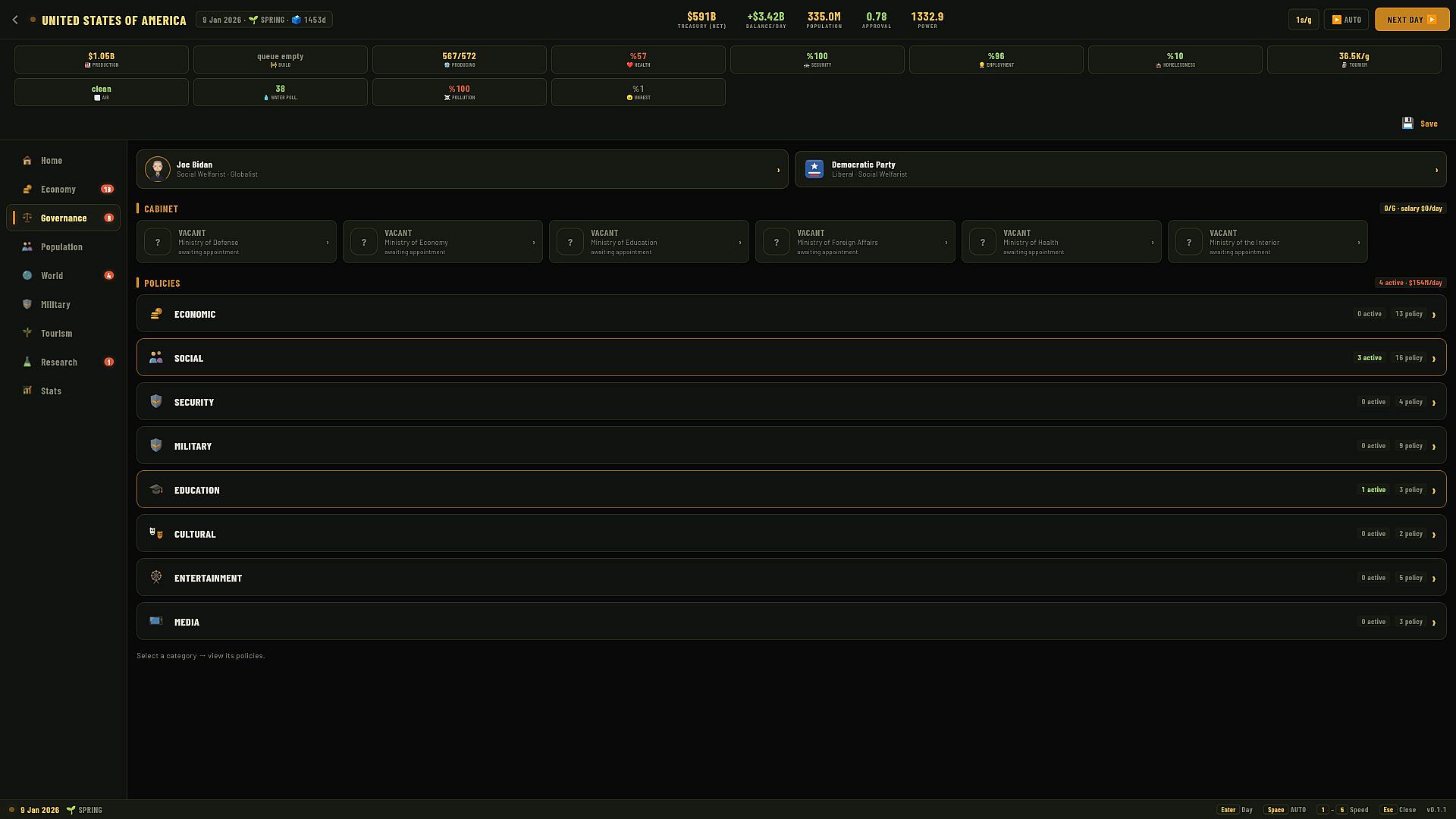
Society management adds depth. Players appoint ministers and allocate funding across 55 policy areas that span economic growth, education, migration, and infrastructure. Population factors such as education levels, job distribution, and age demographics affect productivity. Shortages in skilled workers, for example, can halt factory operations. Public approval, election outcomes, and overall prosperity respond directly to policy choices and economic performance.
Game Modes
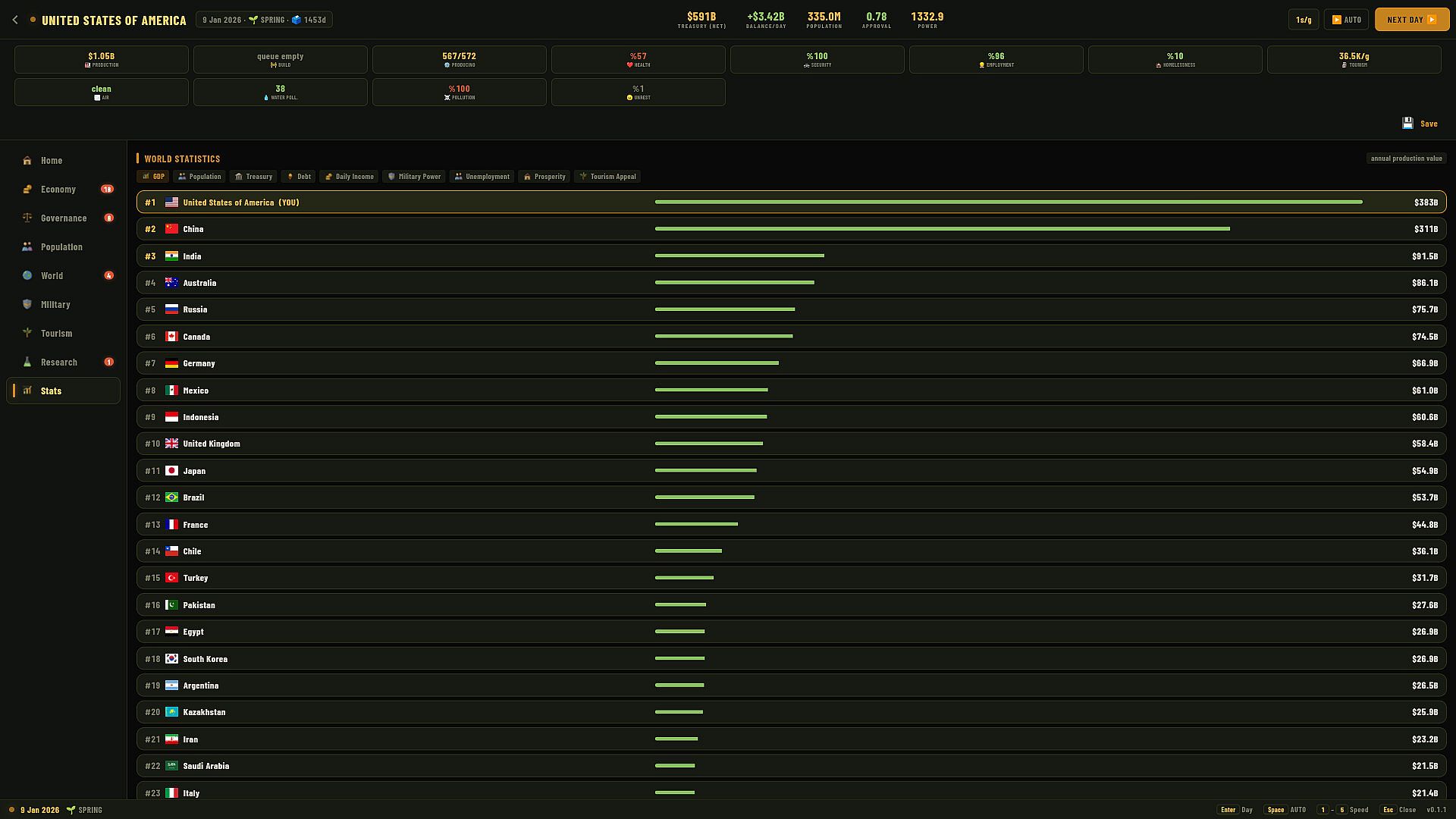
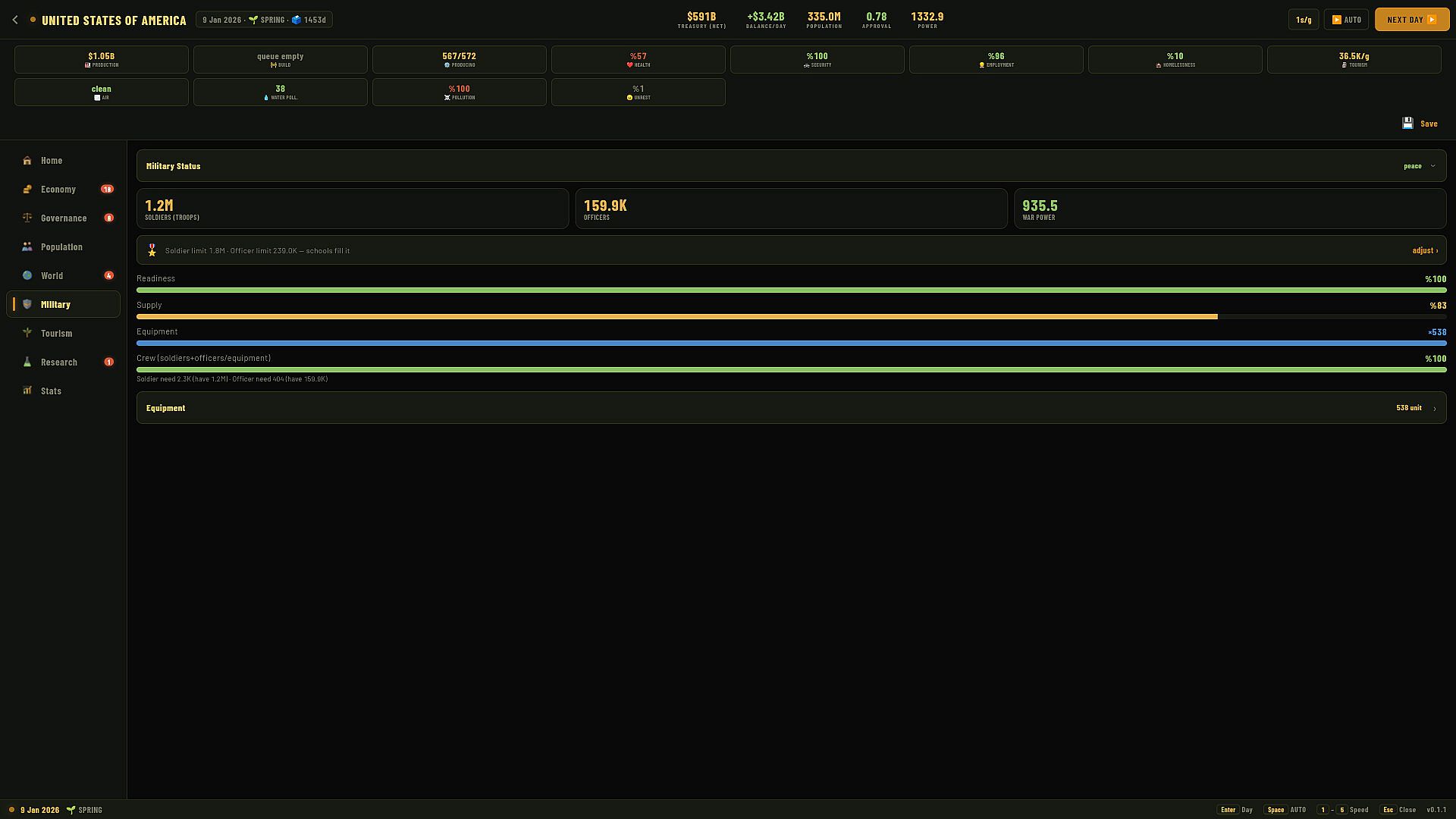
The game operates as a single-player country simulator with no multiplayer components. Progress centers on long-term nation development, where economic dominance serves as the primary path to victory. Competitive elements appear through world leagues that rank nations by metrics including GDP, treasury size, military strength, and prosperity levels. Achievements and personal records track individual milestones, with leaderboards providing benchmarks against other players' results.
War functions as a final option rather than a default strategy. Mobilization consumes food, fuel, and ammunition, while diplomatic negotiations offer alternatives. Players can achieve success through acquisitions of rival assets or by drawing talent and investment away from competitors without direct conflict.
Key Systems and Features
Resource chains and market fluctuations create ongoing decision-making. A factory might stand idle without sufficient engineers, prompting investment in education policies or immigration adjustments. Storage management prevents waste during price swings, and trade deals can secure advantages in specific sectors.
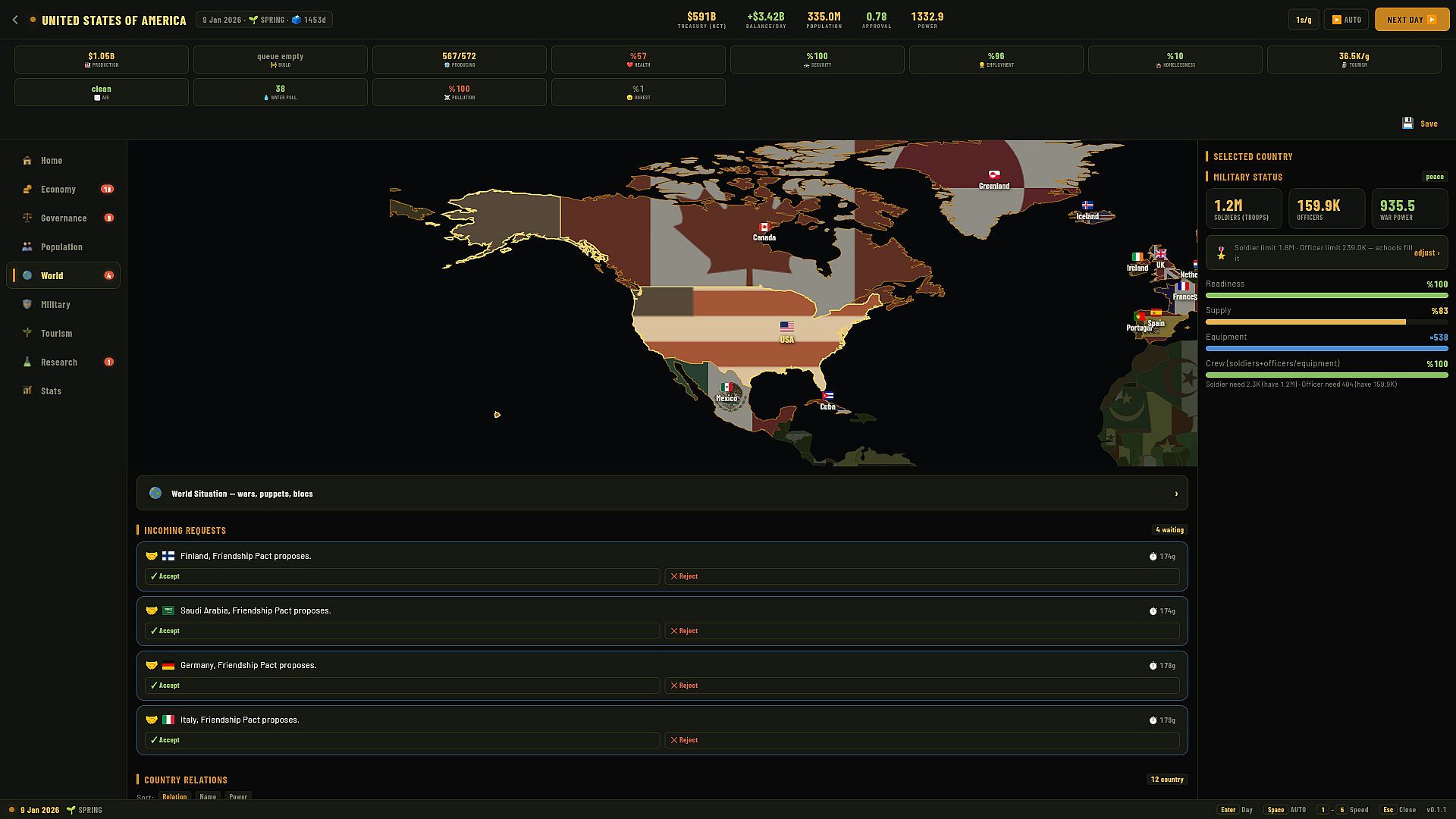
The world map displays all 52 countries with their respective flags and real geographic layout. Leaders and diplomatic relations reflect 2025-26 conditions, grounding the simulation in contemporary global context. Every financial transaction remains accounted for, reinforcing the emphasis on sustainable budgeting over short-term gains.
Is It Worth Playing?
Money Wars: Modern Ages suits players who enjoy detailed economic simulations and grand strategy titles centered on nation building. Its offline design supports uninterrupted sessions on planes, trains, or other locations without connectivity. The focus on production chains, policy impacts, and market responses delivers a self-contained experience for those interested in turning a starting nation into a global economic leader.
Those seeking fast-paced action or direct combat will find the mechanics less aligned with their preferences, as military options remain secondary and resource-intensive. The game rewards careful planning across multiple interconnected systems rather than quick tactical wins. For fans of tycoon-style management and realistic policy simulation, the depth in facility variants, technology progression, and societal feedback provides substantial long-term engagement.











