


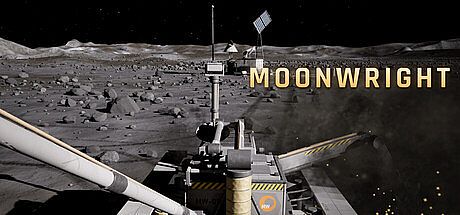


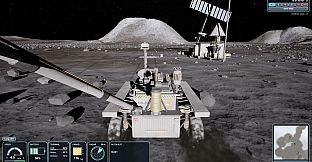
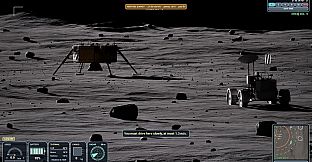
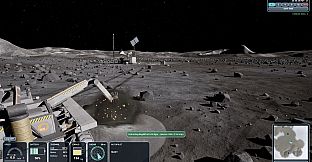

MOONWRIGHT is an indie casual simulation game set on the lunar surface. Players operate a single mining rover from Earth through a radio link that introduces a consistent 1.3-second delay in both directions. The experience centers on resource extraction, debt repayment, and gradual rover improvements within a realistic model of lunar conditions.
Gameplay
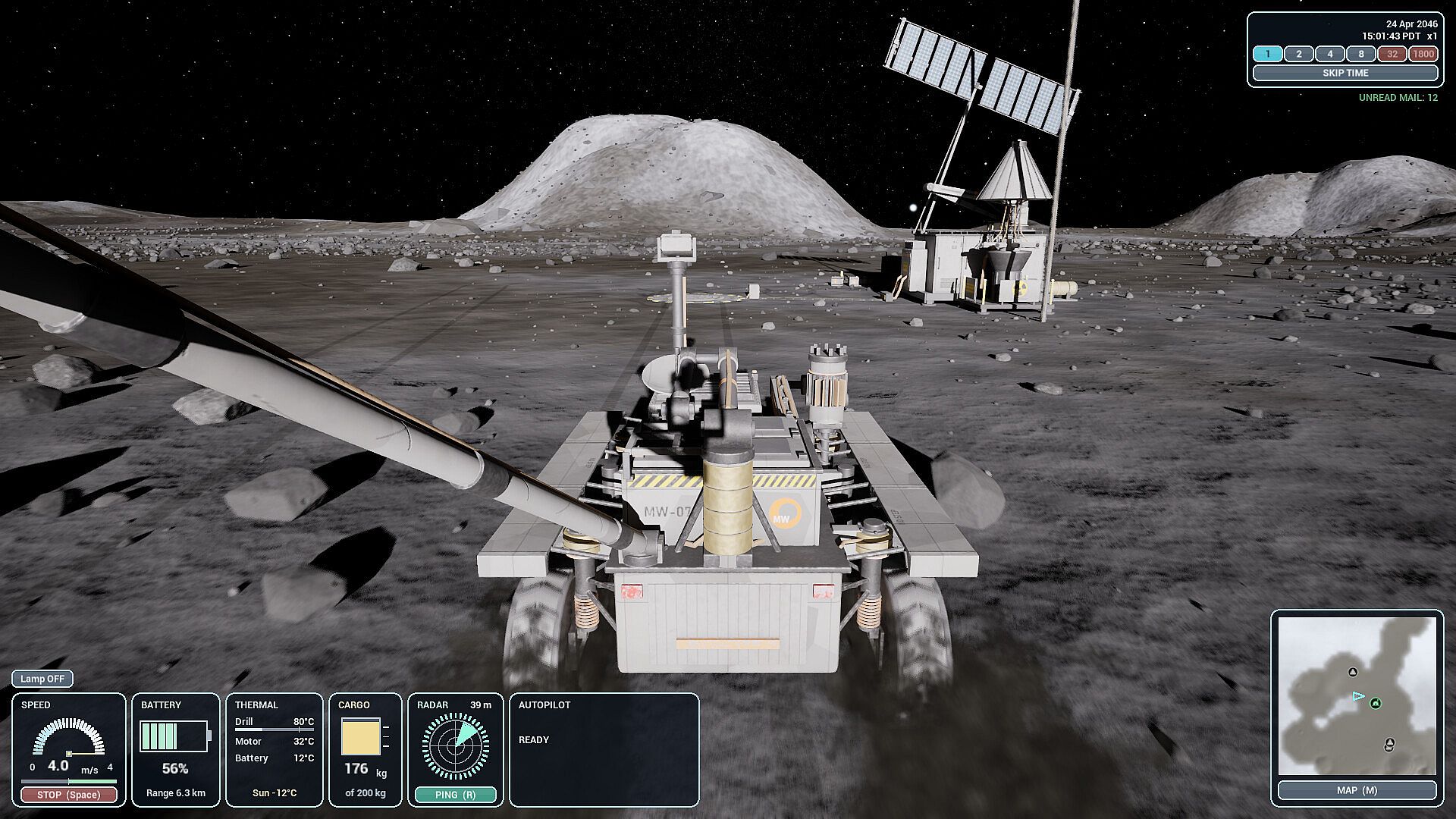
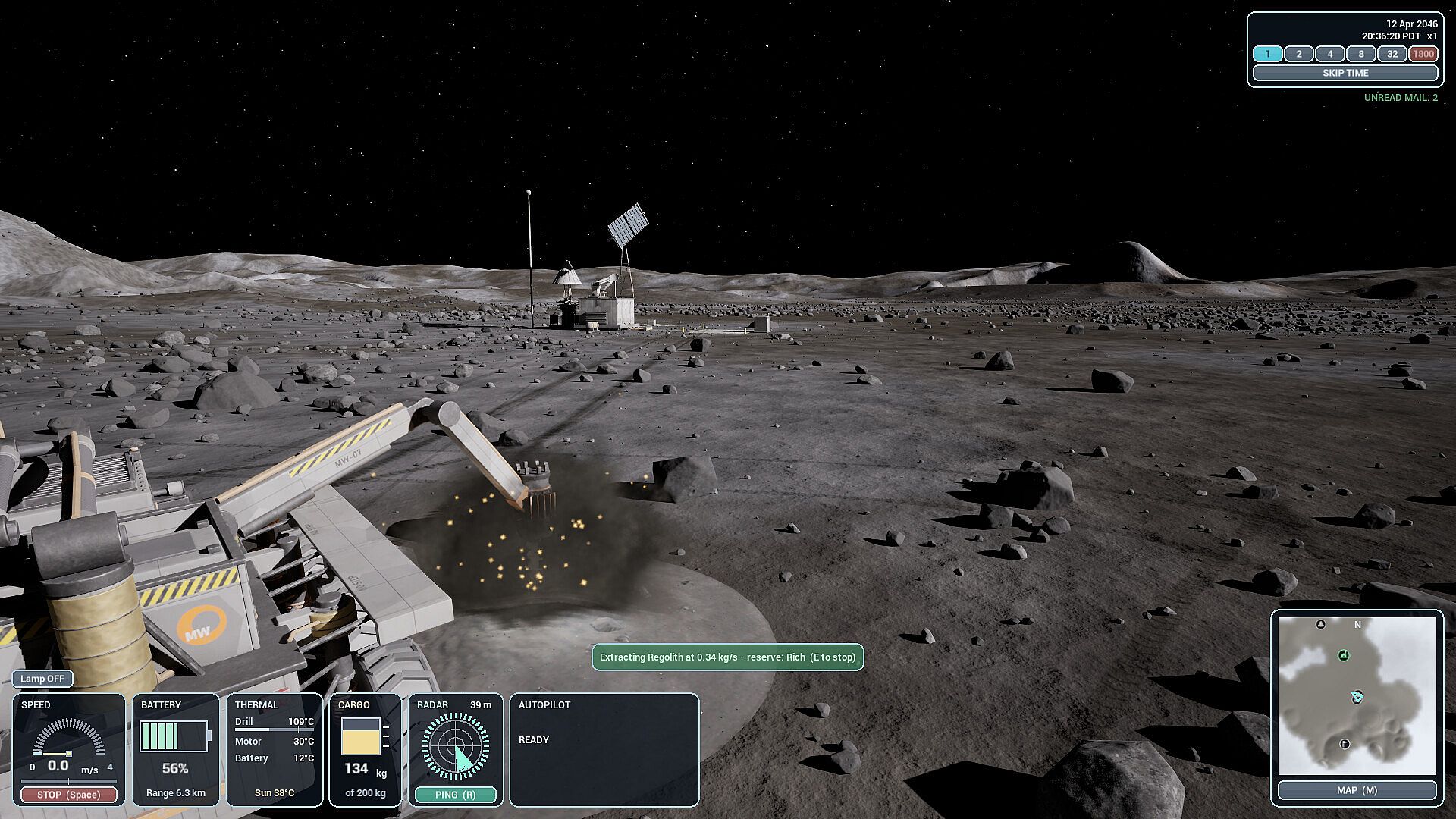
The core loop requires direct control of every rover action. Players drive in real time while accounting for the signal lag, which means commands arrive late and visual feedback is always delayed. Radar pings reveal map details, and contacts assay automatically when approached. Drilling extracts one of eight lunar resources whose market prices fluctuate daily. Battery life, cargo capacity, and component wear limit each outing, forcing careful route planning and return timing.
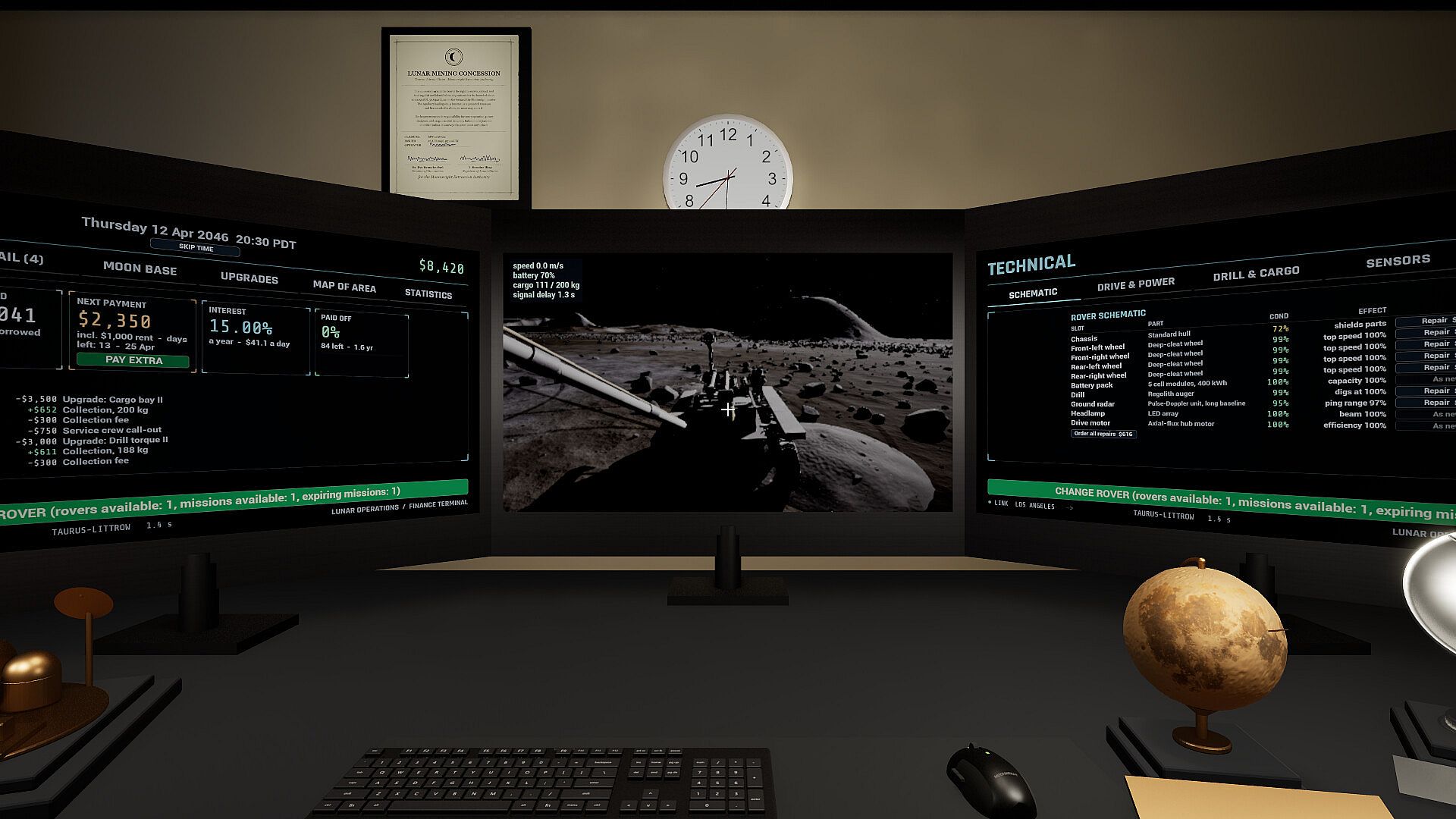
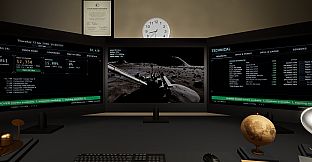
Temperature plays a constant role. Daytime heat can overheat the drill, while nighttime cold reduces battery capacity and diverts power to heating systems. A two-week lunar day and night cycle governs these shifts. The three-monitor console displays the rover camera feed, financial tracking, and repair or upgrade options. Time compression up to 1800x helps manage long charging periods or travel times without idle waiting.
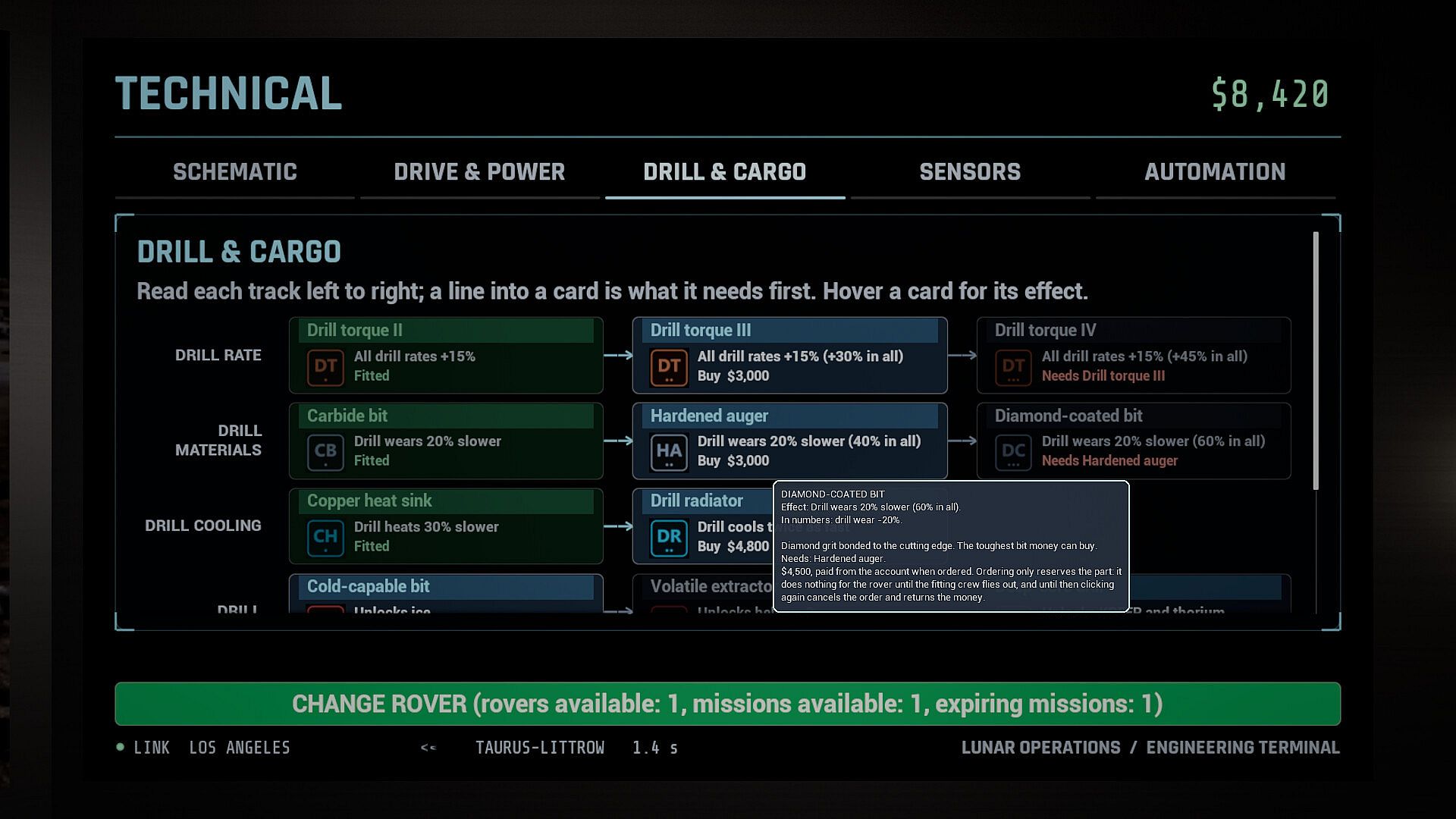
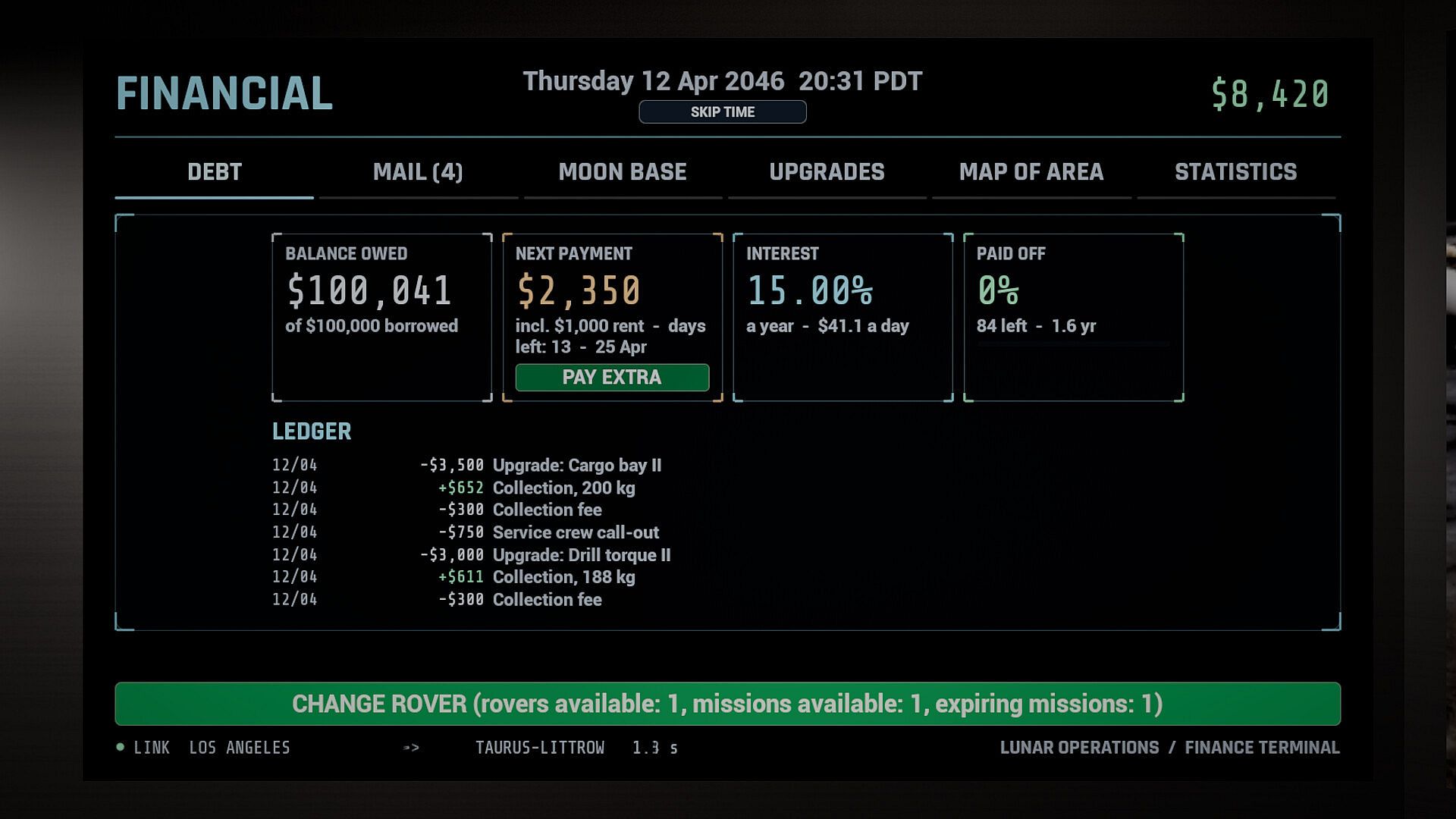
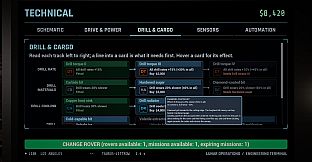
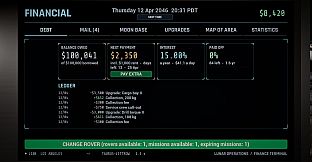
Five upgrade trees cover drive and power systems, drill and cargo capacity, sensors, automation features, and base logistics. Individual rover parts degrade over time and require repairs. Successful hauls fund these improvements and the weekly debt payments of 1,350 plus rover rent. Ore remains unsold until a shuttle pickup is purchased, adding another layer of timing decisions around market prices.
Game Modes
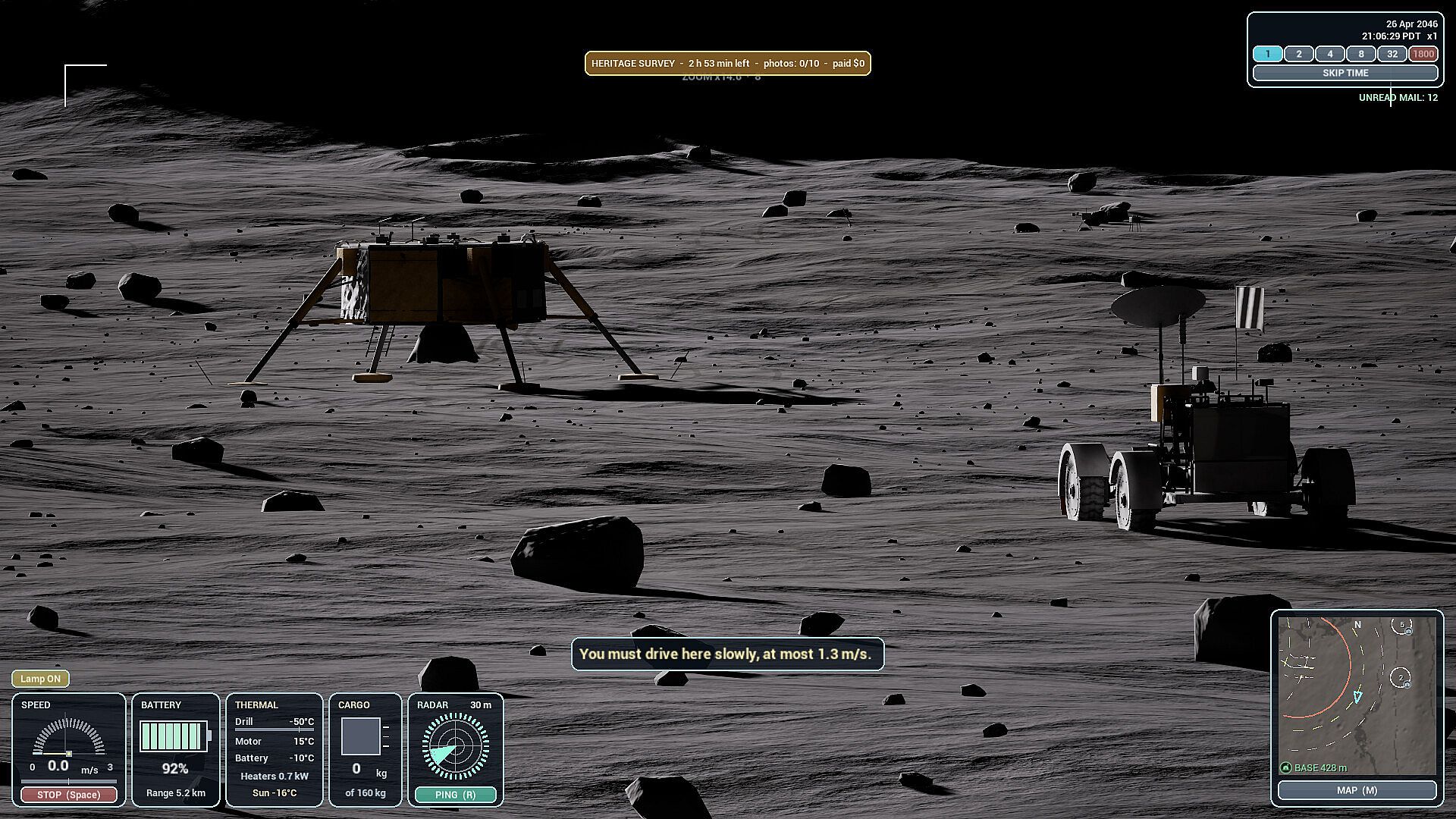
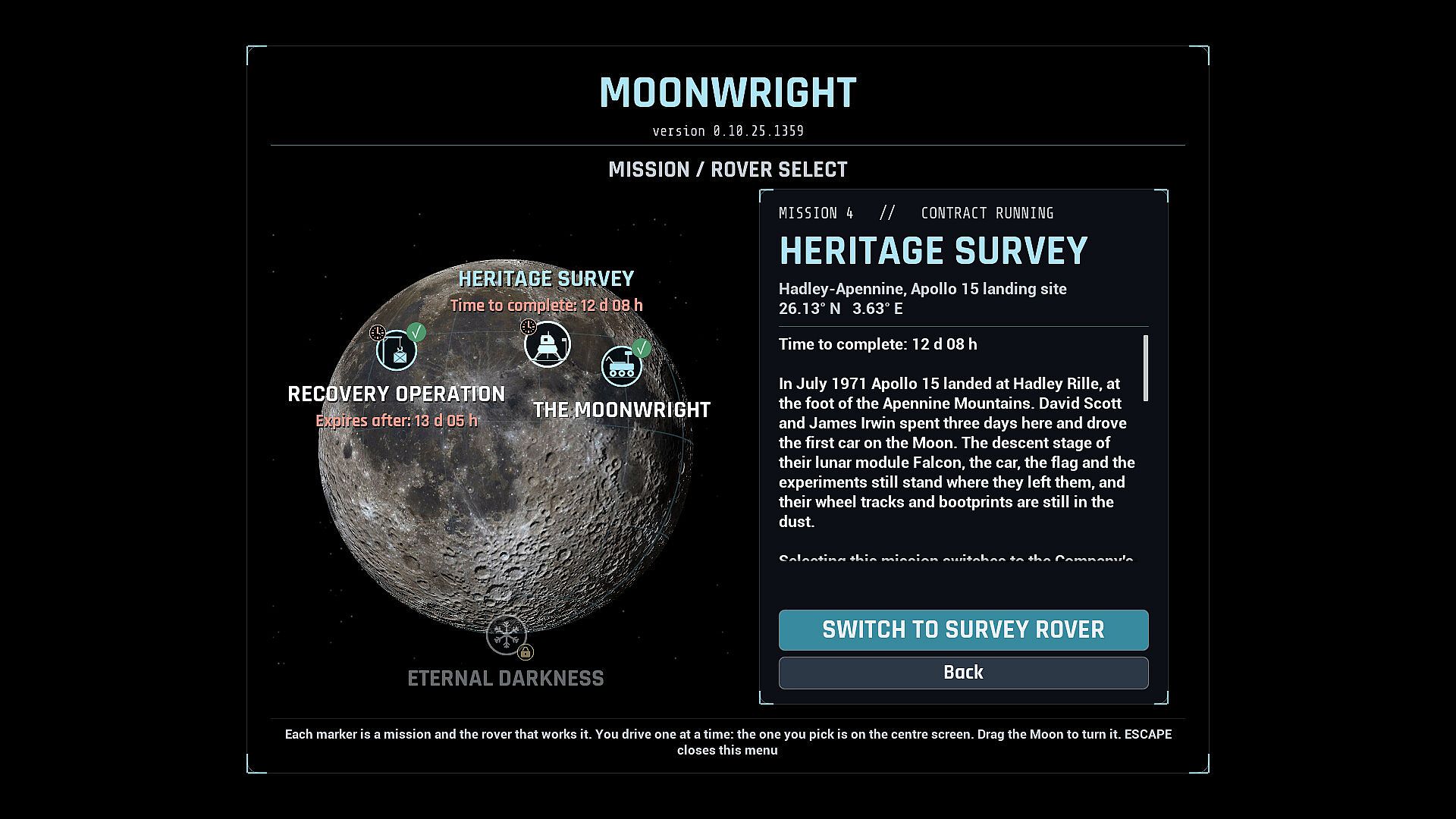
MOONWRIGHT operates as a single continuous campaign without separate selectable modes. The primary activity takes place on a 2 km claim in the Apollo 17 valley, where players map terrain with their own radar and extract resources to meet payment deadlines. Three additional missions become available through play: a photo survey of the Apollo 15 landing site, an ice collection run inside Shackleton crater, and the recovery of a lost rover. These objectives expand the scope while remaining integrated into the same debt-driven progression system.
All activities share the same remote-operation mechanics and environmental constraints. No multiplayer or competitive elements exist. The focus stays on managing finite resources, surviving temperature extremes, and deciding when to push further or return to base.
Key Mechanics and Progression
Signal delay defines the challenge. Players must anticipate stopping distances, use short steering taps, and time braking early. Prospecting involves radar sweeps followed by close inspection. Drilling occurs only when parked directly over a deposit. Hauling returns ore to the stockpile, after which a paid shuttle collects it for sale on the changing market.
Debt functions as the central timer. Missing three consecutive payments results in repossession of the base and rover. Upgrades reduce the manual workload through partial automation while parts still require maintenance. Thirty-eight awards track achievements for both in-game display and the platform profile. The claim location matches real Apollo 17 landing coordinates, with accurate solar and Earth positions in the sky.
Is It Worth Playing?
MOONWRIGHT appeals to players who enjoy deliberate, systems-driven simulation experiences. The lag mechanic turns routine driving into a skill that rewards practice, while resource prices and temperature cycles add ongoing decision layers. The single-player structure emphasizes careful planning over fast reflexes or exploration for its own sake.
Because the game remains in development with a planned release in the fourth quarter of 2026, no player reviews or completion data are available yet. Those drawn to realistic lunar conditions, debt pressure, and incremental rover customization will find the verified features align closely with the described systems. Others seeking faster pacing or varied scenarios may prefer titles with different core loops.











