


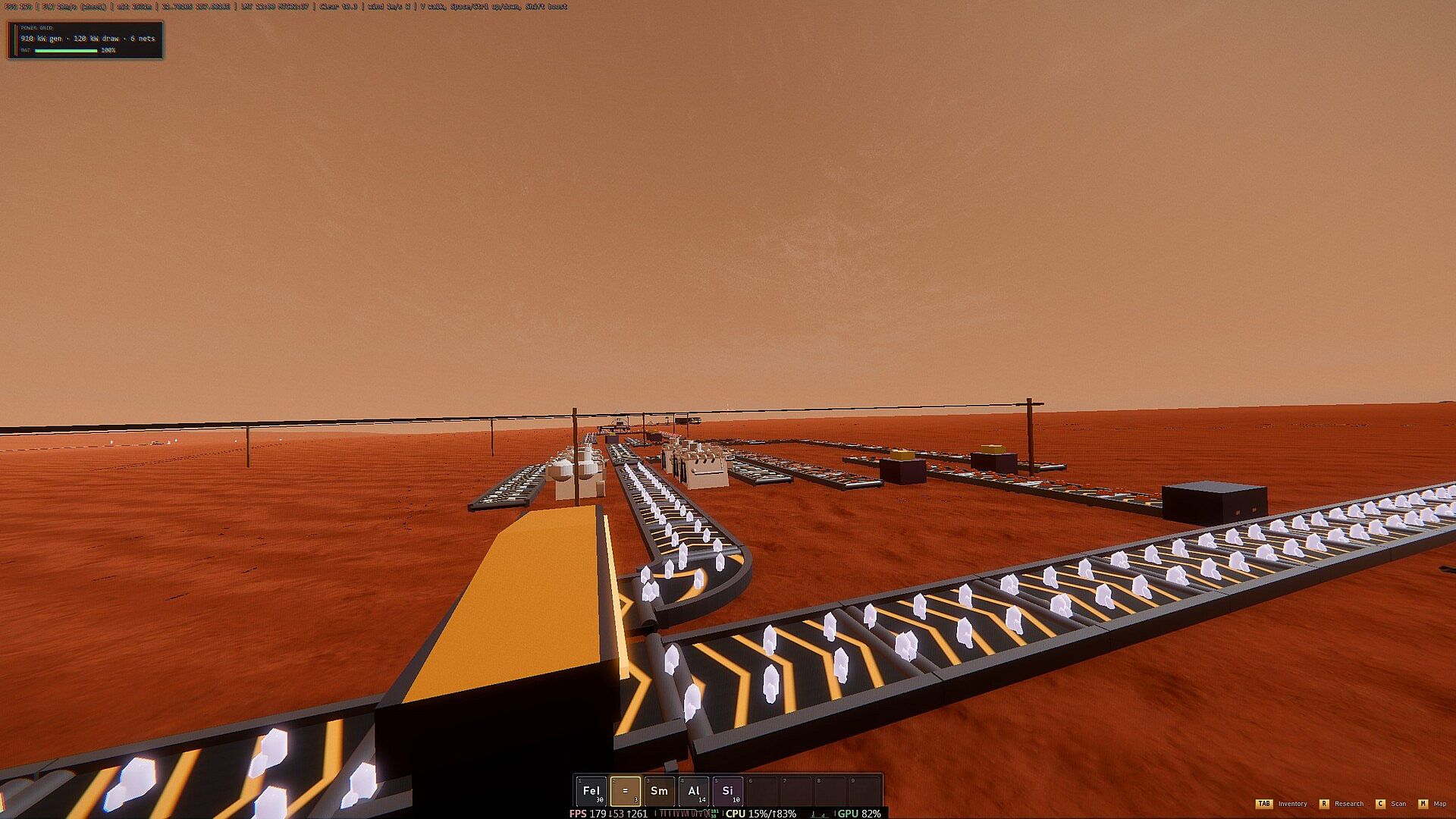
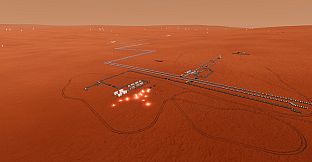
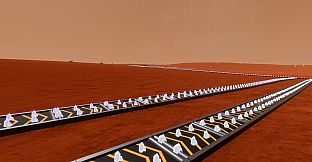
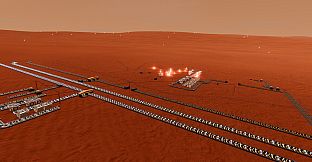
MORS is a strategy and simulation game set on a true-scale recreation of Mars. Players begin with a basic lander pod and suit, then expand into automated industrial operations across the planet's surface. The experience blends resource management, logistics networks, and survival challenges drawn from real Martian conditions.
Gameplay
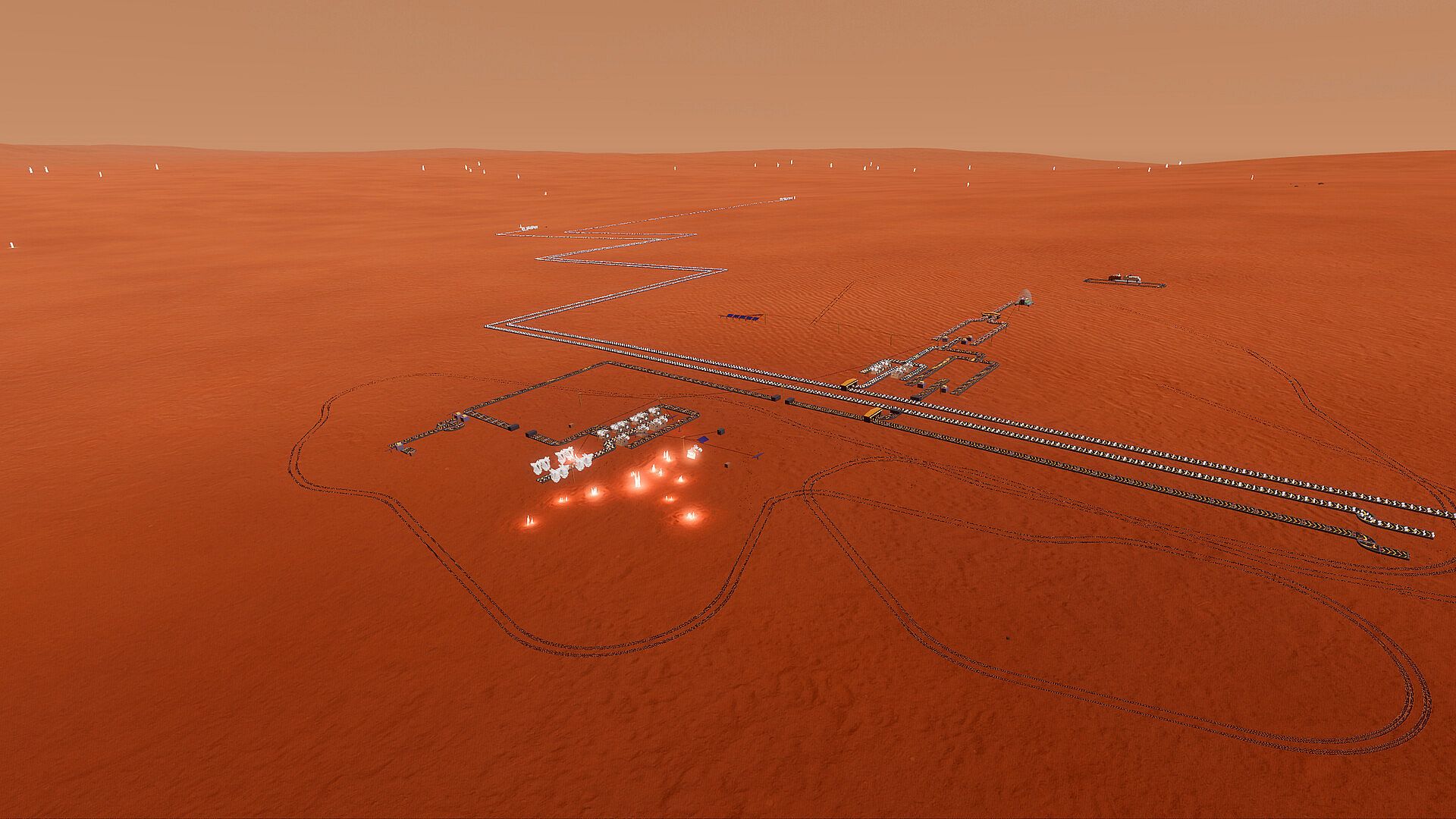
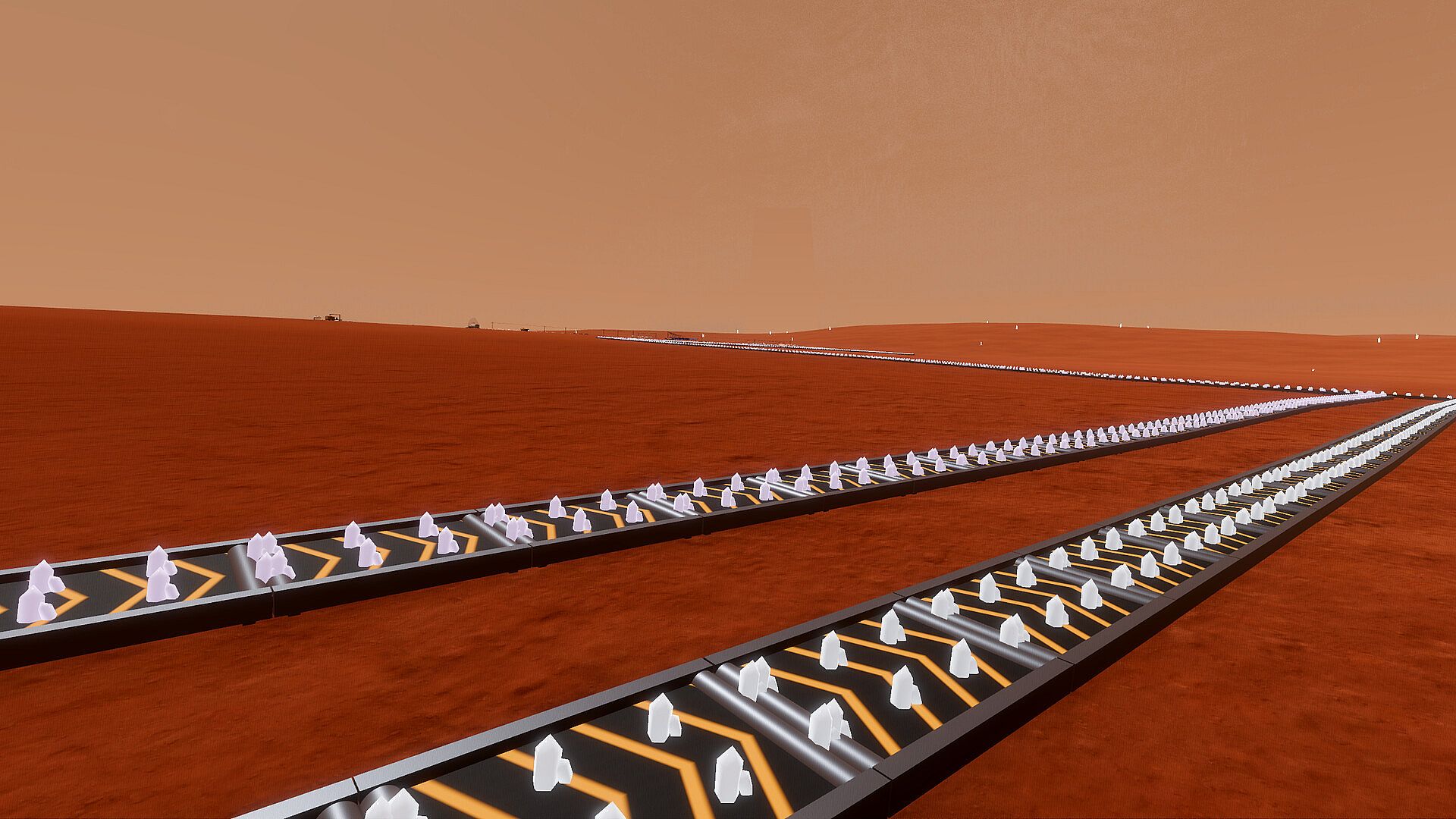
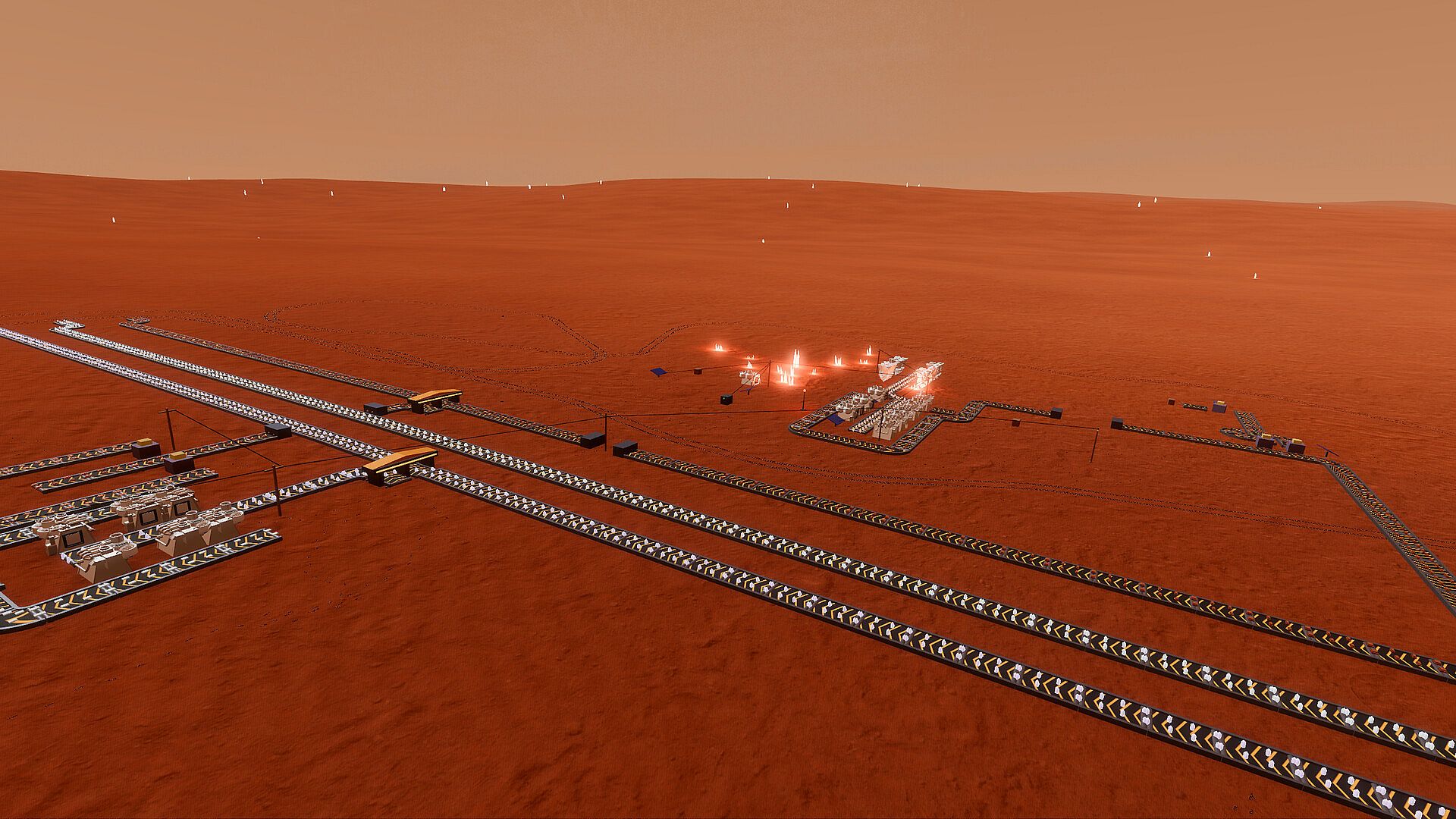
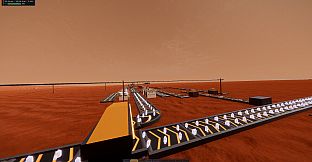
The core loop centers on extracting resources from the regolith, processing them through smelters and assemblers, and routing materials via conveyor belts. Solar power generation follows actual solar angles and seasonal variations, with batteries handling nighttime demands and brownouts serving as a constant reminder of resource limits. Fluid systems incorporate water extraction, electrolysis, and methane production through the Sabatier reaction to support further industry.
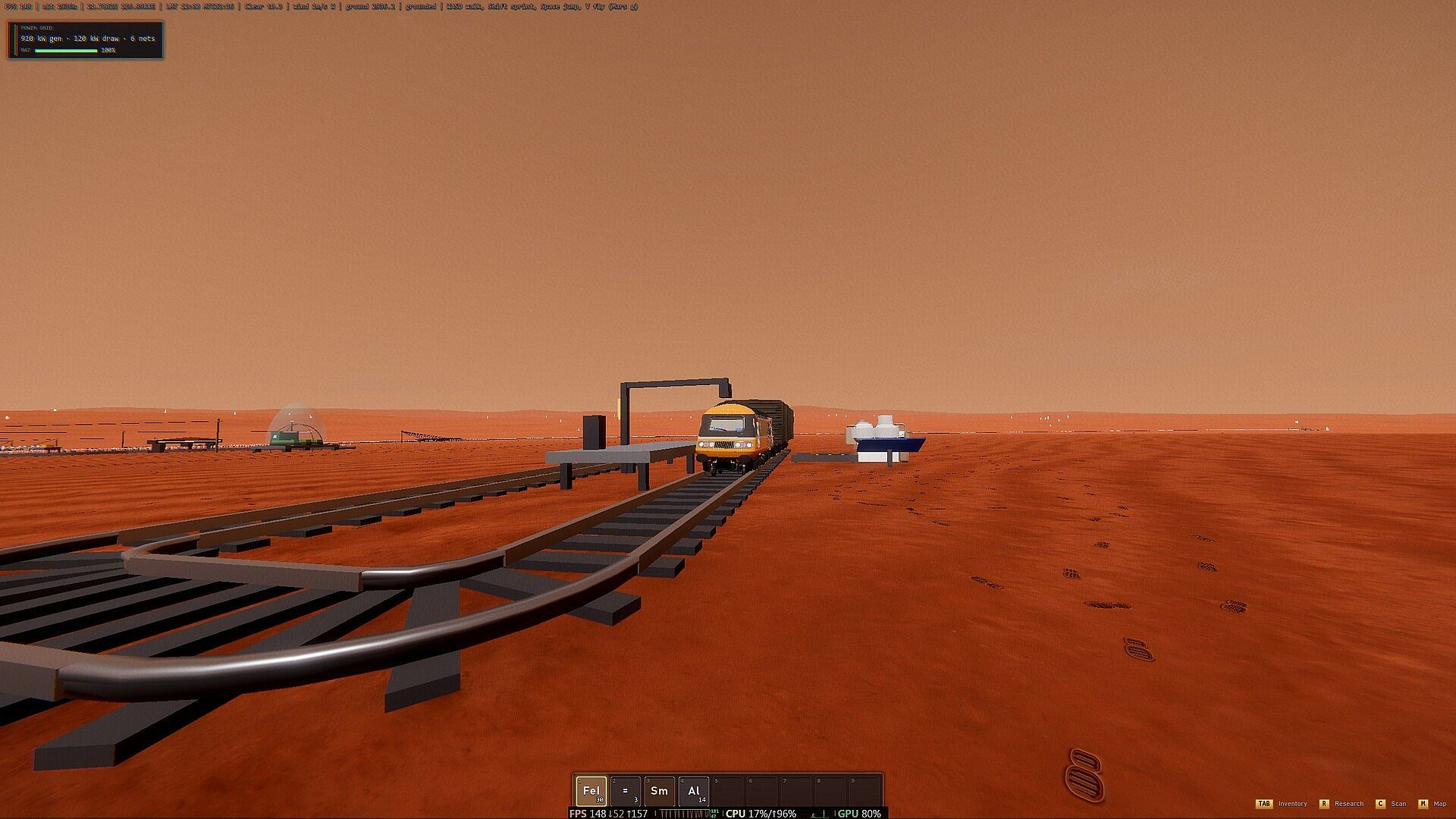
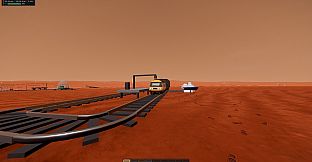
Exploration and expansion rely on a drivable rover that leaves persistent tracks across the dust. When belts reach capacity limits, players lay battery-electric rail lines with named stations, schedules, and wait conditions to move ore, goods, and fluids between distant outposts. A research tree advances from basic hand tools to laser drills, rail systems, jetpack upgrades, and advanced industrial chemistry. Science packs produced in greenhouse labs drive technological progress, while oxygen and water reserves must be managed during any travel away from established bases.
The planet itself uses streamed NASA elevation data for a 1:1 scale environment. A full Martian sol lasts 24 hours and 39 minutes, with computed sunlight based on longitude and season. Weather includes dust storms that can obscure bases, morning frost, and seasonal shifts. The night sky remains unfiltered, showing stars and the sun without atmospheric softening.
Game Modes
MORS currently supports single-player campaigns focused on building from a lone landing to planet-spanning operations. The experience emphasizes offline progression with persistent world state, where factories continue operating, footprints remain visible, and terrain scars accumulate over time. No separate multiplayer modes exist in the initial release, though future development plans include co-op elements after the core single-player systems mature.
Progression follows a linear tech ladder without branching factions or competing objectives. Players manage one continuous save that carries forward across sessions, allowing gradual expansion of mining outposts, rail networks, and chemical processing facilities while adapting to environmental pressures.
World and Systems
Every location on the accessible Mars surface draws from authentic elevation mapping, enabling travel from Gale crater through Valles Marineris to polar ice caps at real distances. Mining operations start with burner drills and advance to laser variants, feeding directly into smelting and assembly lines. Power distribution uses poles and substations to connect solar arrays, batteries, and backup combustion generators.
Survival mechanics tie directly into automation goals. Limited oxygen and water supplies force careful planning for rover trips or remote site visits. Dust storms reduce solar output dramatically, while cold nights increase energy demands. These elements encourage players to automate as much as possible so that distant facilities handle their own maintenance.
Development and Current State
The game enters Early Access with a complete core loop of landing, mining, smelting, automation, rail transport, and survival. Placeholder models appear on some machines, and balance adjustments are expected during the development period. Saves receive careful handling across updates, with the stated goal of reaching a full 1.0 release around 2029 that adds deeper rail signaling, crewed endgame content, a full art pass, and co-op support.
System requirements list a 64-bit Windows operating system, a 6-core CPU, 8 GB RAM minimum, and a GPU with 4 GB VRAM. An SSD is strongly recommended due to the live streaming of planetary terrain data. The title remains single-player and offline at launch.
Is It Worth Playing?
MORS targets players who enjoy detailed factory automation combined with realistic environmental simulation. The absence of user reviews at this stage reflects its pre-release status, yet the documented systems provide a stable foundation for long-term base building on an authentic Martian landscape. Those drawn to logistics challenges, power management under variable conditions, and persistent world changes will find substantial depth in the available mechanics.
Early Access pricing reflects the current feature set, with planned increases tied to major content additions. The single-player focus and offline capability suit dedicated solo sessions without requiring constant connectivity. Players comfortable with iterative development and providing feedback on factory scaling may appreciate contributing to the road toward the completed version.