



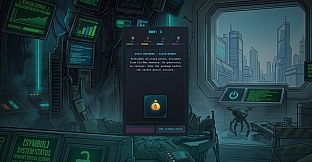

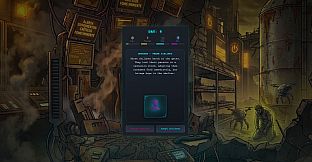
Neo-Exodus: Last Bastion is a single-player narrative strategy game that places players in command of a struggling settlement facing collapse. Developed as an indie title with simulation elements, it centers on guiding survivors through a series of critical moments where resources run low and external pressures mount. The core loop revolves around making swift binary choices that carry lasting effects on the bastion's stability and the lives of its inhabitants.
Gameplay
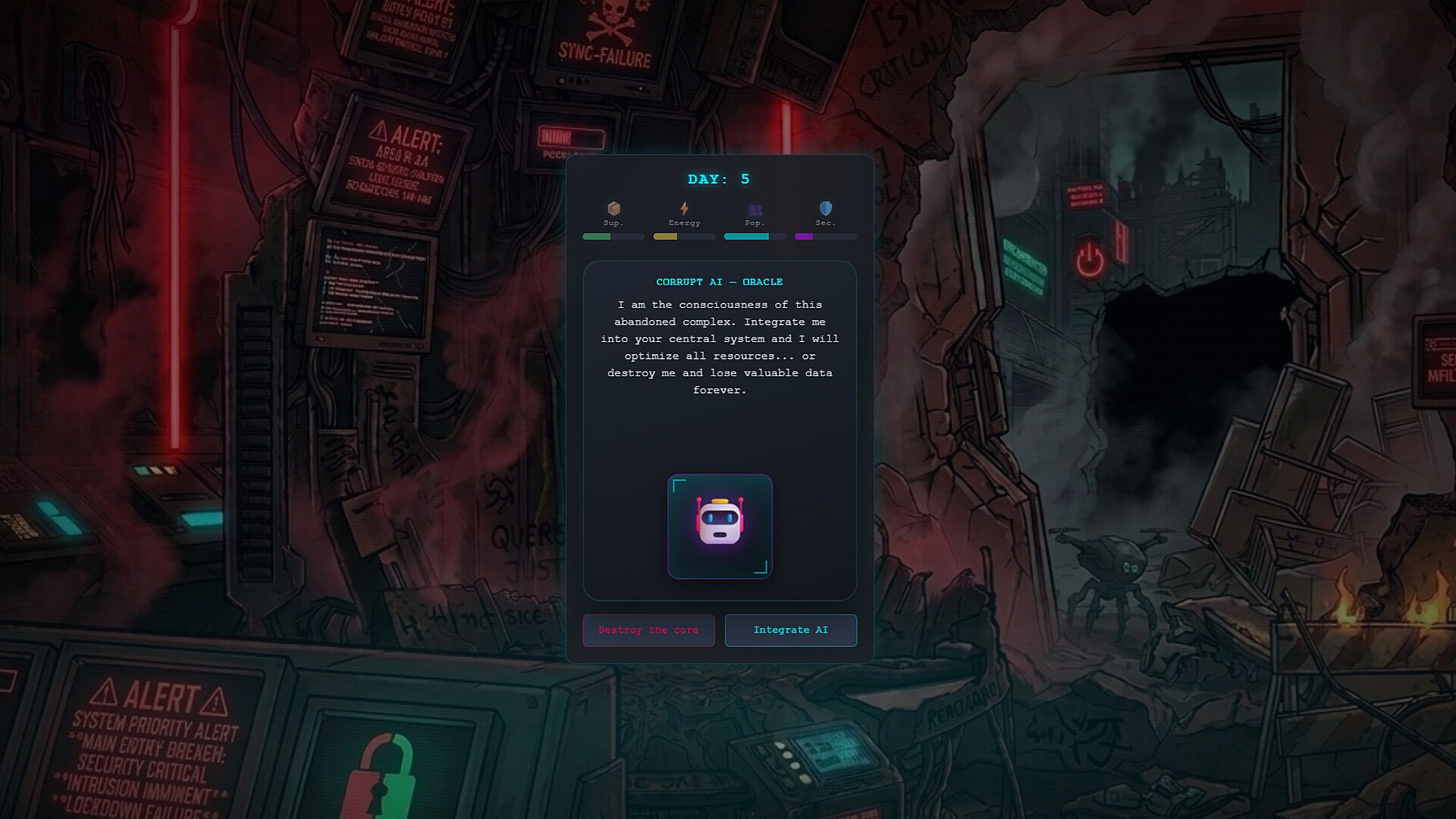
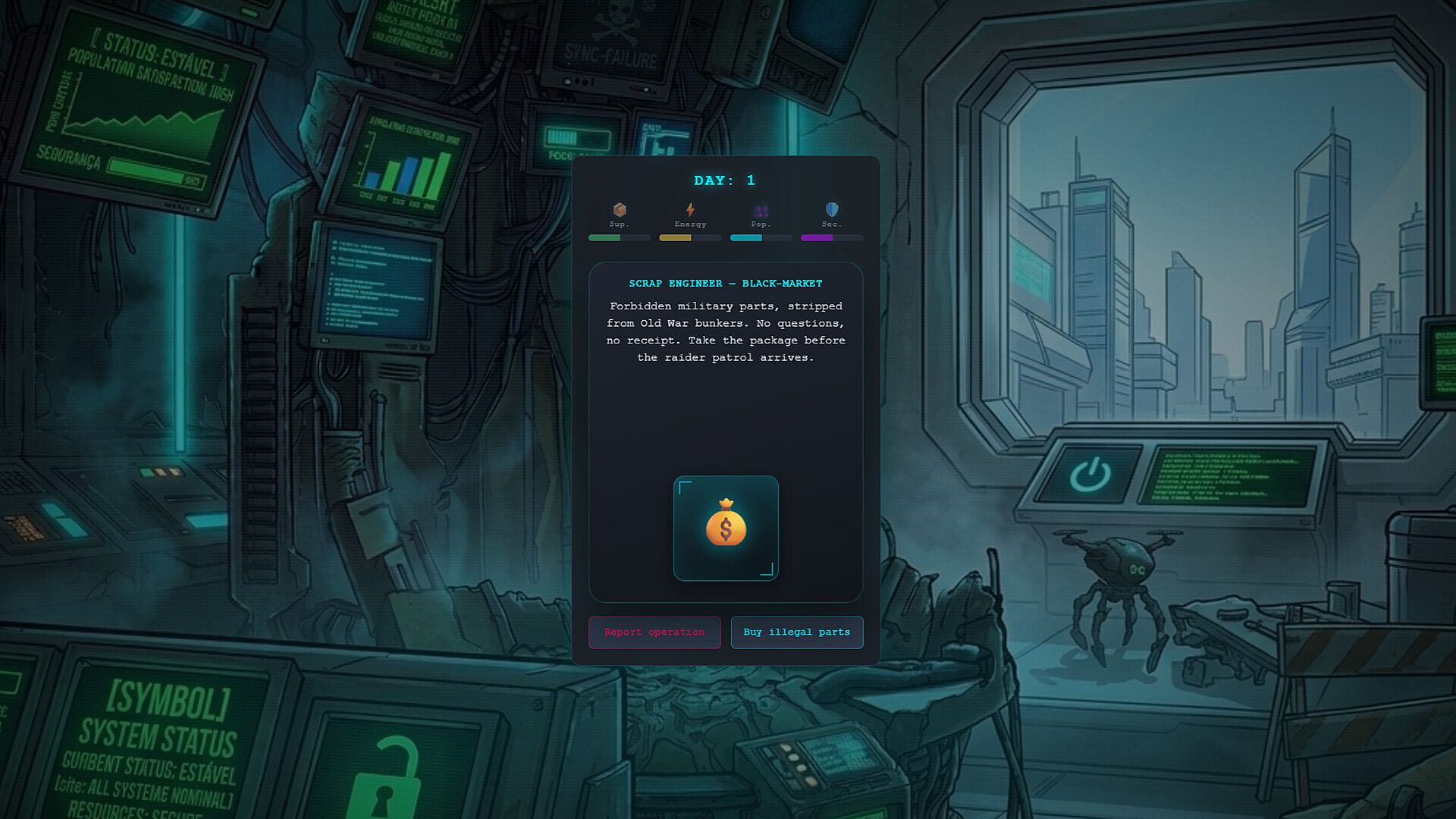
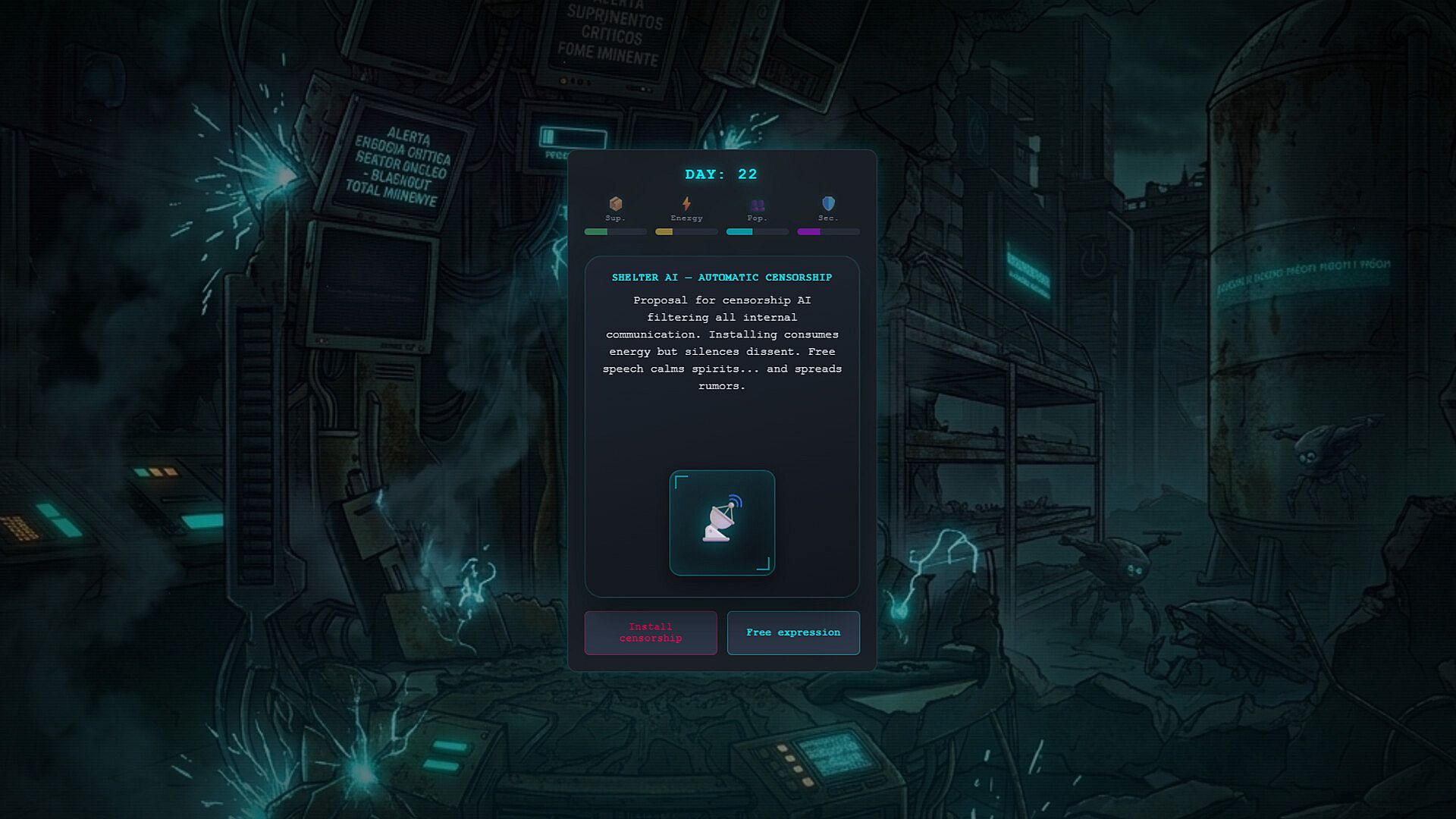
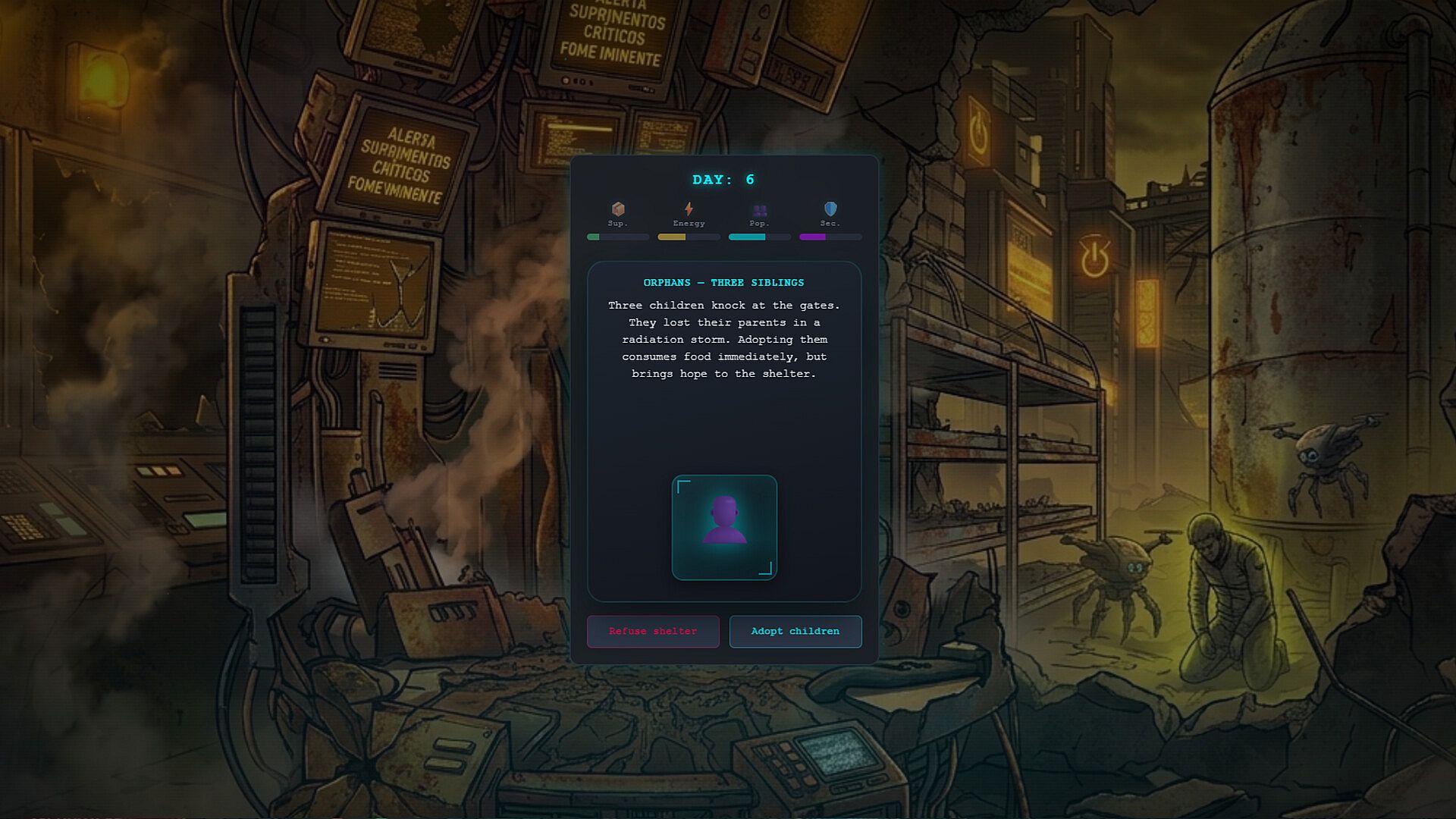
Players navigate a tense sequence of decisions presented through an intuitive system that requires selecting between two options at each step. These choices directly influence resource levels such as food, security, and morale while introducing moral and political conflicts that test priorities. The simulation aspect tracks how actions compound over time, with the world responding to shifts in power balances and survival strategies. Scarcity forces constant evaluation of short-term gains against potential long-term fallout, creating a focused experience built around pressure and accountability rather than open exploration.
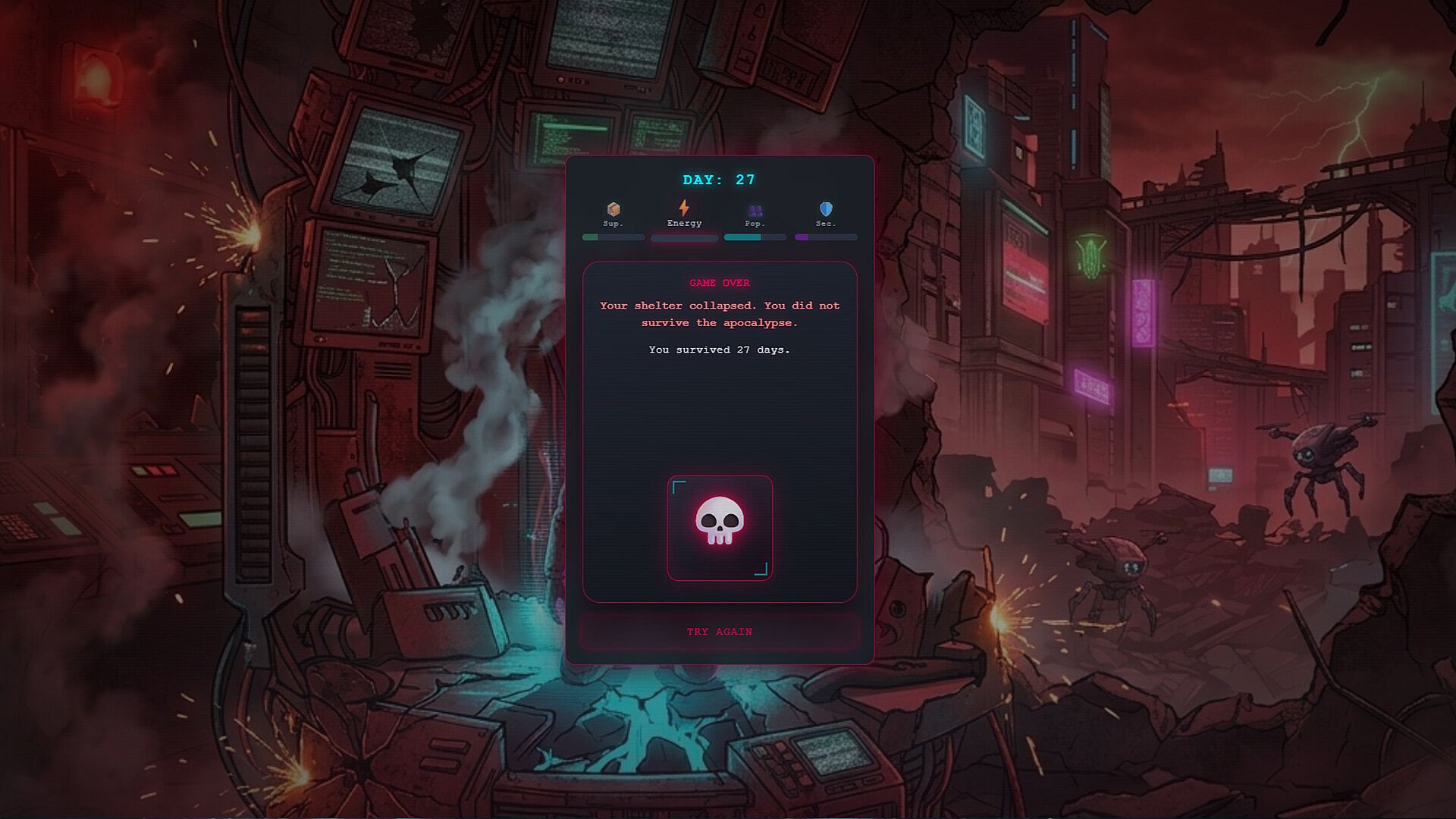
Resource management forms the backbone of progression. Every decision adjusts key metrics that determine whether the bastion maintains order or edges closer to failure. Moral dilemmas appear regularly, requiring players to weigh options that might favor one group over another or sacrifice immediate comfort for broader stability. The minimalist presentation keeps attention on these mechanics, stripping away extraneous elements to emphasize the weight of each selection and its ripple effects across the narrative.
Game Modes
The title operates exclusively in single-player format, with all content delivered through a continuous narrative campaign driven by player choices. There are no separate competitive or cooperative modes, as the design keeps focus on individual decision paths that lead to varied outcomes. Branching occurs naturally from the binary system, allowing different playthroughs to diverge based on how resources and dilemmas are handled at each stage.
Replay value stems from the dynamic consequences mechanic, where no two sequences unfold identically. Players can revisit the experience to explore alternative routes, observing how earlier selections alter later challenges and the overall fate of the settlement. This structure suits those seeking a contained, introspective session rather than extended multiplayer sessions or procedural generation.
Story and Atmosphere
The narrative unfolds in a collapsing world where the bastion serves as the final refuge for a group of survivors. Events build through the accumulation of decisions, with the story adapting to reflect shifts in leadership, alliances, and resource allocation. Tension arises from the constant awareness that time is limited and every action carries consequences that reshape the community's trajectory.
Atmosphere relies on a stripped-down visual and audio approach that highlights the gravity of choices. Background elements remain simple to avoid distraction, directing attention toward the text-based dilemmas and their immediate impacts. This creates an environment where the pressure of leadership feels immediate, encouraging careful consideration without overwhelming sensory input.
Is It Worth Playing?
Neo-Exodus: Last Bastion targets players who appreciate choice-driven strategy experiences with simulation depth and narrative consequences. Its single-player focus and binary decision framework deliver a compact session that rewards thoughtful resource balancing and ethical reflection. Those drawn to indie titles emphasizing tension over spectacle will find the mechanics align closely with the described core loop.
Since the game remains in development ahead of its planned August 2026 release, current information centers on the confirmed features of instant decision mechanics, dynamic story alterations, and pressure management. Fans of minimalist narrative strategy should monitor updates for any additional details on length or specific systems once it becomes available. The approach suits individuals comfortable with replaying short campaigns to uncover different endings rather than those seeking expansive worlds or ongoing content cycles.