




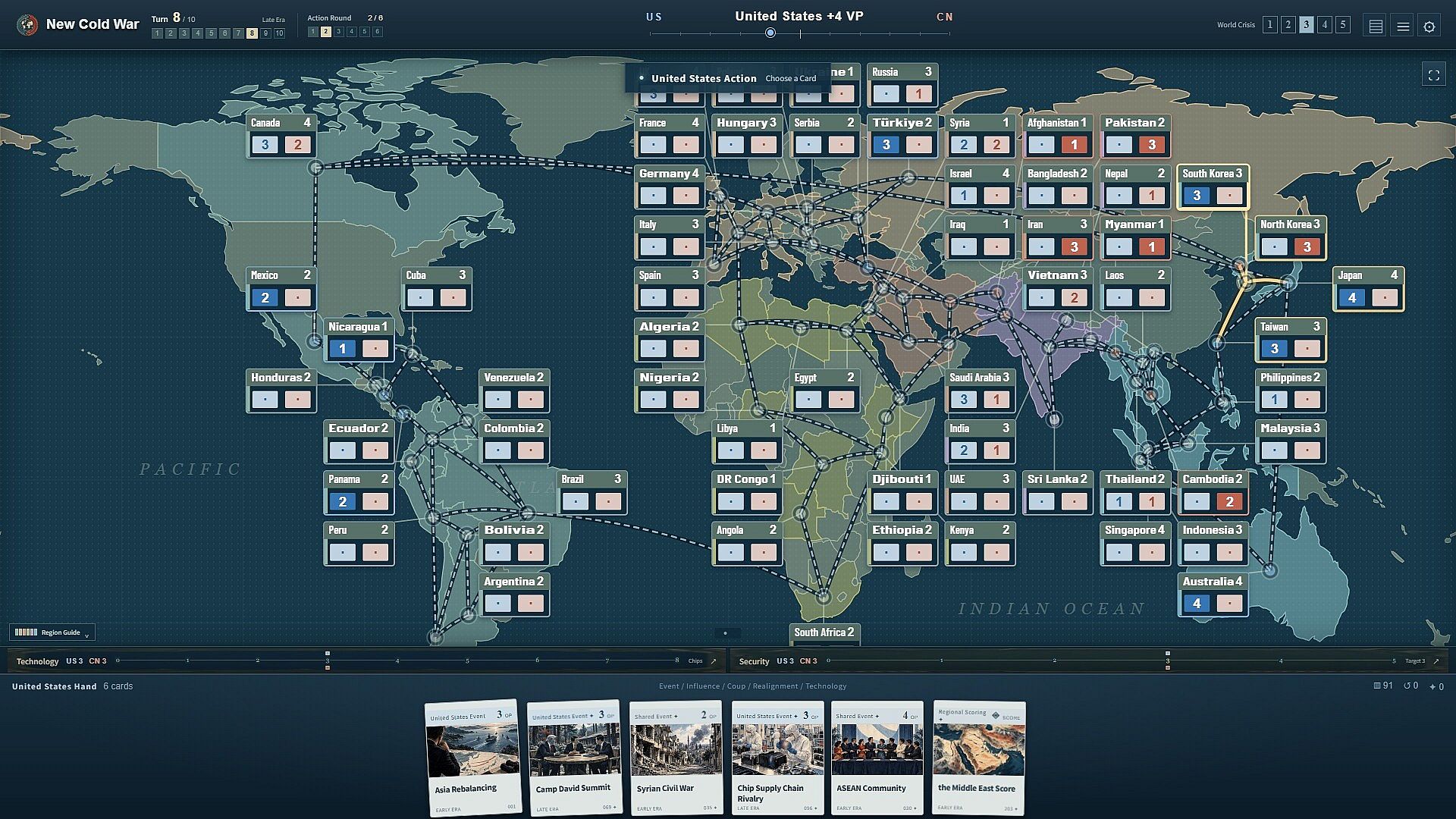
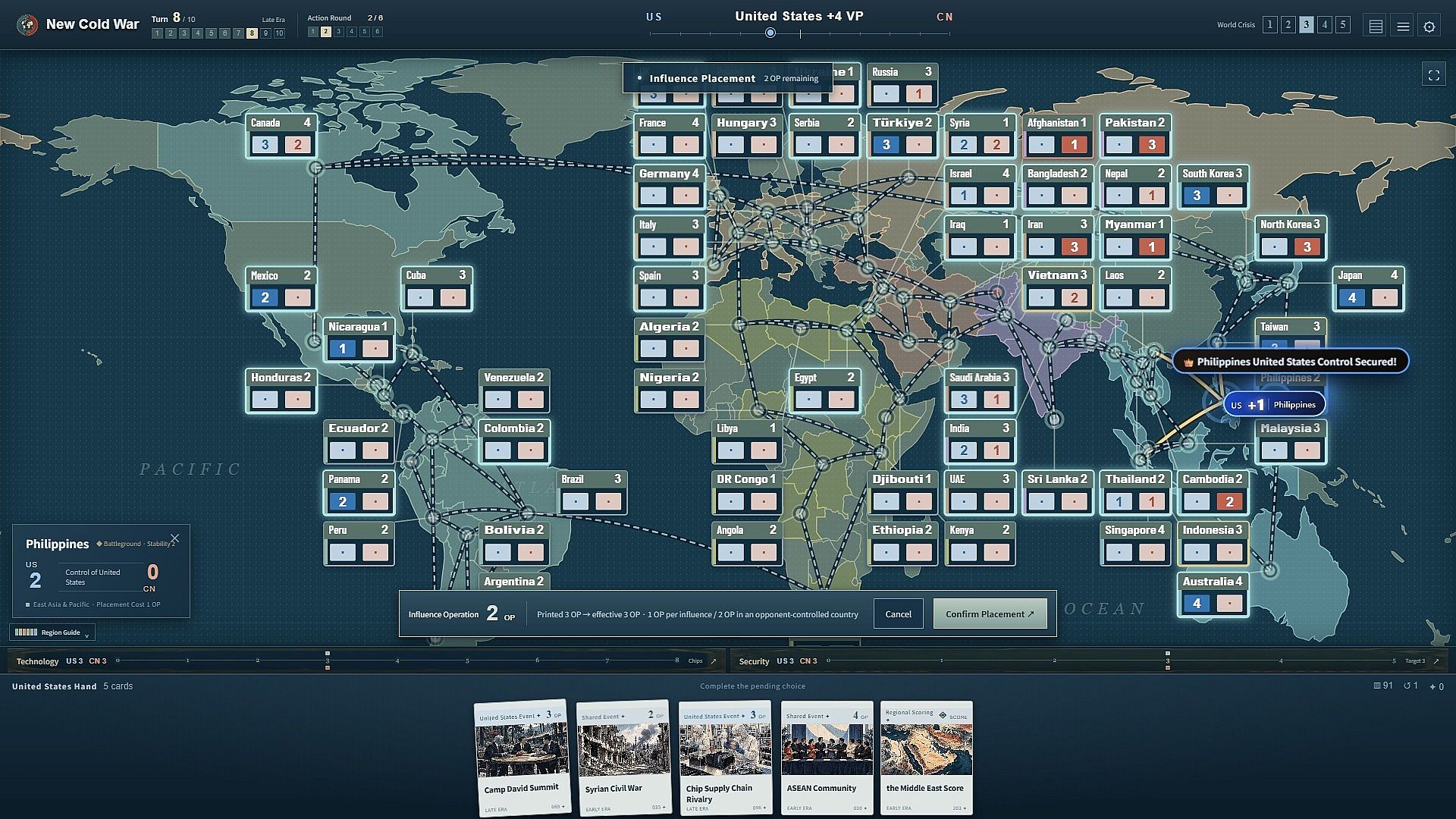
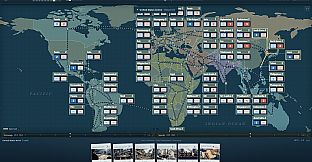
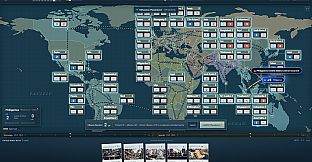
New Cold War is a strategy and simulation title for PC that adapts a card-driven, turn-based board game focused on the U.S. China rivalry between 2010 and 2025. Players select one of the two sides and compete for regional control through careful card management and long-term positioning rather than direct combat.
Gameplay
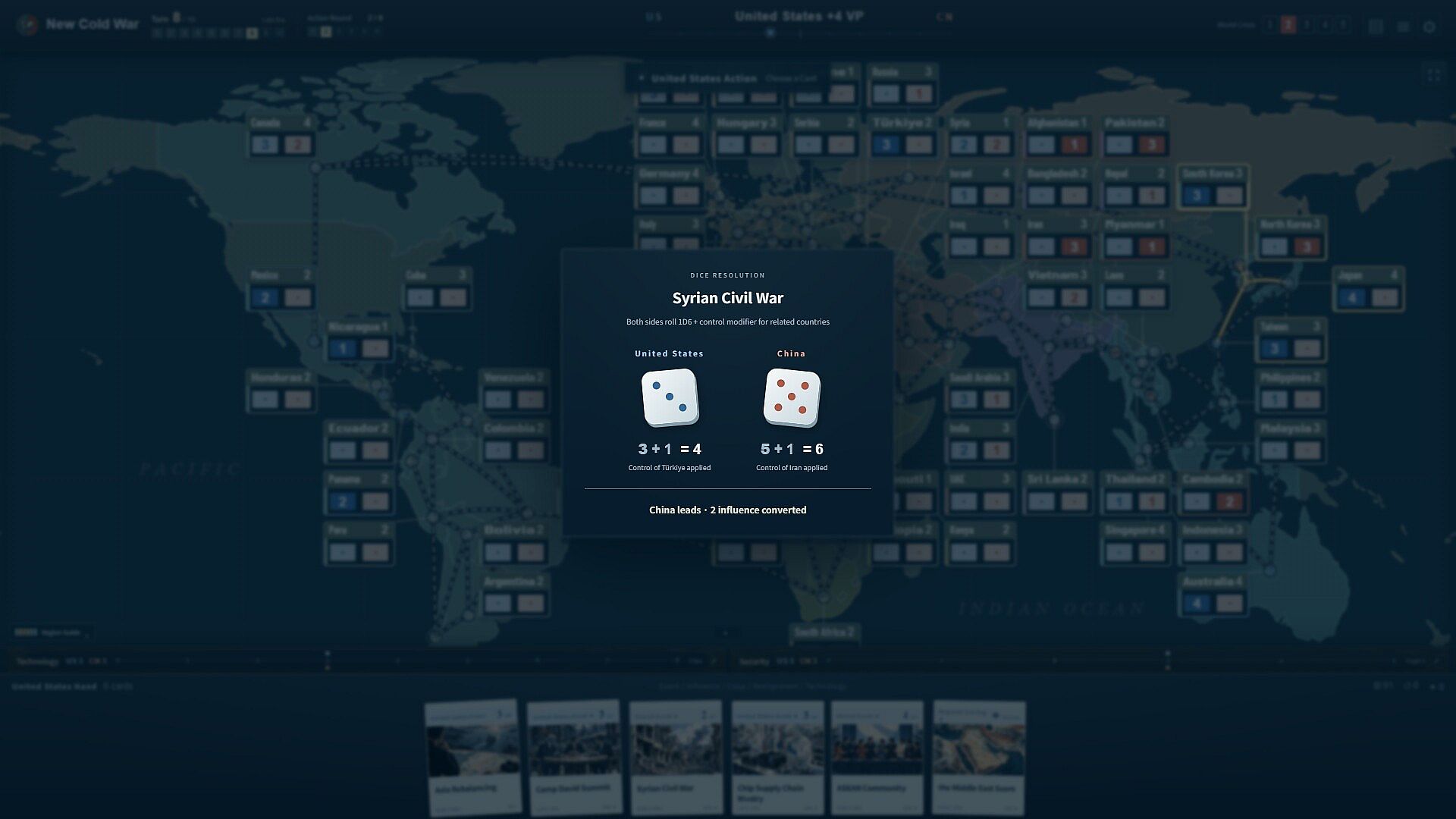
The core loop revolves around drawing and playing cards each turn. A player can either trigger the event printed on the card or spend its operations points on map actions. Events deliver immediate effects or victory points, while operations points support placing influence markers, launching interventions, or attempting diplomatic realignments in contested countries.
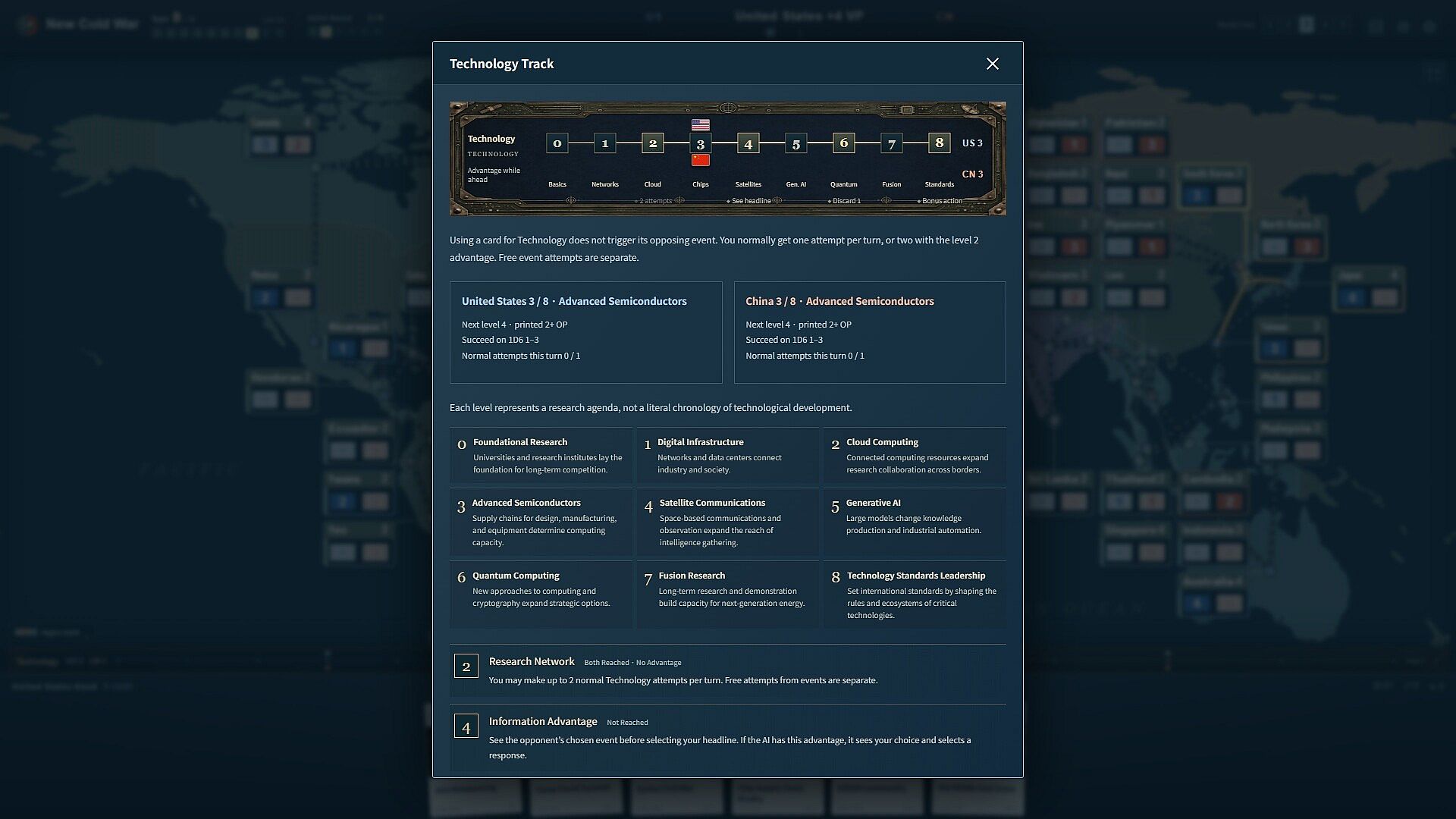
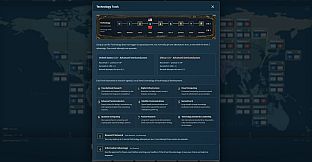
Research forms a parallel track. Advancing technologies such as advanced semiconductors, generative AI, and quantum computing grants advantages that persist across turns. A lead in research can reveal an opponent headline card in advance or provide an extra action during the round.
Scoring occurs when specific cards are played. These cards convert the current balance of influence in targeted countries into victory points. Timing matters because an opponent may intervene to shift control just before a scoring opportunity resolves. Escalating the global crisis marker too far hands the game to the opposing side, creating a built-in limit on aggressive plays.
Game Modes
Two primary ways to play exist. Solo mode pits a single player against an AI opponent that follows programmed decision rules. Online 1v1 allows direct competition against another human through the platform matchmaking system.
A tutorial mode walks new players through the rules and card interactions step by step. Match history and statistics screens record past decisions, influence placements, and scoring outcomes for later review.
Key Mechanics and Strategy
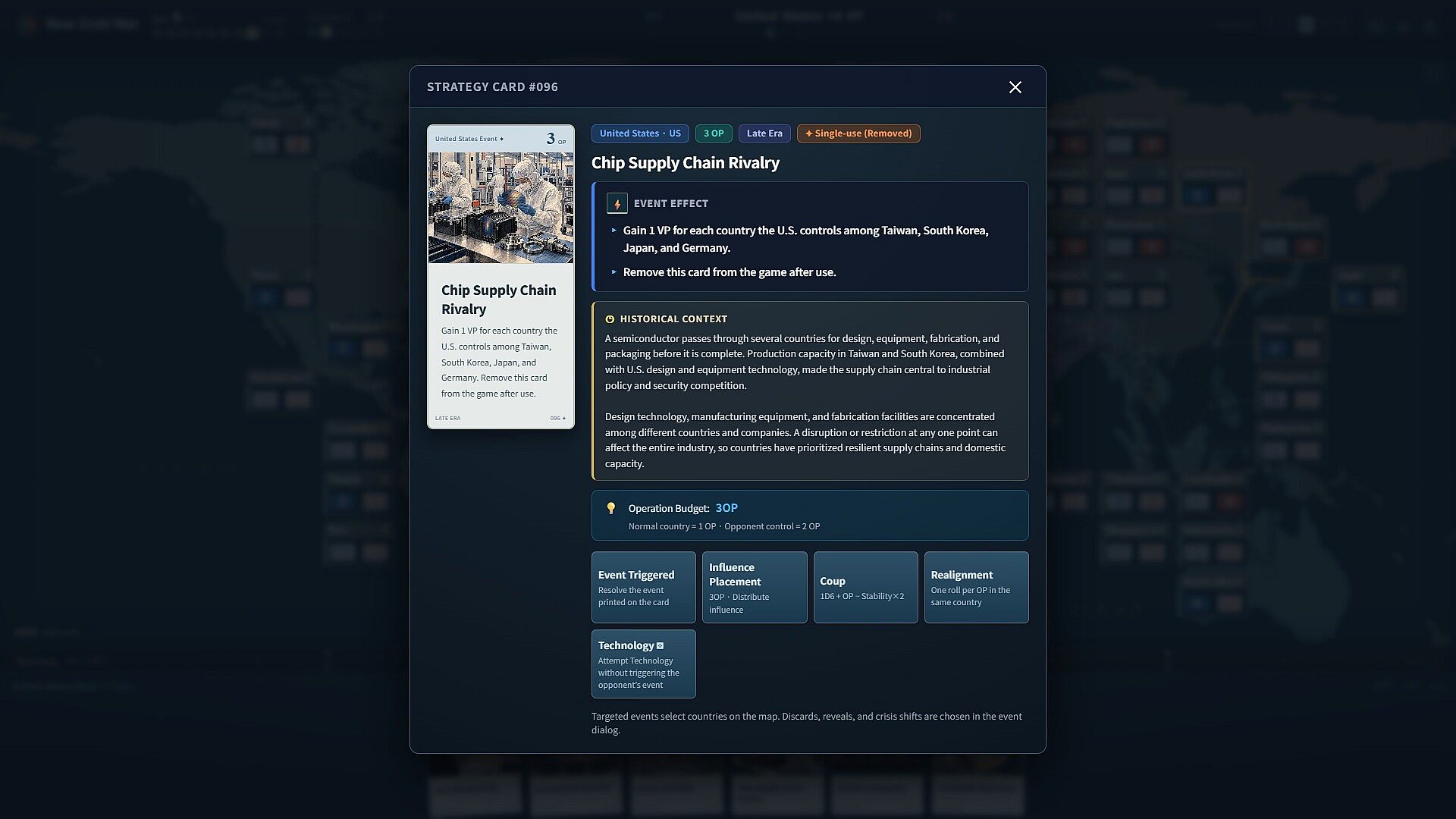
Influence placement builds presence across six distinct regions. Each region contains multiple countries whose control contributes to scoring cards. The semiconductor supply-chain event illustrates the choice between immediate points and sustained positioning, awarding the United States one victory point per controlled country among South Korea, Taiwan, Japan, and Germany when played.
Diplomatic realignment attempts can flip countries without direct confrontation, but success depends on relative influence levels. Interventions allow one side to disrupt an opponent action at the cost of increasing the global crisis level. Players must weigh short-term gains against the risk of triggering an automatic loss condition.
Is It Worth Playing?
The game suits players who enjoy deliberate, card-driven strategy with elements of area control and timing. Its two-player focus and AI opponent make it accessible for both competitive matches and practice sessions. Because the title remains in development with a planned release in Q1 2027, no player reviews or long-term support details are available yet. Those interested in modern geopolitical themes executed through classic board-game mechanics will find the described systems worth following as more information emerges.












