

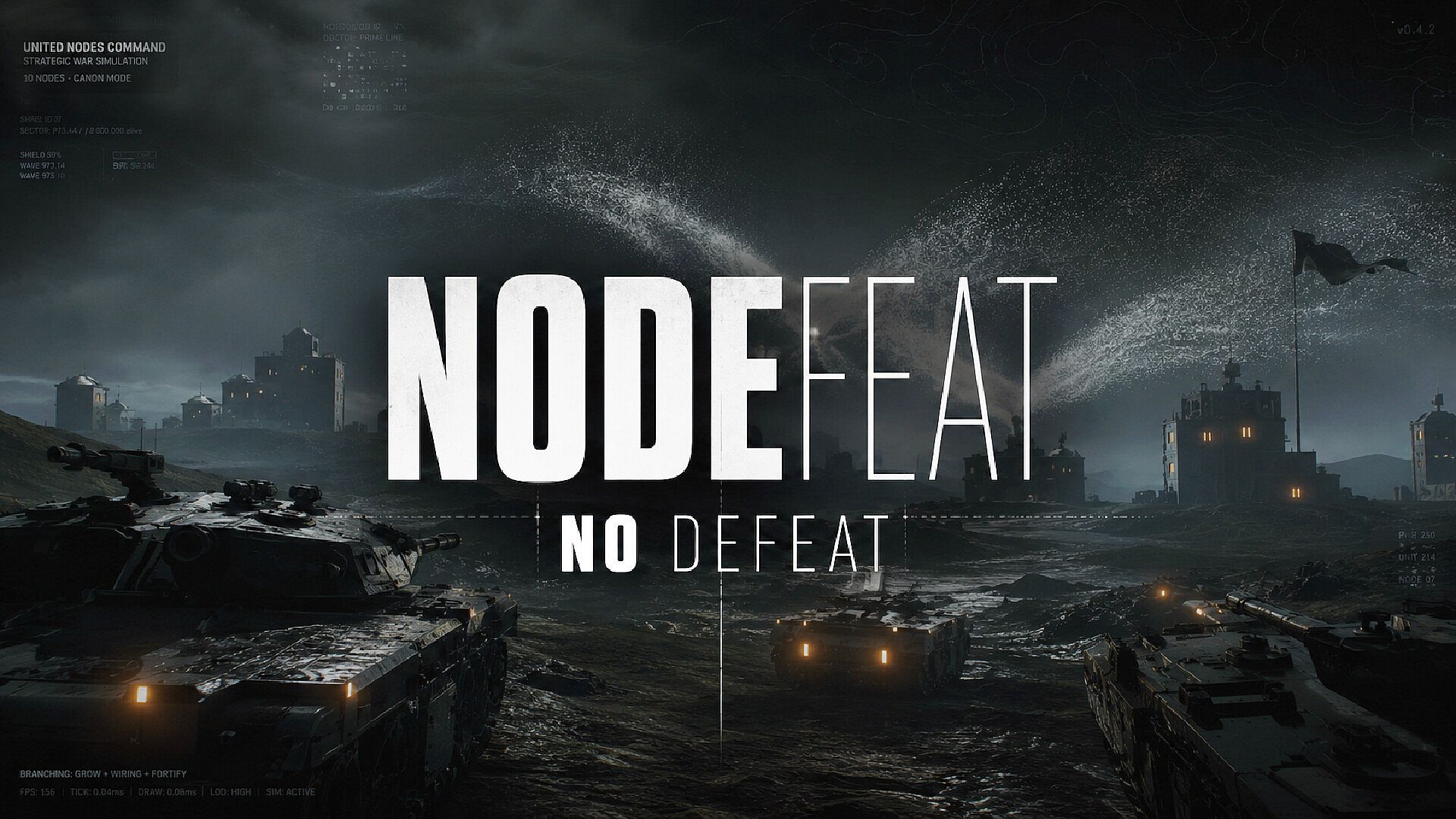
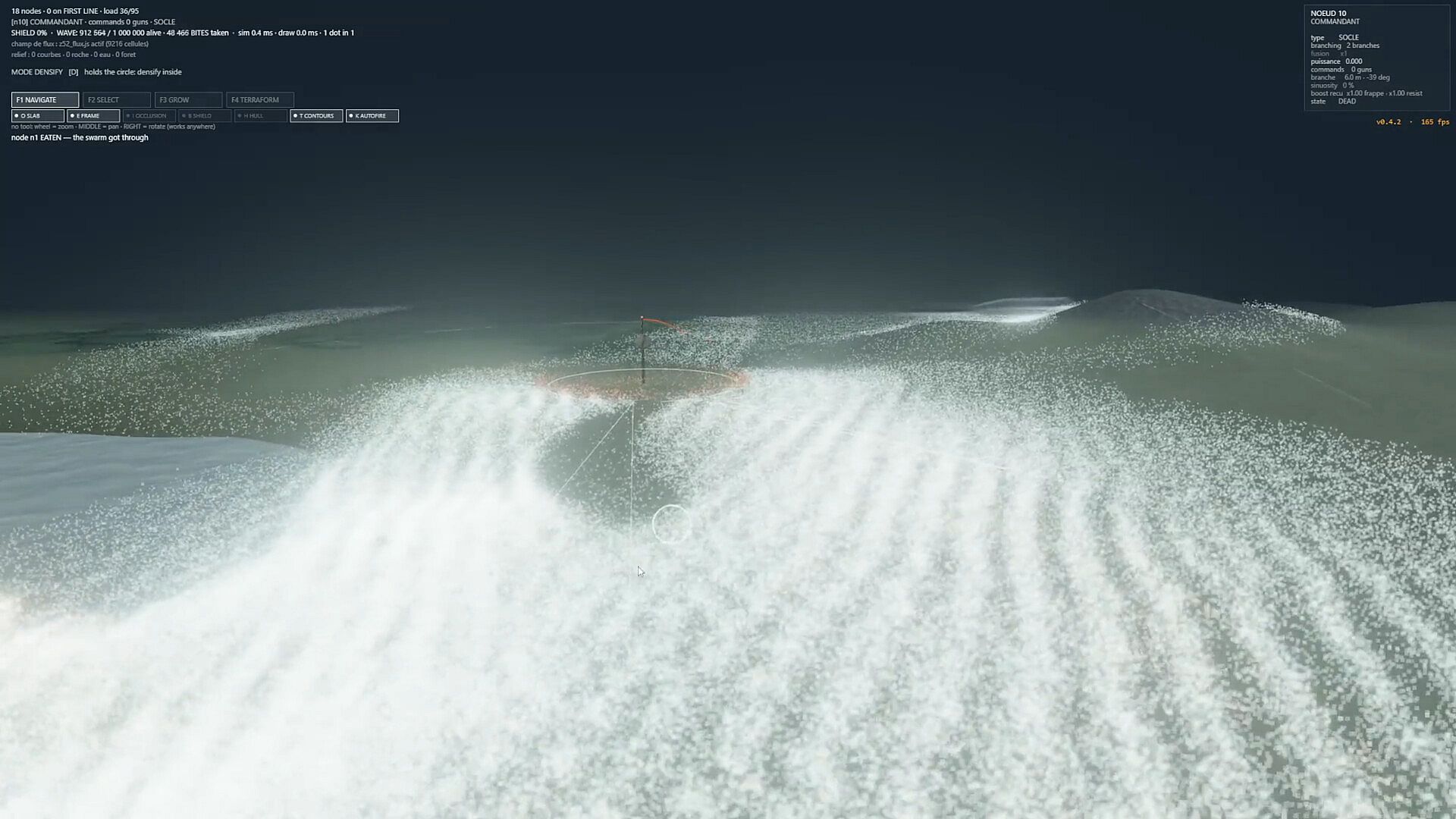
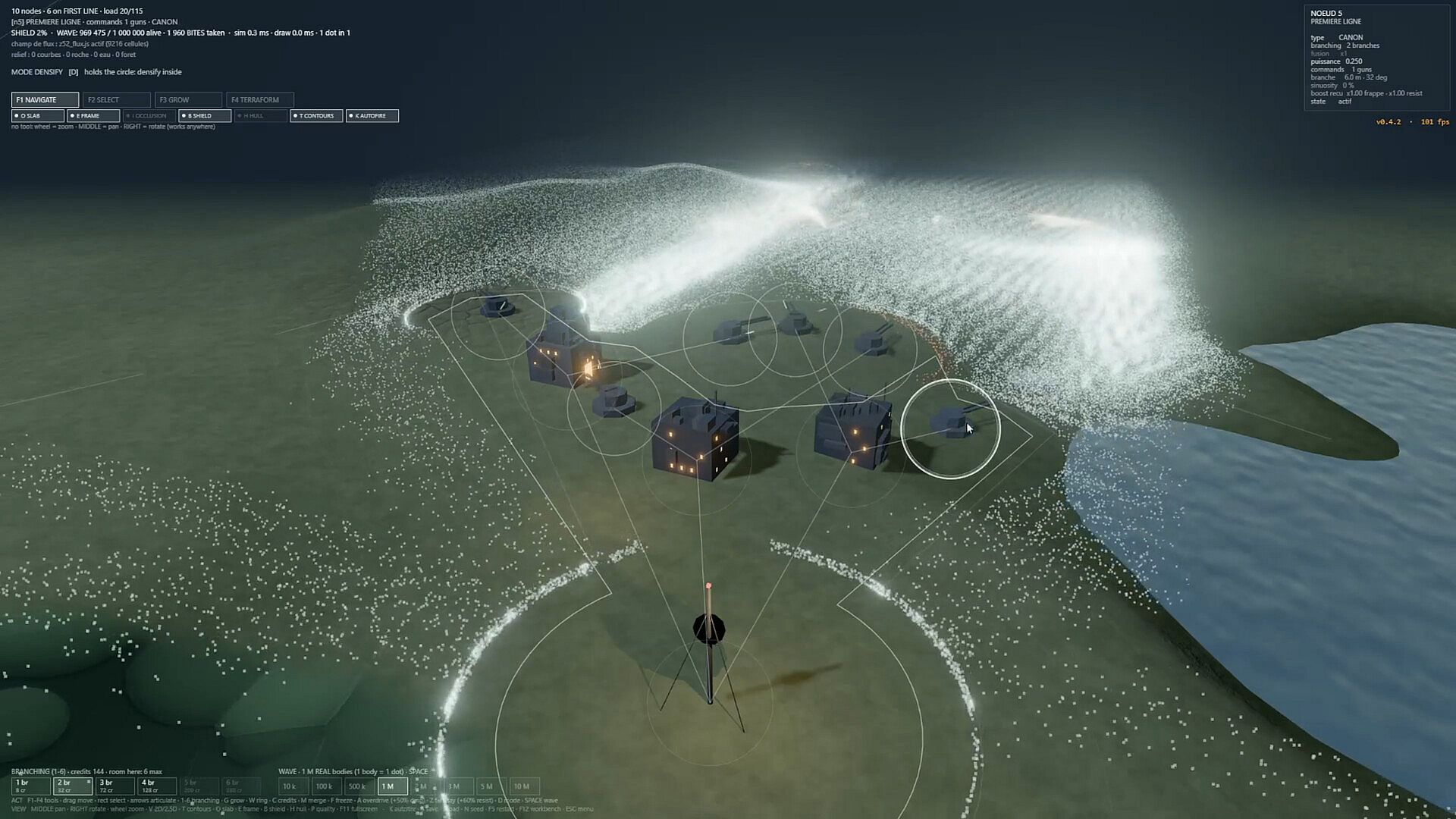
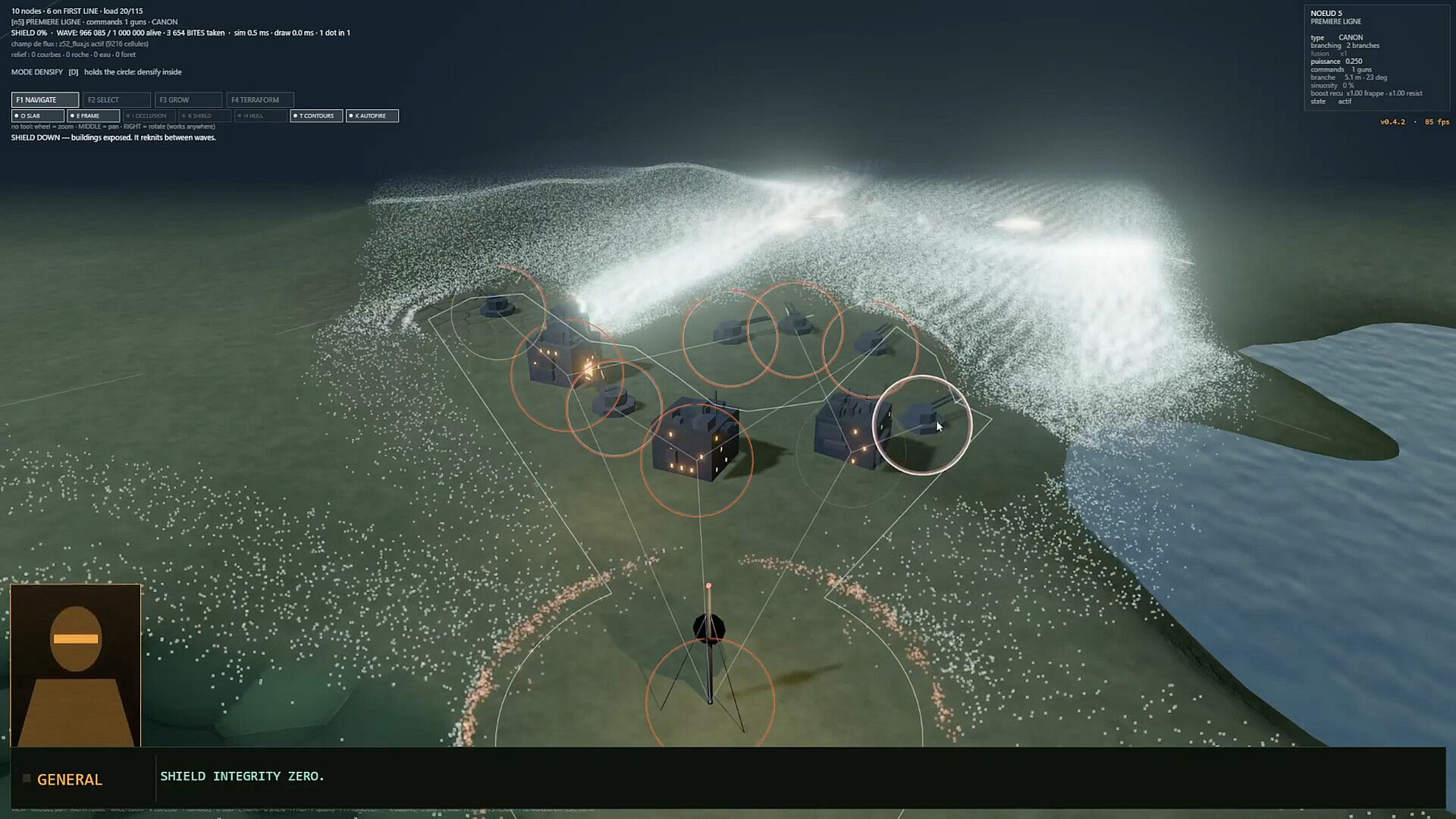

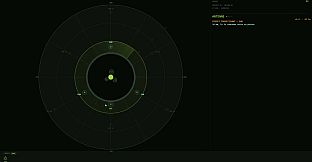
NodeFeat is a single-player real-time tower defense and base building game that blends action, strategy, indie, simulation, and early access elements on PC. Players take command of Node 52, a growing base that must withstand relentless assaults from a phosphorescent swarm devouring everything in its path.
Gameplay
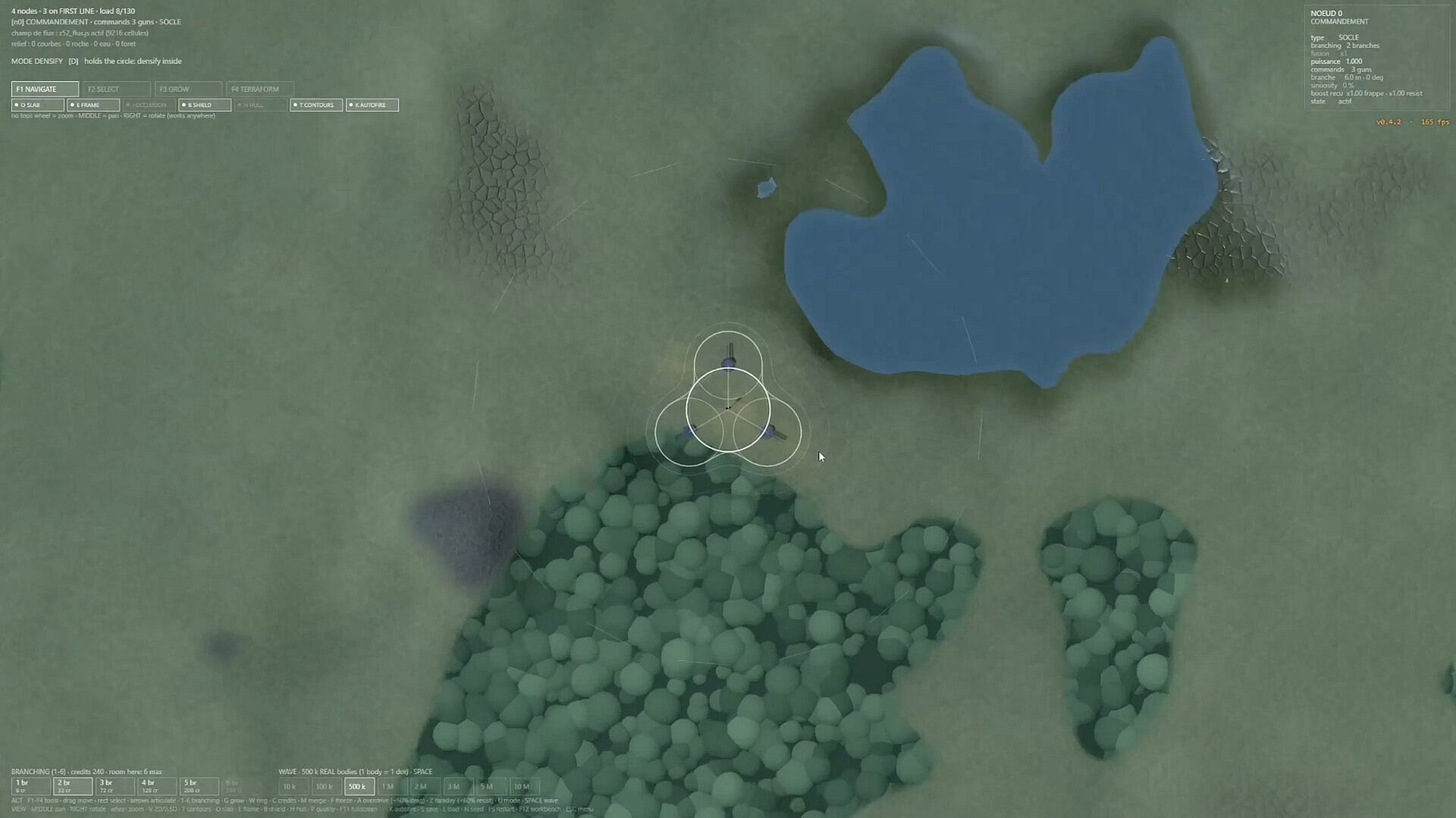
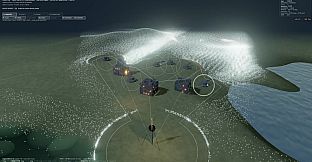
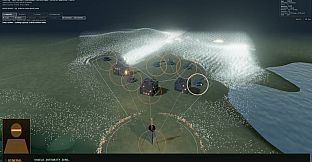
The core loop centers on growing a tree-like base node by node. Each node functions simultaneously as a weapon, wall, and structural element. Growth happens greedily between enemy contacts, but overextension risks structural collapse under its own weight. Turning nodes rotates entire branches, allowing precise aiming of guns and redirection of growth patterns without a traditional build menu.
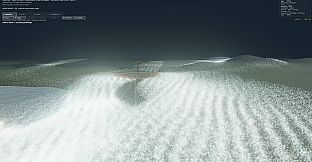
Terrain manipulation serves as a primary defensive tool. Raising ridges, cutting channels, and flooding corridors shapes how the swarm flows across the ground. The enemy behaves like a fluid, so strategic digging directs their path into kill zones or away from vulnerable areas. Three weapon lines-WALL, CANNON, and MINE-each progress through ten tiers, with higher tiers altering function rather than raw power. Six enchantments, including magnetic veil, anchoring, dike, electrification, faraday cage, and overclock, further customize node capabilities.
Every run features procedural variation through a seeded draw system for node openings. Players can freeze or reroll nodes to optimize the tree. The shield, formed by the hull stretched around nodes, adapts dynamically: folding inward creates a dense shell while spreading outward extends firing range at the cost of thinner protection. No mode button is required; posture selection happens before contacts arrive.
Four enemy types-WALKER, SPRINTER, HULK, and CRAWLER-mix into each assault, each with distinct speeds, damage output, and durability. Every individual body receives full simulation with unique position and velocity tracking. Seven attack vectors-ground, roads, air, water, underground, network, and waves-are announced in advance, giving time to prepare. The site itself degrades between waves through seventeen possible mutations such as fire, landslide, fissure, flood, storm, dust, drought, quake, lava, fog, frost, and magnetic cloud that stack and alter rules, disable equipment, or reshape the environment.
Game Modes
Four difficulty modes adjust how the site retains memory of past disasters rather than scaling enemy strength. ROOKIE mode clears disaster effects with each new contact. OPERATOR and VETERAN increase retention progressively. ZONE 52 preserves every mutation permanently, demanding long-term adaptation to cumulative changes.
Node 52 consists of nine distinct sectors: THE PERIMETER, THE SUBURBS, HANGAR 18, THE LAKE, THE SHAFT, THE BONEYARD, THE RIG, THE VERTICAL, and THE RIVER. Each sector applies its own ruleset that influences possible disasters and layout generation from the run seed. Selection affects available tools, such as the absence of water in certain sectors preventing flood-based tactics or fire suppression.
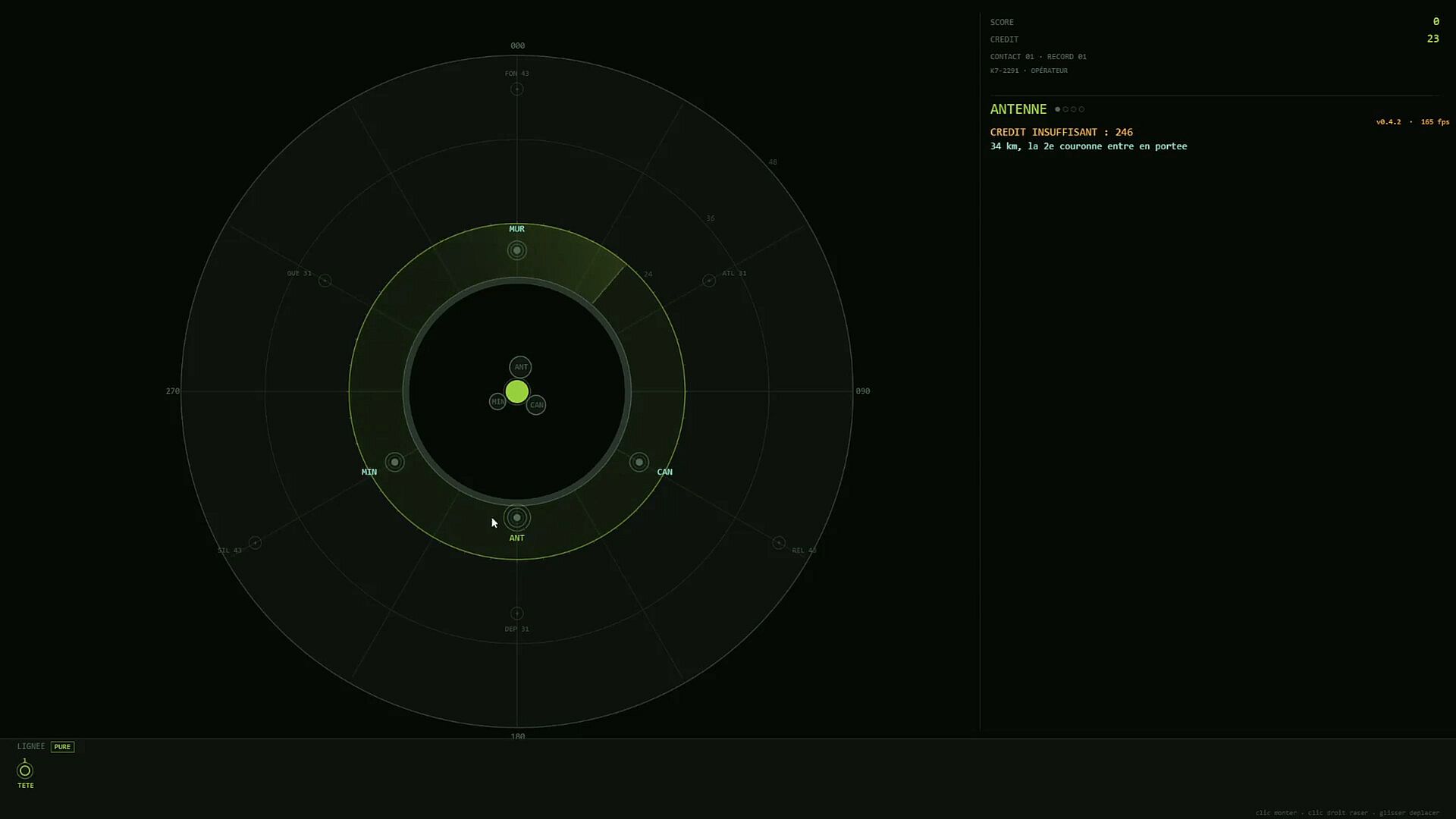
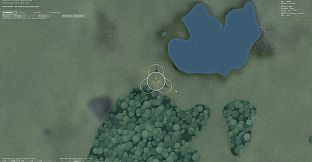
Two display options support different playstyles. A full HD view provides detailed visuals while a monochrome tactical overlay emphasizes circles, vectors, and simulation data in the style of a warship combat display. Switching between them occurs freely during play.
Progression and Structure
Credits earned from surviving contacts fund further node growth and upgrades. The single persistent site never resets, carrying forward all carved terrain, losses, and structural changes into subsequent runs. This creates a continuous record of each attempt at holding Node 52.
Early access includes the full base systems at launch, with planned additions of mobile units across ground, water, and air, countermeasures against swarm remnants, and asymmetric co-op featuring one aerial commander alongside ground players. Interface support covers English, French, German, Simplified Chinese, and Japanese.
The soundtrack generates live during play, shifting from calm building phases to intense combat tracking. Sound intensity reflects the current fight state without relying on pre-recorded tracks.
Is It Worth Playing?
NodeFeat suits players who enjoy deliberate, systems-driven tower defense where terrain shaping, procedural node selection, and persistent environmental memory create meaningful long-term decisions. The emphasis on one unchanging location across runs rewards careful planning and adaptation over repeated short sessions.
Those drawn to simulation elements will appreciate the full individual enemy tracking and fluid-like swarm behavior that responds directly to player-altered ground. Strategy fans focused on real-time positioning and posture management rather than resource micromanagement will find the growth and turning mechanics distinctive.
Early access status means the experience centers on the verified single-player loop with announced future expansions. It appeals most to those comfortable with iterative runs on a single site and willing to experiment with sector rules and mutation stacks. The game delivers a focused test of defensive architecture against overwhelming numbers without extraneous objectives.