






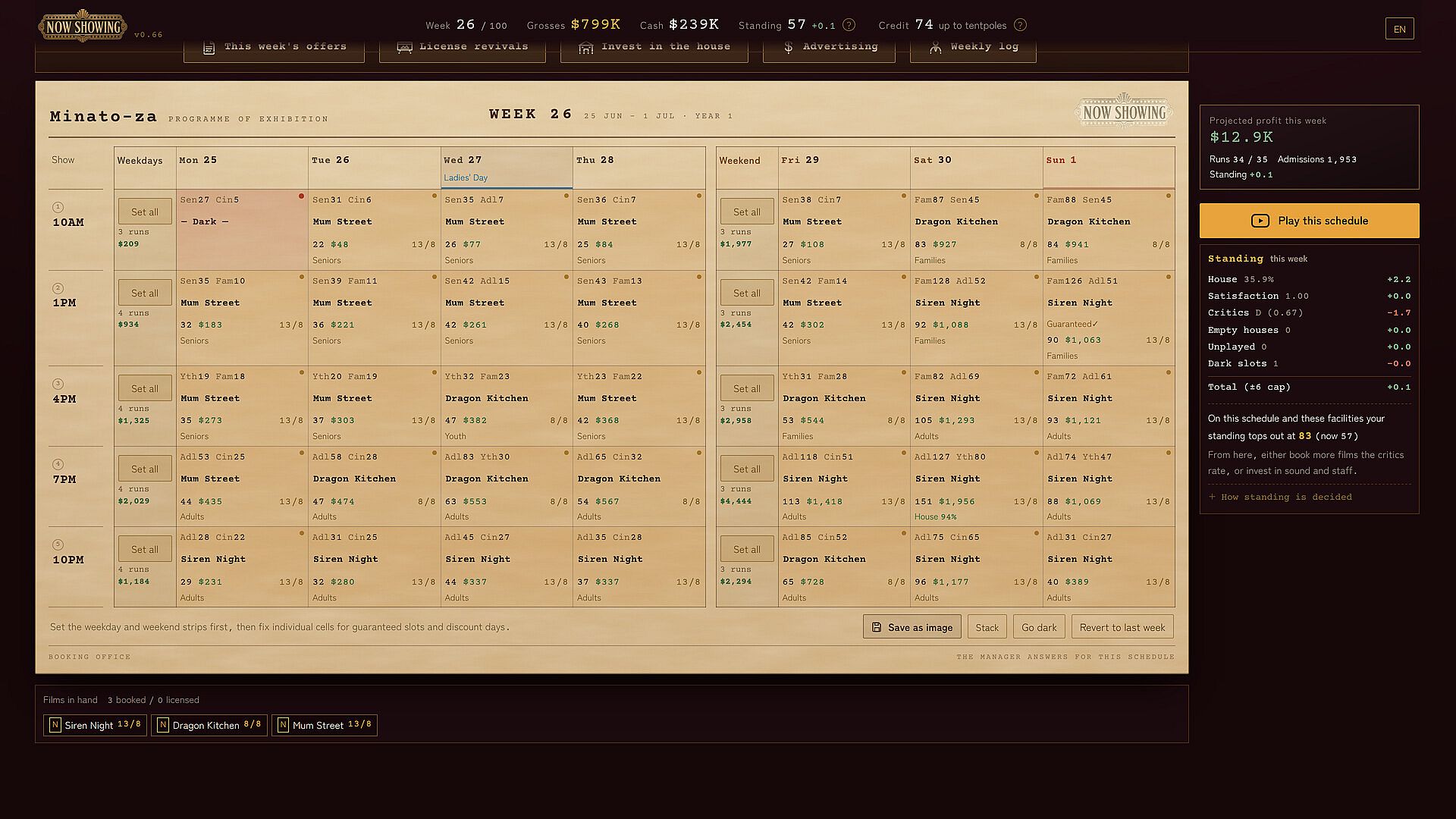
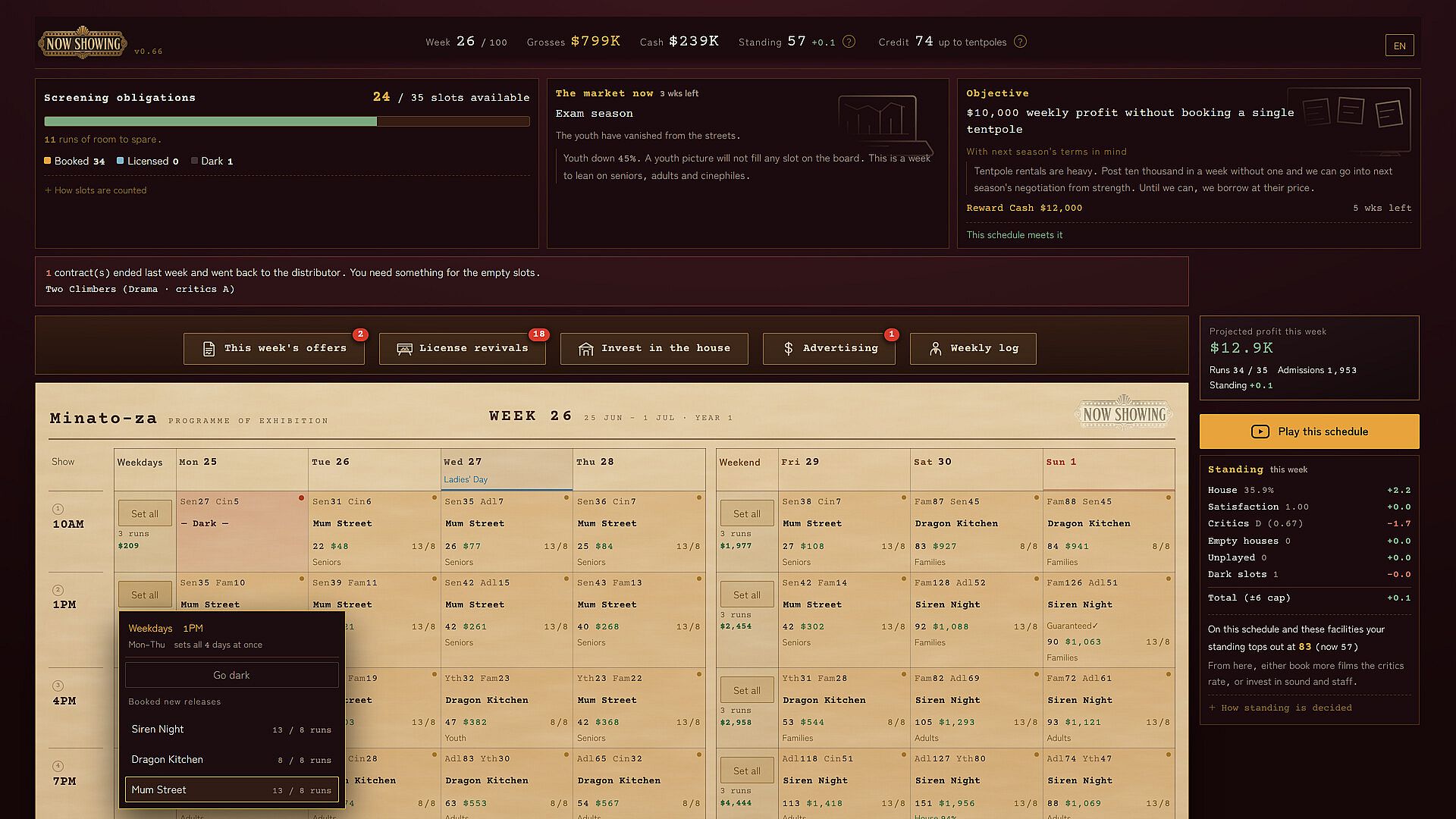
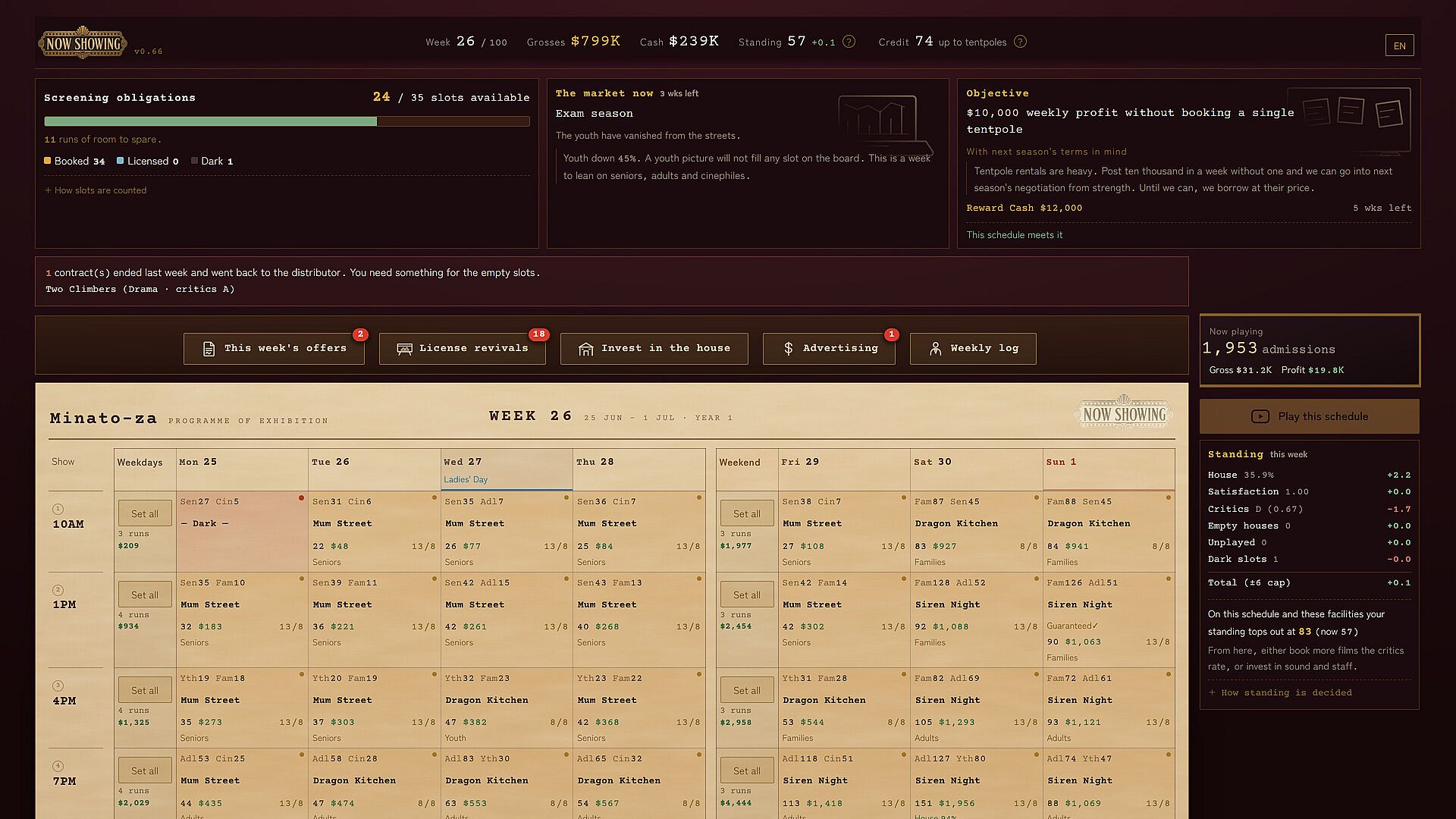





NOW SHOWING: A Cinema Programming Game is a strategy, indie, and simulation title for PC that places players in charge of scheduling films at a single cinema in Japan. The experience centers on filling thirty-five weekly screenings across five daily start times while balancing audience preferences, distributor contracts, and long-term house development over a chosen number of weeks.
Gameplay
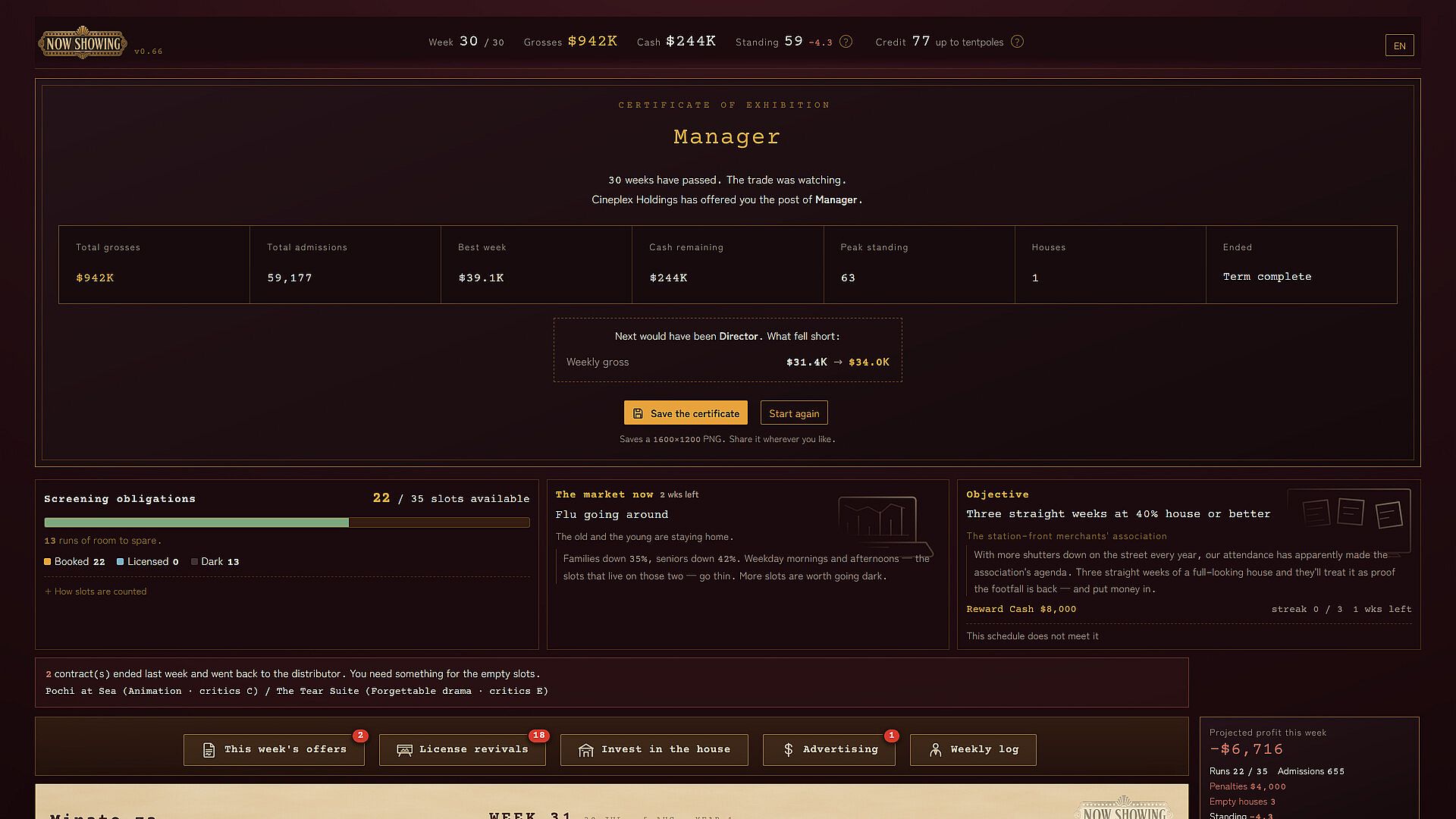
Players begin by selecting a term length of thirty weeks, one hundred weeks, three years, or five years, which sets both the campaign duration and overall difficulty. Each week presents a board of time slots that must be filled with available films. Five distinct audience groups attend at different hours: families, youth, working adults, seniors, and cinephiles. Matching the right film to the right slot determines attendance and revenue.
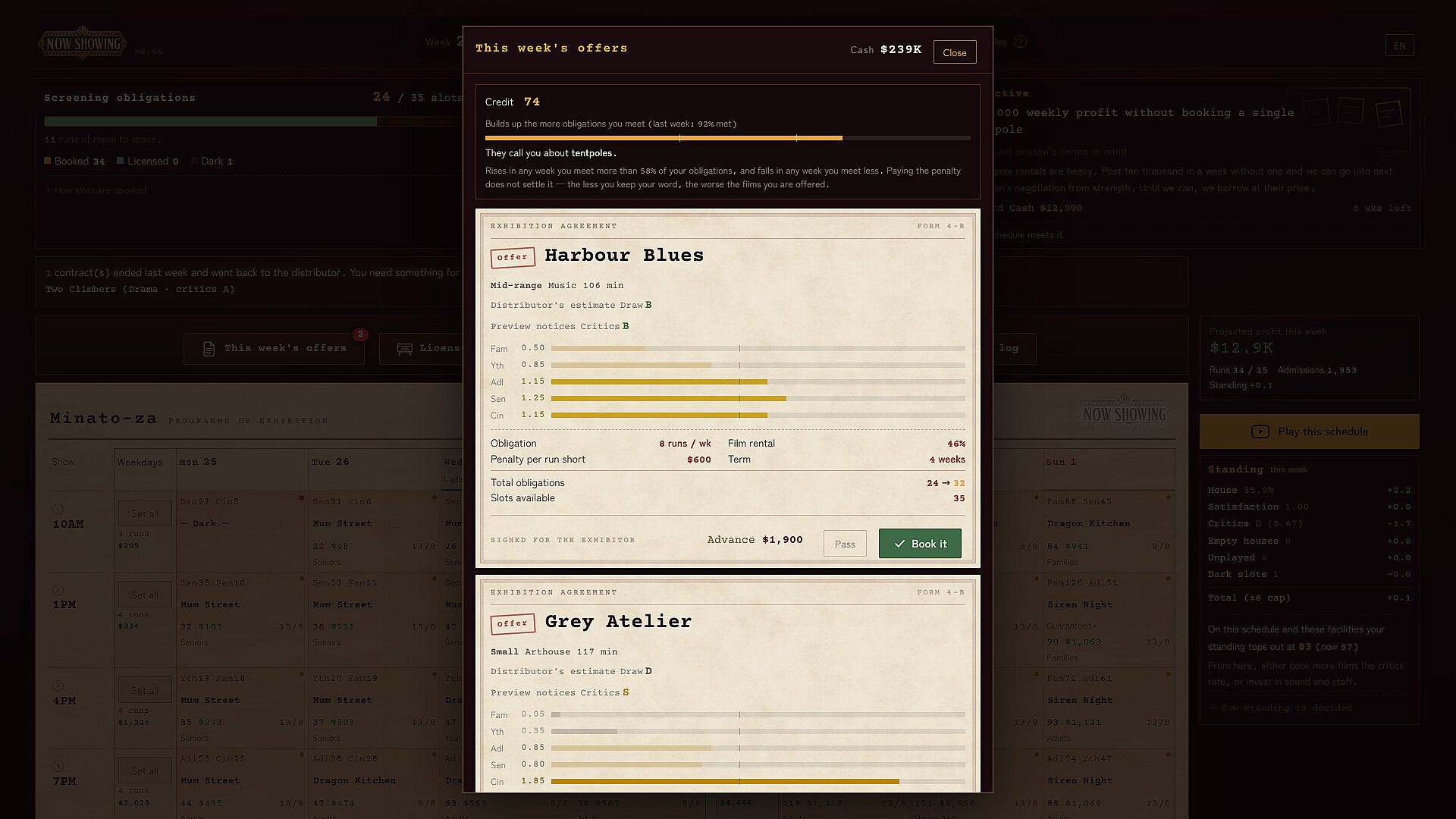
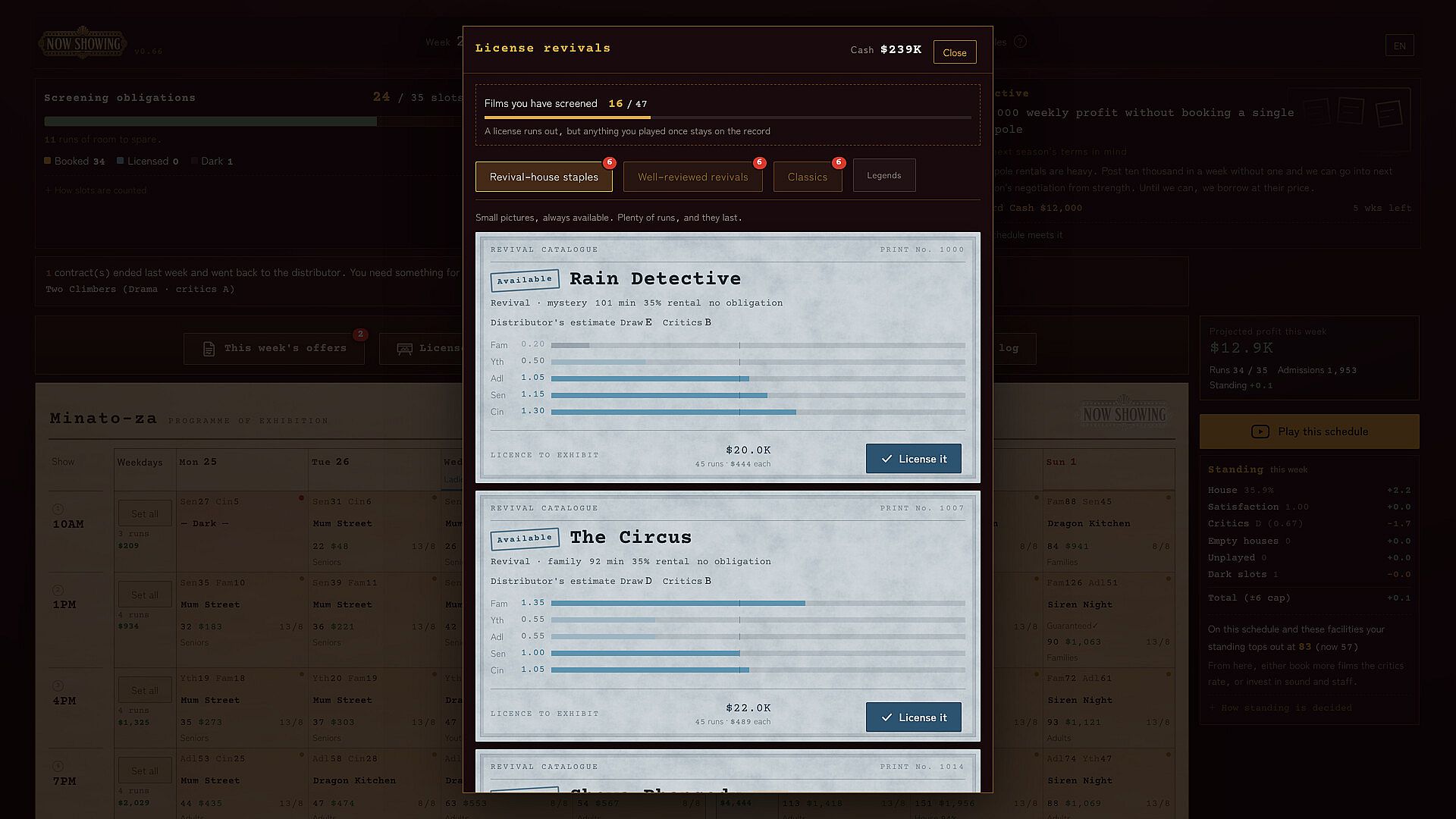
Films arrive through two primary systems. New releases come with distributor requirements such as minimum run counts or demands for prime-time slots. Revivals are purchased outright for a fixed number of screenings, granting more scheduling freedom once acquired. Standing reflects public perception of the cinema and drives seat sales, while credit governs access to future distributor offers. Decisions often force trade-offs between the two metrics.
Revenue can be reinvested in house improvements including better seating, sound and projection quality, a functional concession stand, additional staff, or targeted advertising. These upgrades influence repeat visits and overall earnings. All films are original creations with no real-world titles or direct parodies involved. The simulation runs without hidden timers or off-screen progression, ending with a performance certificate once the chosen term concludes.
Game Modes
The game operates as a single continuous campaign without separate named modes. The core loop remains consistent regardless of term length, though longer durations expose players to more varied distributor negotiations and audience patterns. Short terms emphasize quick optimization of weekly schedules, while extended play allows gradual accumulation of owned revivals and infrastructure upgrades.
Progression occurs through repeated weekly cycles of booking, observation of results, and reinvestment. No multiplayer elements or alternate scenarios appear. The single-cinema focus in Japan keeps every decision tied to one location and its evolving reputation.
Core Mechanics and Systems
Scheduling requires careful attention to audience timing data displayed on the booking board. A film that fills seats on a Saturday evening may draw almost no one on a Tuesday morning. Contract penalties exist for breaking distributor terms, creating moments where sacrificing credit preserves standing or vice versa.
Resource management extends beyond films to physical and operational improvements. Better equipment and staff retention encourage repeat business, while advertising can boost short-term turnout. The interplay between owned revivals and ongoing distributor deals forms the central tension, as players rarely afford ideal quantities of both.
Every element stays visible and player-controlled. No external events or automated growth occurs outside active play sessions.
Is It Worth Playing?
This title suits players who enjoy deliberate, turn-based strategy and simulation focused on resource allocation and long-term planning. The fixed campaign lengths provide clear endpoints and measurable outcomes without requiring ongoing commitment. Those interested in cinema management themes will find the audience differentiation and contract mechanics add meaningful depth to each booking decision.
Because the game features only invented films and a single location, it avoids reliance on licensed content or expansive world-building. The experience rewards careful observation of patterns across weeks rather than rapid expansion or competitive play. Players seeking a contained, self-contained simulation with transparent systems will find the structure aligns closely with those preferences. Shorter terms offer accessible entry points, while longer ones deliver extended strategic layers for those who complete them.











