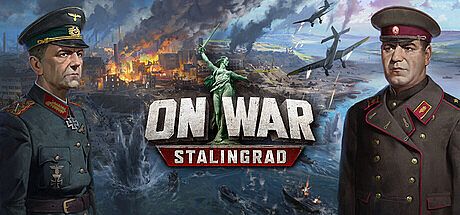


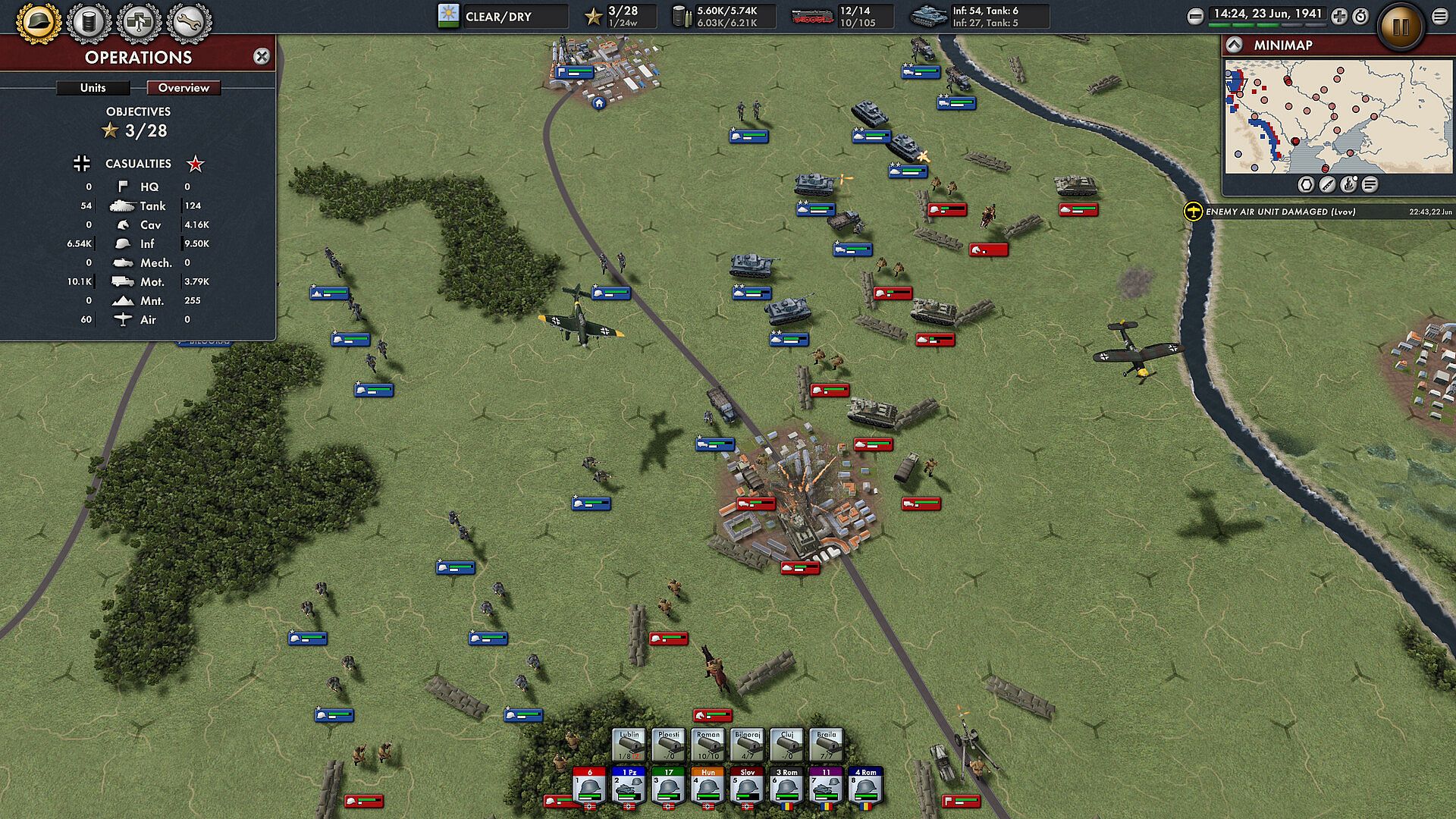
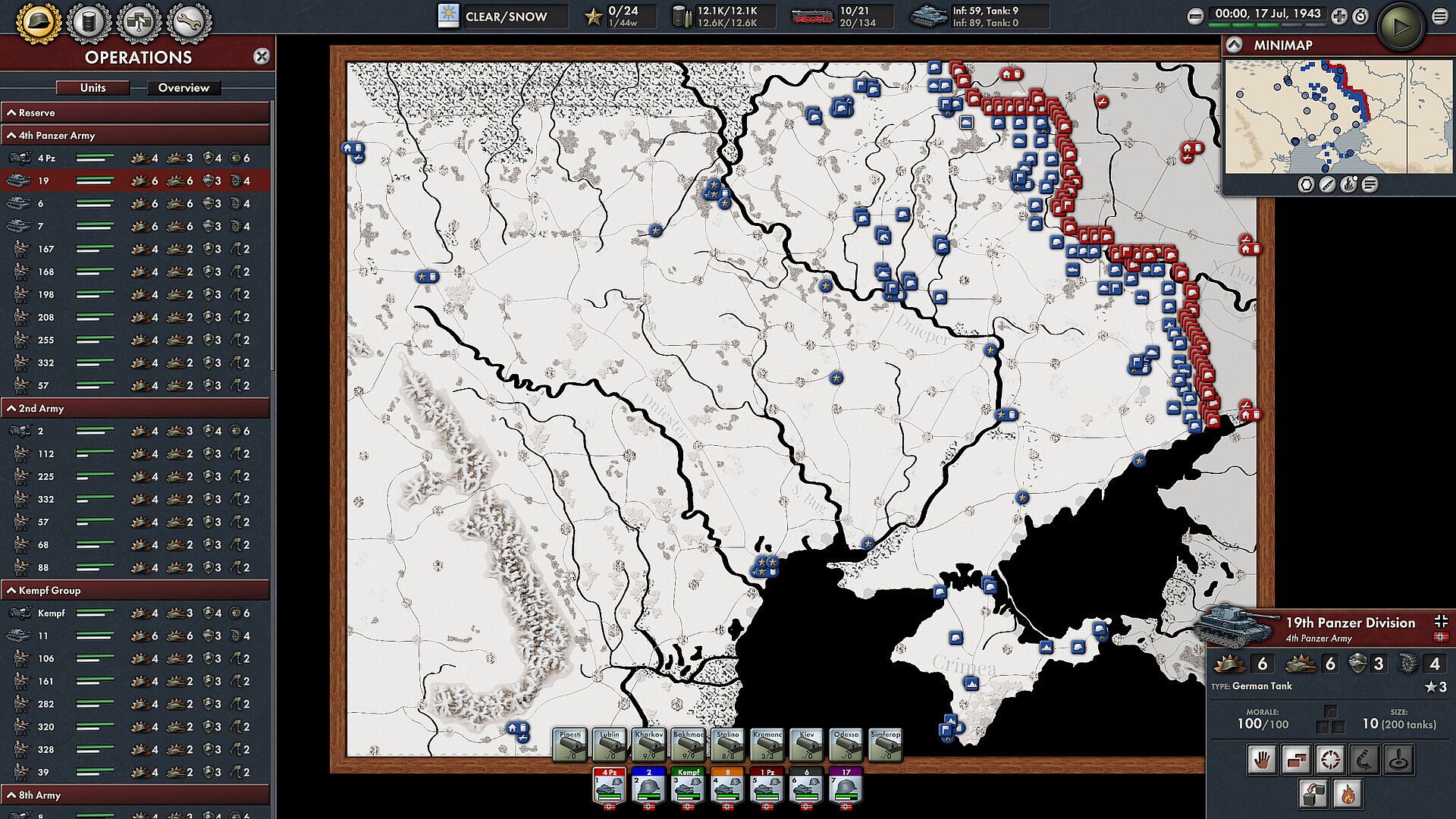
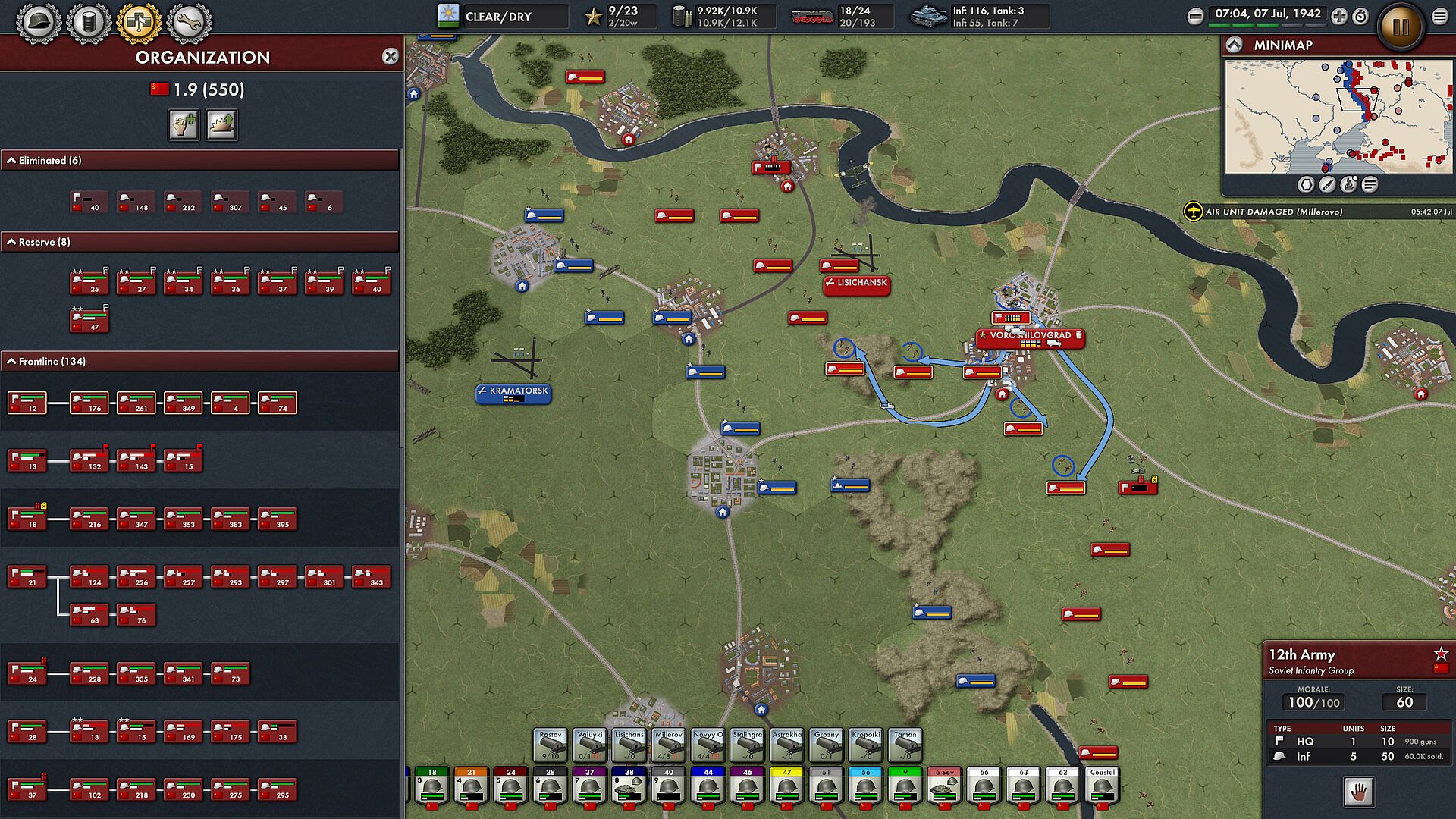
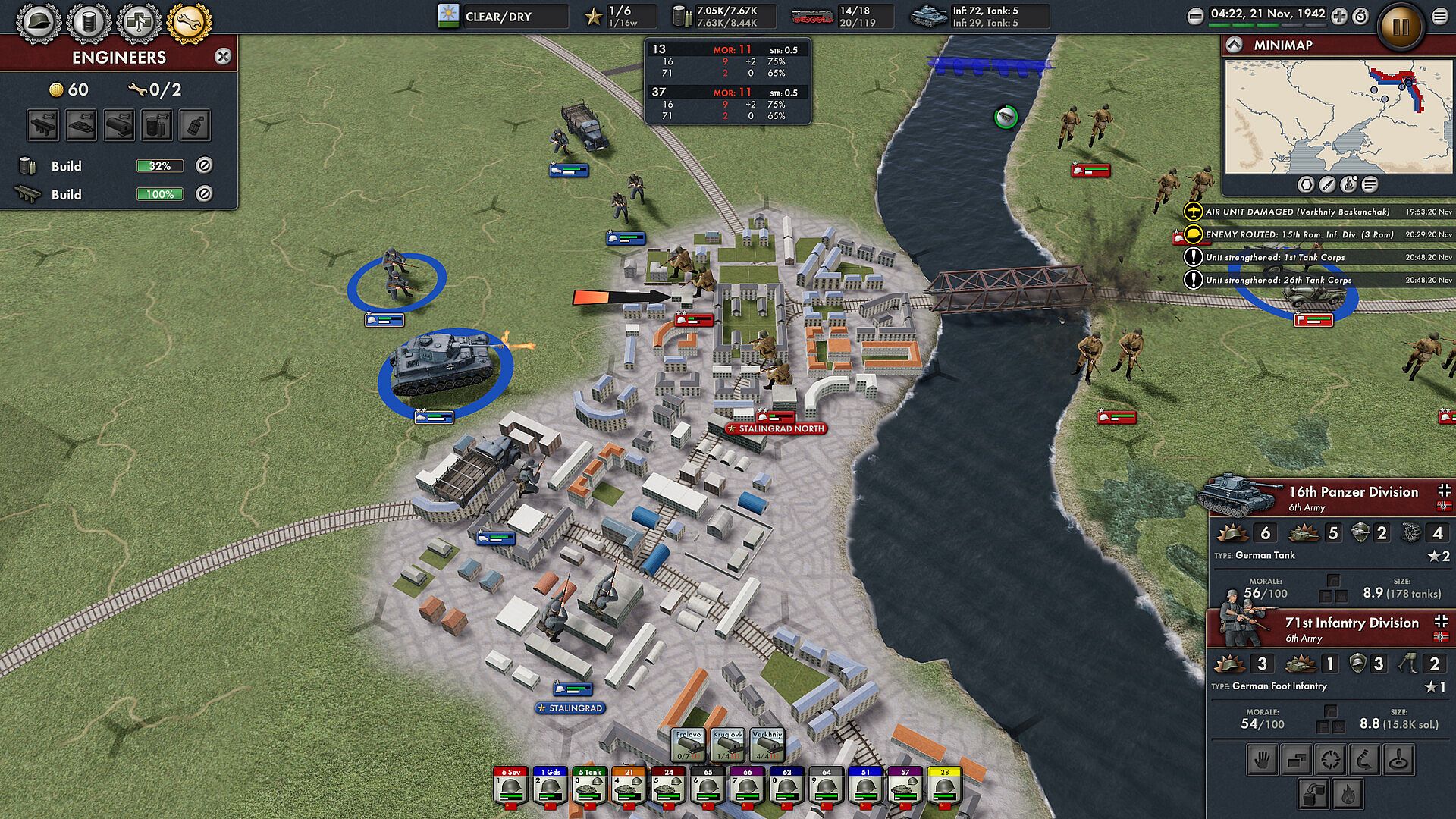
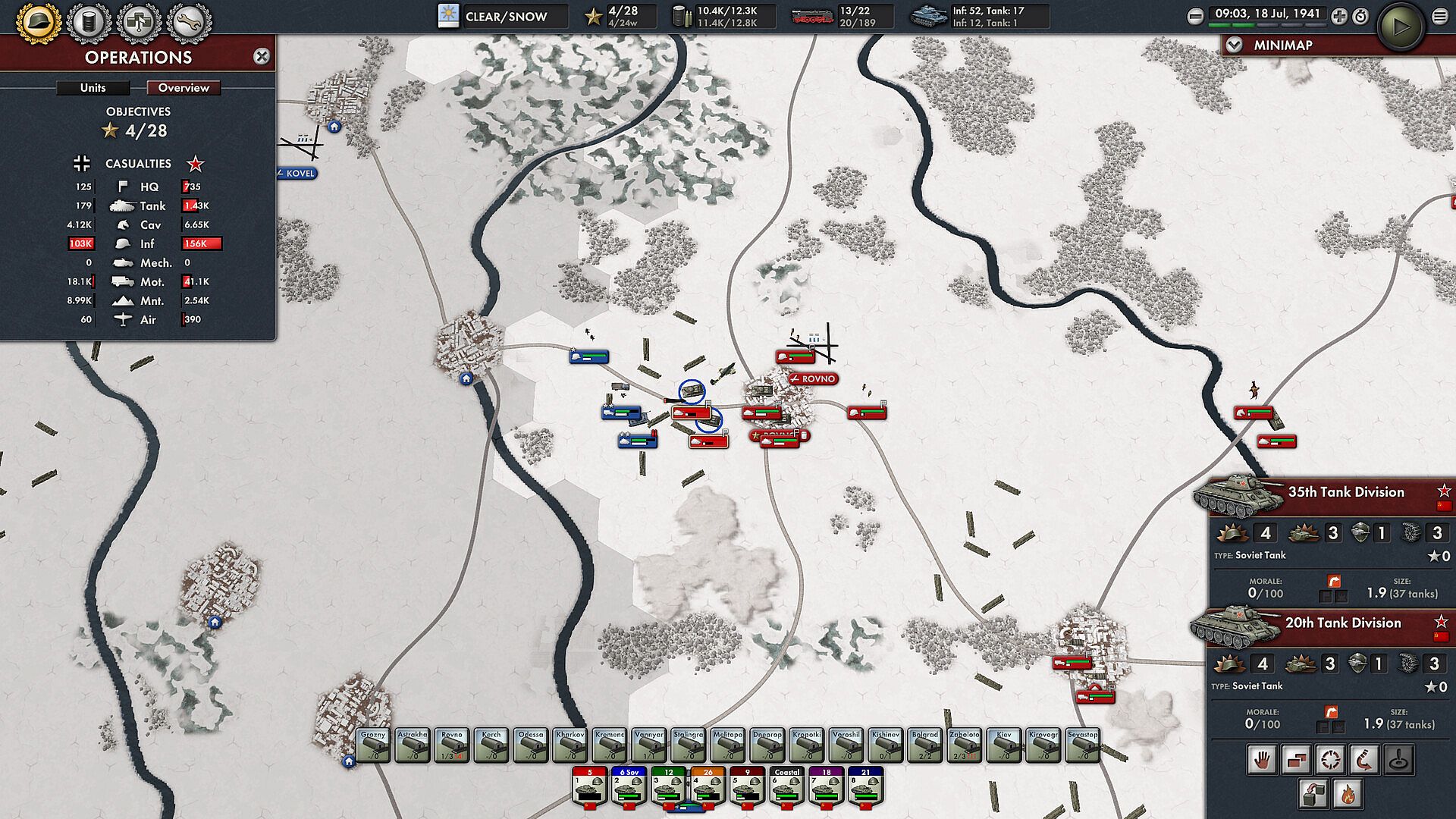
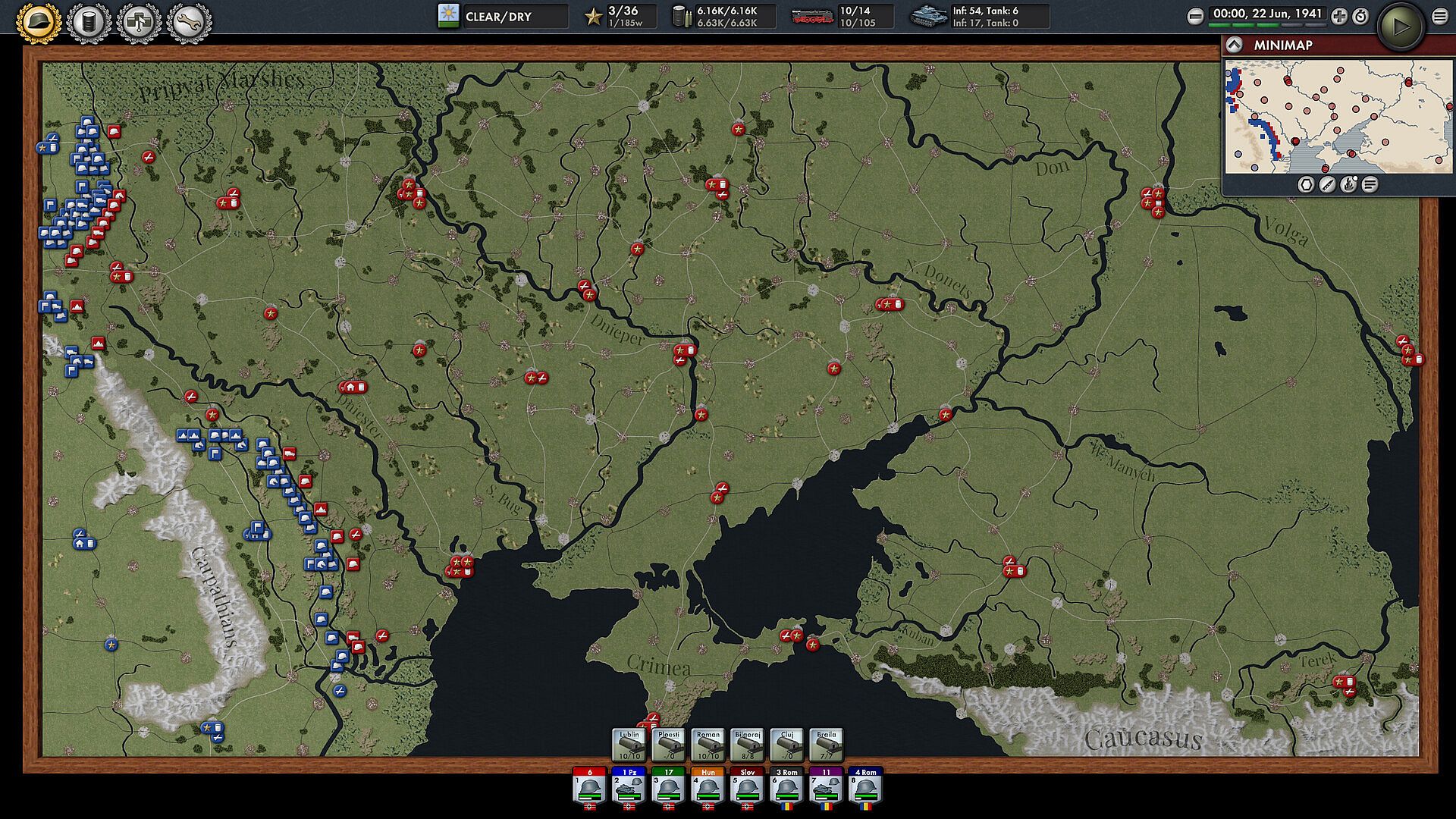
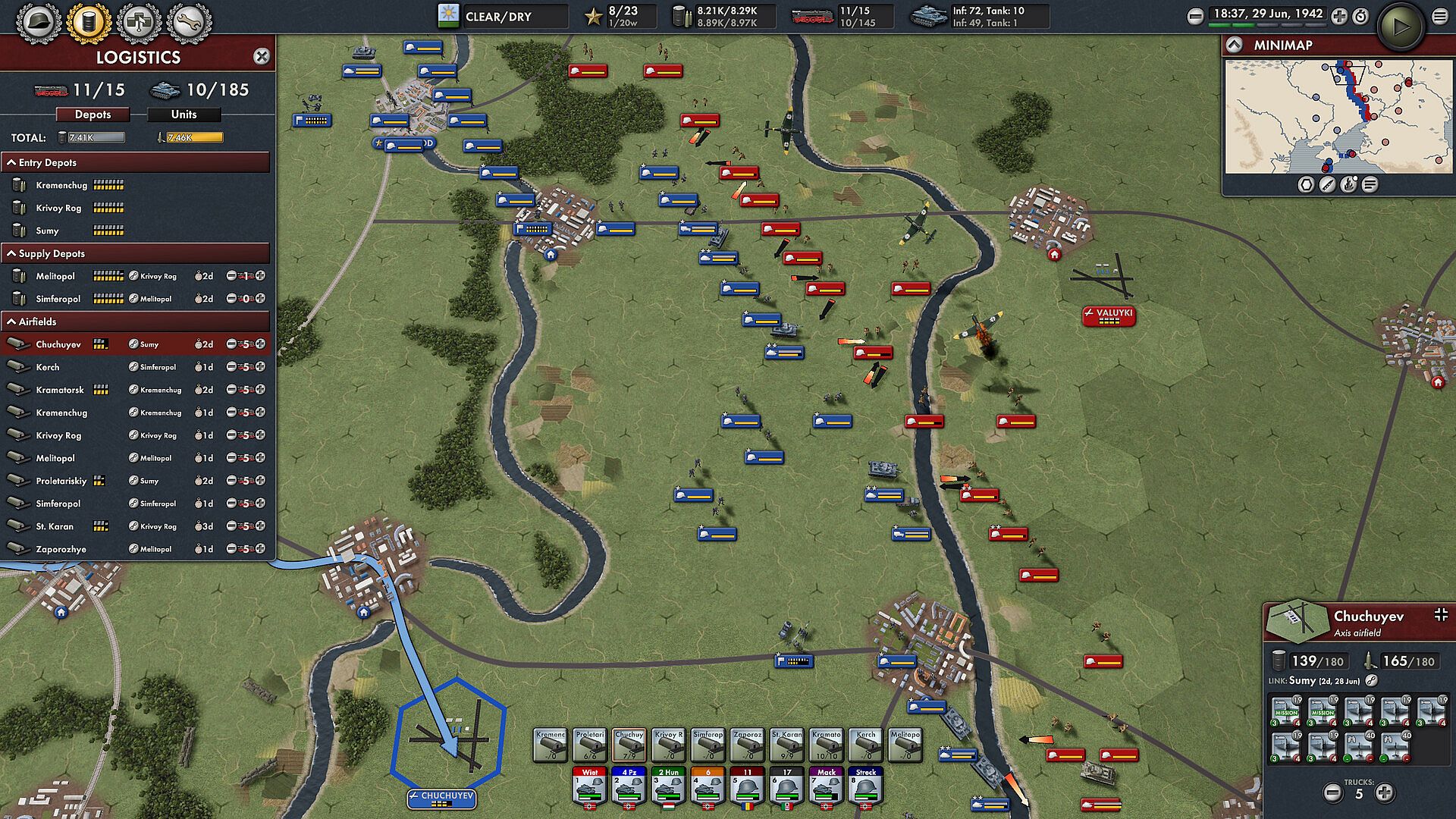
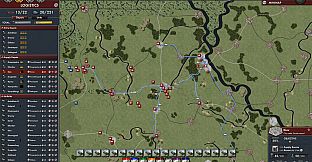
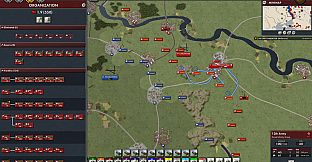
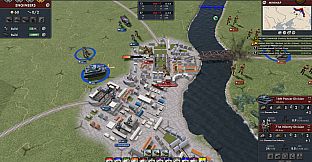
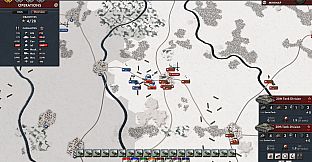
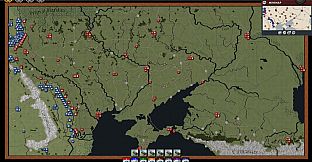
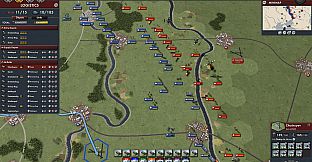
On War: Stalingrad is a single-player strategy and simulation game for PC that places players in command of division-level forces during the 1942 German offensive known as Case Blue on the Eastern Front. The title emphasizes operational warfare through clear systems that highlight logistics, supply lines, and engineering choices rather than unit-level control.
Gameplay
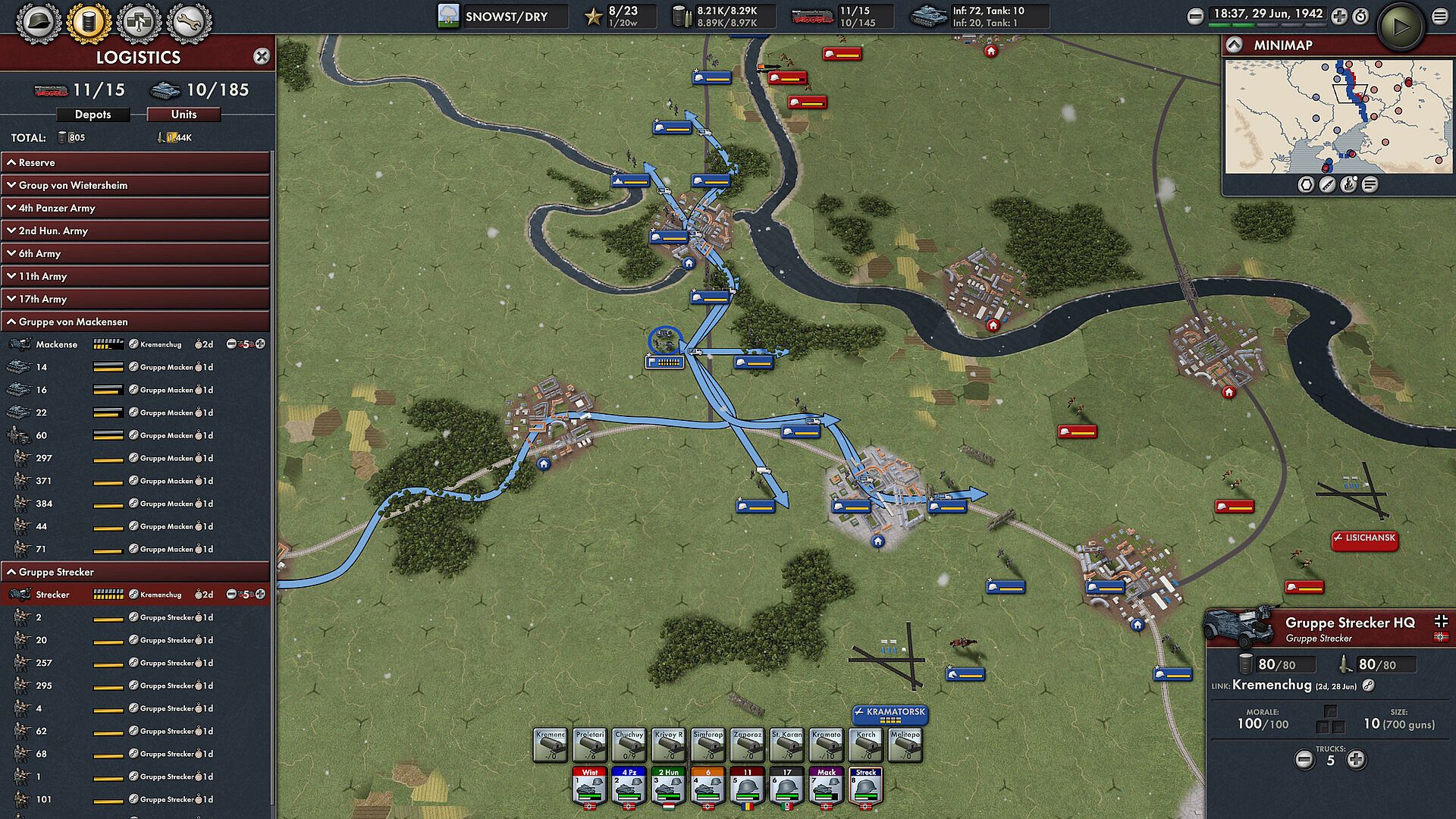
Players direct entire divisions across a large operational map instead of individual squads. Movement decisions affect supply routes that stretch with distance, while limited engineering resources must be allocated to bridges, airfields, fortifications, and infrastructure. Air support can be directed to critical points, and sectors require constant attention to prevent collapse or to capitalize on enemy weaknesses.
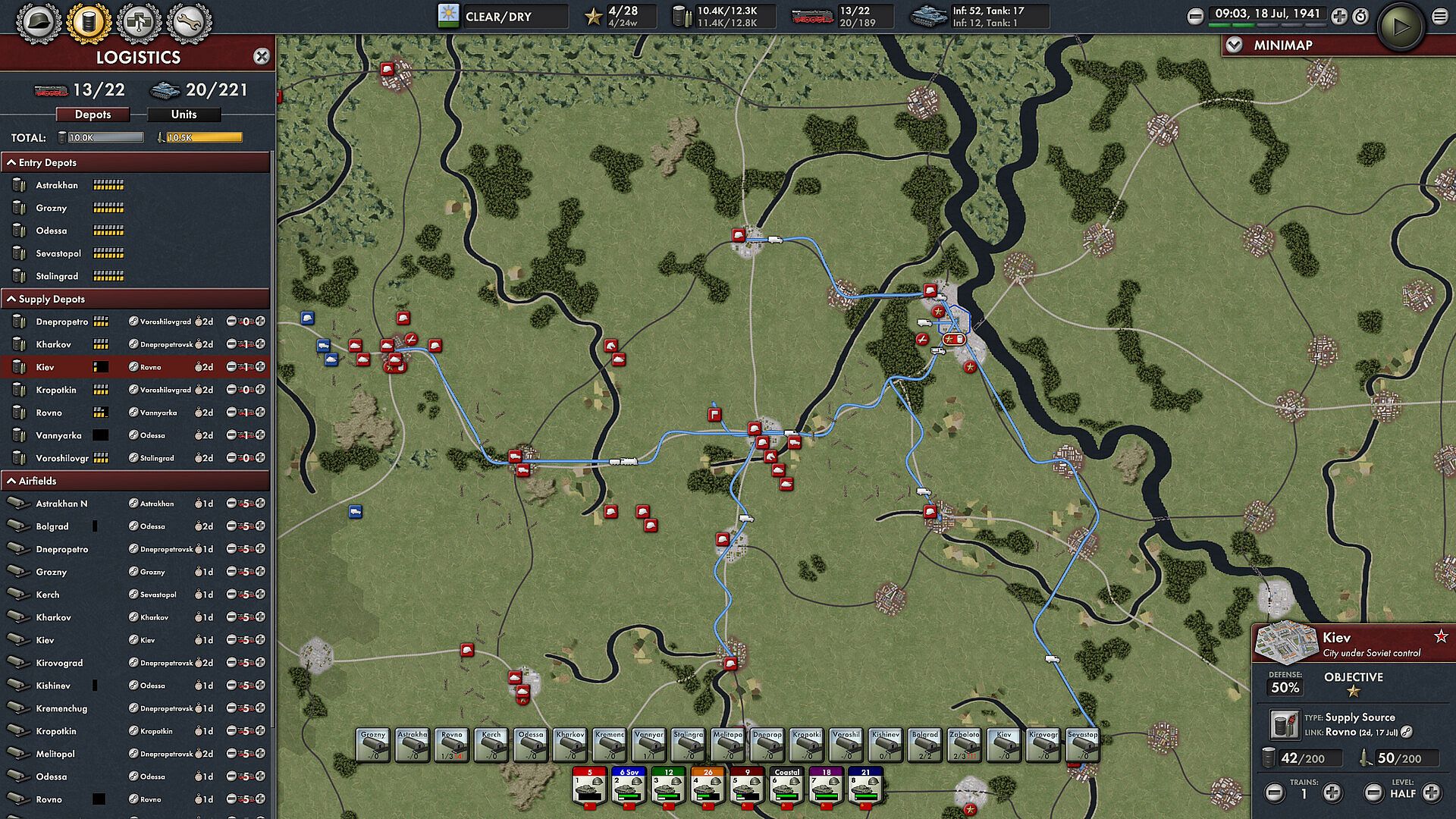
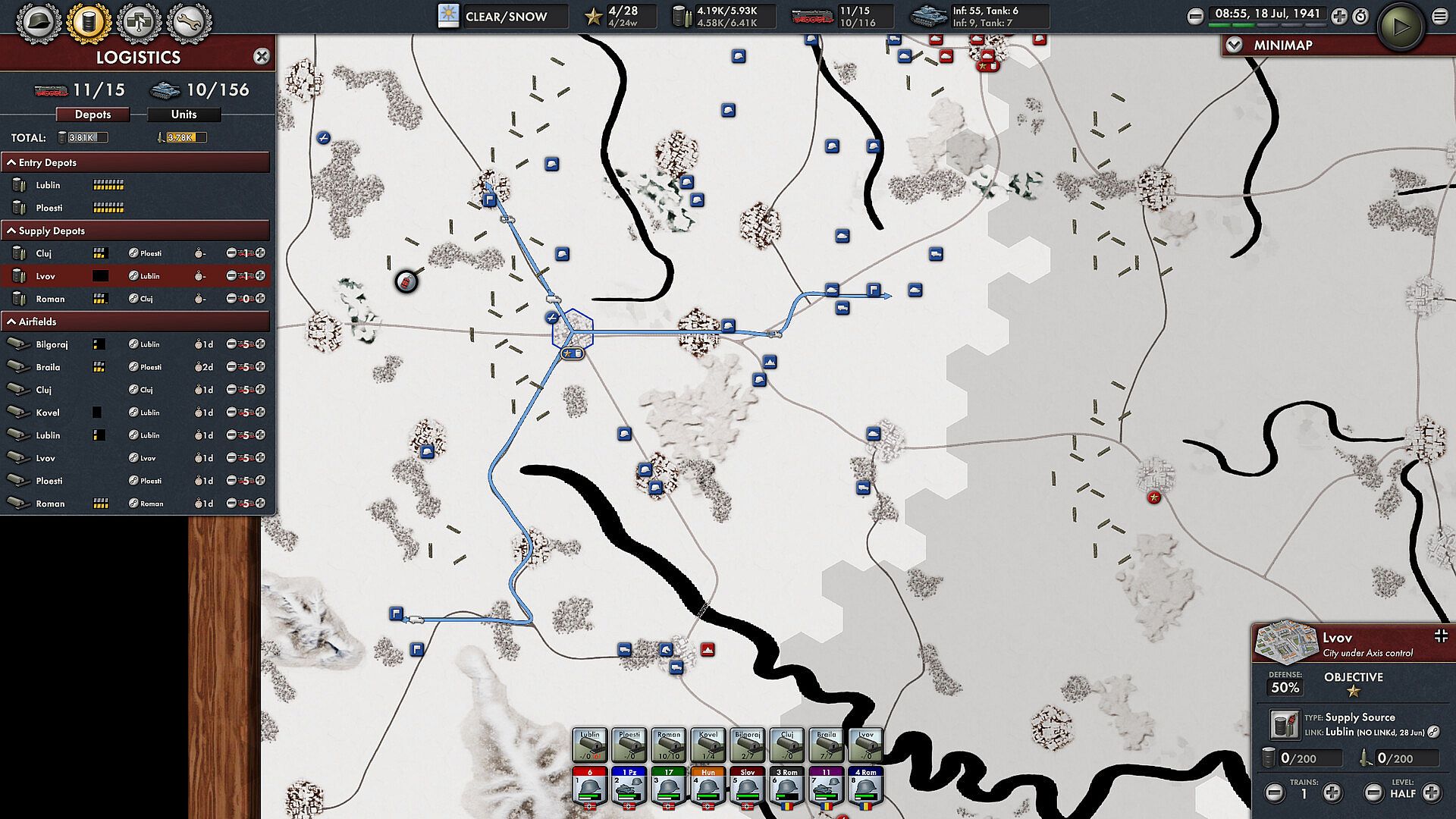
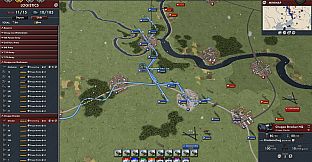
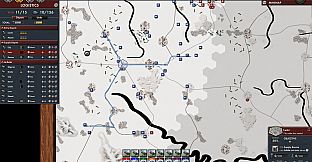
Supply originates from depots and flows forward, making disruption a serious threat that can halt advances. Strength and readiness must be maintained through reinforcement and careful preservation of forces. Breakthroughs risk turning into encirclements if momentum outpaces support, forcing choices between pressing an attack or consolidating positions. The system rewards anticipation of counterattacks and identification of vulnerable enemy sectors under pressure from multiple fronts.
Multi-level zoom allows different scales of oversight, with the interface designed to surface key information through tooltips and visual cues. Trade-offs define every action, as resources cannot cover every need simultaneously, and the front remains fluid based on movement and logistical realities.
Game Modes
The experience centers on a single-player campaign set along the road to Stalingrad. Command spans the full operational theater, with dynamic frontlines that respond to player choices in force allocation and timing. No additional modes such as multiplayer or skirmish options are confirmed at this stage, keeping the focus on sustained decision-making across the campaign.
Core Mechanics and Design
Logistics form the backbone, with distance and depot security directly influencing offensive potential. Engineering assets serve as a finite pool that shapes infrastructure development and defensive preparations. The design avoids micromanagement by streamlining mechanics into readable flows that emphasize high-level planning over constant unit orders.
Intuitive UI elements draw from grand strategy conventions to present the battlefield as an interconnected system. Players balance multiple sectors, stabilize threatened areas, and exploit openings while monitoring the overall momentum that can shift rapidly with a single lost supply point or well-timed reserve commitment.
Is It Worth Playing?
This title targets players who want operational depth in a World War II Eastern Front setting without overwhelming complexity. The streamlined approach to division command, supply management, and engineering trade-offs provides a focused strategic loop centered on understanding the broader battlefield rather than tactical execution. As a newly announced first entry in the On War series with a coming-soon release and single-player focus, it suits those drawn to clear, decision-heavy simulations of large-scale warfare. Those seeking squad-level action or established multiplayer options may find the scope narrower than expected, but the emphasis on readable systems and meaningful choices aligns well with fans of accessible yet substantive strategy experiences.