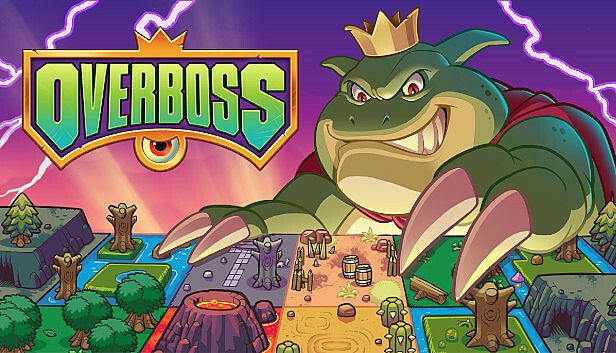

















Overboss is a strategy and simulation game on PC that puts players in the role of a dungeon-building boss competing to dominate a shared map. Drawing from classic board game roots, it emphasizes careful tile selection, terrain optimization, and monster positioning to maximize final scores. The experience blends solitary planning with competitive tension, appealing to those who enjoy methodical resource management and spatial puzzles rather than fast-paced action.
Gameplay
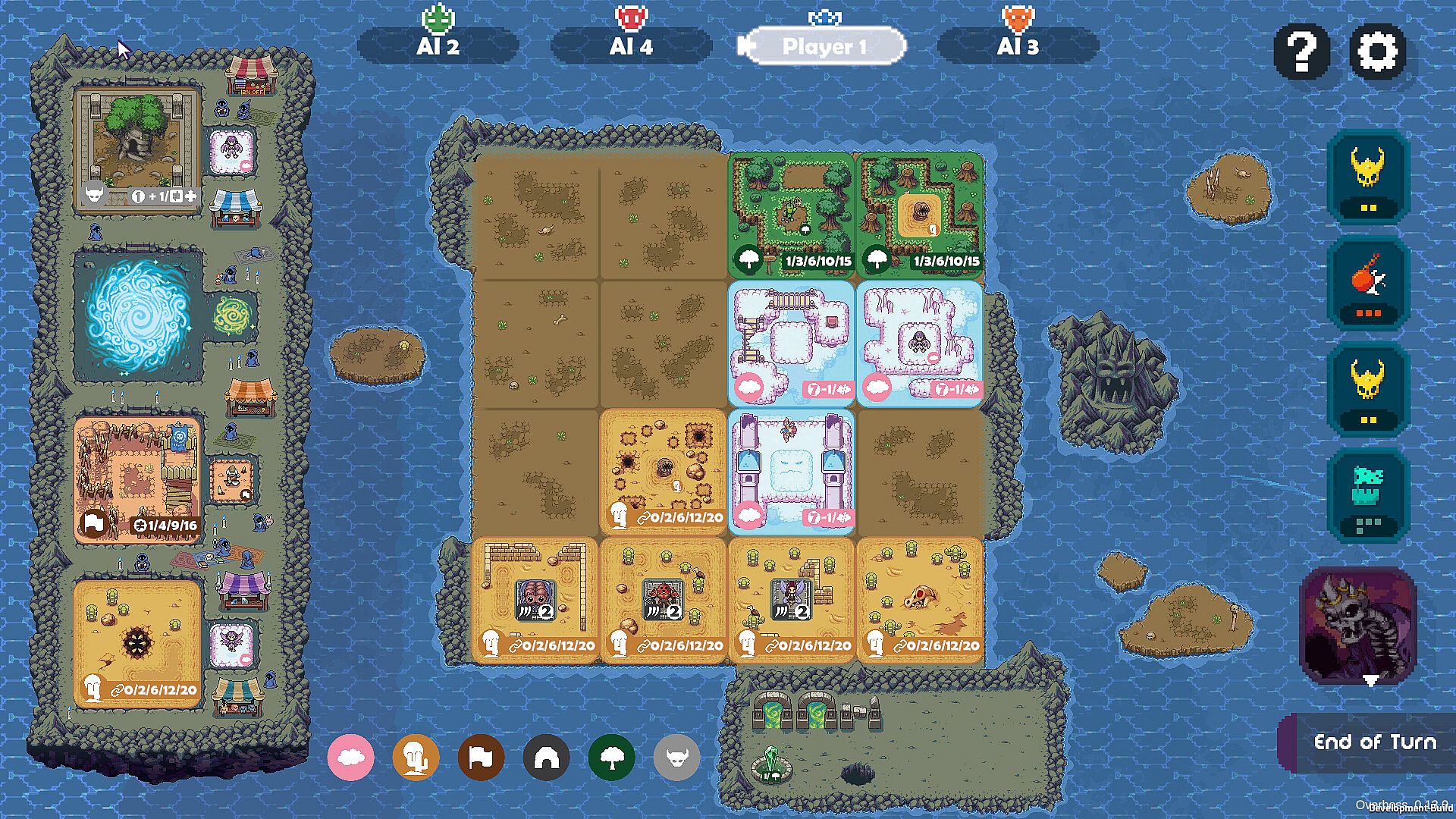
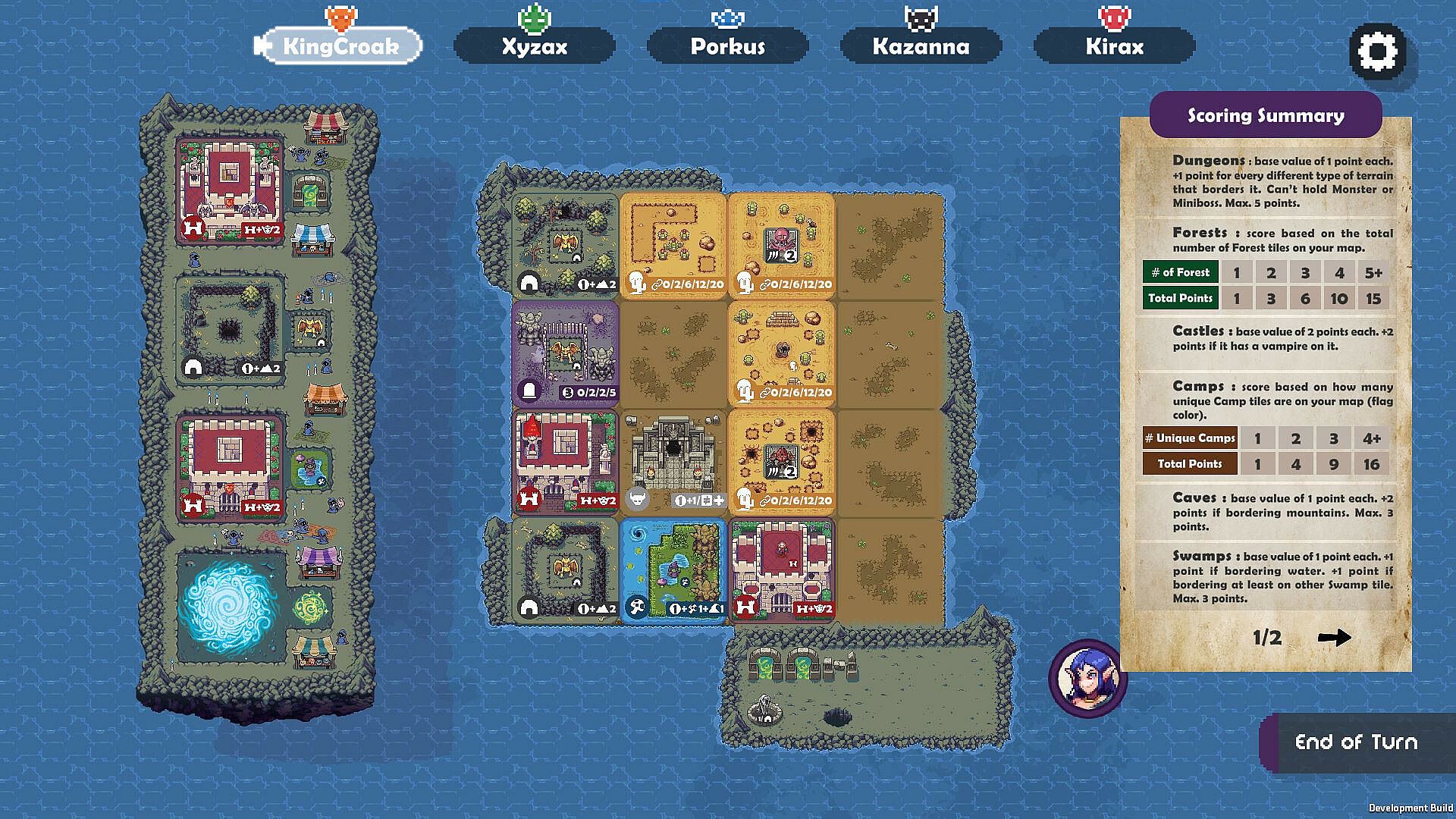
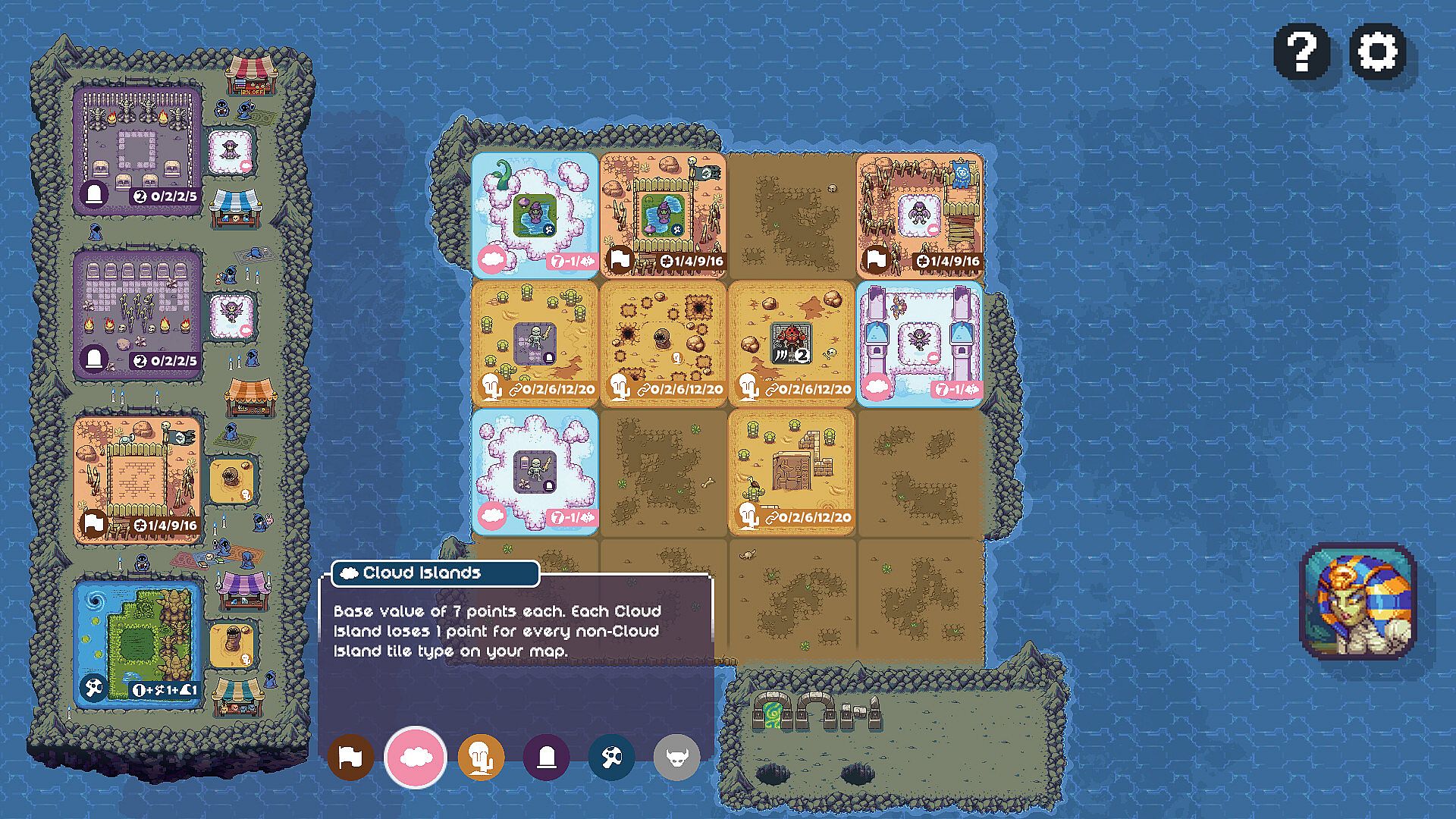
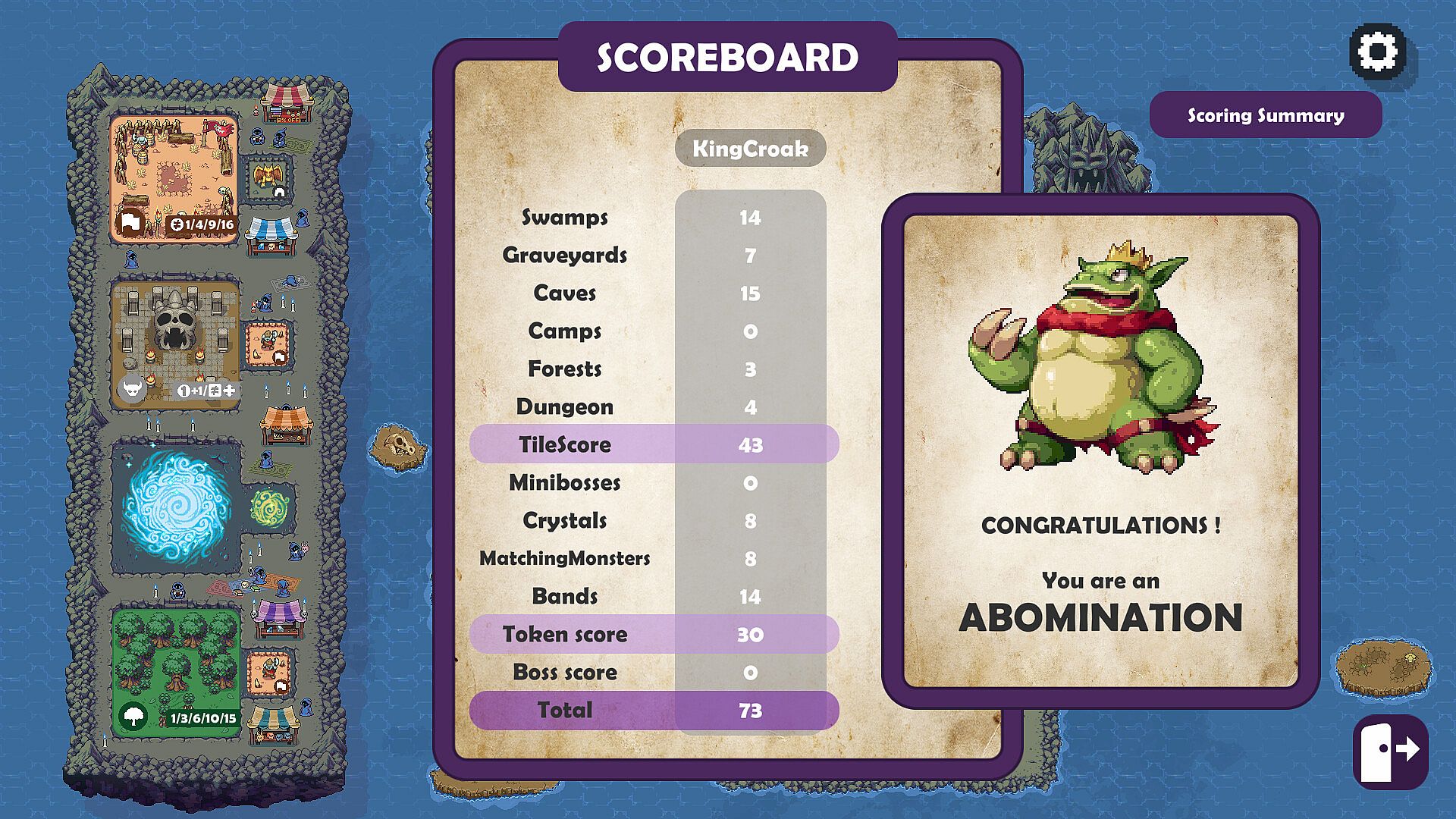
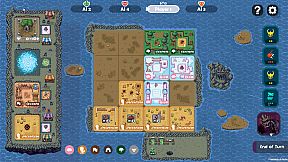
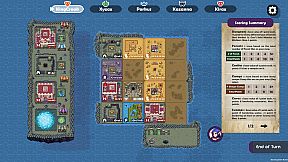
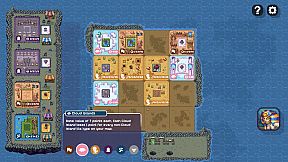
Each round begins with drafting a combination of terrain tile and associated token from a central market. Players place the chosen tile into an expanding personal map, where different terrain types contribute points according to specific rules. Swamps accumulate power when next to coastlines or other swamps, graveyards reward the player who claims the largest collection, and forests scale their value upward with greater numbers gathered.
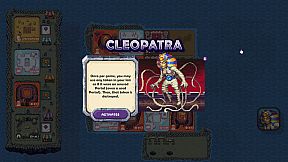
Tokens attached to each tile include monsters and minibosses that occupy open terrain spaces. Matching icons between monster and terrain grant extra points, while connected bands of two or more monsters create larger bonuses. As the map fills, portals allow repositioning of these units across the board. Crystals collected during play multiply overall power totals, encouraging players to chain placements for maximum efficiency.
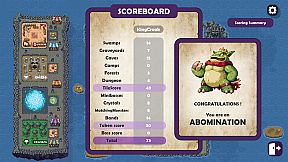
The loop rewards foresight in tile arrangement and token synergy. Early choices influence later options, and the shared market forces decisions between personal gain and denying strong pieces to opponents. By the final round the map reaches completion, after which scores are tallied to determine the winner.
Game Modes
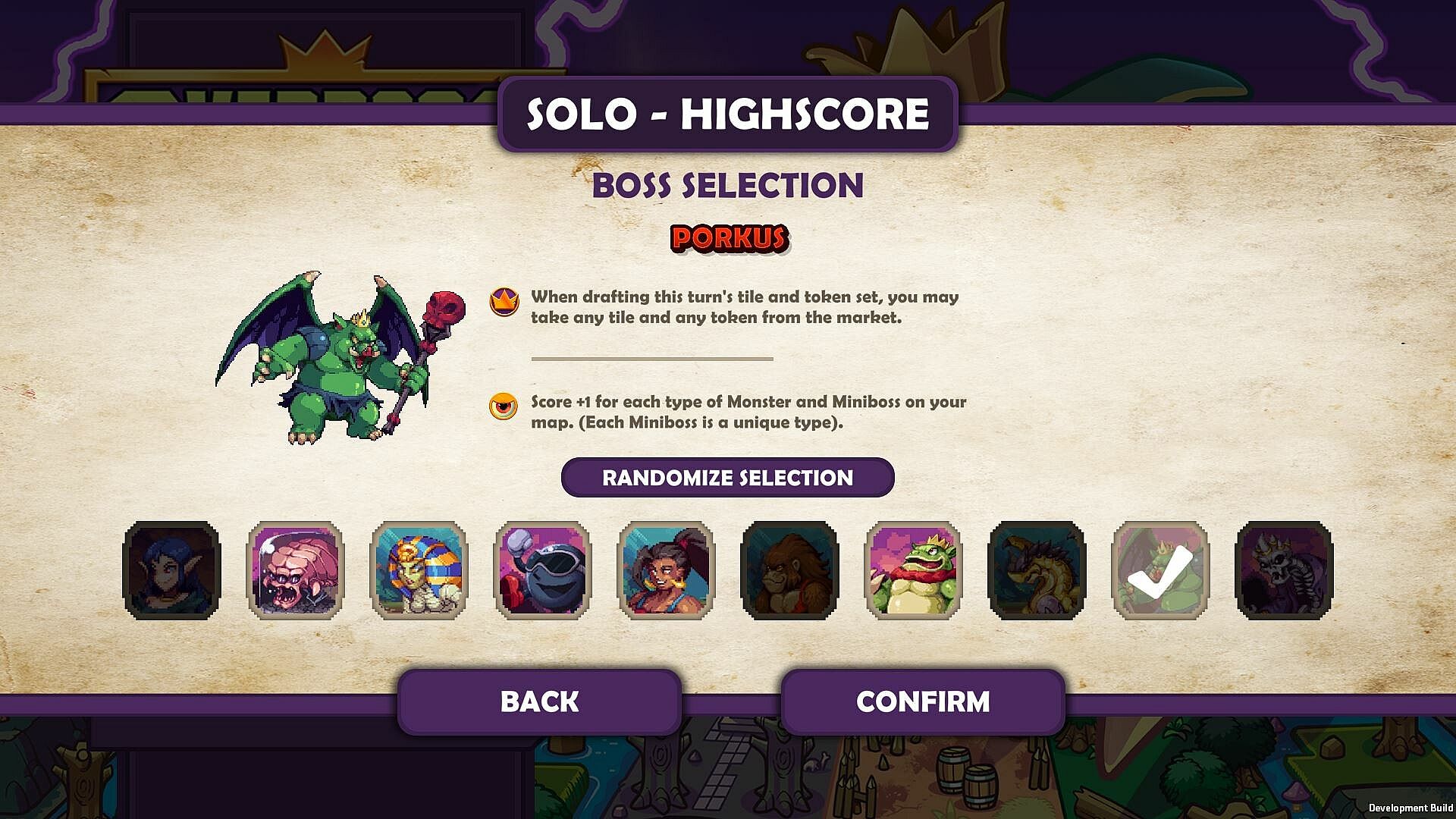
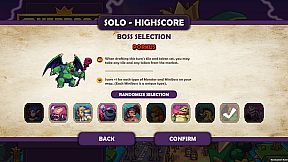
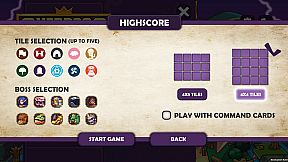
Overboss supports single-player sessions against computer opponents, allowing practice or solo competition without other people present. Online player-versus-player matches enable remote competition, while shared or split-screen options facilitate local multiplayer on the same device.
These formats accommodate both individual sessions and group play, with rules scaling to the number of participants. The core drafting and placement mechanics remain consistent across modes, though the presence of human opponents shifts emphasis toward blocking high-value tiles and anticipating rival strategies.
Core Mechanics and Strategy
Terrain scoring creates distinct priorities for each player. One participant might focus on expanding swamp clusters near water edges, while another pursues the graveyard majority bonus through aggressive collection. Monster bands add a layer of tactical placement, as lining up matching units along rows or columns multiplies their contribution.
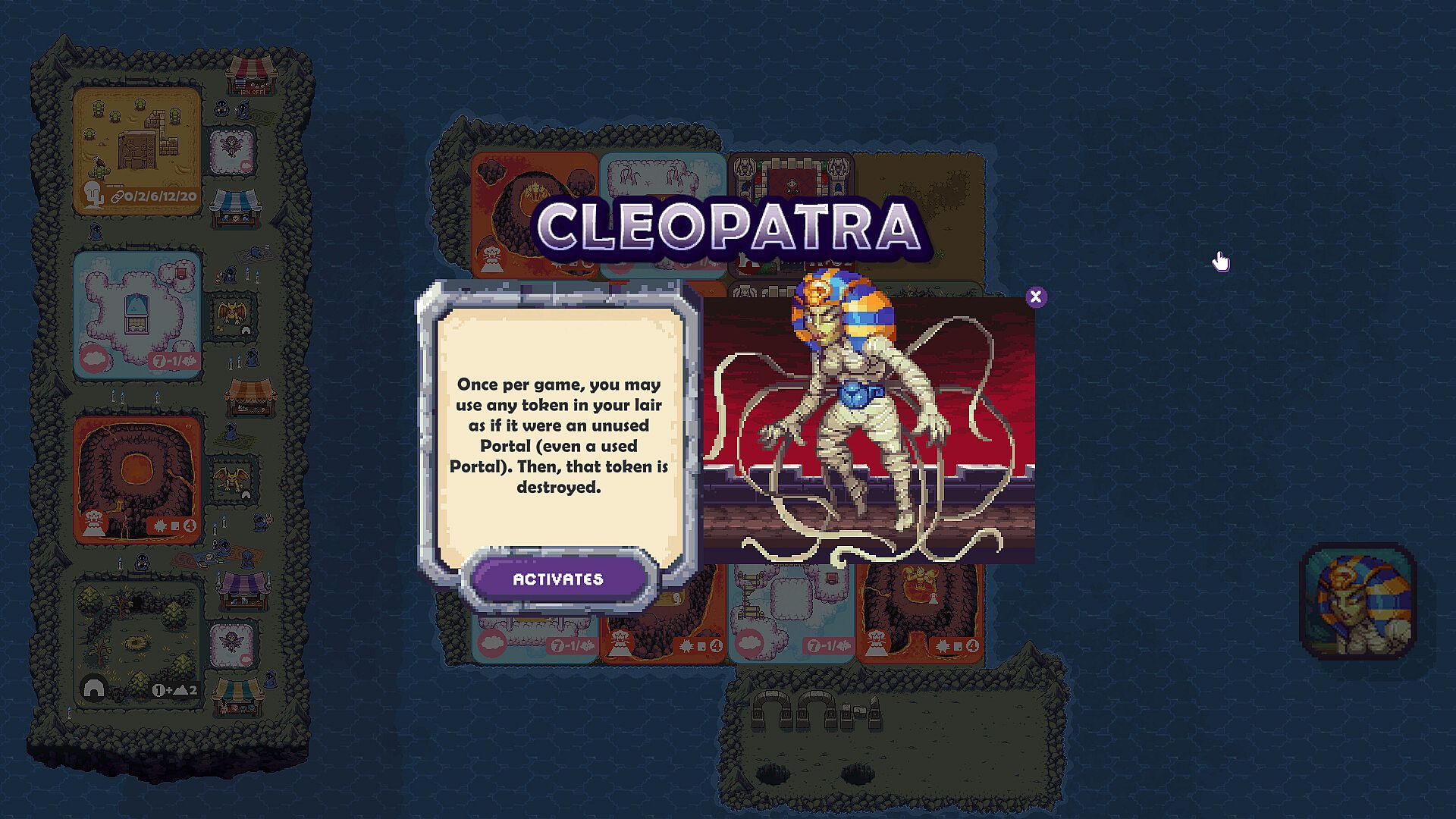
Portal usage introduces mobility, letting players relocate key monsters to newly opened high-value spaces or to complete bands. Crystal multipliers reward consistent collection throughout the game rather than end-loaded accumulation. Successful strategies often combine terrain adjacency bonuses with monster synergies while monitoring the market to secure needed pieces before opponents do.
Is It Worth Playing?
Overboss delivers a faithful digital adaptation of its board game origins, with clear rules and satisfying spatial decision-making. The mixed reception on its platform reflects varied player preferences for the deliberate pace and competitive drafting elements. Those who appreciate tile-placement strategy and monster-management systems will find depth in repeated plays, particularly when exploring different terrain priorities and portal timing.
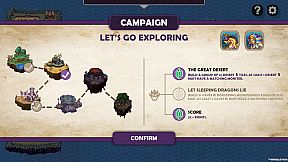
Support for both solo and multiplayer formats broadens its reach, though the experience shines most in head-to-head settings where market denial adds tension. Players seeking a measured, score-driven simulation rather than narrative-driven campaigns or real-time combat will likely enjoy the focused loop. The game remains available for those ready to build and optimize their own maps in pursuit of the highest score.