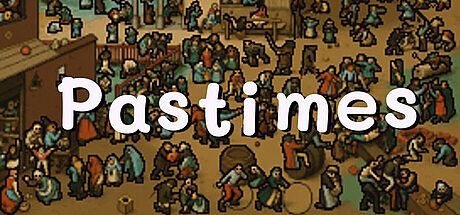



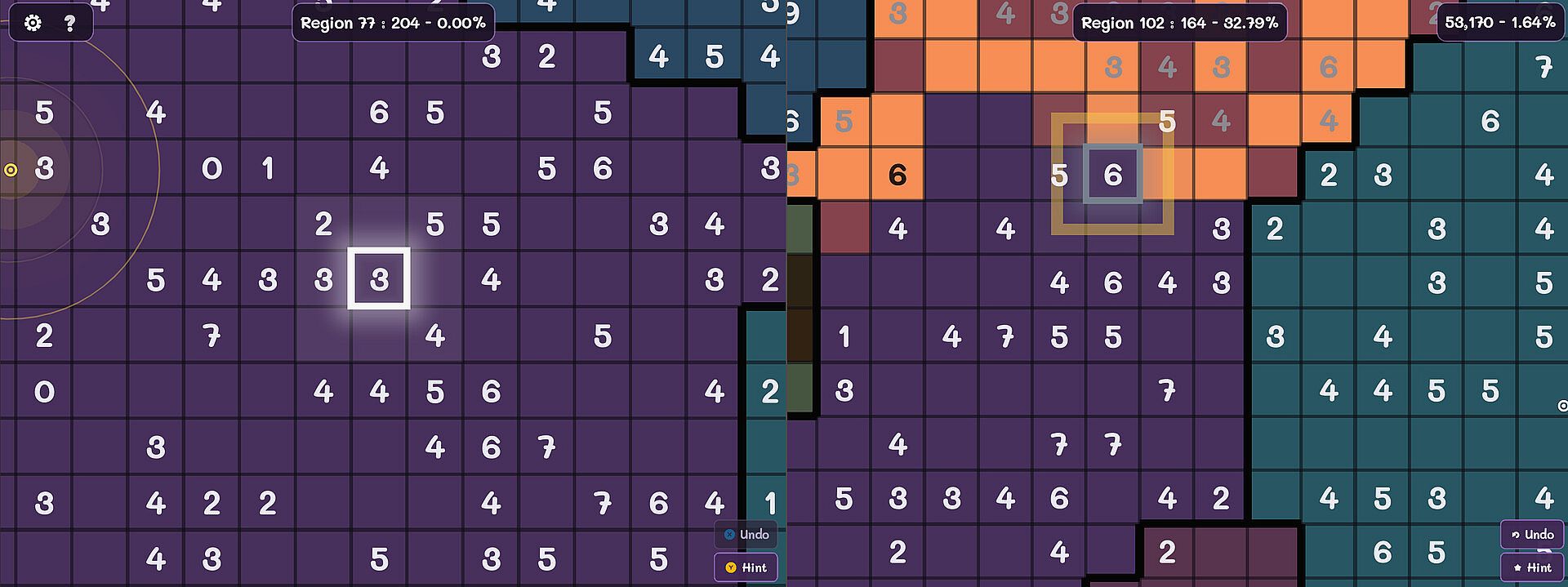
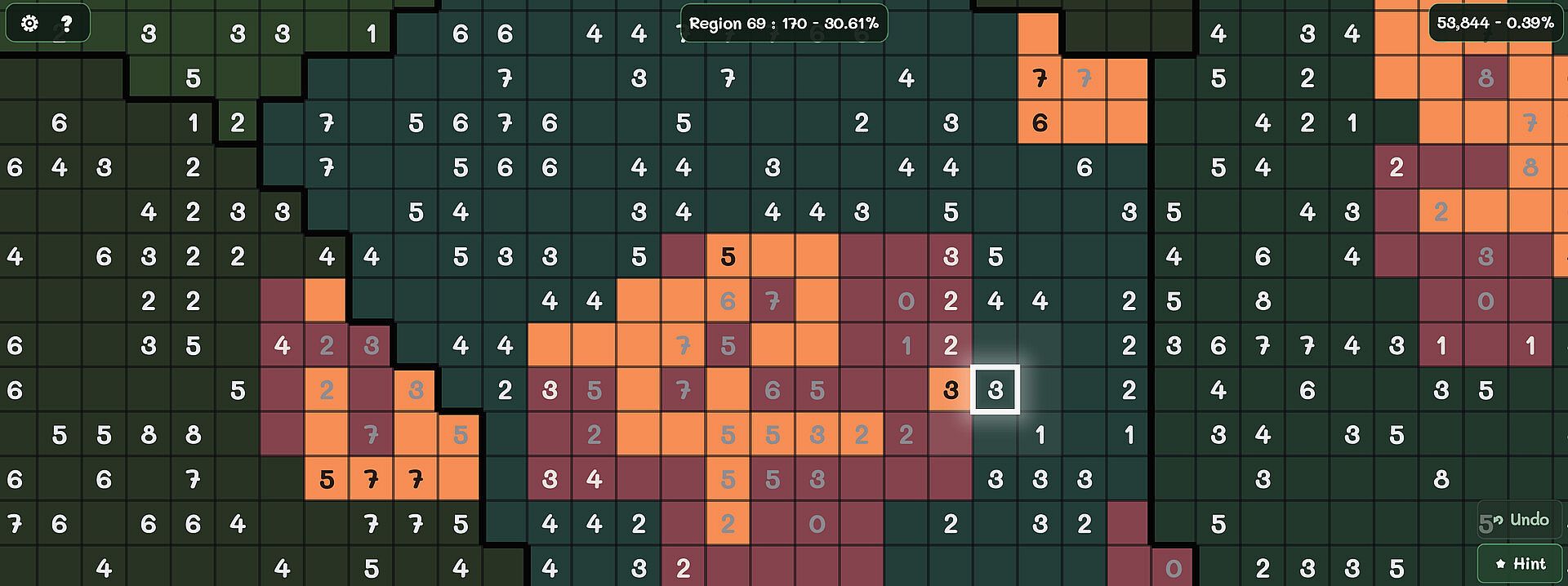
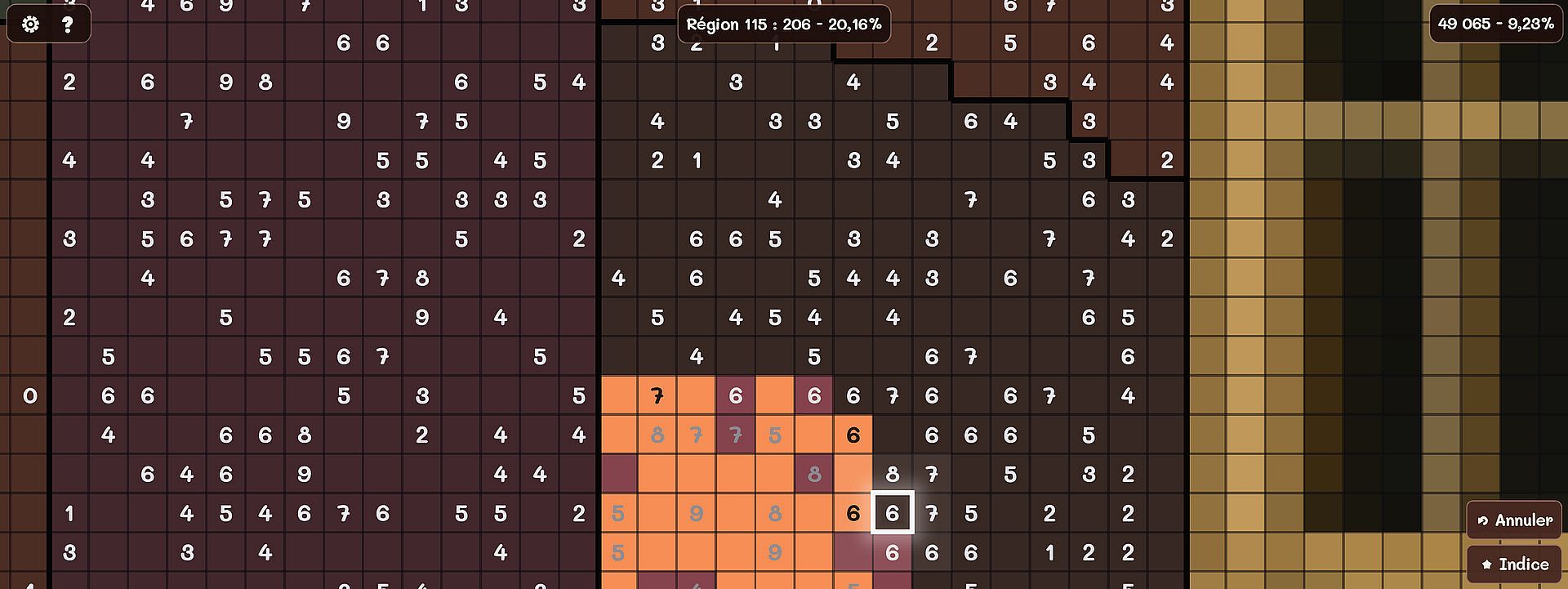
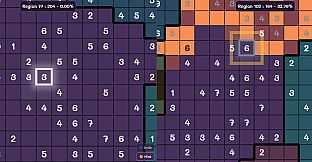
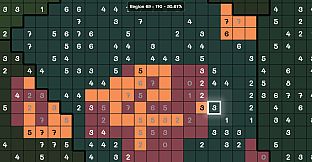
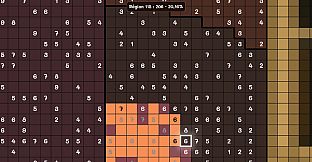
Pastimes is an indie casual logic puzzle game for PC that turns the 1560 painting Children's Games by Pieter Bruegel the Elder into a single large grid to solve. The experience begins with an empty grid marked only by numbers. As cells are filled or left blank according to the rules, the painting gradually appears, revealing children engaged in dozens of historical pastimes such as rolling hoops, spinning tops, playing leapfrog, and blind man's buff. Each number indicates how many cells in its surrounding 3x3 area must be filled, including its own cell. Solving requires cross-referencing multiple clues to determine the correct pattern without guessing.
Gameplay
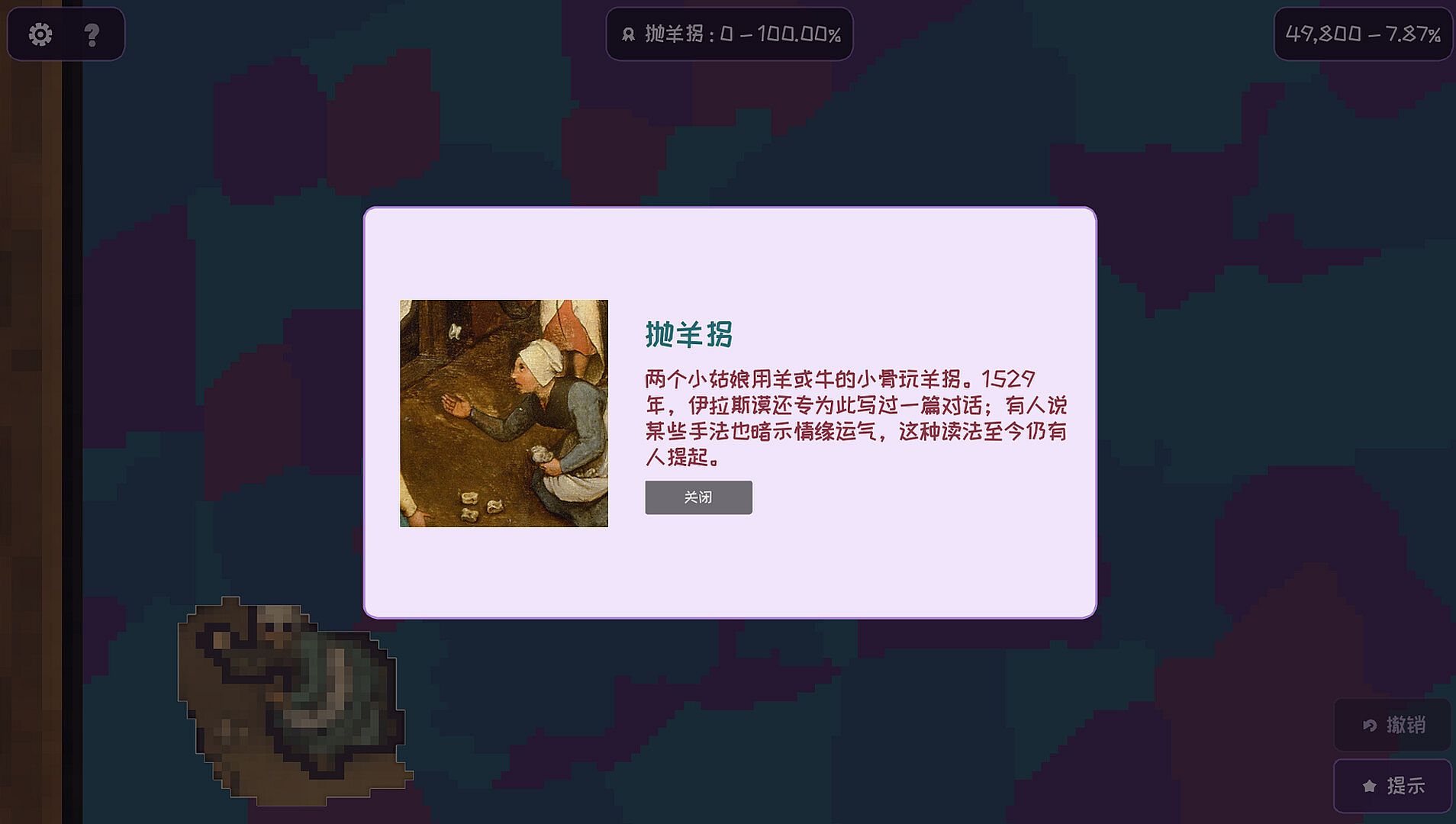
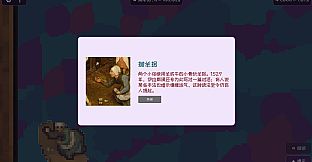
The core loop centers on careful deduction across one expansive grid that represents the entire painting. Players work cell by cell, using the numerical clues to mark filled areas and empty spaces. The grid is divided into distinct regions that correspond to different games depicted in the artwork. Completing a region unlocks a close-up view of that scene along with brief historical notes about the pastime shown. Progress saves automatically, allowing sessions of any length without losing place. The puzzle rewards methodical checking rather than speed, and the visual reveal provides steady feedback as more of the painting emerges.
Controls support precise cursor movement and zooming for detailed inspection of crowded areas. The system avoids time pressure or penalties for errors, focusing instead on logical consistency. Once a region is solved correctly, the associated artwork section becomes available for viewing, adding context to the historical games without interrupting the main solving flow.
Game Modes
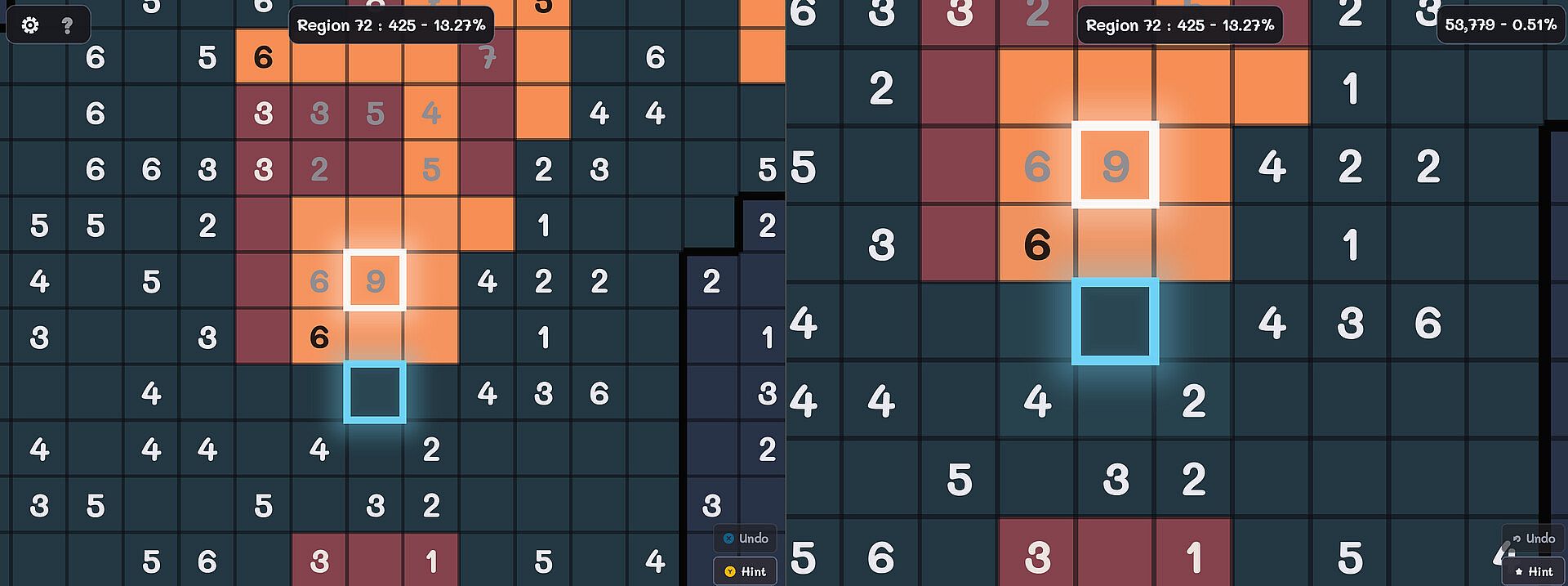
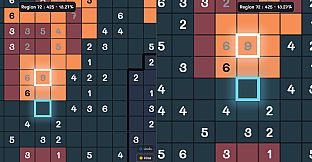
Pastimes supports solo play as the primary experience, where one person works through the full grid at an individual pace. Local co-op is available in split-screen format on the same PC, with each participant controlling an independent camera, zoom level, and cursor. Partners can collaborate on the same section or divide the grid and solve separate regions simultaneously. This setup preserves the shared logic puzzle while allowing different approaches to the same clues.
Remote co-op extends the local split-screen option through Steam Remote Play Together, enabling two players on separate computers to join the same session. The game tracks progress for both solo and paired sessions, so players can switch between modes without restarting. No competitive elements or additional named modes exist beyond these cooperative and single-player options.
Visual and Thematic Elements
The central appeal lies in the gradual reconstruction of Bruegel's detailed scene. As the grid fills, the familiar painting takes shape with its array of children and activities. Each completed region offers a focused look at one of the games, paired with short explanatory text that highlights the historical pastime. This integration keeps the logic solving tied directly to the artwork rather than treating the puzzle as abstract numbers alone.
The interface remains minimal to emphasize the grid and emerging image. Zoom and camera tools help navigate the large play area without clutter. The design suits extended sessions or brief daily returns, matching the relaxed pace described in the game's concept.
Is It Worth Playing?
Pastimes suits players who enjoy nonograms, picross-style logic puzzles, or other deduction-based grid games that unfold over time. The combination of a single large puzzle with optional shared solving makes it accessible for both solitary reflection and light collaboration. Those interested in historical art or Bruegel's work may find extra value in the unlocked scene details and notes.
The game offers no free-to-play elements, seasonal updates, or additional content beyond the core grid and regions. Its strength rests in the verified mechanics of clue-based filling, region completion, and flexible solo or paired play. Players seeking a calm, self-paced logic experience on PC will find a focused title that delivers exactly the described puzzle without extraneous features.