

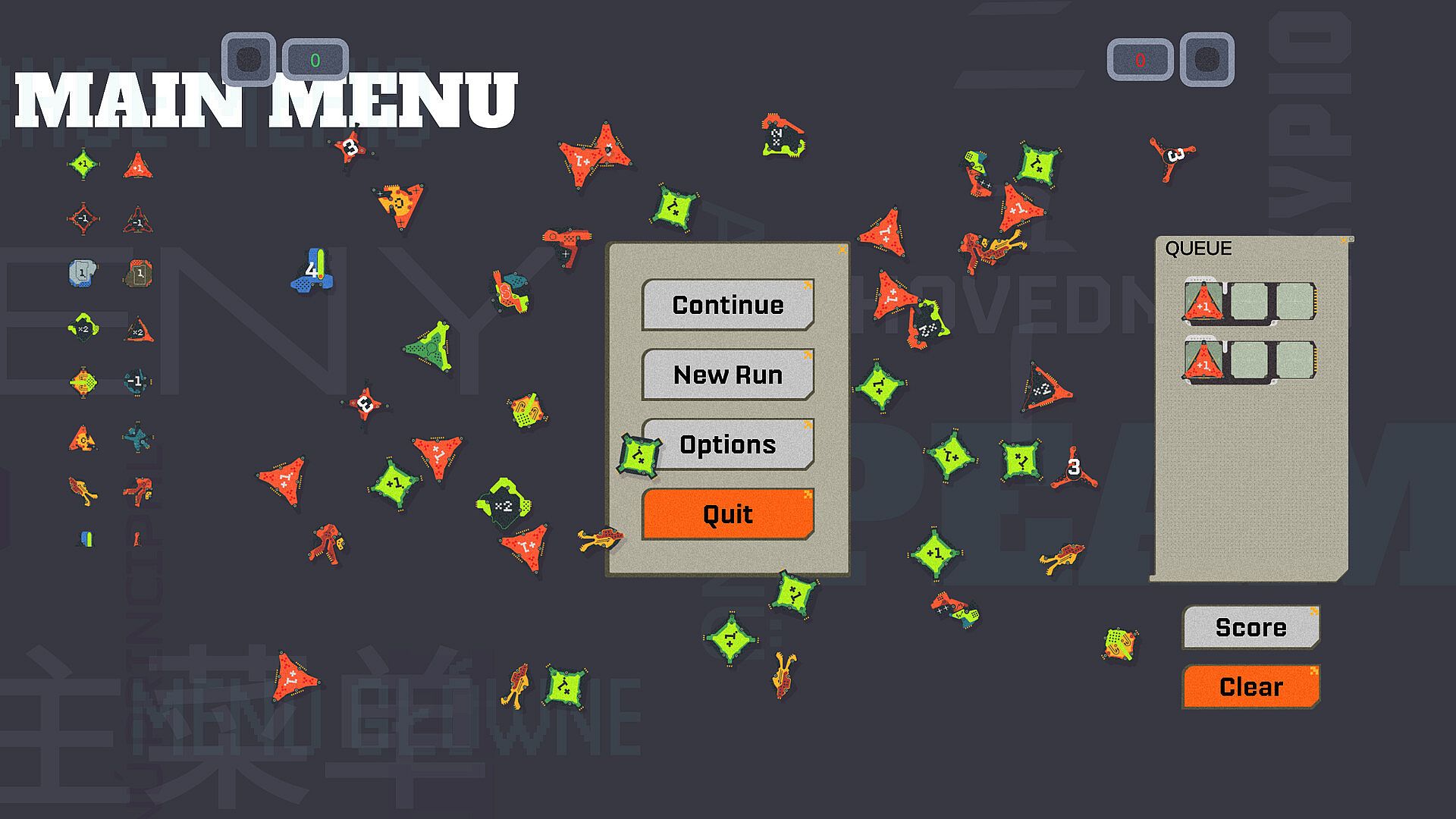
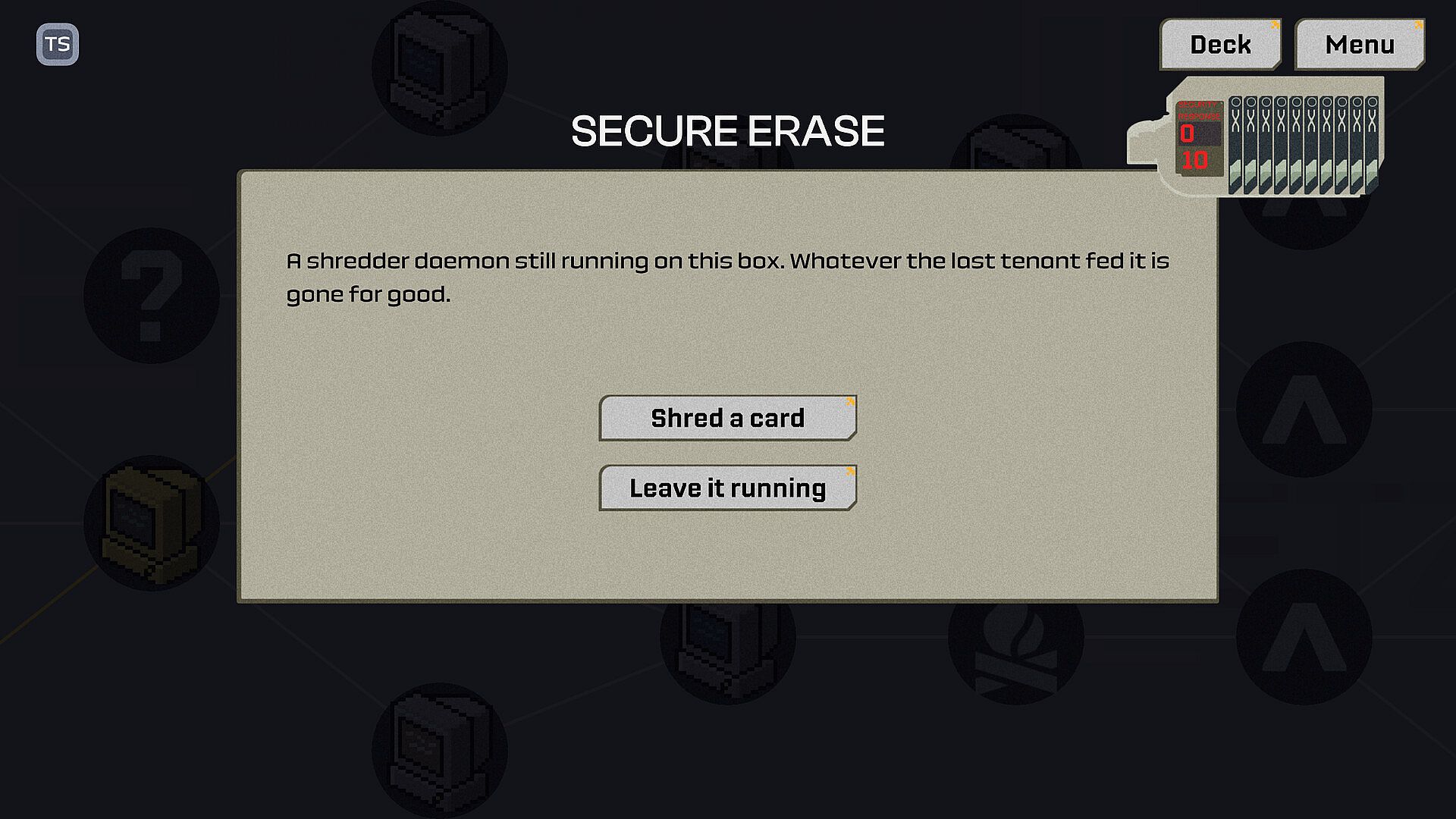
PATH//HACK is a strategy indie roguelike deckbuilder set in a Y2K network hacking scenario on PC. Players assume the role of a hacker navigating digital security systems through card-based exploits and token management in single-player sessions.
Gameplay
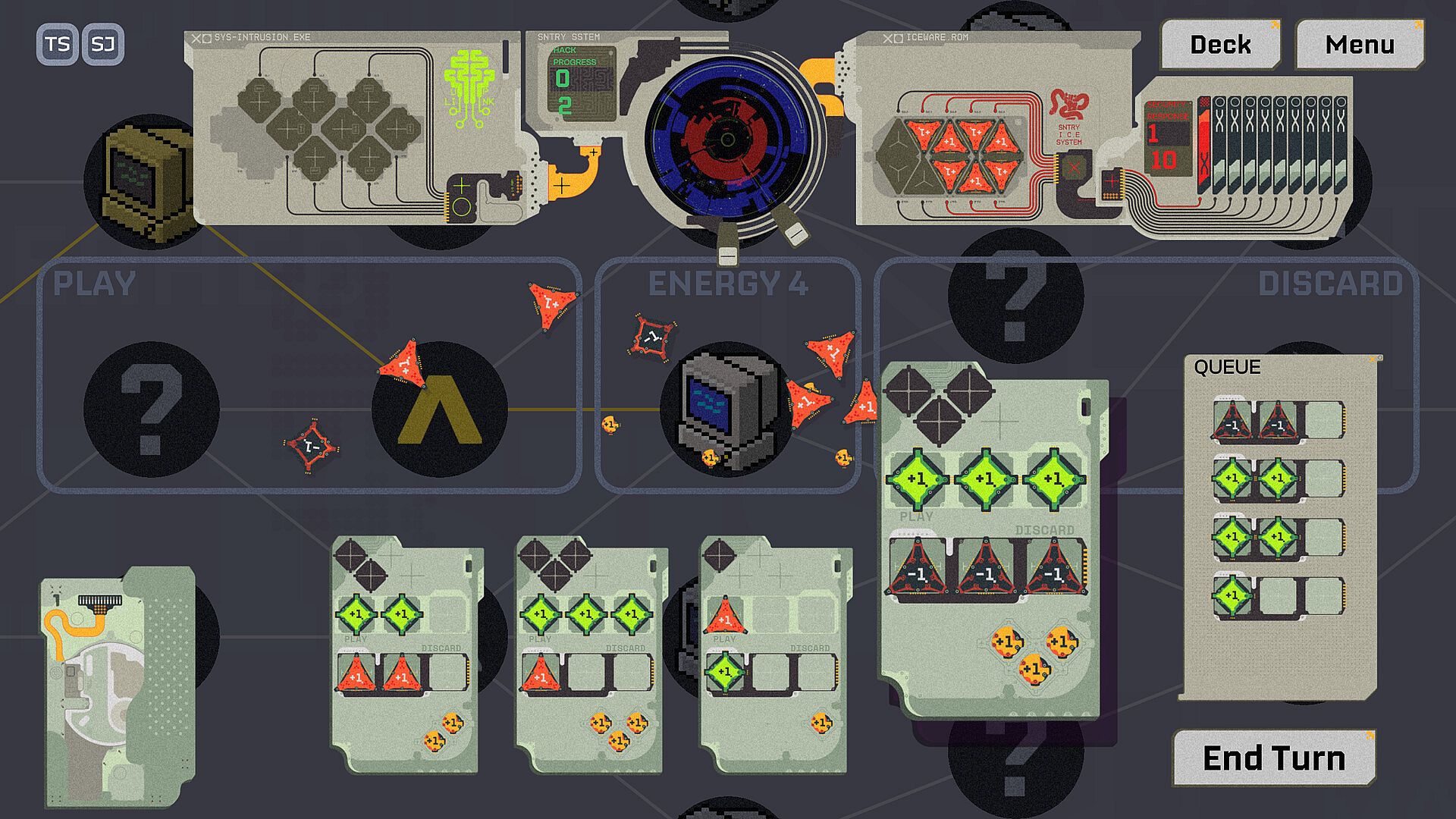
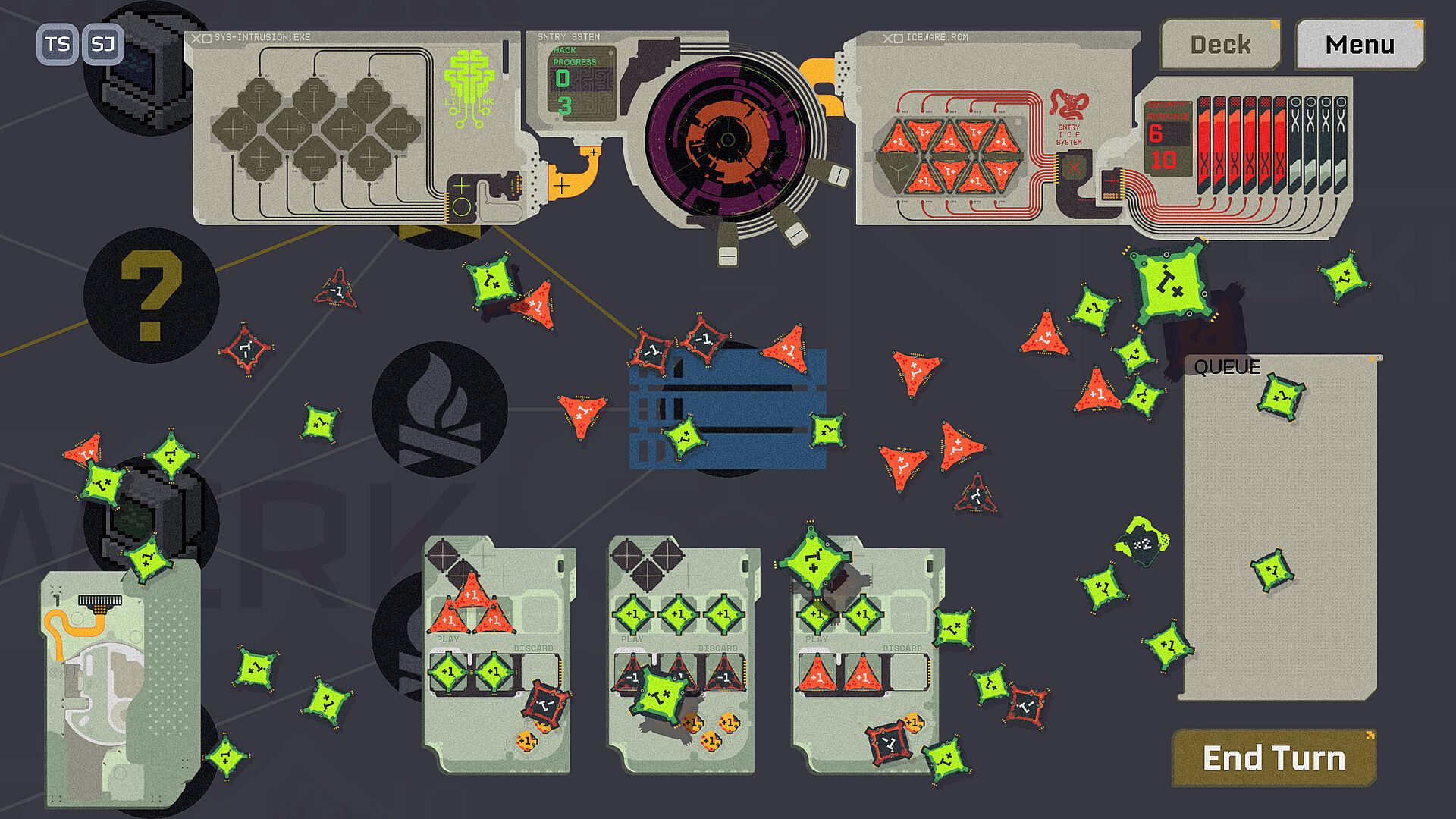
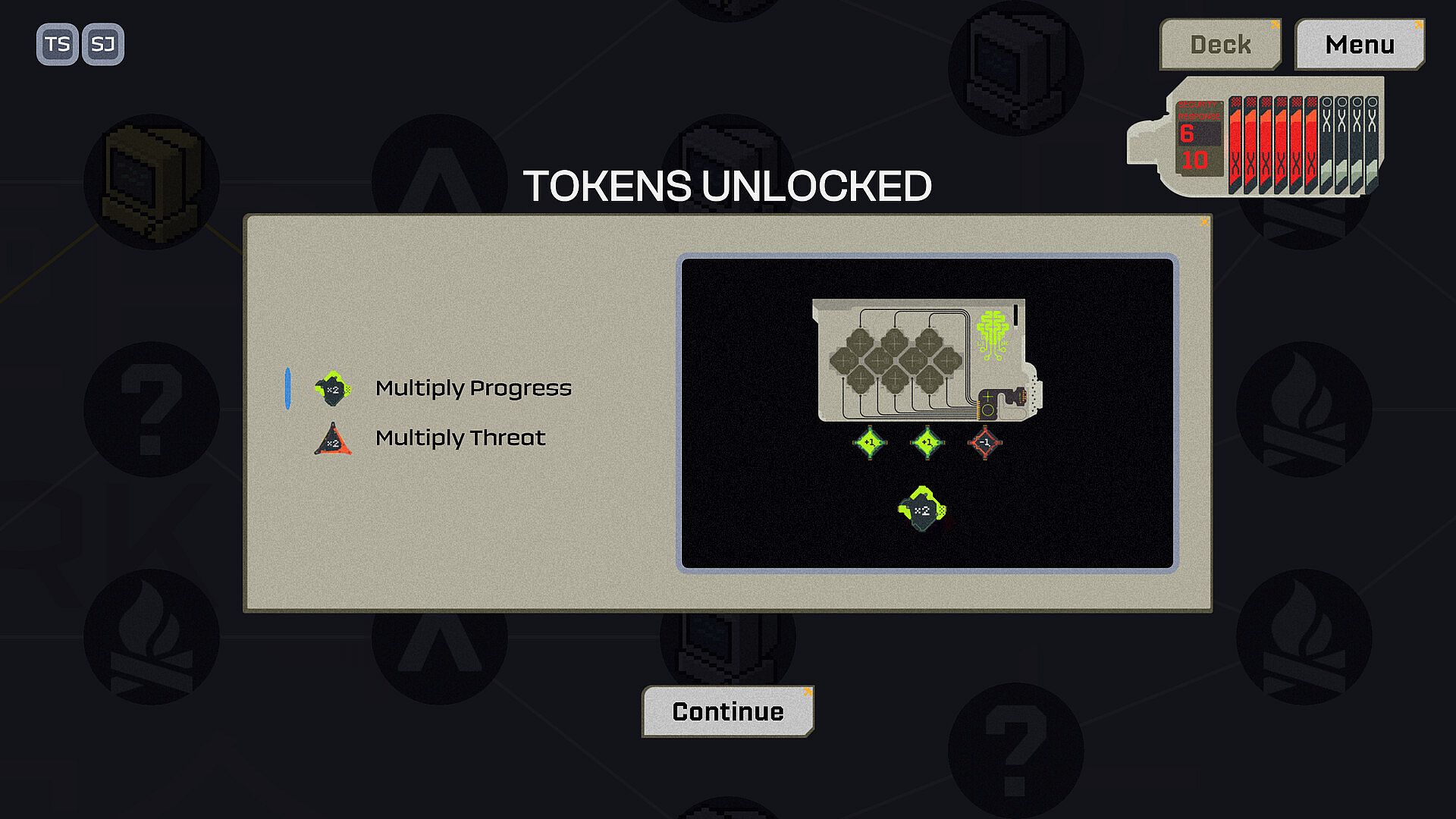
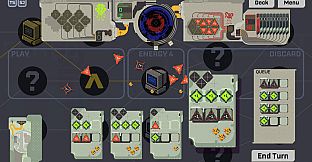
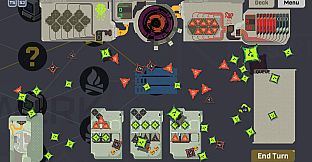
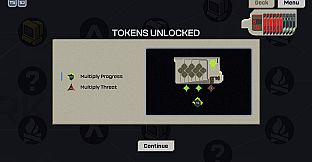
The core loop centers on dual-use cards that function as exploits when played or generate payloads when discarded. Each card releases specific tokens onto a board, with outcomes varying based on whether the card is used or set aside. Most tokens contribute to scoring at the end of a turn, while unlockable variants support chaining and multiplication effects for greater impact.
Action economy relies on discards to generate energy for subsequent plays, creating a flexible resource system without fixed per-turn limits. Discarded cards feed tokens into a queue that deploys one row at the end of each turn. This setup encourages careful sequencing to build combos while managing board state against escalating network defenses.
Relics provide rule-breaking effects that interact with tokens and other relics, allowing players to subvert security protocols. The progression involves an arms race where tougher security layers demand turning the network's own defenses back on itself through precise token placement and chaining.
Game Modes
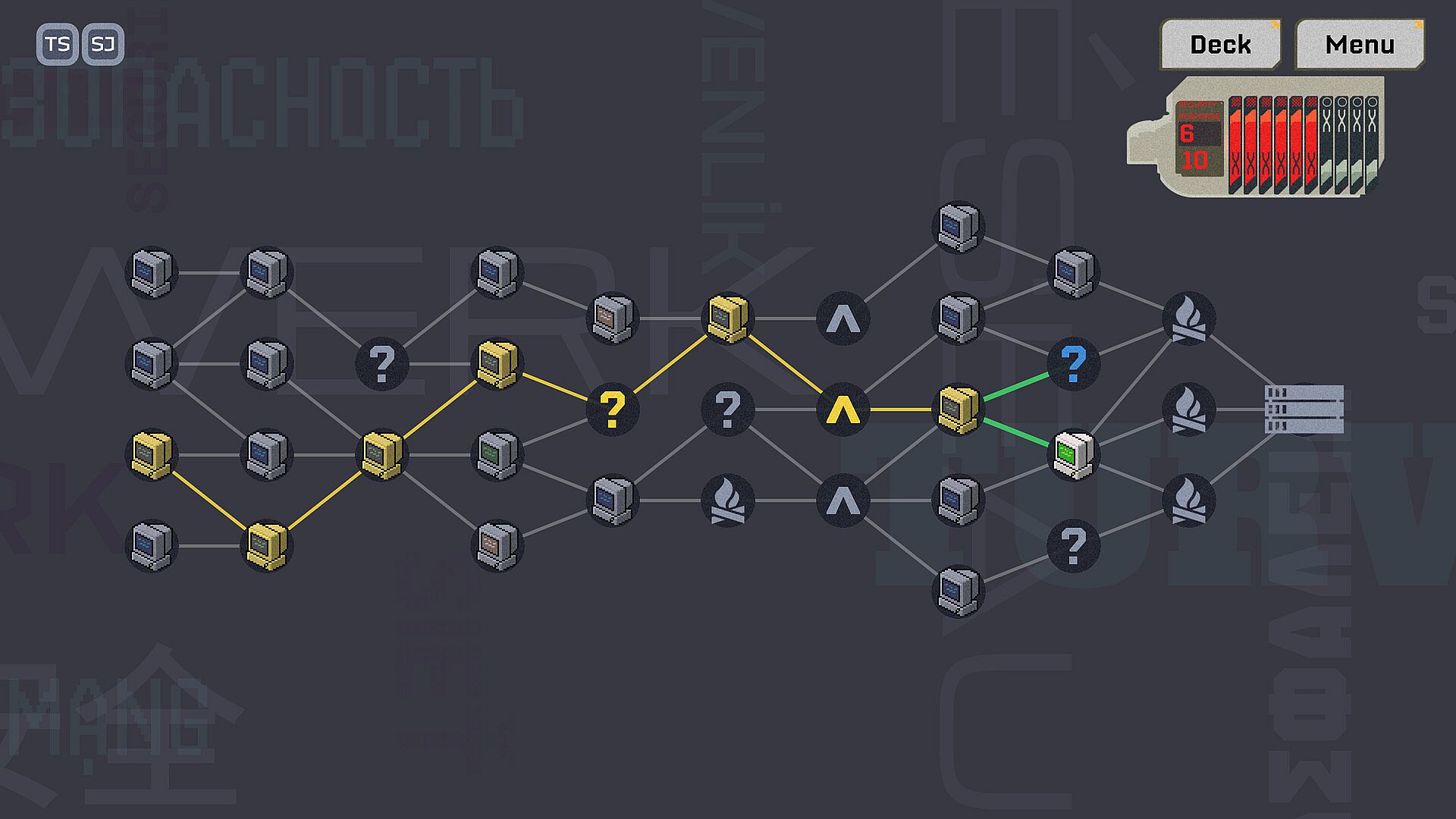
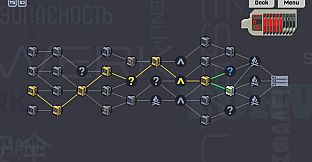
PATH//HACK operates as a single-player experience focused on roguelike runs. Each attempt presents procedurally influenced challenges that increase in difficulty, requiring adaptation of card strategies and token management to progress through security layers.
Players engage in repeated runs that emphasize learning from prior attempts, refining deck interactions and relic usage to handle more complex network configurations. The structure supports experimentation with discard timing and token chaining without multiplayer elements or separate competitive formats.
Core Systems and Progression
Token deployment forms the foundation of scoring and disruption. Cards produce different token types depending on play or discard choices, leading to board states that evolve turn by turn. The queue mechanic adds a delayed release element, forcing players to plan ahead for row activations that can amplify or interfere with ongoing strategies.
Relics introduce variability by altering fundamental rules, such as enabling unexpected chains or interactions between tokens. This layer supports deeper optimization as runs advance, with security responses adapting to player tactics in a responsive manner.
Is It Worth Playing?
PATH//HACK appeals to players who enjoy roguelike deckbuilders with intricate resource systems and combinatorial depth. The emphasis on discard-driven energy, token chaining, and adaptive security responses creates a focused single-player loop centered on outmaneuvering digital threats.
Those drawn to strategy titles that reward precise planning and iterative improvement will find the mechanics engaging. The game remains in a pre-release state with no established player metrics available yet, making it suitable for enthusiasts willing to explore its systems upon launch.