






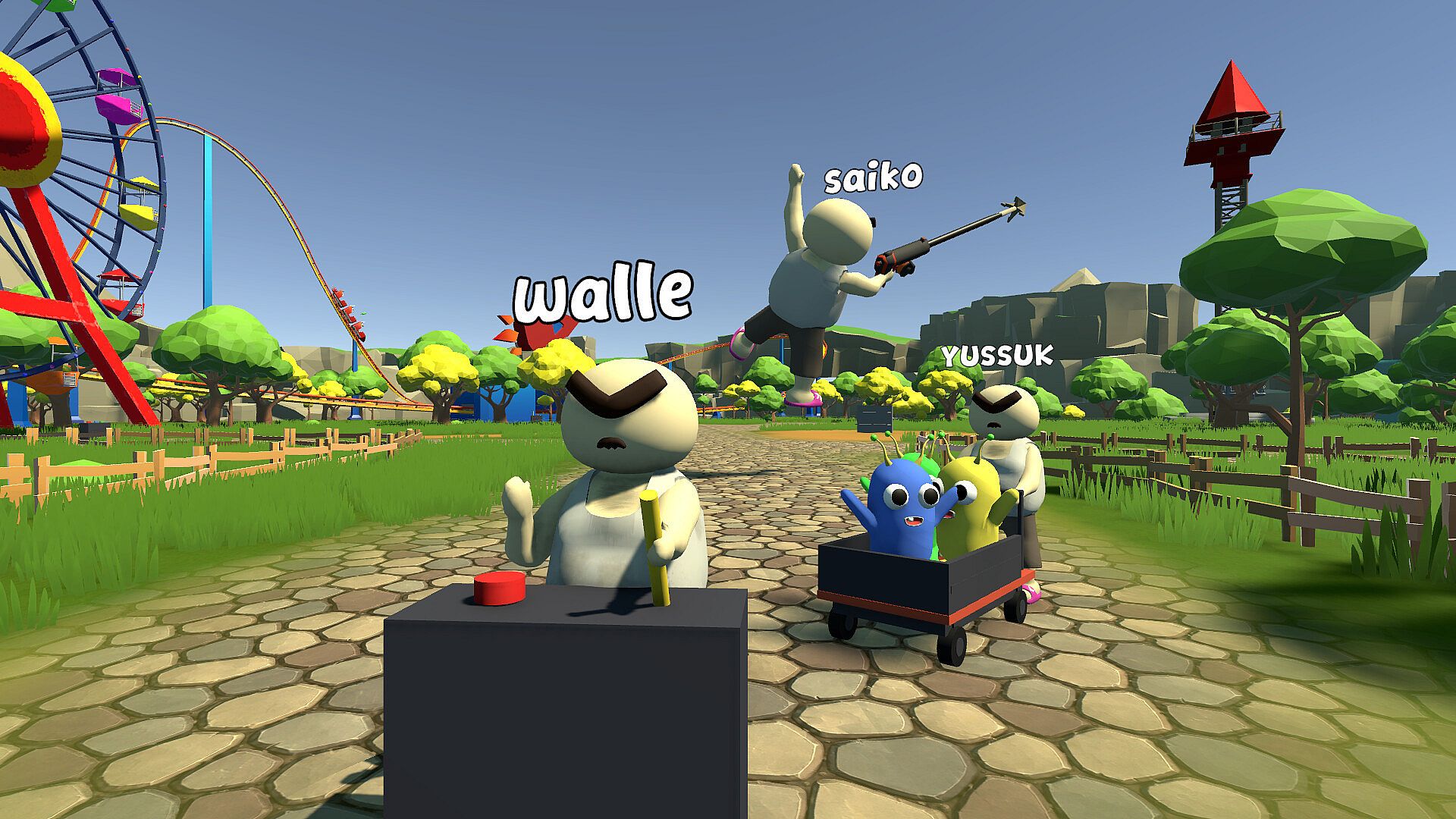
Please Stay Seated is an indie simulation game set in an amusement park where players operate rides manually in a physics-driven environment. The experience centers on chaotic co-op play for up to four participants who handle every aspect of customer flow and ride control without any automated systems or management layers. Early Access development focuses on refining these core interactions for PC players seeking short, replayable sessions filled with unpredictable outcomes.
Gameplay
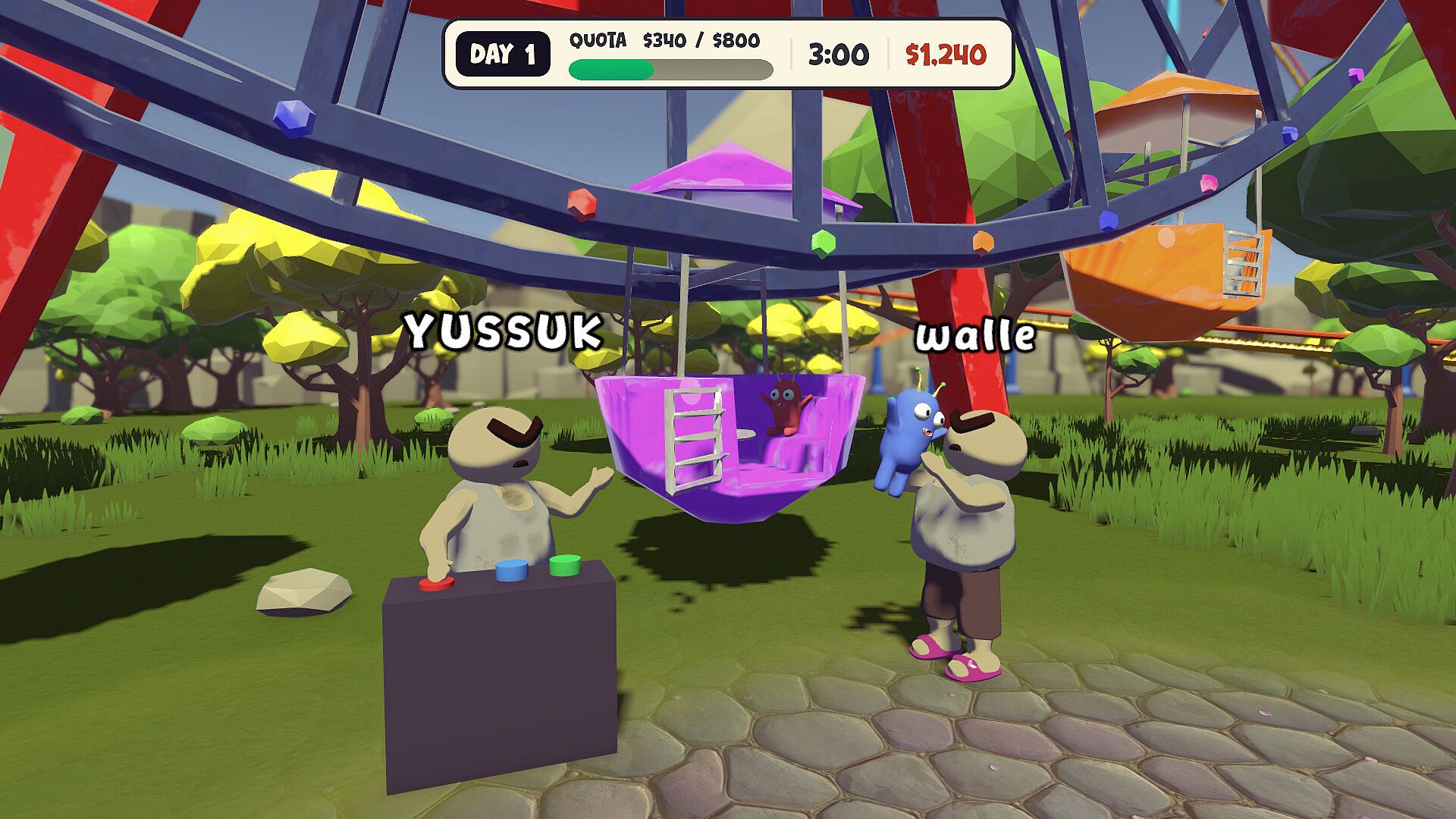
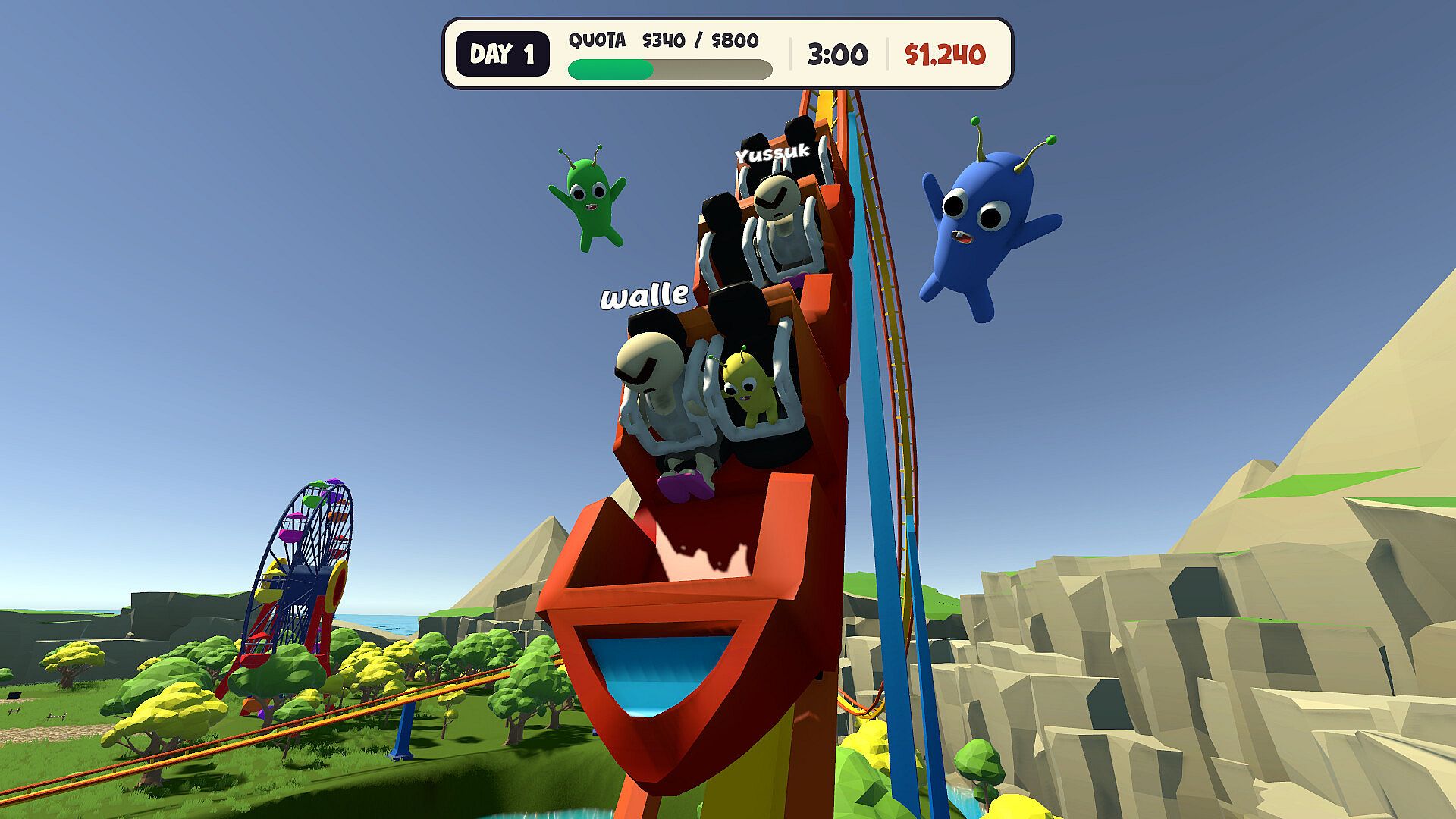
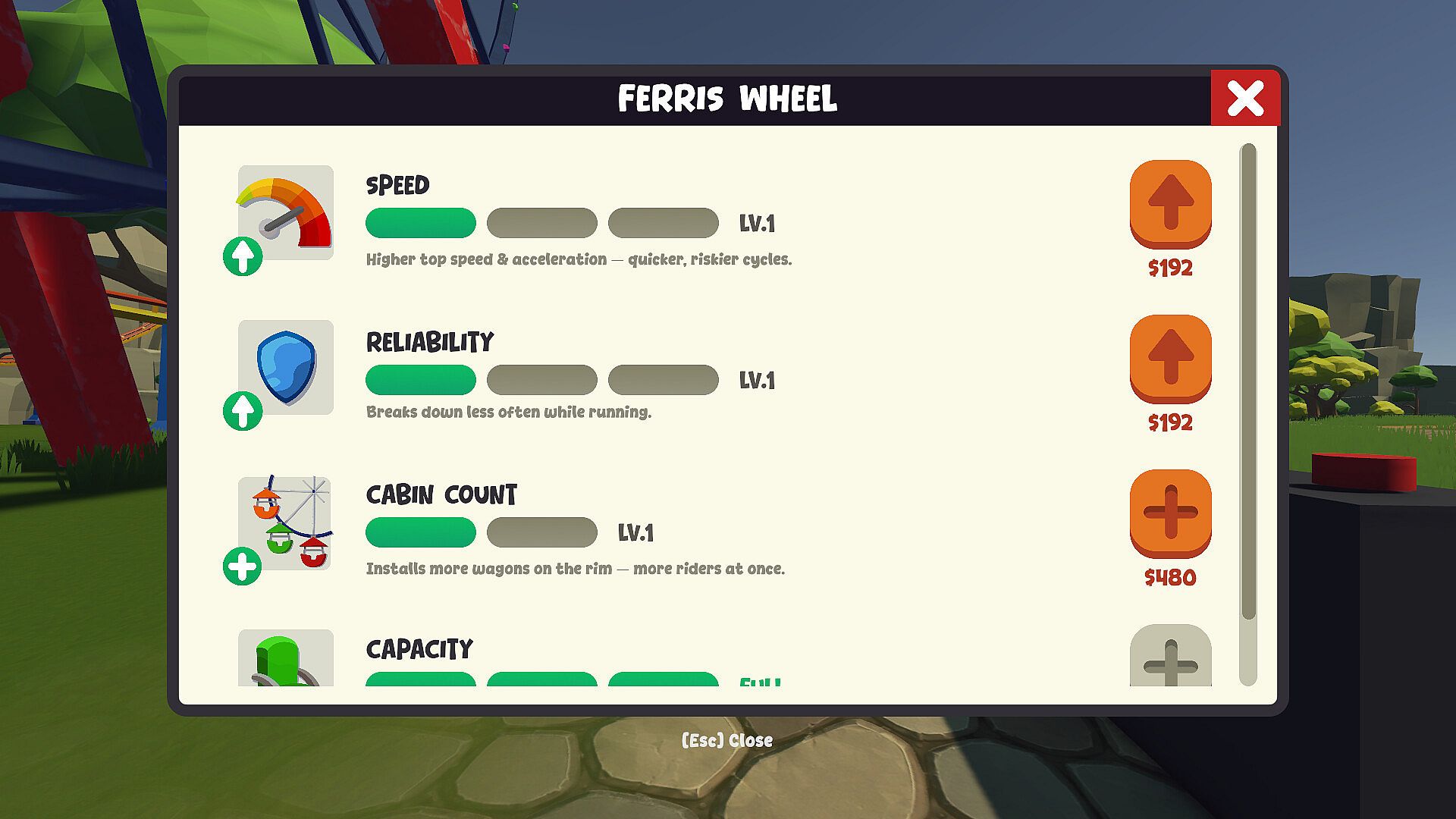
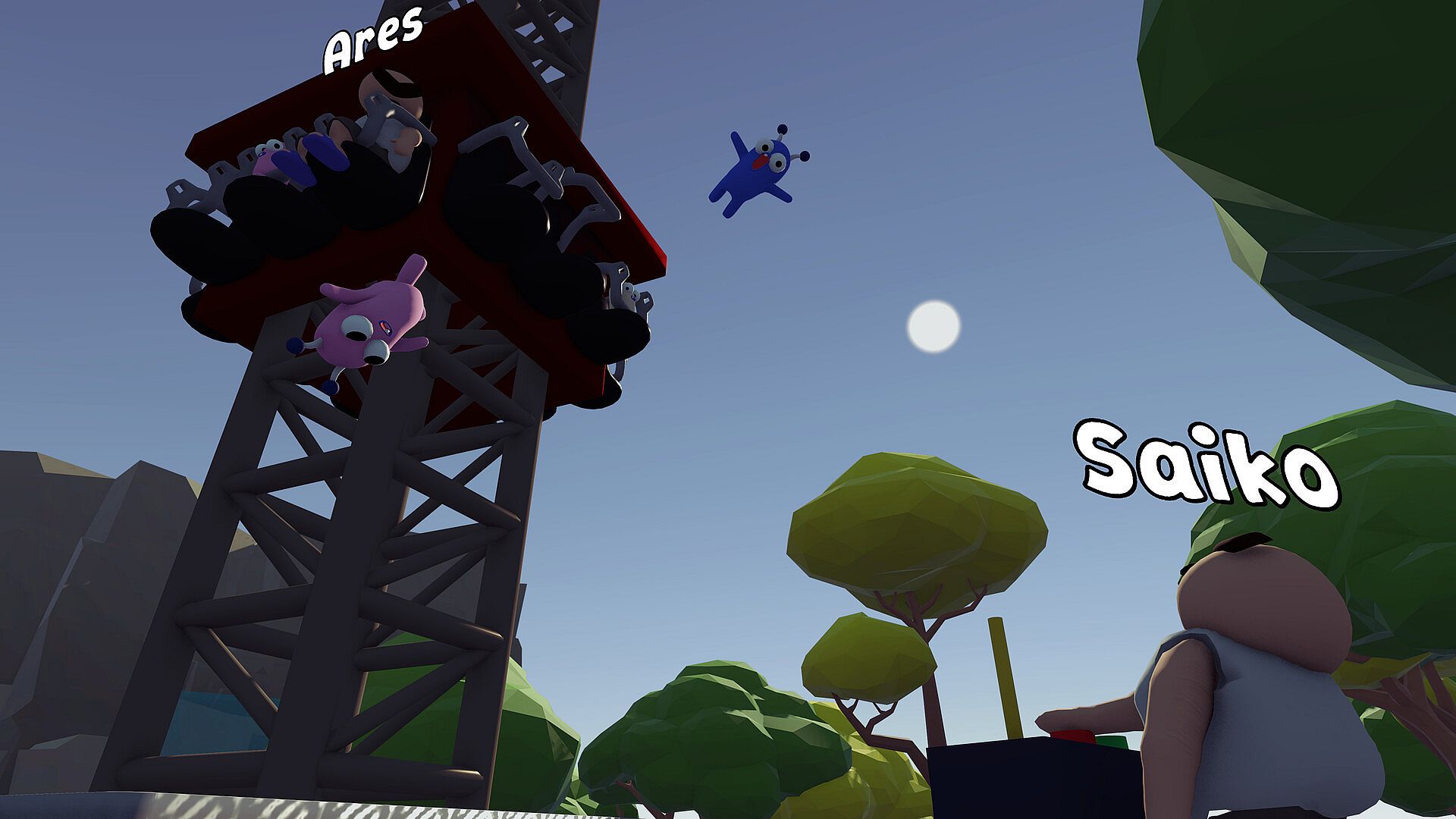
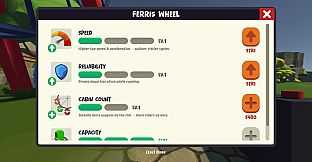
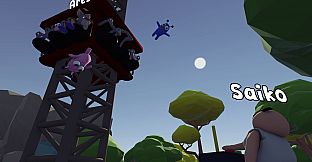
Operation begins when customers arrive at the gate and wait to be carried or thrown into seats. Players must secure restraints before activating controls, though skipping this step leads to riders being ejected during motion. Each ride runs through physical levers that adjust speed and timing, with no preset buttons available. Overdoing acceleration on the carousel can send riders flying, while the drop tower requires precise brake timing at the base to avoid disaster. The roller coaster demands choices between launch speed, station braking, and restraint security, often forcing trade-offs that affect safety and revenue. Ferris wheel cabins open outward, adding risk during rotation, and bumper cars allow direct power application that lets vehicles collide freely. Between daily runs, shared funds purchase upgrades that expand ride options or improve handling, but failure to meet escalating quotas ends the session after roughly forty minutes of play.
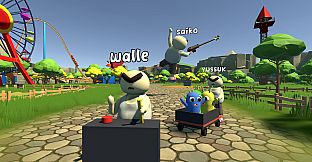
Multiplayer introduces constant interference since everyone accesses the same controls and wallet. One participant might seize a lever mid-operation or physically relocate another player, turning routine tasks into slapstick sequences. Solo sessions remain fully supported, allowing the same ride operations without external input. The physics model emphasizes momentum and loose objects, so restraint decisions directly influence whether customers complete the ride intact or end up in unintended locations.
Game Modes
Two primary modes exist: single-player and online co-op supporting two to four participants. Single-player focuses on individual management of the five available rides while balancing speed, safety, and quota targets across repeated daily attempts. Online co-op expands the same systems into shared chaos, where simultaneous access to levers and the ability to interact with teammates create emergent comedy without altering core objectives. No additional modes or variants appear in the current design, keeping emphasis on the loop of customer handling, ride activation, and quota progression.
Core Mechanics and Progression
Progression relies on quota completion rather than construction or pricing decisions. Each successful day unlocks larger targets and new ride access through collective spending. The five rides provide distinct control challenges that reward experimentation with lever positions and restraint timing. Upgrades purchased between runs enhance these systems, though the exact effects remain tied to player testing during development. The absence of spreadsheets or hiring keeps attention fixed on real-time physical interactions and the consequences of haste or neglect.
Is It Worth Playing?
Players who enjoy short, physics-based co-op sessions with high failure rates and humorous mishaps will find the premise engaging. The emphasis on manual operation and shared controls delivers consistent variety across the listed rides without requiring long-term commitment. Early Access status means the experience is still expanding, with planned additions such as weather effects under community feedback. Those seeking traditional tycoon building or polished single-player campaigns may prefer waiting for further updates, while fans of chaotic simulation will appreciate the direct staff role and repeatable daily structure. Availability on PC supports both solo testing and group play once released.












