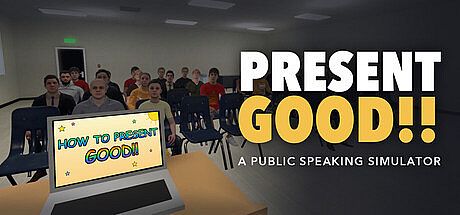



Present Good: A Public Speaking Simulator is a single-player simulation game built around the mechanics of delivering talks to live audiences. Players take on the role of a speaker starting with no reputation, using their own voice and slides to handle different professional and social situations on PC.
Gameplay
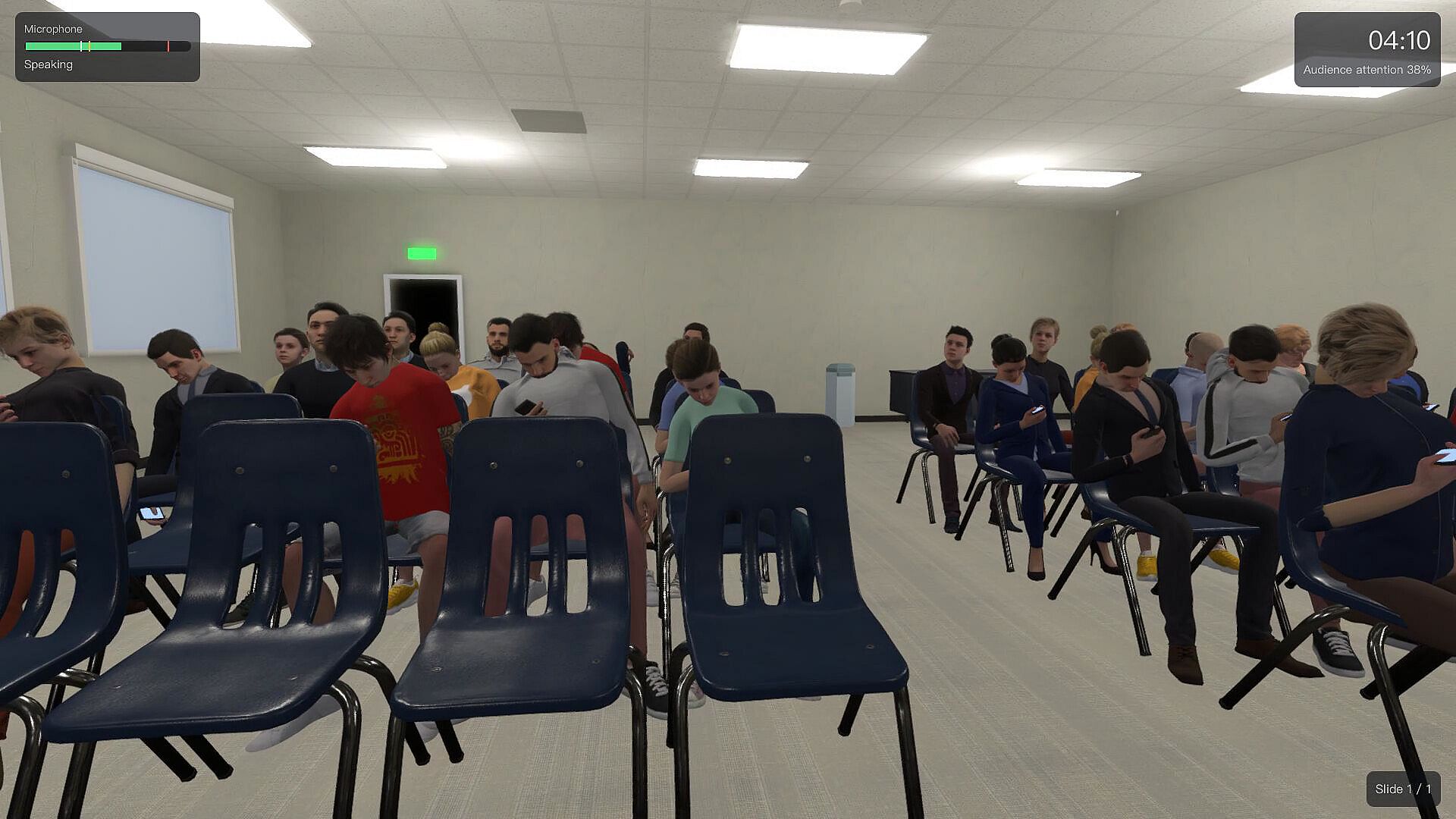
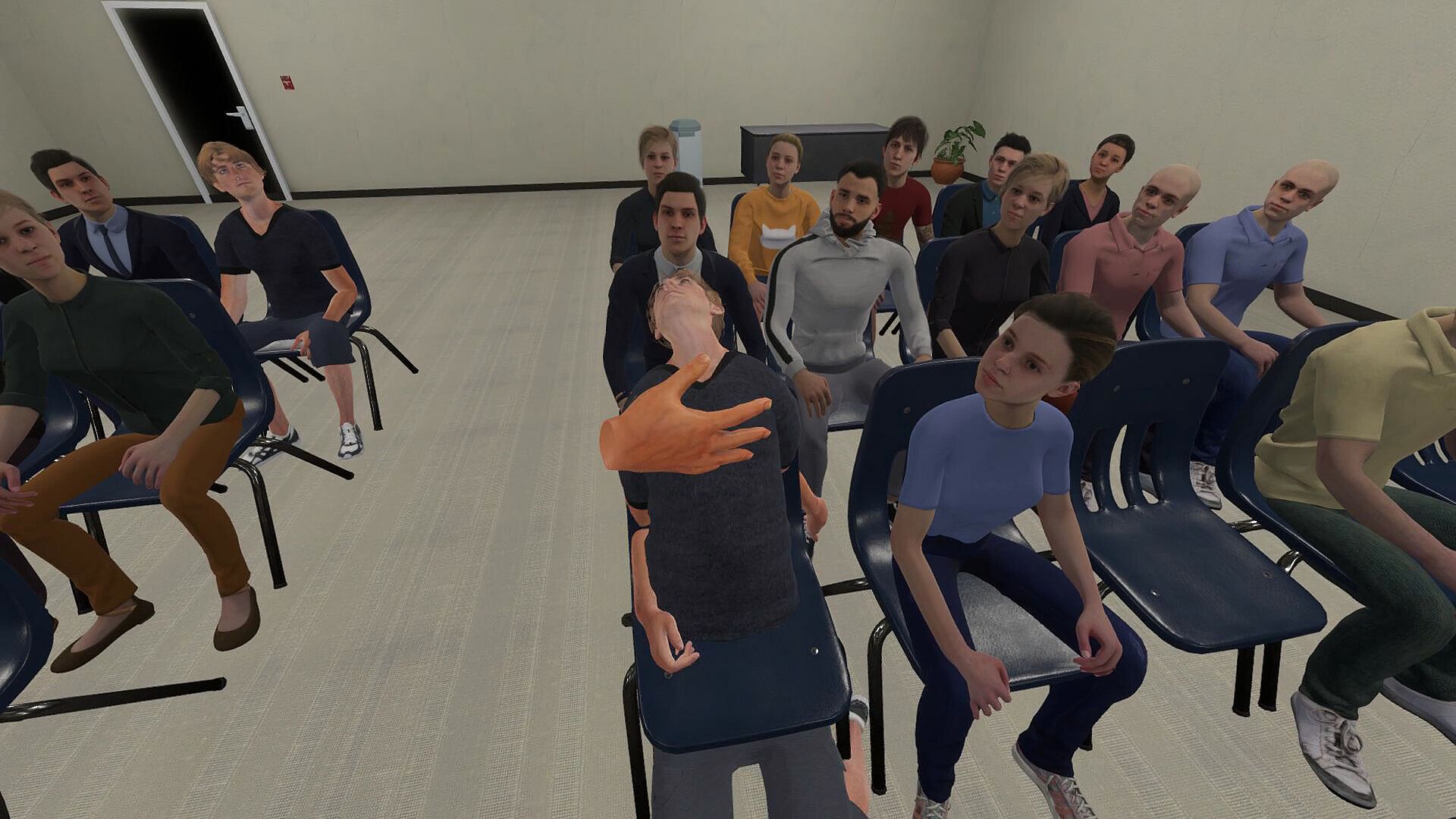
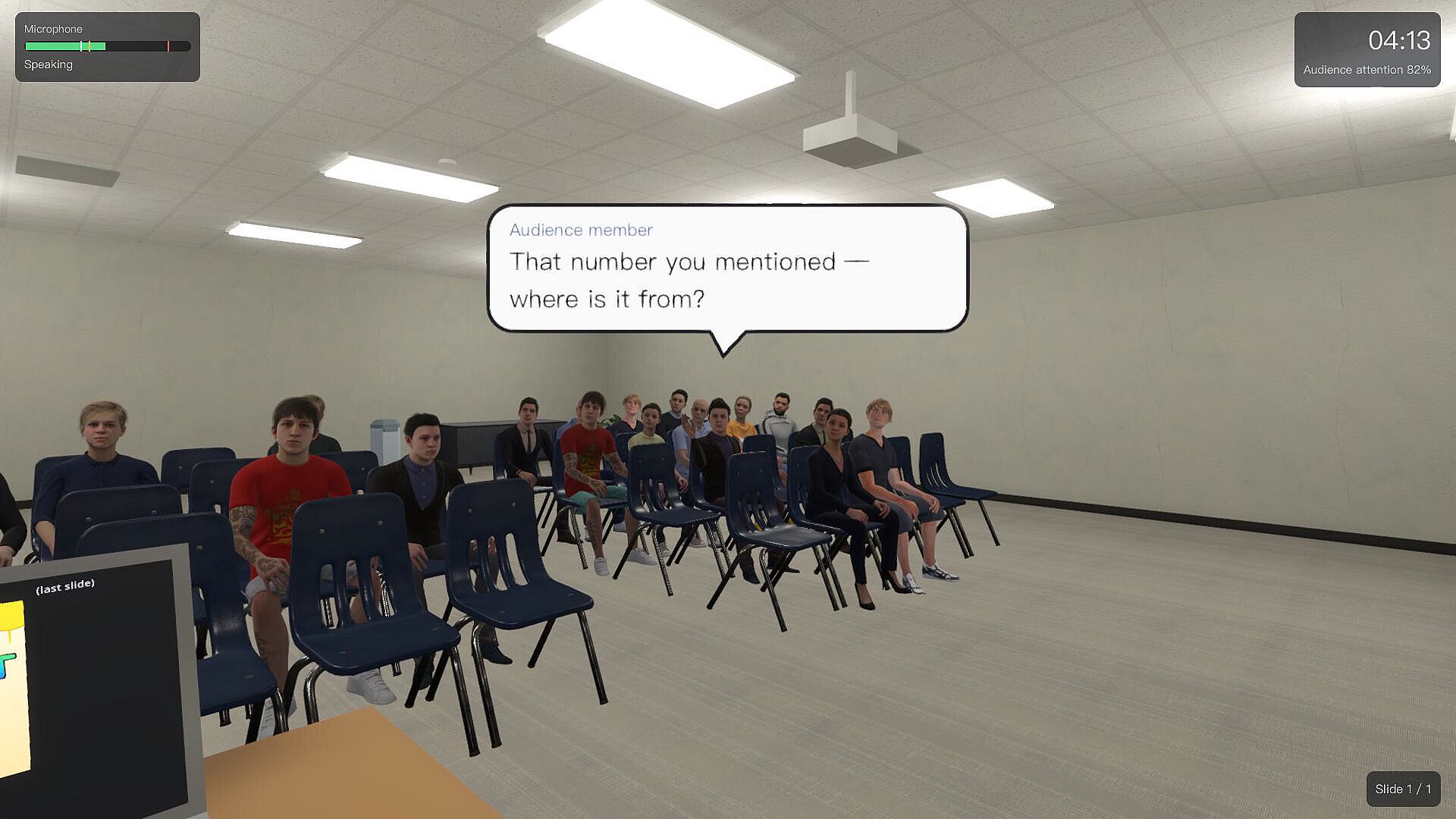
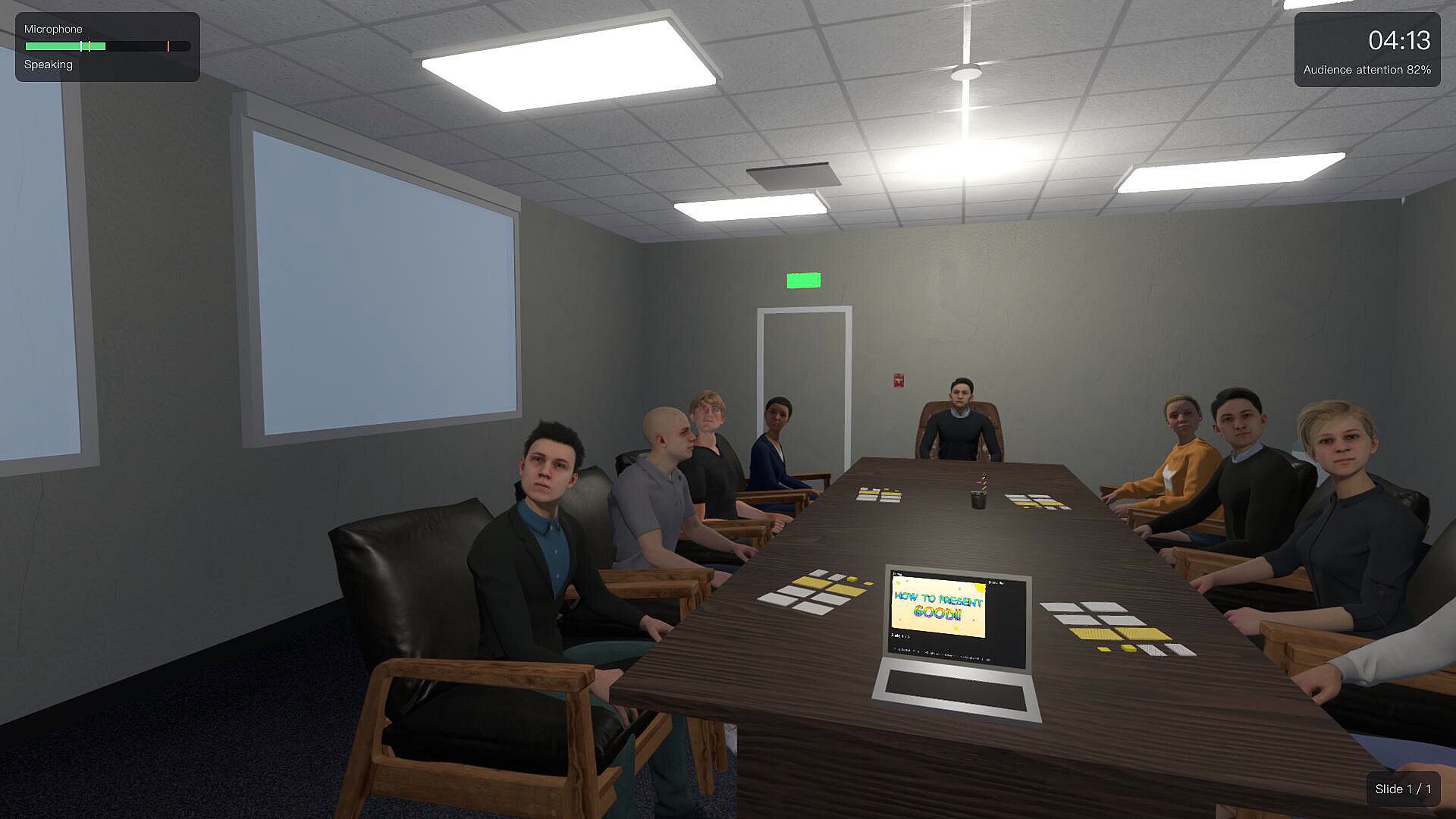
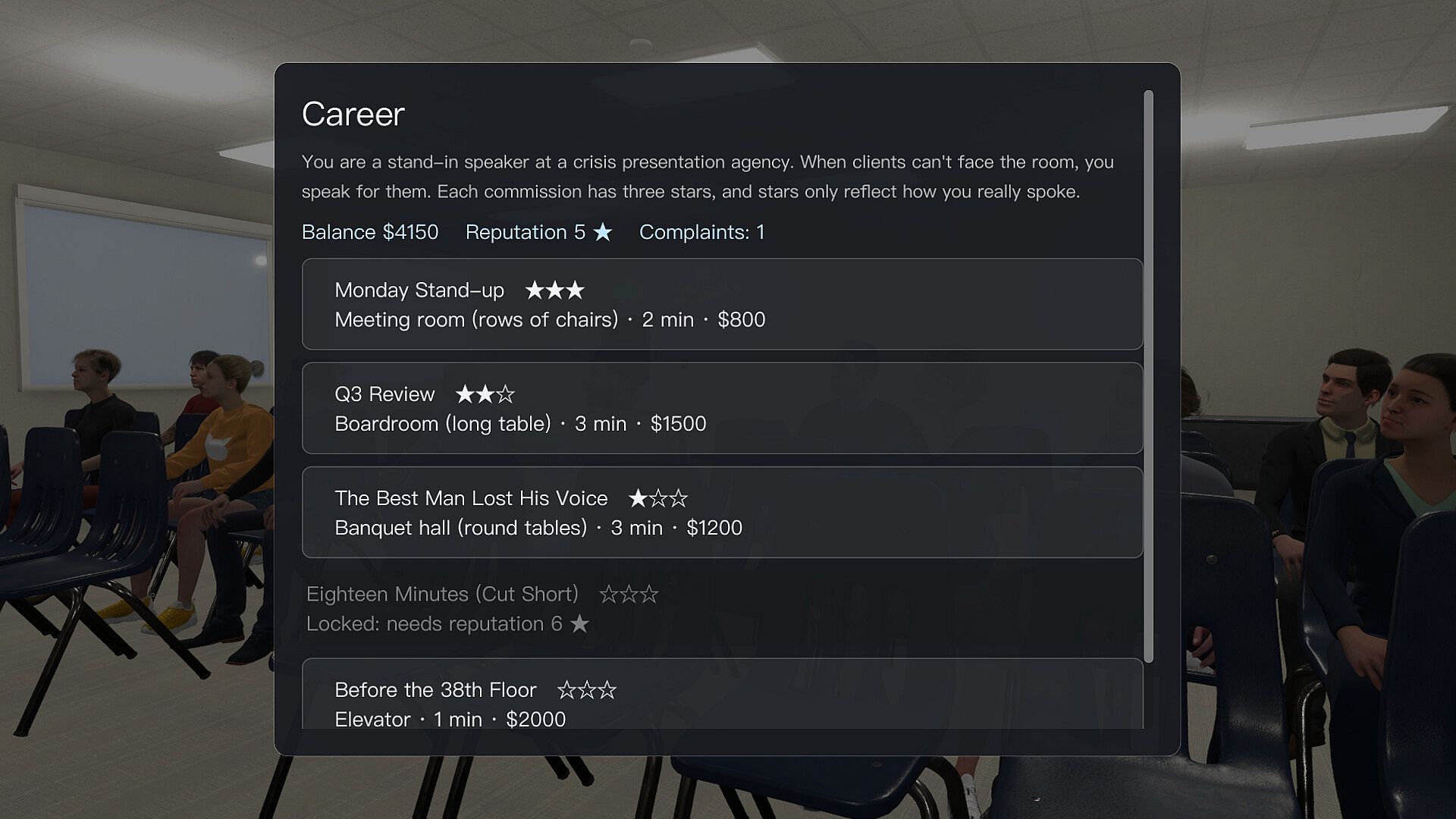
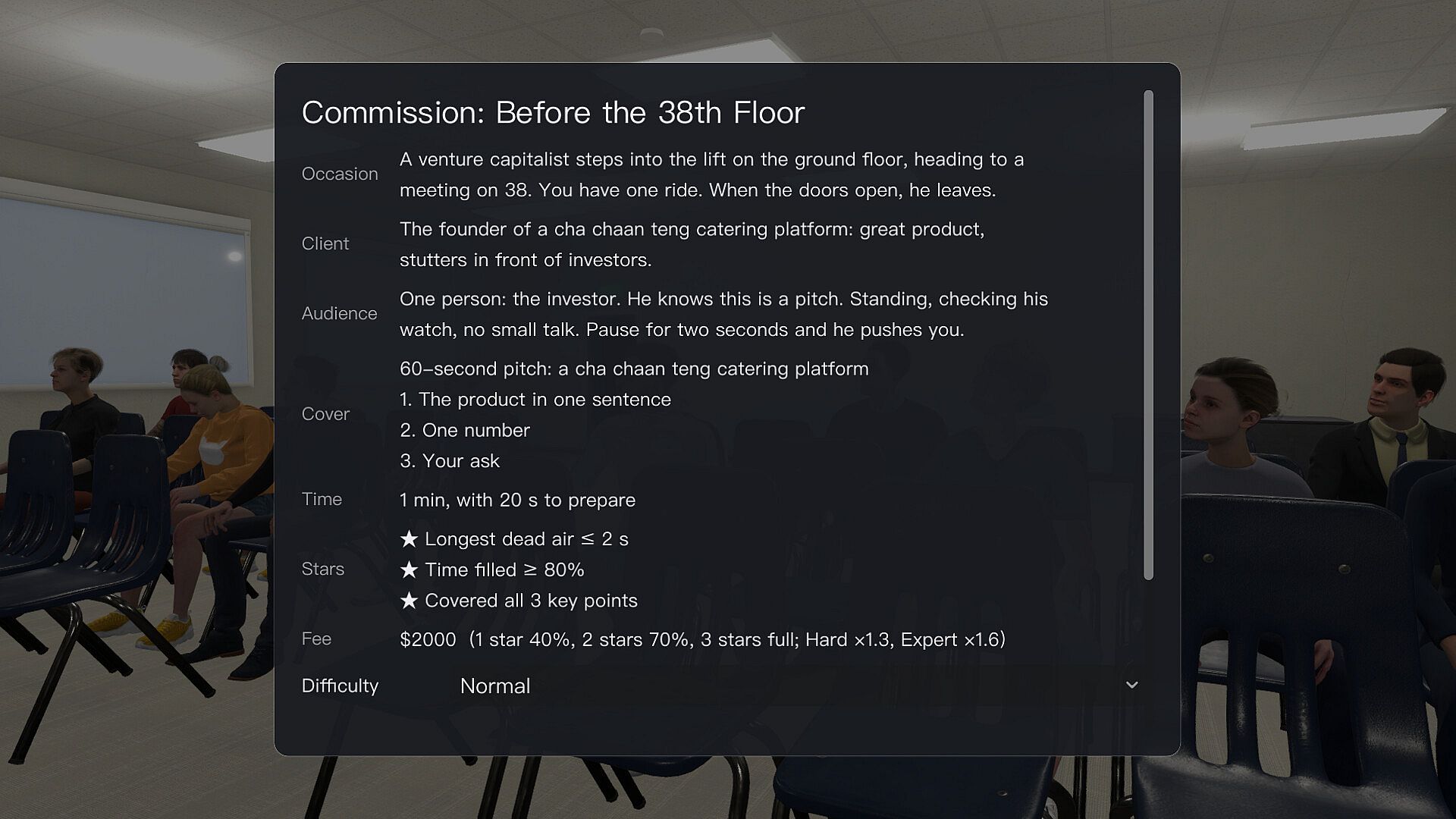
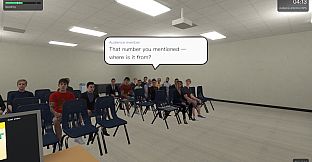
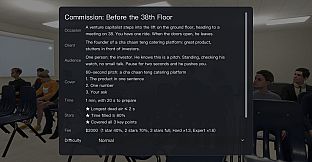
The core loop centers on preparing for and delivering presentations across a series of gigs. Each session begins with a brief that outlines three objectives and a fee. Players manage attention through gestures, pacing, volume, and eye contact while responding to interruptions or questions drawn from the actual content of the talk. Speech recognition processes the player's words locally, and the audience reacts based on what was said rather than pre-scripted lines.
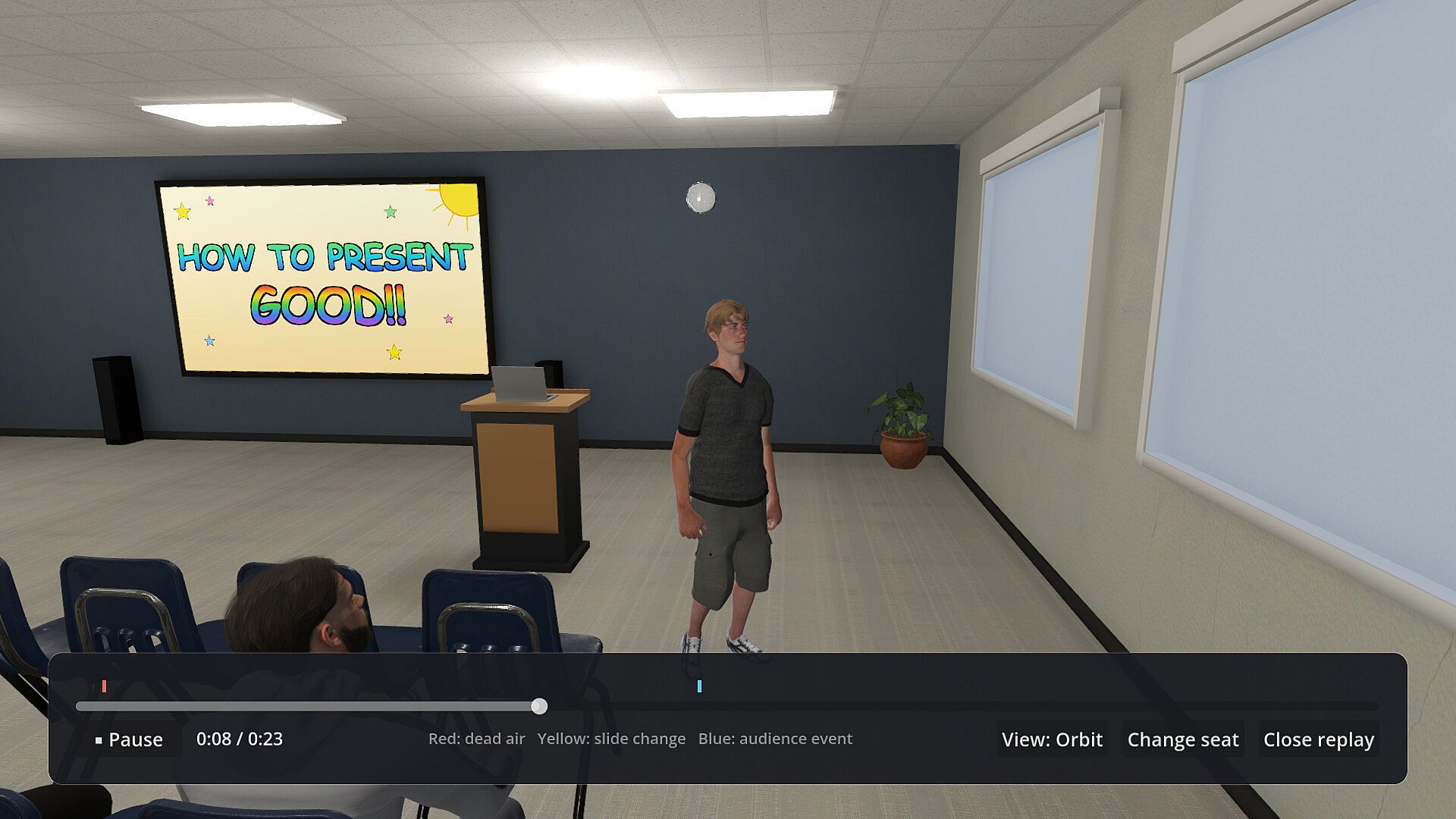
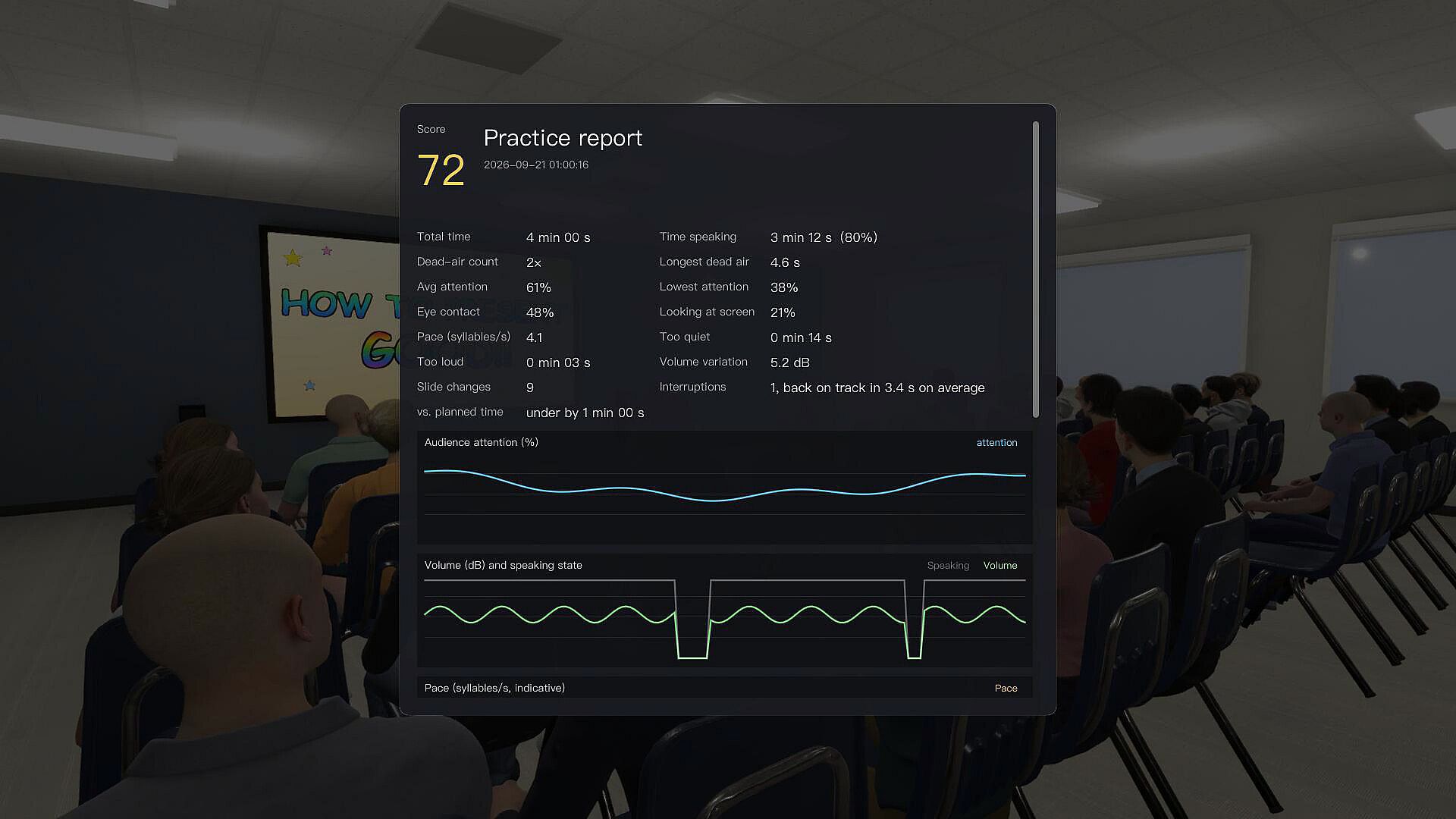
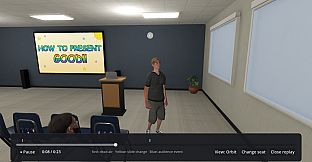
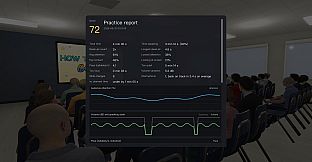
After each delivery, a detailed replay captures the performance from multiple angles. It tracks attention levels over time, volume and pace variations, moments of dead air, eye movement, a full transcript, and counts of filler words such as "um," "like," and "you know." These metrics provide concrete feedback without any external power-ups or simplifications. Sixteen gestures and ten hotkeys support expressive delivery, while a shop allows purchases that affect presentation style.
Everything runs on the player's machine. An optional local AI model for generating audience questions requires a one-time download and is not required to play. The game supports English, Cantonese, and Mandarin for speech recognition, with the interface available in English and Traditional Chinese.
Game Modes
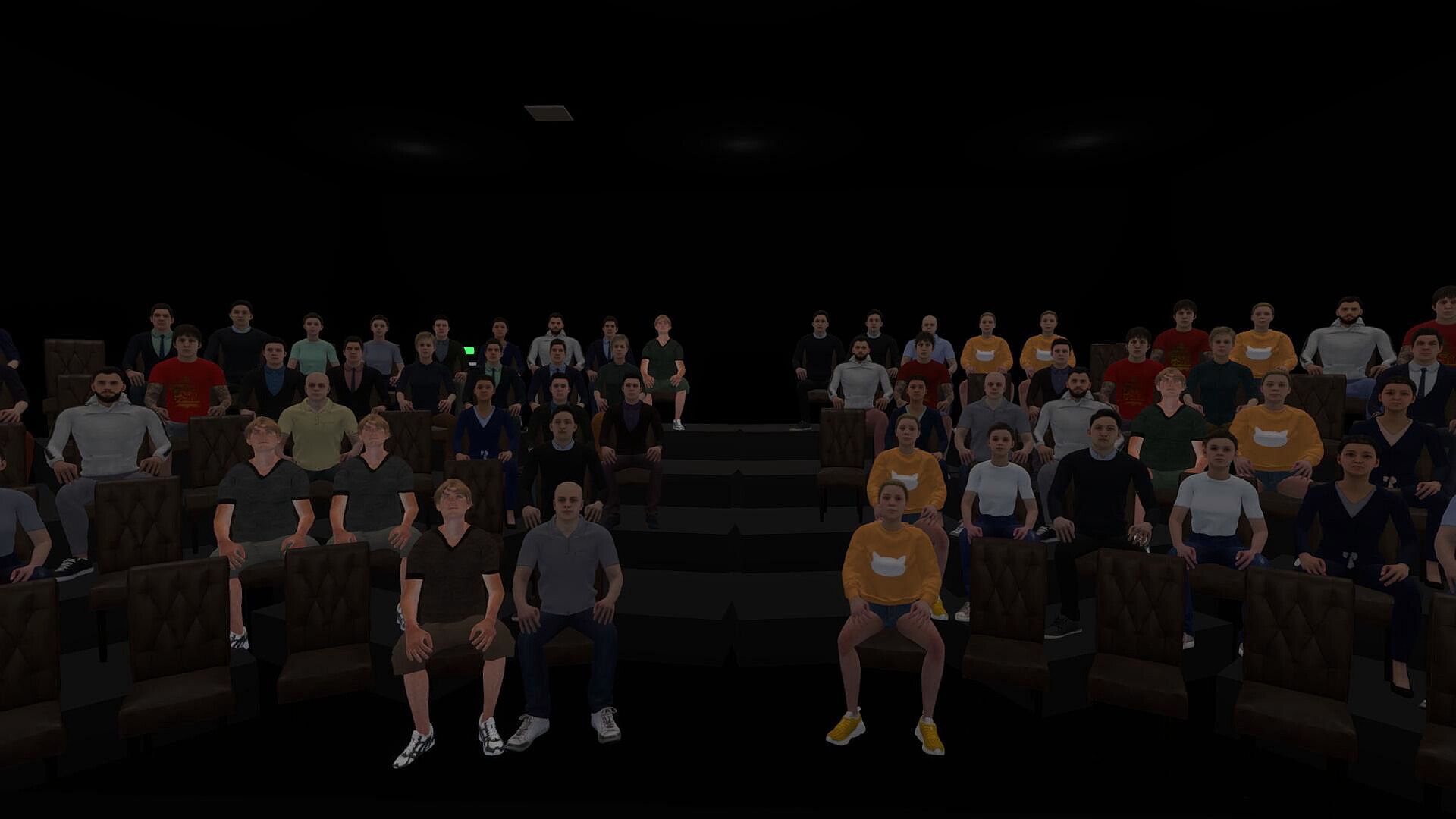
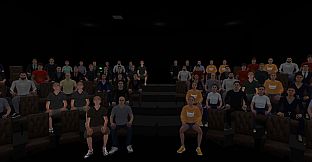
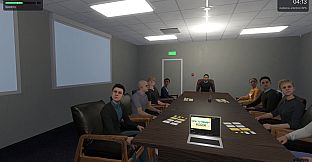
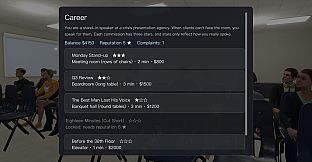
Progression occurs through a series of distinct gigs that increase in scale and complexity. Early scenarios include a Monday meeting with colleagues and a latecomer, a boardroom setting with a boss who interrupts about budgets, and a wedding banquet where half the room faces away. Later challenges feature a timed elevator pitch to a single investor and a larger stage presentation in front of sixty seats.
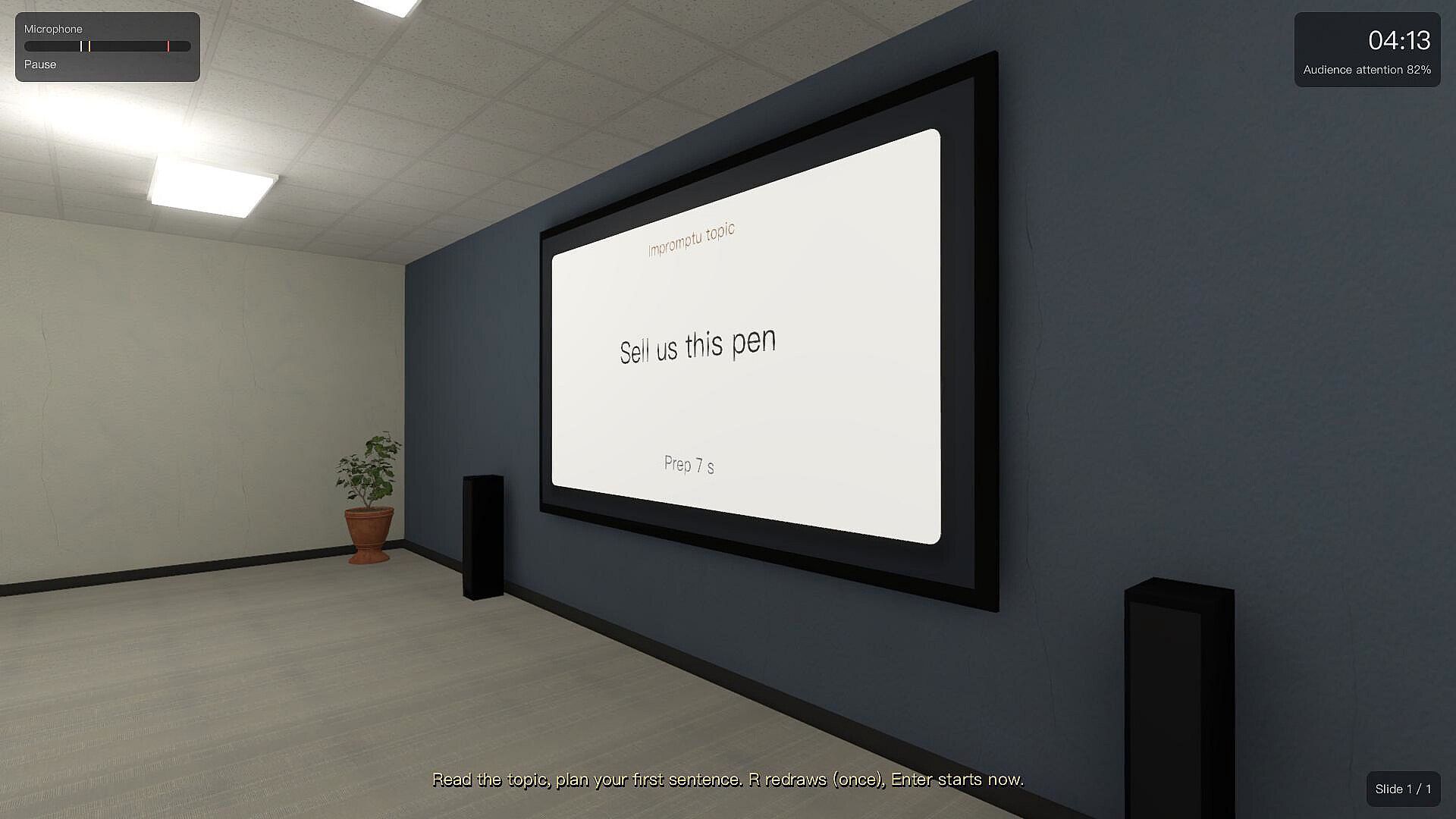
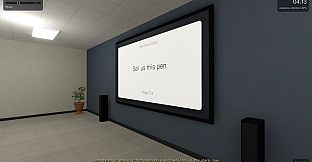
Free practice mode unlocks every venue immediately. Players can use their own slide decks in PDF, PNG, or JPG format, or select impromptu topics such as "Sell us this pen." Custom gigs allow users to define their own talking points, after which the audience evaluates whether those points were addressed.
Difficulty settings influence payouts, with harder options providing higher fees but greater risk to reputation if objectives are missed or complaints arise. Helpers can be toggled on at the cost of a fee reduction.
Practice and Feedback Systems
Replays serve as the primary tool for improvement. The timeline highlights exactly where audience attention dropped, paired with quantitative data on delivery elements. This setup turns each session into a reviewable record rather than a one-off performance.
Players retain full control over their recordings and reports, which stay local. The system emphasizes real skill measurement through speech patterns and audience response instead of abstracted scoring layers.
Is It Worth Playing?
The game targets individuals who want structured practice in public speaking without external judgment. Its local processing keeps all speech data and AI features private, and the free practice option removes barriers to repeated use across venues. With no live audience or multiplayer elements, it suits solo users focused on refining delivery, handling questions, and analyzing their own habits through detailed metrics.
Since the title remains in development with no released version or player reviews available, its value depends on how well the described systems match personal practice needs once it launches. Those seeking a tool for deliberate improvement in presentation skills will find the combination of voice-driven interaction, objective tracking, and venue variety relevant to that goal.