





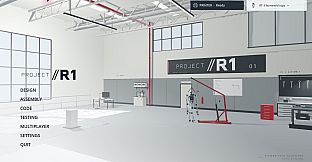
PROJECT R1 is an indie simulation game for PC that places players in a virtual robotics workshop. The experience centers on designing mechanical parts, assembling mechanisms, writing control code, and testing them in a physics environment. Players progress through an engineering workflow that starts with sketches and ends with working prototypes that respond to programmed instructions.
Gameplay
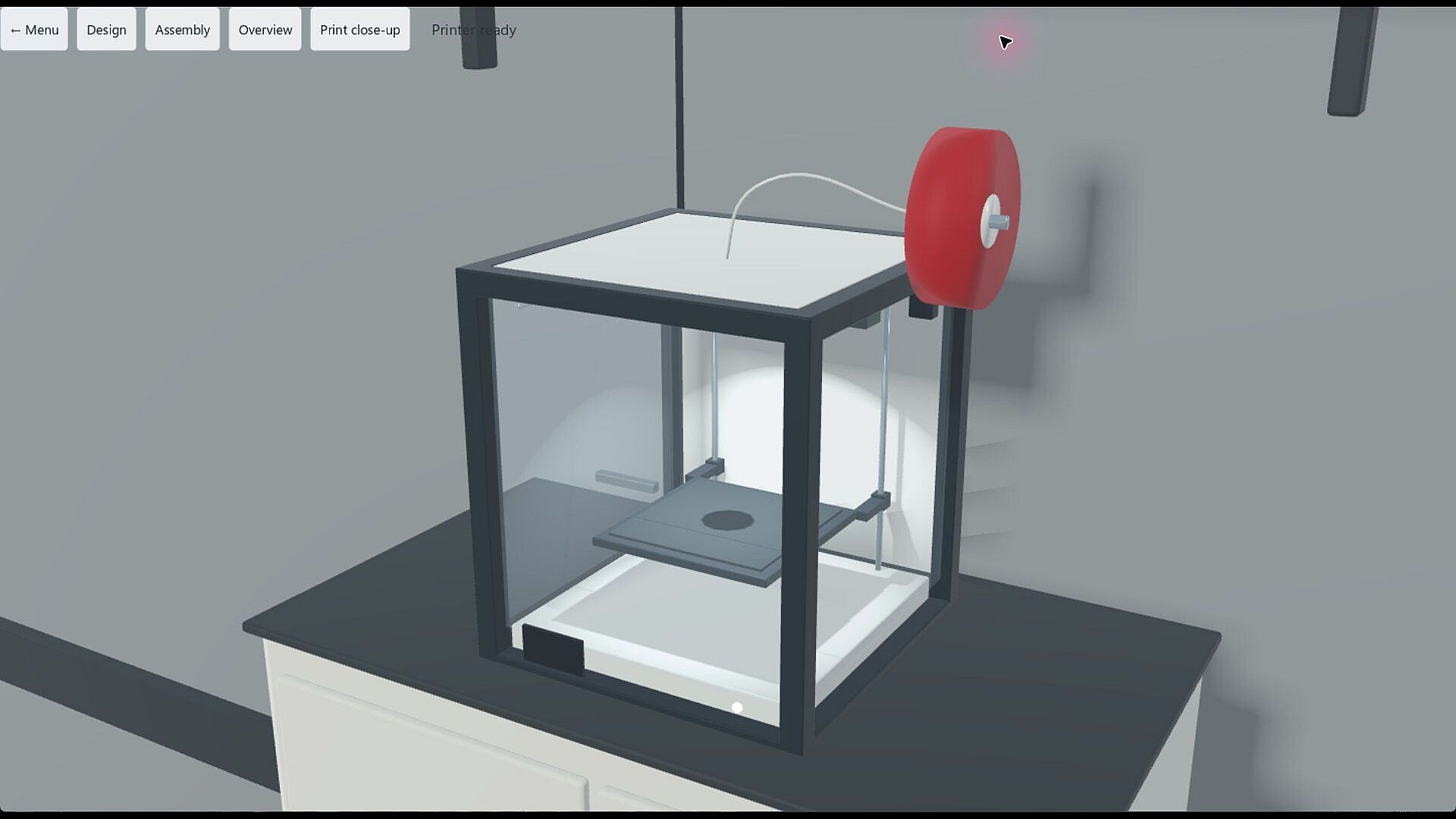
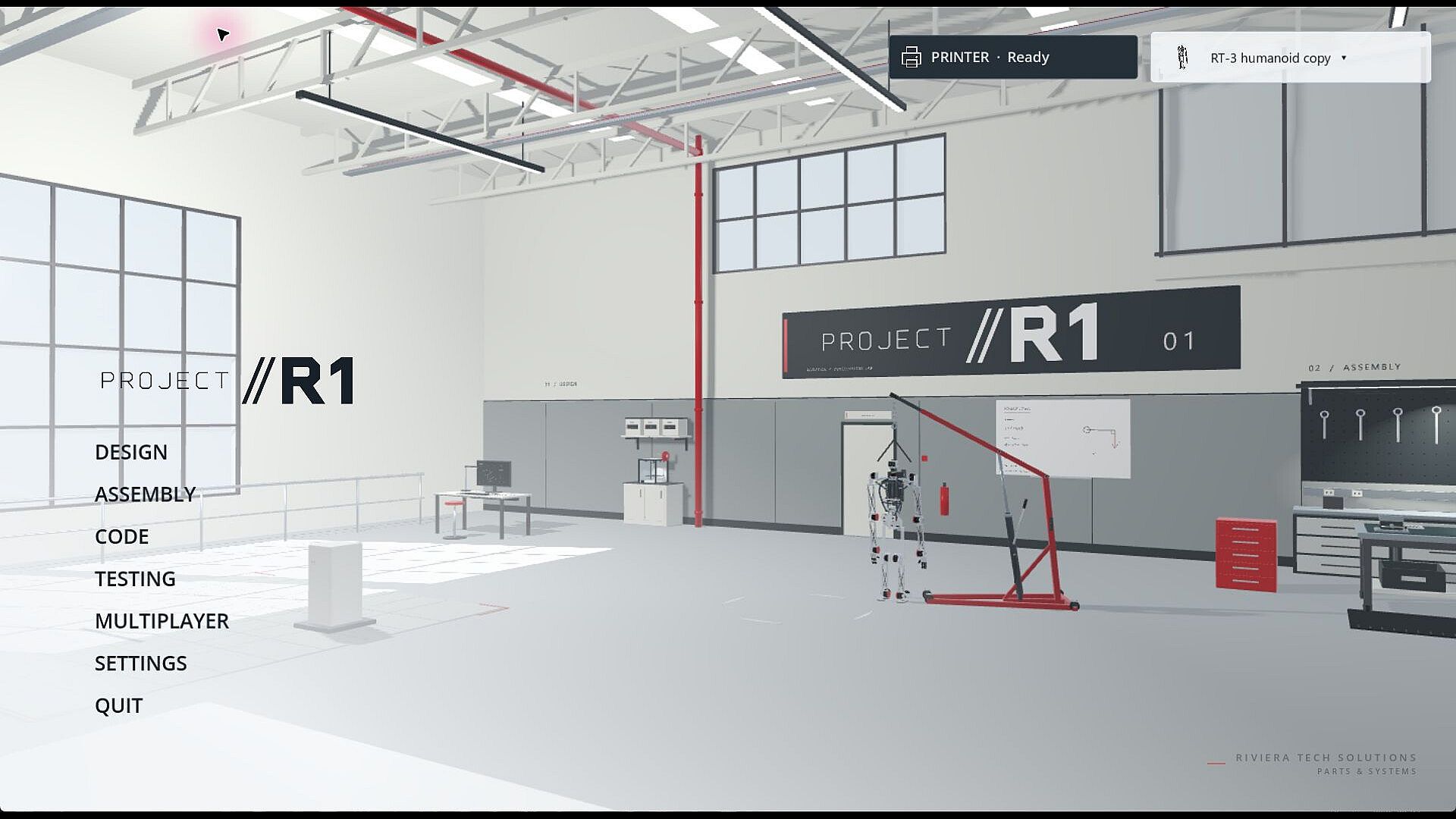
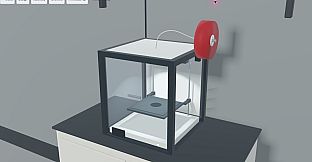
The core loop involves moving between specialized workspaces to build and iterate on robotic creations. In the CAD area, users define part profiles by setting dimensions, extruding forms, and cutting holes to shape custom components. Completed designs move to an inventory after printing, where they join stock parts for assembly.
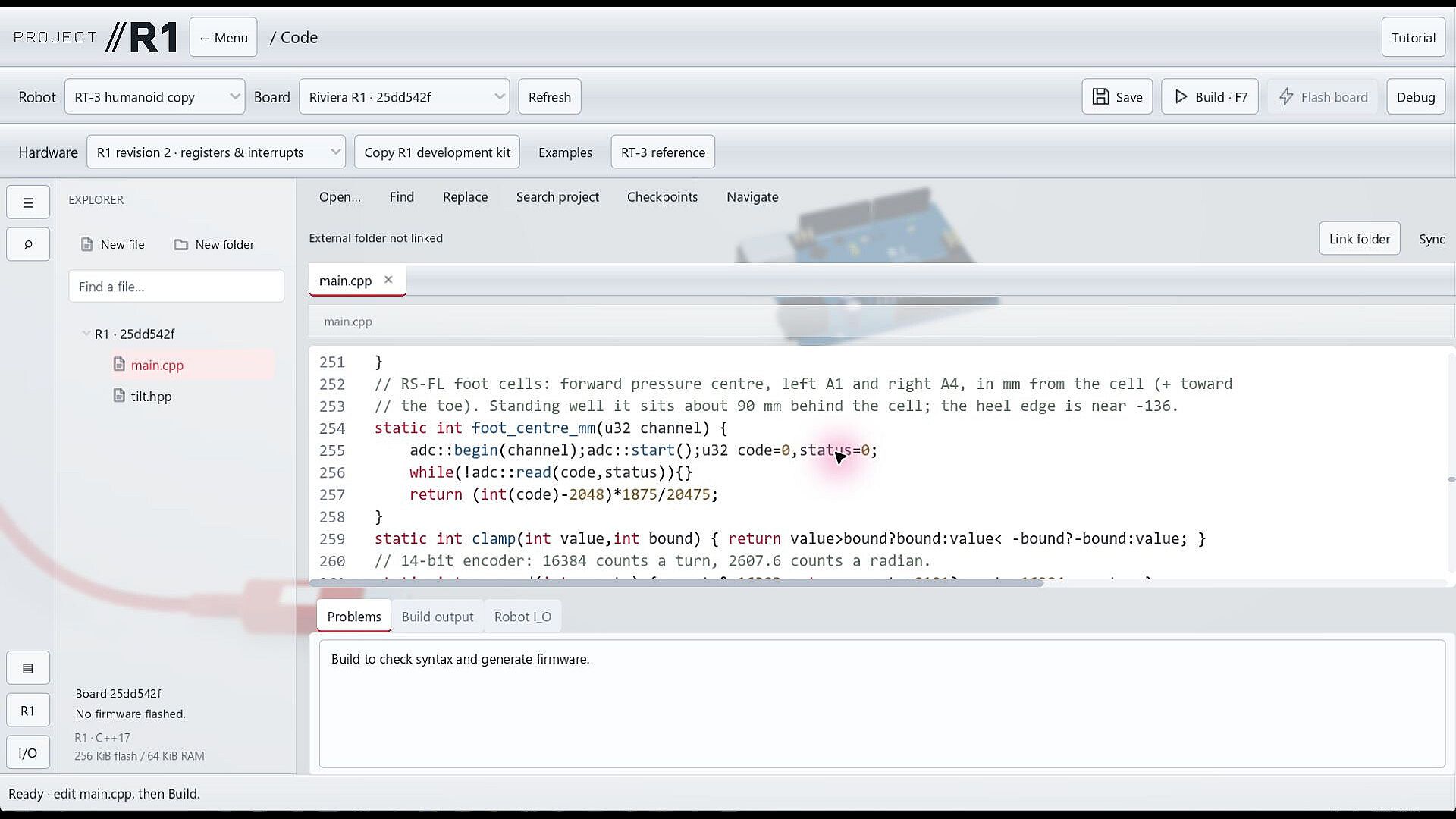
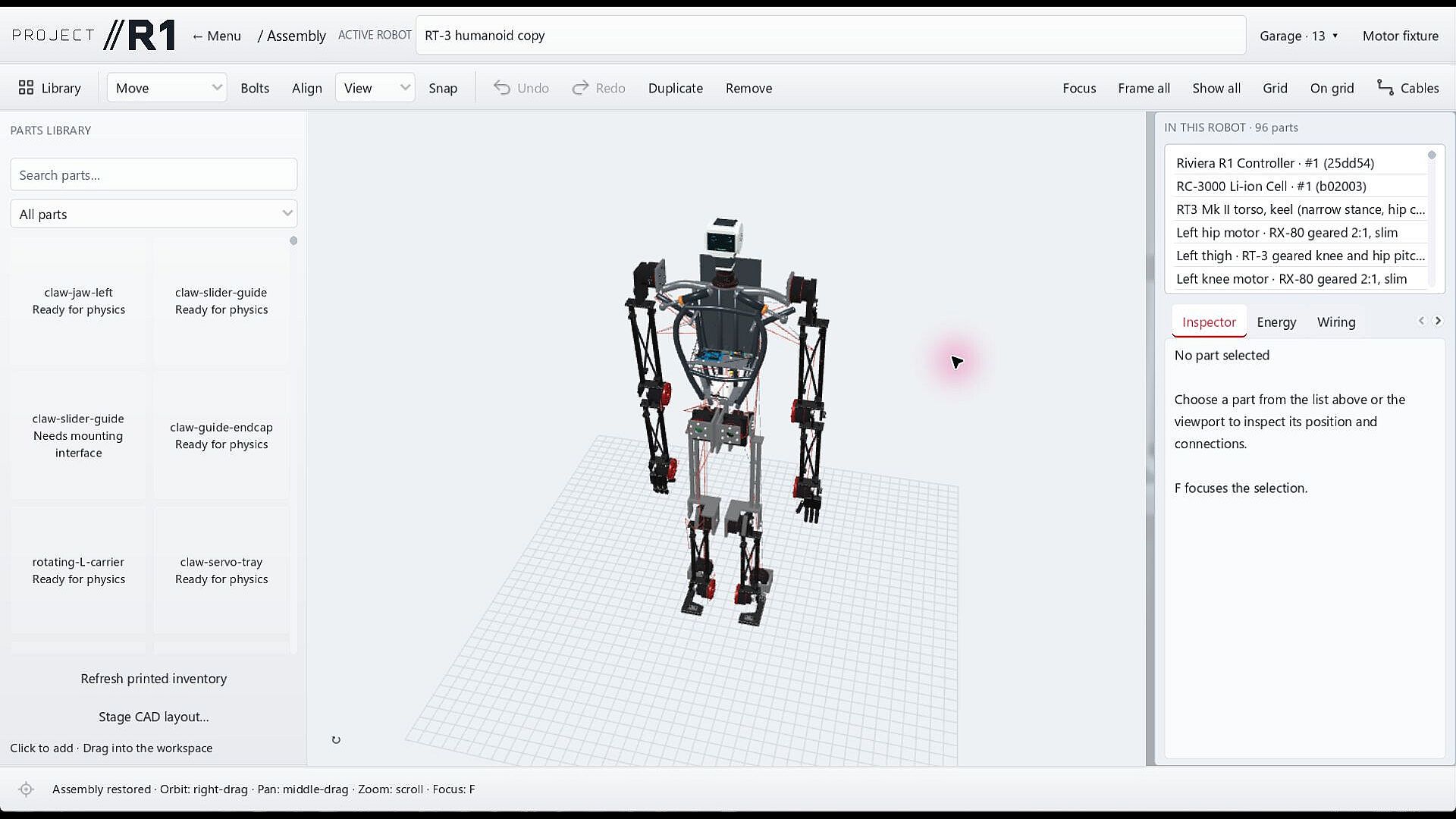
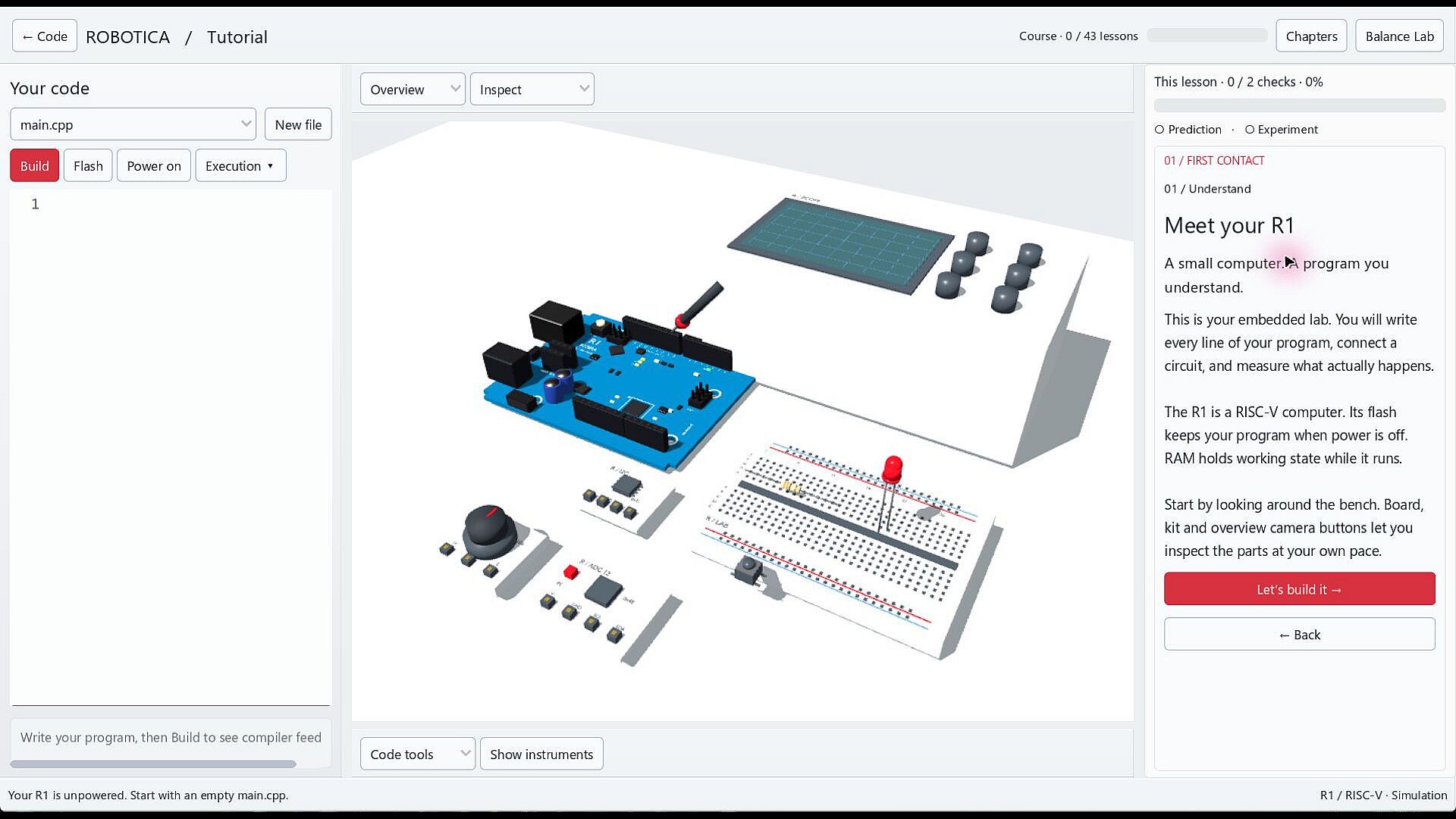
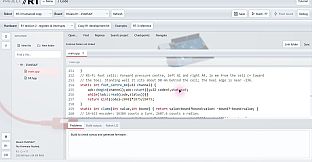
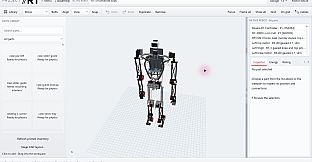
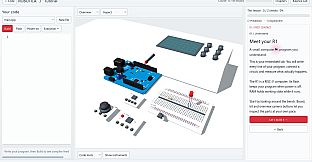
Assembly requires arranging components on a workspace, linking mechanical interfaces, and connecting wiring between controllers and actuators. Projects can be saved at any stage for later refinement. Programming takes place in a dedicated workspace where players write C++ firmware, compile it, and load it onto a virtual controller. Input signals, control logic, and feedback from contacts can be tested to link code behavior directly to physical responses.
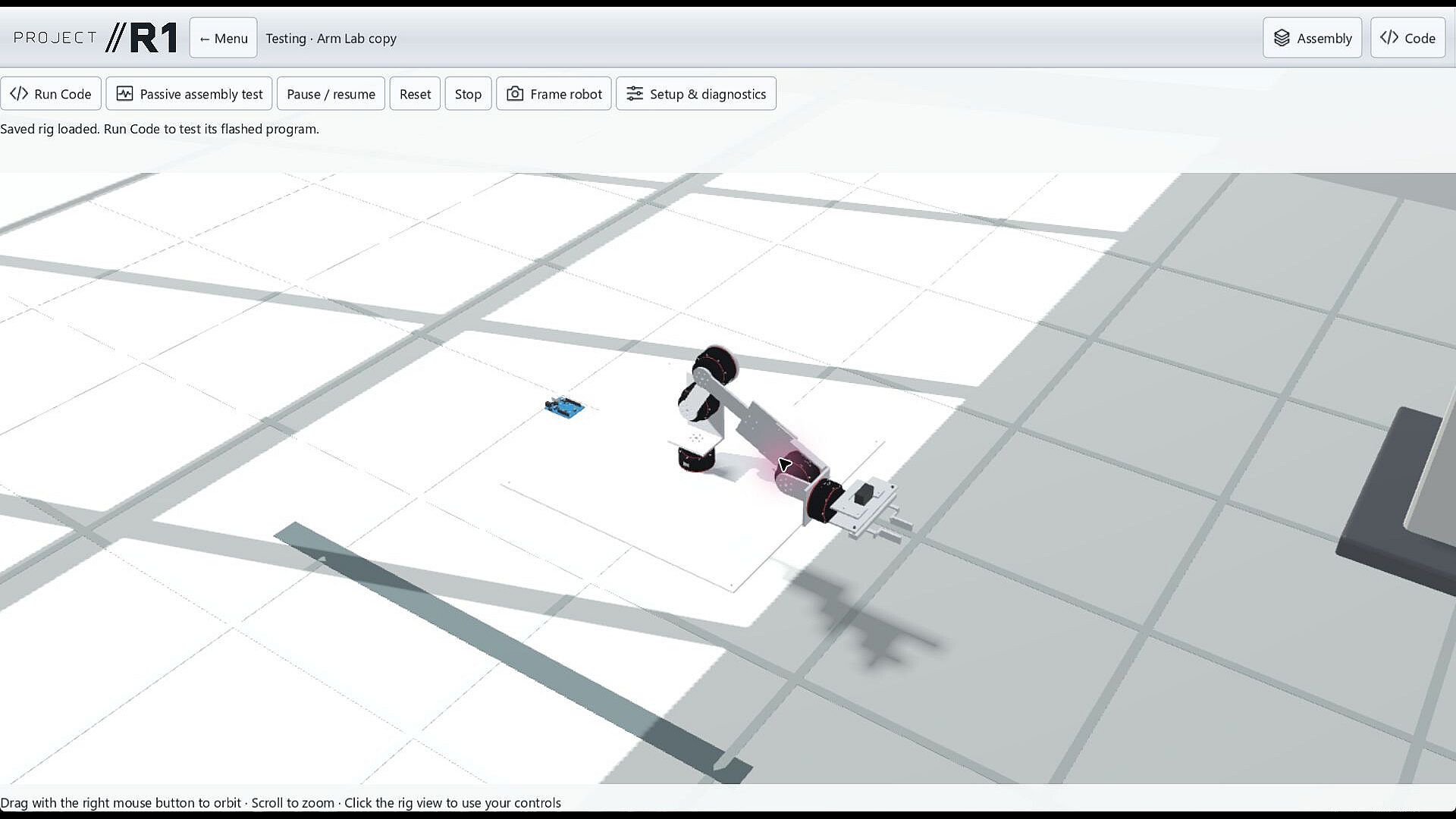
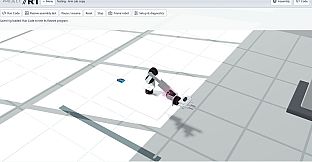
Testing occurs in a physics simulation that runs supported mechanisms. Controls allow pausing, stepping through frames, or resetting runs to observe outcomes. Results guide adjustments back in the design or programming tools. The process emphasizes experimentation with real engineering steps rather than abstract gameplay systems.
Game Modes
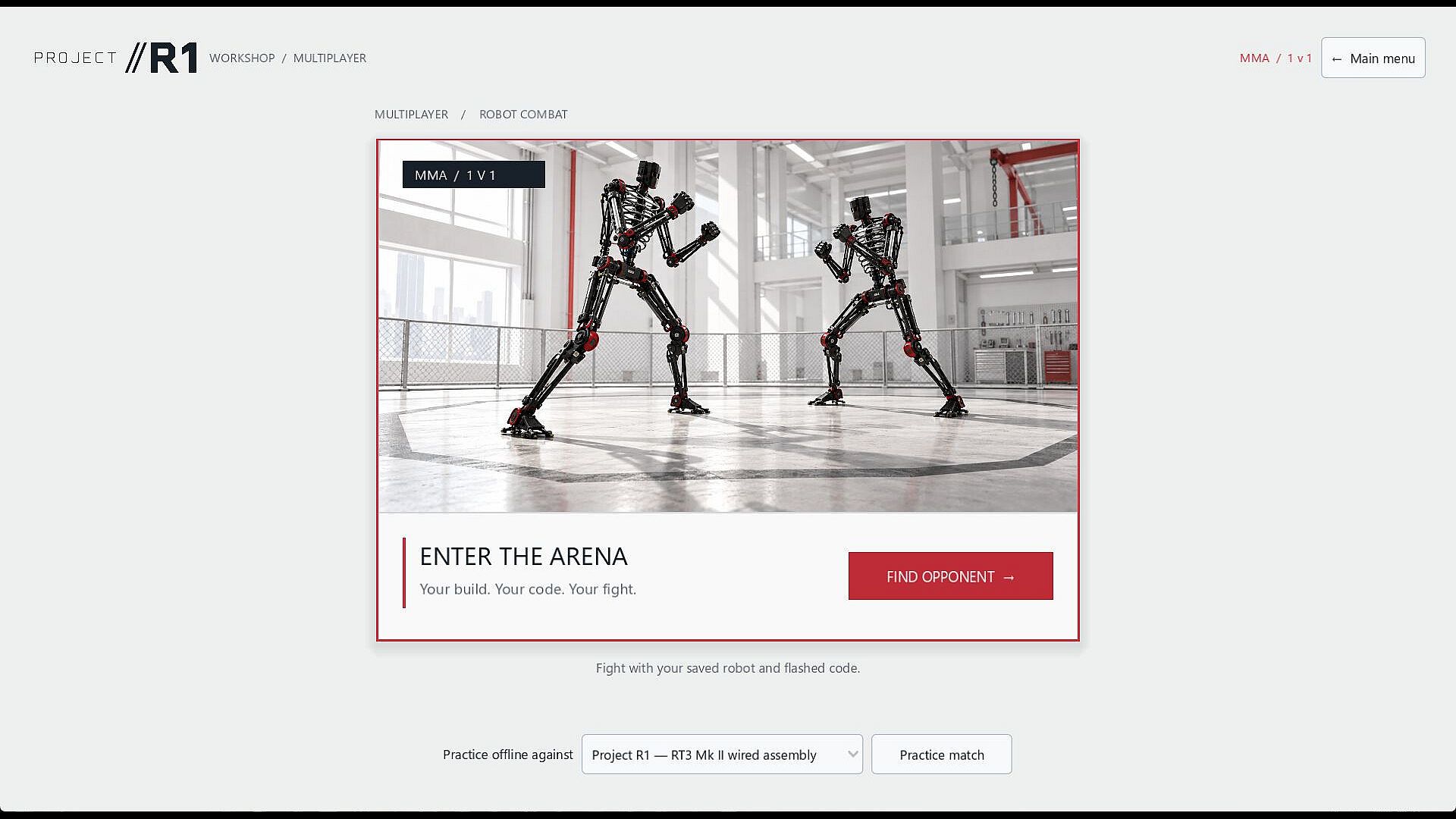
PROJECT R1 operates as a single-player simulation without separate named game modes. All activity occurs within one continuous workflow that combines design, assembly, coding, and simulation testing. Players manage their own projects across sessions, returning to earlier stages to modify parts, connections, or firmware as needed. The structure supports iterative development of individual mechanisms rather than competitive or narrative branches.
Key Mechanics and Features
Mechanical interfaces and wiring follow supported rules that determine how parts interact once assembled. The C++ programming environment focuses on firmware that handles inputs and outputs tied to the physical model. Physics testing reveals how designs behave under simulation, including contact feedback and motion responses. Saving and reloading projects encourages repeated cycles of refinement without starting from scratch each time.
Stock components supplement printed parts, allowing mixed assemblies that combine ready-made elements with custom designs. The overall system rewards attention to detail in dimensions, connections, and code logic because small changes can alter how a mechanism performs during tests.
Is It Worth Playing?
PROJECT R1 targets players interested in hands-on engineering simulation and robotics concepts. The single-player format and focus on CAD, assembly, C++ firmware, and physics testing create a self-directed experience suited to those who enjoy iterative problem solving. Because the game remains listed as coming soon with no user reviews available, reception cannot yet be assessed from player feedback. Those drawn to technical design loops and virtual prototyping may find the workflow engaging once released, while players seeking structured levels or multiplayer elements will encounter a more open-ended toolset instead.












