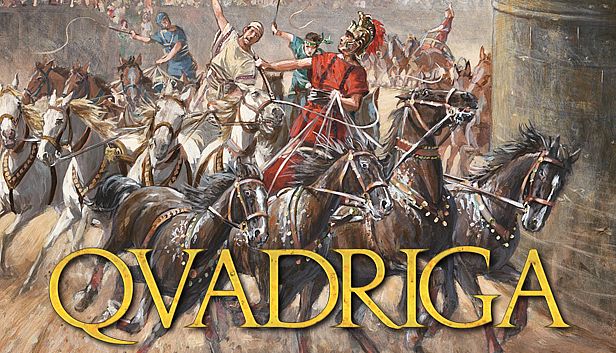











Qvadriga is a strategy and simulation game centered on chariot racing in ancient Roman settings. Players manage a four-horse team, handle upgrades, and compete in races across historic tracks while navigating risks from accidents and rival interference.
Gameplay
The core loop combines team management between events with tactical decisions during races. Between competitions, resources go toward improving drivers through skill and constitution gains, refining chariot quality and size, or enhancing horse speed and endurance. Combinations matter because each element brings distinct strengths that must align with race conditions.
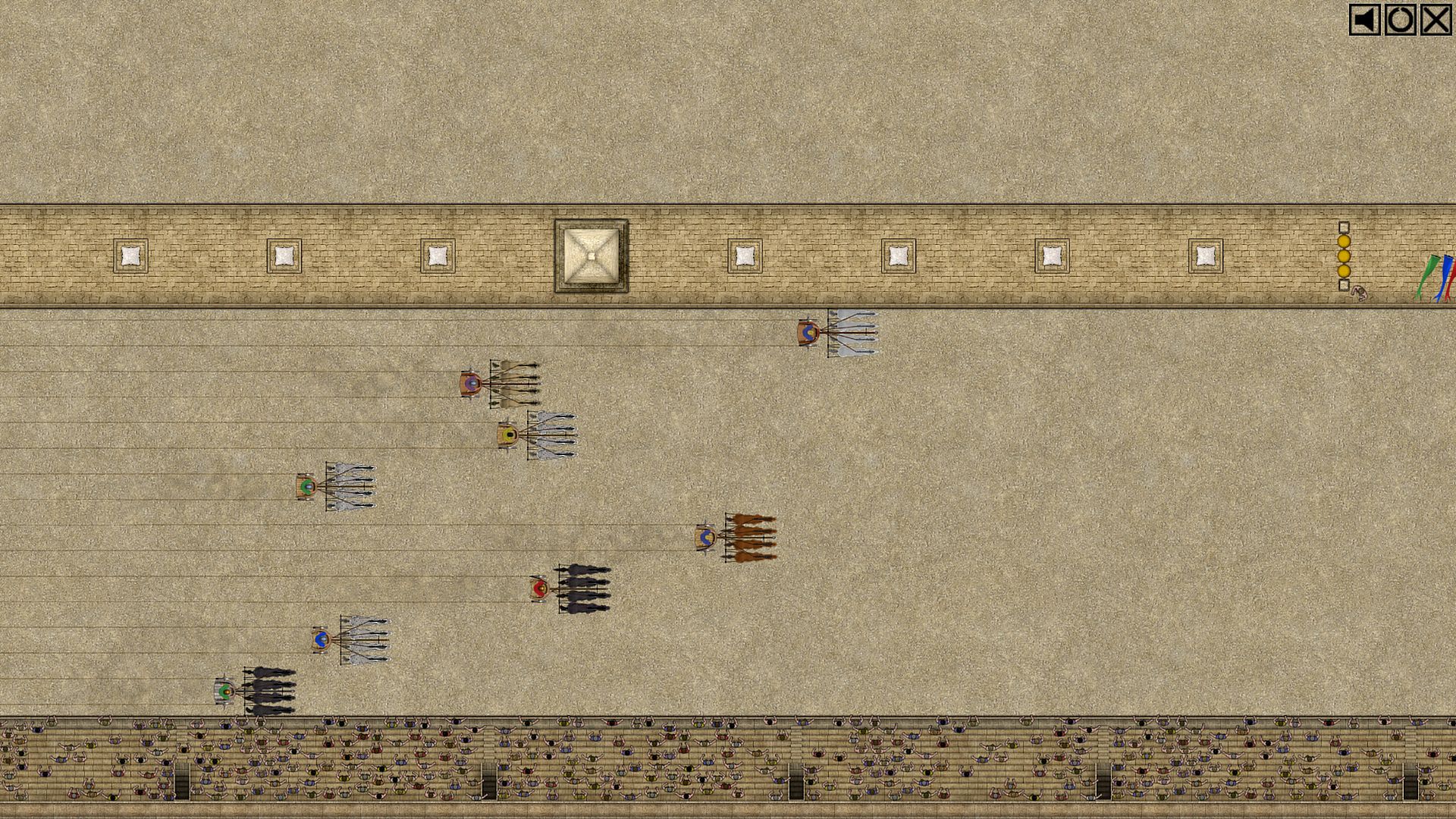
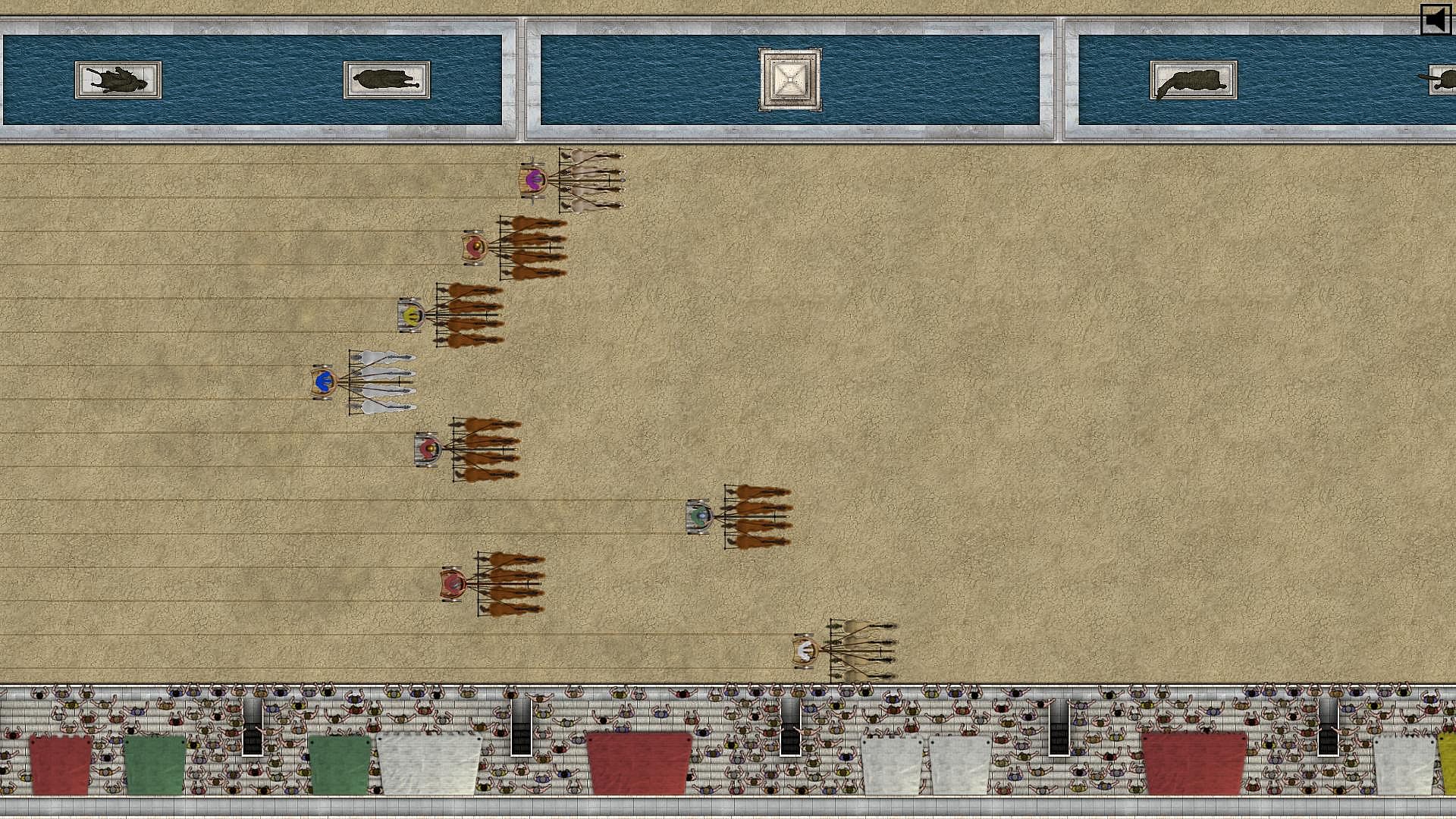
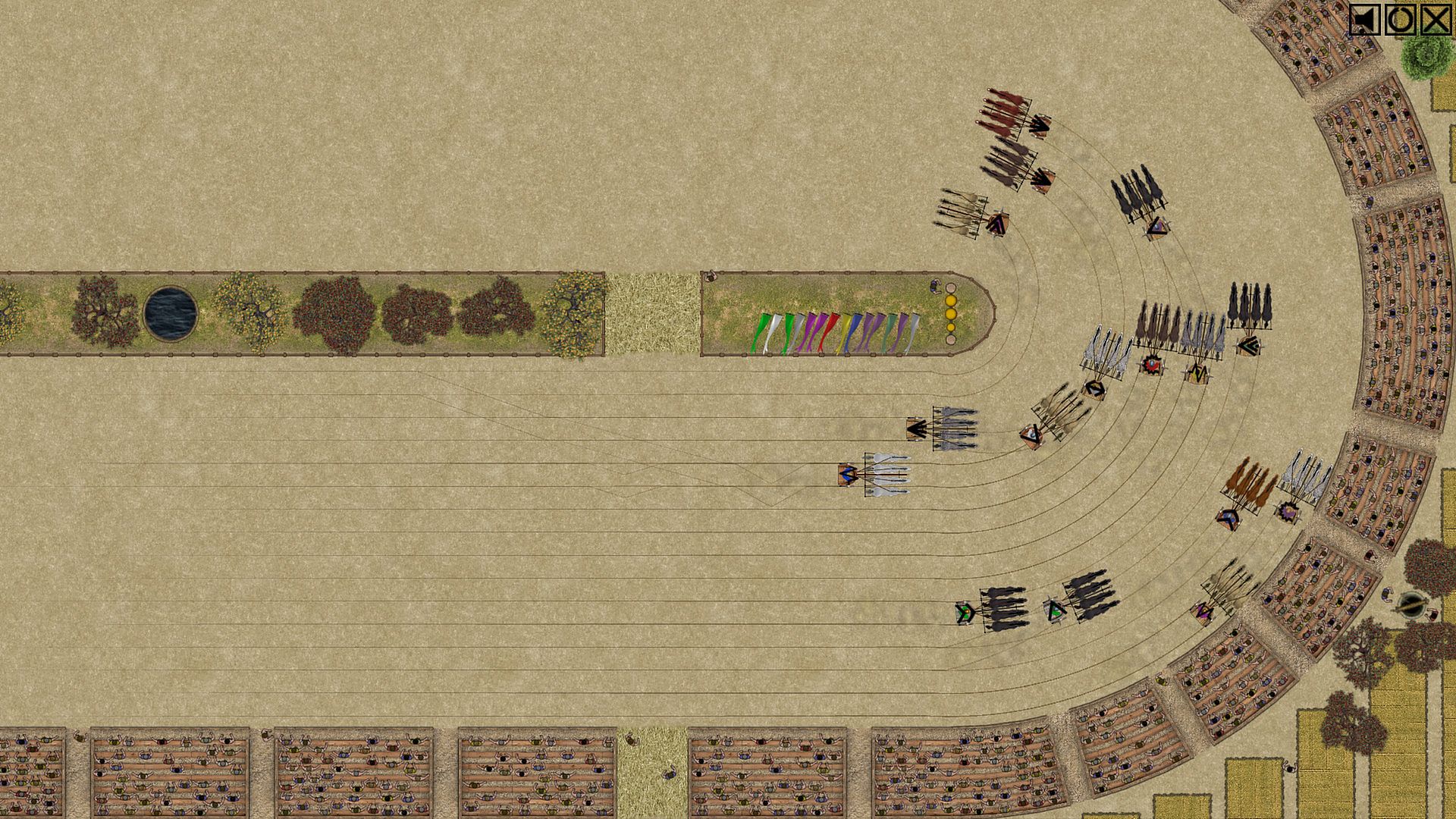
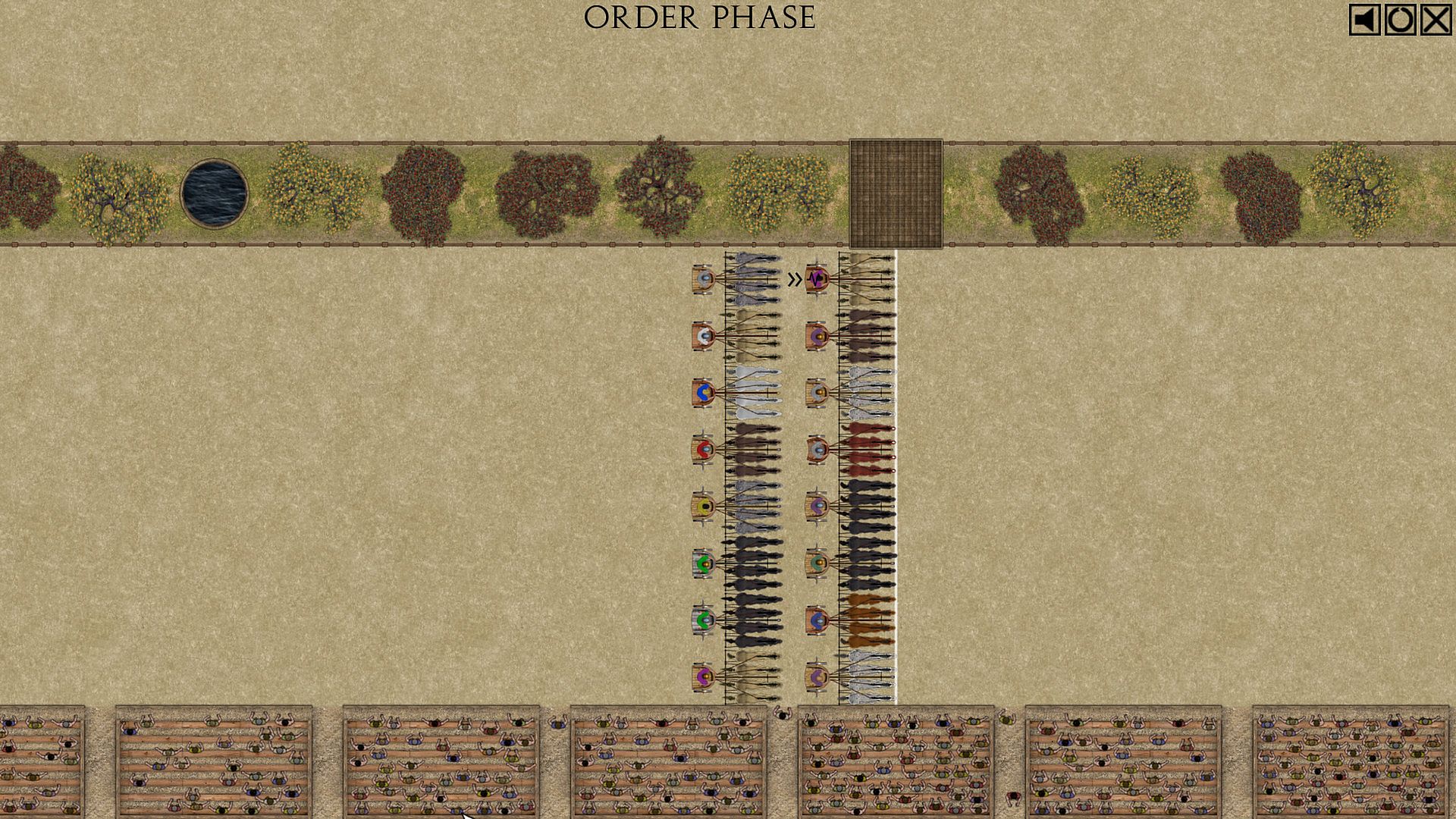
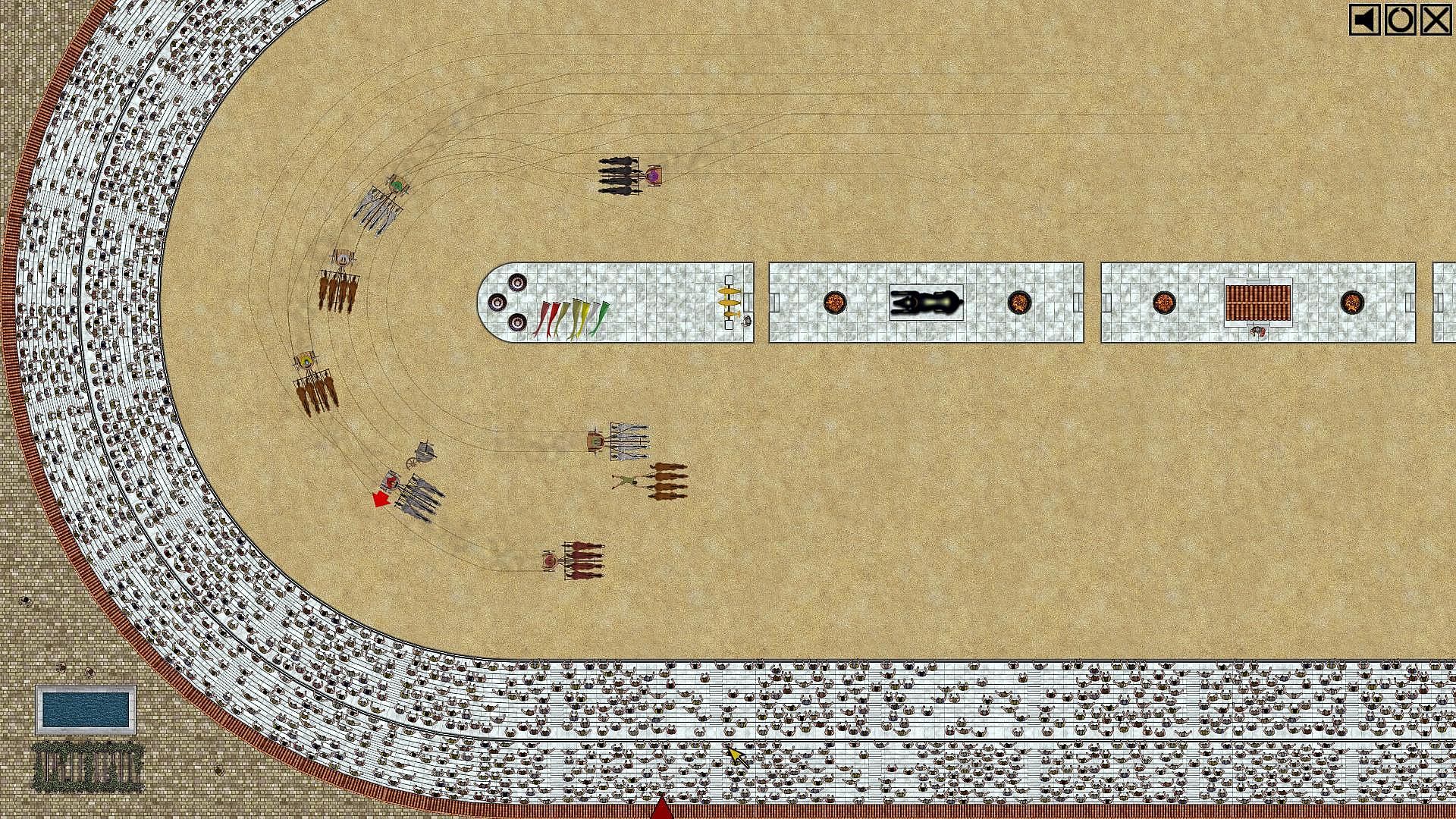
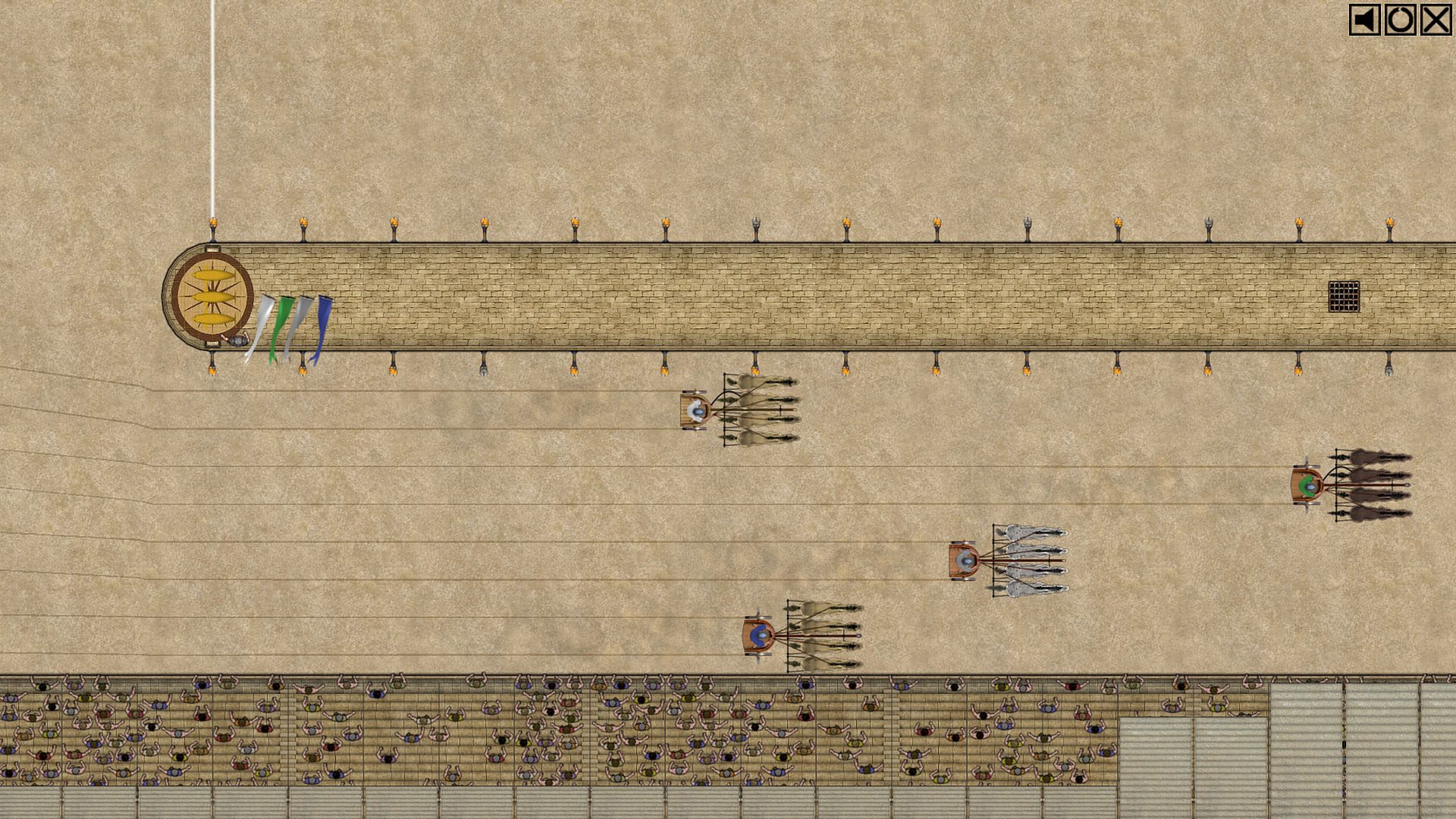
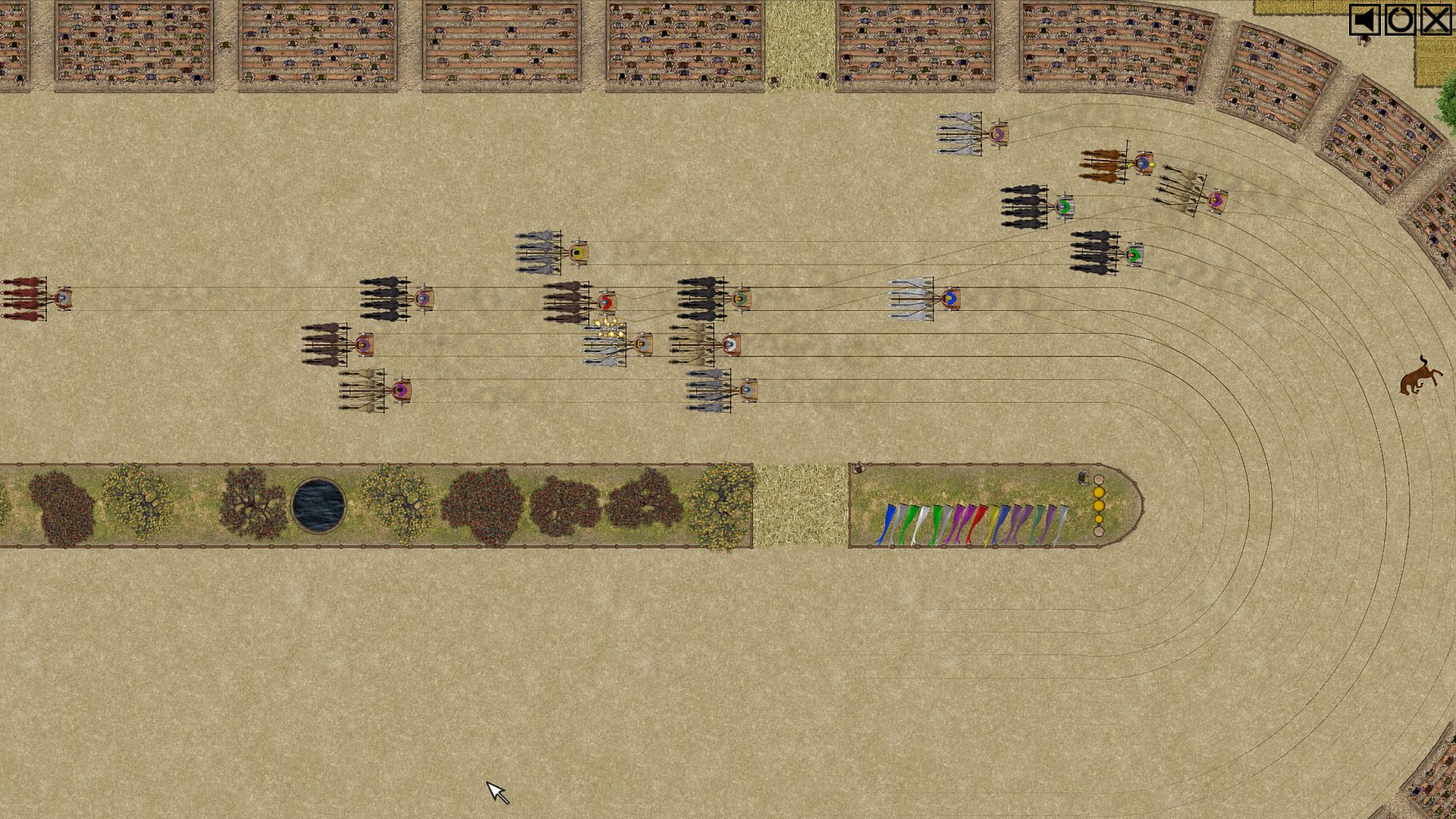
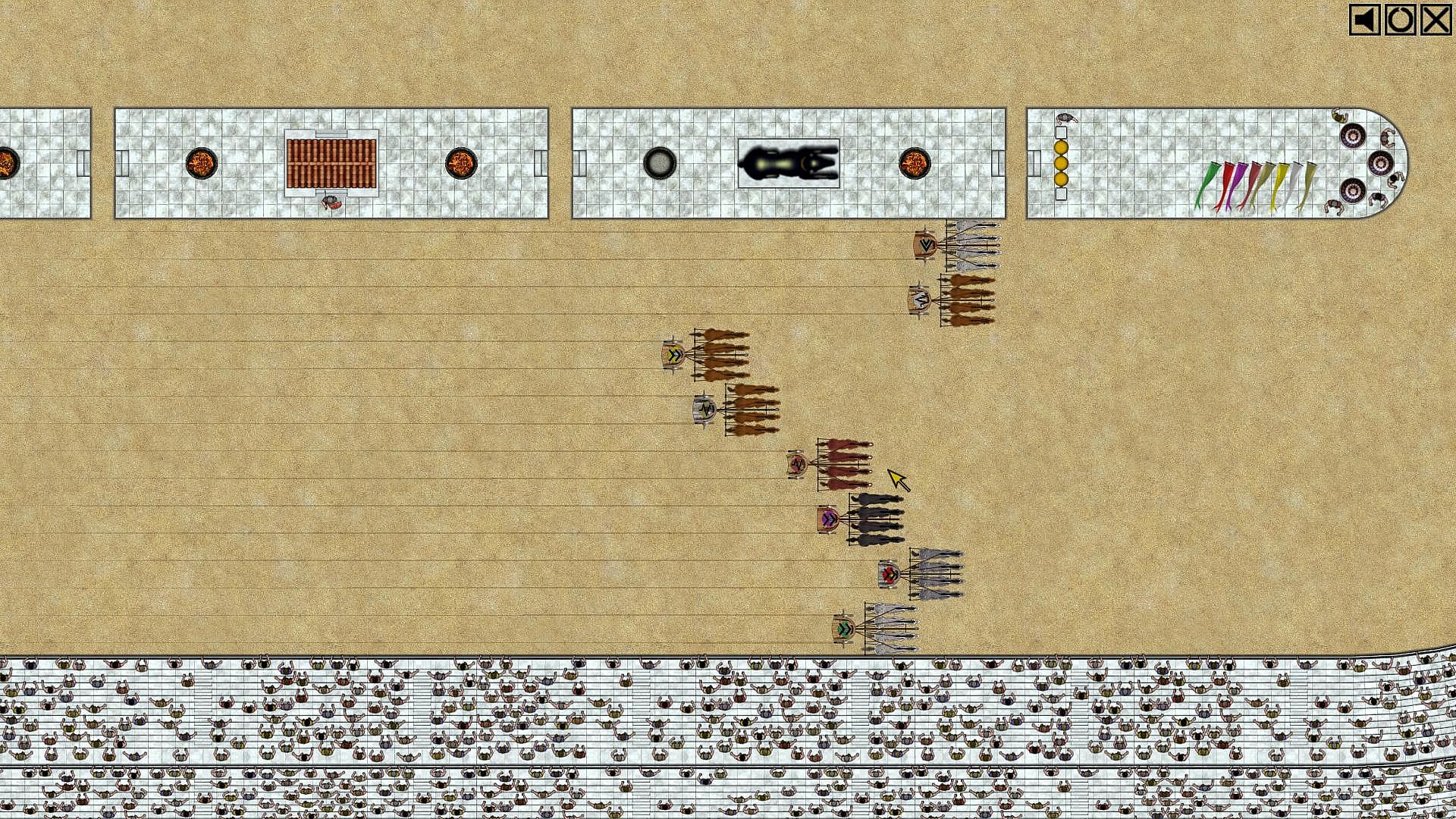
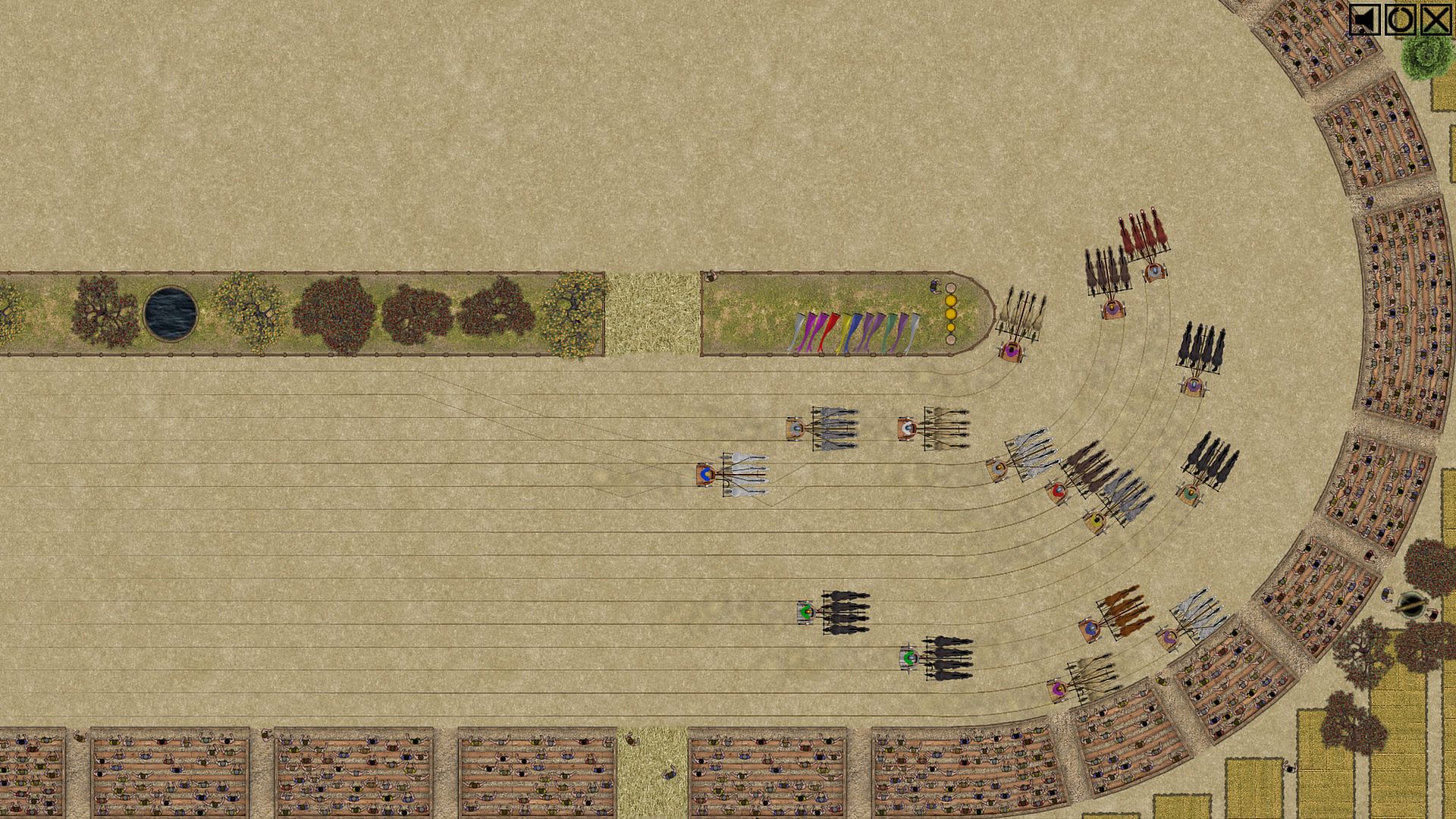
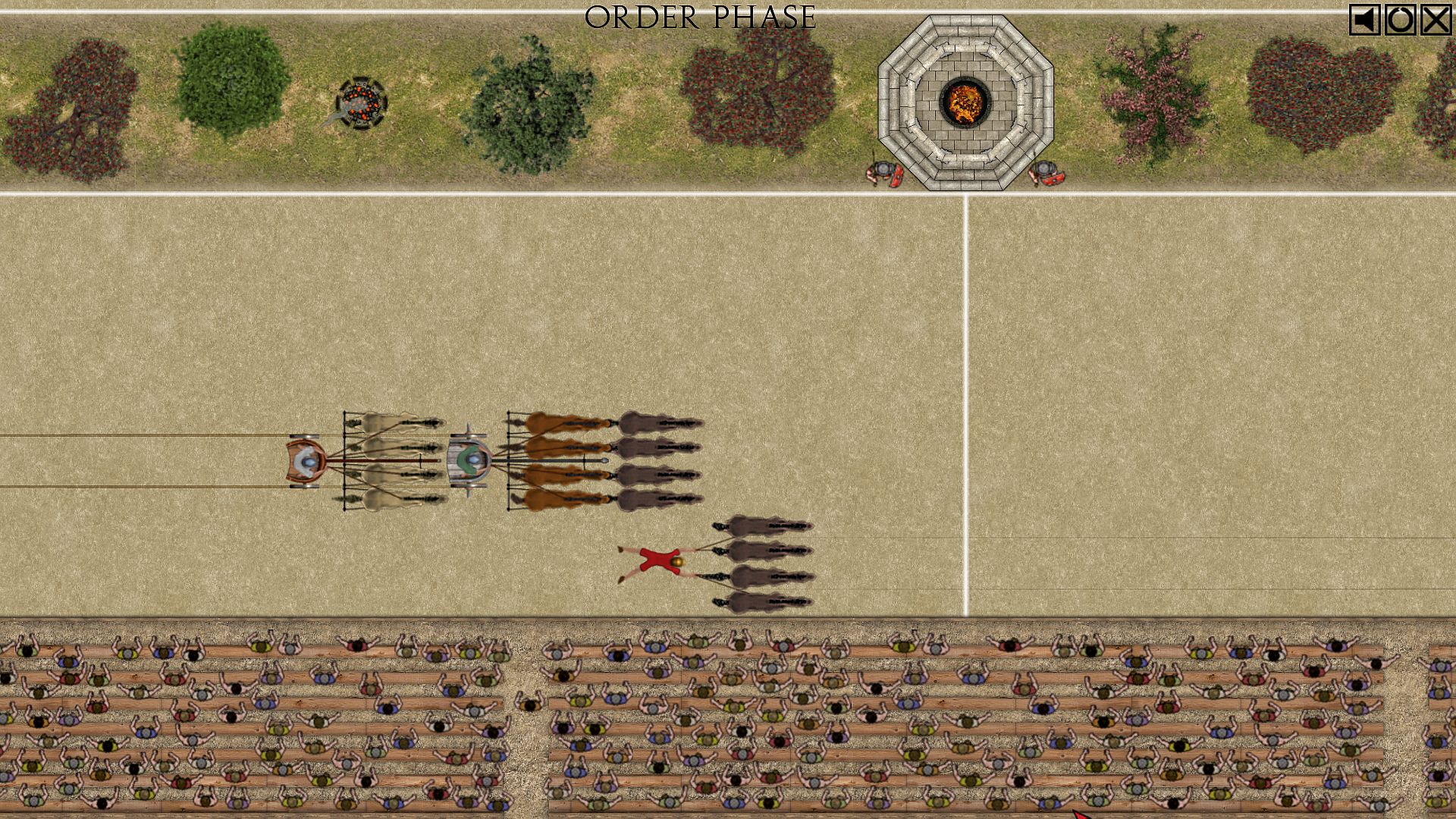
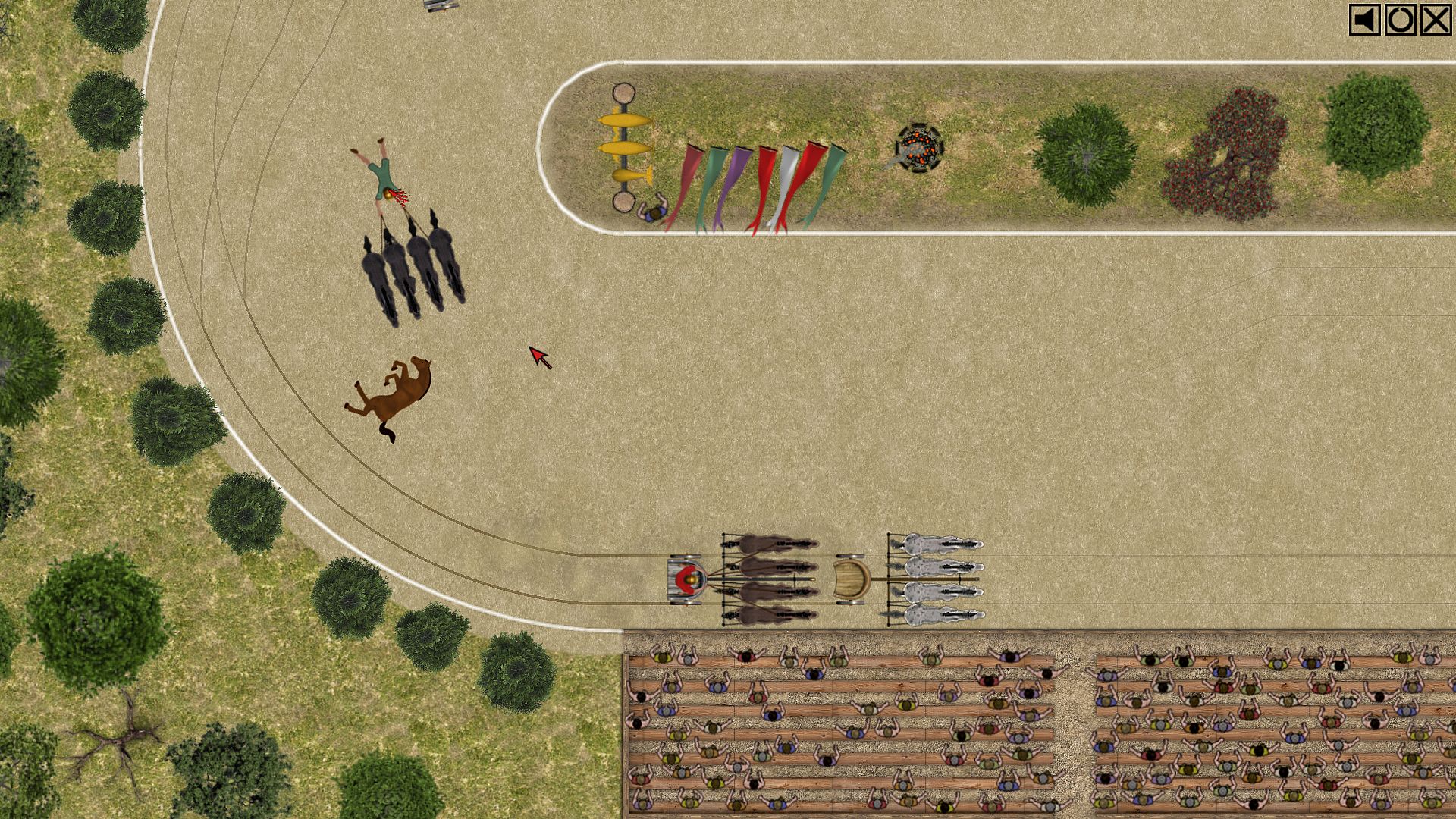
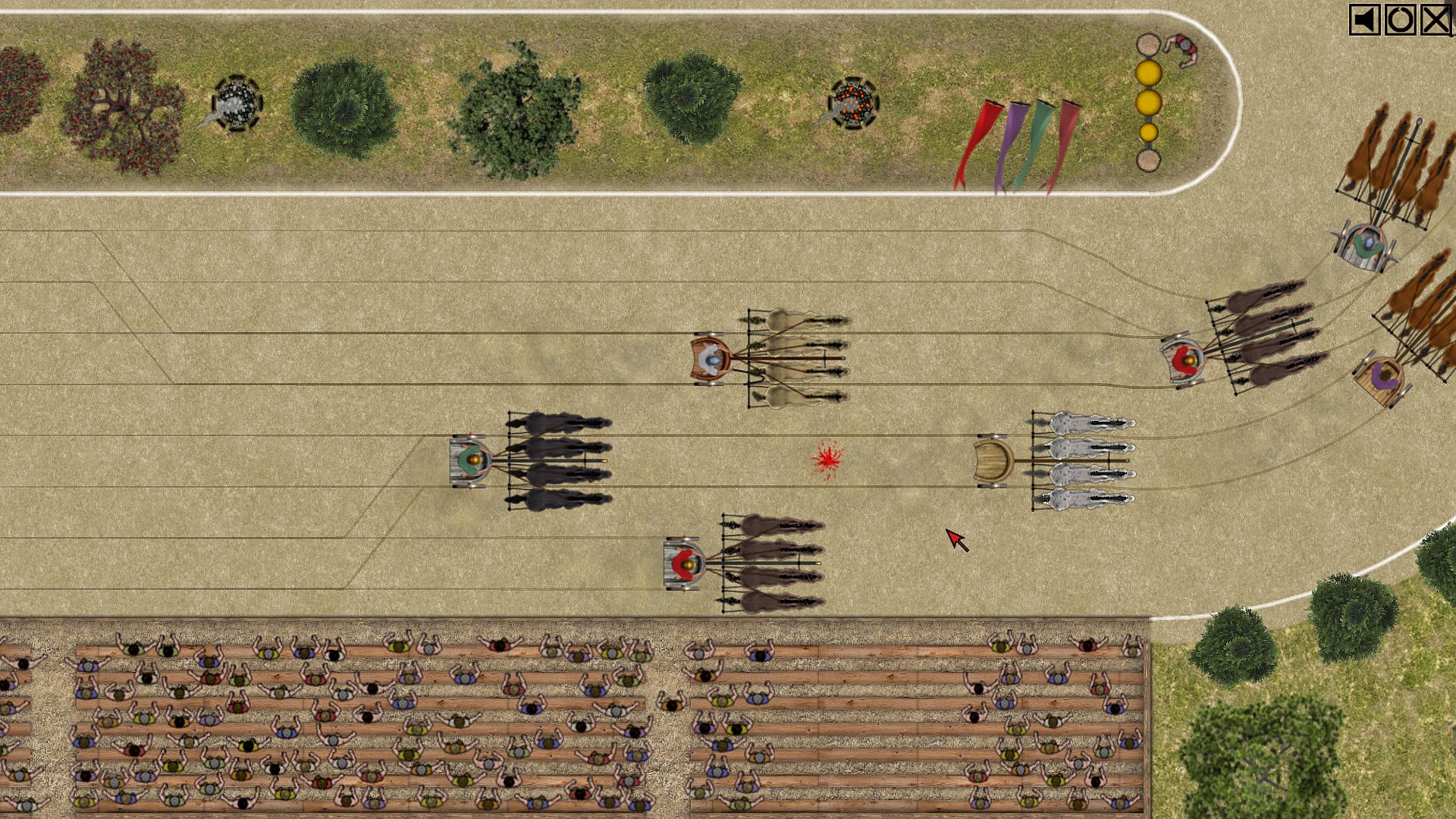
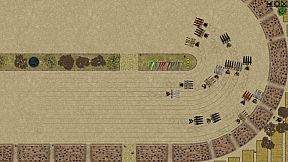
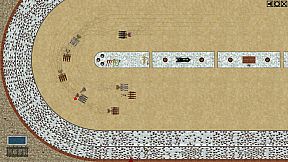
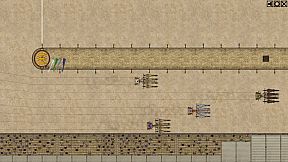
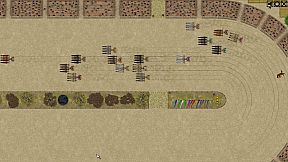
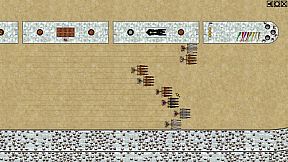
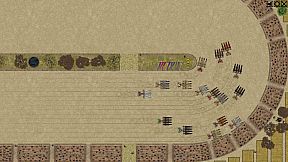
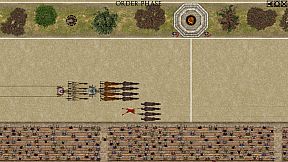
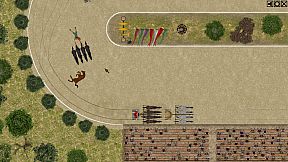
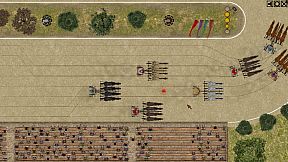
Races unfold from a top-down view over three laps on modeled circuses and hippodromes. At each decision point, commands include shaking reins, whipping horses, selecting lanes, holding position through curves, avoiding attacks, blocking paths, or striking opponents. Speed management proves critical on turns, as excessive pace risks flips that drag drivers along the ground. Fallen horses and wreckage create ongoing obstacles. The AI adapts to its position and exploits advantages, creating varied encounters depending on the number of competitors, which ranges from four teams to larger fields of sixteen.
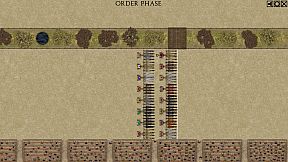
Two presentation styles support the same underlying systems. Static mode pauses for deliberate orders, while dynamic mode runs continuously with timed inputs. Both reward planning around track layout, rival positioning, and equipment limits.
Game Modes
Single races allow immediate entry into any unlocked circus with chosen team configurations. The primary experience centers on a campaign that spans seven regions, beginning in any of seven available starting locations. Progress builds fame to unlock higher-tier venues among the total of forty-three circuses, culminating in Rome's Circus Maximus. Each city provides unique bonuses that influence race variables, and random events can shift conditions mid-campaign.
Team operations run throughout the campaign. Purchases, sales, healing, and repairs keep the roster competitive. Access to better components opens only after advancing through provincial tracks. Faction choice at the start grants specialized upgrade paths across the six available groups, shaping long-term strategy without altering core racing rules.
Campaign Progression and Team Building
Campaigns emphasize steady advancement through fame and earnings. Starting in remote or exotic provinces offers lower competition but limited rewards, while later regions demand stronger teams. Race outcomes determine both currency for upgrades and access to new facilities. Hiring support staff such as medics, craftsmen, and veterinarians further refines performance by addressing injuries or equipment wear.
Variable track features add depth. Greek-style ovals differ from standard Roman layouts in length and shape, forcing adjustments to lane choice and speed. Rival aggression increases in higher categories, where blocking and direct attacks become more common. Success requires balancing aggression with preservation, since driver losses force reliance on replacements.
Is It Worth Playing?
Qvadriga suits players who enjoy tactical management layered over racing mechanics. The combination of upgrade decisions and in-race commands creates repeated engagement across the campaign structure. Steam user reviews rate the title Very Positive, with the majority highlighting the depth of its systems and the satisfaction of successful team development.
Those seeking fast arcade action or multiplayer competition will find less appeal, as the focus remains on single-player progression and deliberate choices. The game has seen no major updates or seasonal content since its original release, so expectations should center on its established mechanics rather than ongoing additions. For fans of simulation-style racing with strategic elements, the experience holds up through its focused design and historical flavor.