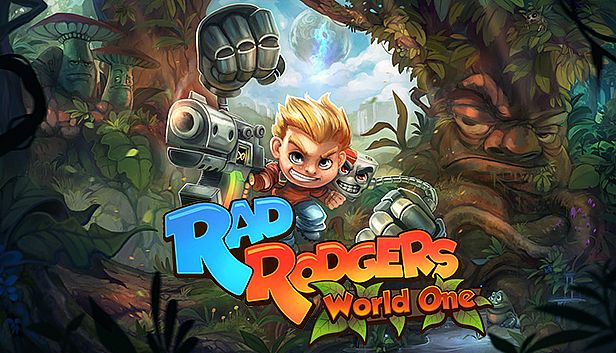












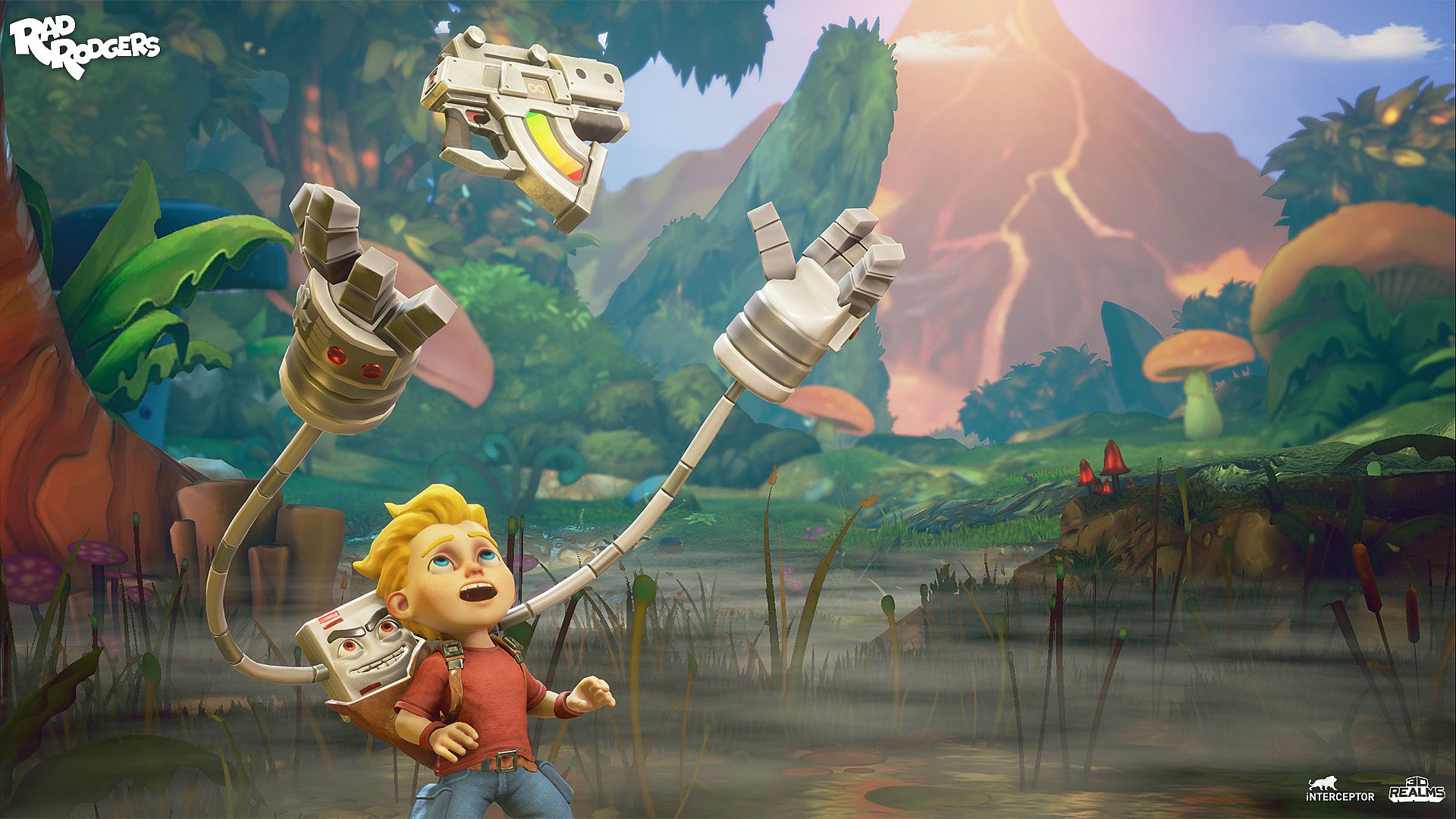
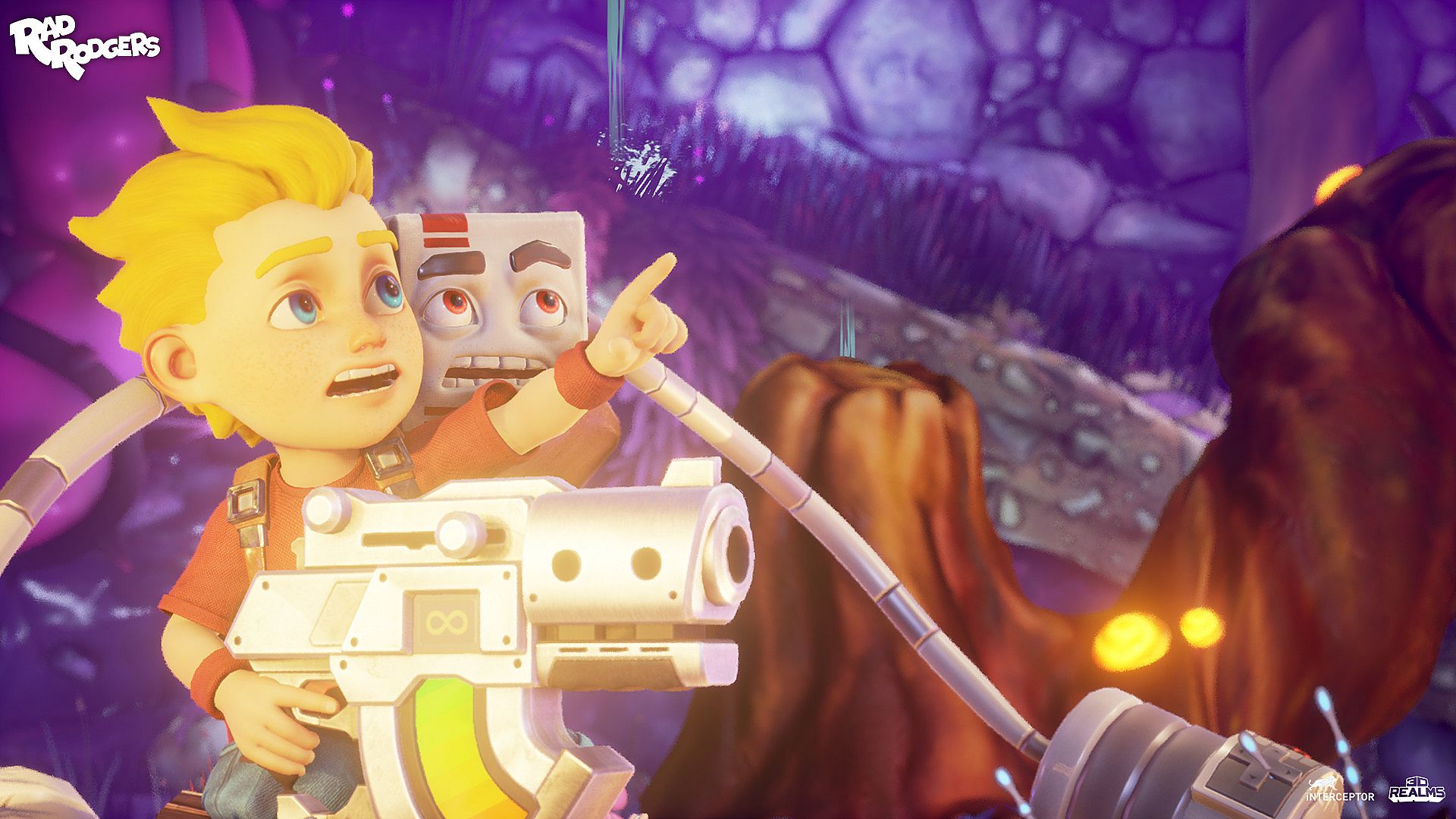
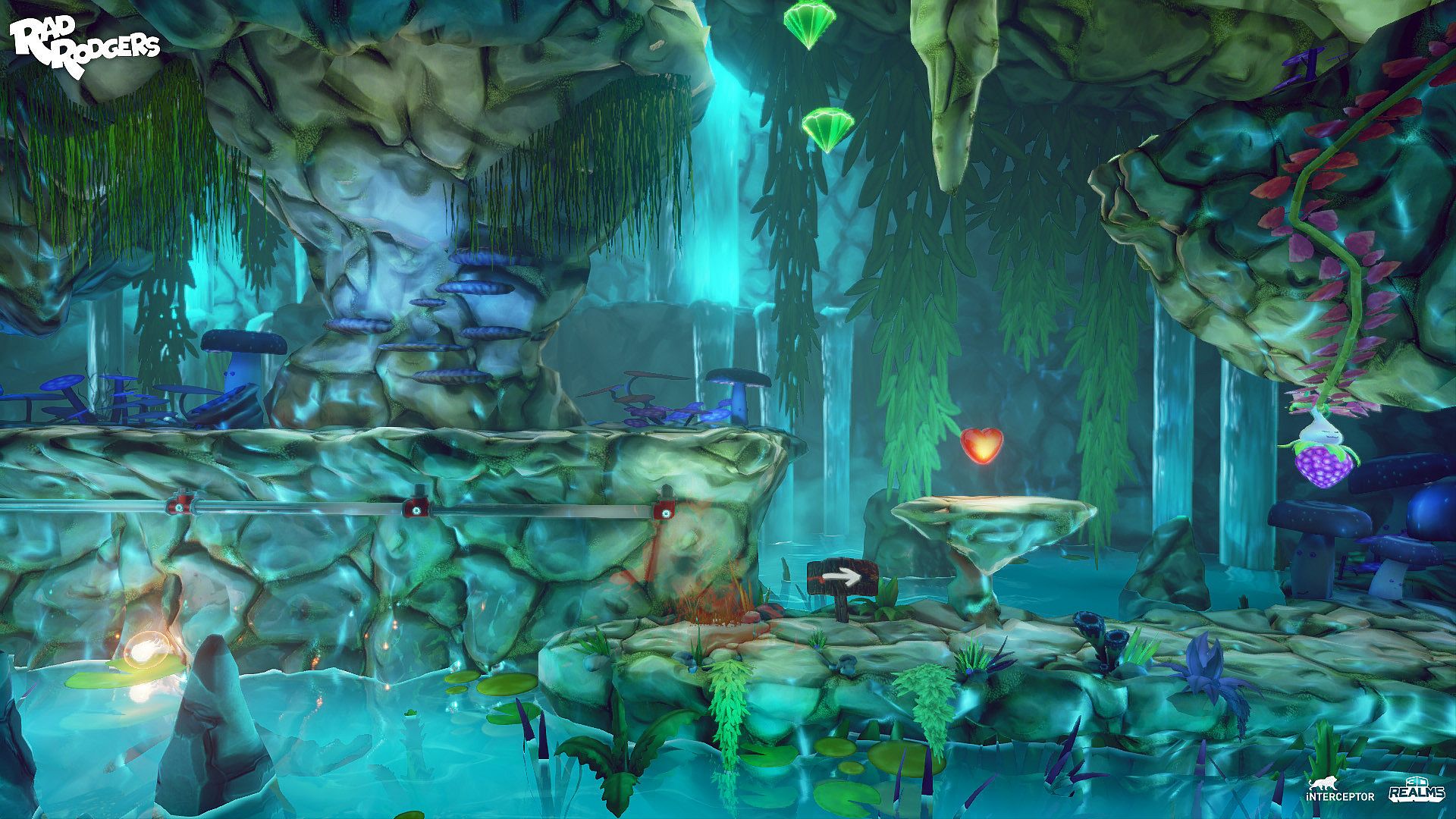
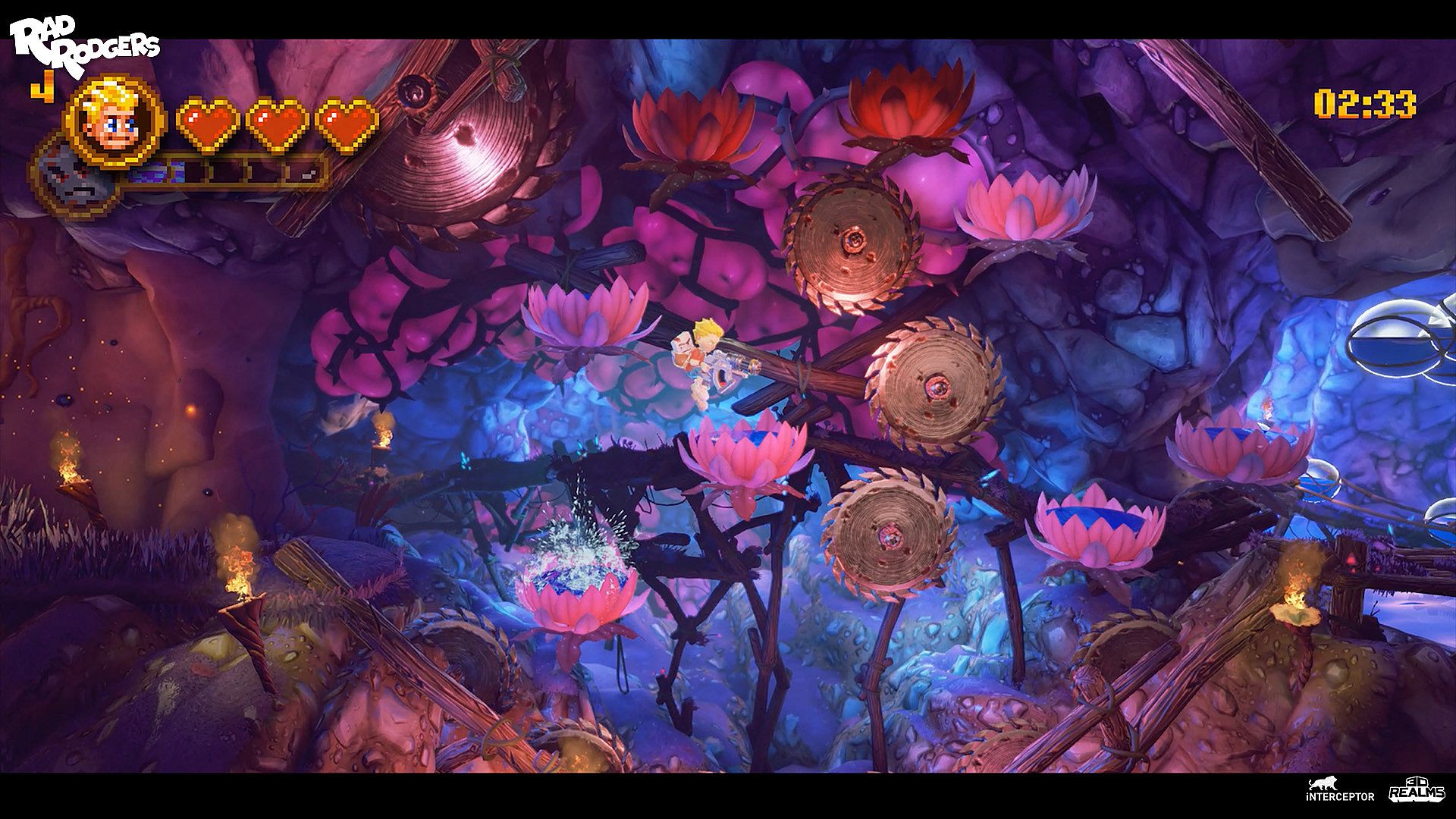
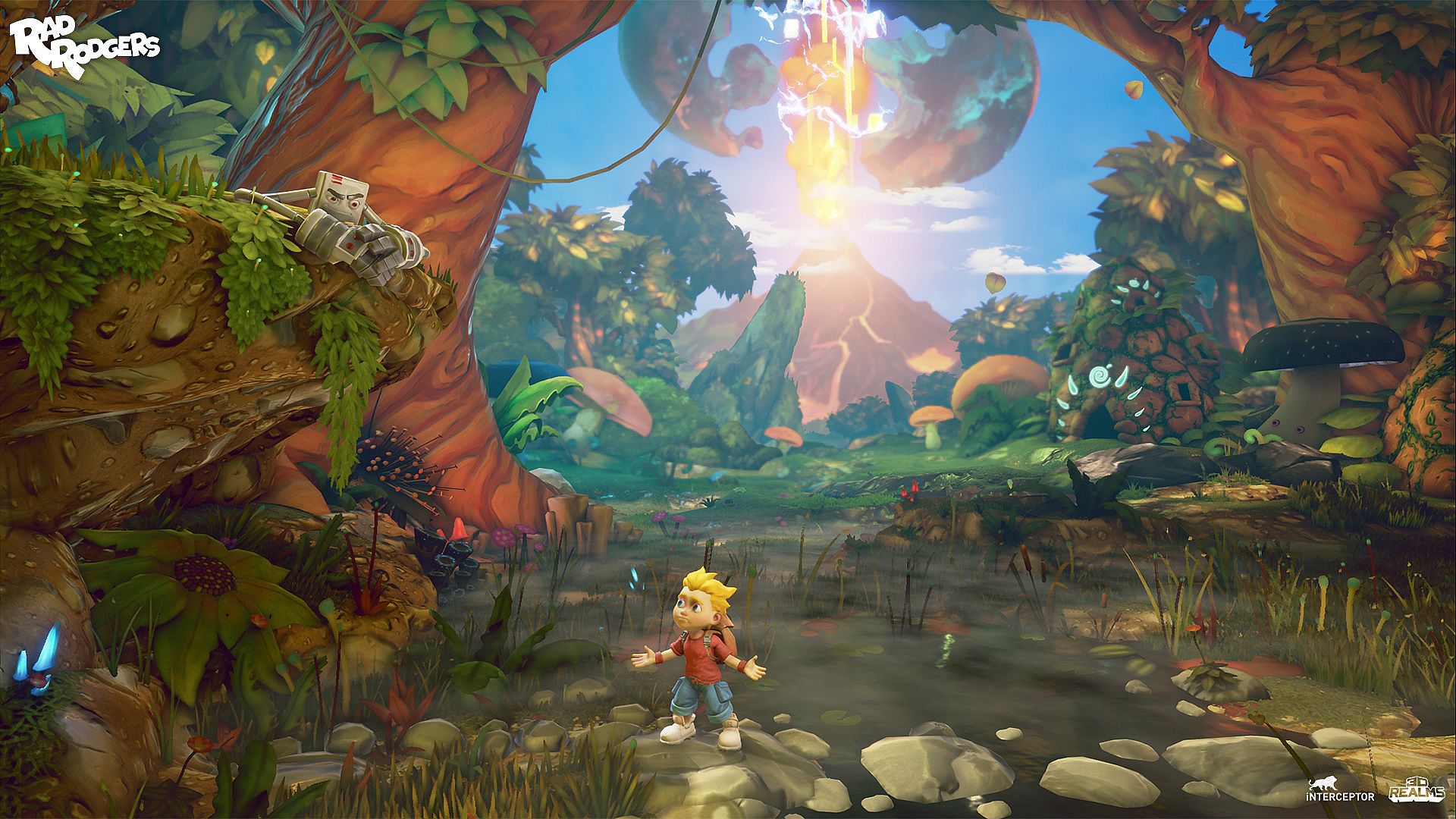
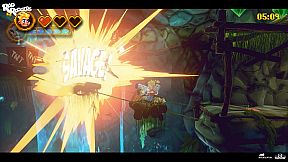
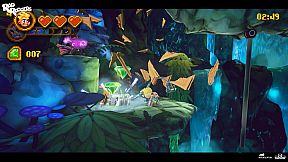
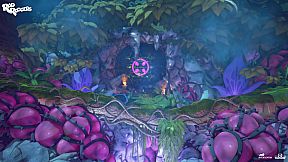
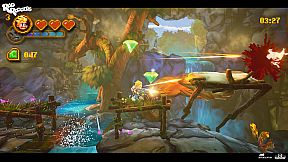
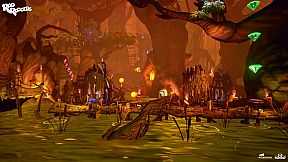
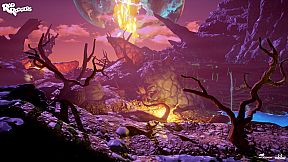
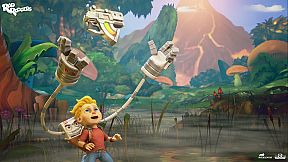
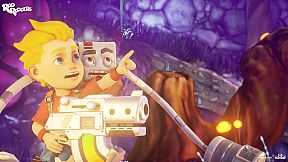
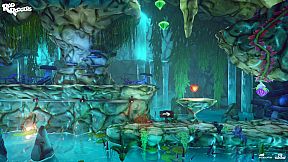
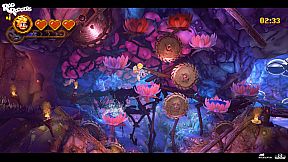
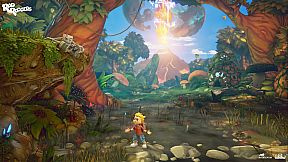
Rad Rodgers: World One is a 2.5D action-adventure platformer that places players in control of a young boy named Rad and his sentient game console Dusty. The game blends classic platforming mechanics with light combat and puzzle elements set inside a retro-inspired video game world. Rad finds himself pulled into his television after a marathon gaming session, where he teams up with Dusty to navigate a corrupted jungle environment across seven stages. The experience emphasizes precise jumping, ledge grabbing, and weapon use while progressing through decaying levels filled with enemies and environmental hazards.
Gameplay
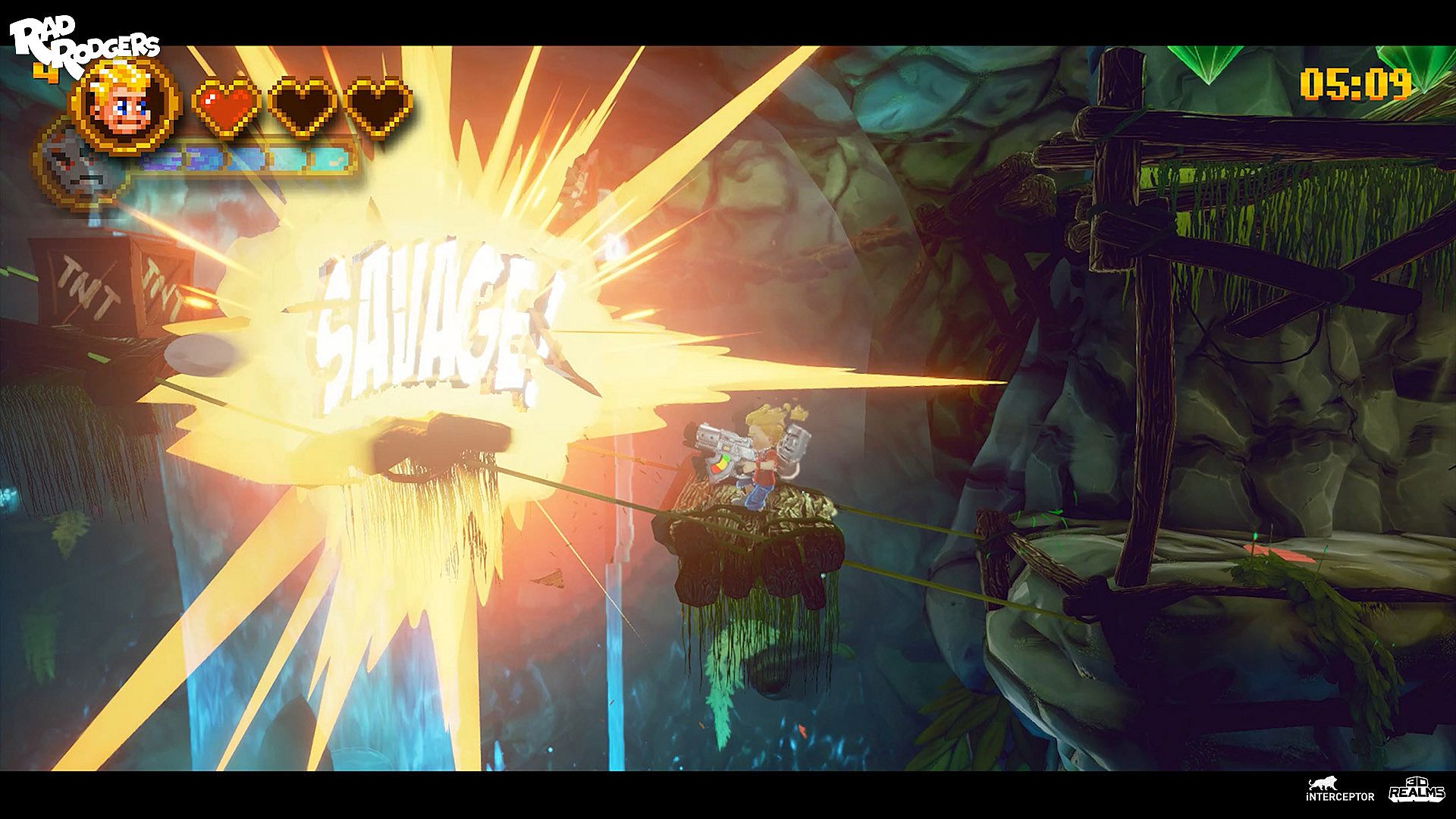
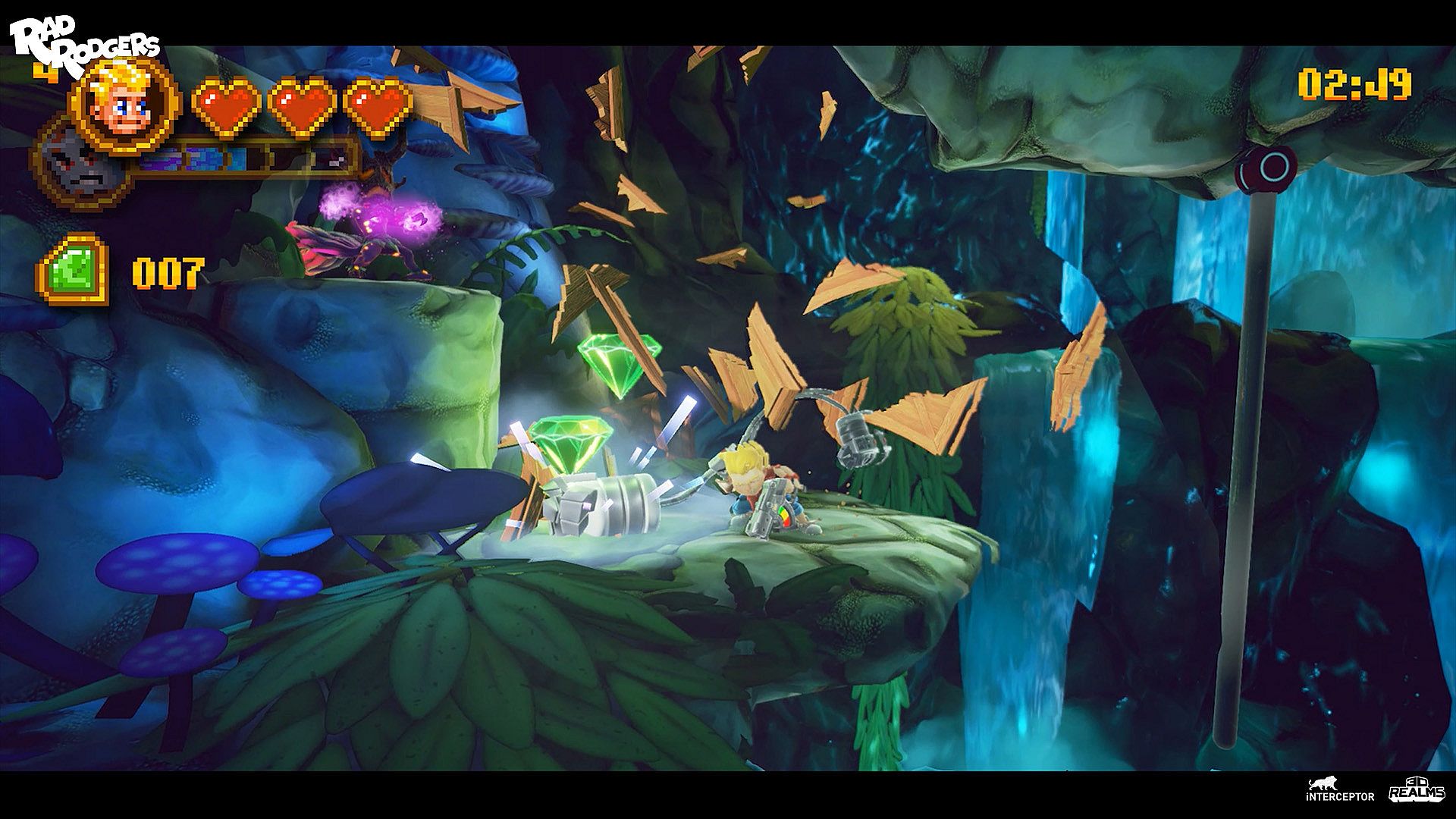
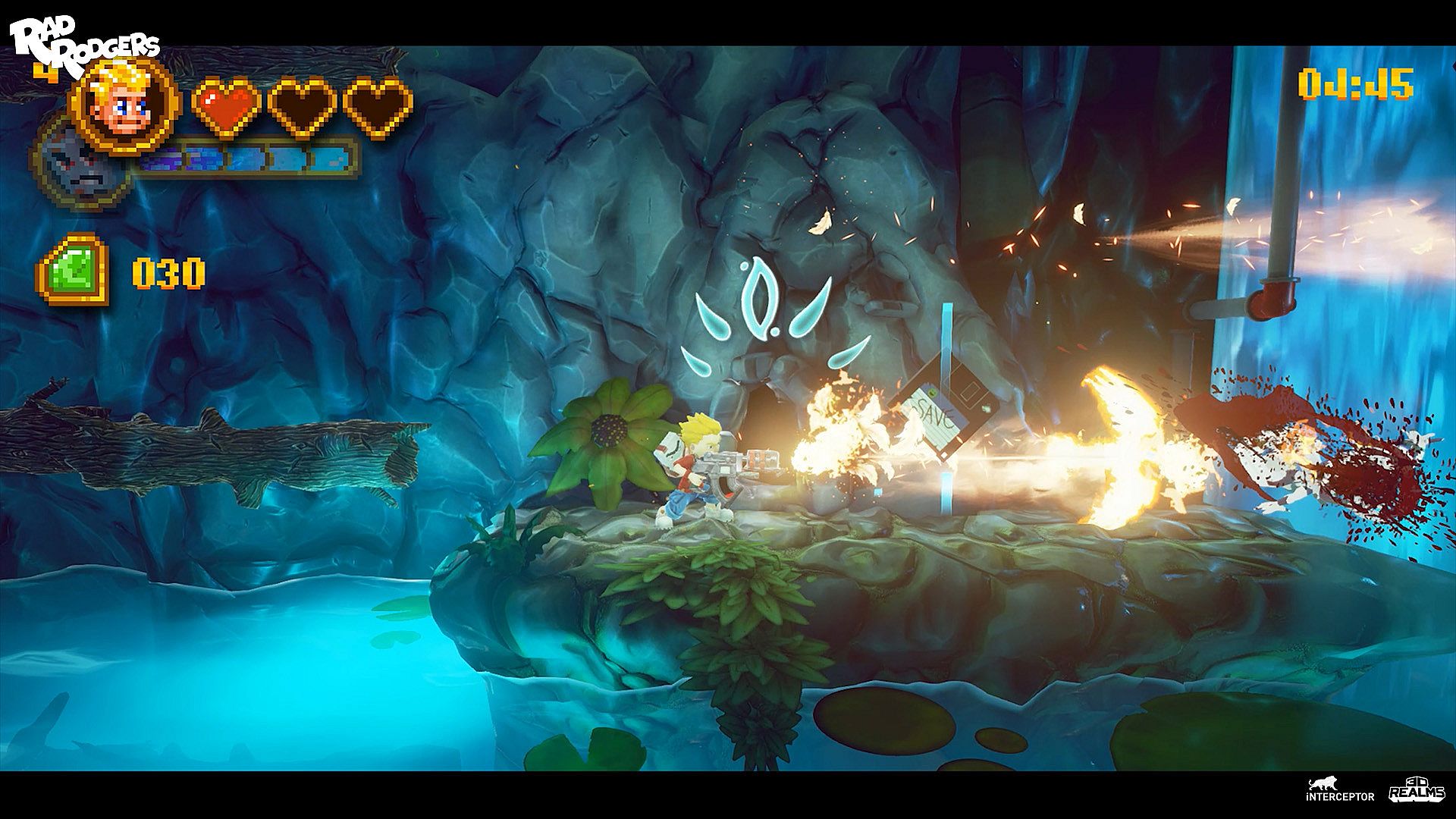
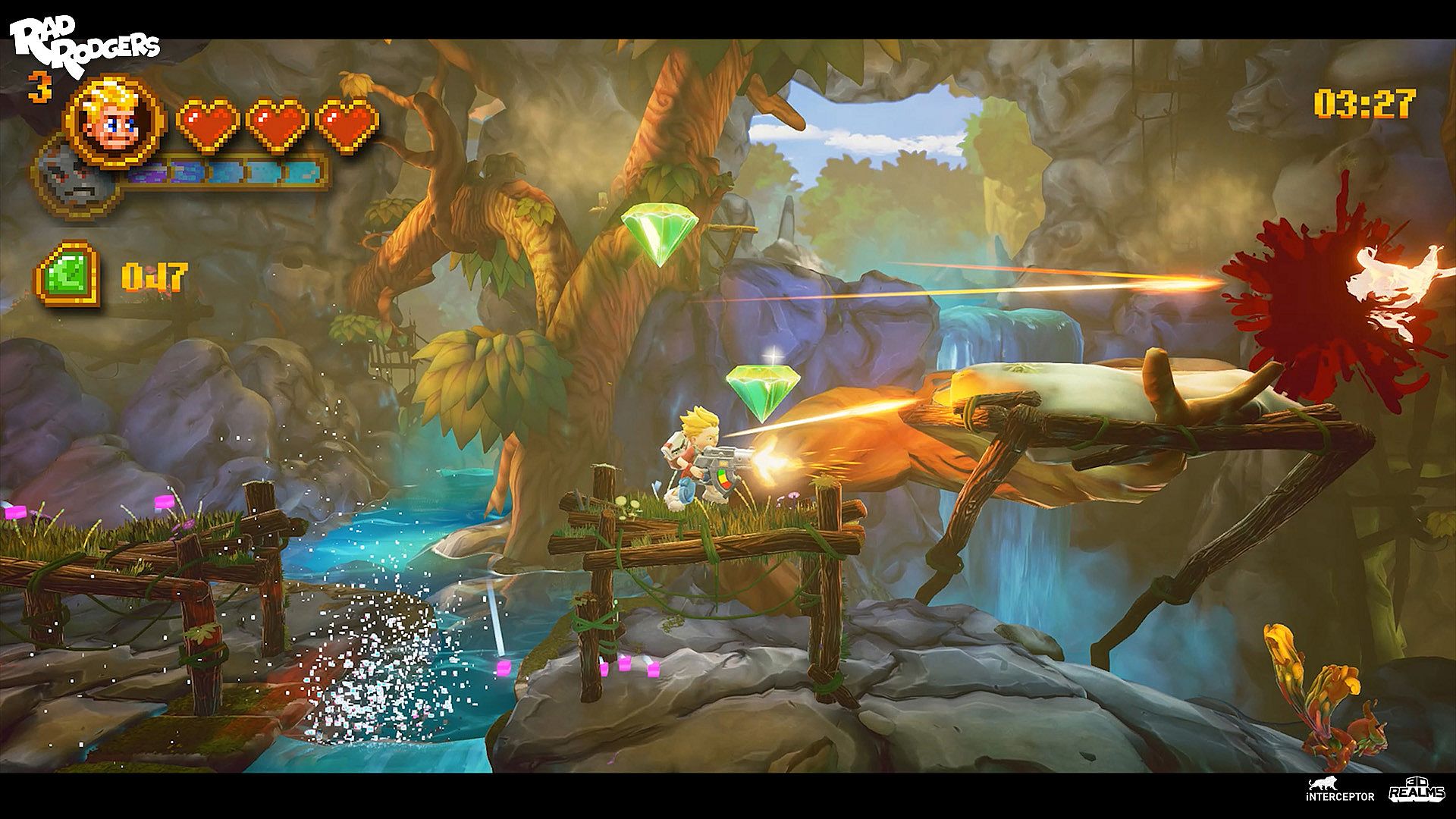
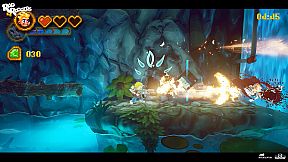
The core loop revolves around traversing side-scrolling stages with tight platforming controls. Rad can run, jump, and grab onto ledges to reach new areas or avoid dangers. Combat integrates directly into movement, as Dusty provides an arsenal of weapons that Rad fires while platforming. The Bolt Blaster serves as the default option with unlimited ammunition for steady enemy clearing. Additional weapons include the Phoenix Cannon, which launches a fiery bird that spreads flames across groups of foes. Five or more weapons appear throughout the first chapter, each offering distinct firing patterns suited to different enemy types and arena layouts.
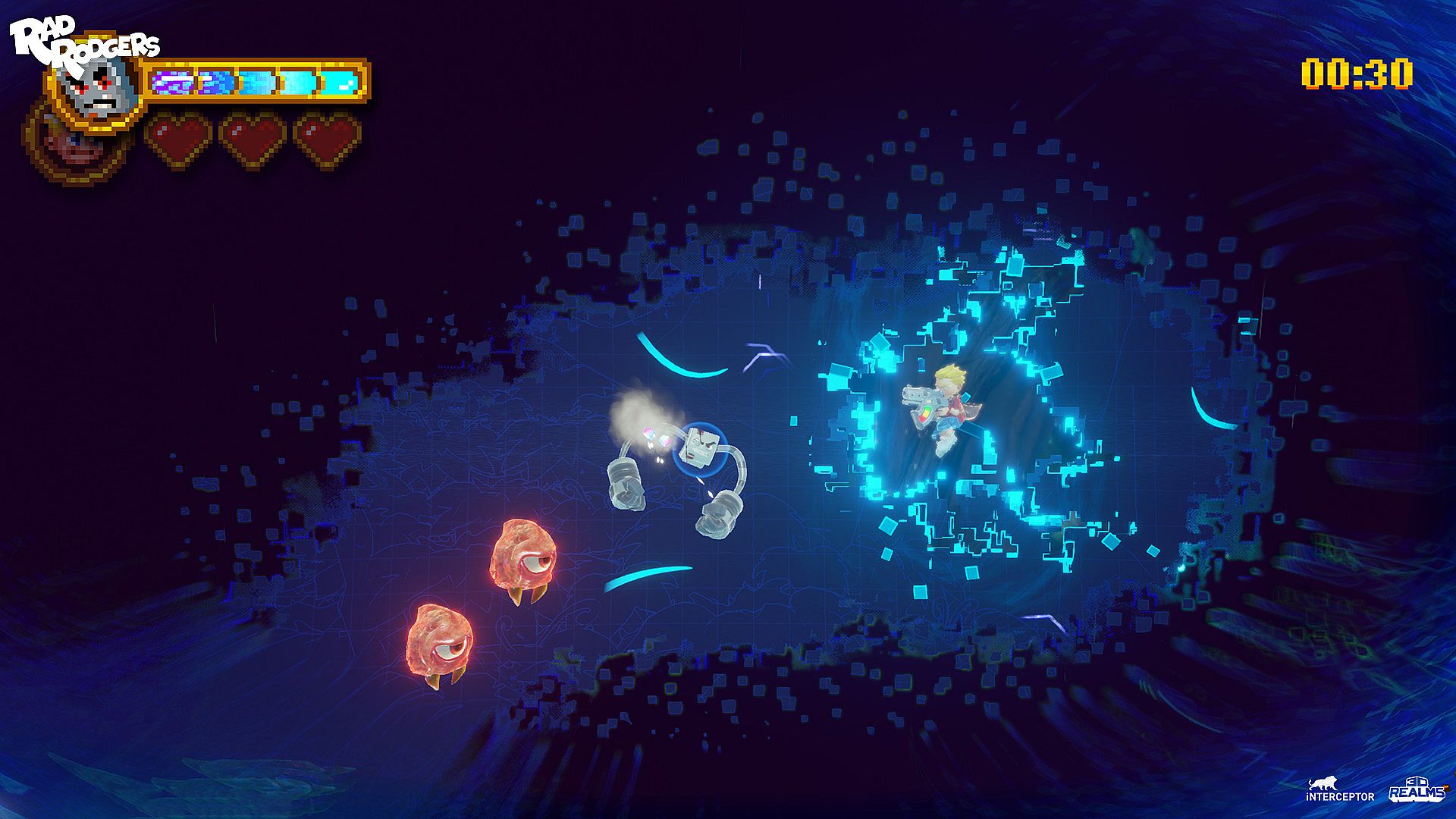
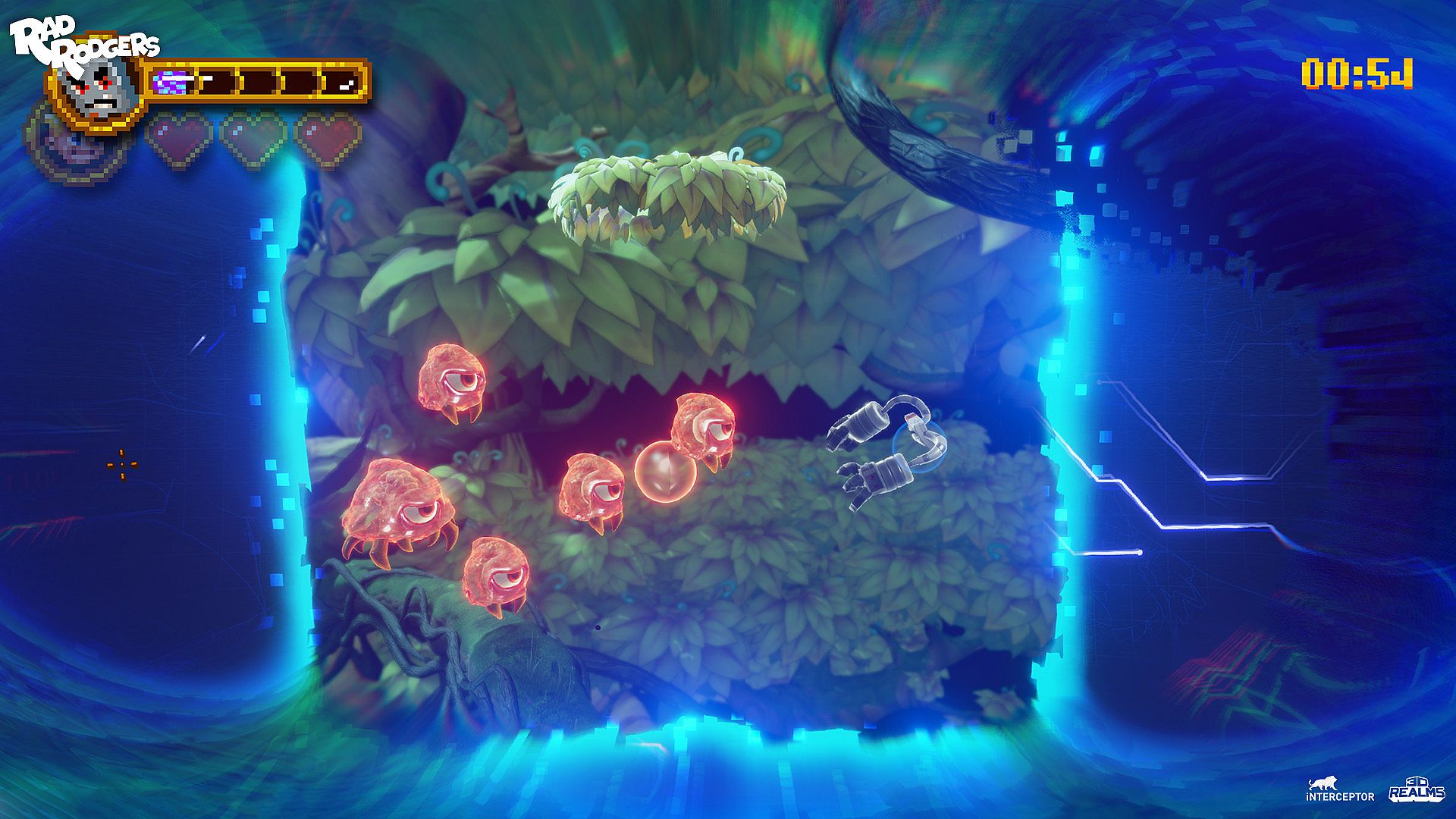
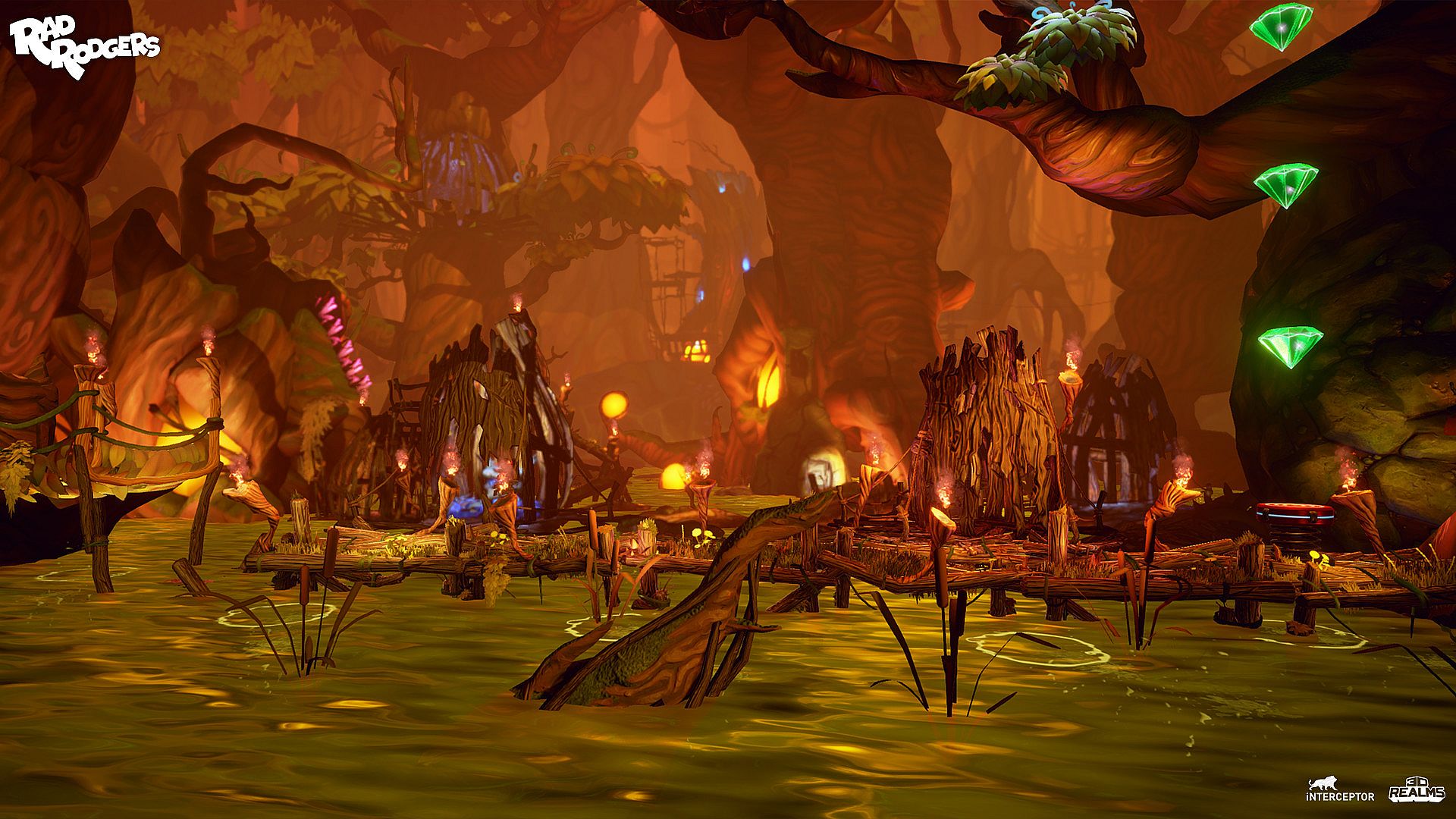
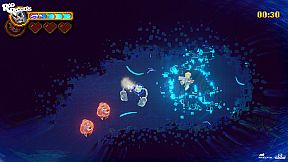
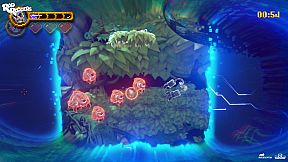
A unique mechanic involves the Pixelverse, a separate electrified dimension that only Dusty can access. When glitches appear in the main game world, Dusty enters this spacetime region to make repairs, allowing the pair to continue forward. This system adds brief shifts in perspective and requires careful timing to maintain momentum. The seven stages unfold in a jungle setting overtaken by corruption, with objectives centered on clearing paths, defeating enemies, and reaching the end of each level while restoring balance to the land.
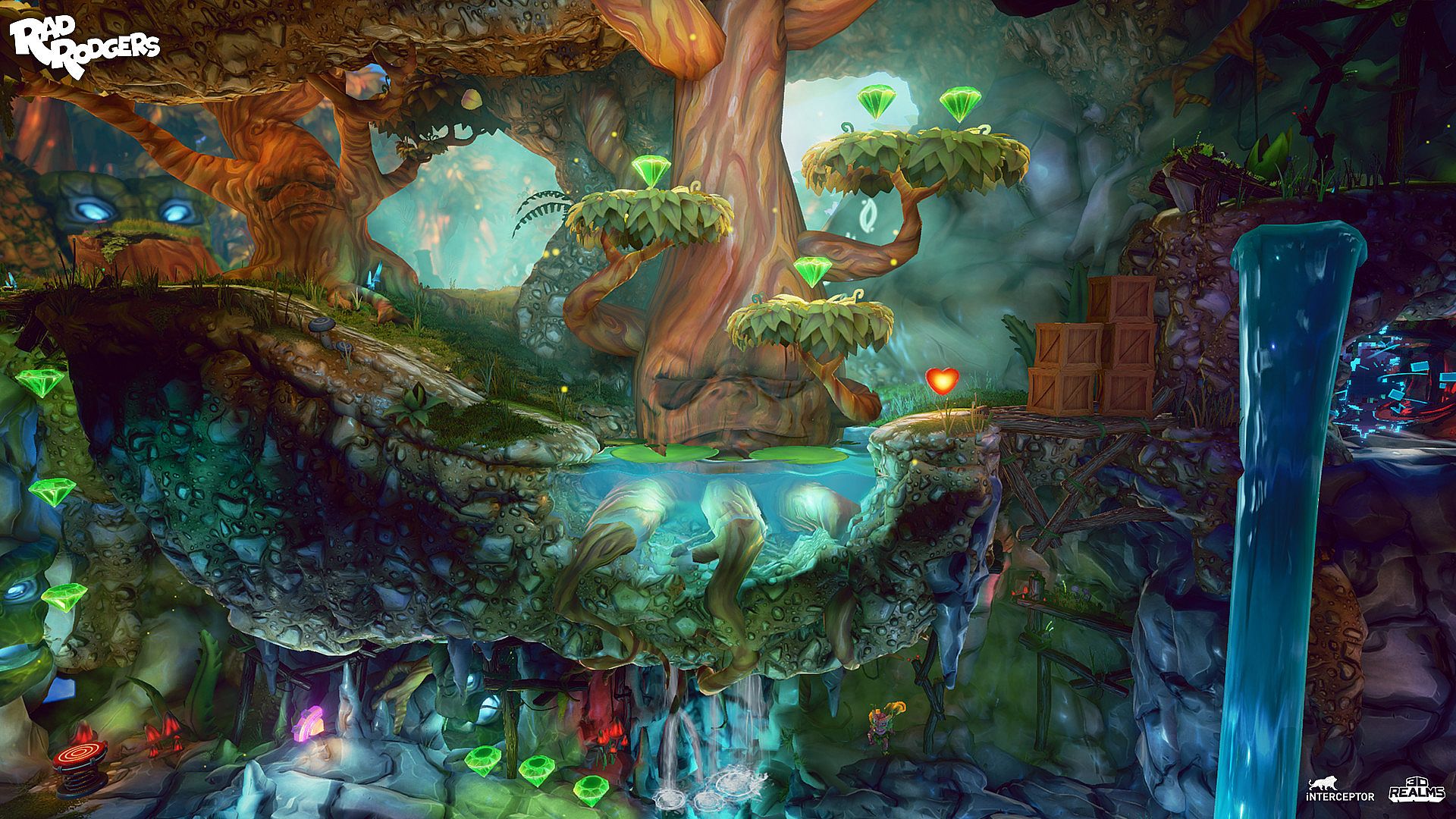
Precision matters throughout, especially when hunting for hidden collectibles tucked into secret rooms. These areas often demand exact jumps and exploration off the main path, rewarding players who revisit stages with improved skills.
Game Modes
Rad Rodgers: World One operates entirely as a single-player experience. The campaign consists of seven connected stages that form the complete adventure in the First World. No separate multiplayer options, competitive modes, or additional game types exist. Progression follows a linear structure with occasional backtracking encouraged by the collectible system, but the focus remains on completing the story-driven levels in sequence.
Story and Setting
The narrative follows Rad, a spirited boy who spends too much time gaming, and Dusty, his foul-mouthed but experienced console companion. After falling asleep during a late-night session, Rad wakes to a vortex that draws him into the television screen. The pair lands in a once-vibrant jungle now infected by corruption. Their goal centers on saving the local inhabitants and restoring the Elder Tree as the land's guardian. Humor surfaces through character banter and references to classic gaming tropes, keeping the tone light amid the action.
Audio and Visual Style
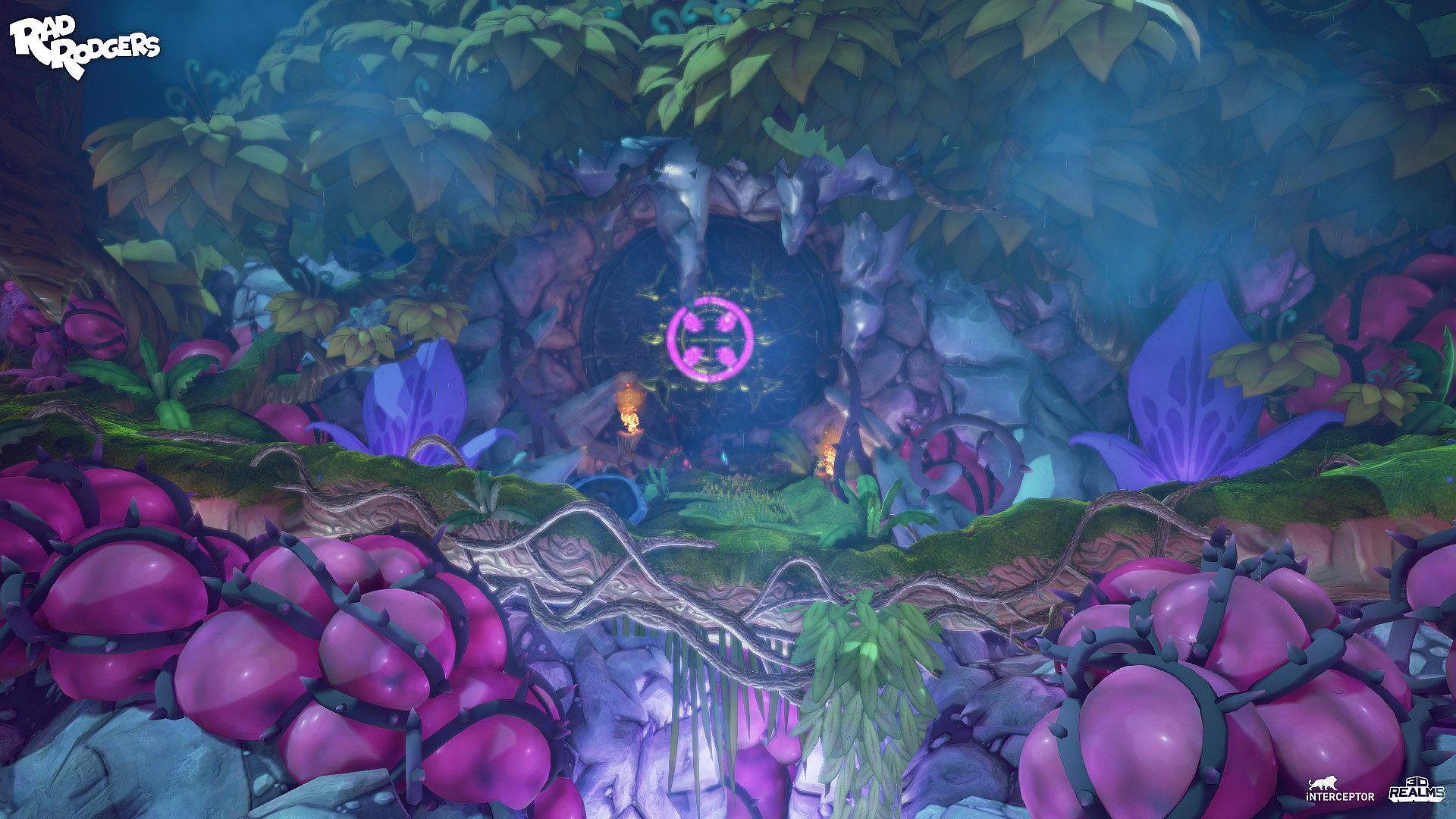
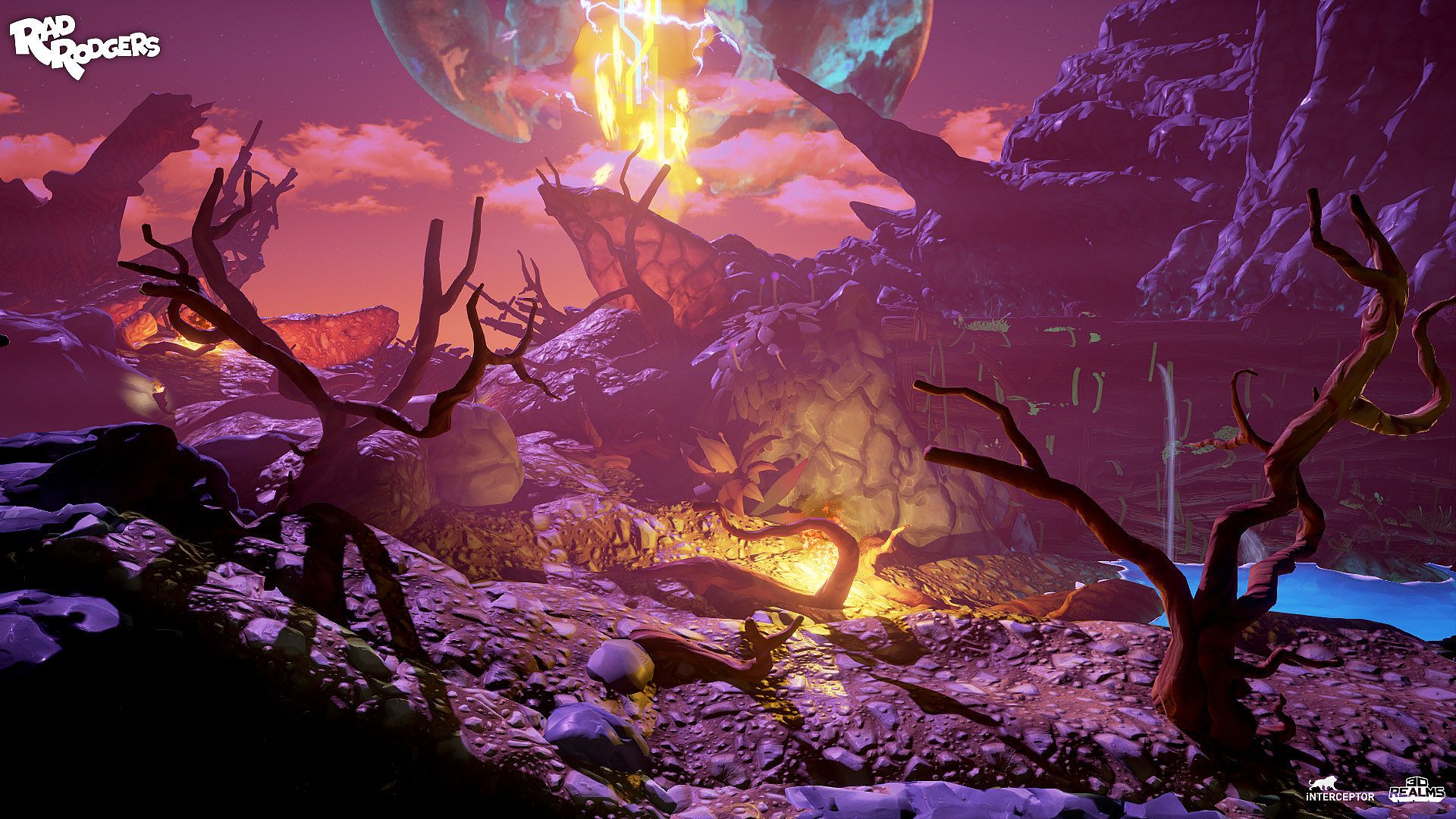
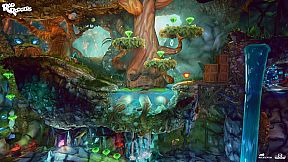
The soundtrack draws from retro influences, featuring MIDI-inspired tracks layered with synthesizers. Composer Andrew Hulshult crafted the music to evoke 80s and 90s gaming eras while fitting the platforming pace. Visually, the game uses colorful pixel art with detailed backgrounds that highlight the decaying jungle theme. Secret rooms and Easter eggs scattered throughout reward thorough exploration and reference older platformers.
Is It Worth Playing?
Rad Rodgers: World One delivers a focused retro-style platforming campaign suited to players who enjoy precise controls and light combat in a single-player setting. Steam user reviews rate the title Very Positive based on feedback from dozens of players. The seven-stage structure provides a complete, self-contained experience without ongoing seasonal content or expansions. Those drawn to indie action-adventure games with 90s aesthetics and buddy-duo dynamics will find the core mechanics engaging, particularly the weapon variety and Pixelverse shifts. Reviewers note smooth movement and humorous writing as strengths, while some mention occasional technical hiccups in earlier versions. The game stands as a finished product best approached for its nostalgic platforming loop rather than modern live-service features.