




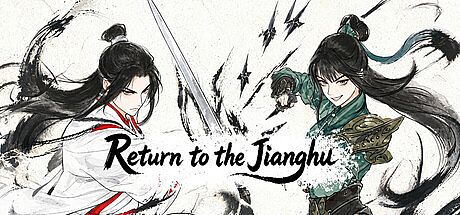


Return to the Jianghu is a single-player wuxia life-sim card game set in a martial arts world where players live out complete lifetimes filled with choices, combat, and lasting consequences.
Gameplay
Players begin each run with a randomly assigned background that shapes early opportunities and challenges. Youth focuses on learning martial arts through training and study. The prime years involve wandering the jianghu, forming alliances or rivalries, and pursuing personal goals. Old age brings reflection on accumulated decisions before the character passes on.
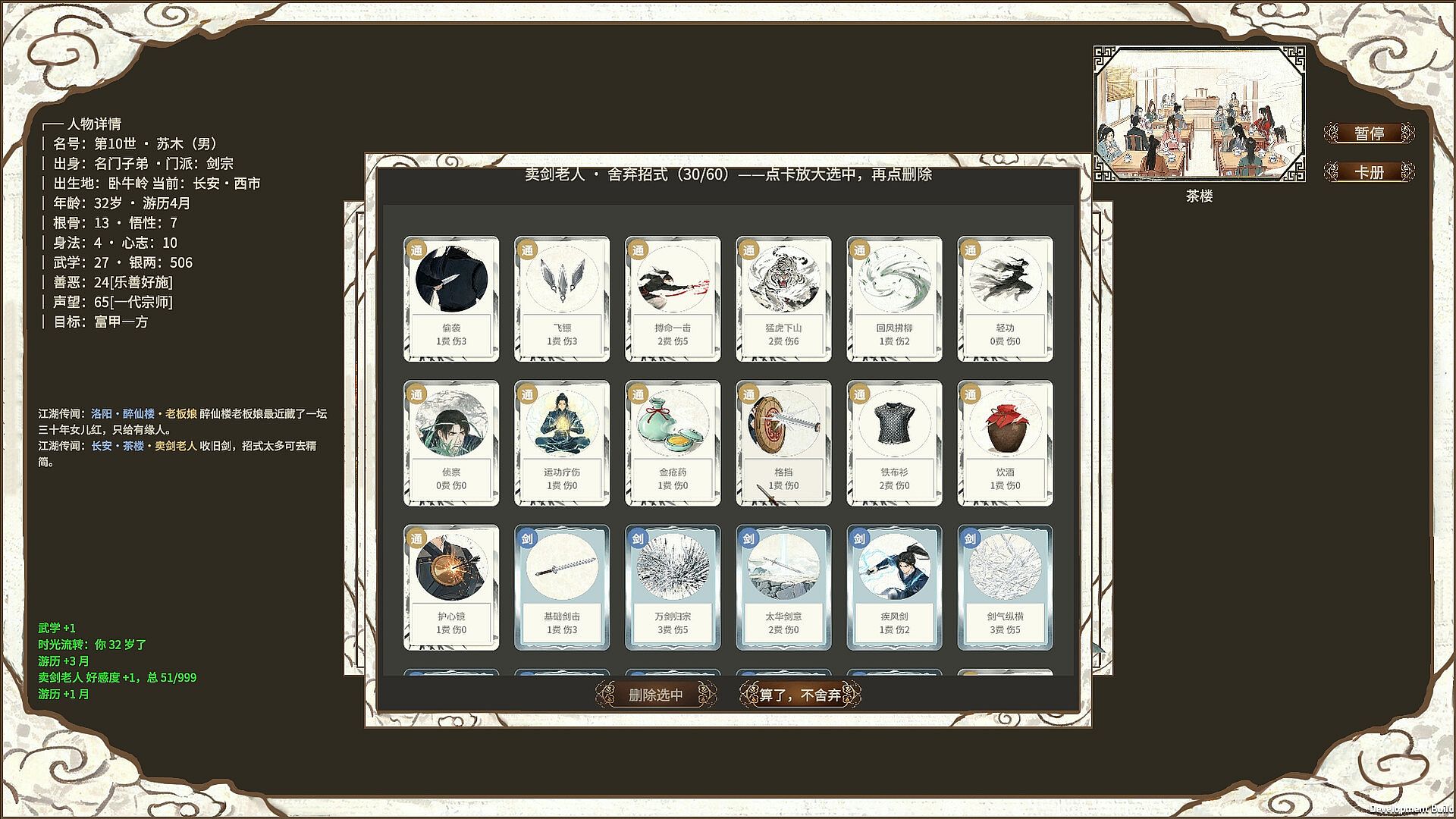
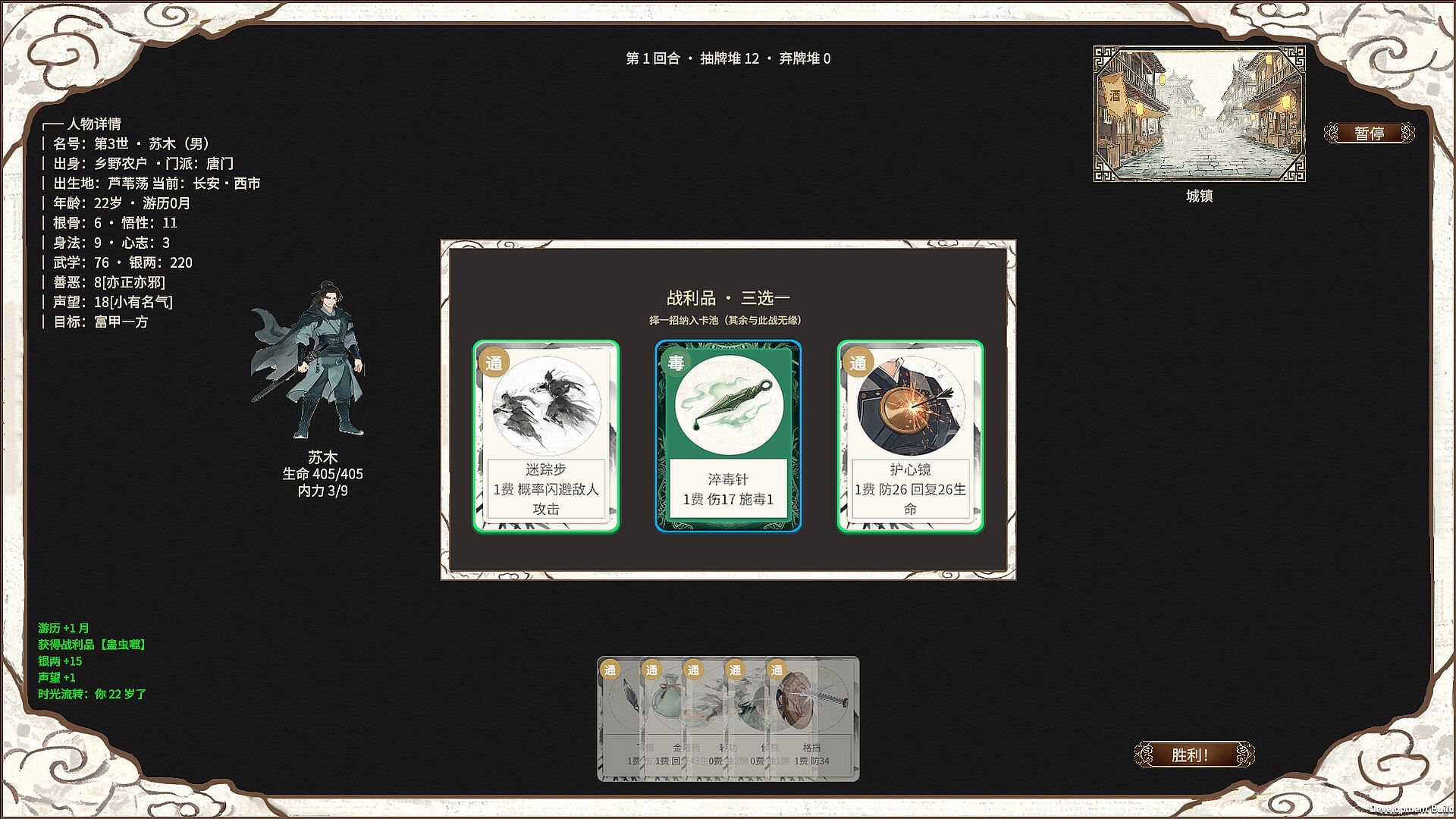
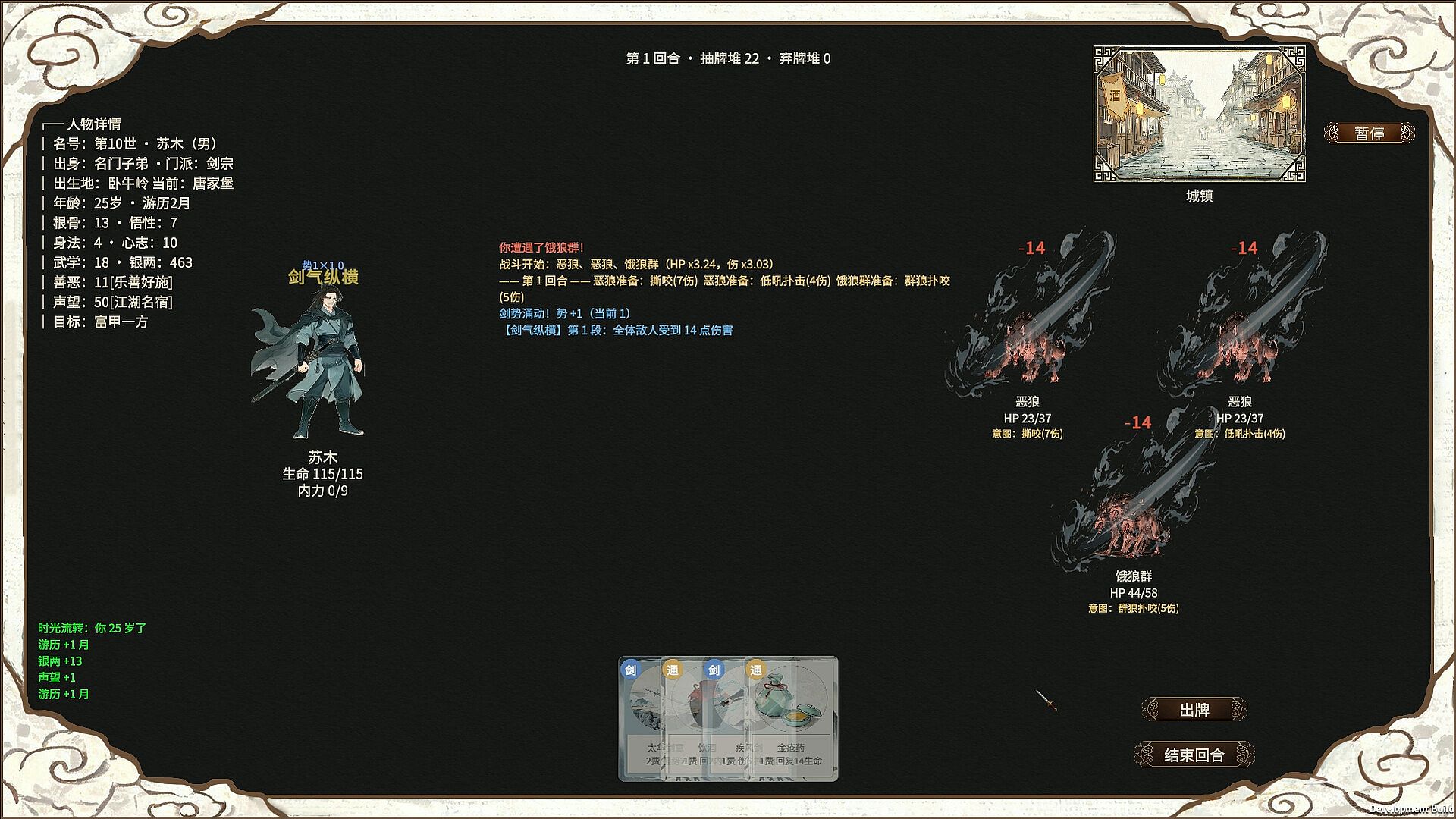
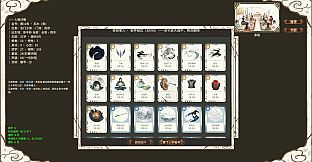
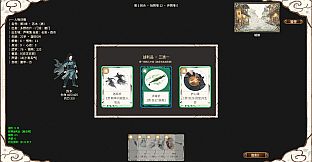
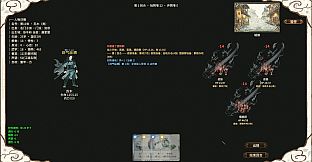
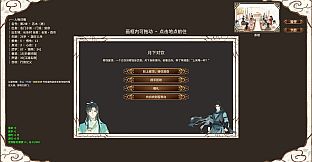
Turn-based card combat forms the core of conflicts. Five distinct schools provide varied approaches: Sword Sect emphasizes swift strikes, Wudang relies on patient power, Tang Clan employs poison, Shaolin focuses on counters, and Blood Fiend channels burning life force. Styles interact through counters, while combos build into full techniques during fights.
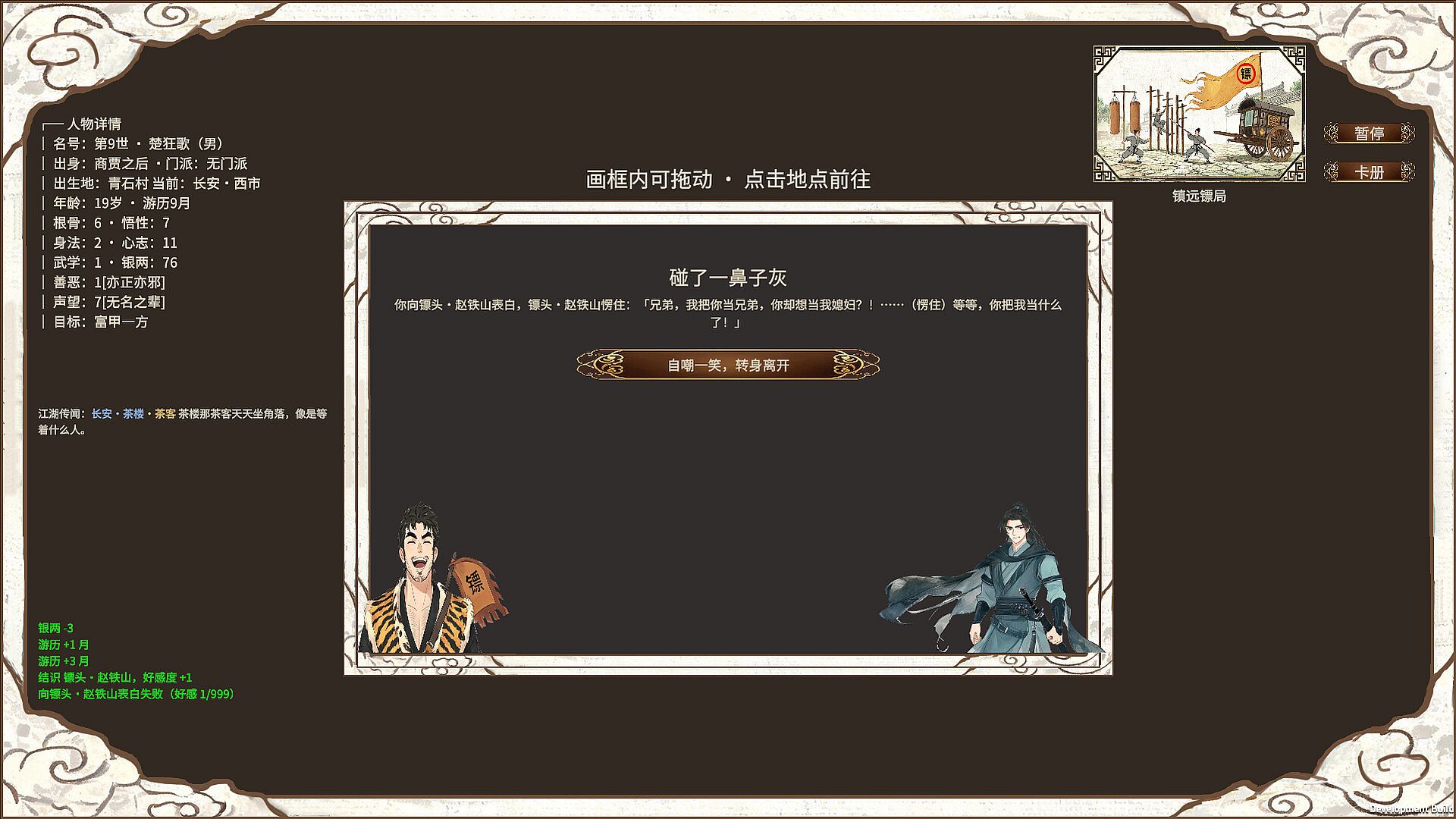
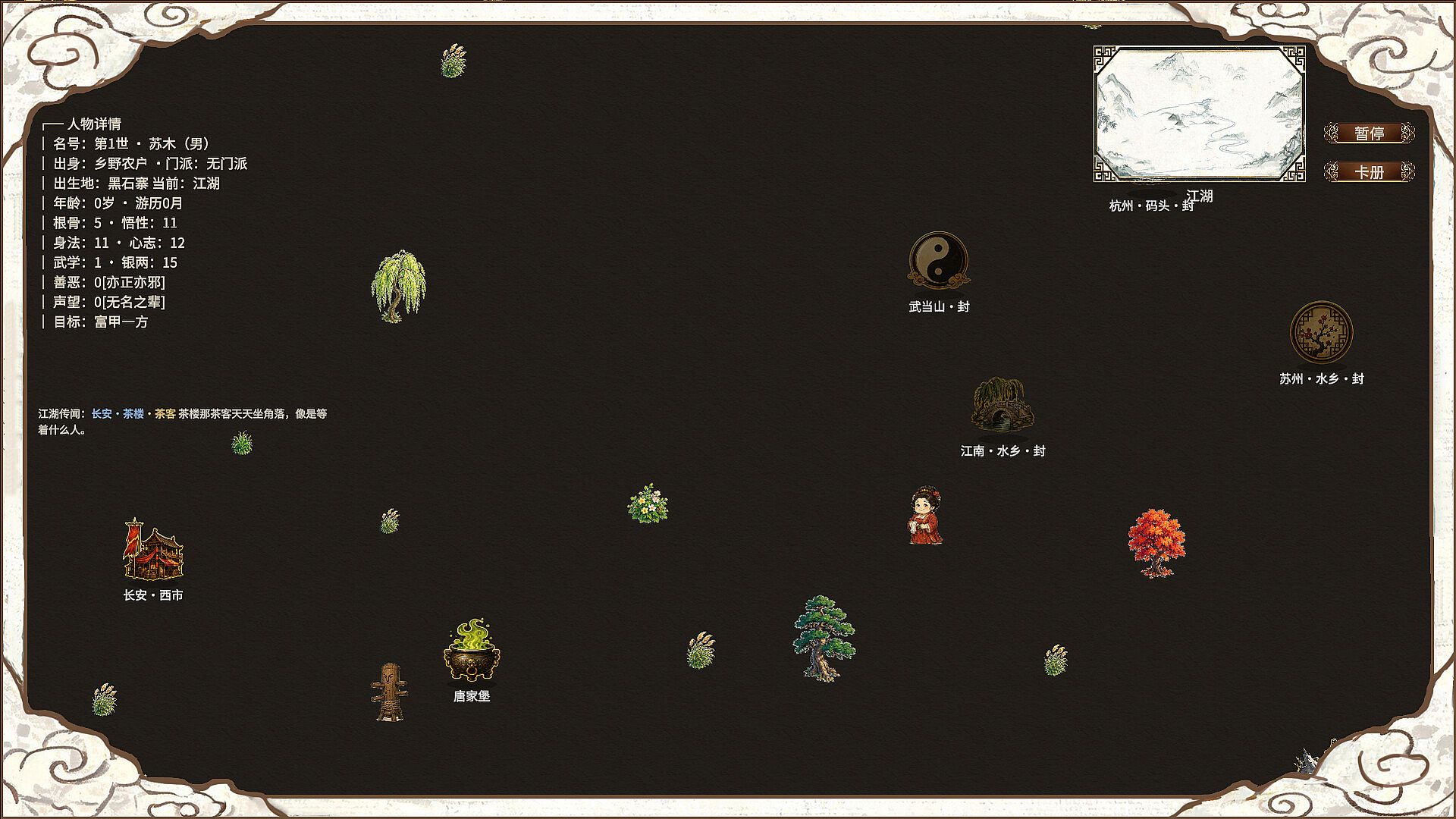
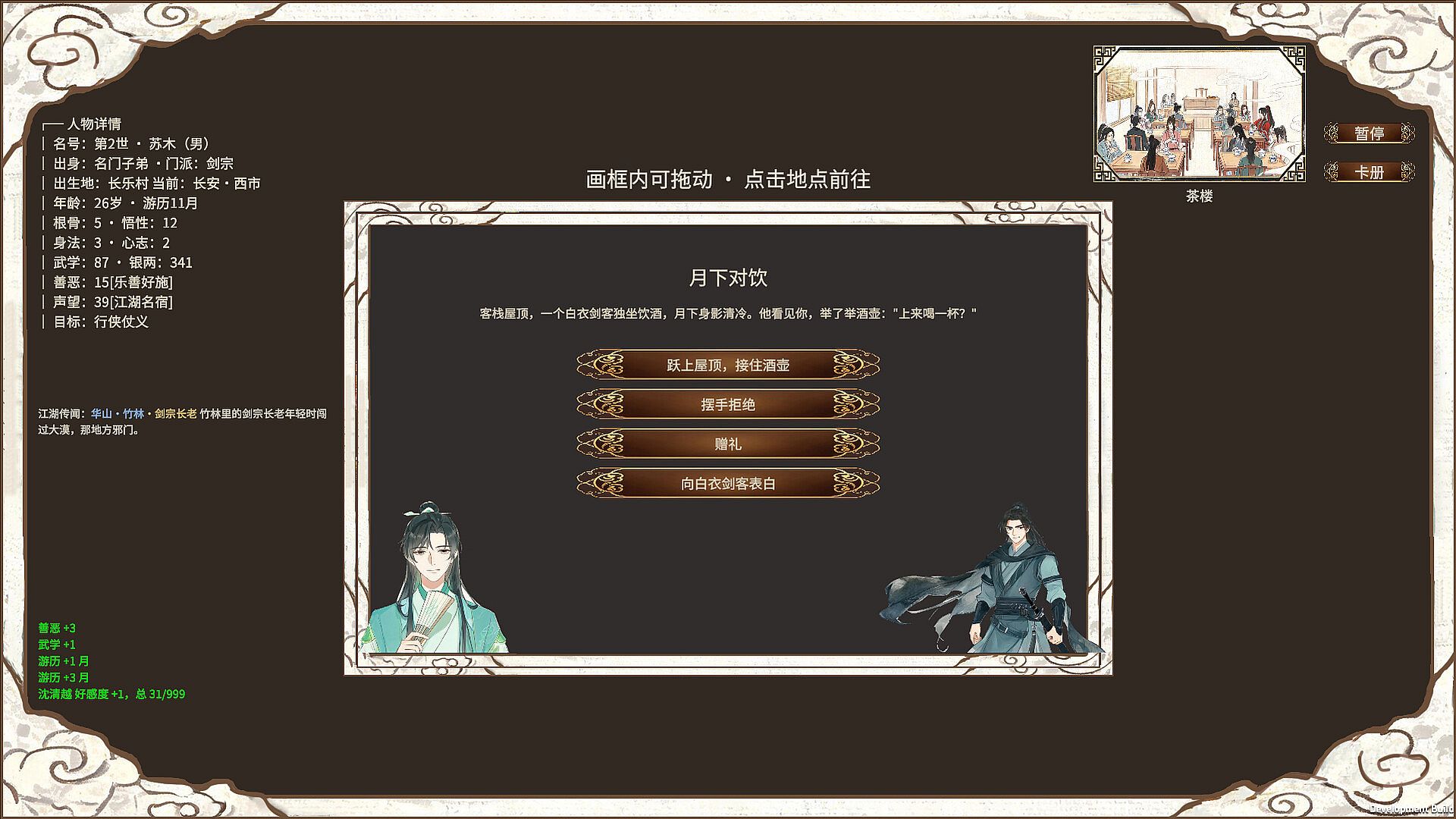
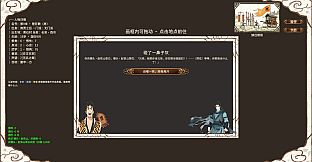
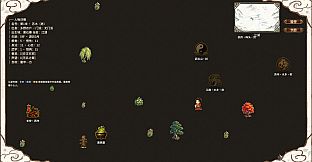
Events drive progression across the world. Roadside bandits, hidden treasures, tavern rumors, and chance meetings create unique paths each lifetime. Random background elements and fate dice introduce variability, allowing players to steer outcomes despite initial conditions.
Relationships extend beyond combat. Courtship options remain open regardless of background, leading to marriage and the raising of children. These bonds influence later events and carry forward through reincarnation mechanics.
Game Modes
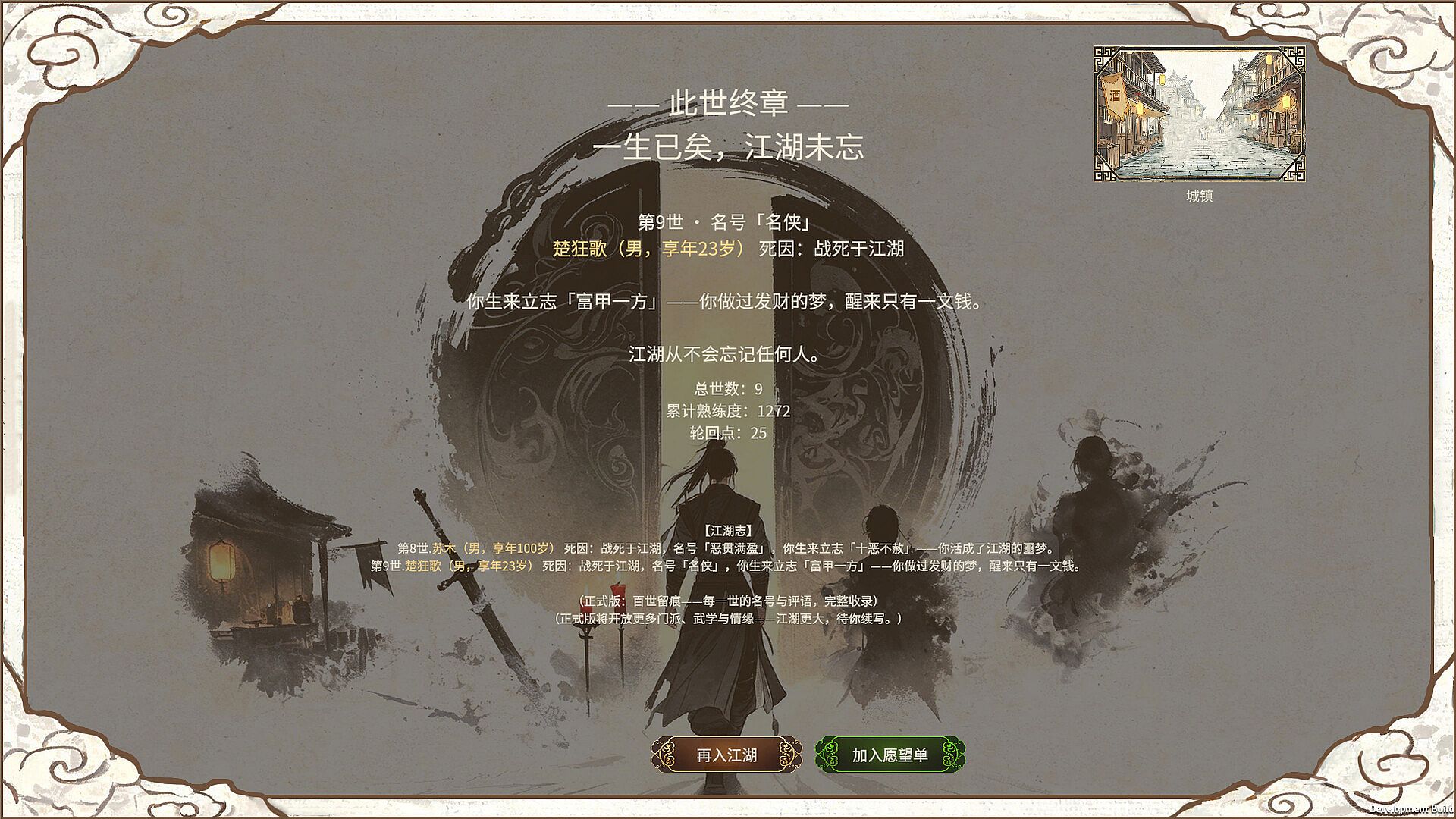
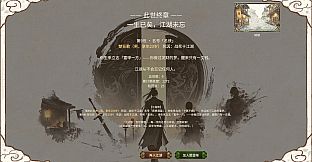
The experience centers on sequential lifetimes connected by reincarnation. Each run represents one full life cycle from youth through old age, with permanent marks left on the world. Grudges from prior lives persist, and heirloom cards transfer martial knowledge to new characters.
A jianghu chronicle tracks every completed life for review at any time. Actions across runs reshape the balance among righteous, demonic, and imperial powers. No separate multiplayer or competitive modes exist; the structure remains single-player throughout.
Key Mechanics and Features
Reincarnation serves as the central progression system rather than a simple reset. Legacy elements such as carried cards and remembered enmities create continuity between lives. The 2D animated art style features visible brush strokes that reinforce the wuxia aesthetic.
Player choices determine long-term outcomes. Decisions to intervene in events, join sects, or pursue independent paths alter available opportunities in subsequent lives. Bloodlines established through marriage provide additional continuity options.
The simulation elements track personal growth alongside world state changes. Every lifetime contributes to an evolving jianghu that reflects accumulated player influence.
Is It Worth Playing?
Return to the Jianghu suits players who enjoy narrative-driven single-player RPGs and simulation experiences built around meaningful choices and persistent consequences. The card-based combat and lifetime structure reward experimentation across multiple runs, with reincarnation adding layers of strategy through carried legacies.
Those interested in wuxia themes, character progression over extended play sessions, and systems where individual decisions reshape future possibilities will find the core loop engaging. The game remains in a pre-release state with no user reviews available yet, so expectations should align with its described focus on personal storytelling rather than large-scale multiplayer elements.












