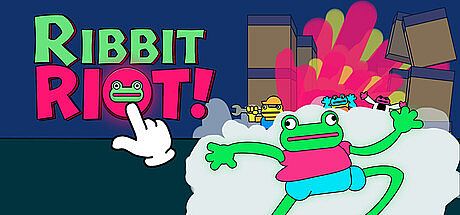


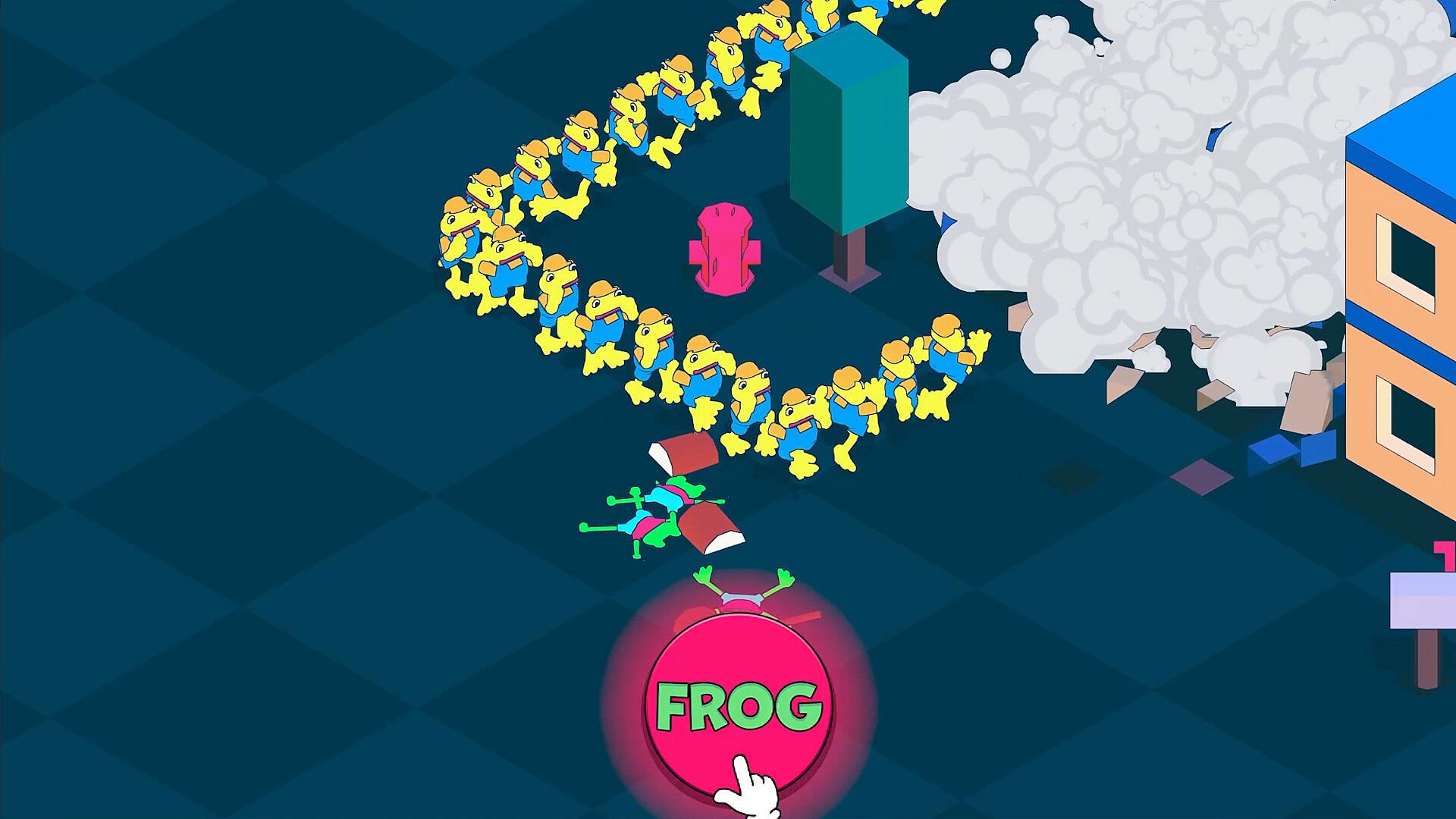
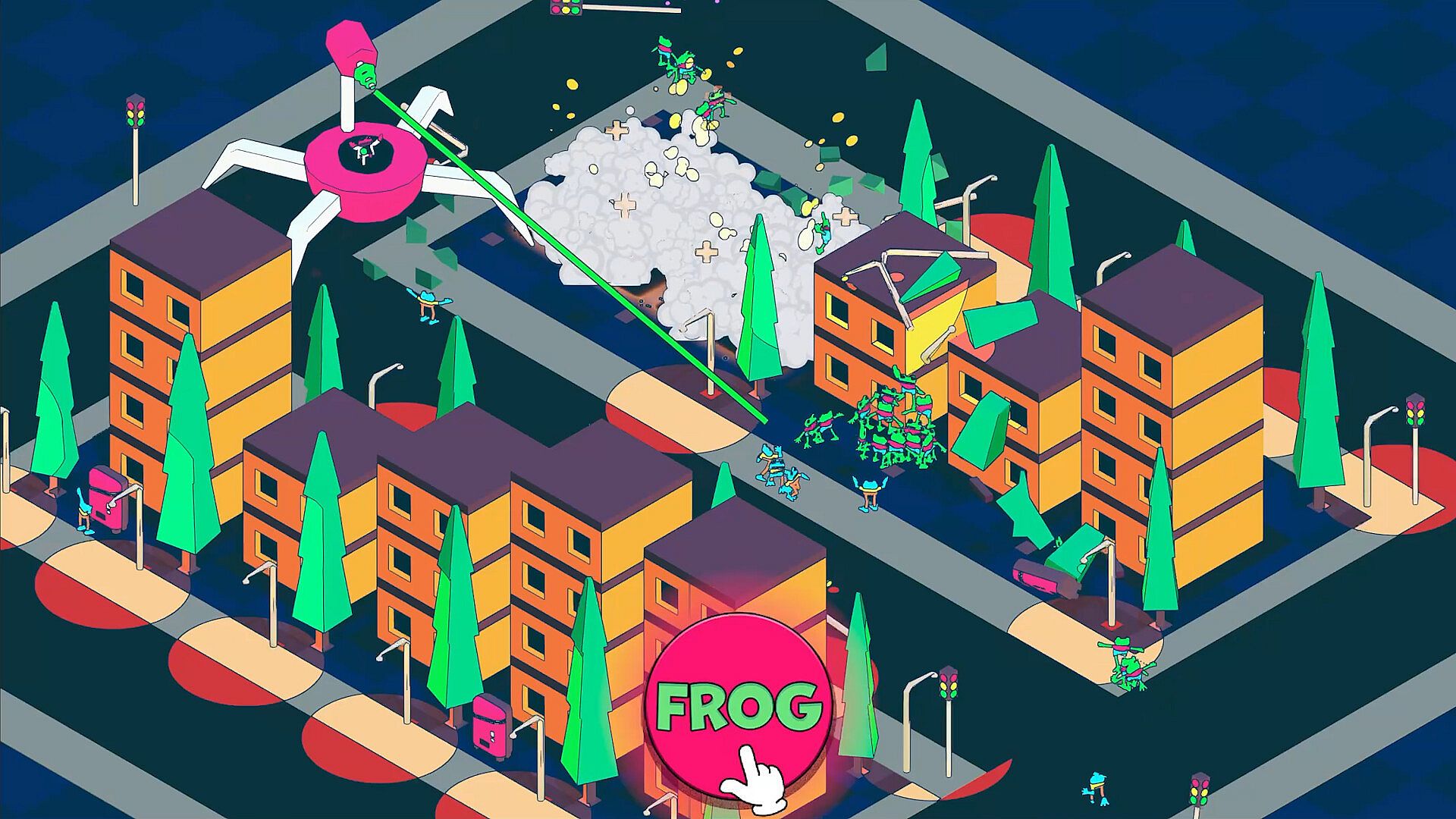
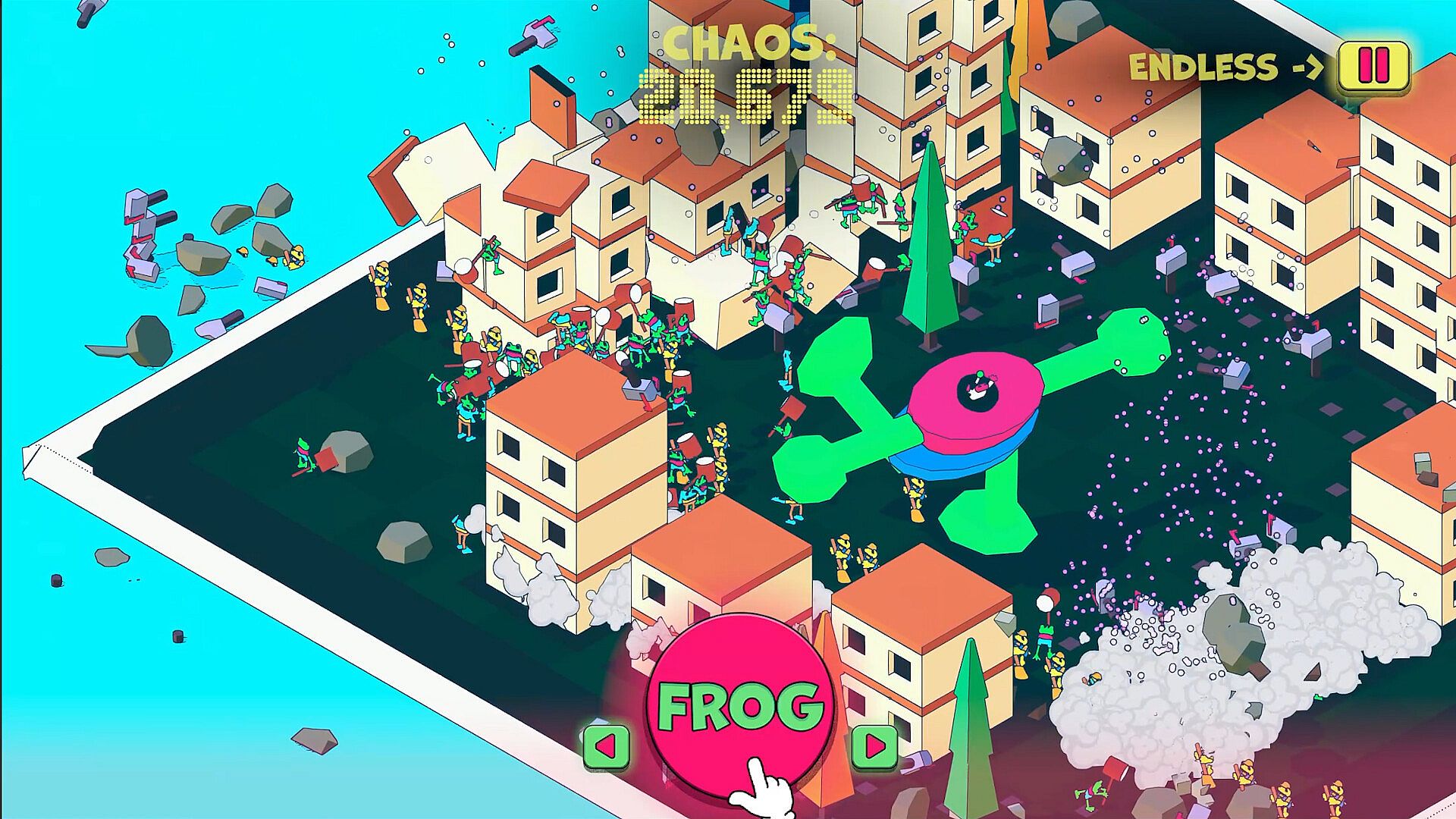
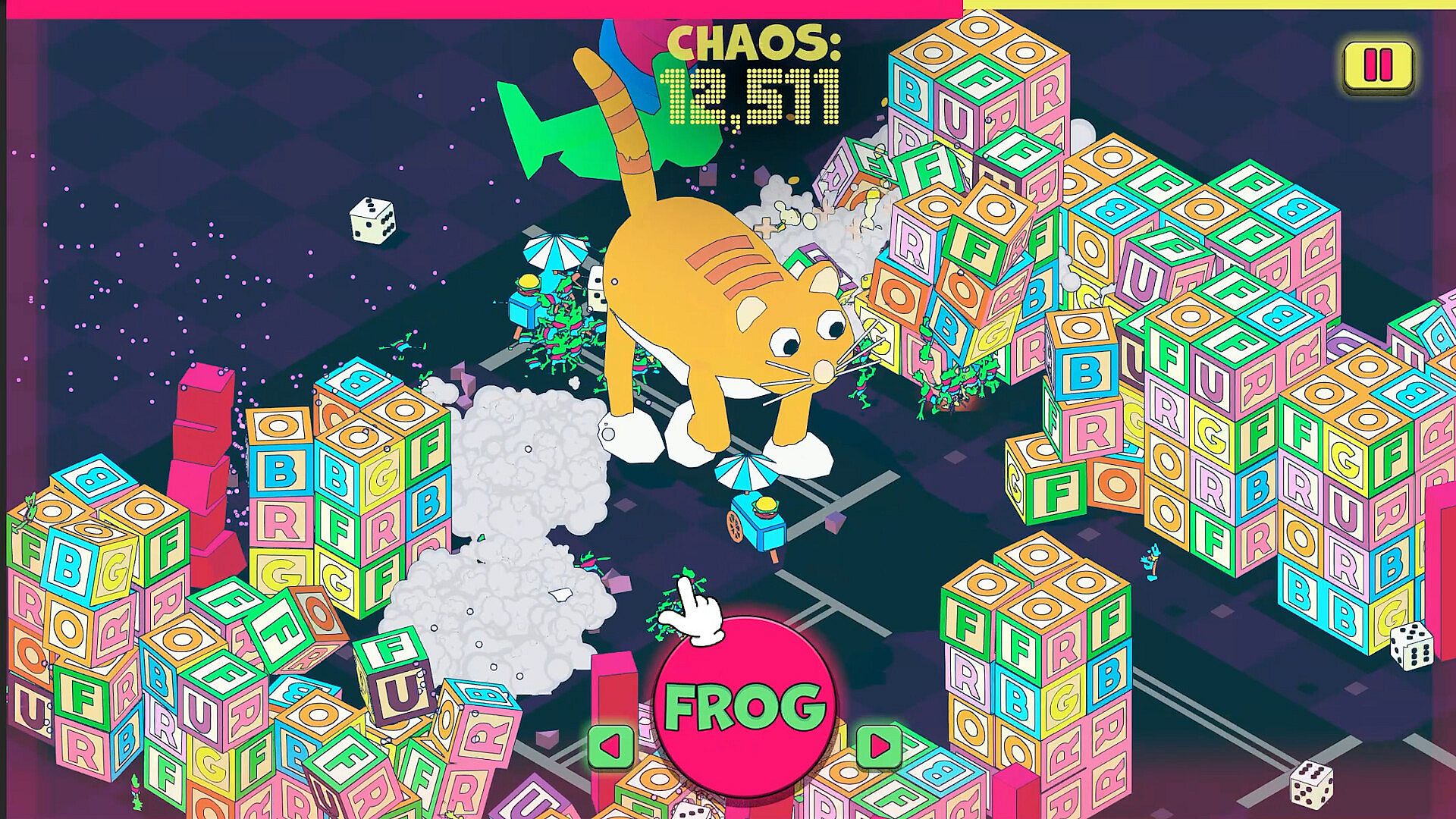

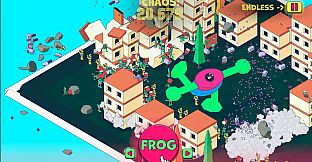
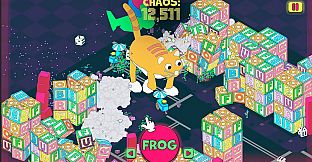
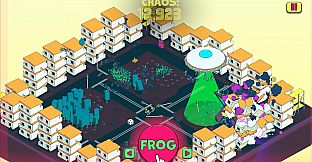
Ribbit Riot! is a casual simulation game built around a simple one-button system that generates escalating frog-driven destruction in a miniature urban setting. Players spawn frogs repeatedly and direct the resulting mayhem through upgrade choices that compound into increasingly unpredictable results across multiple runs.
Gameplay
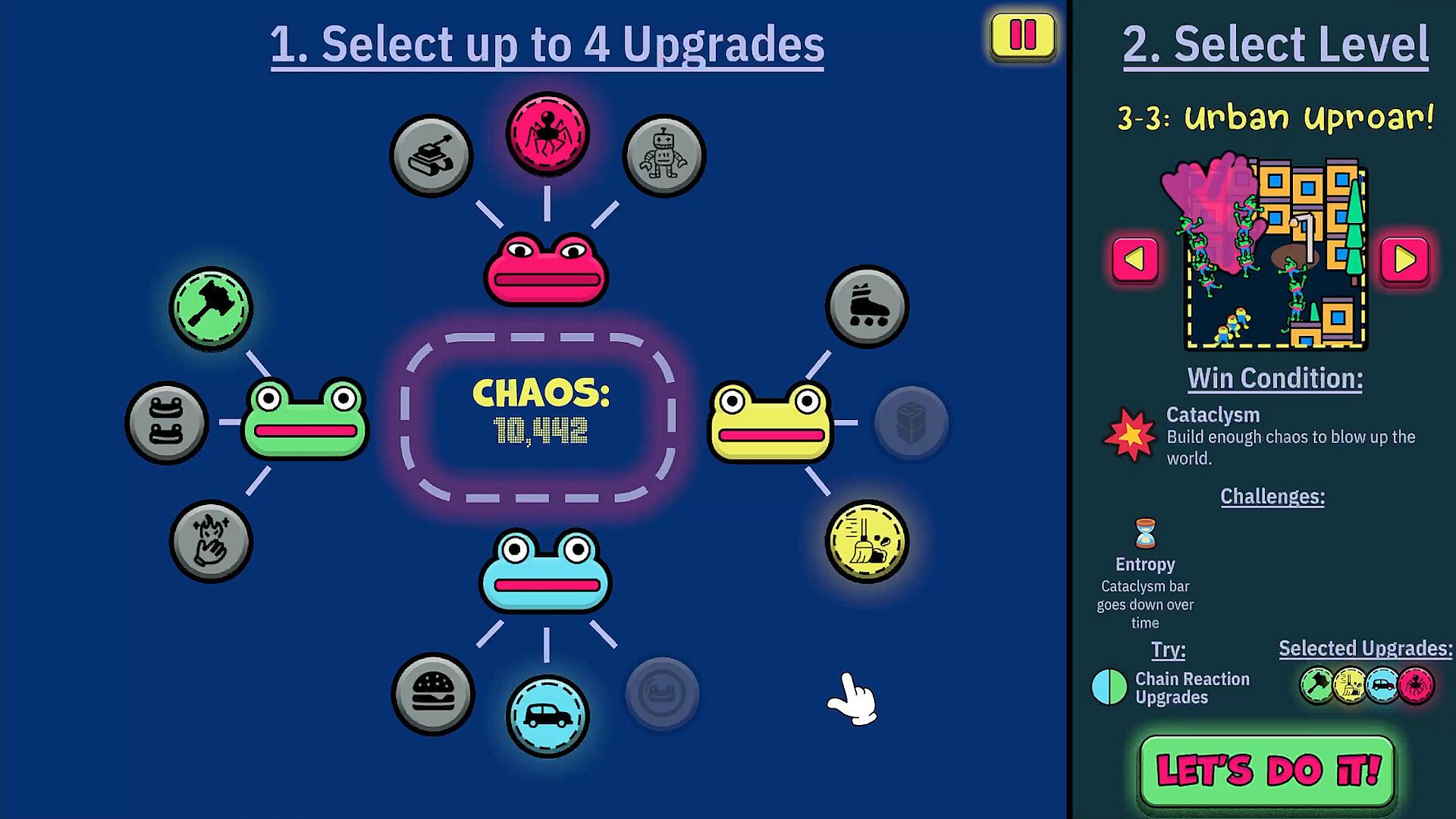
The core loop centers on clicking a dedicated frog button to release waves of amphibians into the environment. These frogs interact with the city structures and each other, generating chaos points that fuel further progression. Upgrades purchased with those points introduce variations in frog behavior, such as altered movement patterns or enhanced destructive capabilities, leading to layered effects that build on prior choices.
Each session encourages experimentation with different combinations of upgrades to observe how they interact and amplify the overall outcome. The single-player structure supports repeated attempts at the same levels, where small adjustments in build order or focus can produce noticeably different scales of disruption. The design keeps input minimal while shifting emphasis to observation and decision-making around resource allocation.
Game Modes
Progression unfolds through a sequence of more than twenty distinct levels that players complete in a linear yet replayable format. Each level presents the same foundational mechanics but scales the city layout and initial conditions, prompting adjustments to frog spawning and upgrade priorities. Total playtime for a full pass typically falls between two and three hours, though the incremental nature invites additional runs to test alternative strategies.
The experience remains entirely single-player with no separate competitive or cooperative options. Instead, variety arises from the freedom to restart levels and pursue different upgrade paths that emphasize speed, volume, or specialized effects. This structure rewards iterative testing rather than mastery of fixed rulesets.
Progression and Upgrades
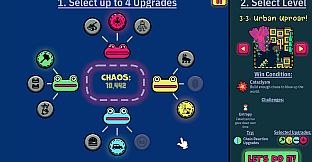
Chaos points earned from frog activity serve as the primary currency for acquiring upgrades that modify how subsequent frogs behave and interact. These upgrades range from basic multipliers on spawn rates to more eccentric modifications that introduce new variables into the destruction process. Stacking multiple upgrades creates feedback loops where earlier choices influence the effectiveness of later ones.
Players track their progress through level completion and the visible escalation of city damage. The system supports short sessions focused on a single level or longer explorations that chain several levels together. Because upgrades persist only within a run, each attempt functions as an independent experiment in balancing immediate gains against long-term chaos potential.
Is It Worth Playing?
Ribbit Riot! targets players who enjoy incremental mechanics delivered through minimal controls and humorous escalation. The short overall length and focus on repeated short runs make it accessible for casual sessions without requiring extended commitment. Those drawn to simulation titles that emphasize observation of emergent systems will find the frog chaos loop engaging on its own terms.
With a demo available for testing the core loop ahead of full release, interested players can evaluate the upgrade experimentation firsthand. The game suits individuals seeking light simulation experiences centered on absurd, self-contained scenarios rather than complex narratives or competitive elements. Its current unreleased status means the full scope of levels and any post-launch refinements remain to be seen, but the verified foundation aligns well with fans of one-button incremental titles.