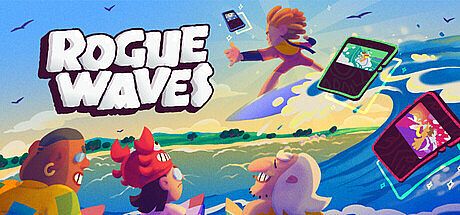


Rogue Waves is a strategy indie casual roguelike deckbuilder set in a world of surfing competitions on sunny beaches populated by eccentric characters. Players build and refine decks to navigate wave-based challenges where bidding, trick execution, and unexpected hazards determine success or failure.
Gameplay
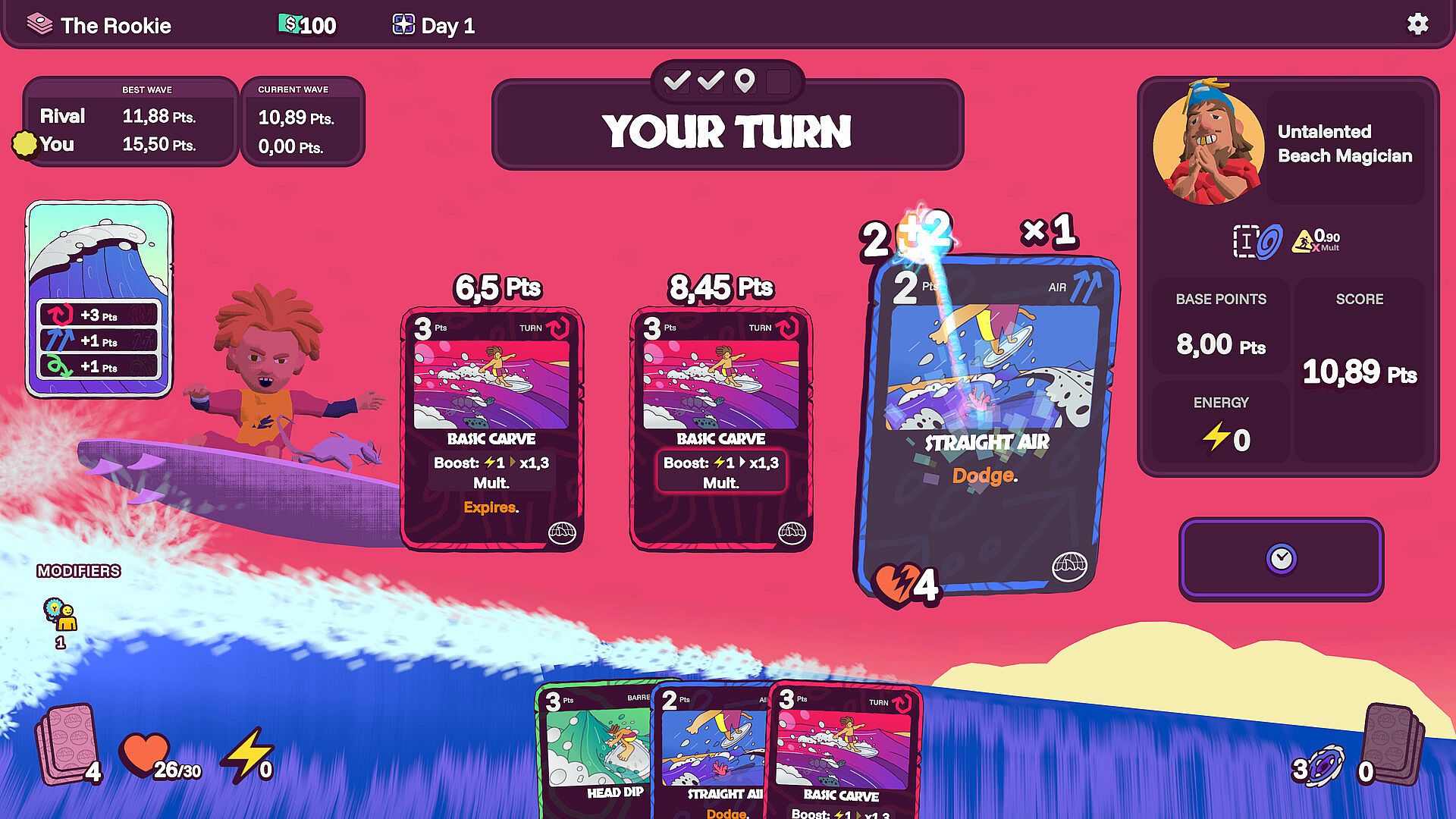
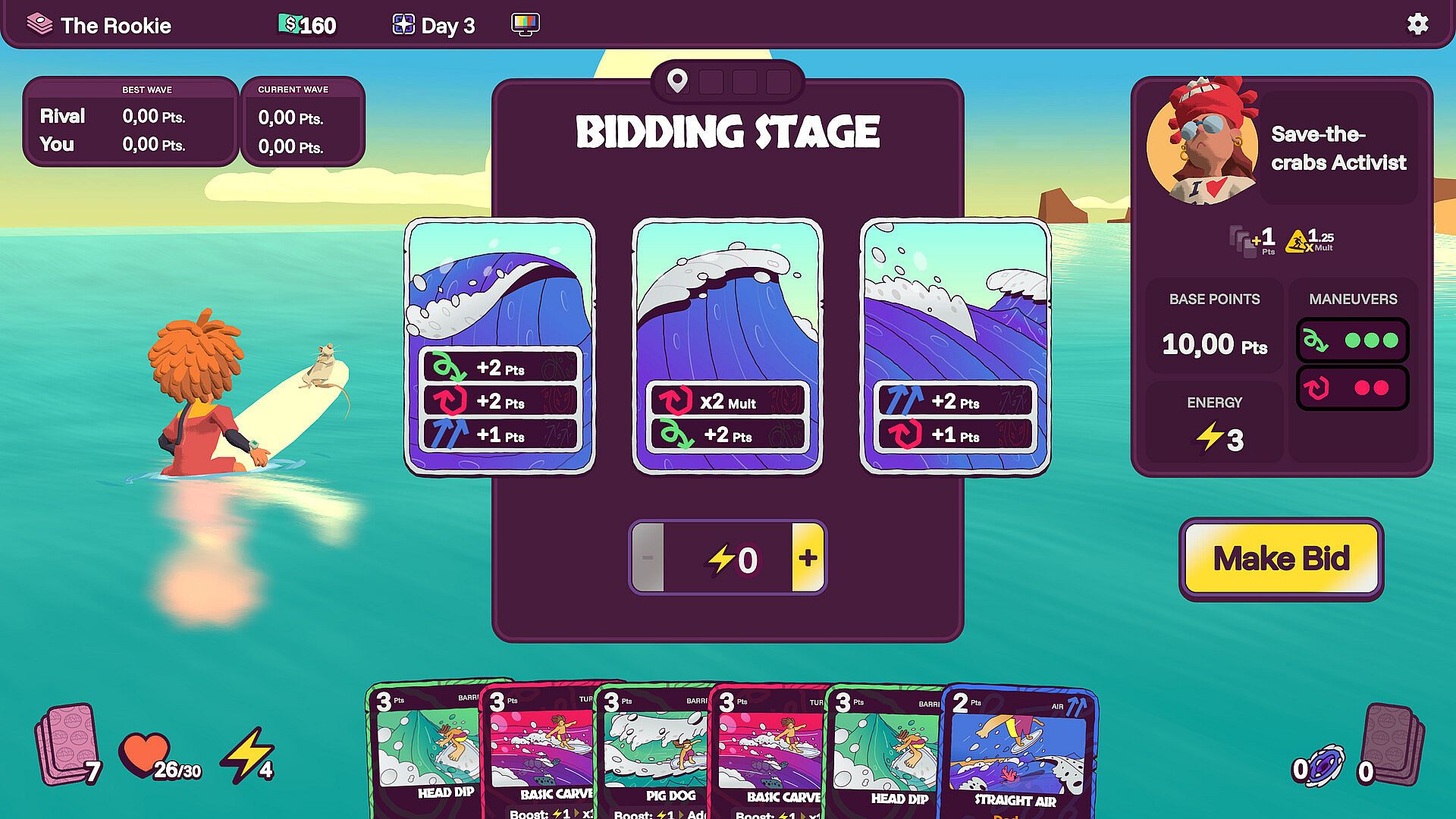
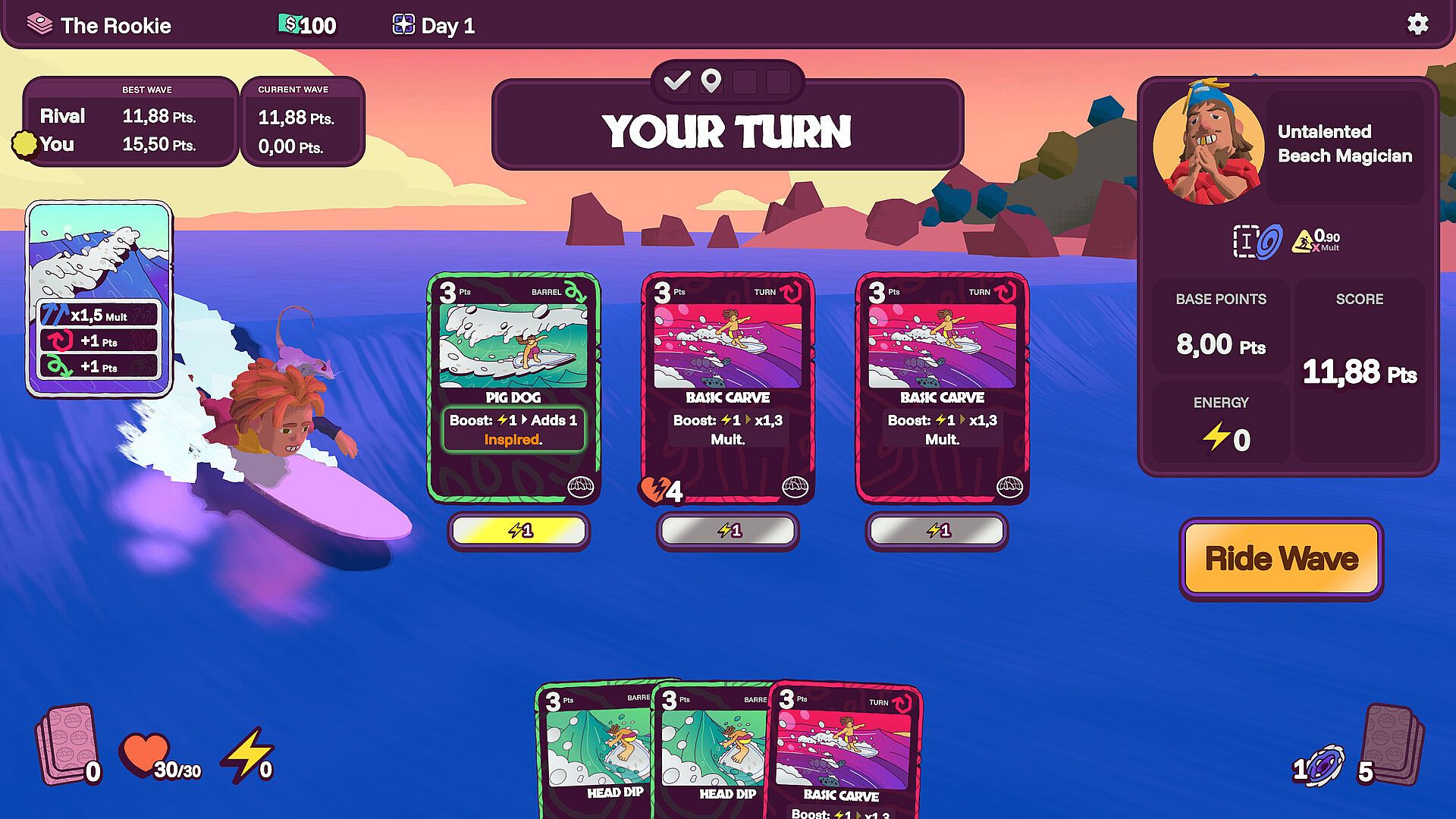
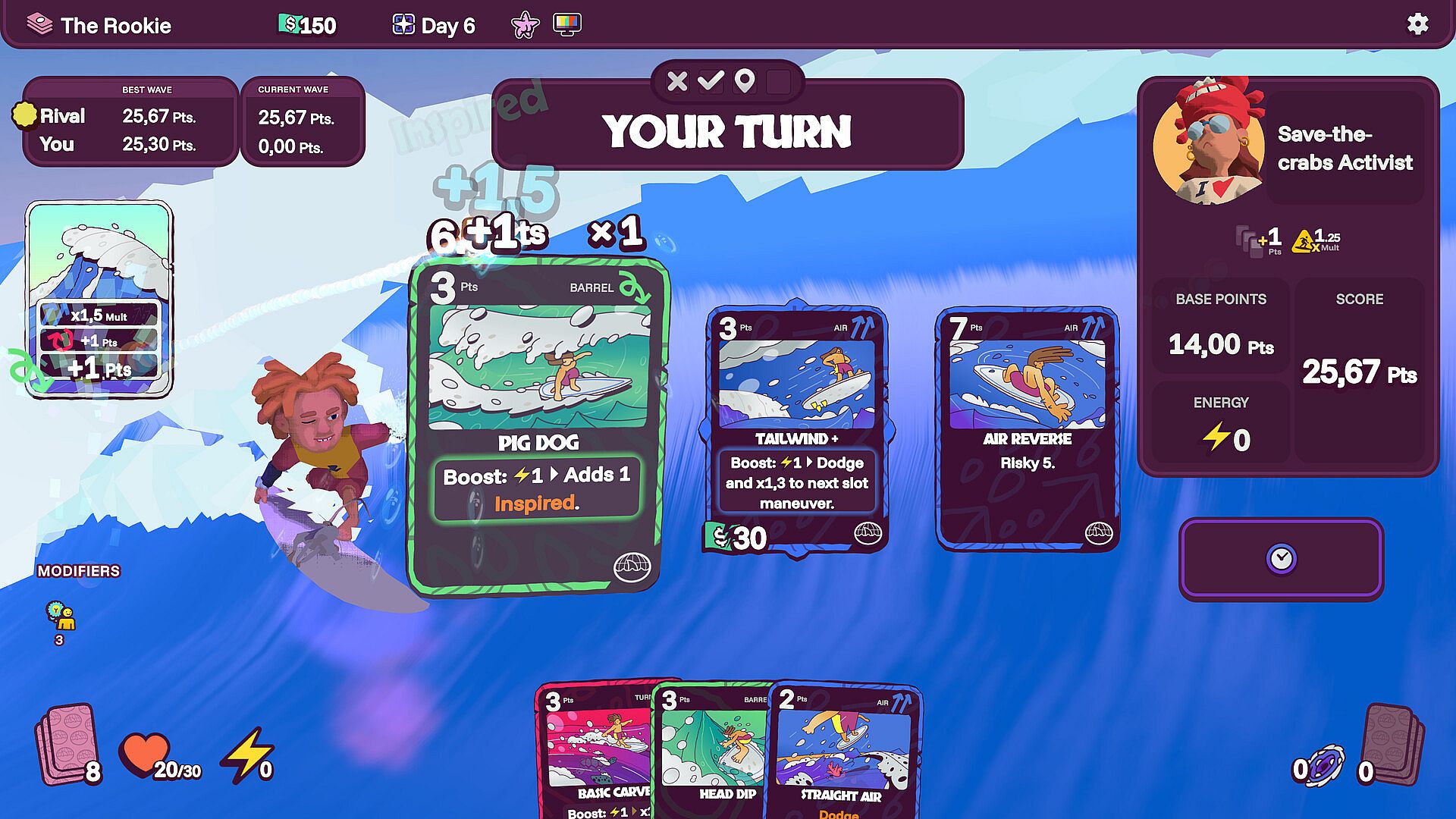
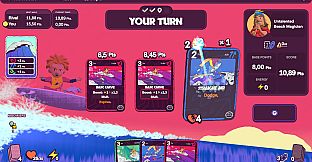
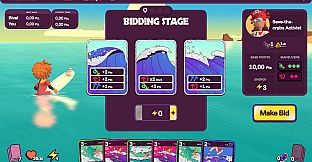
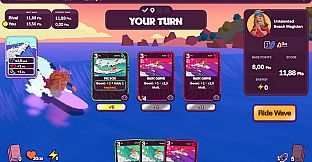
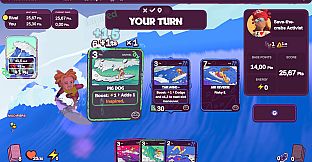
The core loop revolves around preparing for and executing surfing runs against computer-controlled rivals. Before each wave, players allocate energy to bid for the best position in the lineup, which directly reduces the resources available for performing tricks and chaining combos during the ride. Limited space on each wave forces careful card selection to maximize scores while avoiding wipeouts caused by obstacles, miscalculated moves, or insufficient energy reserves. A rogue wave can appear without warning at any time, introducing larger potential rewards alongside heightened risks that disrupt planned strategies.
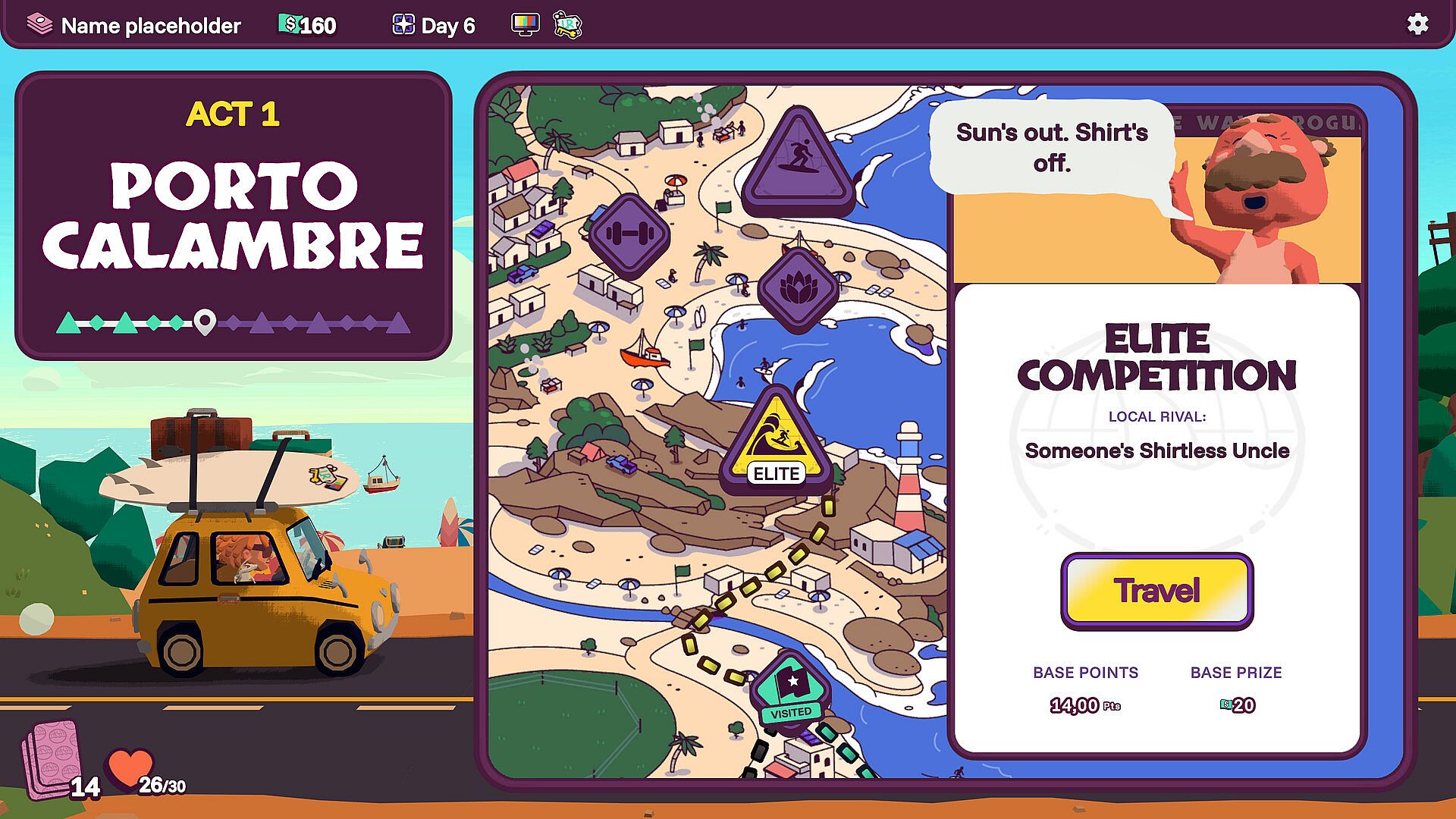
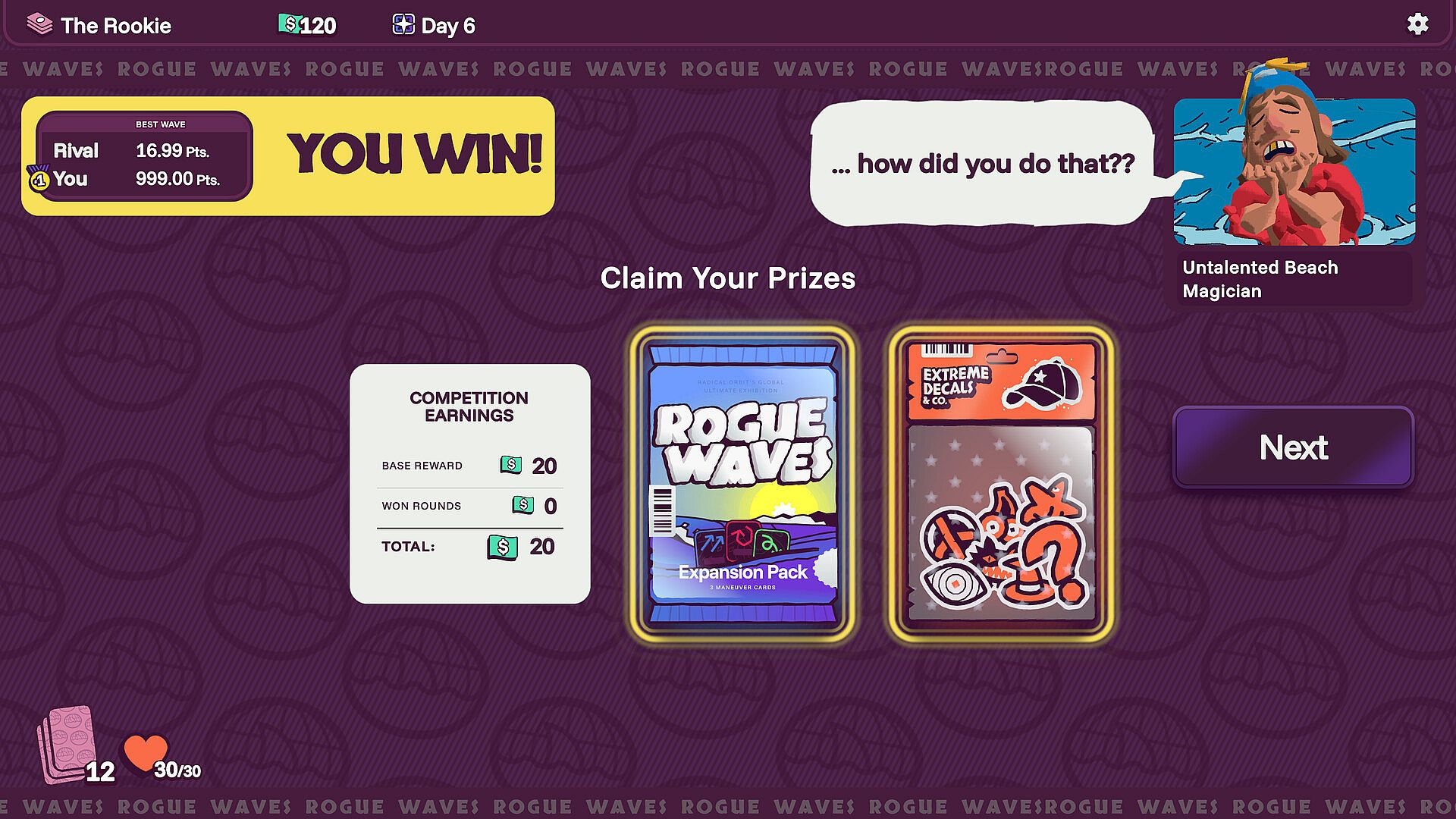
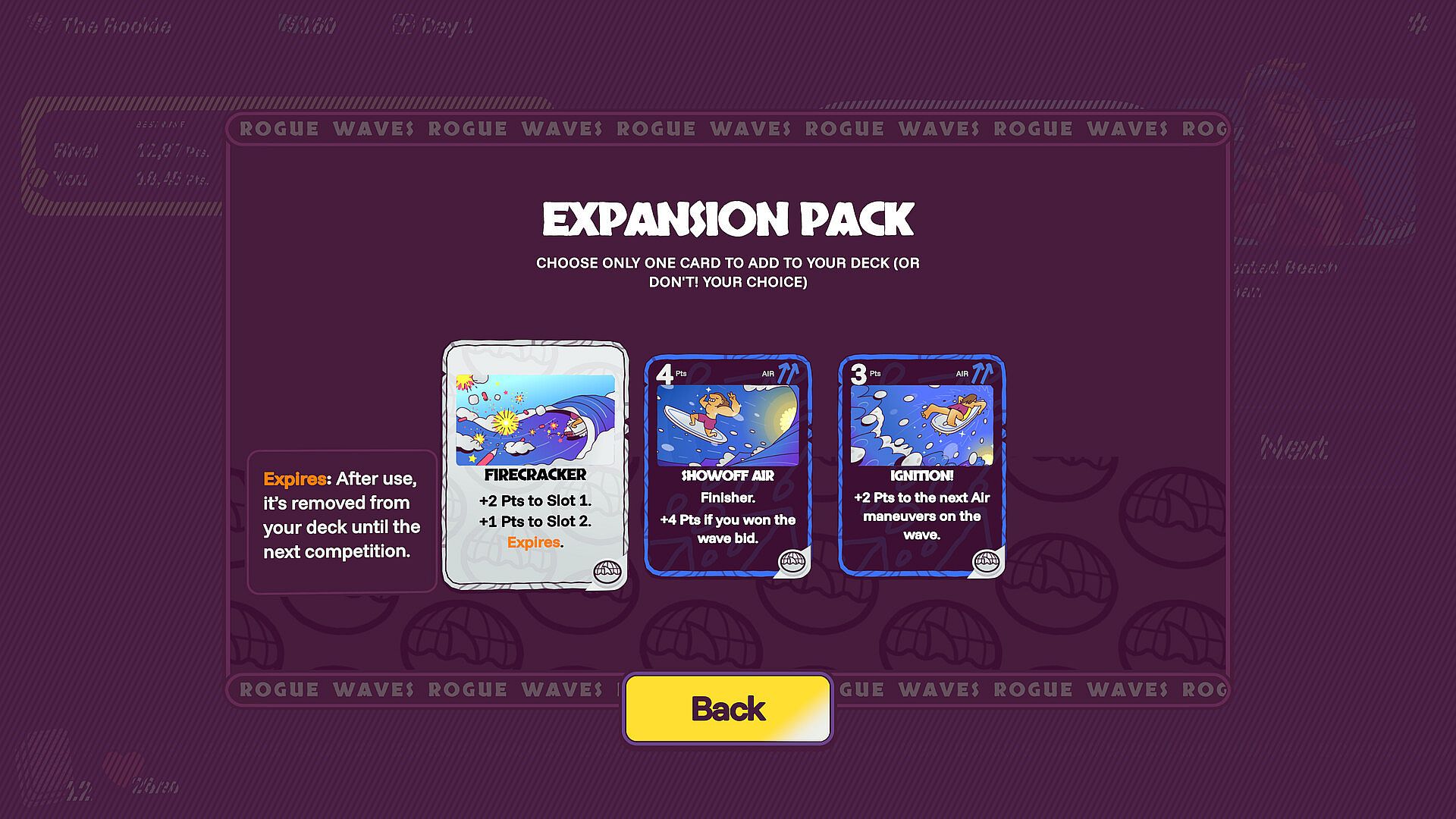
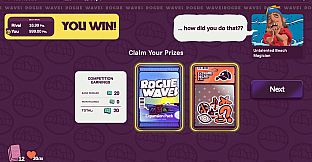
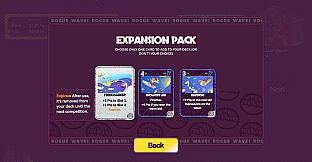
Between competitions, players acquire stickers from various sponsors. These items provide modifiers that alter scoring math or deck performance when combined effectively. The Rookie deck in the available demo contains over 50 cards focused on trick execution and combo building. Six distinct rivals each bring unique abilities that interfere with the player's plans in specific ways, requiring adaptation rather than a single optimized approach across runs.
Game Modes
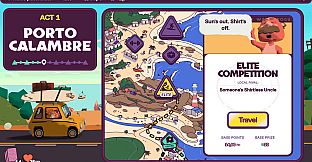
Competitions form the central activity, structured as a series of rounds where players draft waves and execute runs in sequence. Each round emphasizes quick decisions around energy management and card play within tight constraints. The wave-drafting element rewards both conservative bidding for reliable waves and aggressive spending that leaves less margin for error on tricks. No separate multiplayer or cooperative formats appear in the provided details, keeping focus on individual progression through rival matchups and sticker collection.
Key Mechanics and Features
Energy serves as the primary resource linking bidding and performance phases. Spending too much upfront on a superior wave leaves fewer options for high-value combos, while conservative bids may force reliance on lower-scoring opportunities. Stickers introduce permanent or run-specific effects that shift the balance of risk versus reward, encouraging experimentation with combinations from the pool of over 40 available in the demo. The rogue wave system adds unpredictability, forcing players to weigh potential score multipliers against the chance of sudden disruption. Rival interactions further layer strategy by altering scoring conditions in ways unique to each opponent.
Is It Worth Playing?
The demo showcases a fully implemented Rookie deck, extensive sticker options, and a wave-drafting system that blends planning with opportunistic risk. Six rivals with distinct effects create varied challenges across competitions, supported by an irreverent setting filled with fictional brands and local flavor. This setup suits players who enjoy deckbuilding games centered on resource trade-offs and adapting to variable conditions rather than pure optimization. The casual and indie classification aligns with accessible rounds that still demand strategic attention to energy allocation and combo timing. Availability centers on the demo experience at present, allowing direct evaluation of the bidding, trick-chaining, and sticker synergy systems before committing further.