






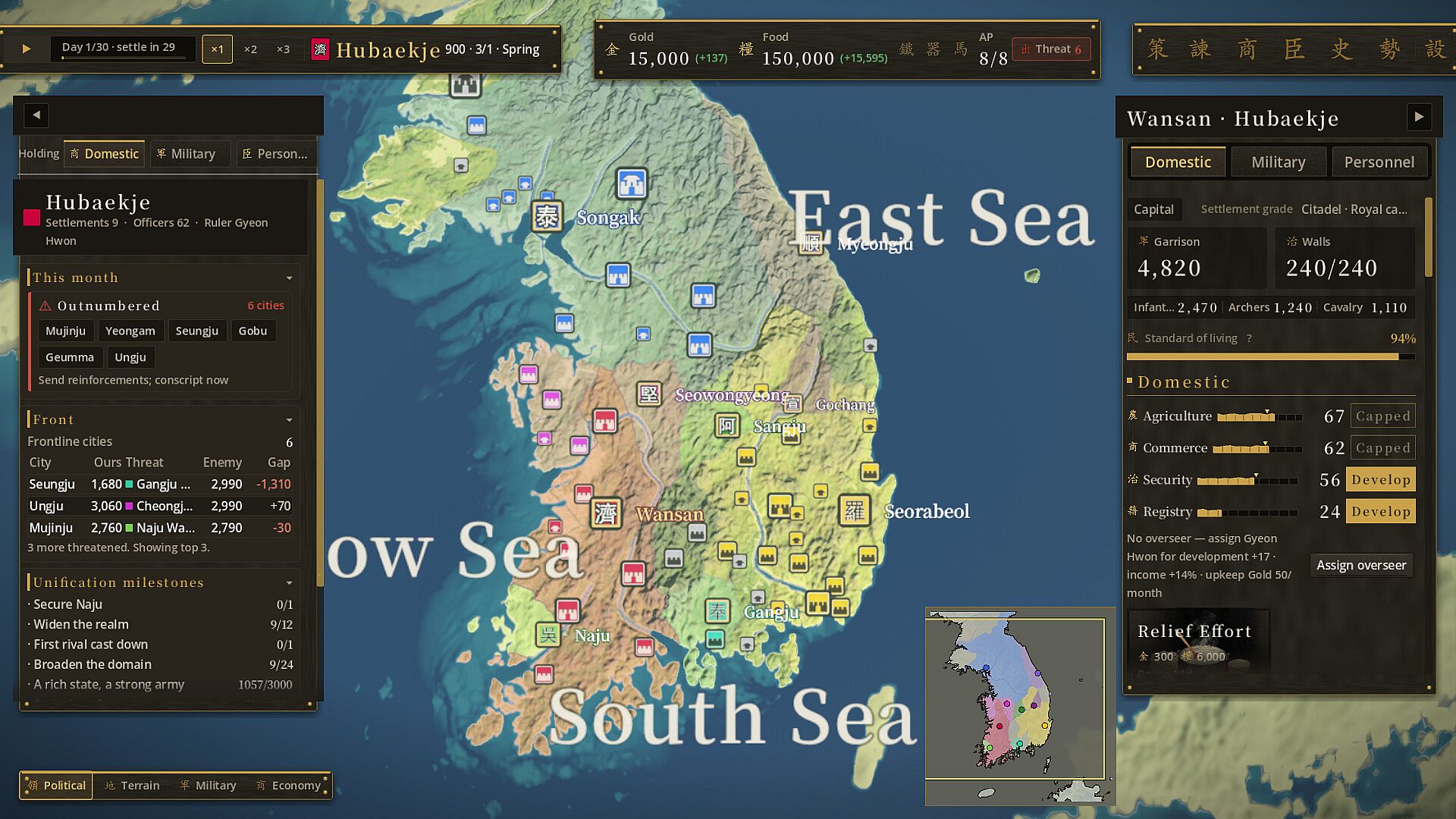
Samhan: Where Korea Began is a single-player strategy and simulation game set during the turbulent Later Three Kingdoms period of Korean history. Players take command of one of 26 factions across five historical scenarios spanning 892 to 927, managing settlements, diplomacy, and warfare on a detailed 3D map of the peninsula to reunite the fractured realm.
Gameplay
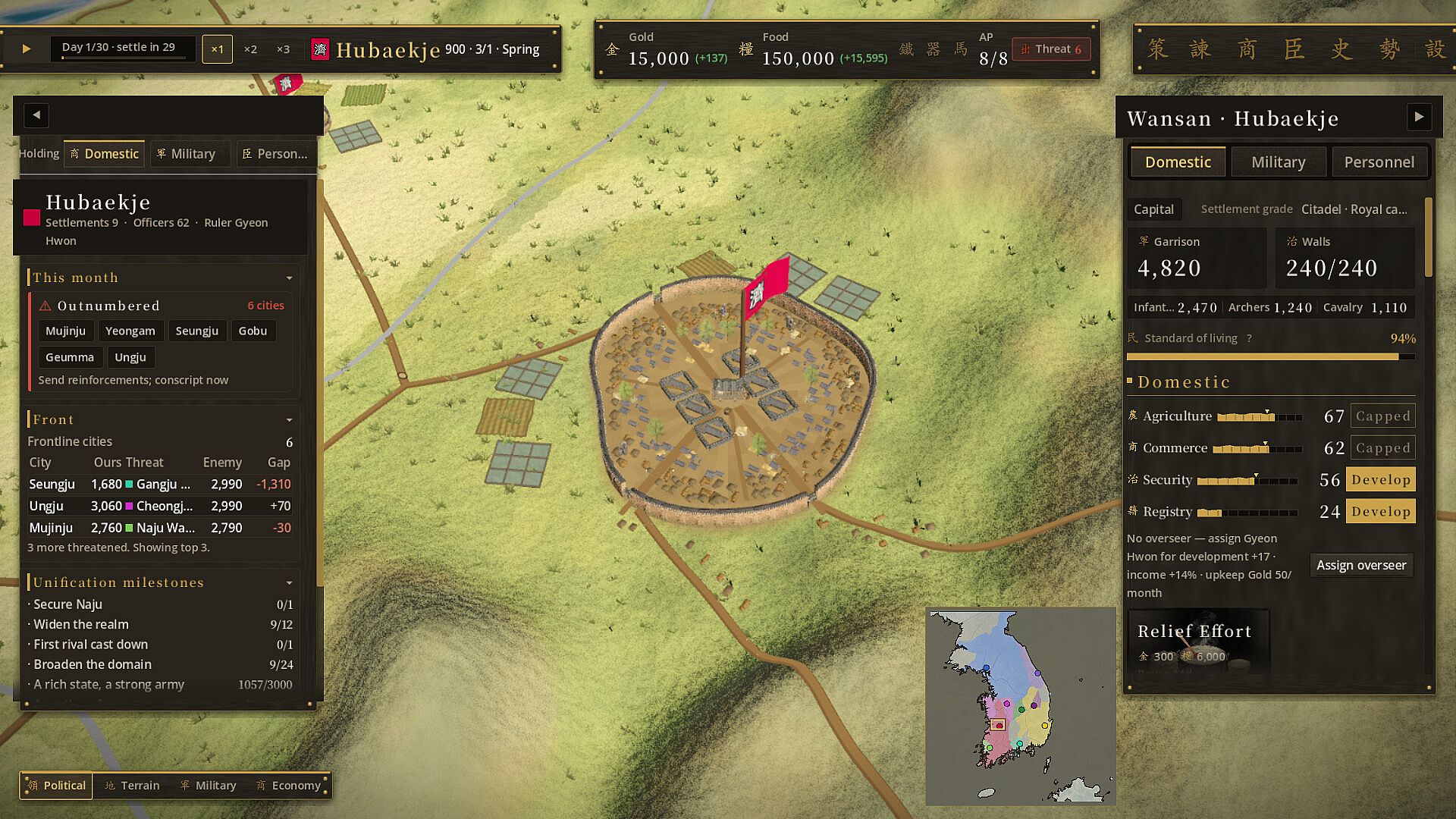
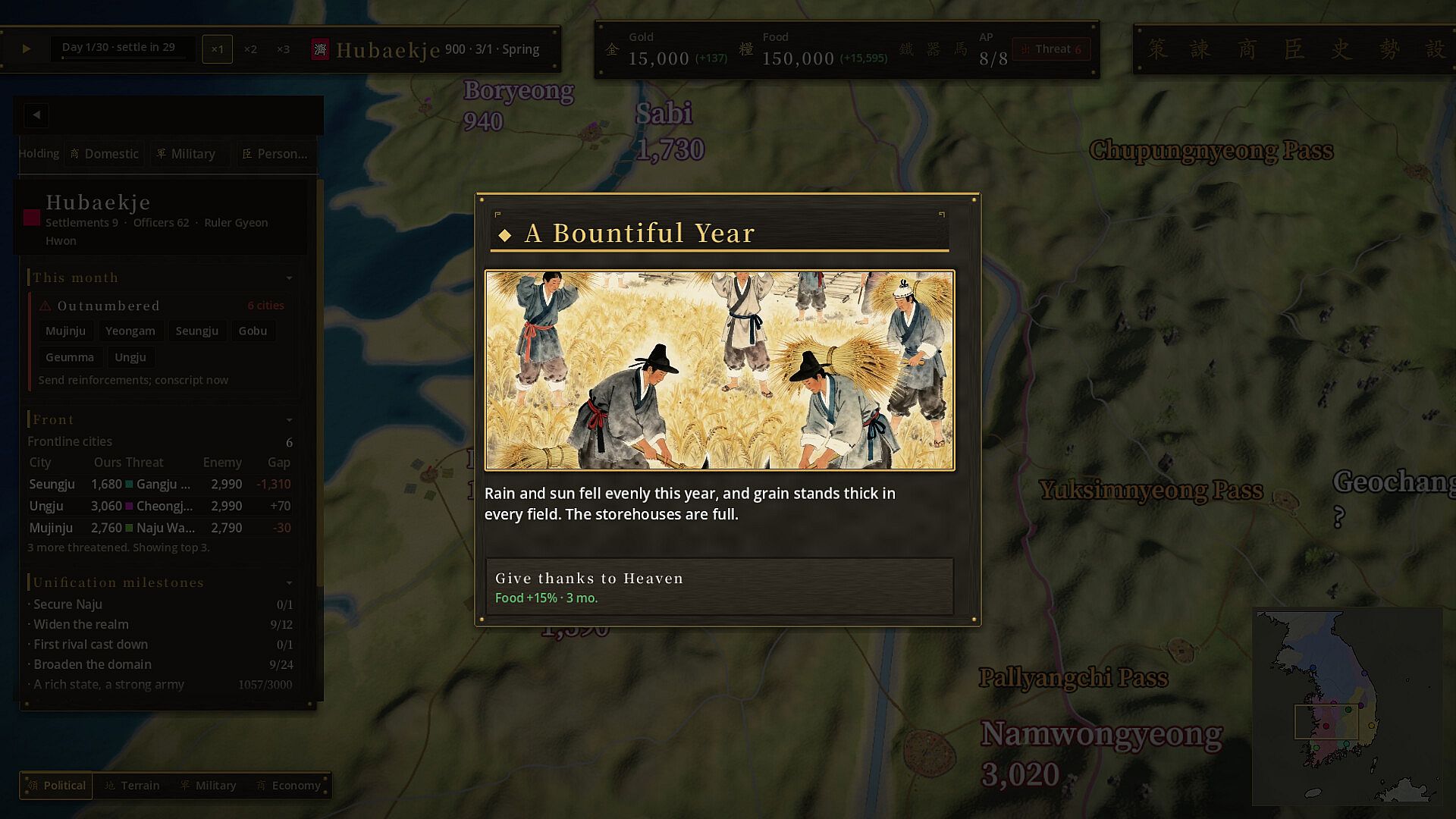
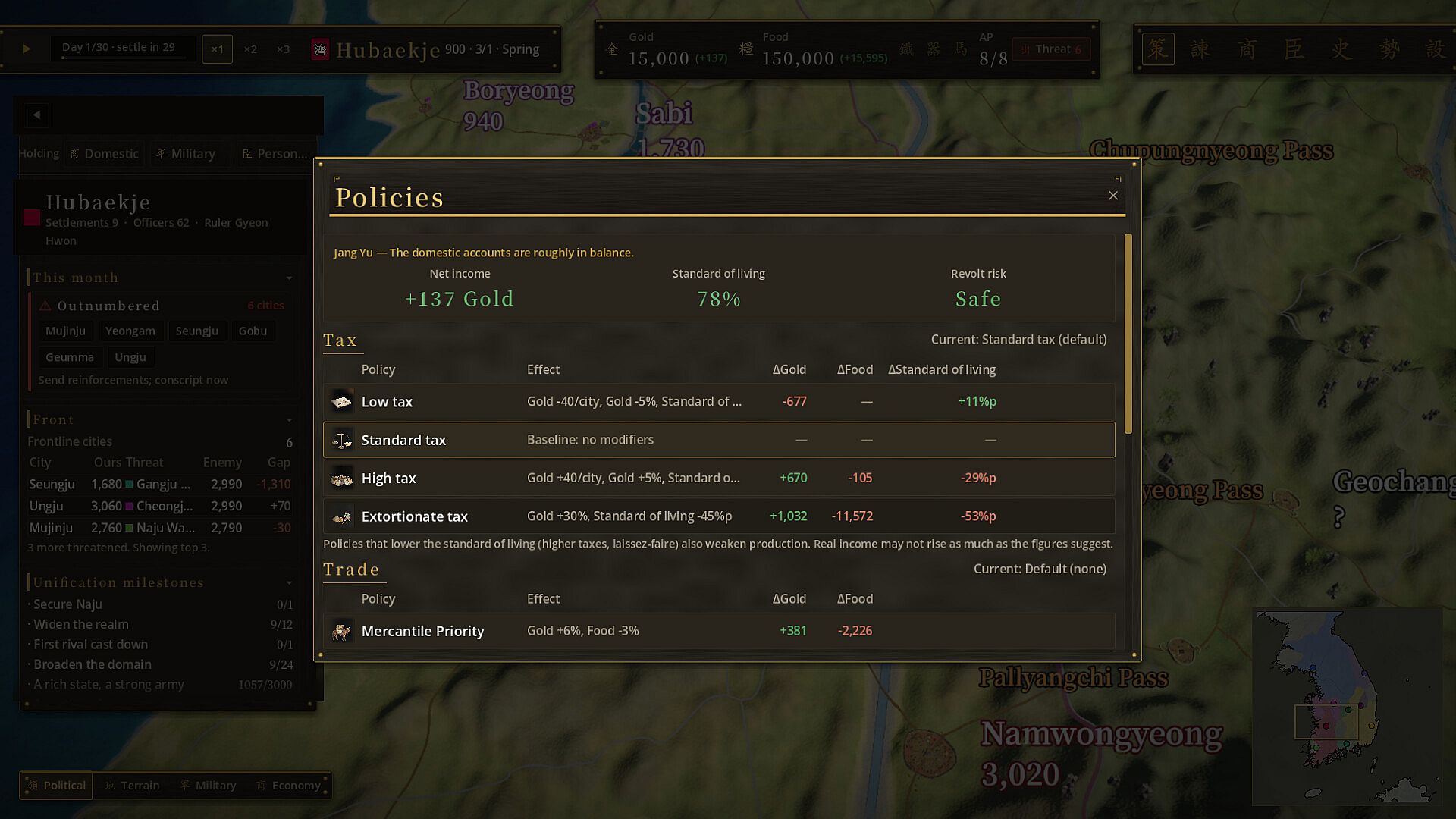
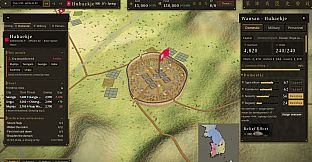
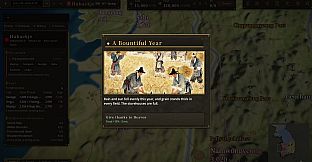
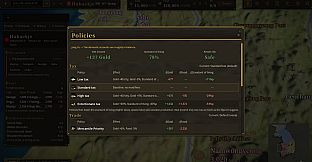
The core loop centers on balancing internal development with external expansion. Settlements require careful management of farmland, trade routes, and infrastructure to maintain order and generate resources. Players construct 23 distinct building types while monitoring living standards, as declining conditions reduce tax revenue and risk widespread revolts. A system of 12 policies allows adjustments to taxation and governance, where aggressive fiscal measures boost short-term gains at the expense of public loyalty.
Supply chains form another critical layer. Iron extraction feeds into tool production and horse breeding, enabling the fielding of specialized cavalry units. These elements tie directly into military operations, where armies must maintain connections to supply lines or face starvation during extended campaigns.
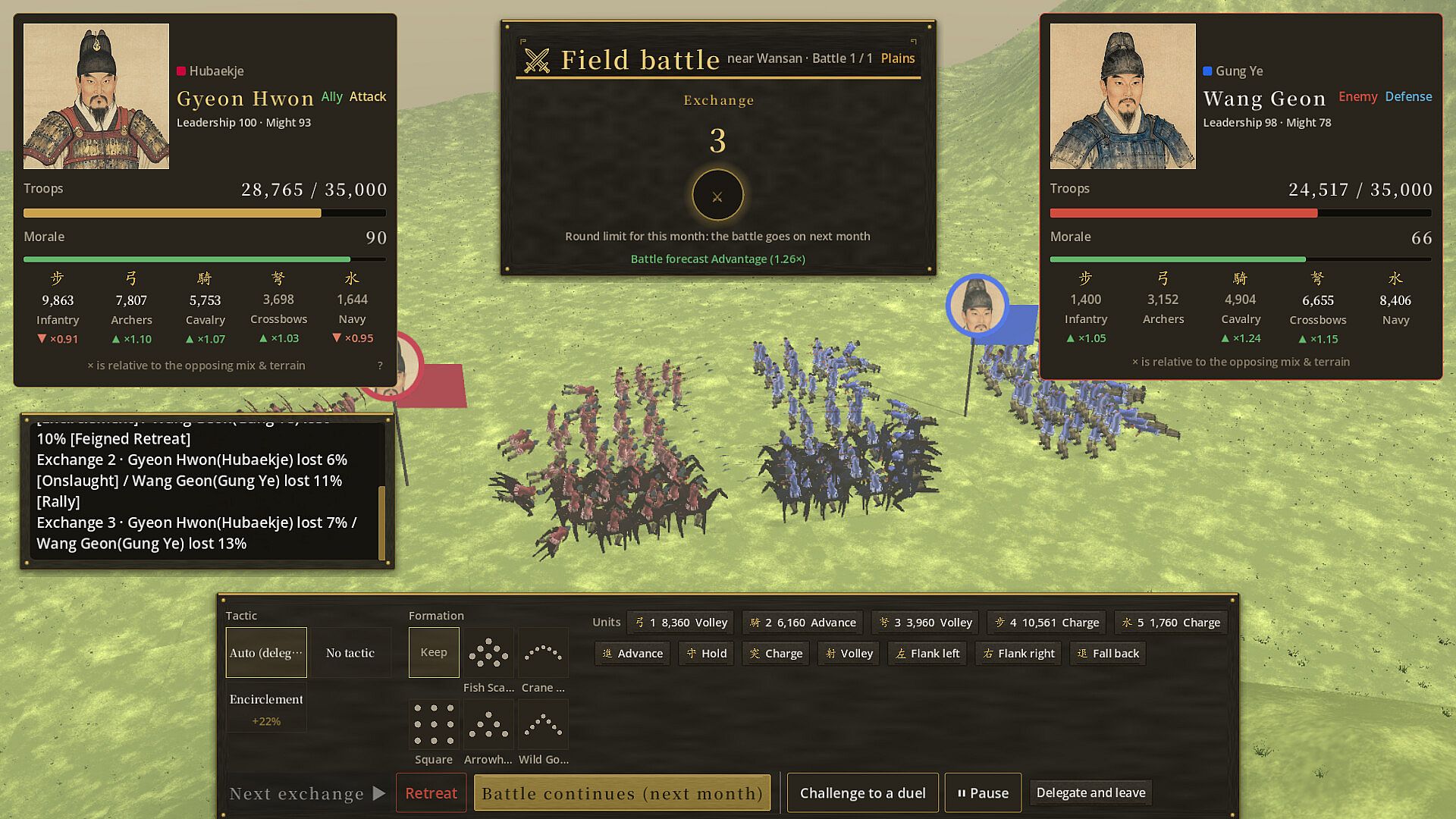
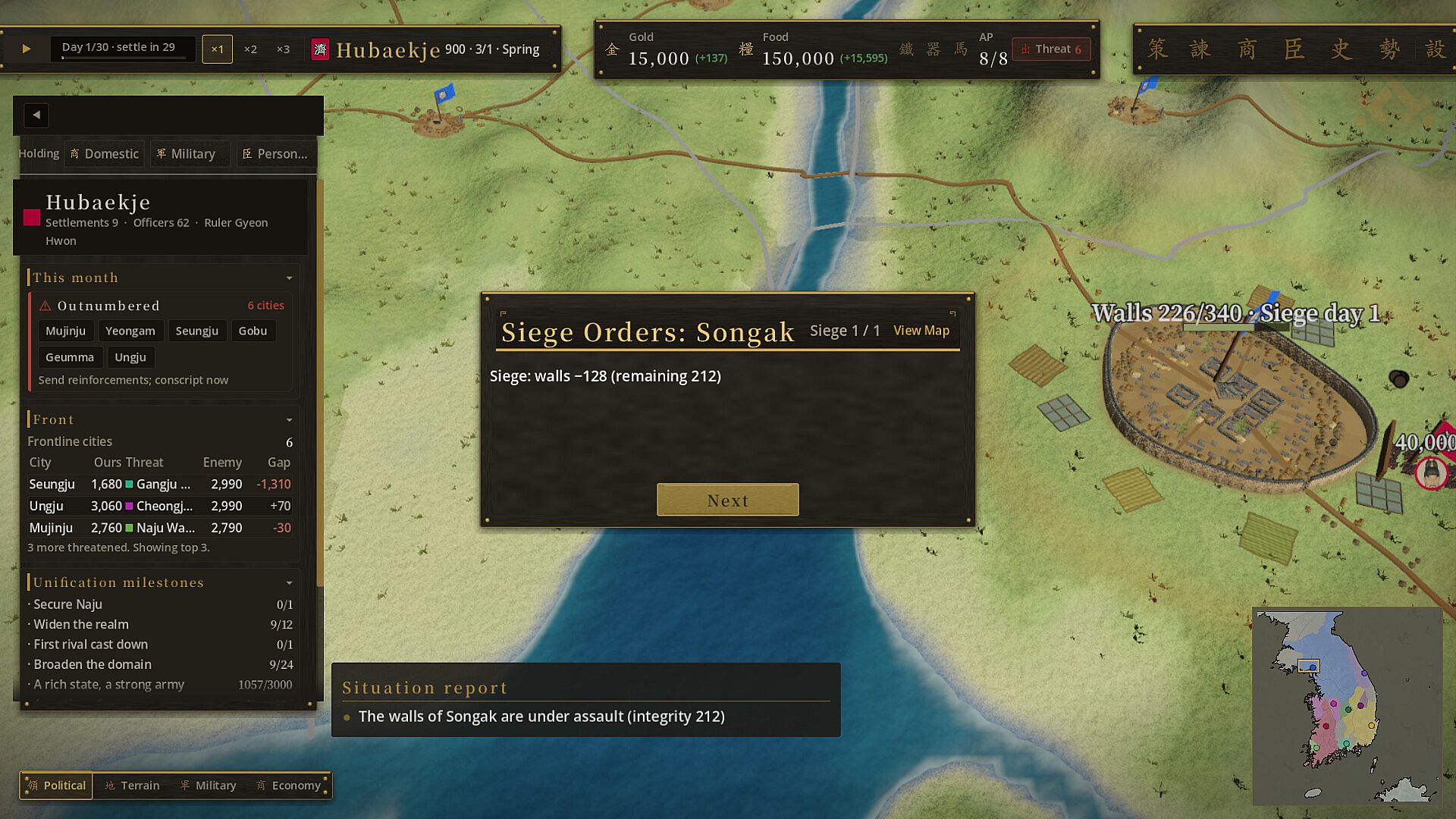
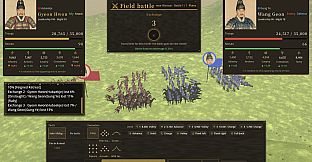
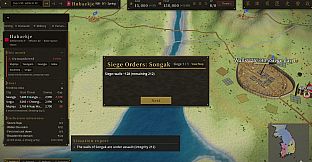
Combat unfolds on a map constructed from real elevation data, with terrain features such as mountains, rivers, roads, and fords shaping movement and engagement opportunities. Armies consist of infantry, archers, cavalry, crossbowmen, and naval forces. Field battles incorporate unit counters, formations, and 15 distinct tactics, alongside opportunities for generals to engage in single combat. Sieges offer choices between prolonged blockades to starve defenders or direct assaults on fortifications.
Game Modes
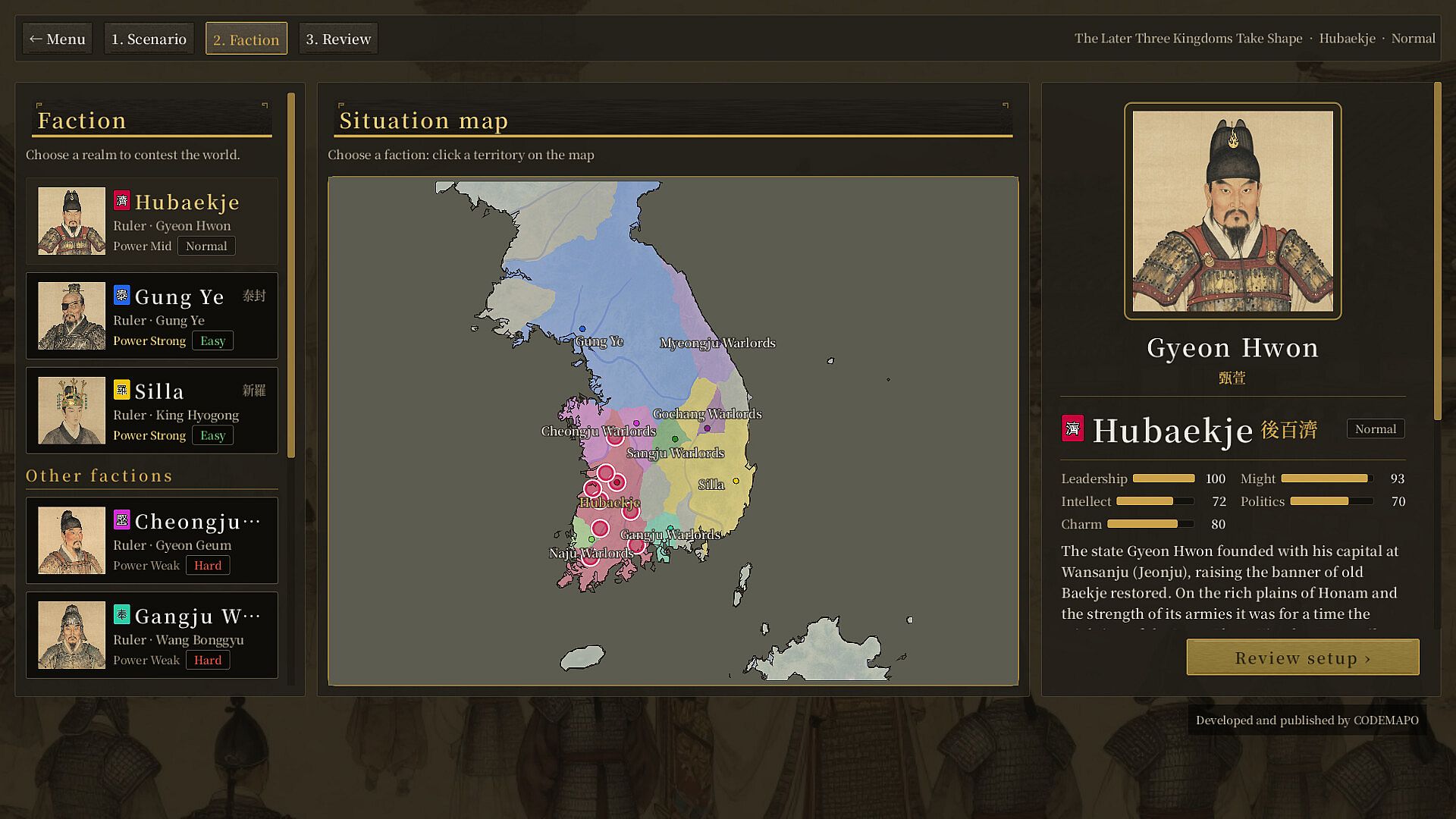
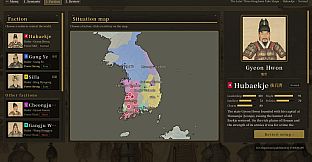
The game structures its experience around five distinct scenarios drawn from the era of warlords through the final confrontations between emerging Goryeo and Hubaekje. Each scenario supports play with any of 26 available factions, allowing players to alter the historical trajectory of unification. Historical events drawn from primary sources like the Samguk Sagi and Goryeosa integrate into these campaigns to ground decisions in period context.
Progression emphasizes long-term statecraft rather than isolated matches. Faction choice determines starting position, available leaders, and strategic priorities, with outcomes shaped by cumulative choices in governance, alliances, and military campaigns across the full timeline of each scenario.
Historical Figures and Diplomacy
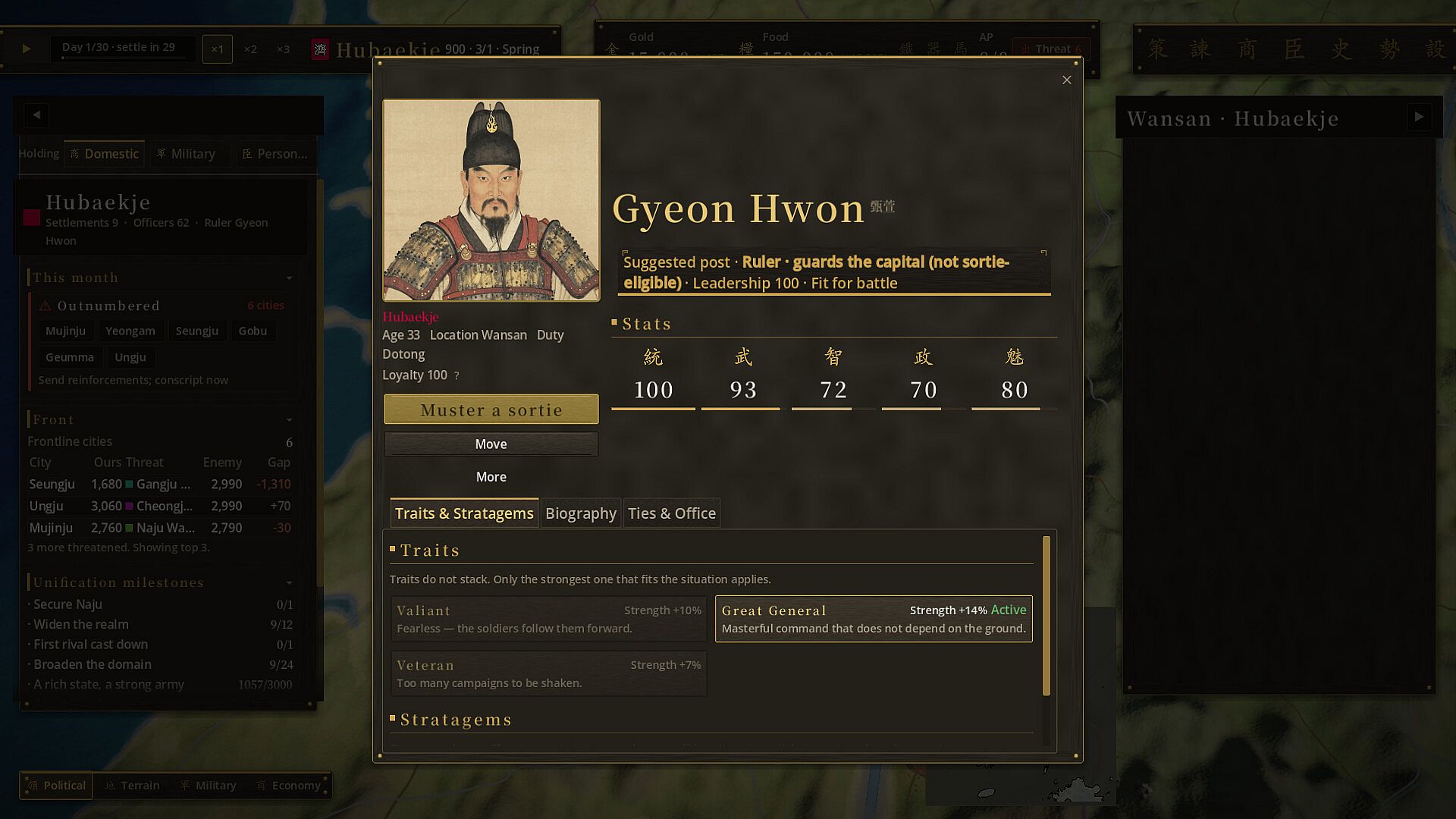
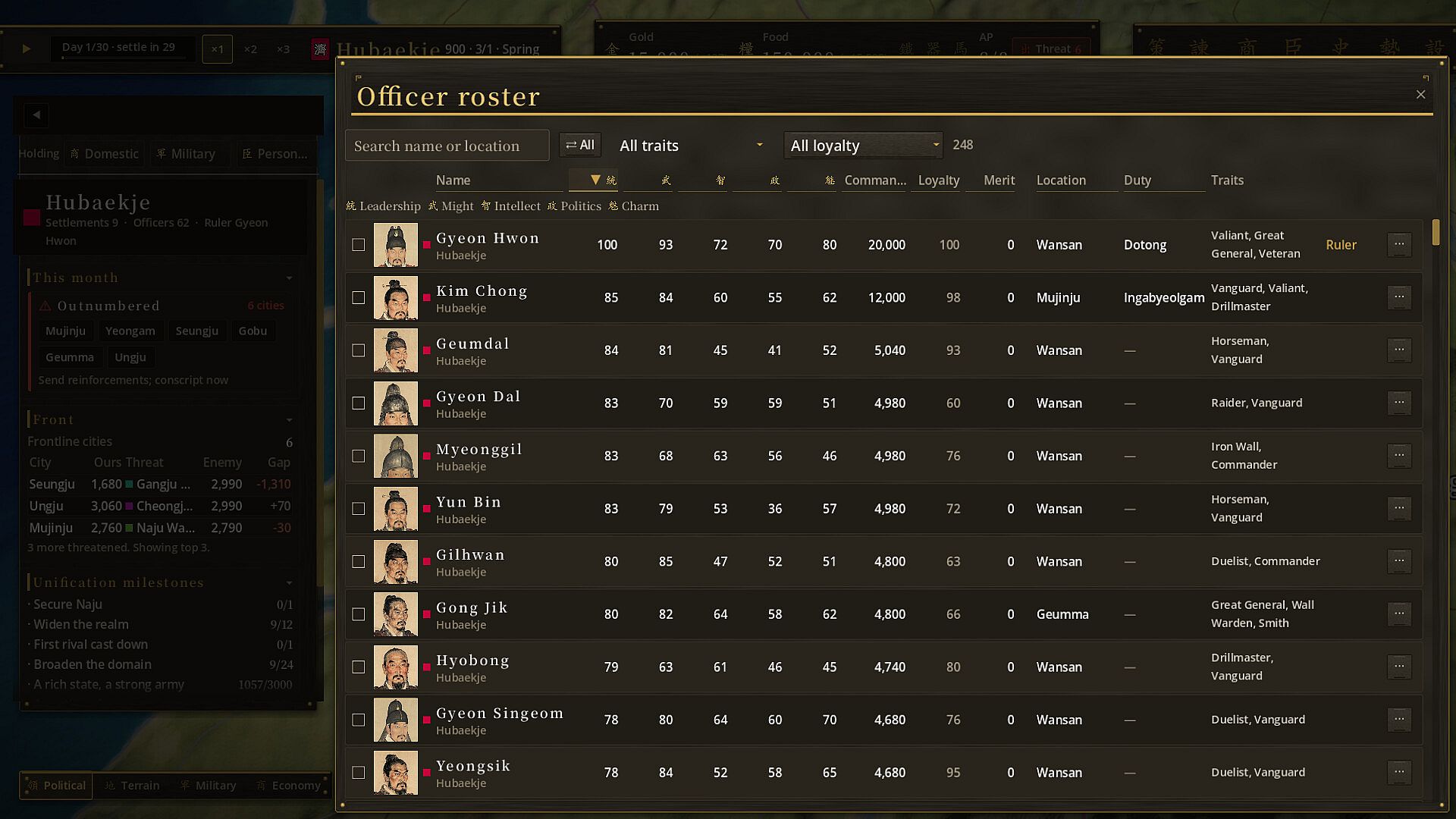
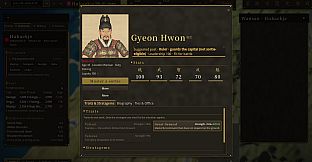
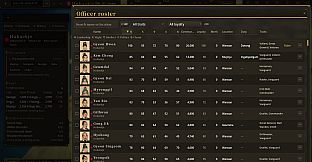
Over 500 historical figures populate the game, each carrying unique statistics, traits, and biographical details. Notable leaders such as Gyeon Hwon, Gung Ye, and Wang Geon appear alongside lesser-known castle lords. Players appoint key officials including a Grand General and Strategist while distributing 32 legendary treasures, such as the Seven-Branched Sword, to influence loyalty and effectiveness.
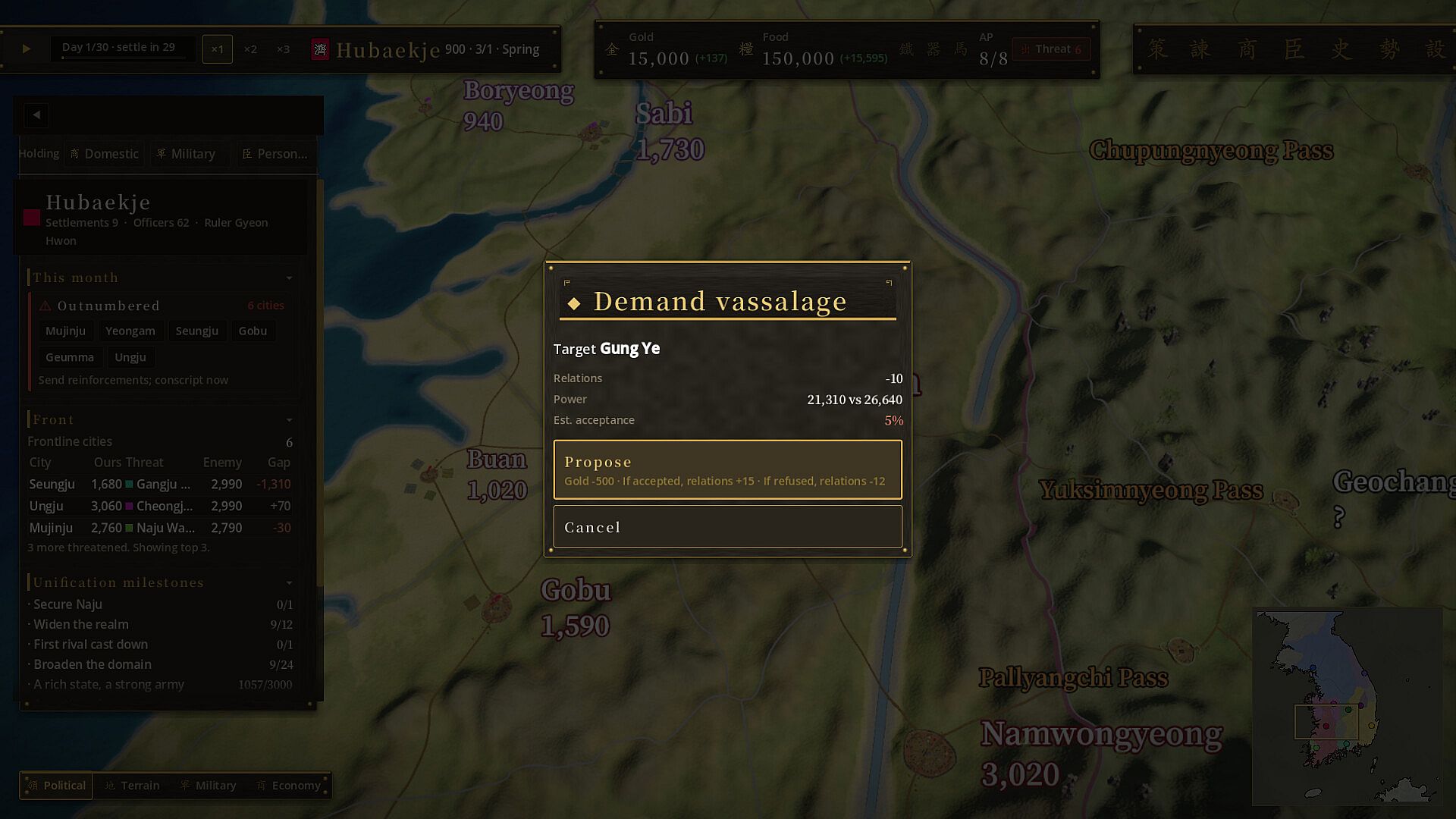
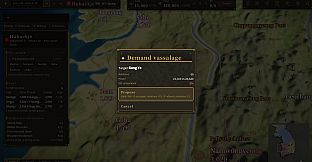
Diplomacy extends beyond simple treaties. Options include alliances, truces, tribute payments, vassalage arrangements, political marriages, hostage exchanges, and covert actions like sowing discord or offering bribes. Captured enemy generals present ongoing decisions: integration into one's own forces or execution to remove threats.
Is It Worth Playing?
This title targets players who enjoy detailed grand strategy and historical simulation. Its emphasis on interconnected systems of economy, policy, supply, and multi-layered warfare rewards careful planning and adaptation across extended campaigns. The inclusion of numerous historical figures and authentic source material adds depth for those interested in the specific period of Korean history.
With its focus on single-player scenarios and faction variety, the game suits individuals seeking a self-contained experience without reliance on multiplayer elements. Availability in multiple languages further broadens accessibility. Those drawn to management of settlements, diplomatic maneuvering, and tactical battles on realistic terrain will find substantial content to explore once released.












