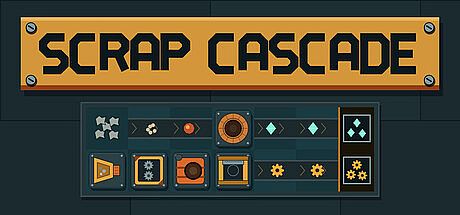


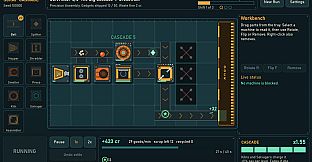
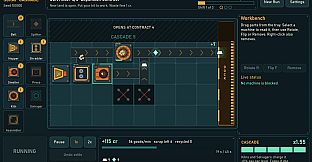
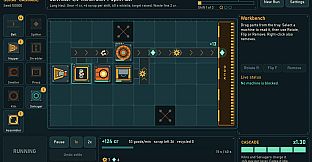
Scrap Cascade is a strategy, indie, simulation game built around factory automation and resource management on PC. Players construct compact production lines that convert incoming scrap into finished goods through a series of timed shifts, then refine those layouts across repeated runs to meet escalating contract demands.
Gameplay
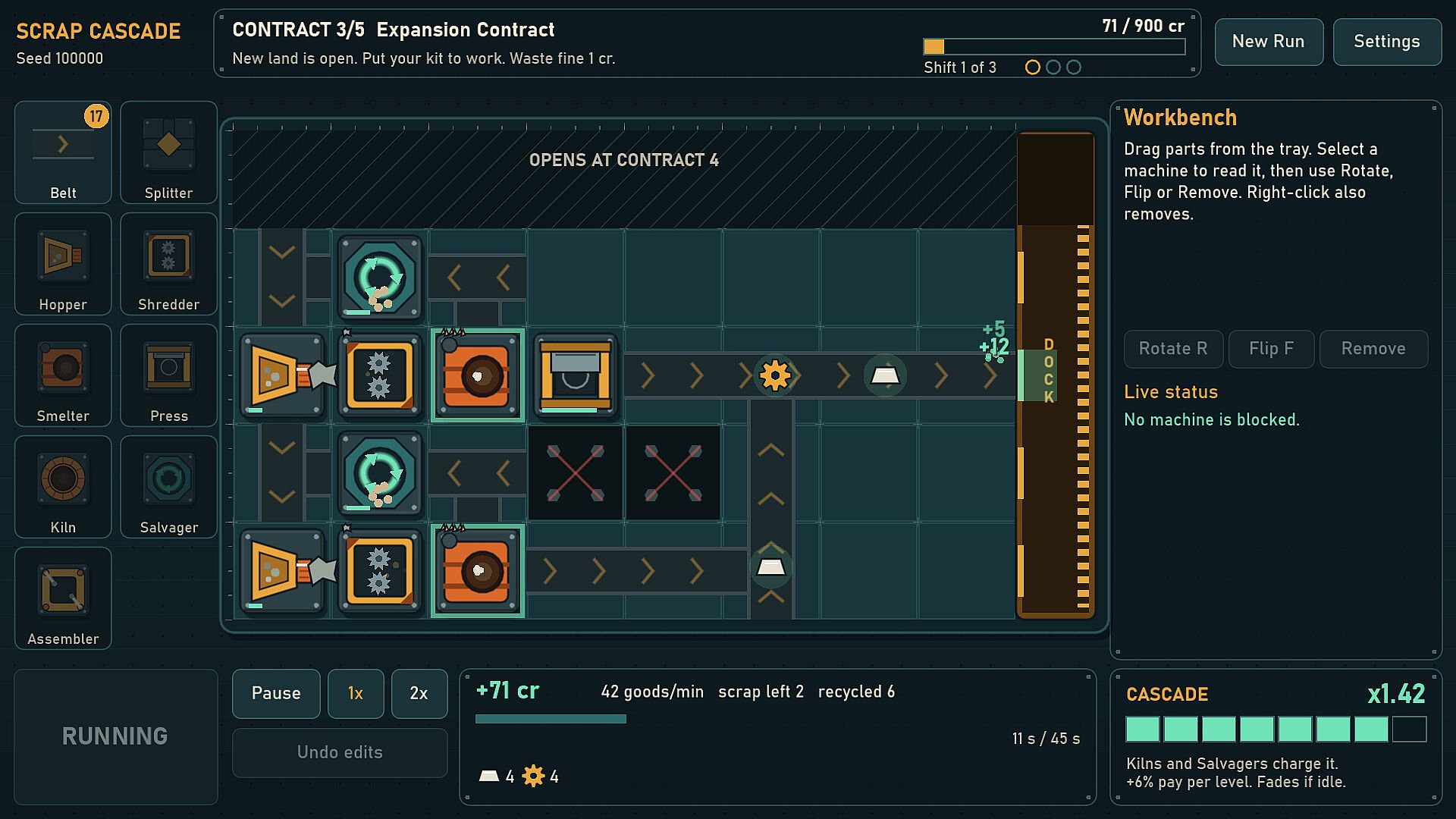
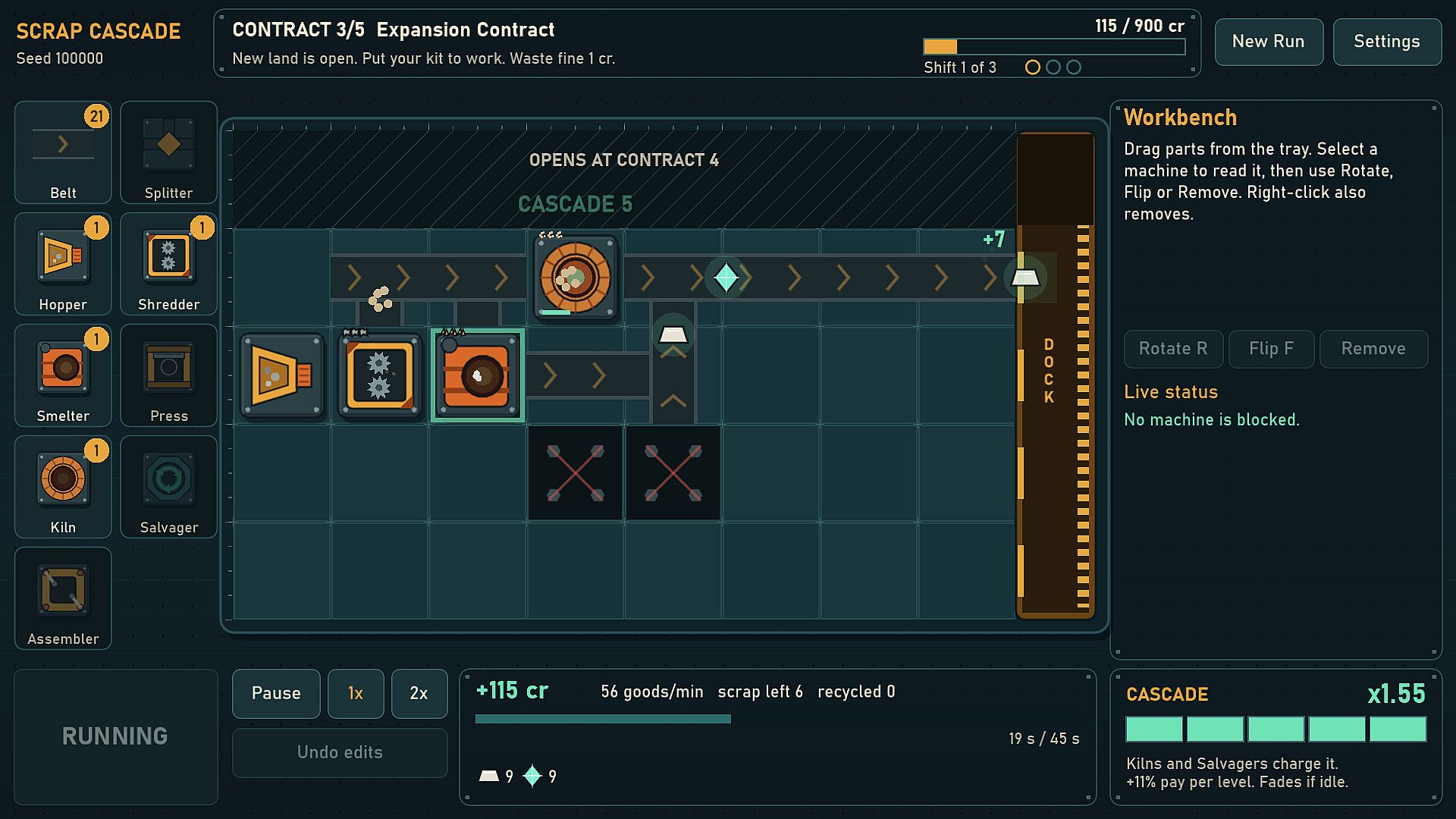
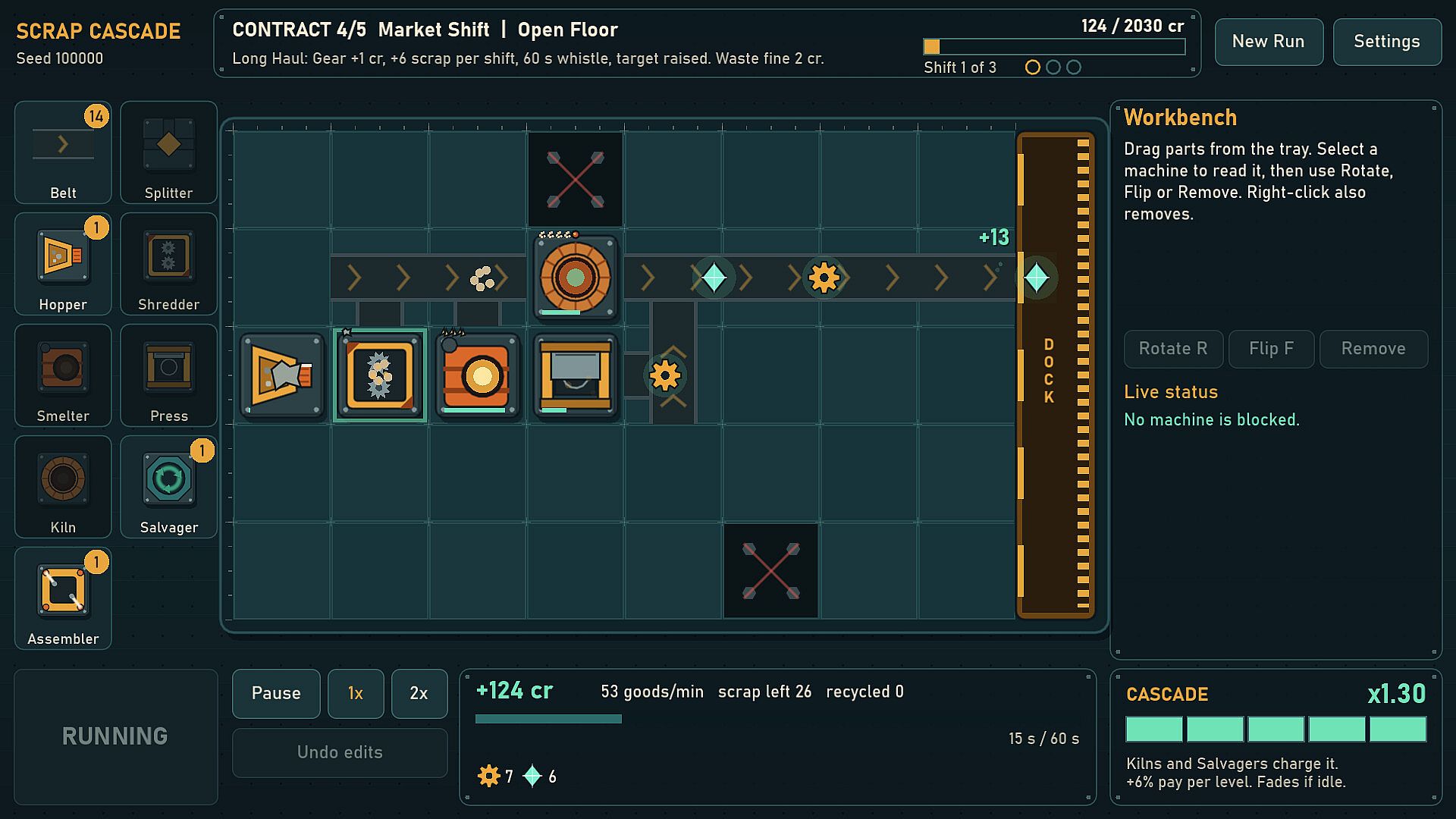
The core loop centers on arranging machines and conveyor belts to create efficient chains. Scrap enters the system and moves through shredders, smelters, kilns, and salvagers. Byproducts such as dust and slag accumulate and can jam lines if left unmanaged, so players route them into kilns to produce glass or reclaim them as fresh scrap for another pass. Successful deliveries charge a cascade bonus that increases the value of each shipment.
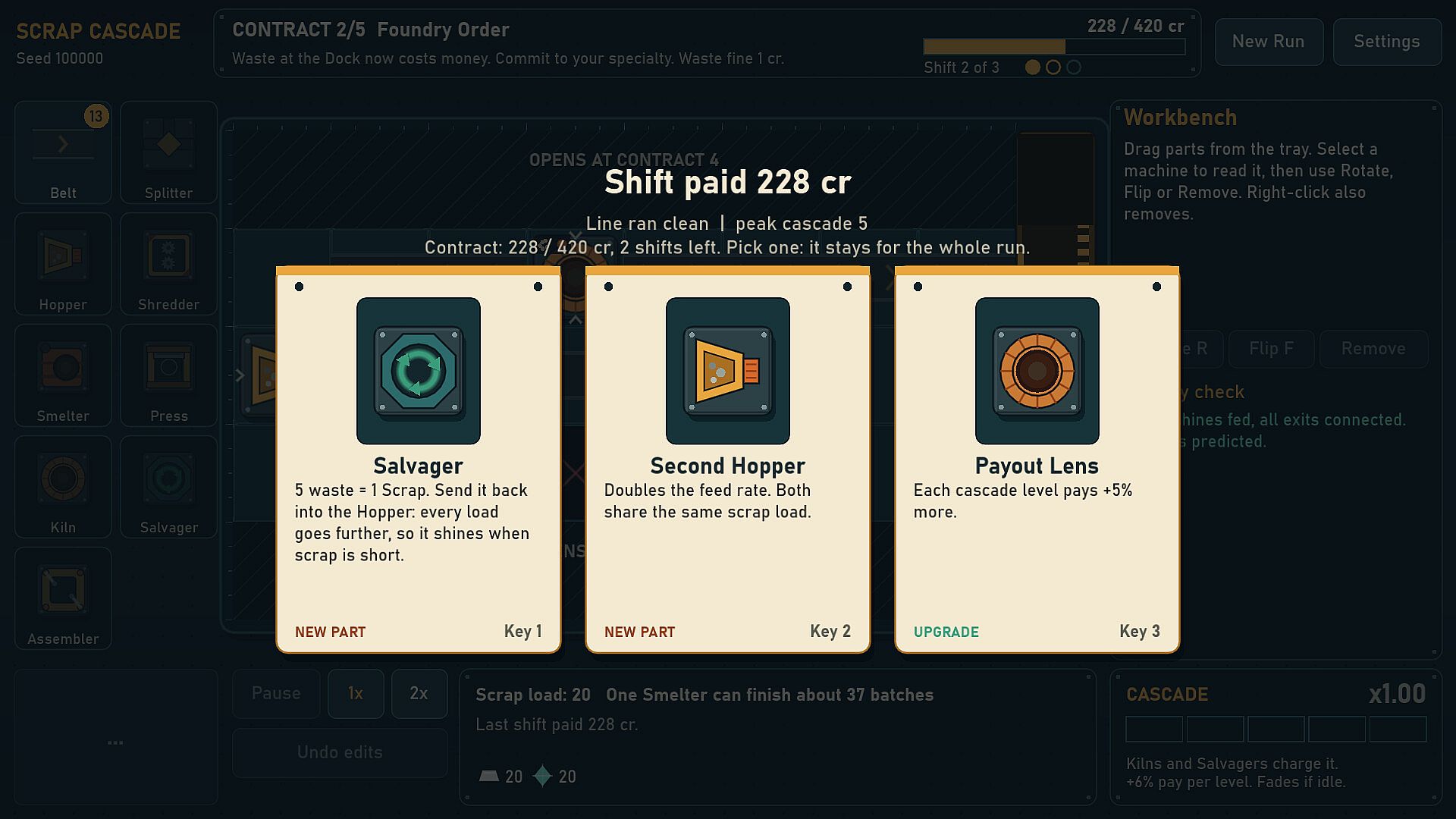
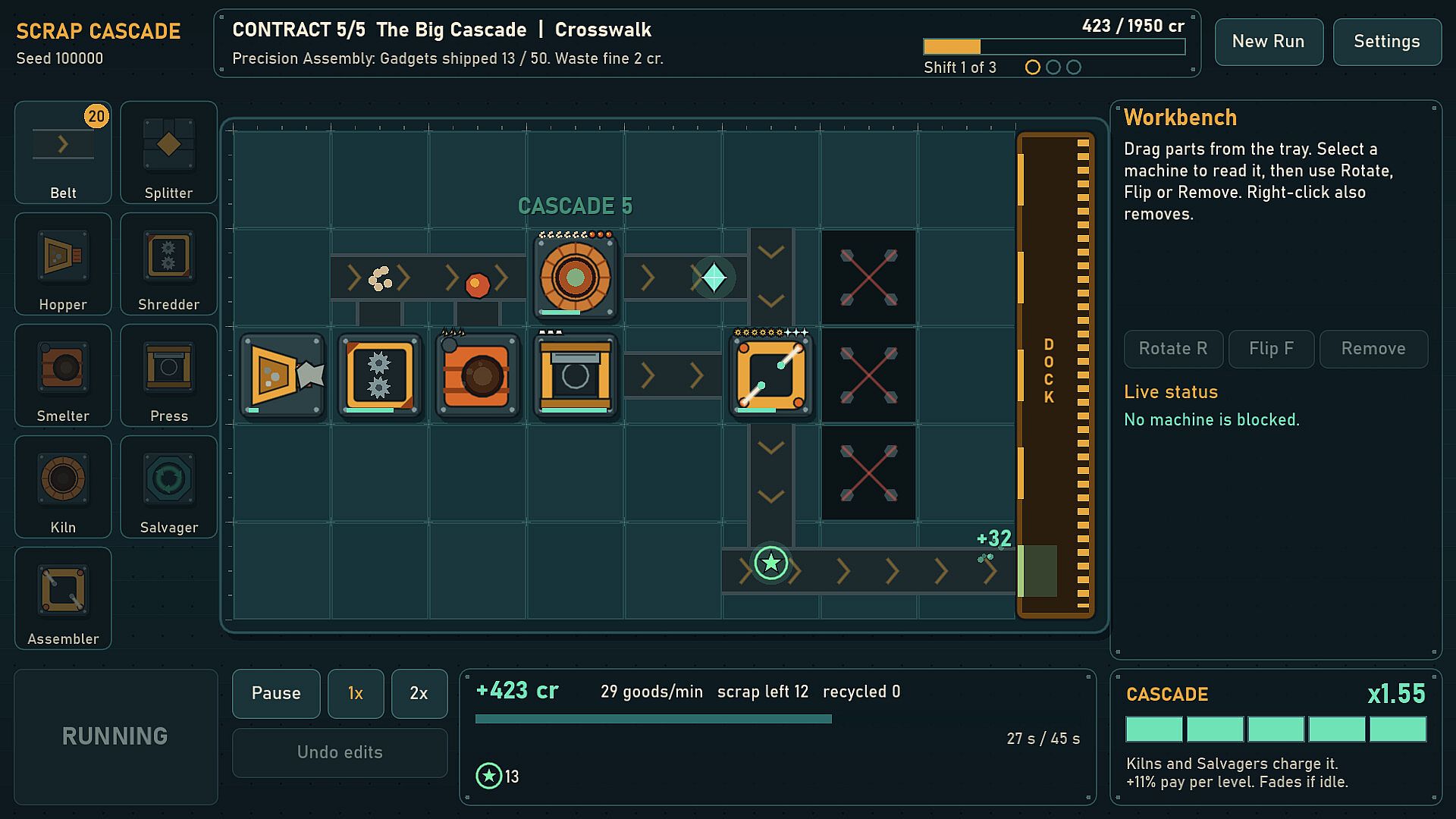
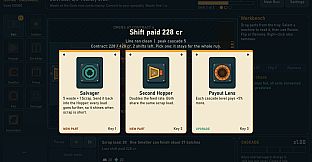
Between shifts, players draft new machines and upgrades from card offers. Choices include adding speed to a slow section, opening a parallel production line, or committing to glass and recycling paths. Gears and glass combine into higher-value gadgets, but space must be allocated for both material flows to converge at the right points. Planning occurs during short pauses in the timed production windows, allowing rotation of parts, redirection of outputs, and reversal of recent edits to test alternate routes.
Materials number eight types across nine machine and conveyor variants. Cards alter available options each run, forcing adaptation to different starting conditions and later obstacles such as price shifts, blocked factory spaces, and closed shipping lanes.
Game Modes
Each session follows a fixed structure of five contracts that progress from basic starter lines to specialized factories. A seed determines the sequence of card offers and the specific challenges that appear in later contracts. Players can replay the same seed to refine a layout or generate a fresh one for new combinations and obstacles.
Completion of a run unlocks Hard difficulty, followed by Expert. Both raise production targets and add stricter constraints on space, timing, and resource flow. An interactive starting guide and a how-to-play reference explain the systems without interrupting the main experience.
Progression and Factory Design
The player bench grows with each contract, providing more room for additional machines and parallel paths. Early runs focus on establishing reliable throughput, while later ones require balancing multiple output types and responding to dynamic conditions like fluctuating prices or restricted lanes. Previewing the next challenge before selecting a reward helps inform long-term layout decisions.
Final delivery options include shipping glass, reclaiming scrap, or assembling gadgets. Meeting both the specific production goal and the overall credit target completes the contract. This structure rewards iterative improvement within a single run and across multiple attempts on the same seed.
Is It Worth Playing?
Scrap Cascade suits players who enjoy deliberate factory-building simulations and short-to-medium planning sessions. The emphasis on byproduct management, card-driven variety, and progressive constraints creates a focused loop that rewards careful observation and incremental adjustments rather than rapid clicking or large-scale construction. Those who appreciate refining a layout over several contracts or testing different seeds will find consistent depth in the mechanics. The game remains in active development with its core systems intact, making it a solid choice for fans of automation strategy titles seeking a compact, repeatable experience.