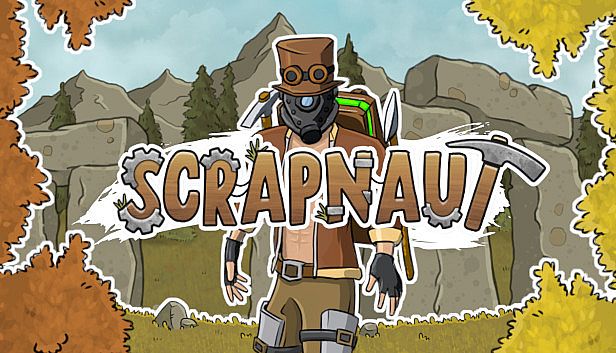




























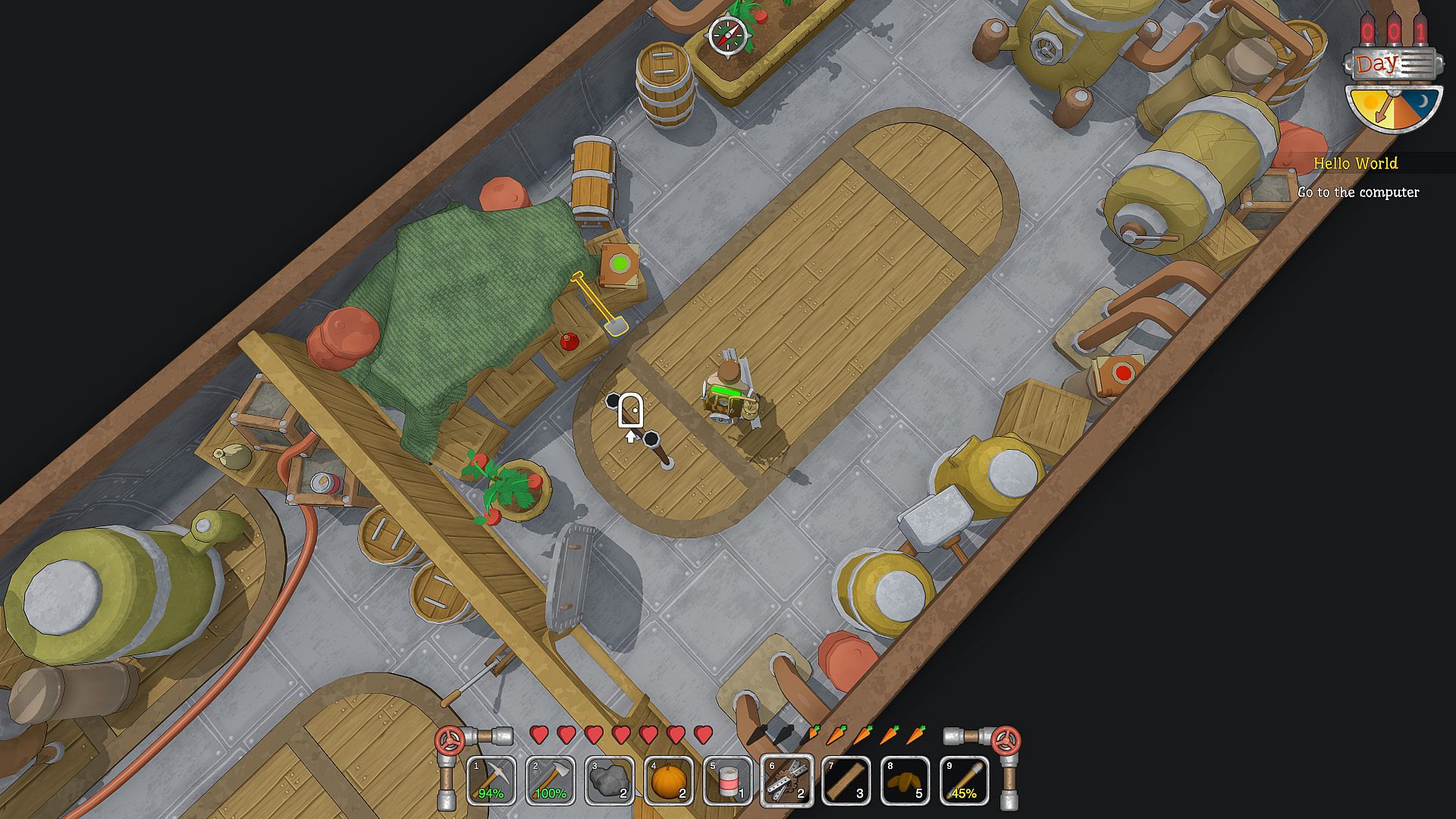
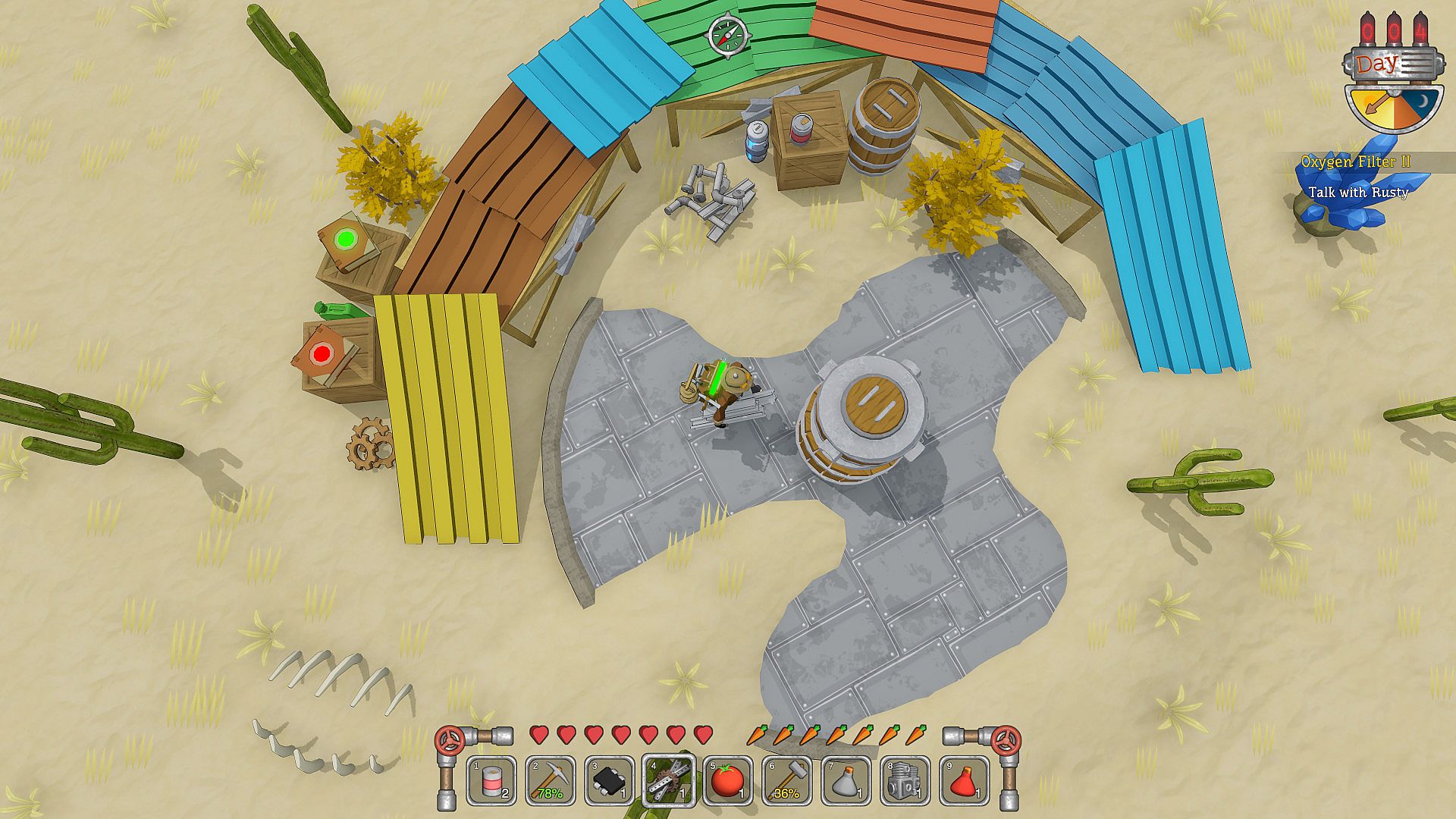

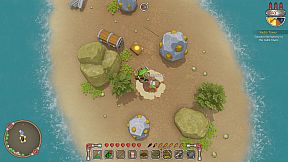
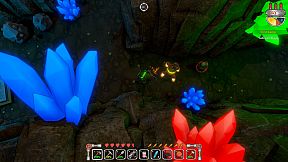
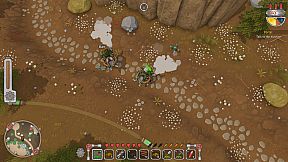
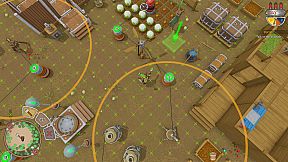
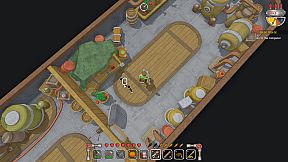
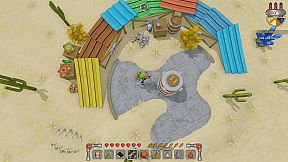
Scrapnaut is an indie top-down survival game on PC that combines base building, resource management, and steampunk visuals in an open world setting. Players gather materials, establish farms, prepare meals, and fortify structures while handling threats from the environment and hostile forces. The experience supports both solo play and shared sessions, allowing progression through exploration, crafting, and defense systems.
Gameplay
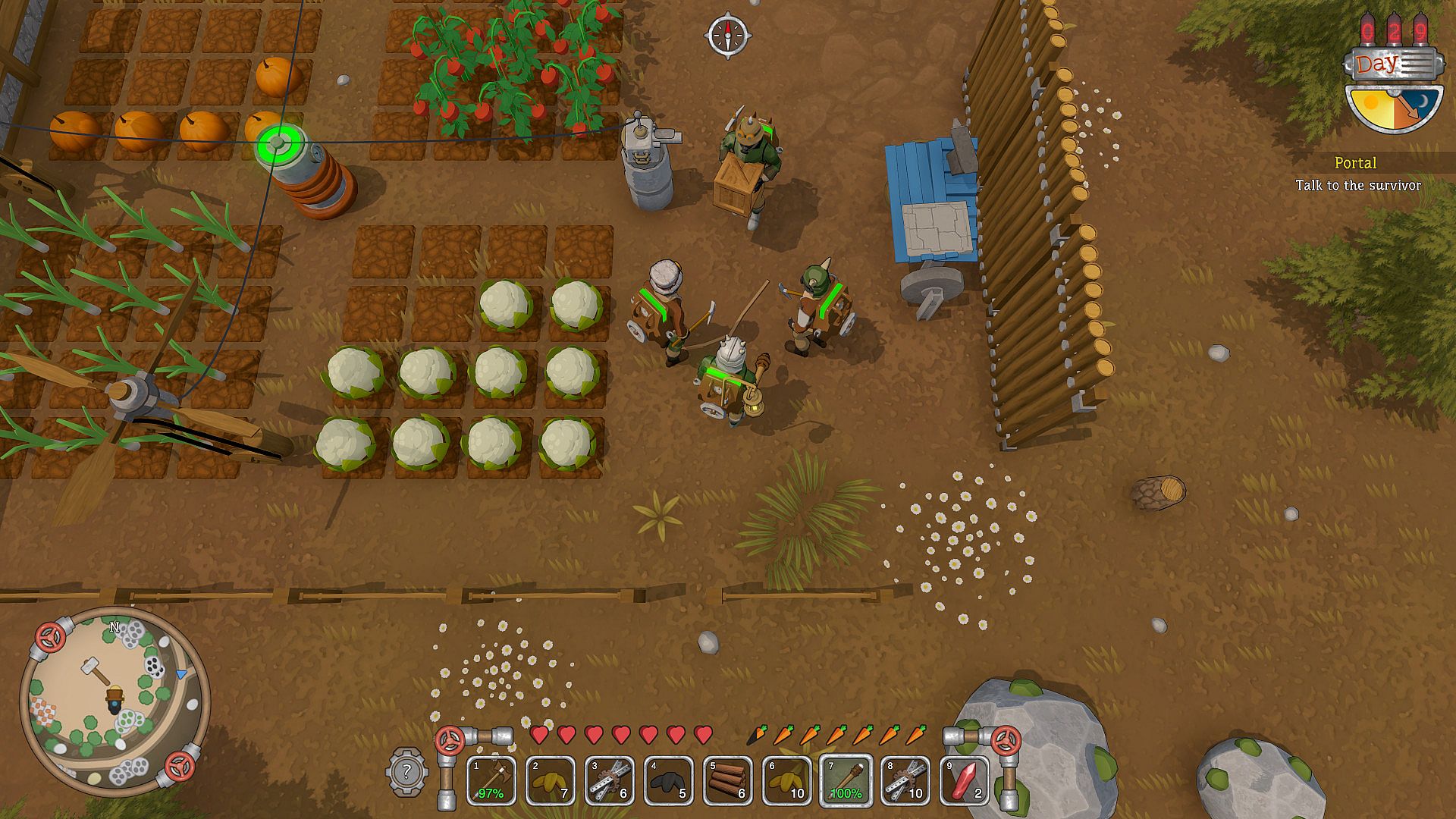
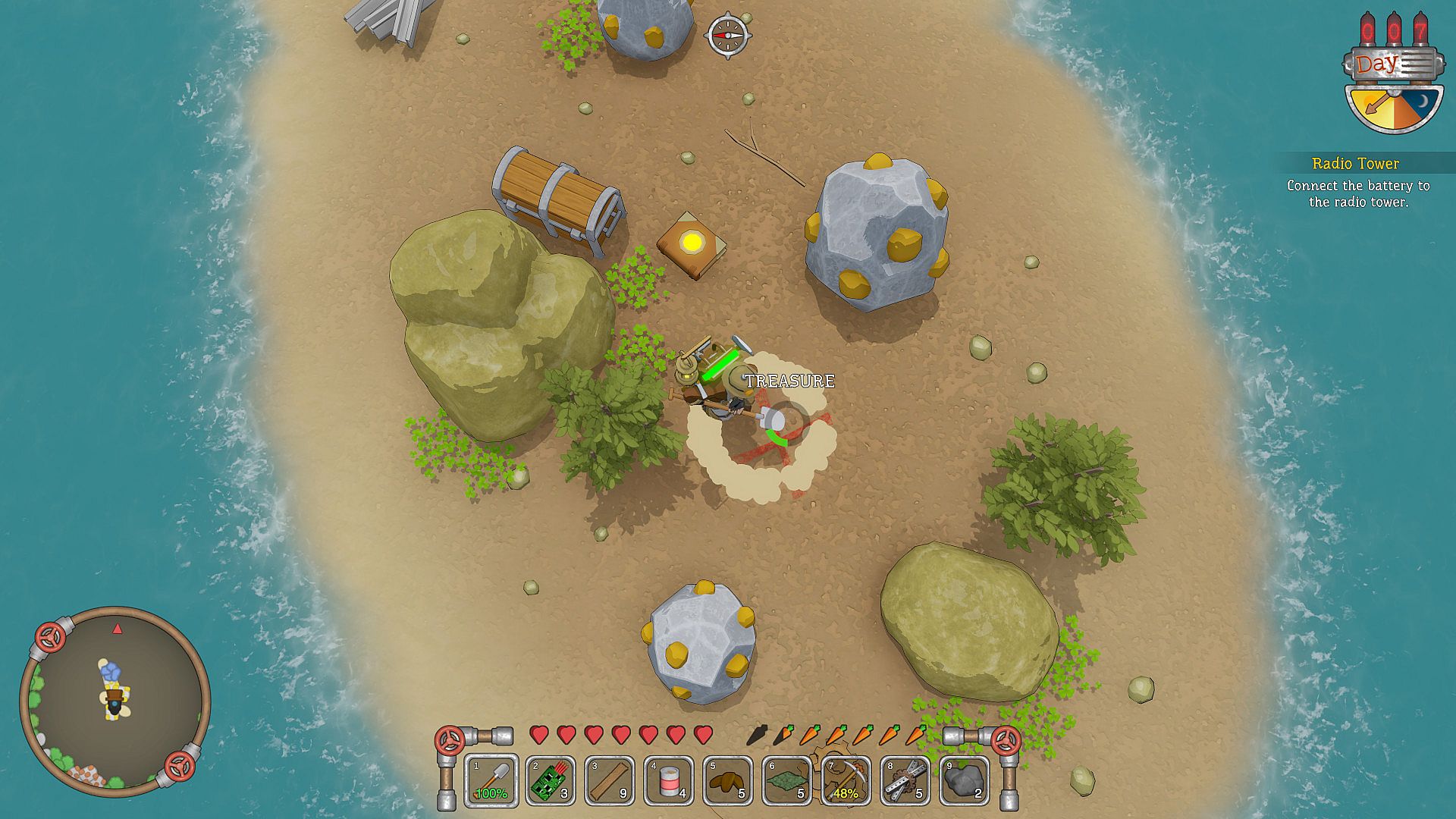
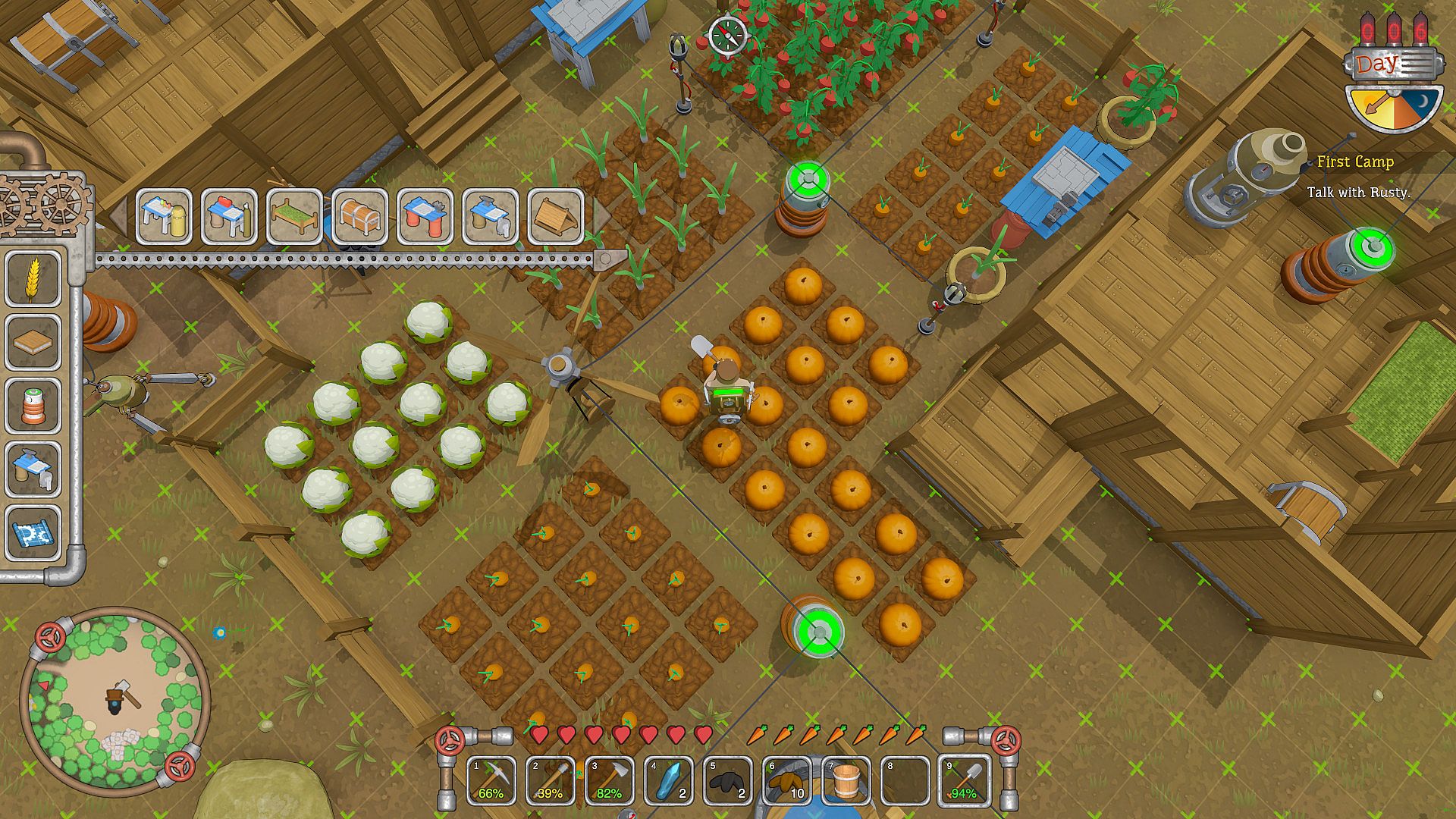
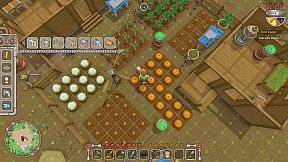
The core loop revolves around scavenging resources across varied landscapes to support construction and daily needs. Players collect items to repair equipment, fulfill tasks, and expand their holdings. Farming plays a central role, with dedicated plots for growing produce that feeds into a cooking system using pots to prepare multiple meal varieties for sustained energy and bonuses.
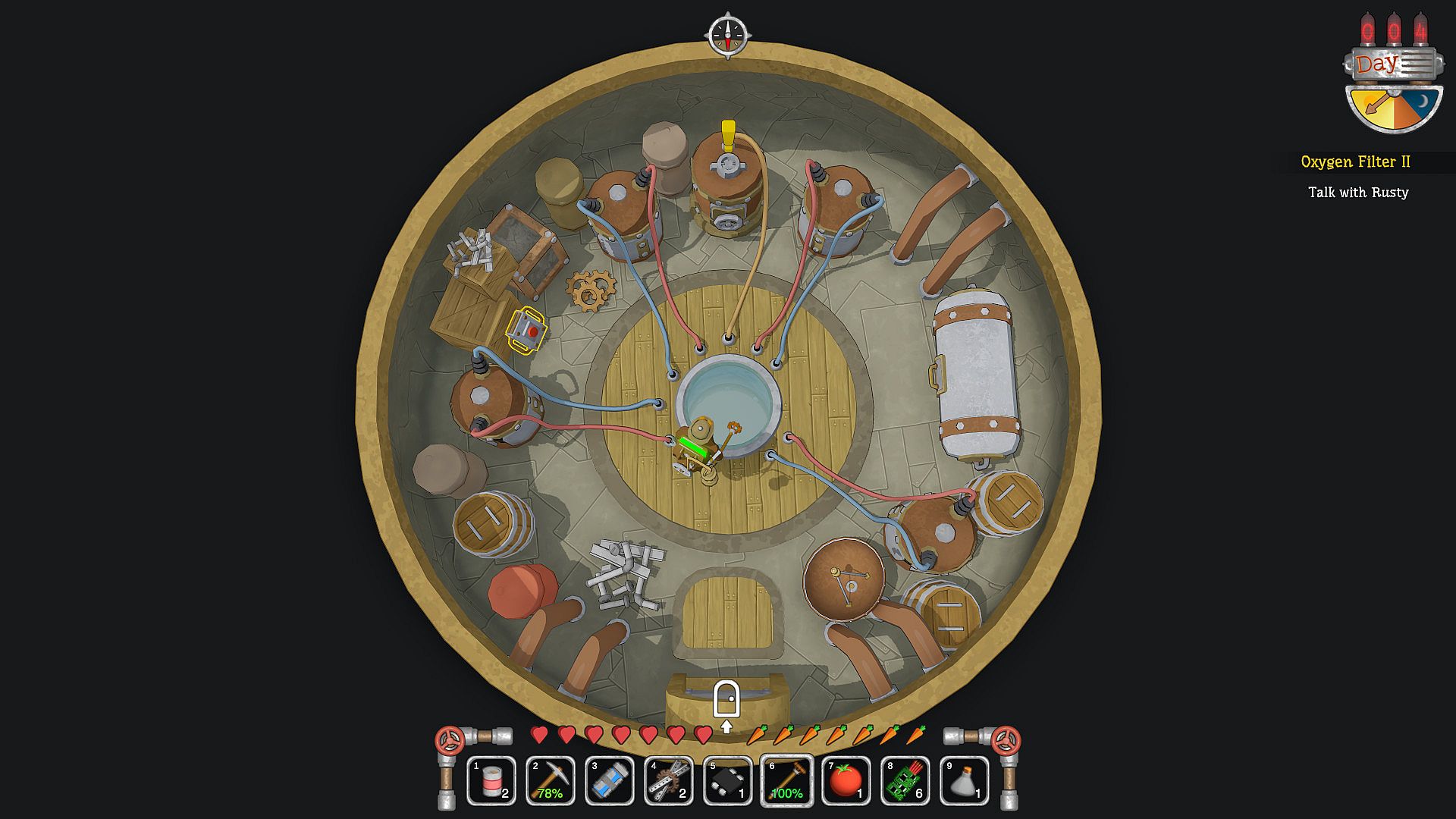
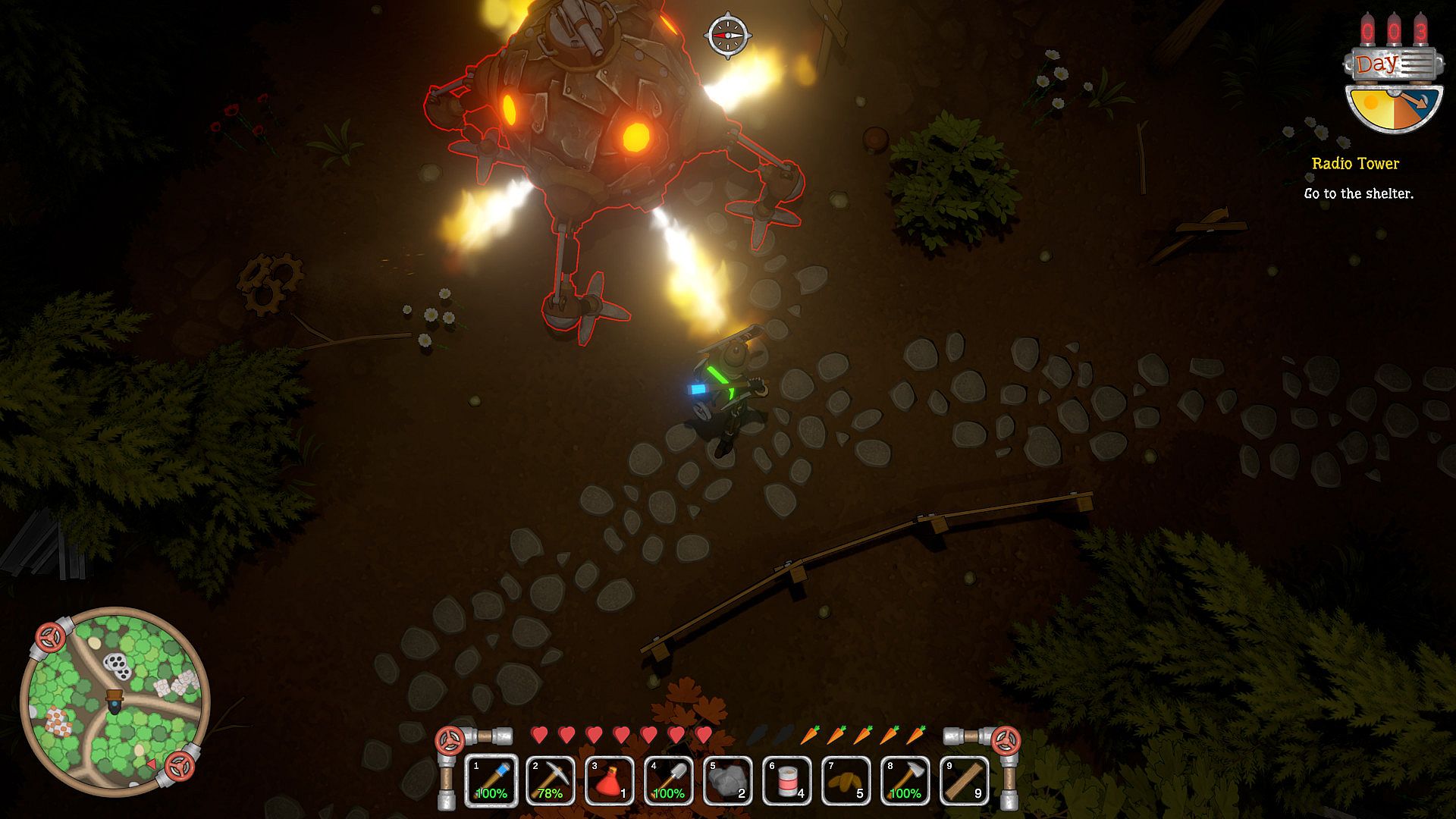
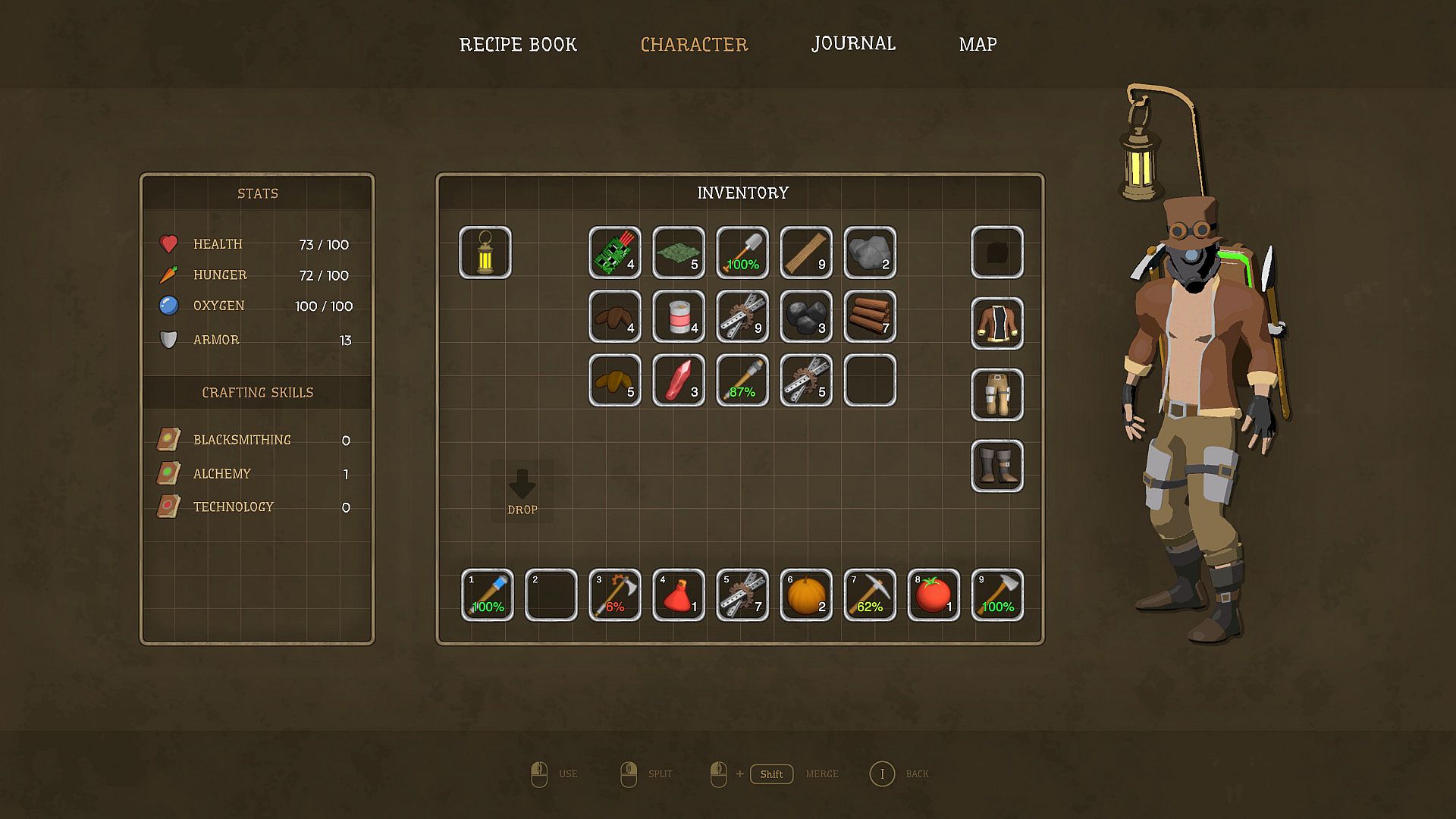
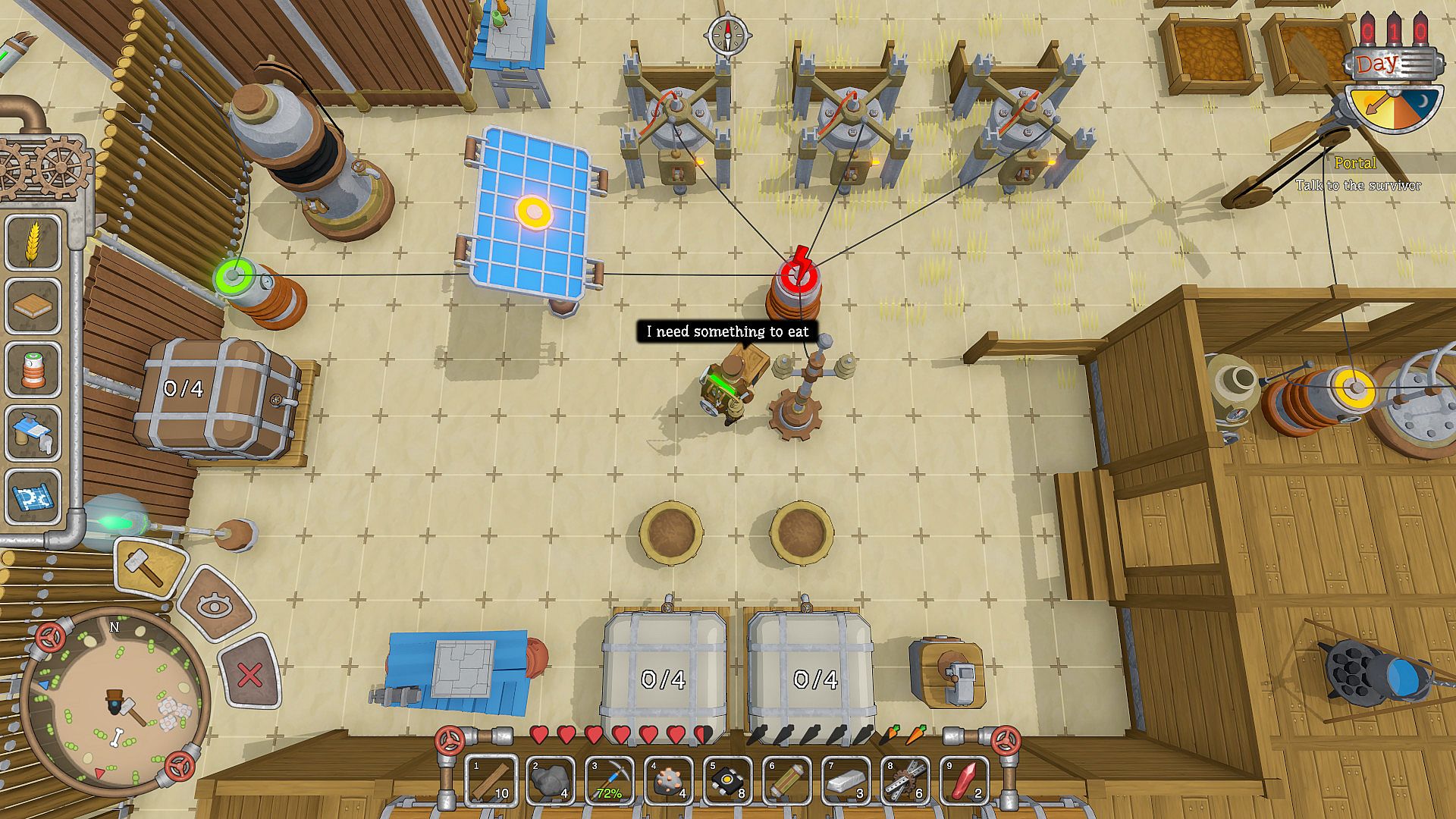
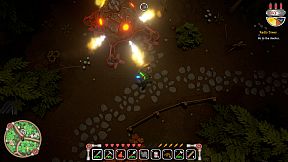
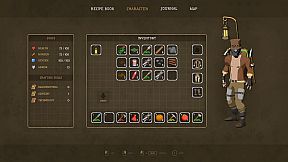
Energy production forms another key pillar, requiring players to generate and store electricity to power bases and devices. Biomes influence available materials and construction options, enabling unique builds tailored to each region. Equipment upgrades cover weapons and protective gear, with combat encounters balanced by the option to engage stronger opponents or retreat strategically.
Quests provide directed goals alongside freeform base improvement. Raids introduce periodic pressure, demanding prepared defenses and quick responses. The steampunk theme appears in machinery, structures, and item designs that blend mechanical and industrial aesthetics with survival needs.
Game Modes
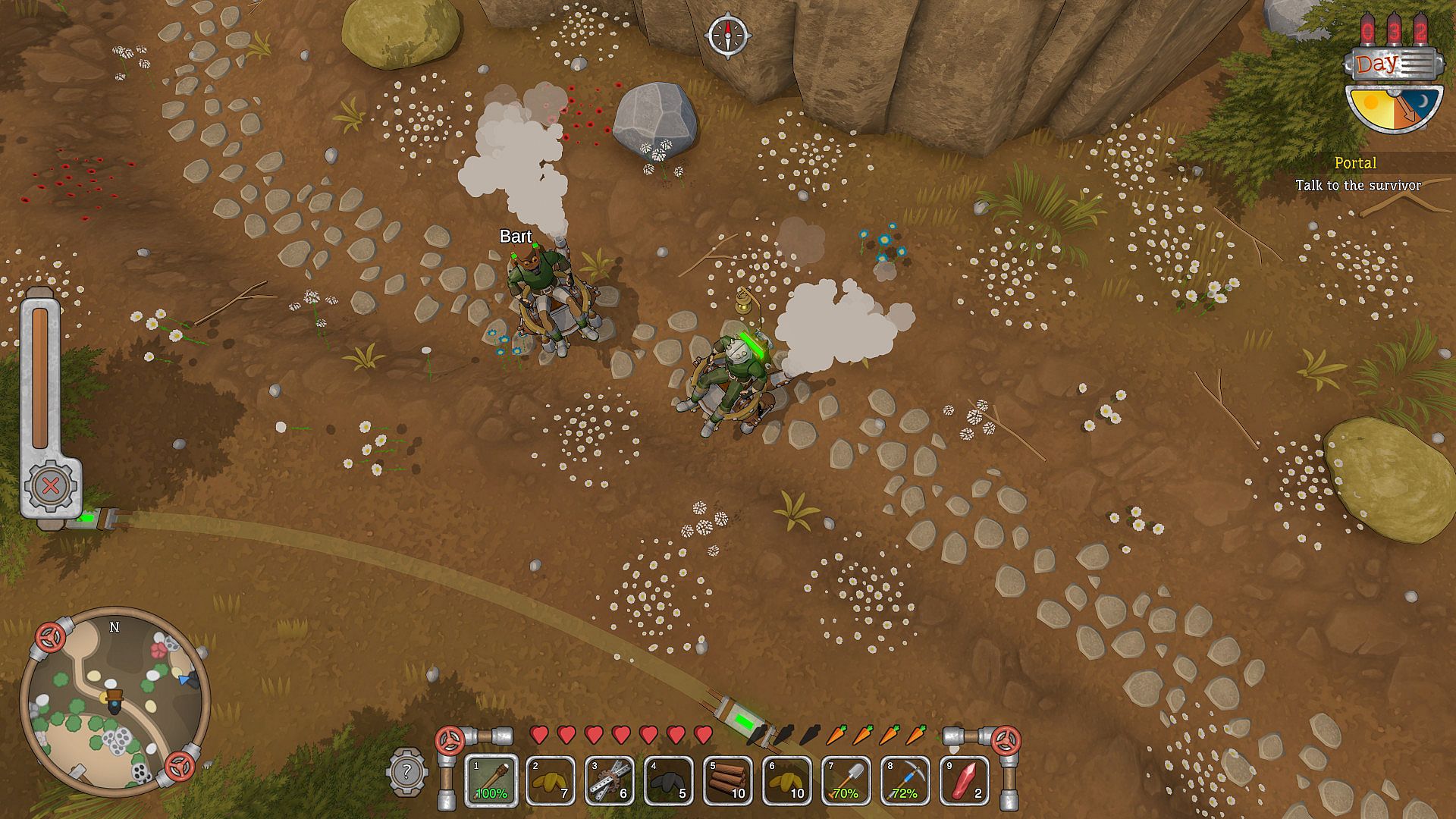
Scrapnaut offers singleplayer as the starting option, where all systems function independently without external input. Sessions can transition to online cooperation at any point, supporting up to four participants who share the same world and objectives. This flexibility lets individuals begin alone and later invite others to collaborate on farms, bases, and defenses.
Cooperative play emphasizes joint resource gathering, base expansion, and raid handling. No separate competitive or specialized variants exist beyond these core options, keeping focus on survival progression whether alone or in a small group.
Exploration and Biomes
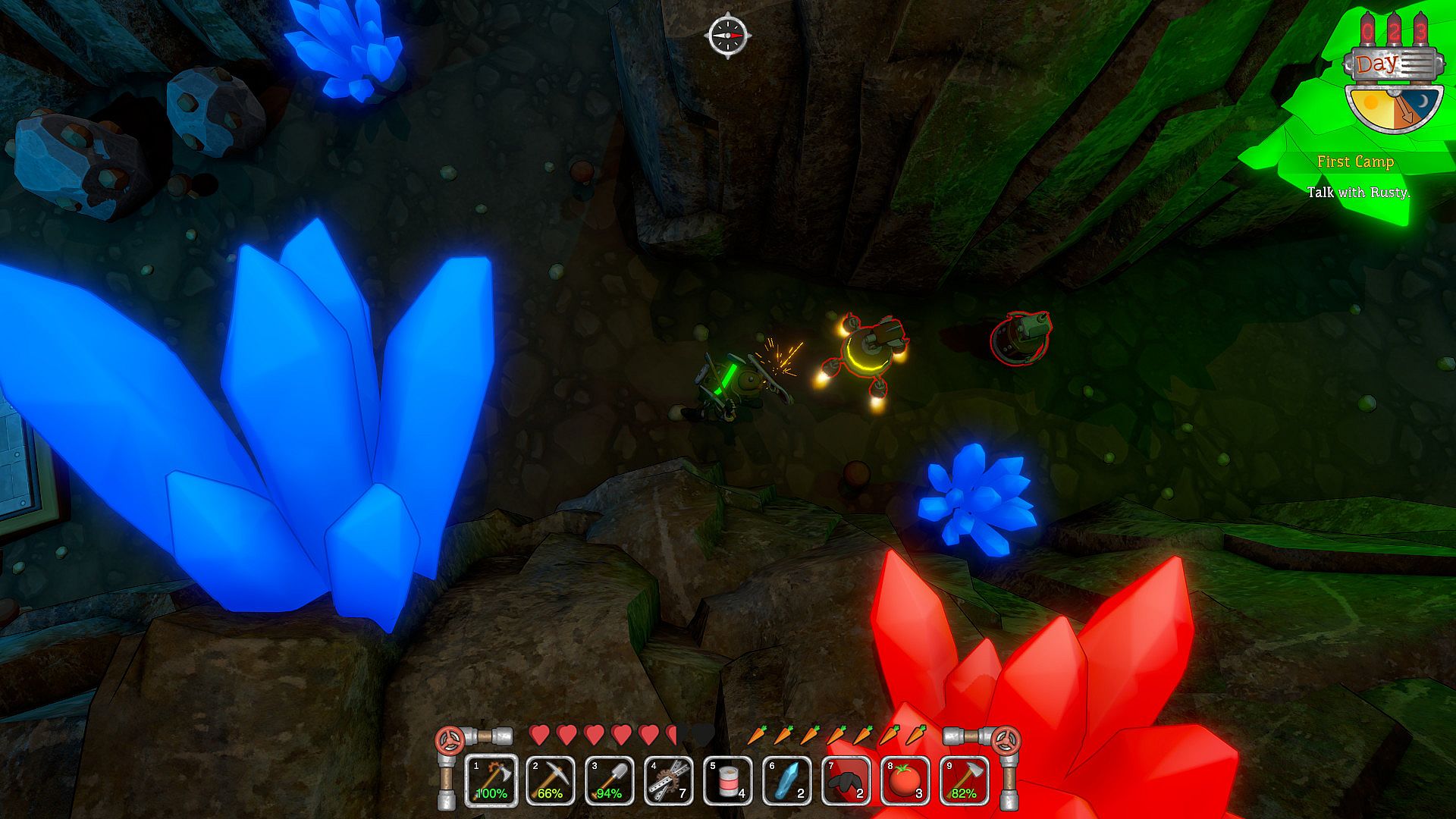
The open world consists of multiple biomes, each supplying distinct resources and enabling specialized constructions. Players traverse these areas to locate materials, discover structures, and complete objectives. Unique items tied to specific biomes encourage repeated visits and adaptive building strategies.
Exploration ties directly into progression, as new regions yield components for better tools and expanded farms. The layout supports both methodical collection runs and opportunistic scavenging during travel between bases.
Base Building and Defense
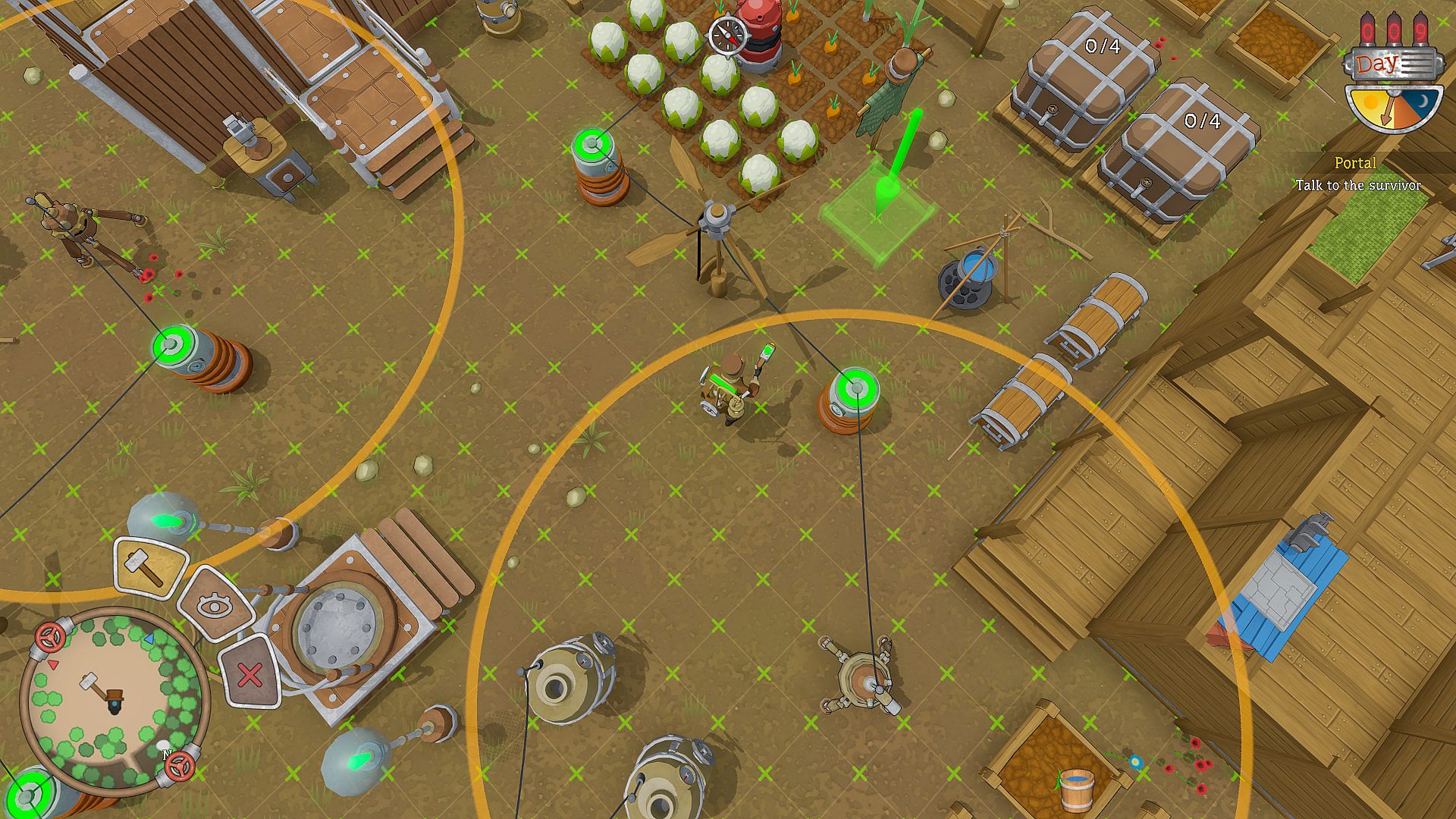
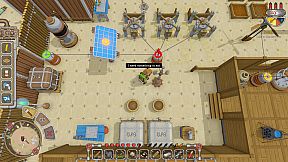
Base construction starts with essential shelters and expands to include storage, production facilities, and defensive elements. Players allocate space for farms, cooking areas, and power generators while reinforcing against incoming raids. Improvement involves iterative upgrades to structures and integrated systems.
Defense mechanics require balancing offense through crafted weapons with evasion tactics. Raids test preparation levels, prompting ongoing refinements to layouts and equipment. The system rewards planning that integrates farming output, energy management, and combat readiness into a cohesive operation.
Is It Worth Playing?
Scrapnaut suits players who enjoy methodical top-down survival experiences with strong emphasis on base development and resource loops. The ability to start solo and add co-op partners up to four makes it accessible for different group sizes or preferences.
User reviews reflect mixed reception, with roughly 69 percent positive ratings on major platforms. Positive feedback often highlights the satisfying progression in building and farming systems, while some note areas for refinement in polish and depth. The game remains available for purchase on PC with its full feature set intact, including all verified mechanics from release.
Those drawn to indie titles focused on steampunk survival, cooperative base management, and flexible single-to-multiplayer transitions will find the most alignment. The price point positions it as a low-risk option for fans of similar crafting and exploration titles.