

Scroll Control is a casual simulation game set in an alternate 1907 where magic scrolls have become common enough to require bureaucratic oversight. Players step into the role of a clerk at the Rune Bureau, examining incoming petitions and deciding whether to approve, reject, or confiscate each scroll based on its runes and supporting paperwork. The experience blends careful inspection of magical symbols with shifting regulations and visible consequences in the surrounding town.
Gameplay
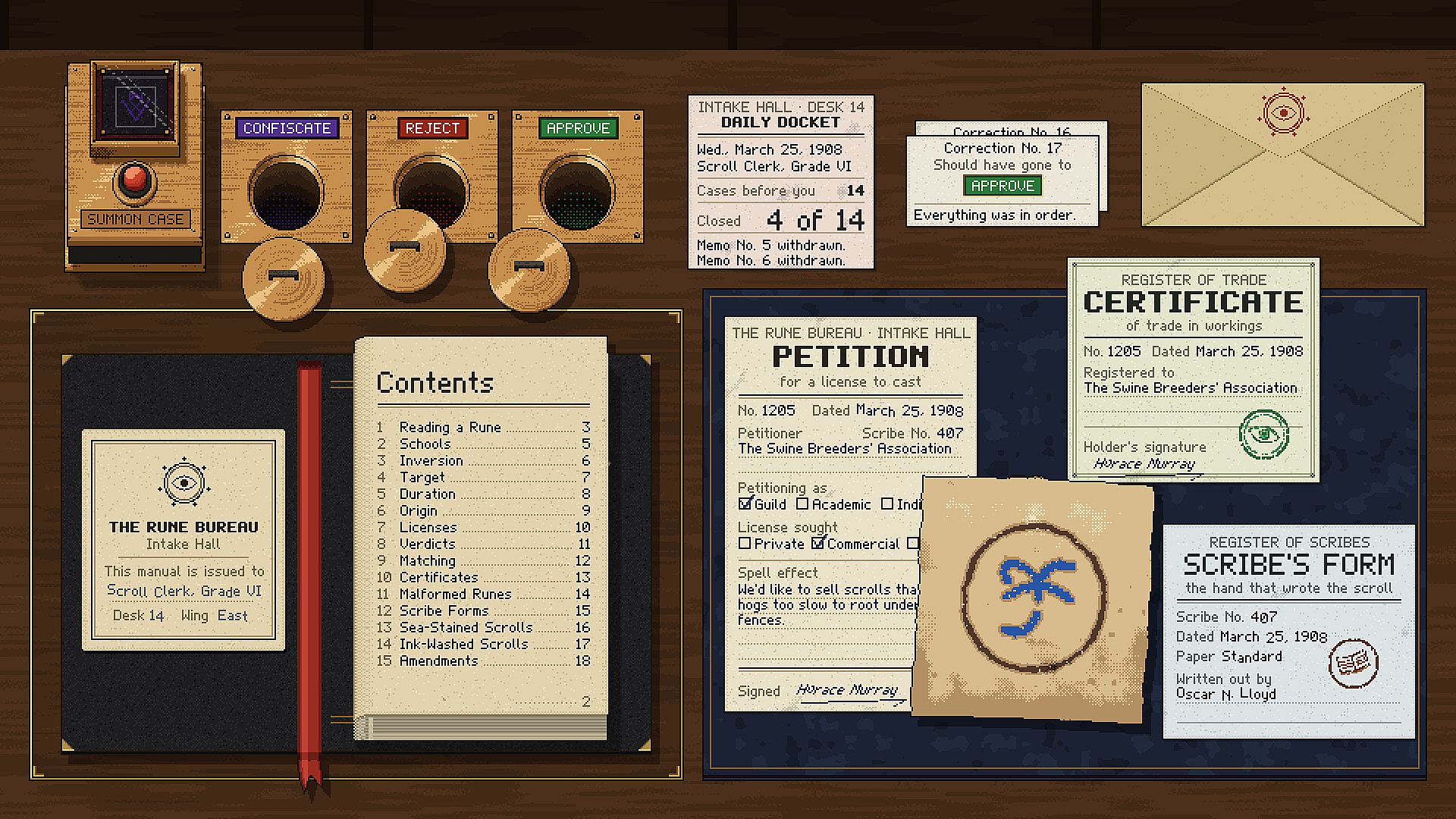
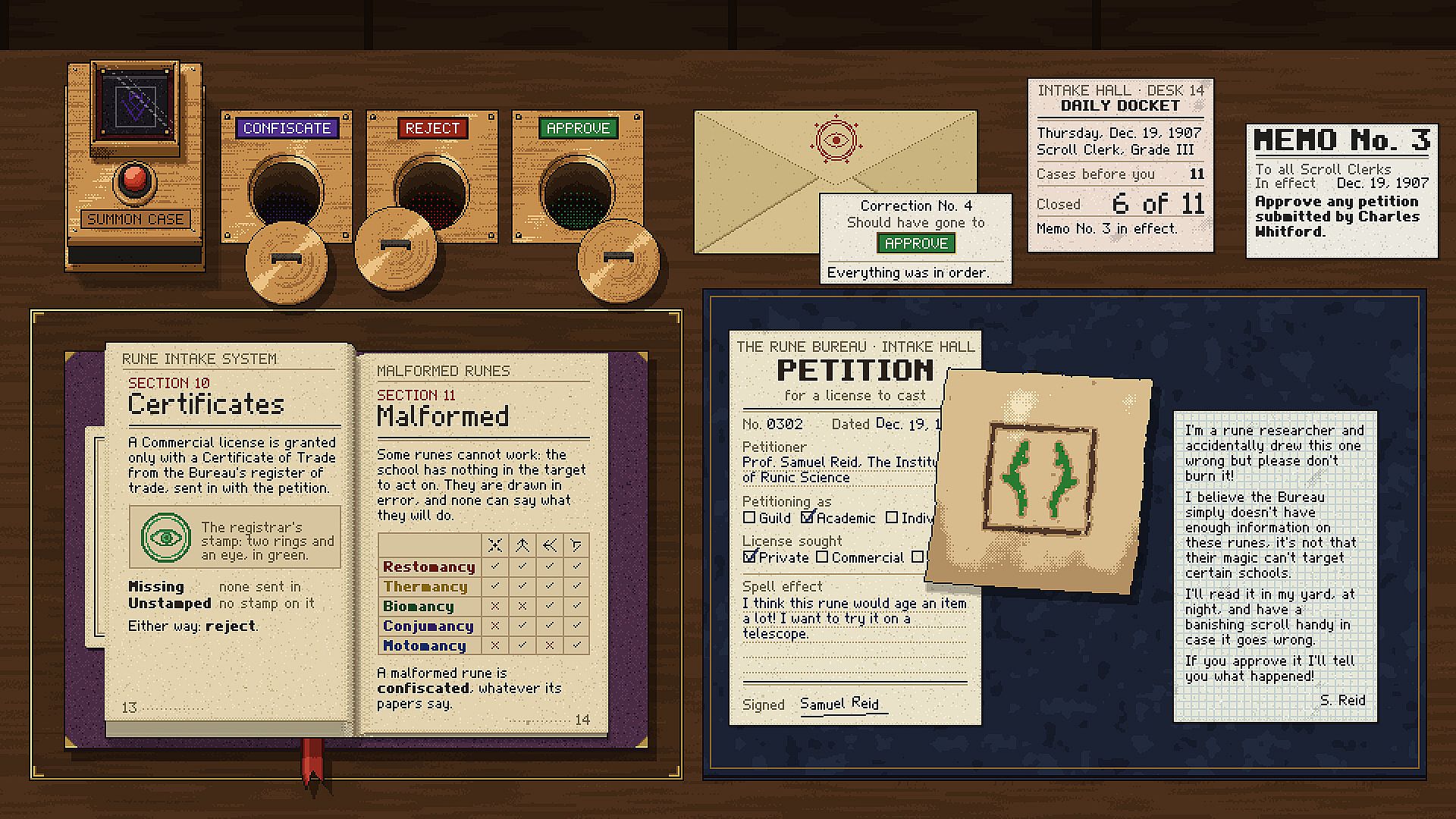
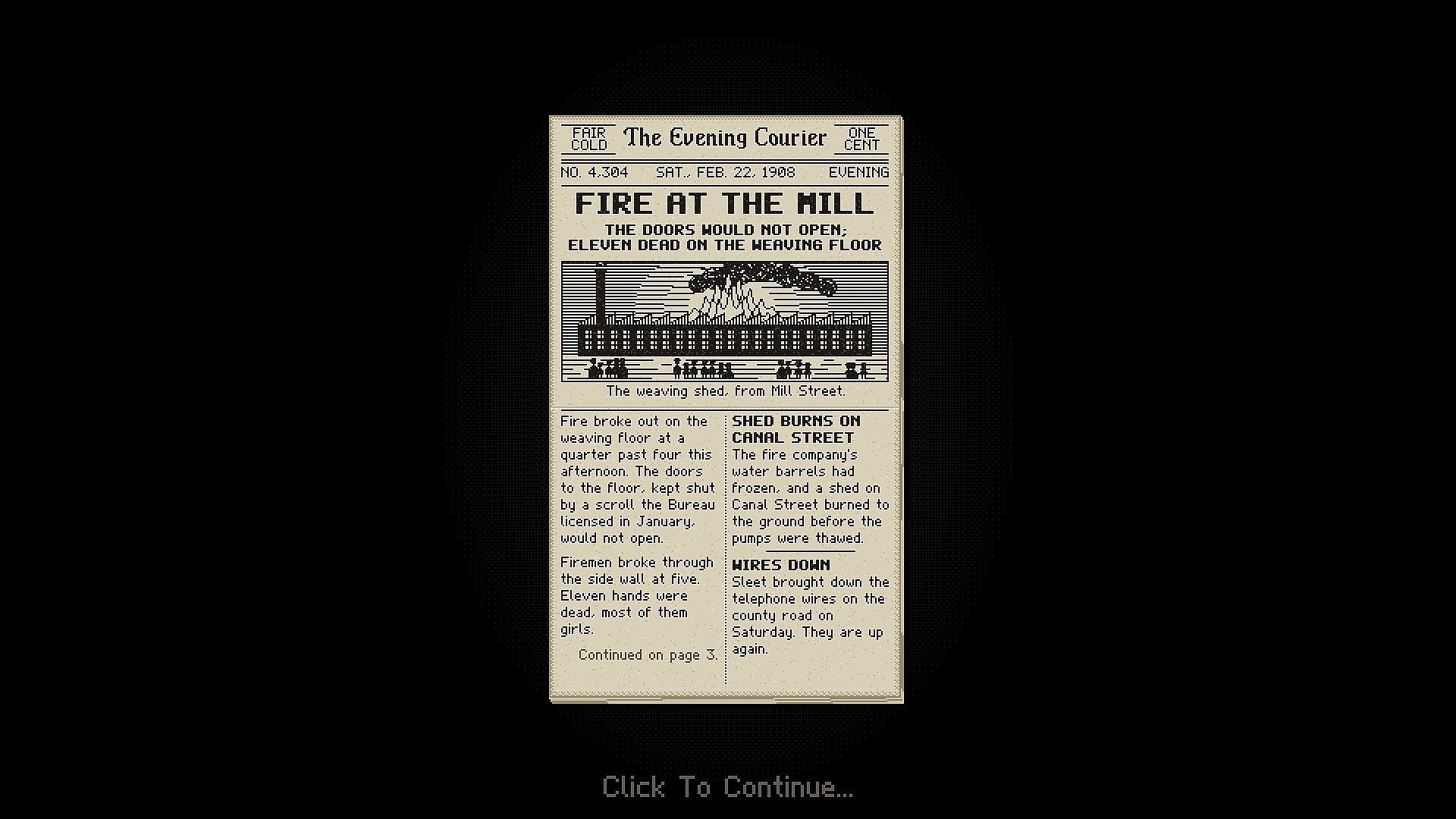
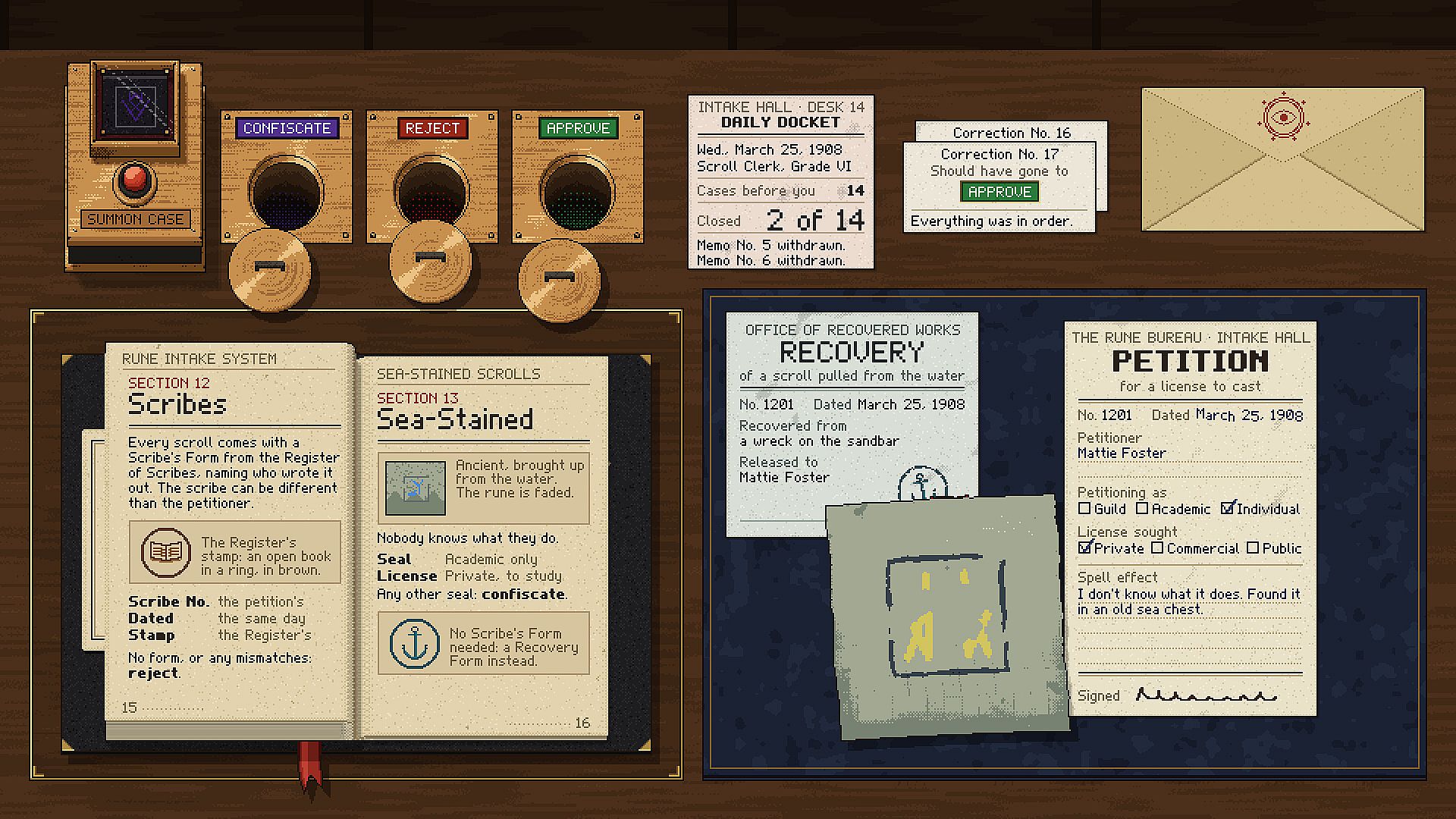
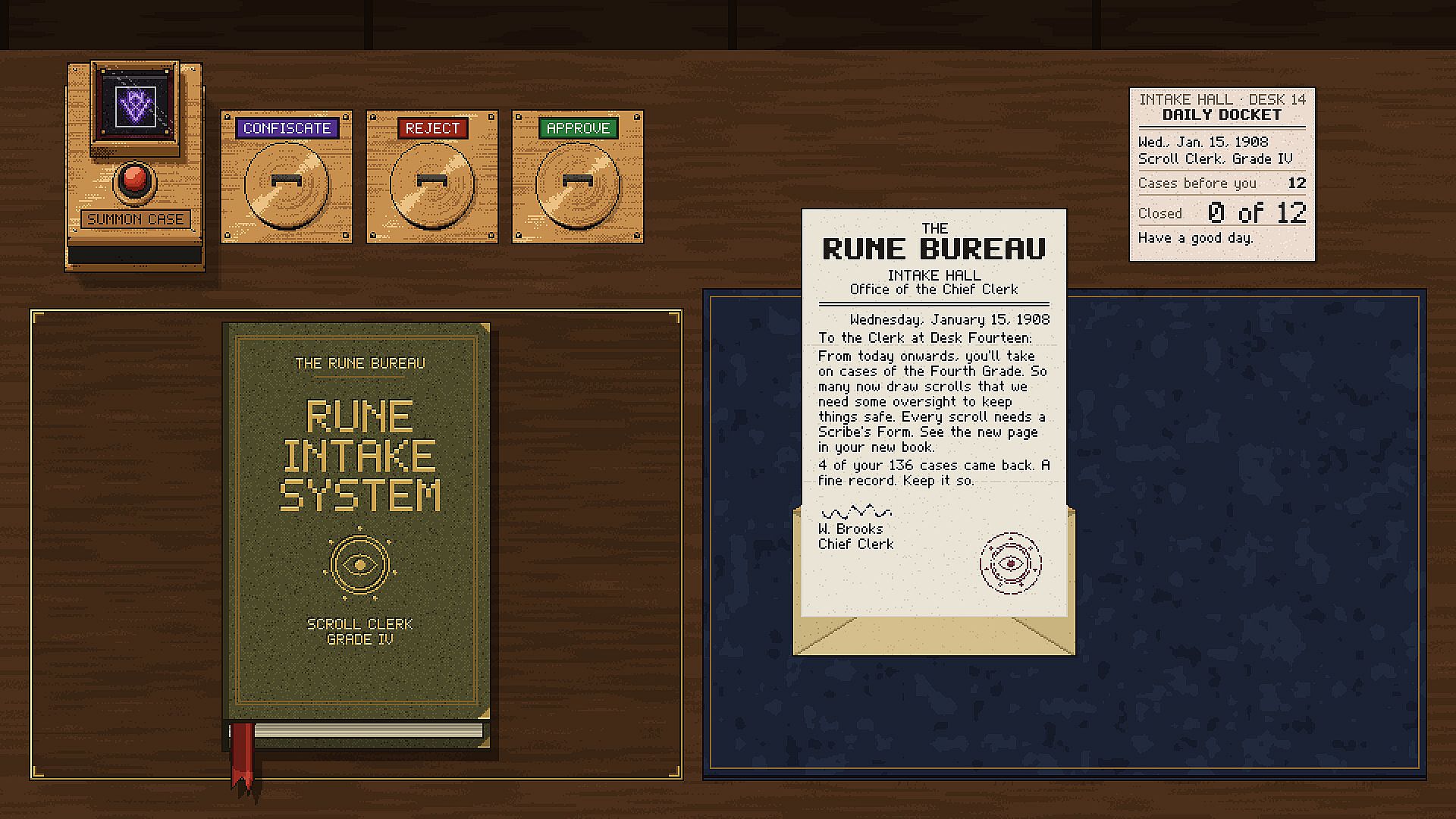
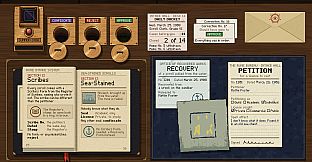
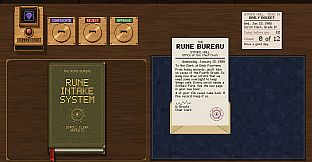
The core loop centers on processing sealed scrolls at Desk Fourteen. Each petition arrives with documentation that must be cross-checked against the current manual and any daily memos. Ink color indicates the school of magic, stroke patterns reveal direction and target, and framing details show duration. Decisions route the scroll into one of three slots, and the results feed into evening newspaper reports that reflect the outcomes of those choices. Procedural generation mixes with hand-crafted story cases across the 28-day campaign, ensuring varied sequences while preserving key narrative threads.
Progression moves through six grades, each unlocking an expanded manual with additional rules to track. Memos can override standard guidelines on certain mornings, forcing quick adaptation. Aptitude exams appear periodically to test retention of the growing rule set. The rune system relies on visual cues that become intuitive after repeated exposure, turning initial careful study into faster pattern recognition without eliminating the need for accuracy.
Game Modes
The primary experience unfolds across the 28-day Intake Hall period, incorporating more than 300 petitions. Story-driven cases interweave with procedurally generated ones, creating replay paths that differ in order and specific challenges. An endless mode extends play beyond the campaign, allowing continued work at the desk with ongoing rule variations and consequences.
Single-player focus keeps attention on personal decision-making and its ripple effects. No multiplayer elements exist, and the structure emphasizes repeated playthroughs through different handling of the same core systems rather than separate competitive or cooperative modes.
Narrative and Consequences
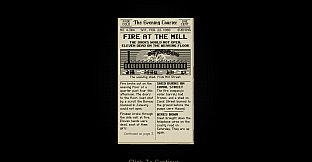
Every evening brings a fresh newspaper front page shaped by prior approvals and rejections. Town events tie directly to scroll outcomes, ranging from minor incidents to larger incidents that reflect accumulated choices. Petitioners occasionally request rule exceptions, introducing moments where personal judgment intersects with official guidelines. Multiple endings emerge from the cumulative pattern of decisions across the full run, rewarding consistent approaches or deliberate deviations.
The setting blends bureaucratic routine with light fantasy elements in a grounded alternate-history frame. Pixel art renders the desk, scrolls, and town updates with clear, hand-crafted detail that supports the inspection-focused gameplay without unnecessary visual noise.
Is It Worth Playing?
Scroll Control targets players who enjoy methodical simulation games built around rules, observation, and consequence tracking. The combination of expanding manuals, daily memos, and visible town feedback creates a steady sense of responsibility that evolves across the campaign. Those drawn to job-simulator mechanics or choice-driven narratives with multiple endings will find the structure rewarding, particularly across repeated runs that highlight how small variations in handling petitions alter results.
With its single-player design and focus on one cohesive loop, the game suits sessions of focused attention rather than quick casual bursts. The upcoming release in April 2027 means current interest centers on the detailed feature set and the promise of procedural variety within a fixed 28-day framework plus endless extension. Fans of pixel-art simulations that emphasize reading systems and managing shifting constraints are the clearest audience for this title.