


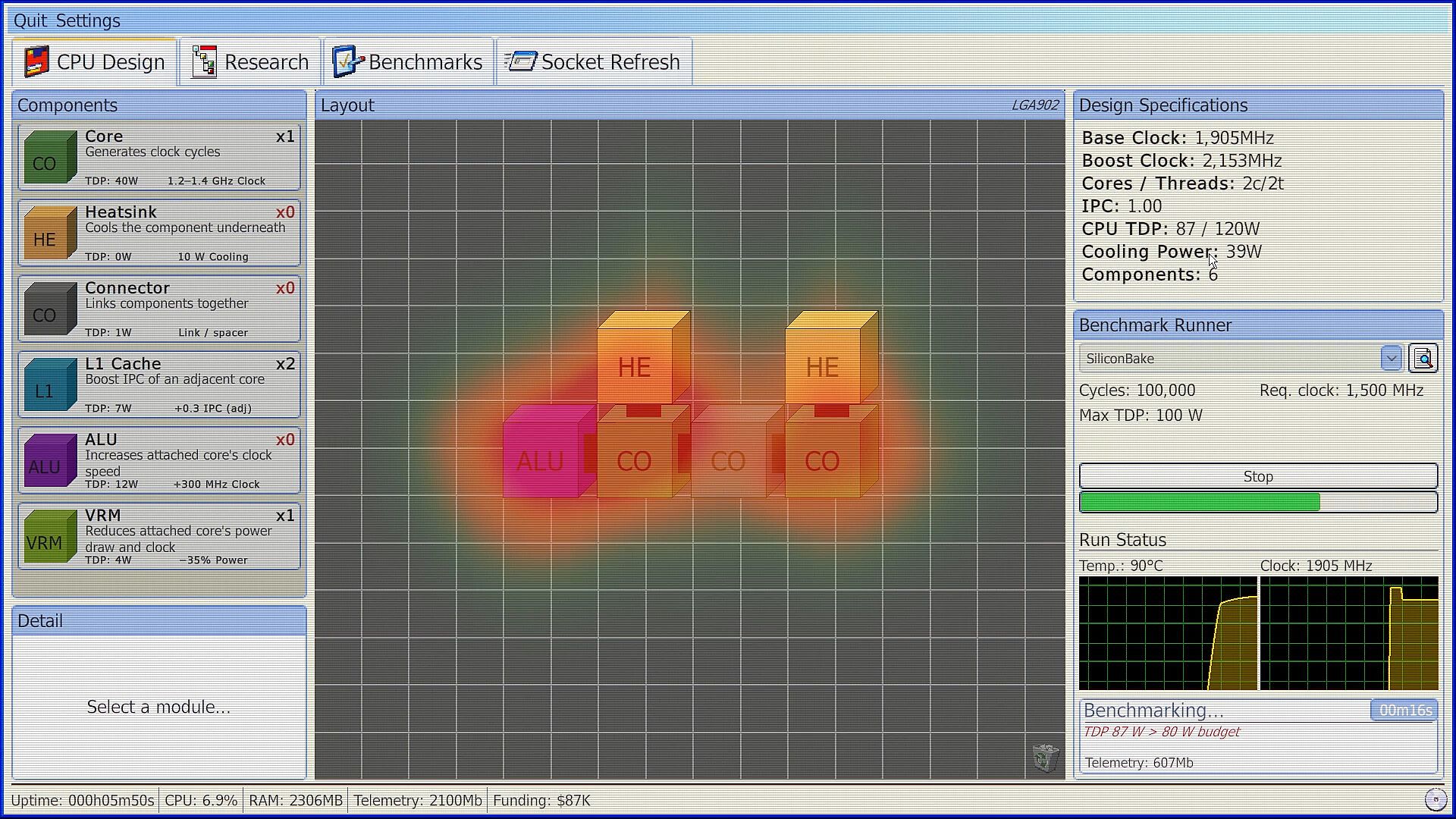
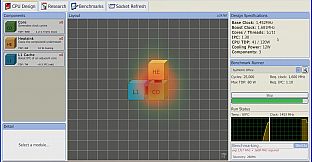
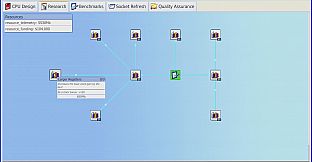
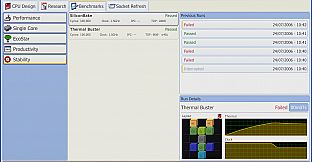
Silicon Architect is a strategy indie simulation game centered on incremental CPU development. Players take on the role of a hardware engineer at BinTel during the 2000s era, focusing on designing processors through component combination and iterative improvement. The experience blends simulation elements with idle mechanics, where progress accumulates even during periods of minimal input. Built for PC, it emphasizes strategic choices in layout and upgrades without requiring high system resources.
Gameplay
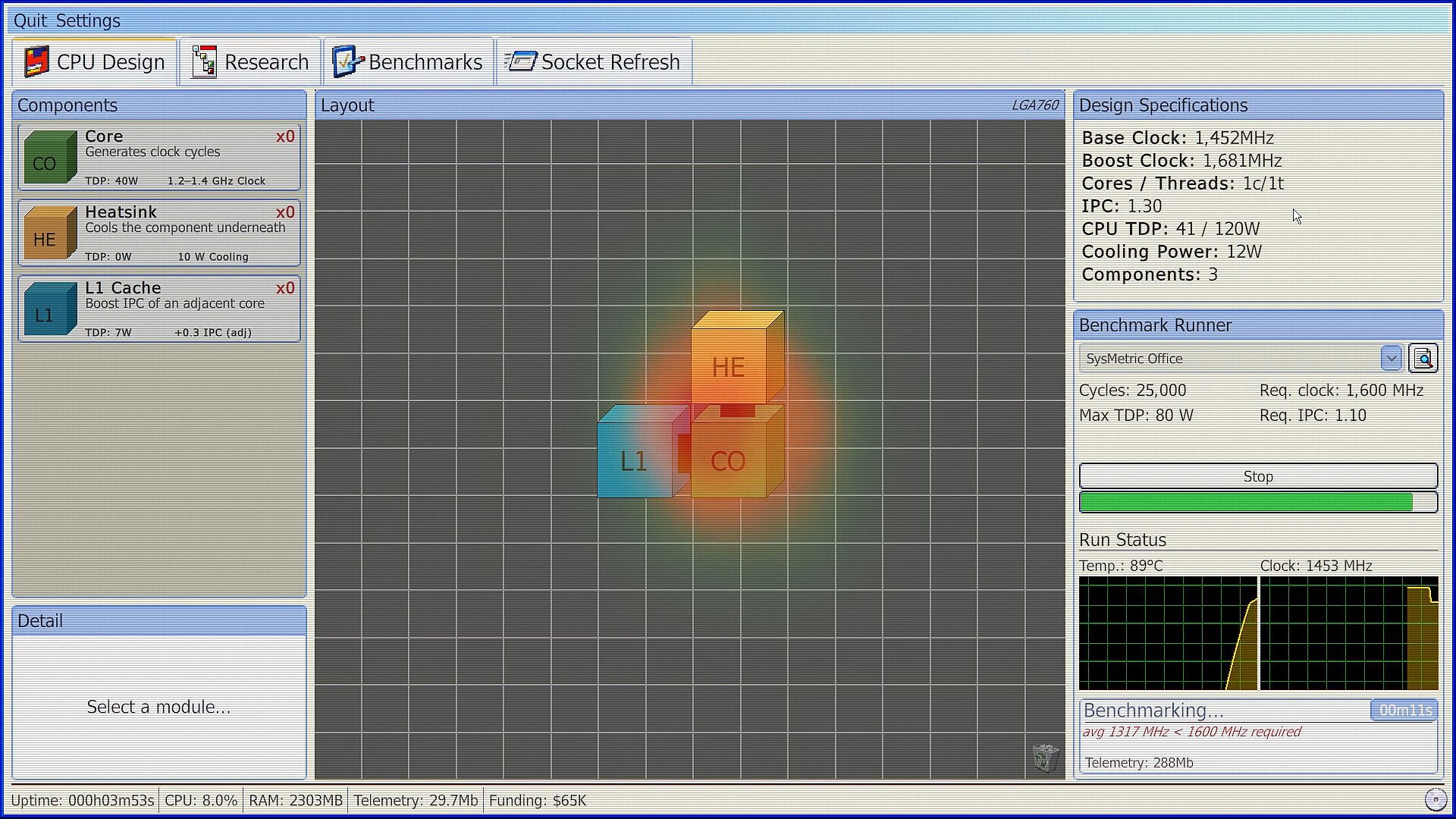
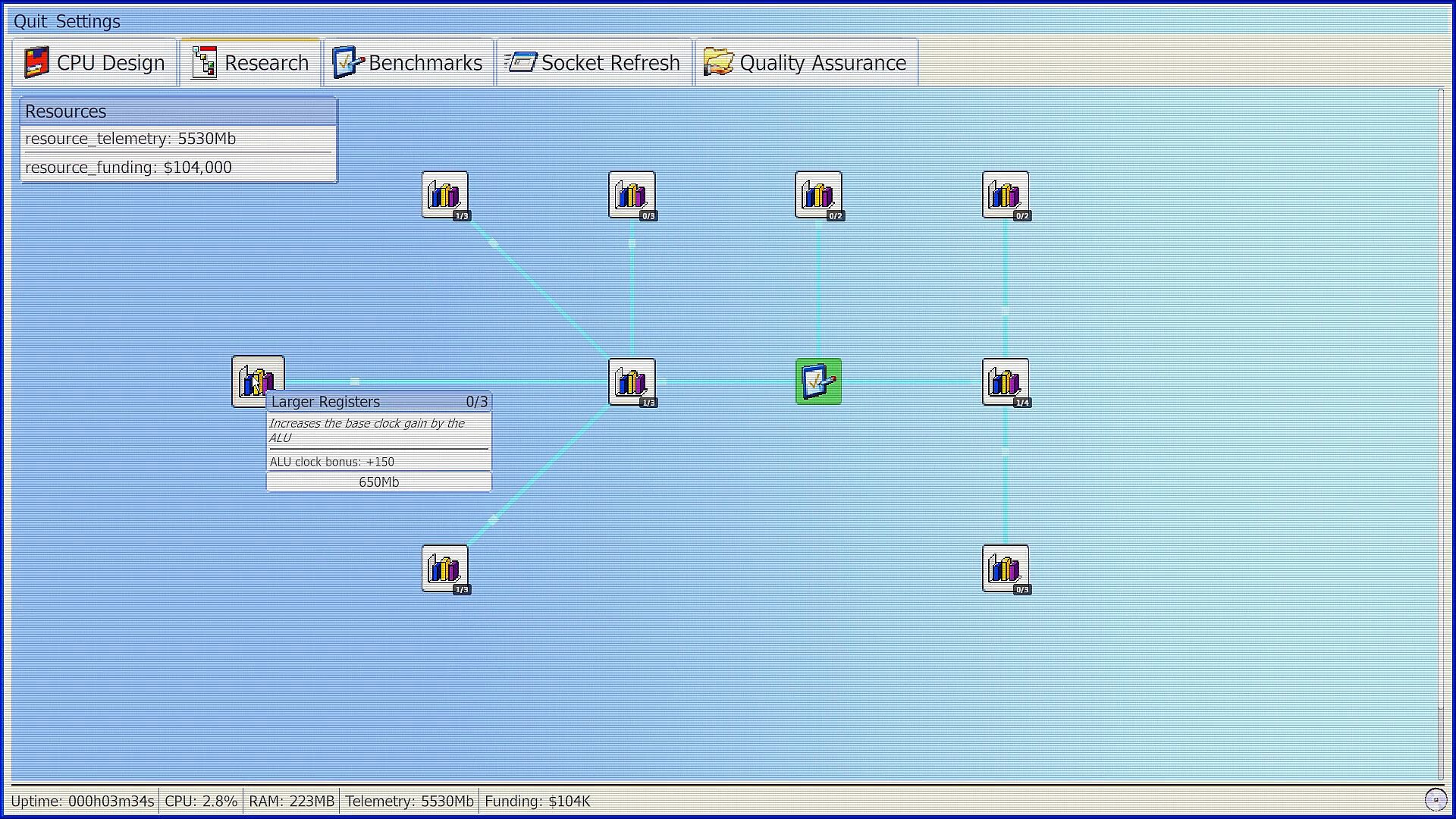
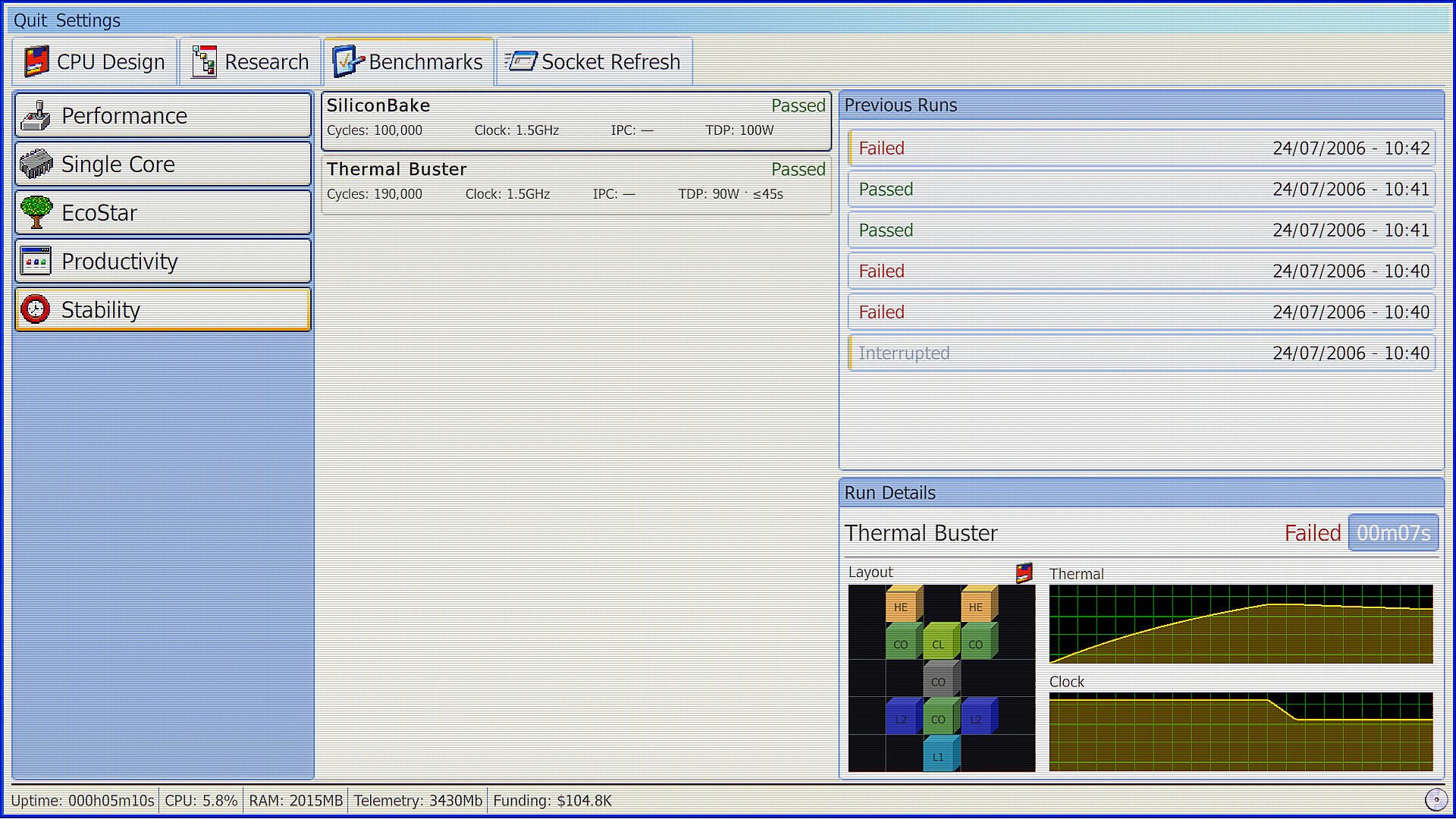
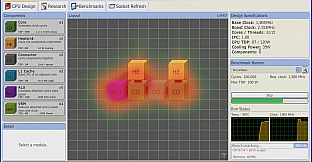
The core loop revolves around assembling CPUs from a selection of over ten unique components drawn from real-world inspired designs. Each configuration undergoes automated benchmarks that generate telemetry data. This information feeds directly into upgrades, allowing refinements to existing parts or the creation of entirely new ones. Progress builds through repeated cycles of design, testing, and enhancement, with each iteration unlocking greater efficiency.
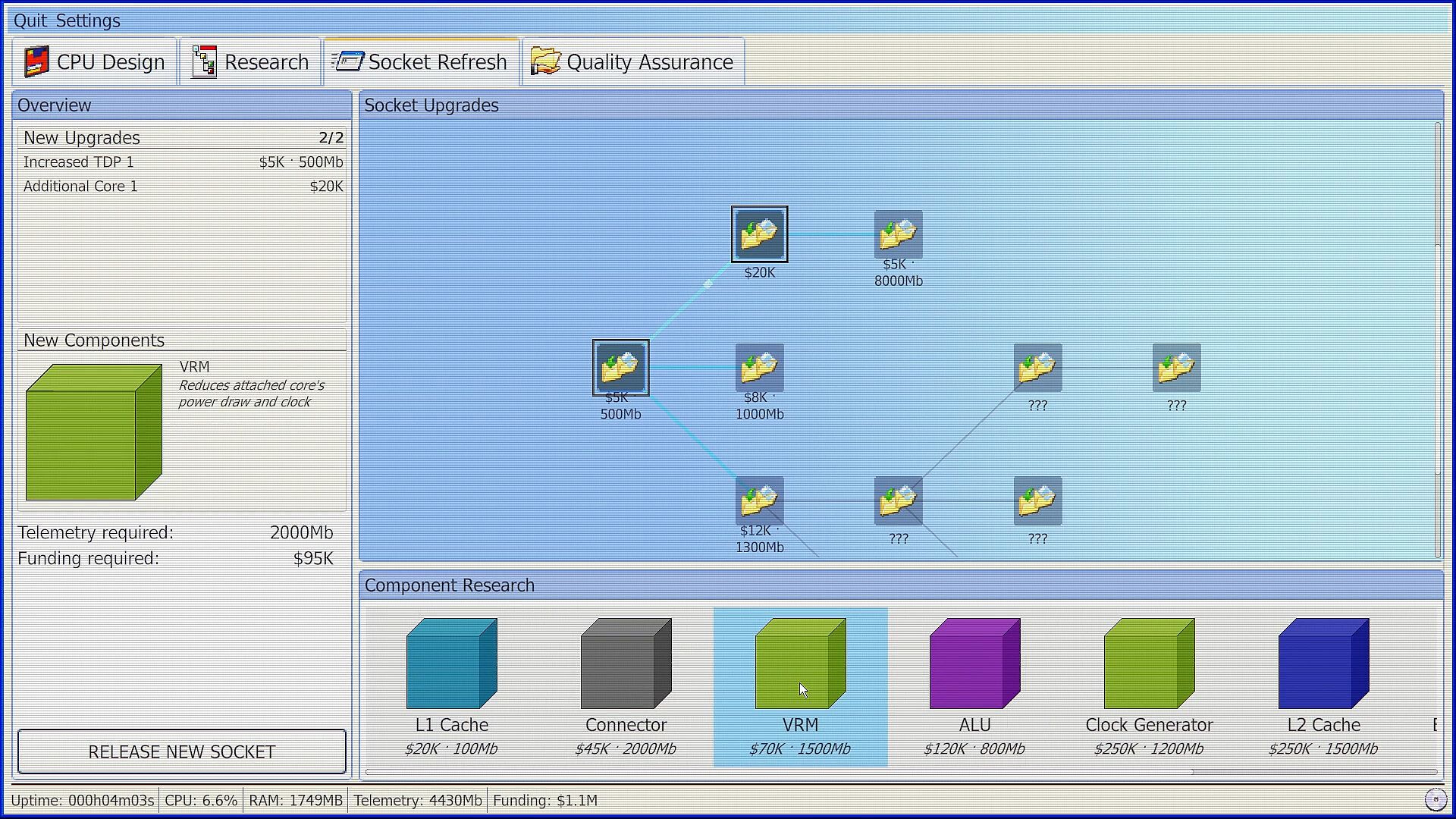
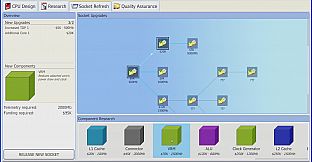
Socket development forms a major progression layer. Advancing to newer socket types delivers substantial performance jumps across generations, encouraging long-term planning around hardware evolution. Research funding harvested from successful runs supports these expansions, tying incremental gains to broader technological advancement. The interface adopts a nostalgic Windows XP aesthetic throughout, complete with period-appropriate visual elements that reinforce the historical setting.
Sound design features a Jungle DnB soundtrack that plays continuously, providing atmospheric accompaniment without interrupting focus. Resource demands remain minimal, ensuring the game runs smoothly on modest hardware while avoiding any actual benchmarking of the player's own machine. Leaderboards allow comparison of benchmark results with others, adding a layer of external motivation to optimization efforts.
Game Modes
Silicon Architect operates primarily as a single-player incremental idler. The main experience centers on uninterrupted progression through CPU design cycles, with no separate campaign or competitive modes beyond the built-in leaderboards. All activity stays within this unified loop of component assembly, benchmarking, and iterative upgrades.
Steam achievements track specific milestones such as socket releases and component mastery, while cloud saving preserves progress across sessions. Leaderboards introduce a communal element where players can measure their custom CPU performance against the community, though the underlying gameplay remains solitary and self-paced.
Setting and Progression
The narrative backdrop places players inside BinTel's engineering labs amid the rapid evolution of personal computing. Decisions around component selection and socket transitions mirror real historical shifts in processor architecture. Generational uplifts from new sockets create clear breakpoints in power scaling, rewarding consistent telemetry analysis and component innovation.
Expansion feels organic as unlocked hardware options compound previous designs. The system supports infinite layout variations through the component library, letting players experiment with trade-offs between speed, efficiency, and complexity. This structure suits extended play sessions or background running, aligning with typical incremental game expectations.
Is It Worth Playing?
Silicon Architect targets enthusiasts of incremental simulation titles who enjoy methodical optimization and historical tech themes. Its low resource footprint and focused mechanics make it accessible for players seeking a relaxed yet strategic experience on PC. The Windows XP presentation and soundtrack add distinctive flavor that sets it apart from generic idle games.
With a planned release in Q4 2026 and features like Steam leaderboards and achievements already confirmed, the game appears positioned for steady post-launch support. Those drawn to CPU building simulations or nostalgic interfaces will likely find the core loop engaging. Players uninterested in incremental progression or hardware-themed strategy may prefer titles with more varied action or narrative depth. The absence of early reviews leaves final judgment to individual playtests once available, but the verified systems suggest strong appeal within its niche.