

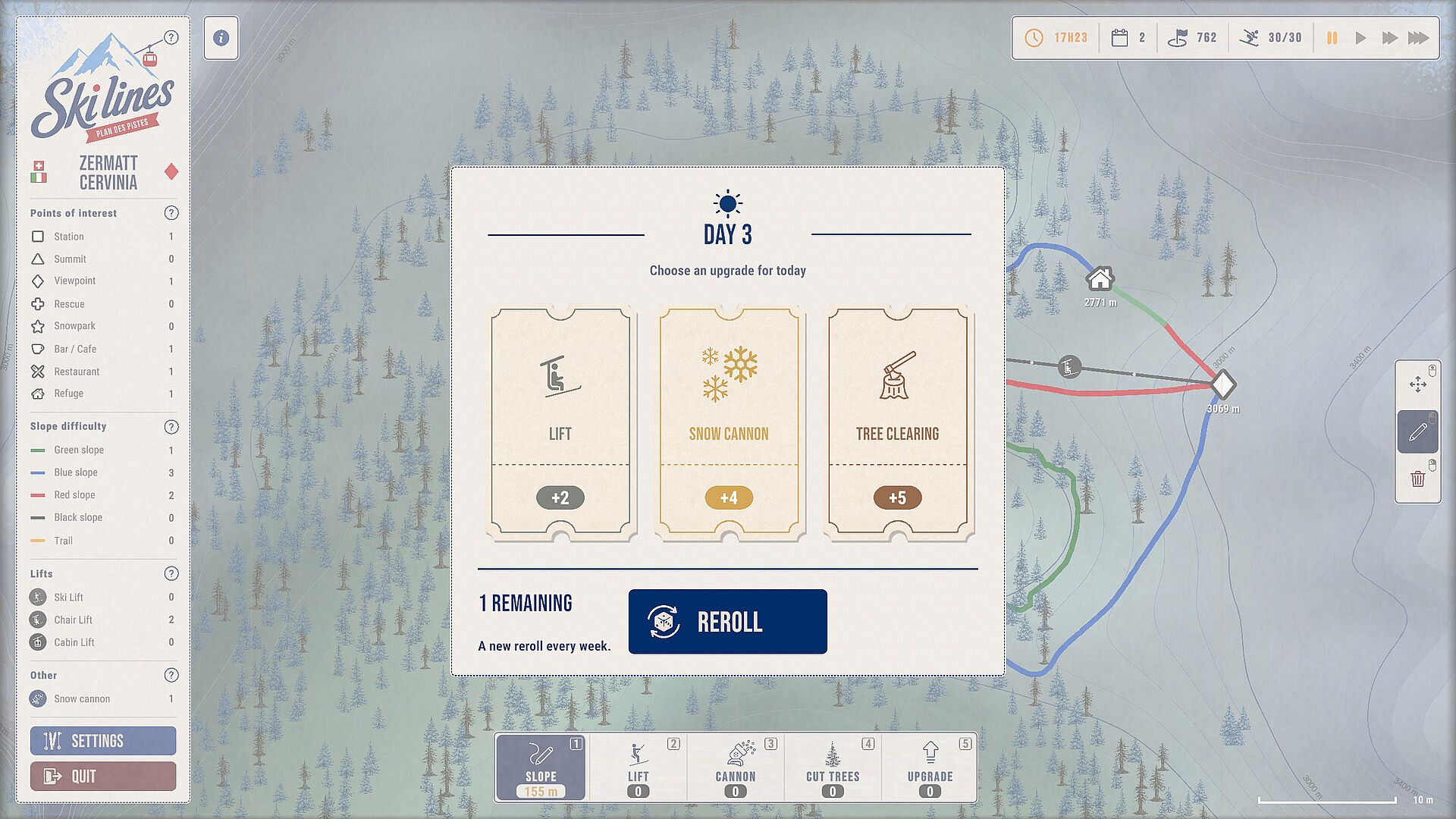
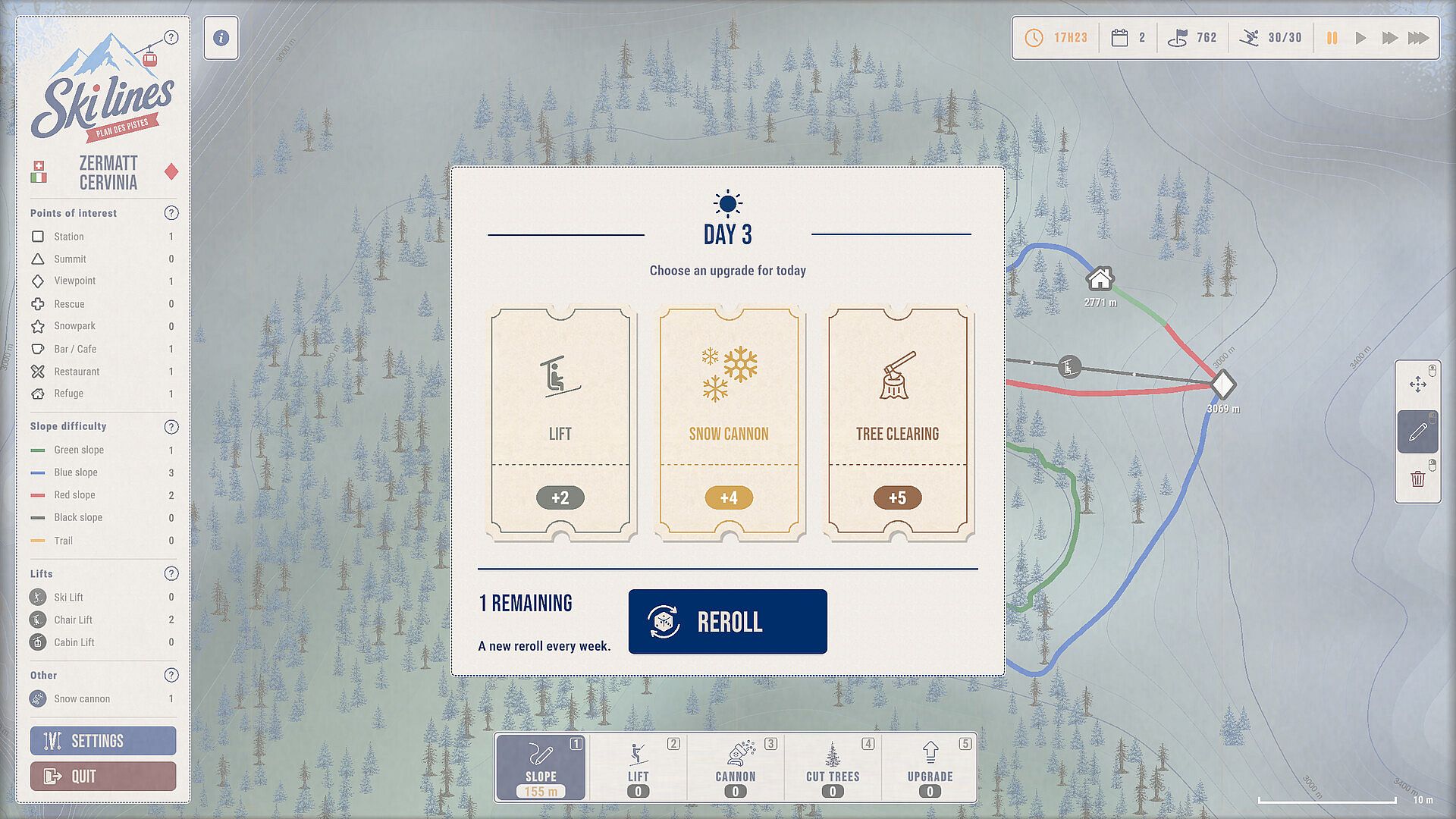
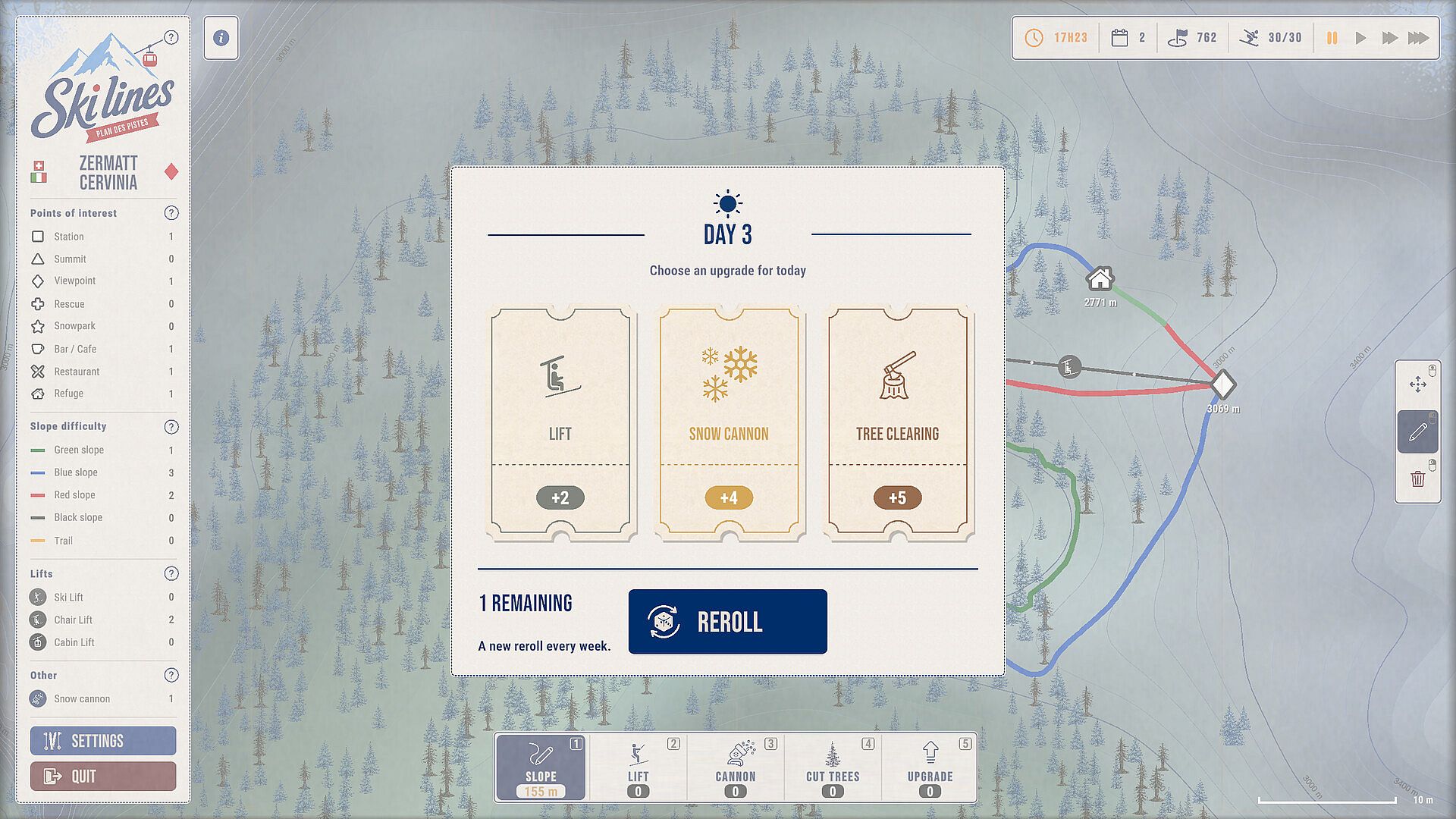
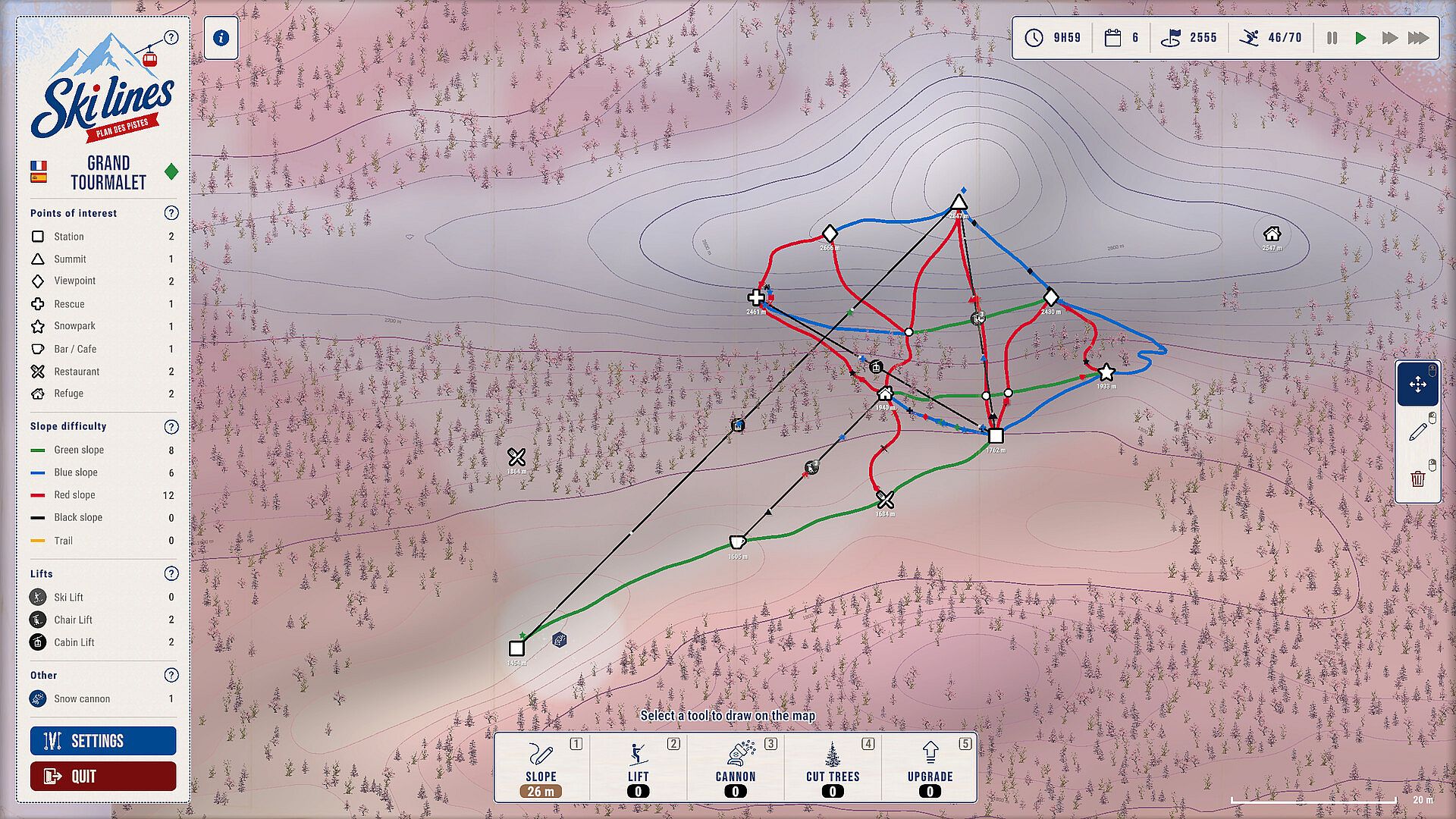
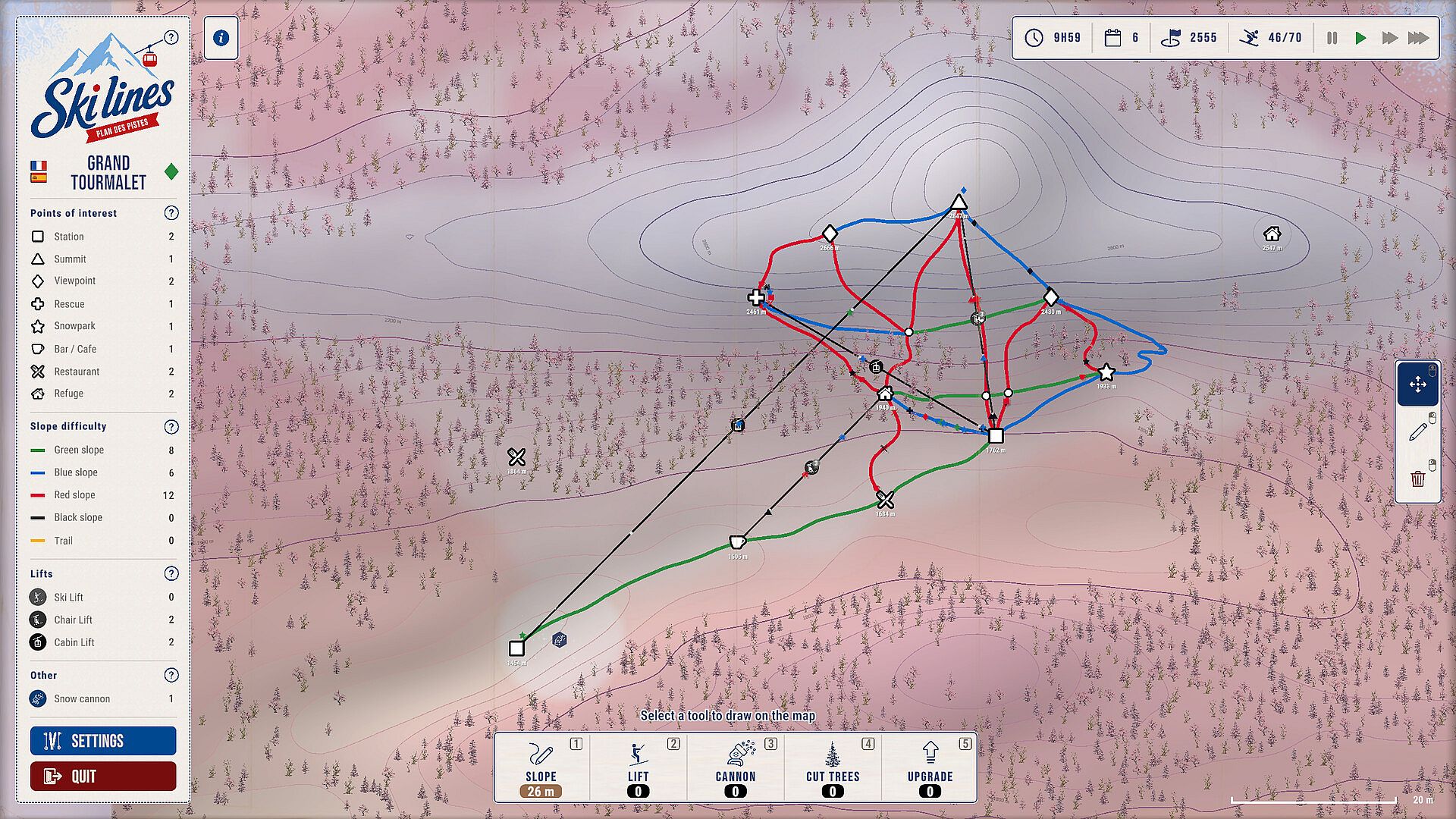
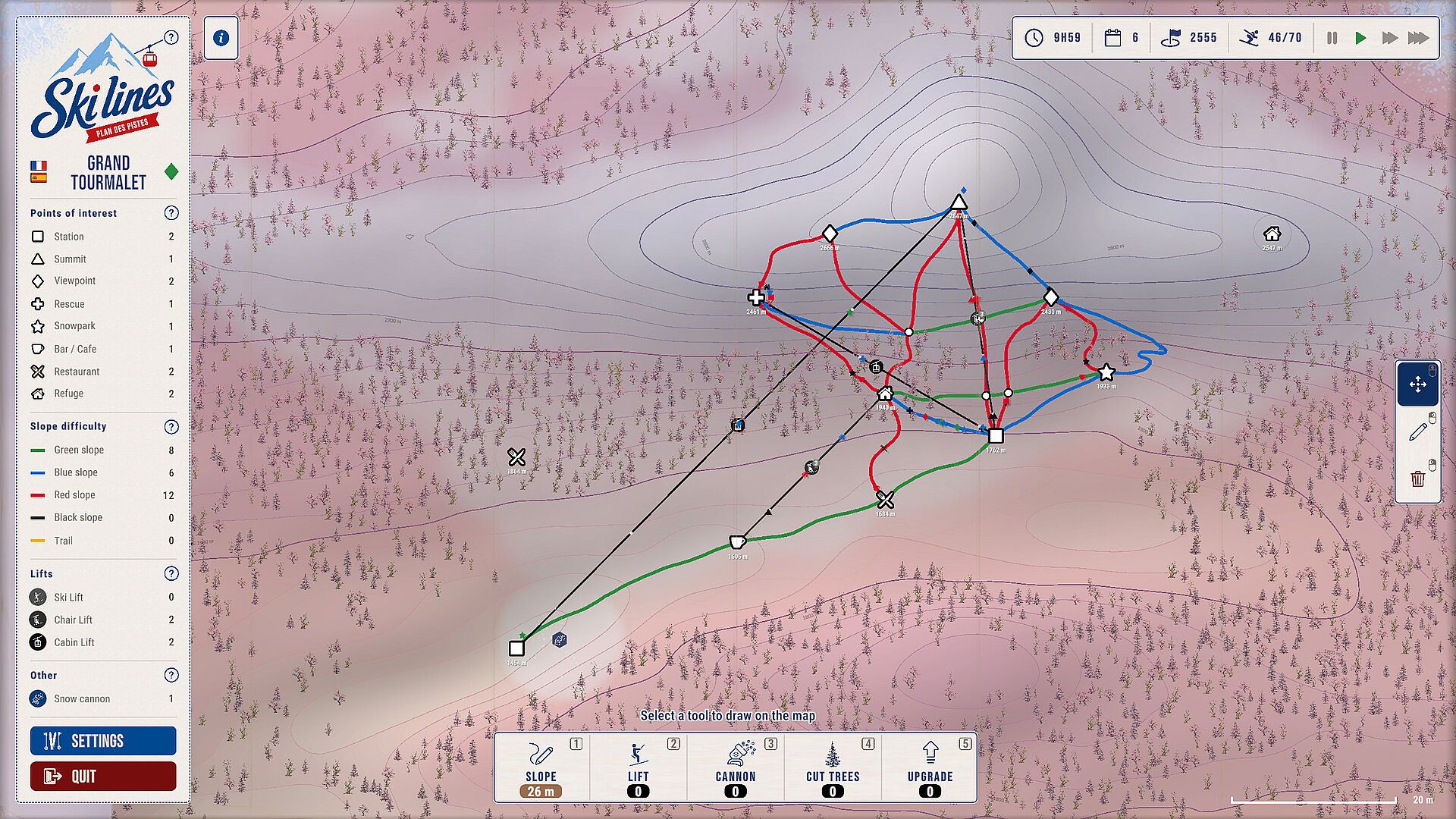
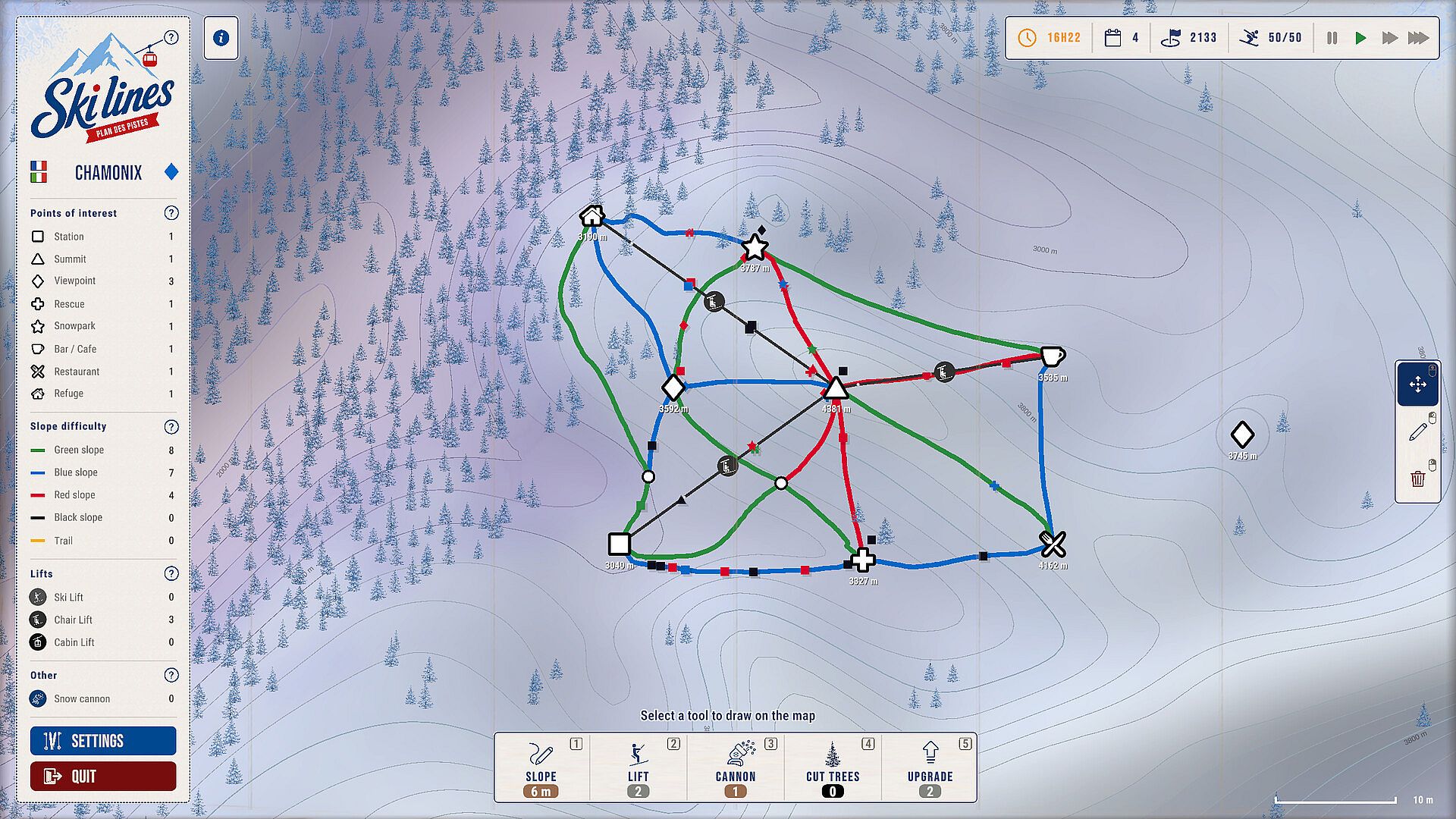
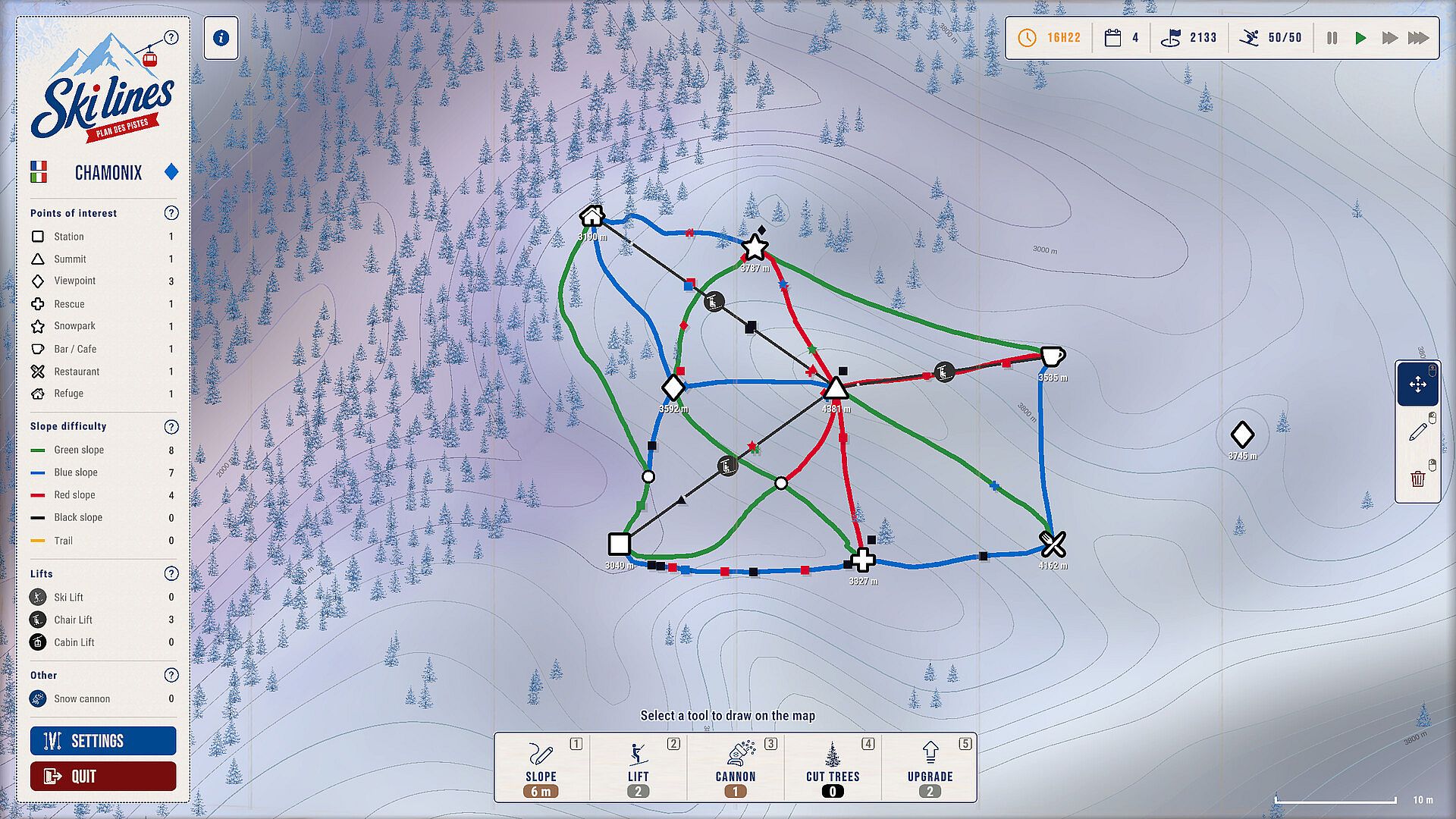
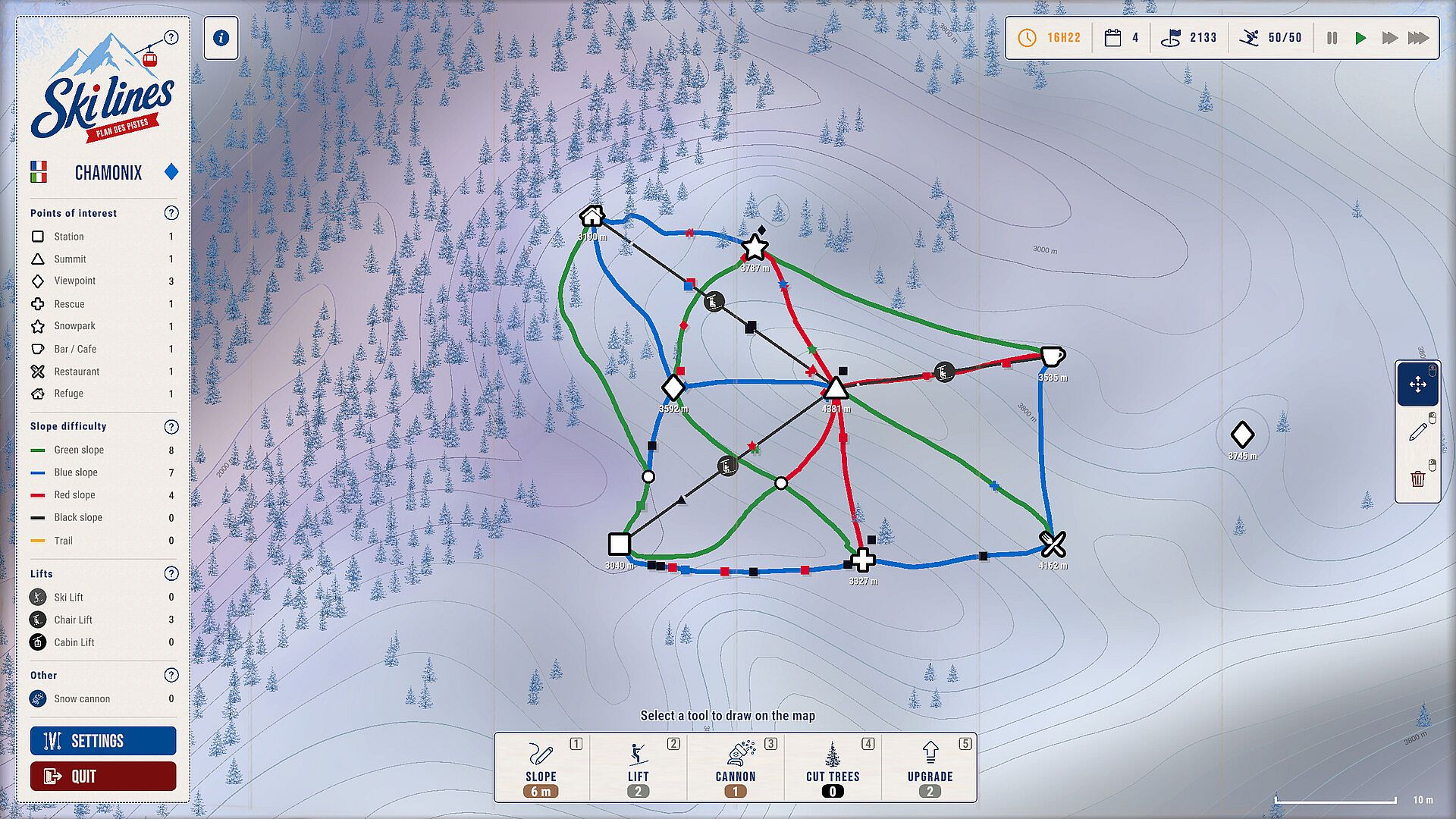
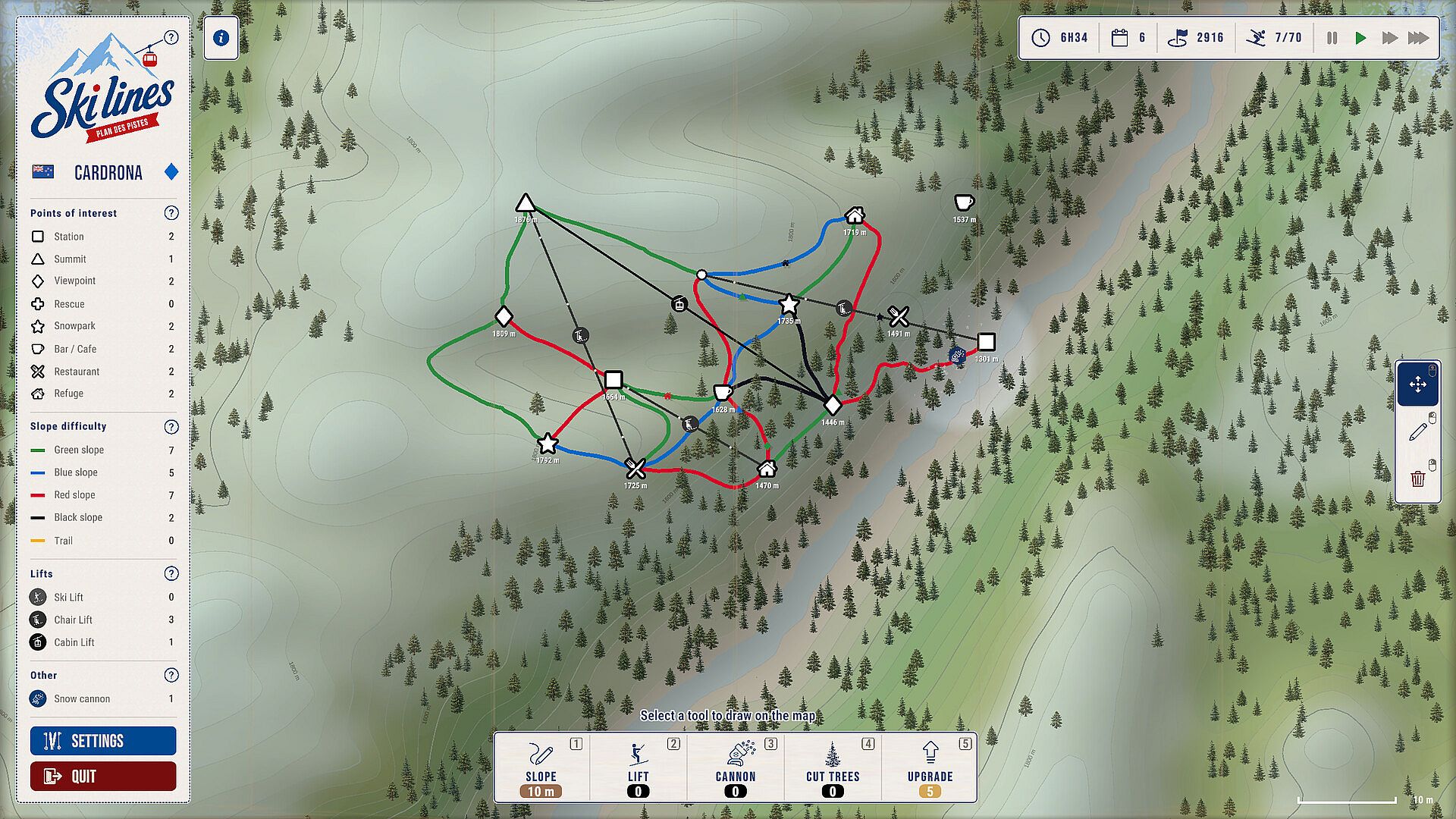
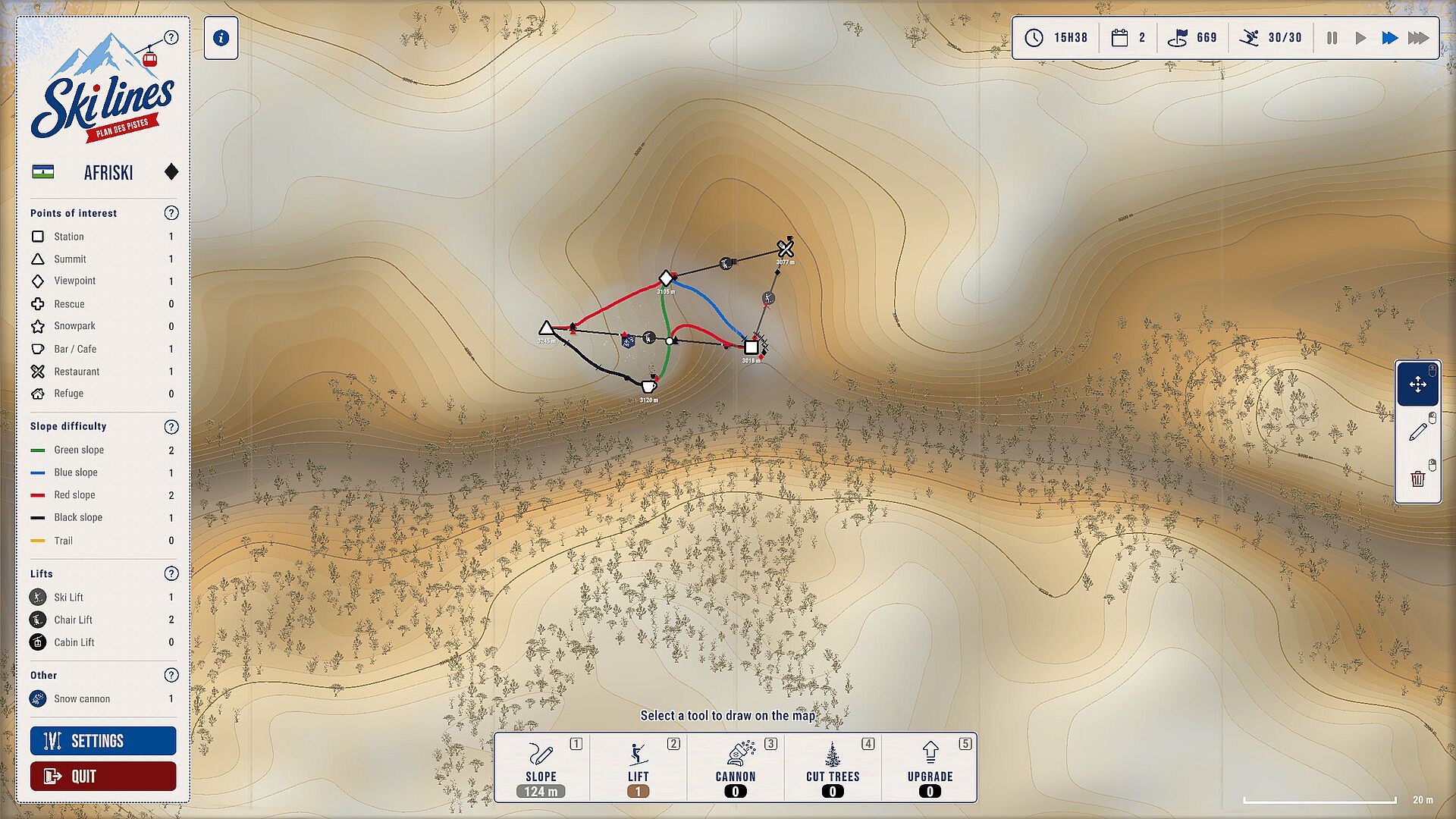
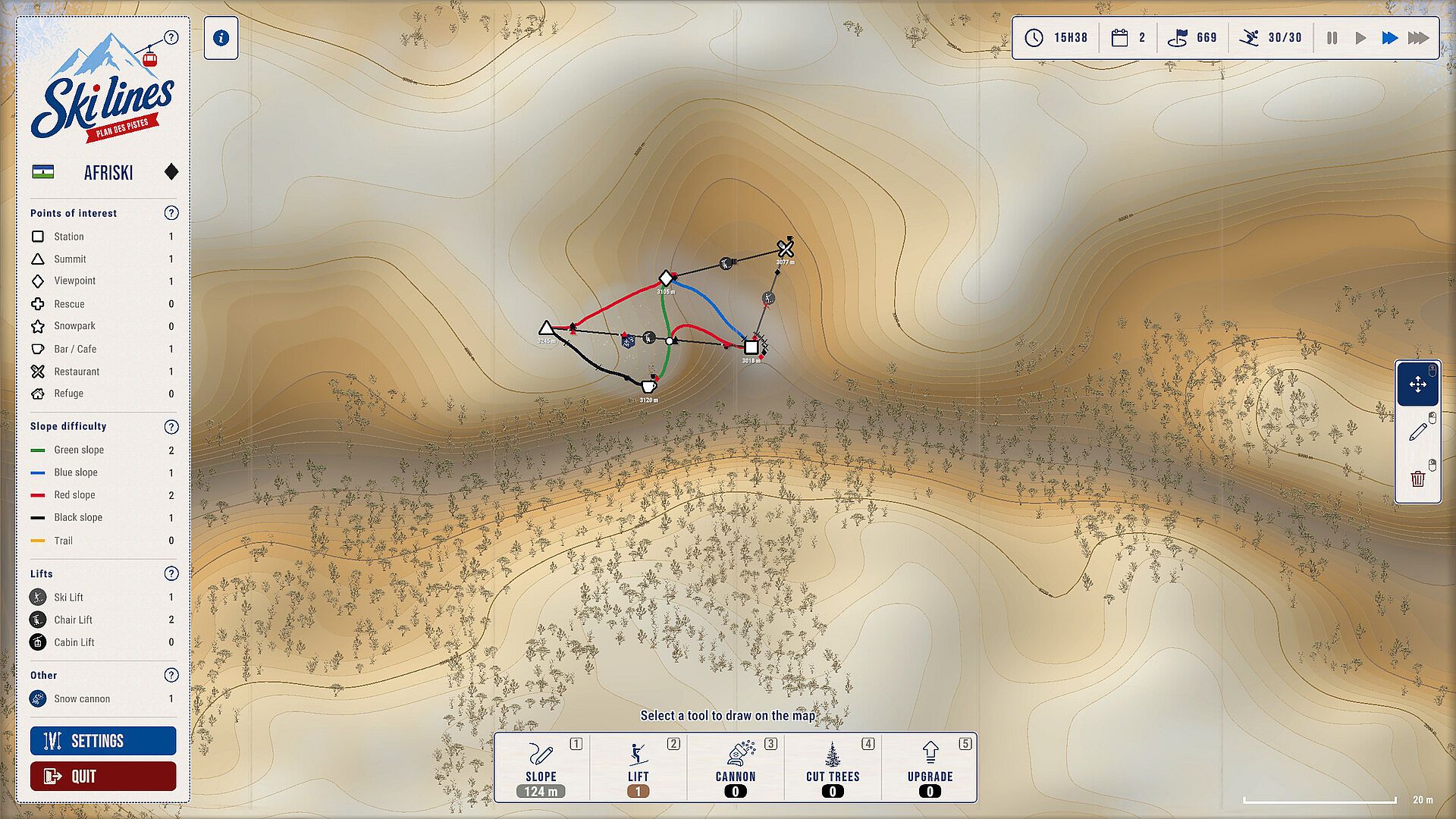
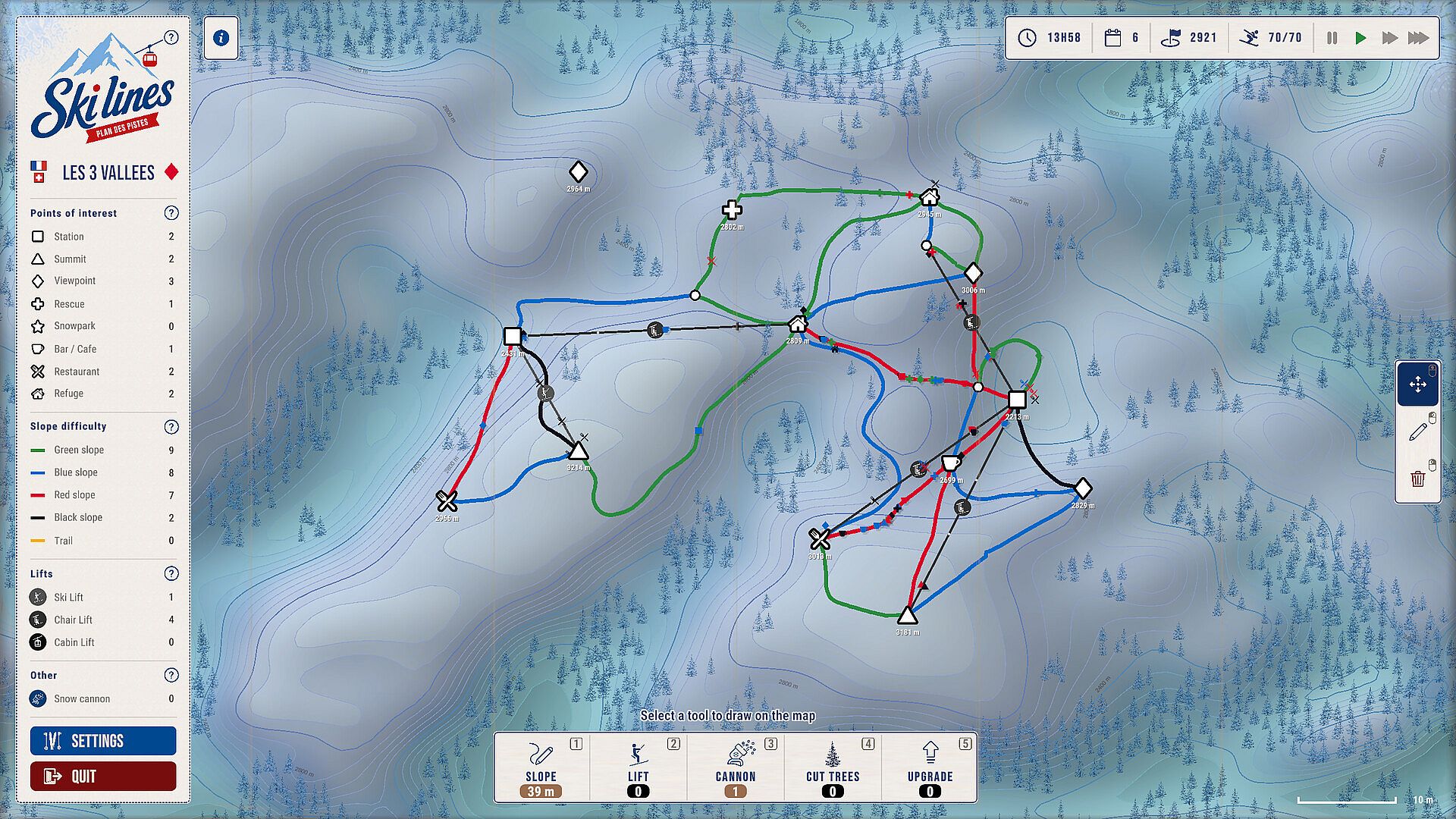
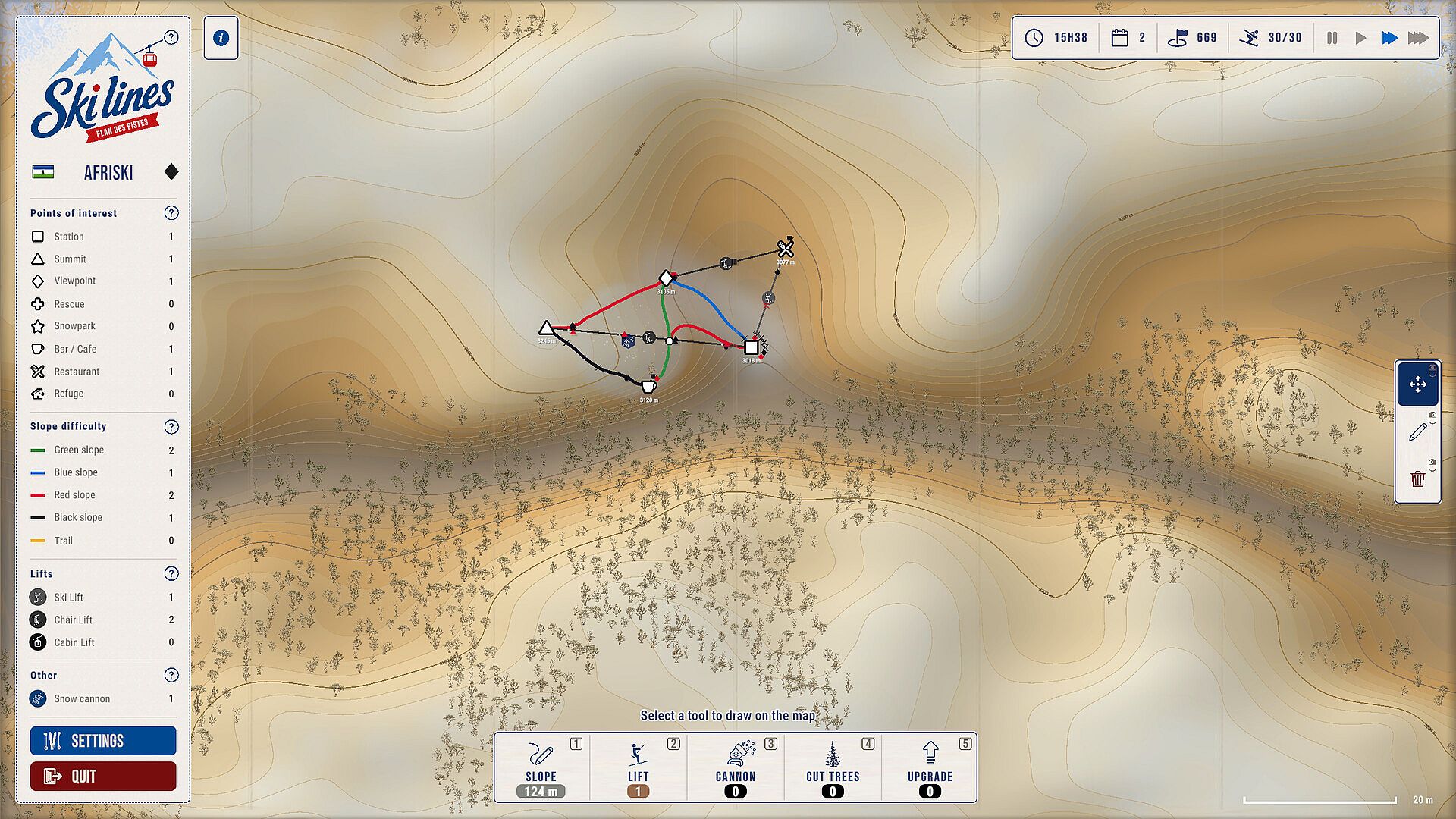
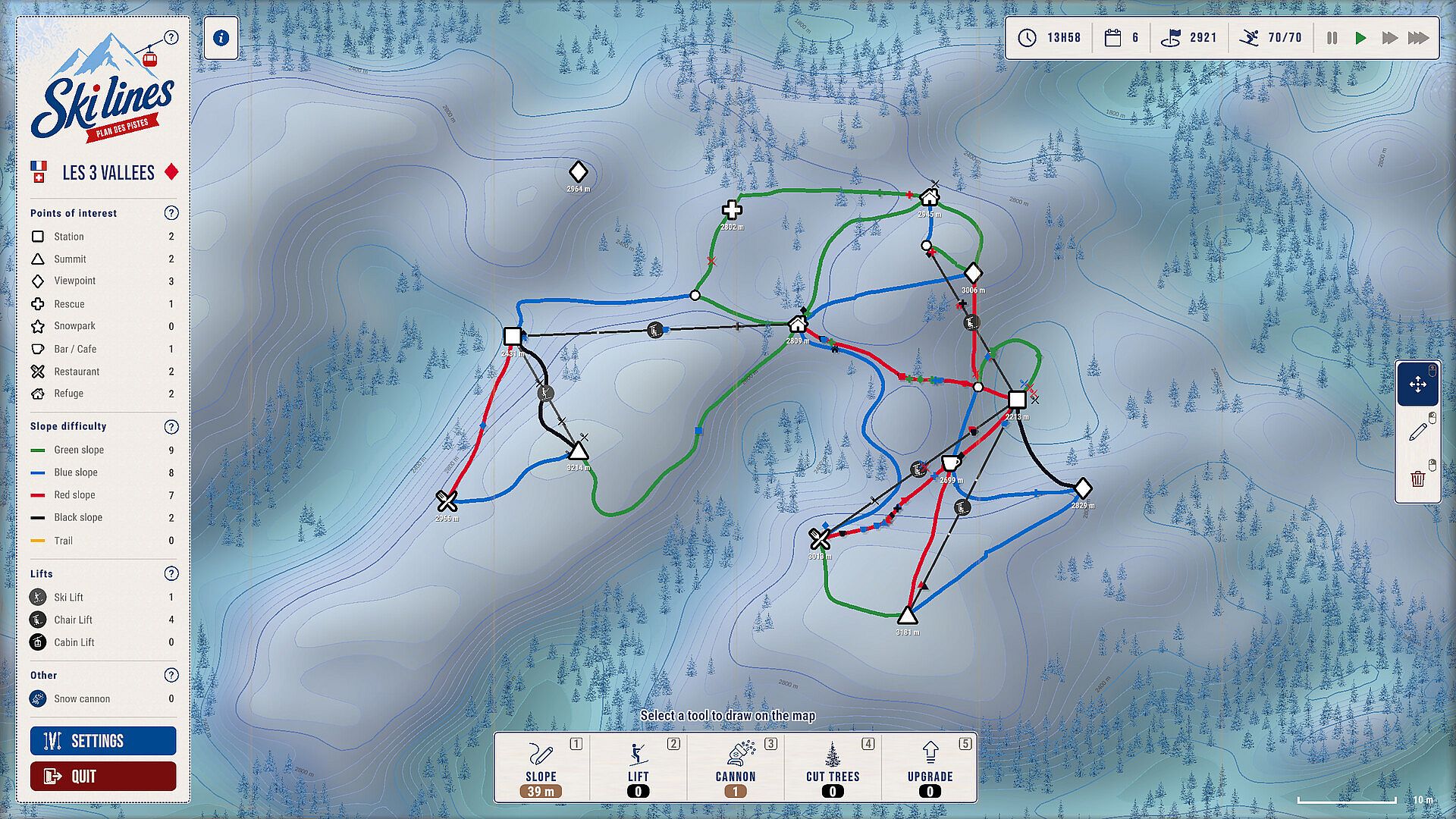
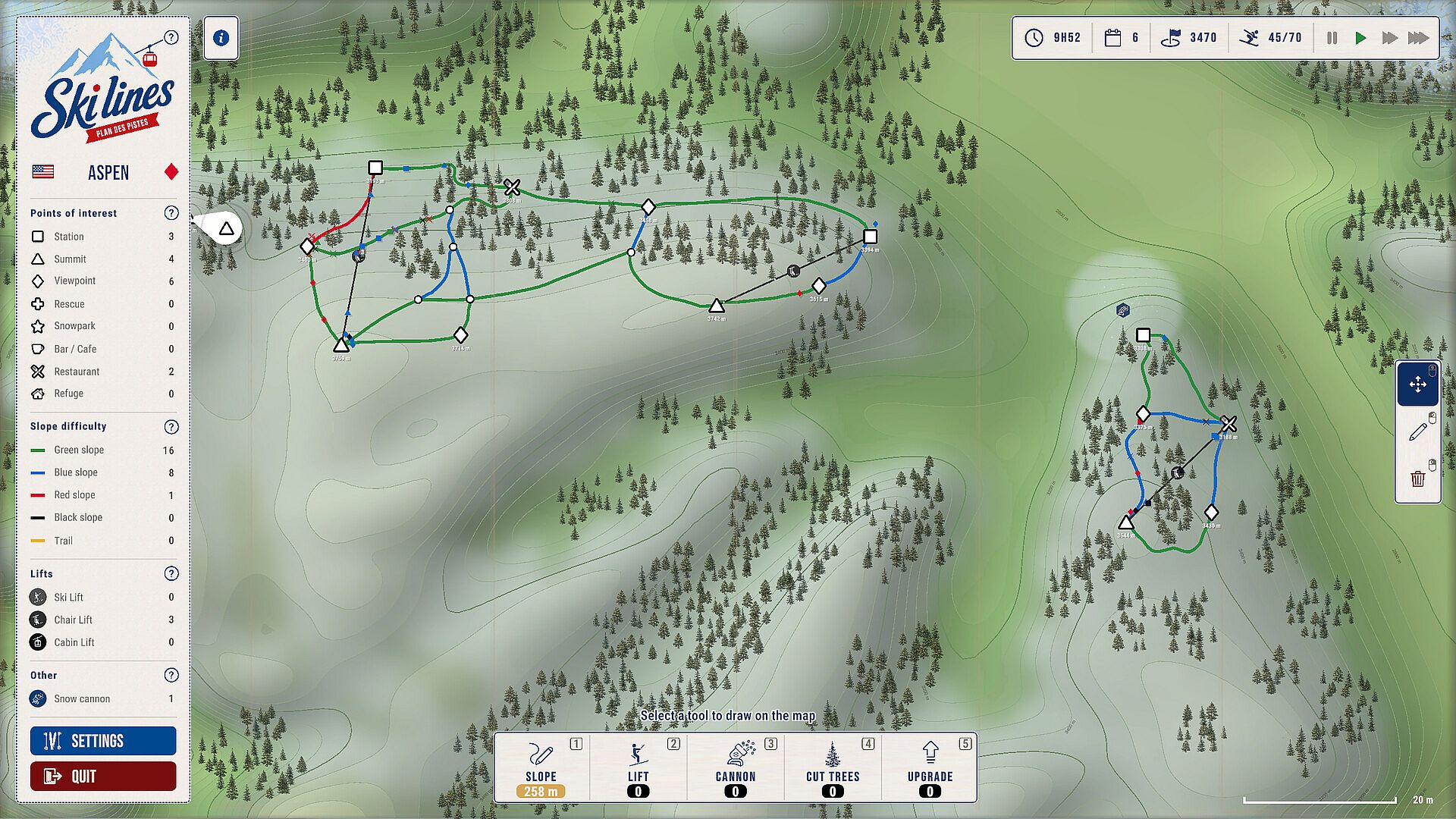
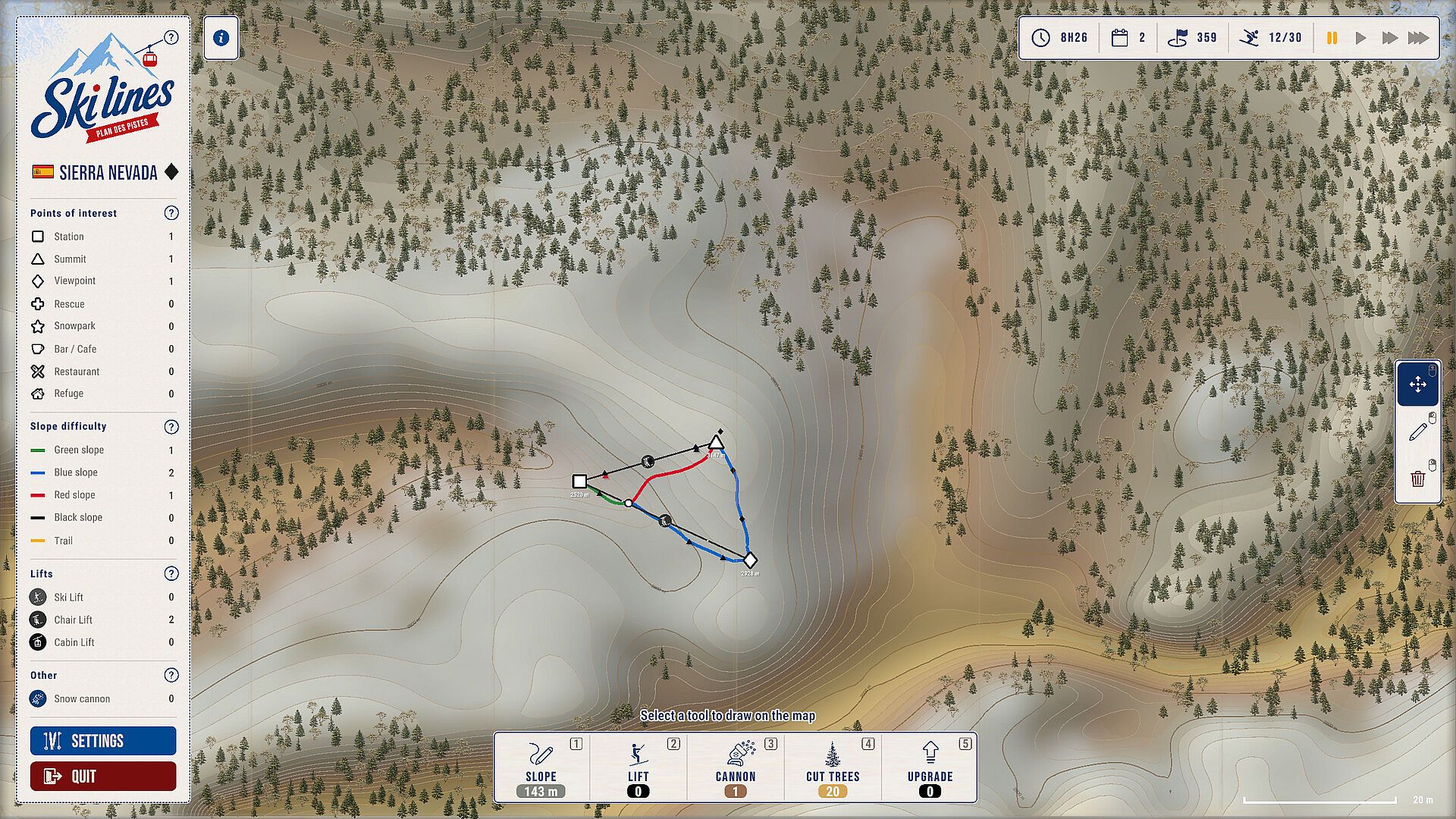
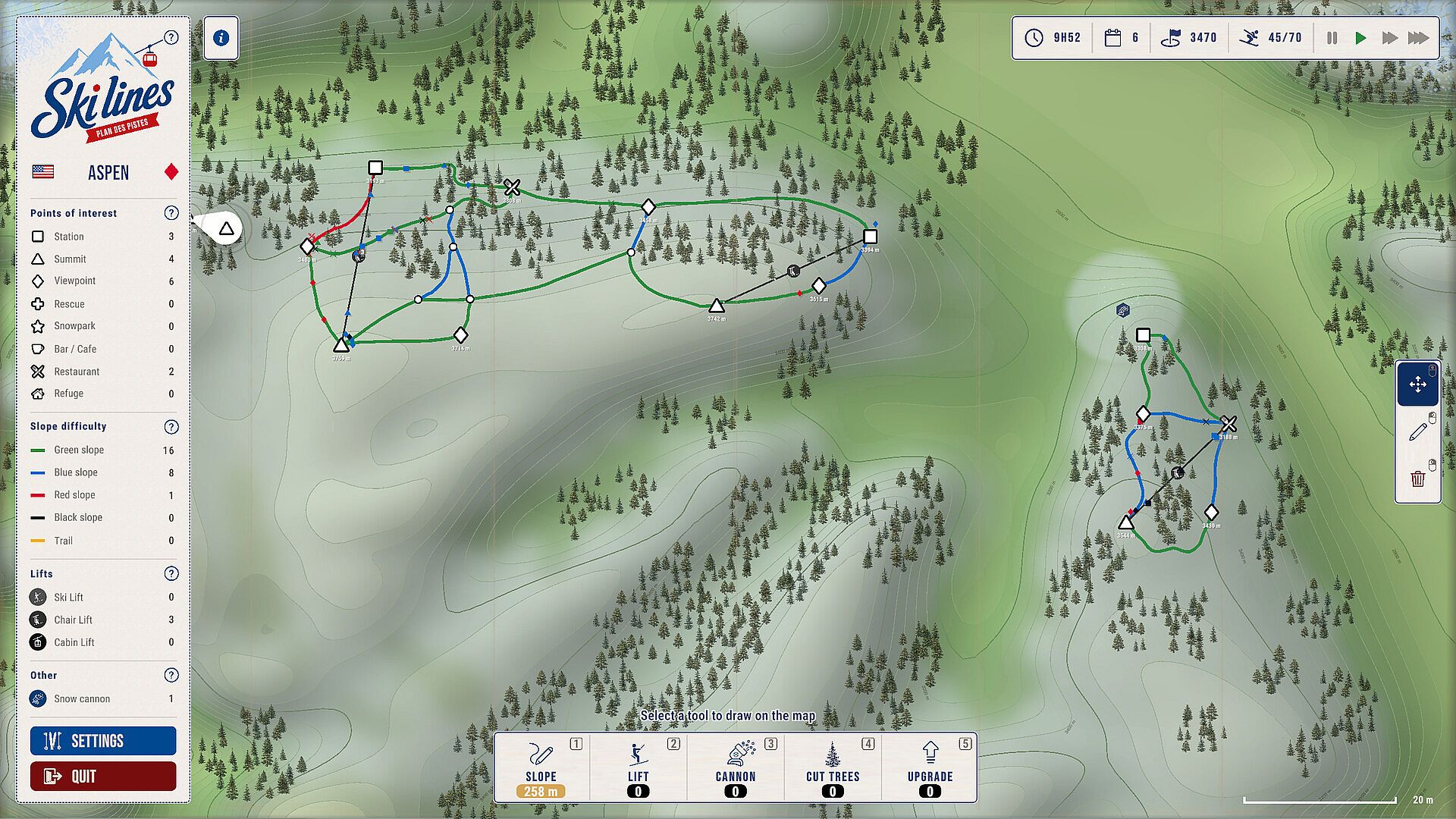
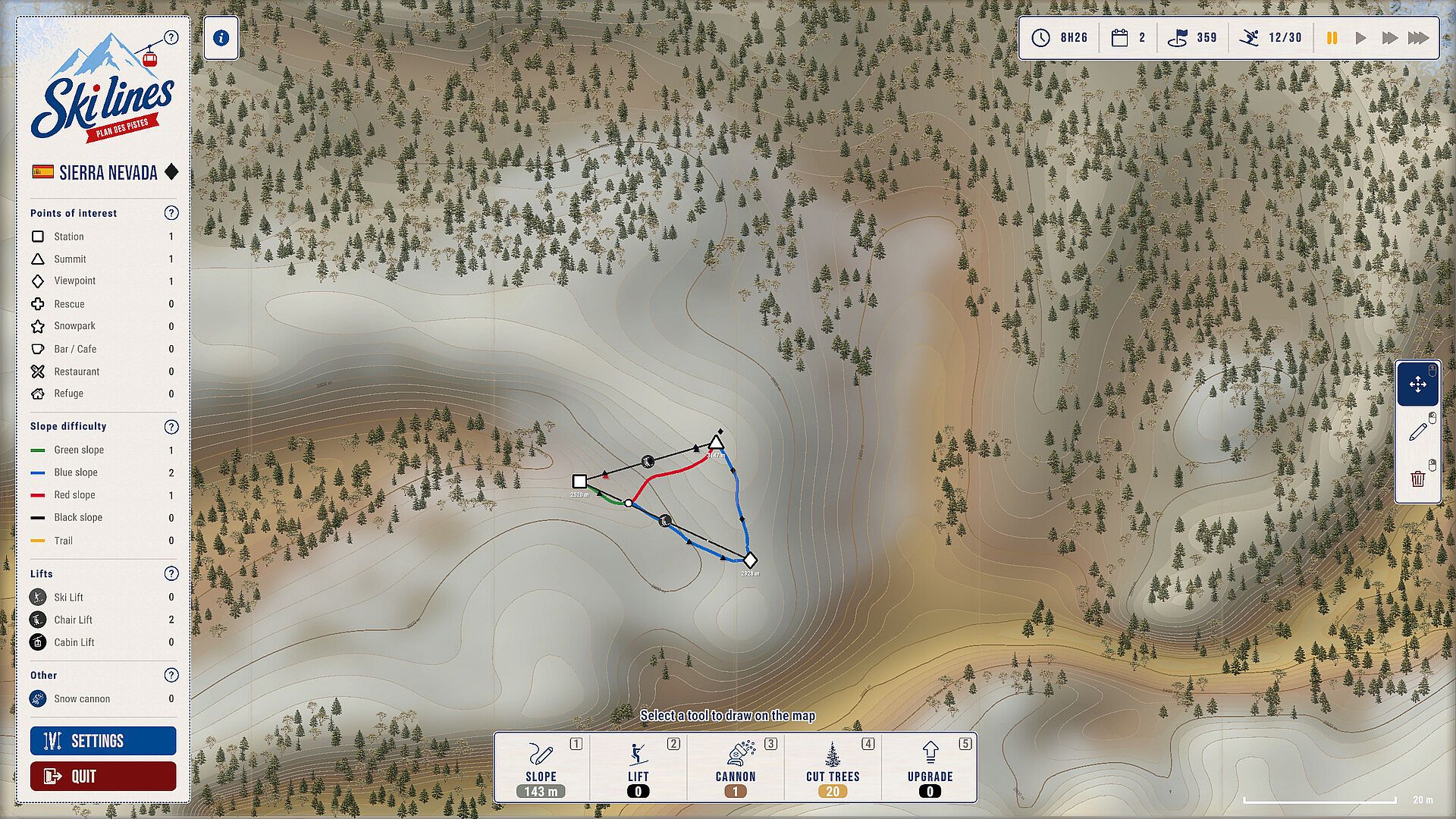
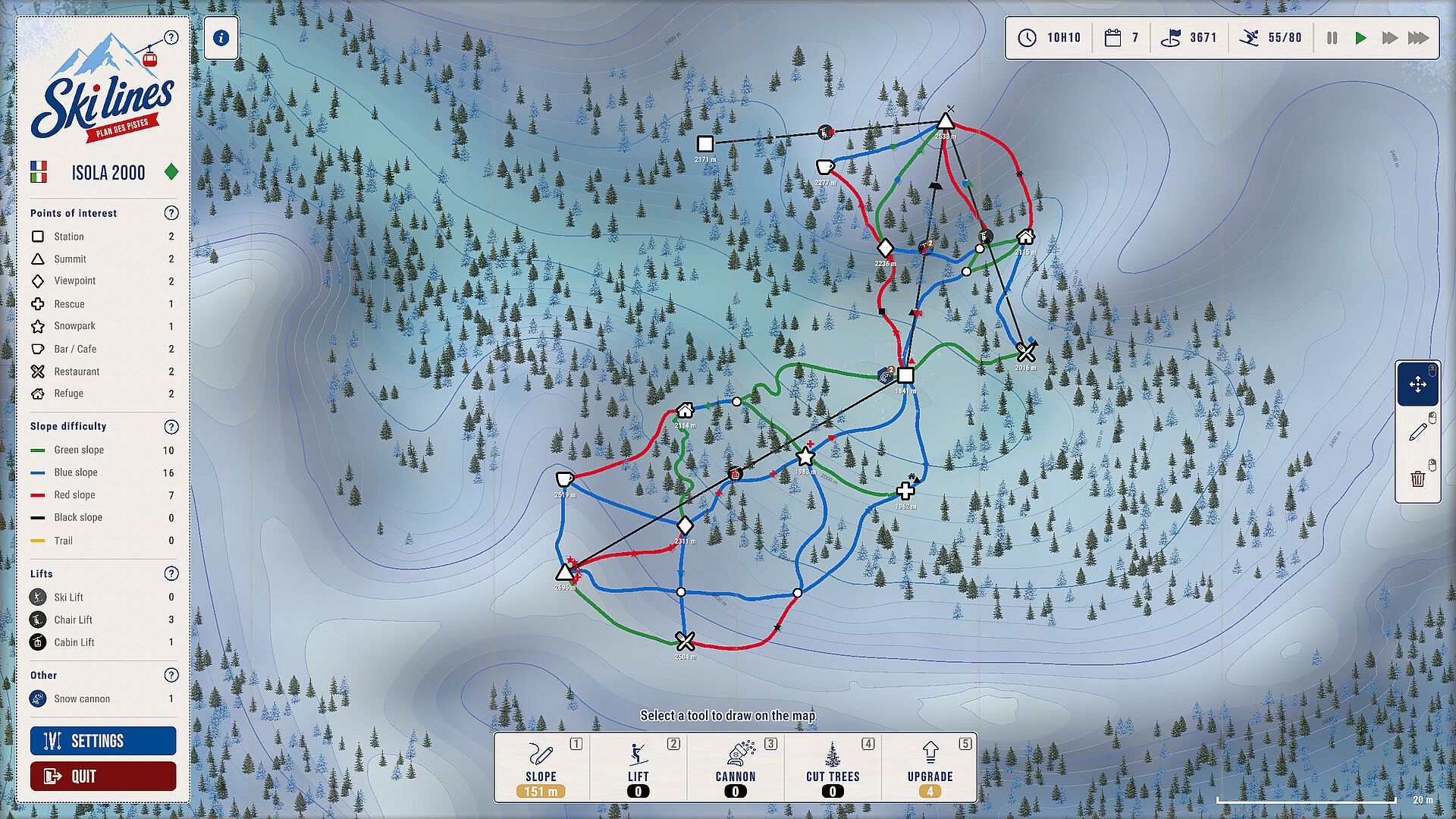
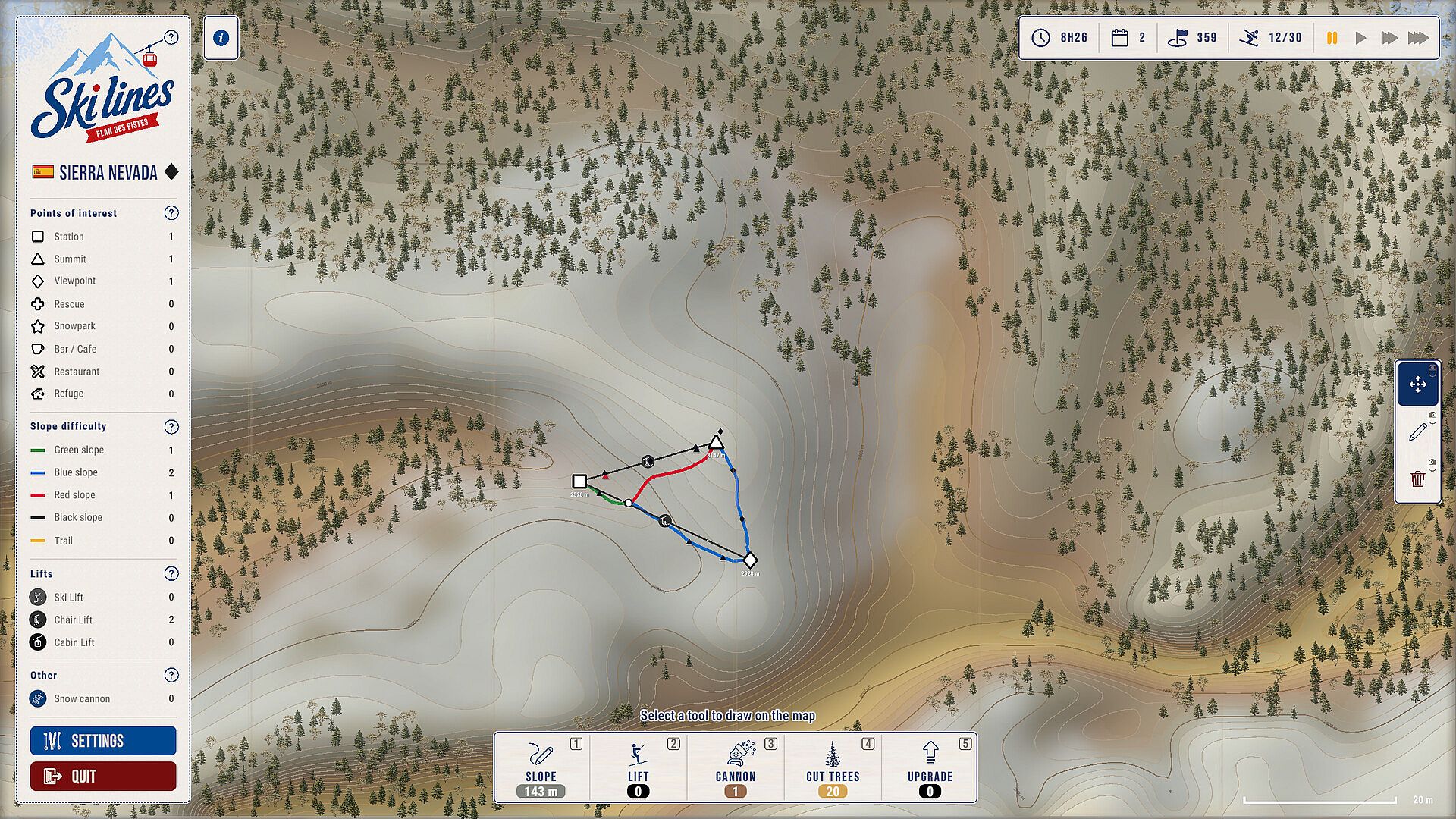
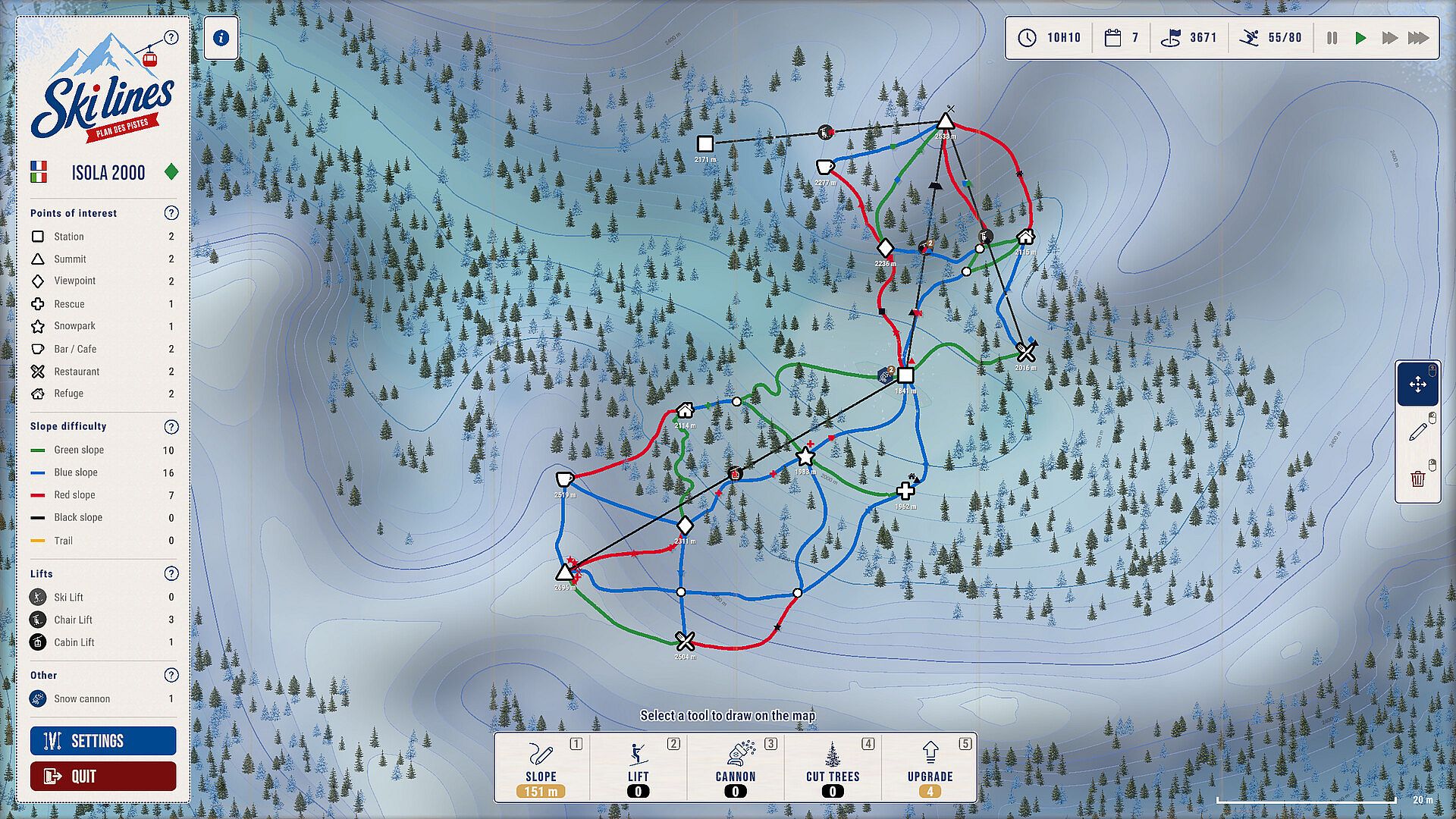
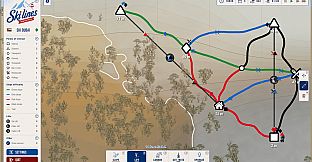
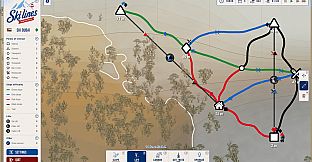
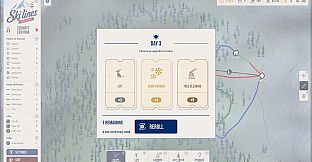
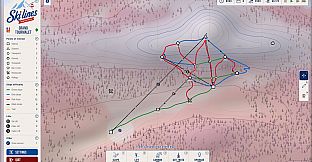
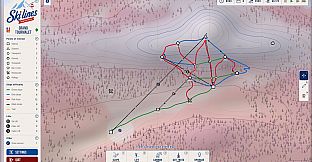
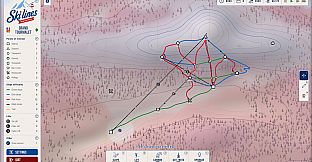
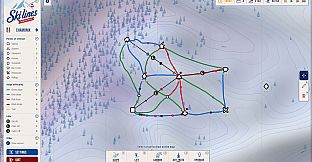
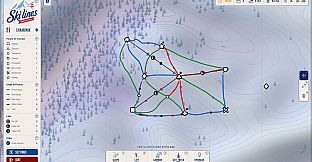
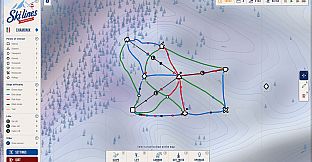
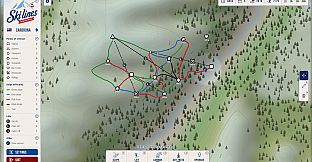
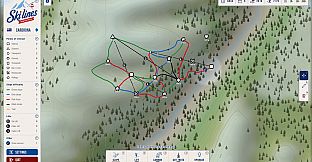
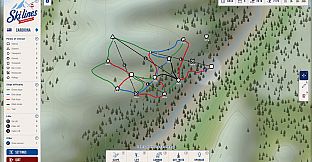
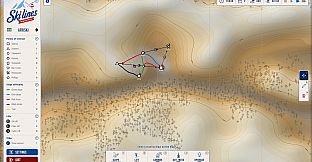
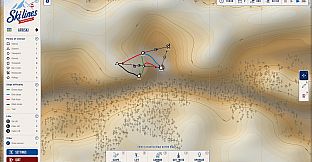
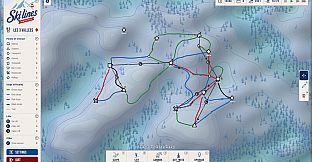
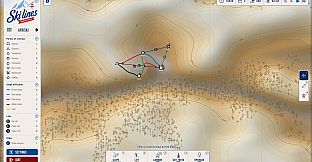
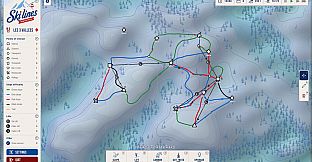
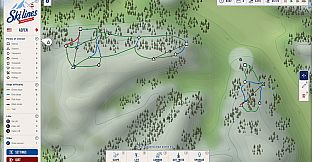
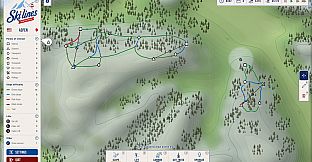
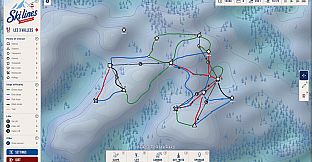
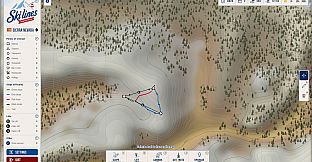
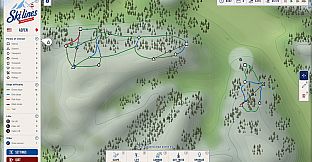
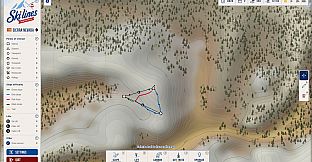
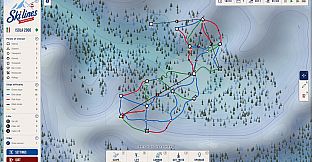
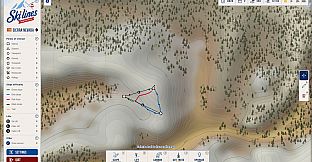
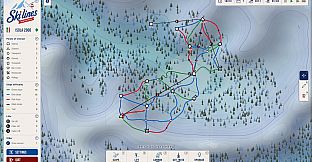
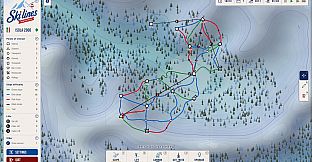
Ski Lines: Trail Map is a minimalist strategy simulation game focused on designing and managing a ski resort through direct interaction with a trail map. Players draw pistes, place lifts, and link key locations on stylized mountain layouts while balancing limited resources and adapting to increasing skier traffic. The experience blends casual accessibility with simulation depth, appealing to those who enjoy thoughtful planning in a sports-themed setting on PC.
Gameplay
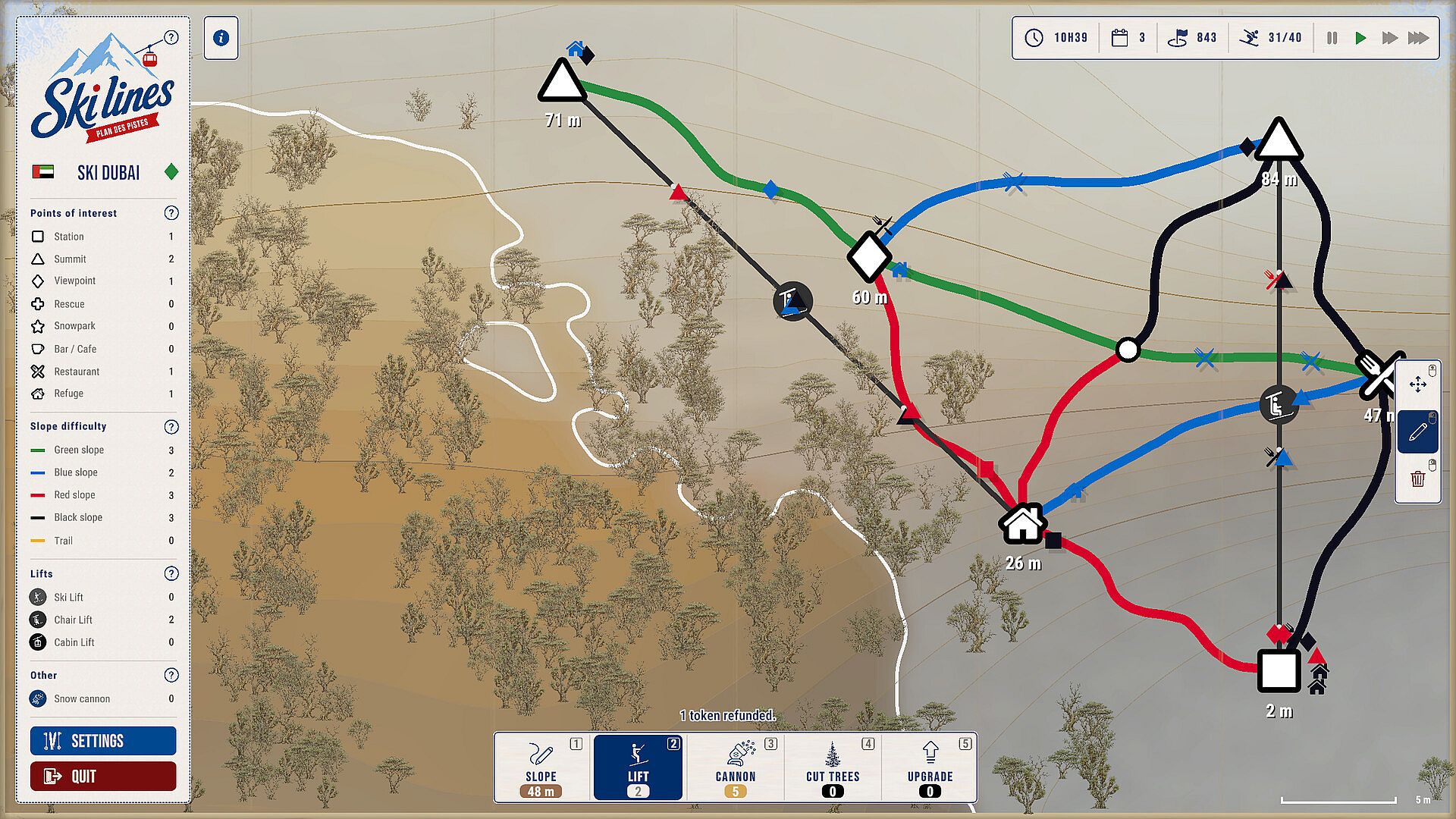
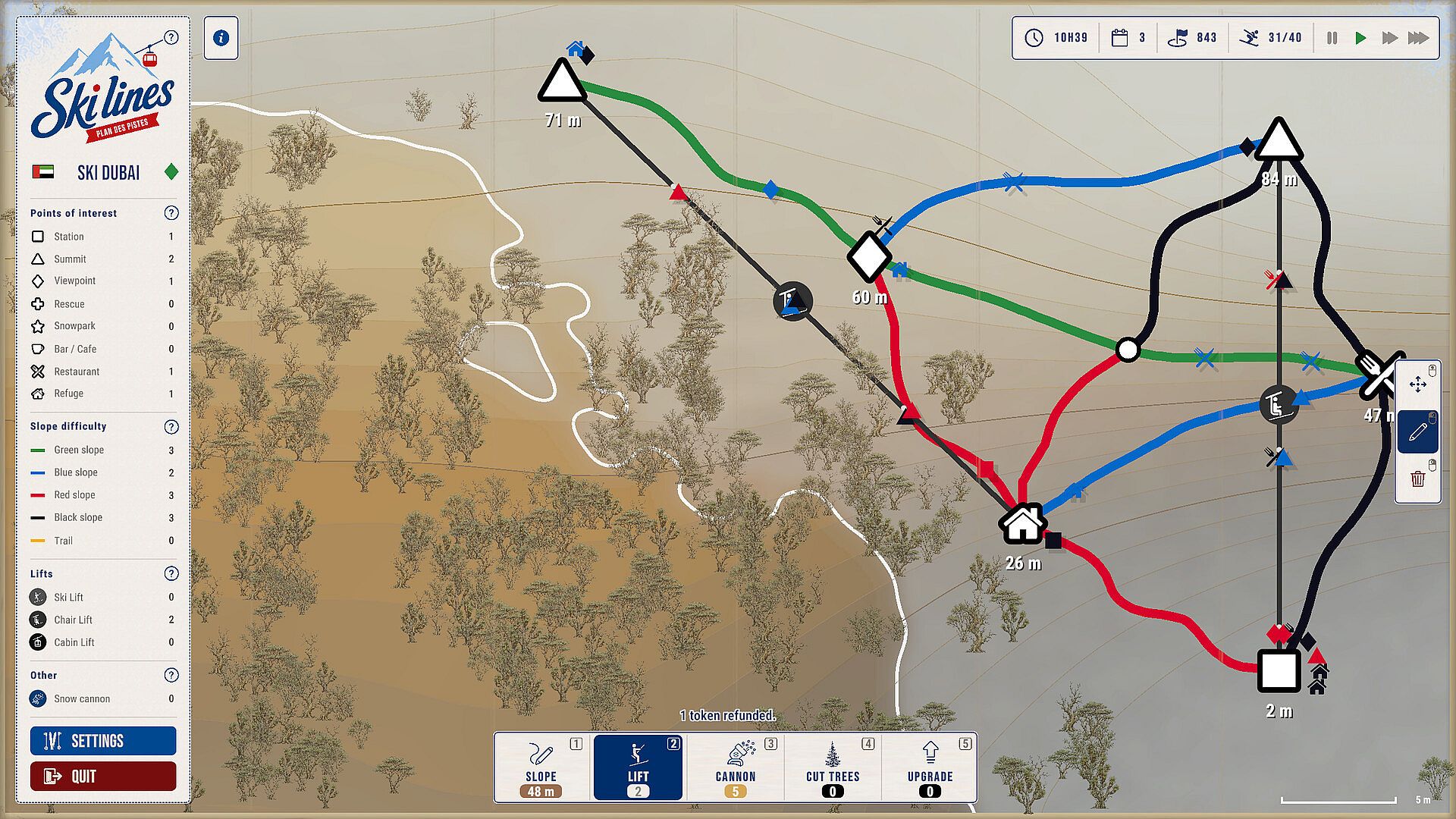
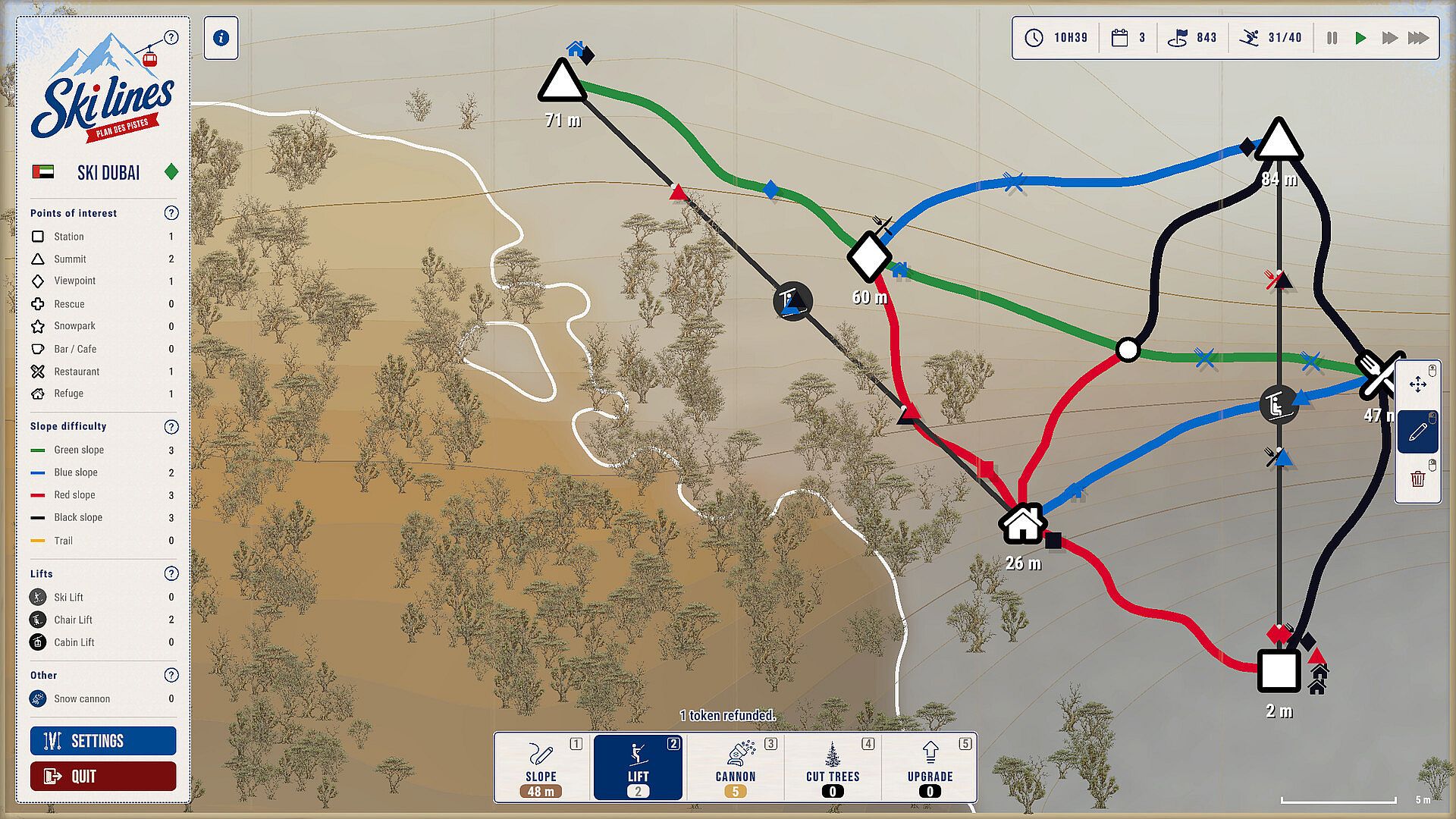
The core loop centers on expanding and optimizing a ski resort network. Players begin with a basic mountain setup and a small set of resources. They draw ski runs of varying difficulty directly onto the map, with easier pistes offering flexibility and steeper ones placing greater demands on the system. Lifts are built to transport skiers uphill, connecting stations, summits, viewpoints, restaurants, refuges, and rescue points as they appear.
Environmental tools add layers to planning. Snow cannons expand the skiable terrain, while tree clearing opens paths through forested areas. Upgrades to lifts and other equipment improve efficiency over time. Each new connection alters the overall network flow, and players must monitor how skiers move to prevent slowdowns.
As days progress, the resort grows more complex. Additional points of interest emerge, skier volume rises, and bottlenecks can form if routes are not adjusted. Resource management requires careful decisions about where to invest, balancing immediate needs with long-term expansion across evolving layouts.
Game Modes
The game operates in a single-player format with roguelike progression elements. Each run presents a fresh mountain layout that changes as new destinations and challenges appear daily. Players redesign networks on the fly, extending the ski domain and adapting connections to maintain smooth skier movement.
Replayability comes from the procedural evolution of the map and the need to experiment with different piste and lift combinations. Runs encourage iterative improvement, where earlier choices influence later performance and resource allocation across multiple attempts.
Key Mechanics and Features
Direct map interaction forms the foundation, allowing precise placement of runs and infrastructure. The system tracks skier flow in real time, highlighting areas where connections succeed or create congestion. Limited resources force prioritization, such as choosing between expanding terrain with snow cannons or upgrading existing lifts for better capacity.
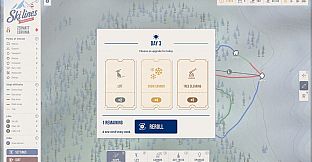
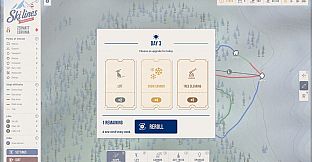
Progression involves unlocking improvements that scale with resort growth. New points of interest introduce fresh routing puzzles, while the overall design supports both short sessions and extended planning. The stylized presentation keeps focus on strategic decisions rather than visual complexity.
Is It Worth Playing?
This title suits players who appreciate deliberate strategy and simulation in a relaxed sports context. The emphasis on network building and adaptation provides consistent engagement through changing conditions and resource constraints. Those drawn to indie experiences with clear goals and replayable structure will find the mechanics rewarding.
The game rewards observation and adjustment, making it a fit for casual sessions or deeper experimentation with layouts. Its accessible entry point combined with growing complexity supports repeated play without overwhelming demands. Availability on PC positions it well for strategy enthusiasts seeking a focused resort management challenge.