




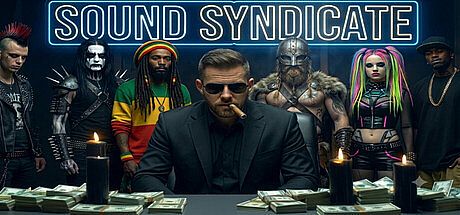


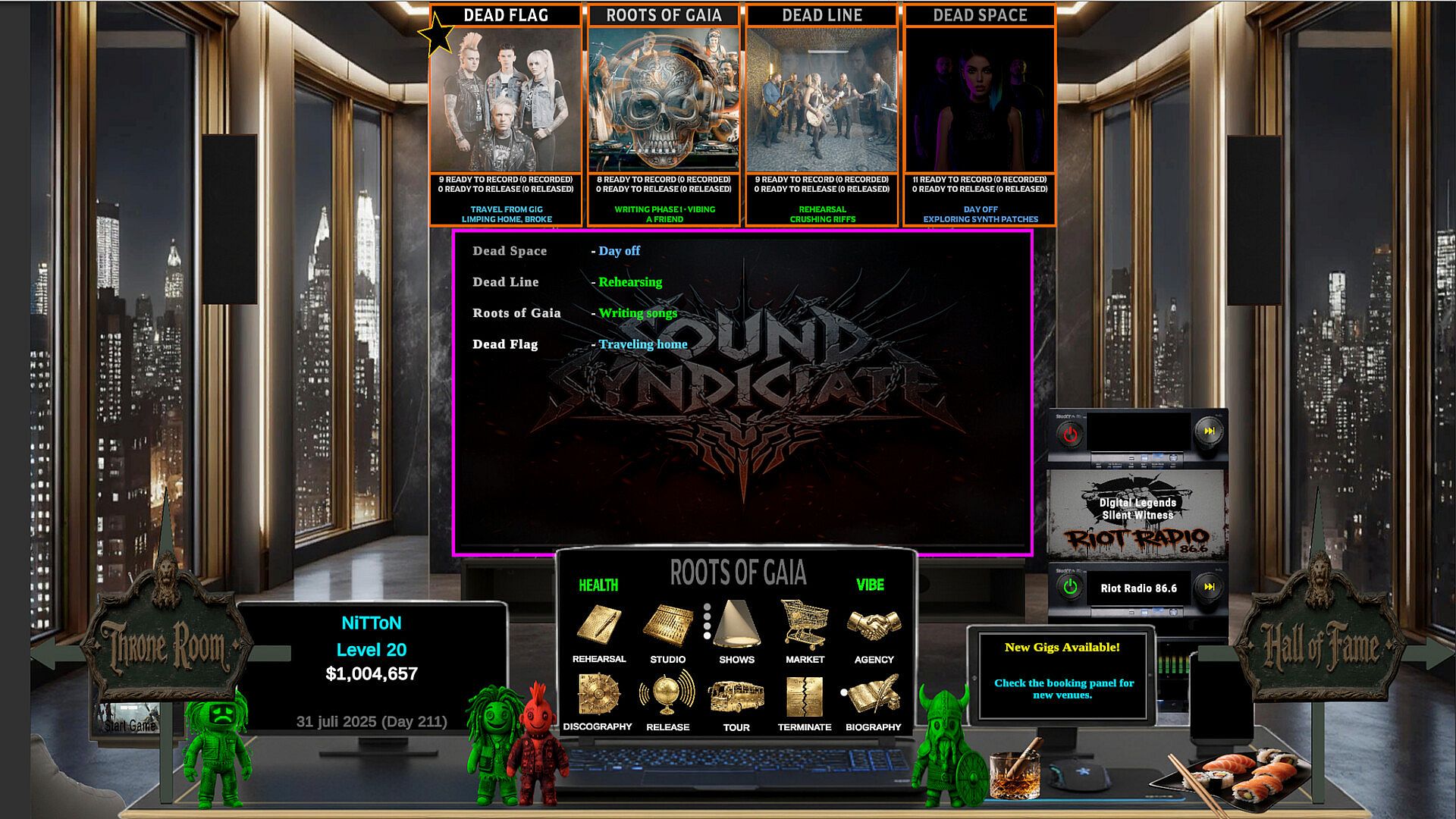
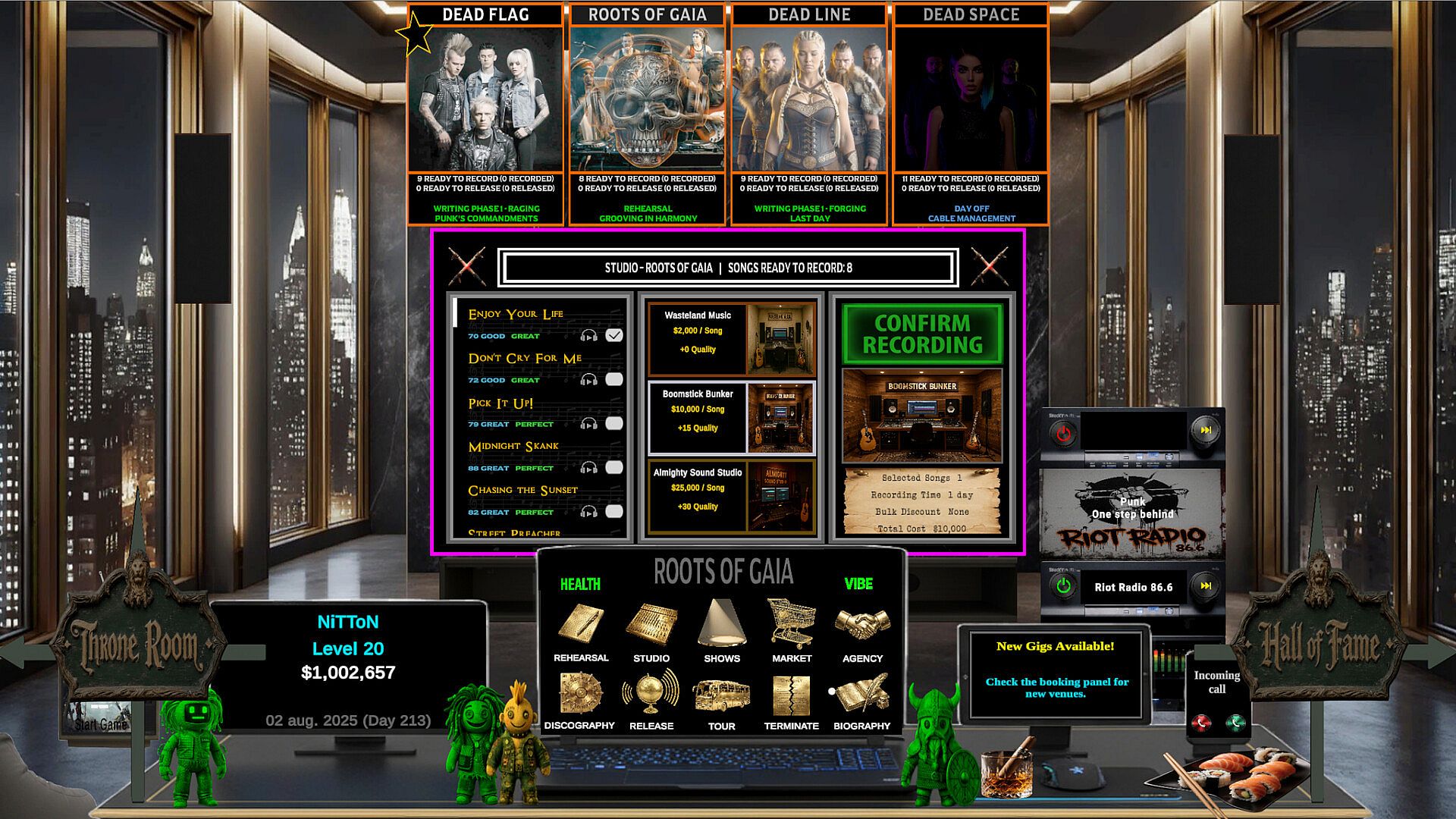
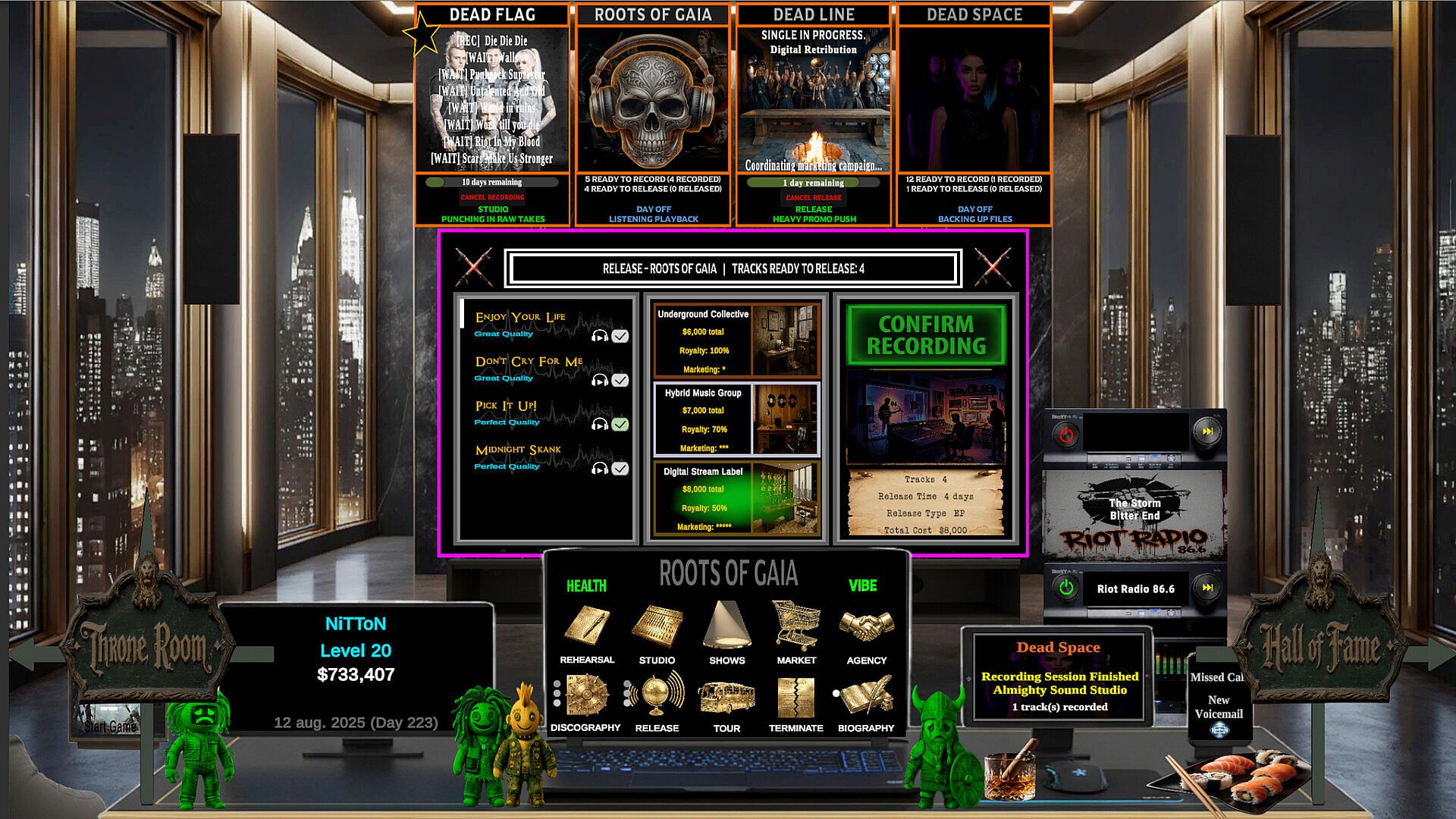







Sound Syndicate is a strategy and simulation game set in the competitive music industry. Players step into the role of a behind-the-scenes executive who builds and maintains a record label through talent discovery, business decisions, and ongoing artist management.
Gameplay
The core loop revolves around scouting emerging artists from underground scenes and integrating them into the label. Talent scouting requires evaluating potential stars while competing against rival labels for the same prospects. Once signed, contract negotiations form a central activity where players adjust terms such as advances, royalty percentages, and copyright ownership to secure favorable deals without losing the artist.
Rights management adds another layer as players buy, sell, and oversee music copyrights. Licensing tracks for use in films, video games, and advertisements generates ongoing revenue streams that support further expansion. Artist personalities introduce variability, with each individual bringing distinct traits that influence daily operations.
Drama management requires attention to internal conflicts, public relations issues, and tour-related disruptions. These elements can affect chart performance and label stability, demanding timely interventions to maintain momentum. The simulation emphasizes long-term planning over immediate action, with success measured by chart positions and financial growth.
Game Modes
Sound Syndicate operates as a single-player management experience without separate competitive or cooperative modes. The structure focuses on a continuous campaign where players build their syndicate from the ground up through repeated cycles of scouting, contracting, licensing, and crisis handling. Progression ties directly to label performance metrics rather than level-based unlocks or mission objectives.
Key Mechanics
Contract drafting stands out for its balance of short-term incentives and long-term rights retention. Players must weigh immediate cash flow against future earnings potential when setting royalty rates or advance amounts. Copyright trading creates opportunities for passive income but carries risks if key assets are sold too early.
Artist interactions extend beyond contracts into personality-driven events. Unique traits can spark scandals or creative boosts, requiring players to allocate resources toward public relations or tour support. These systems interconnect, as strong rights portfolios provide the financial buffer needed to weather artist-related setbacks.
Is It Worth Playing?
Sound Syndicate appeals to players who enjoy detailed business simulations and strategic decision-making in niche settings. The combination of talent scouting, contract balancing, and rights licensing creates a focused loop centered on industry mechanics rather than combat or exploration. Those interested in managing egos, navigating negotiations, and optimizing revenue streams will find the systems rewarding through repeated play sessions.
The game suits fans of indie strategy titles that prioritize thoughtful planning over fast-paced action. Availability on PC allows for extended sessions where players refine their approach across multiple label-building attempts. Current support centers on the core management features described in the design, making it a solid choice for anyone seeking a simulation of music business operations.











