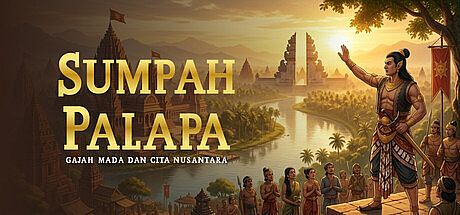



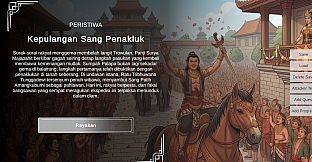
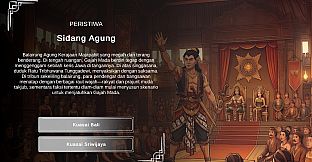
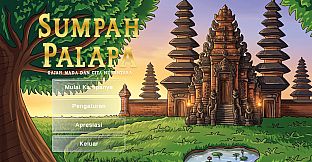
Sumpah Palapa Gajah Mada dan Cita Nusantara is a 2D narrative strategy simulation set in the 14th century. Players take the role of Mahapatih Gajah Mada and work to fulfill the Palapa Oath by uniting the archipelago of Nusantara under the Majapahit Empire. The game combines resource management with branching decisions that affect fleets, supplies, and court politics on PC.
Gameplay
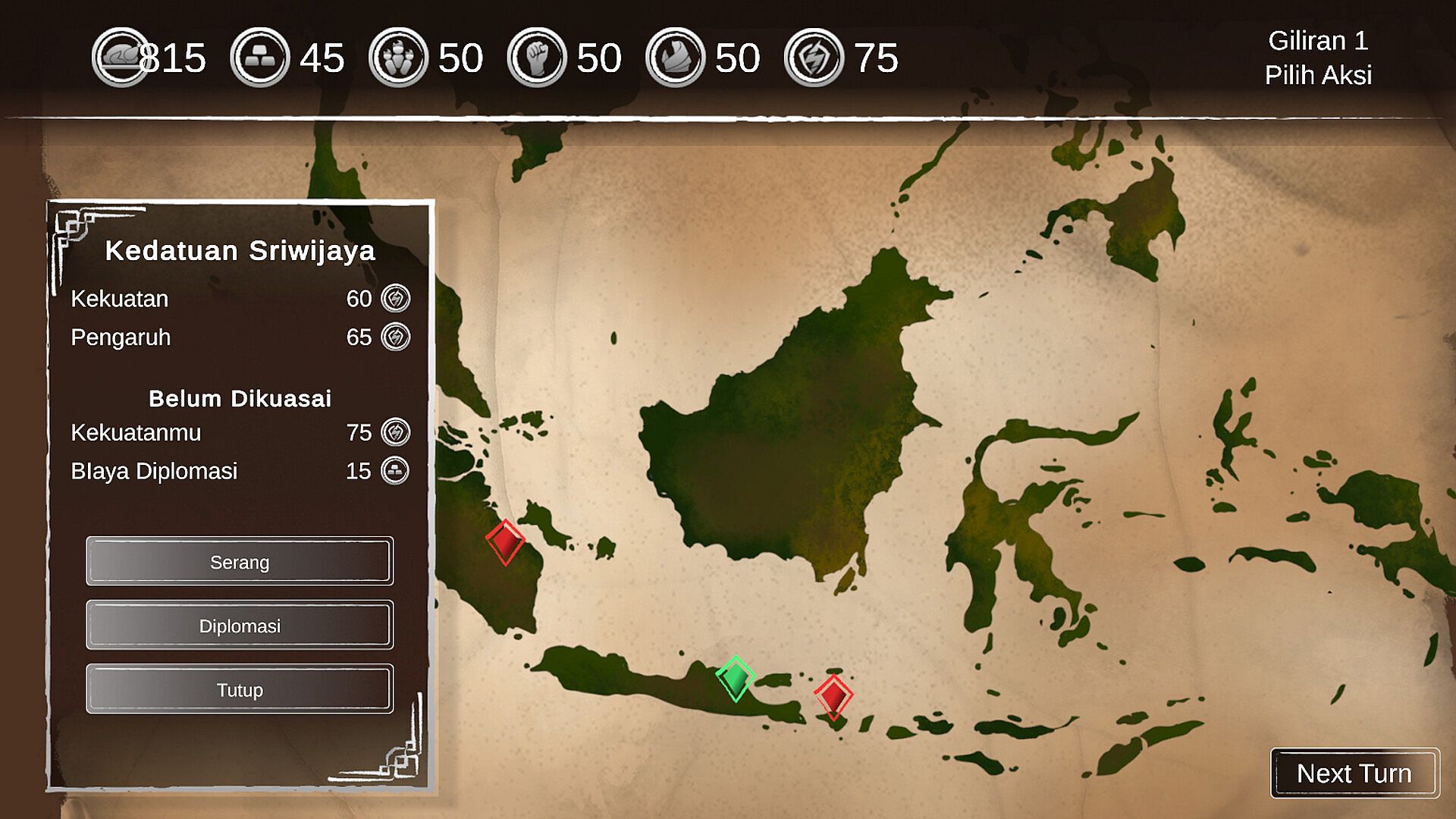
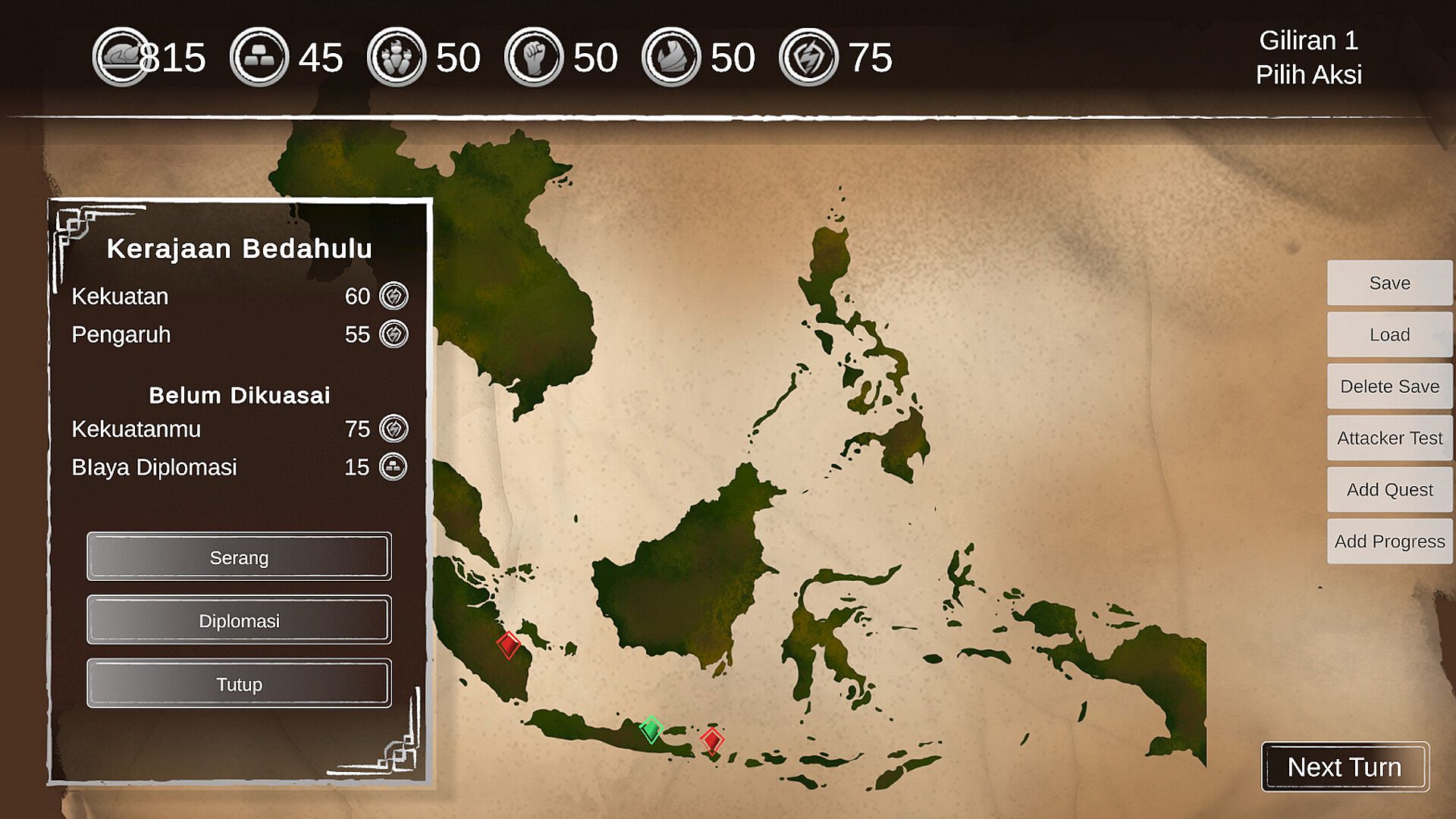
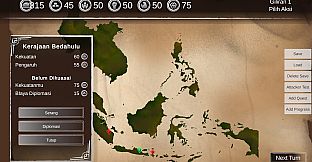
The core loop centers on leading expeditions across the islands while balancing three main resources: gold, troops, and food. Expeditions require careful planning to avoid shortages that can weaken forces during extended campaigns. Players deploy fleets to key locations such as the trading hub of Tumasik, the jungles of Tanjungpura, and the spice islands of Wandan.
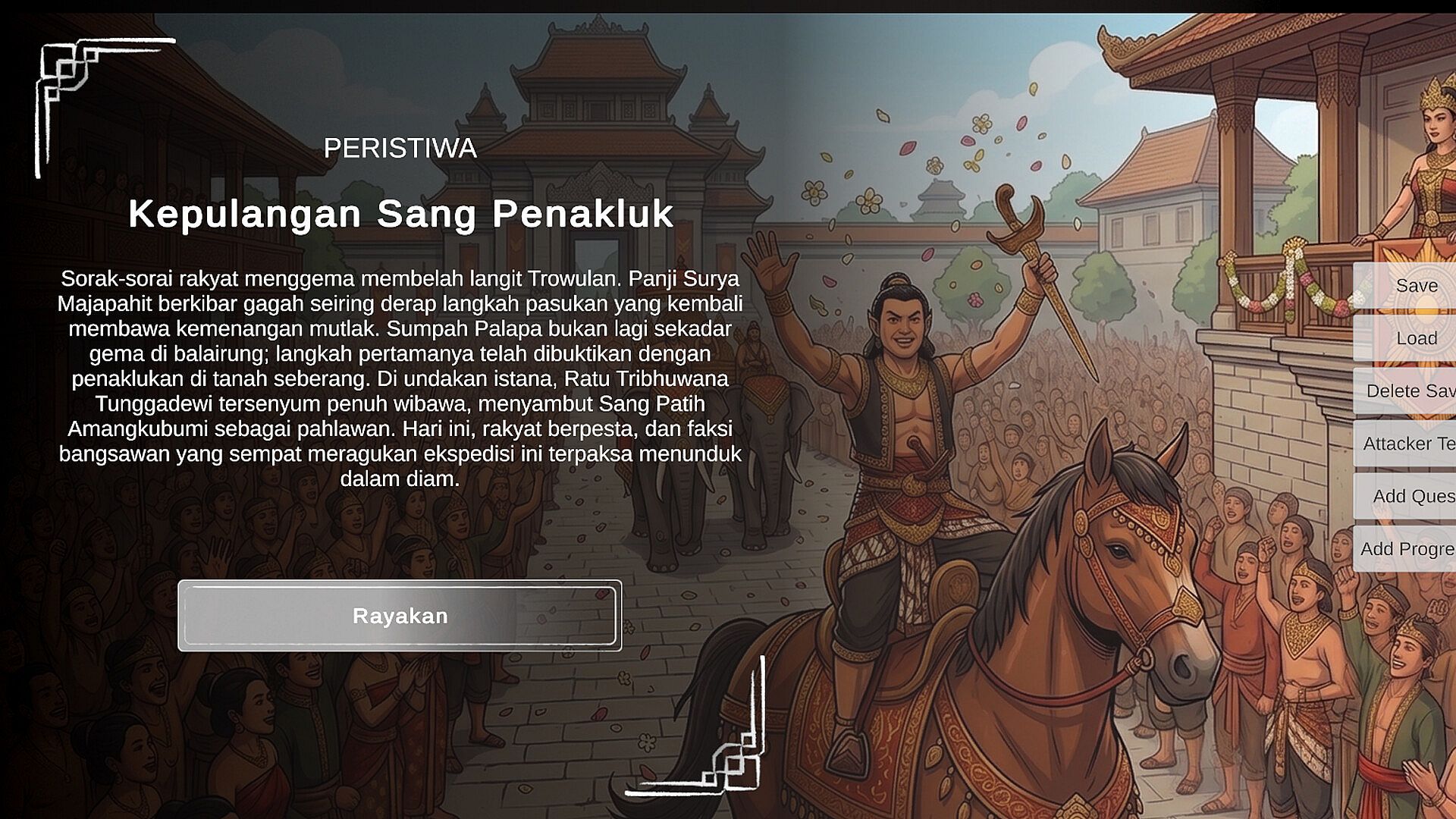
Political elements add tension through internal threats. One example involves the noble Ra Kembar attempting to disrupt troop logistics by cutting off food supplies. Decisions in these situations carry direct consequences for ongoing operations and long-term stability. Conquests also provoke immediate responses, including retaliatory attacks from rival forces that target the capital.
Resource allocation must support both citizens and soldiers to prevent starvation on long voyages. Every choice influences the empire's trajectory, from military expansion to diplomatic outcomes that may involve foreign powers.
Game Modes
The experience is built as a single-player narrative strategy title. Progress follows a linear structure shaped by player decisions rather than separate competitive or cooperative modes. The focus remains on guiding Gajah Mada through historical events with branching paths that alter the story's direction and conclusion.
Core systems revolve around managing fleets and supplies while responding to crises. There are no additional verified modes such as multiplayer skirmishes or endless survival scenarios. The structure emphasizes replayability through different choices that lead to distinct historical outcomes.
Key Mechanics and Systems
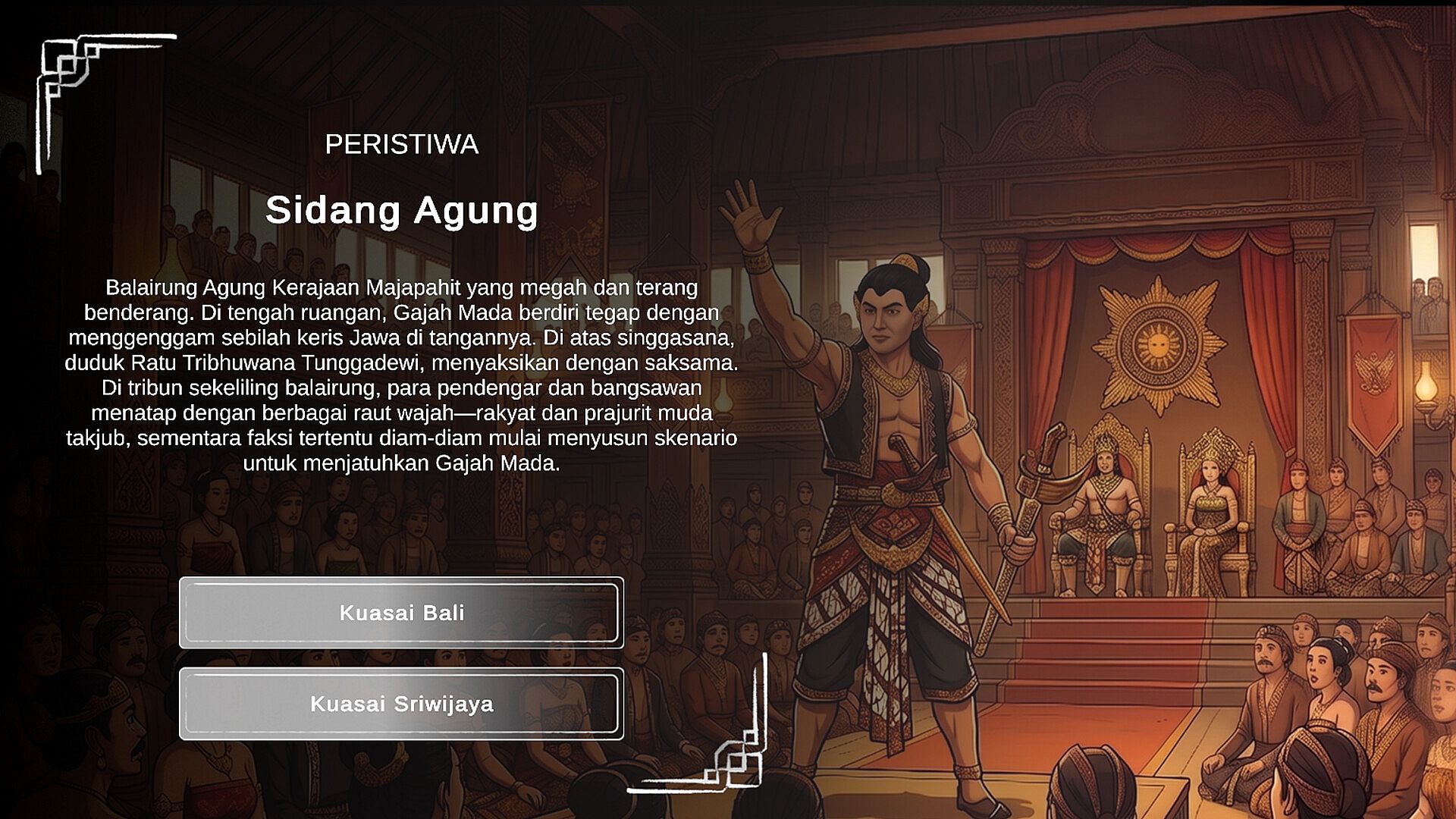
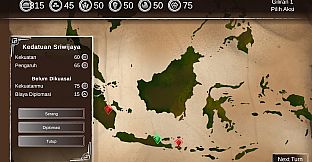
Strategic resource management forms the foundation, requiring players to maintain steady supplies of gold, troops, and food throughout campaigns. Shortfalls in any area can halt advances or expose the empire to greater risks. The retaliation system ensures that aggressive moves, such as an attack on Sriwijaya, trigger counterattacks from other regions like Bali.
Narrative choices determine the ending. Paths include triggering the Bubat War or pursuing a peaceful alliance with the Sunda Kingdom. The latter option carries its own risks, potentially drawing attention from external empires such as the Ming Dynasty. These systems create a simulation where military, economic, and political factors interact continuously.
Is It Worth Playing?
The game targets players interested in historical strategy simulations with strong narrative elements. Its mechanics reward careful planning and adaptation to consequences, particularly for those drawn to themes of empire building and political maneuvering in a Southeast Asian setting. As a free-to-play title still listed as coming soon, it offers an accessible entry point for anyone seeking a focused single-player experience without additional purchase barriers.
Reception data remains limited due to the current release status, with no user reviews available yet. The verified features align with fans of decision-driven strategy who value resource balance and historical branching over large-scale multiplayer action. Those who enjoy managing limited supplies while navigating court intrigue will find the systems engaging, while players seeking broader genre variety may prefer established titles first.