

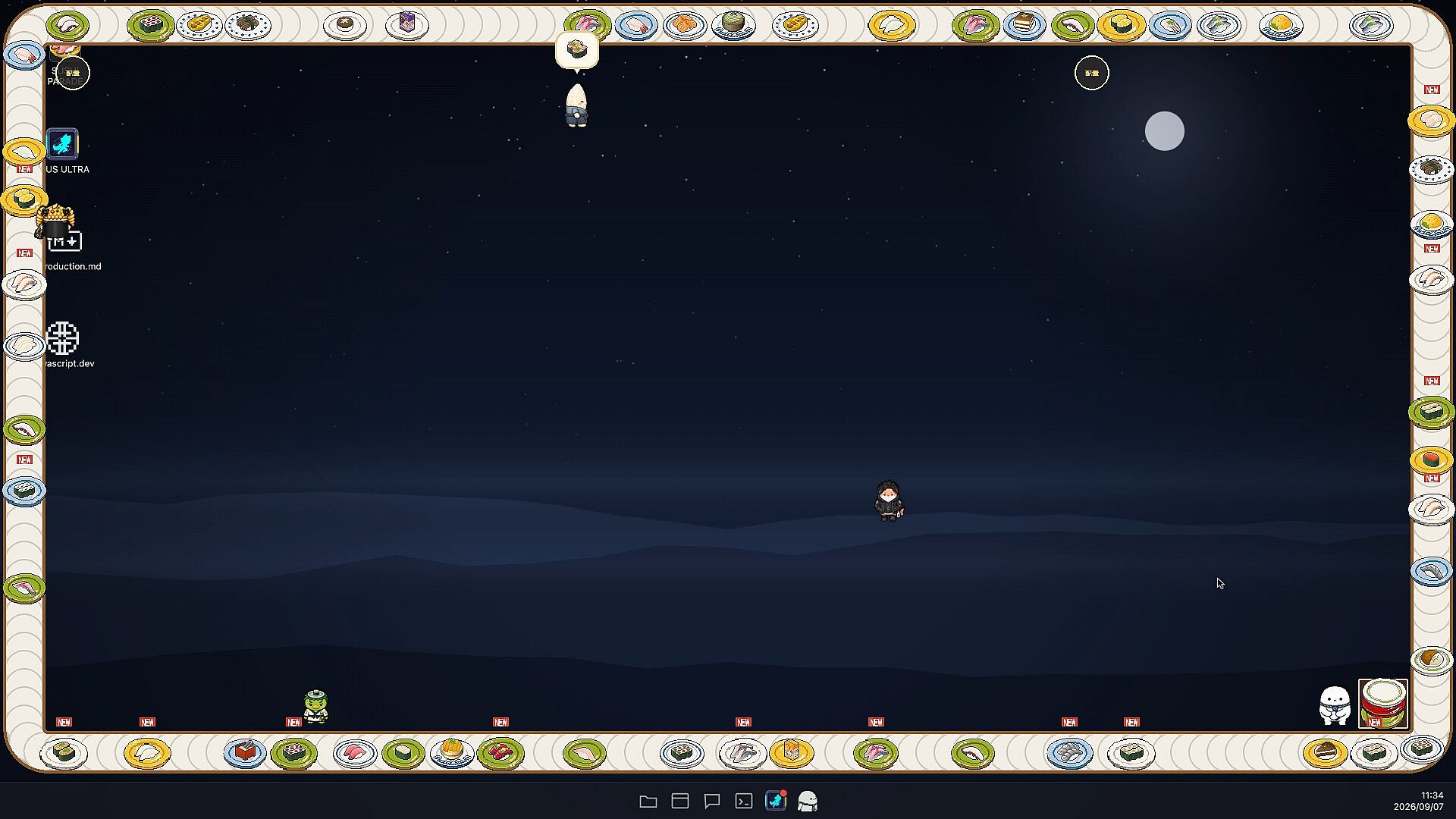
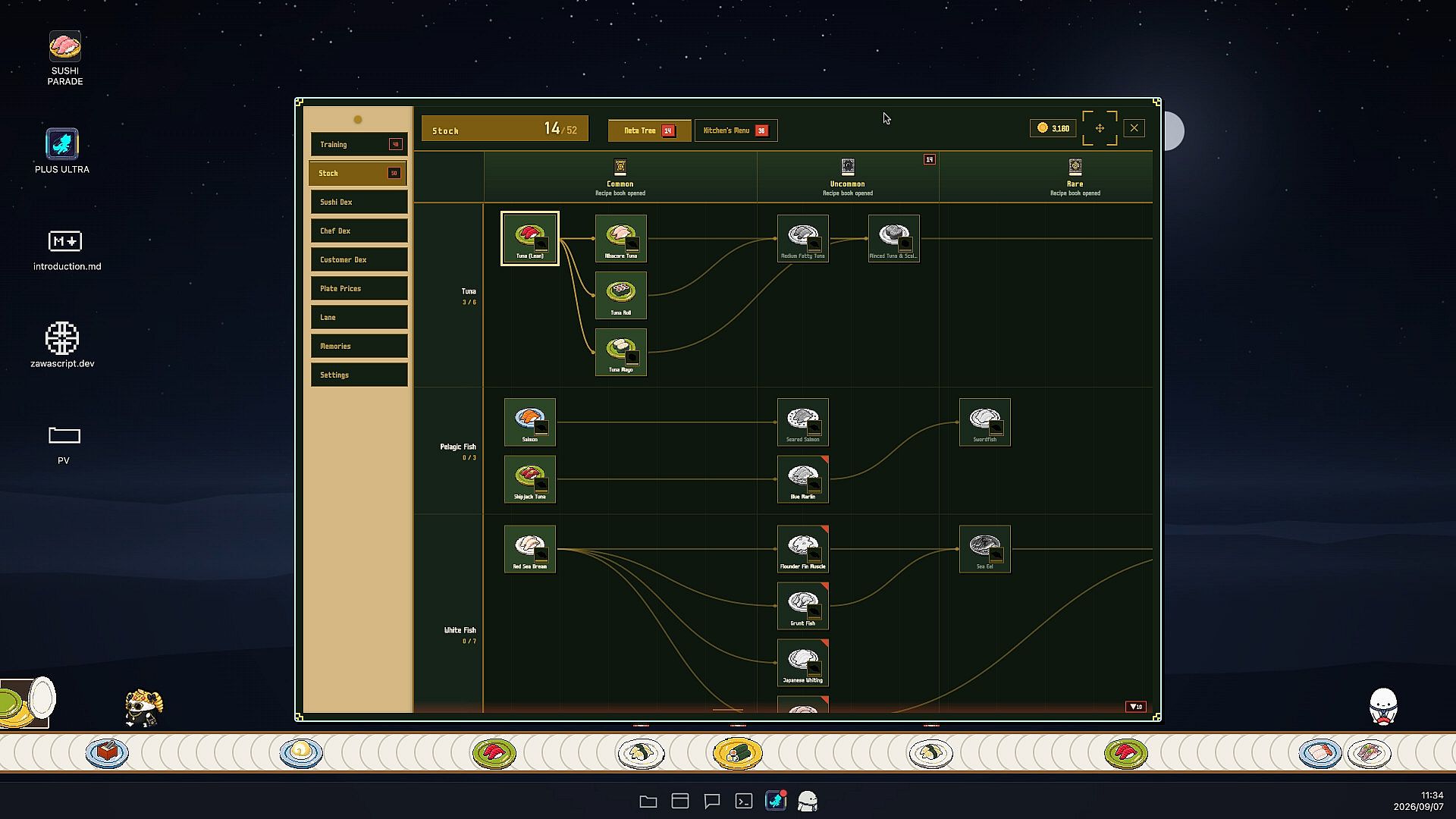
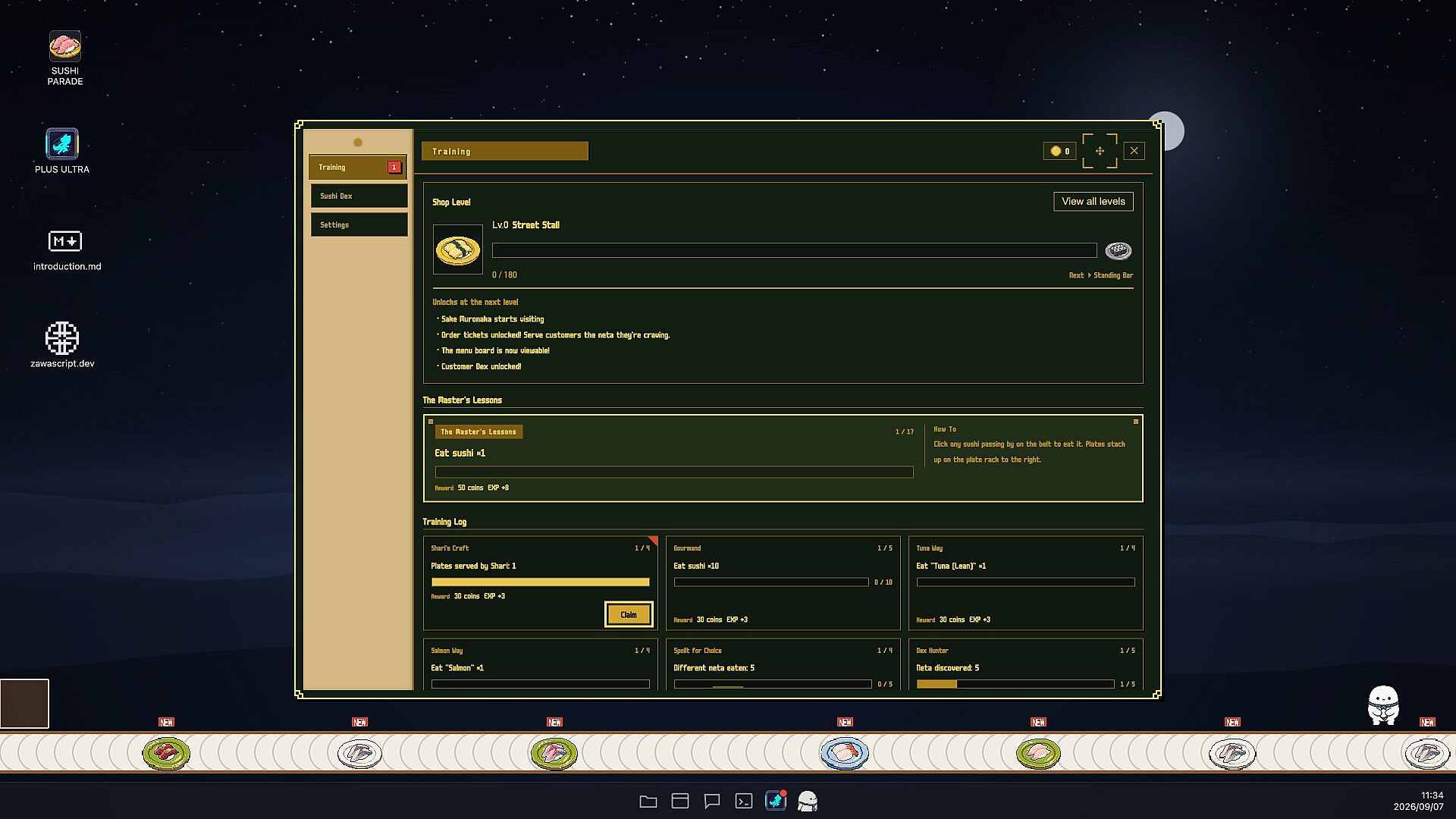
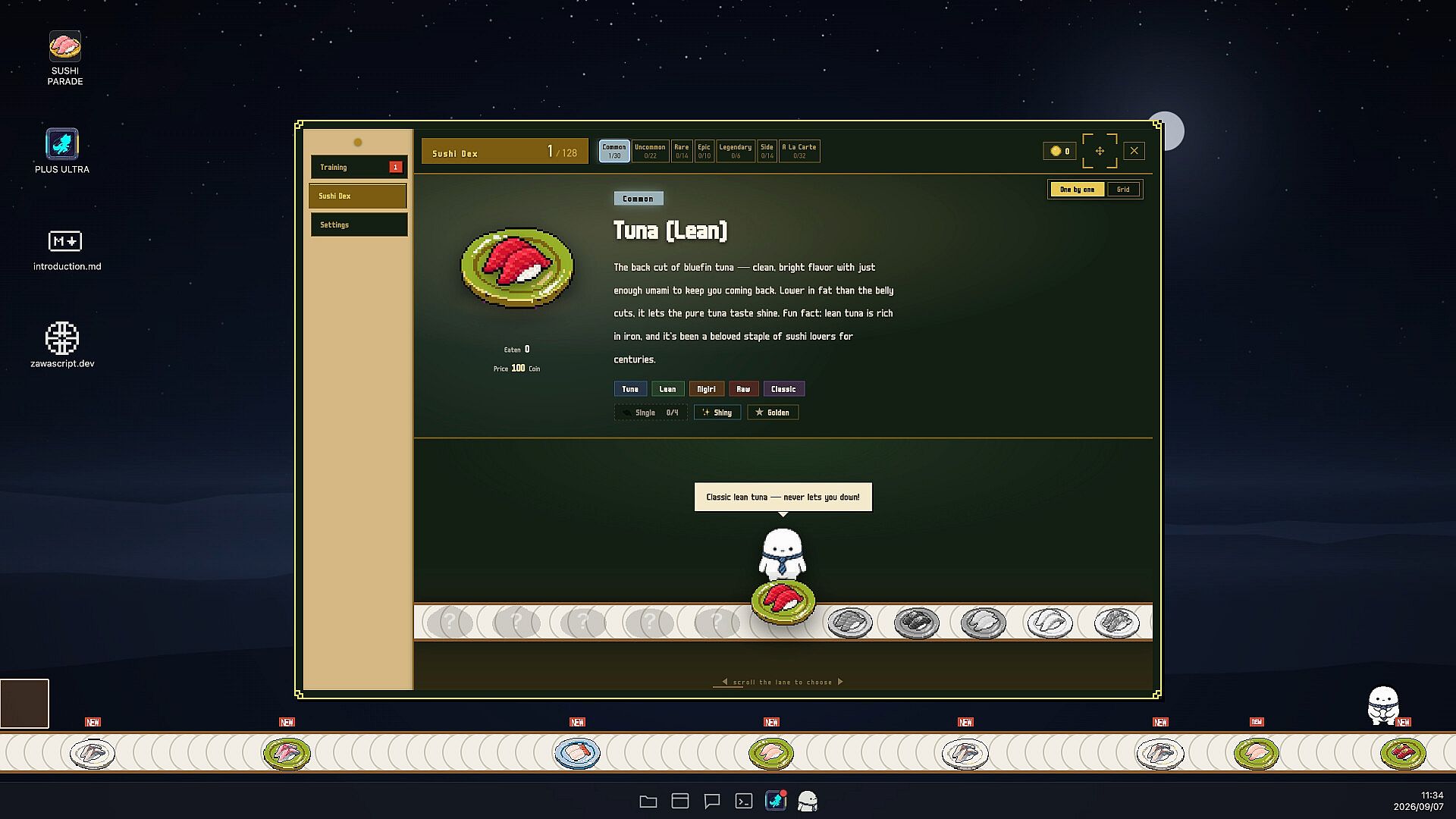
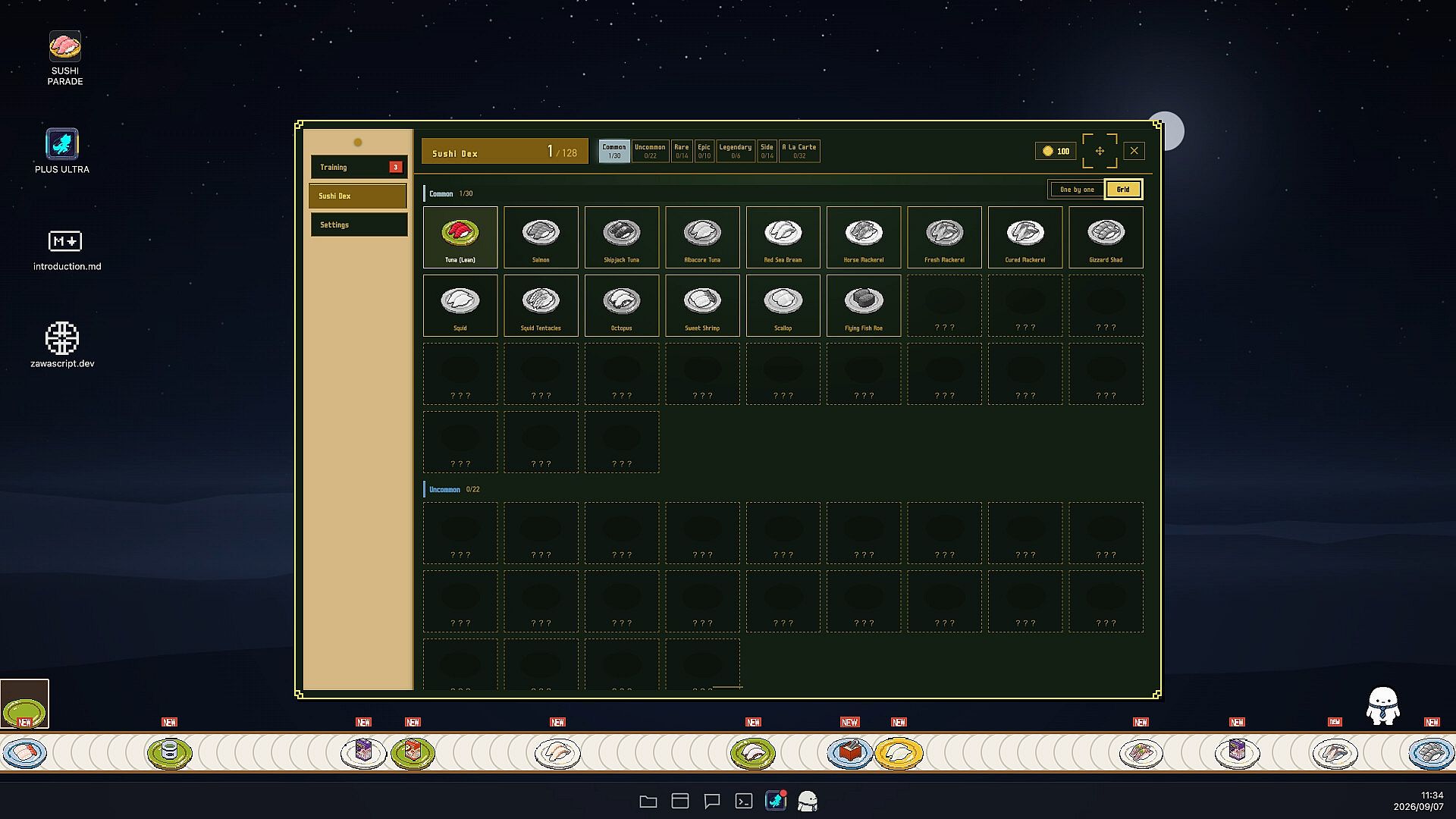
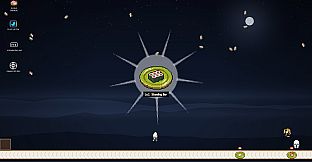
SUSHI PARADE is a simulation game that places a fully operational conveyor belt sushi restaurant on the player's PC desktop. The experience centers on running the shop in the background while handling other tasks, with sushi plates gliding along a customizable belt accompanied by authentic shop sounds and welcoming calls. Players stock the line with over 100 varieties of sushi, hire chefs who specialize in different preparations, and serve a cast of customers who each have distinct preferences that influence earnings.
Gameplay
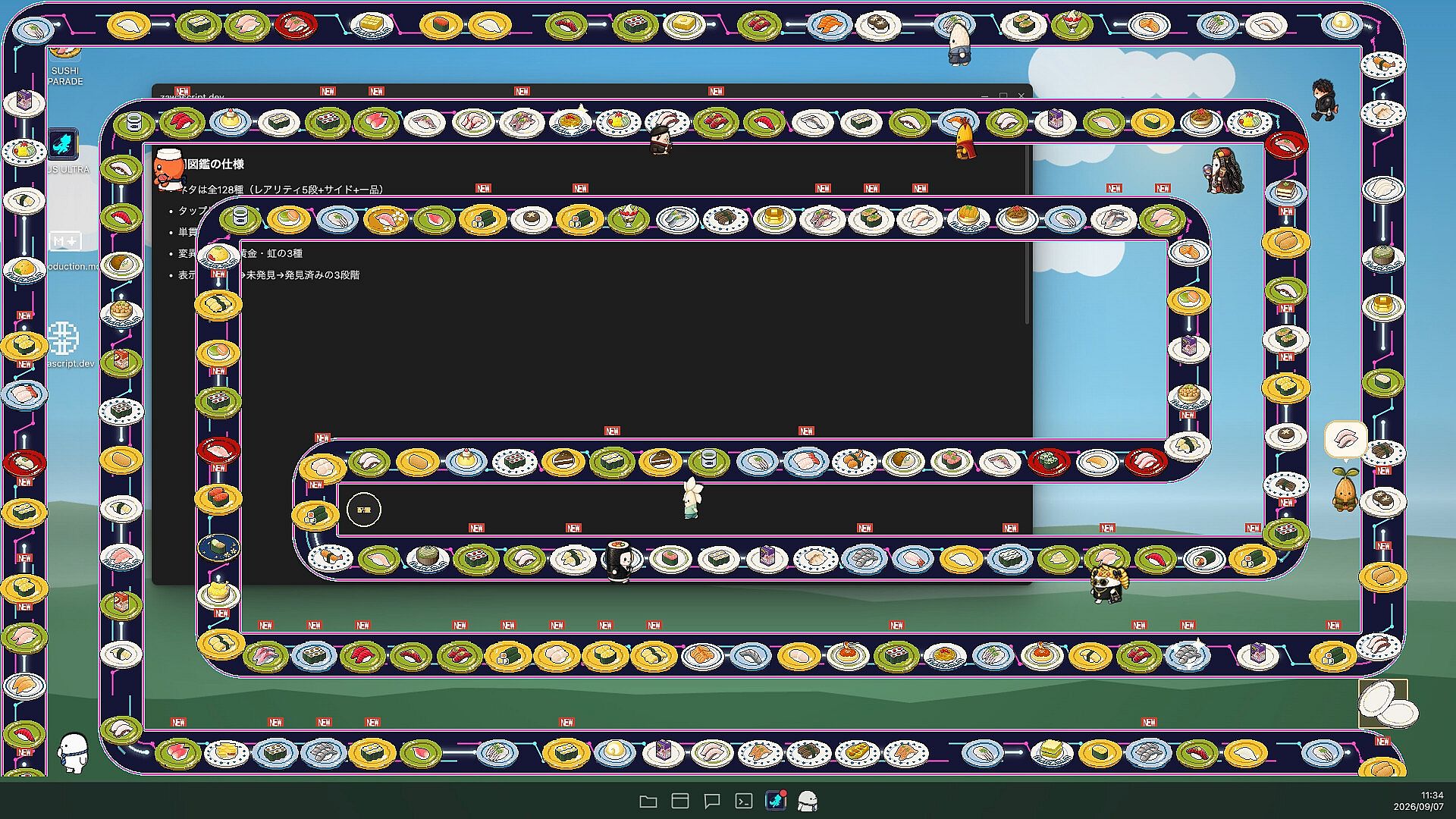
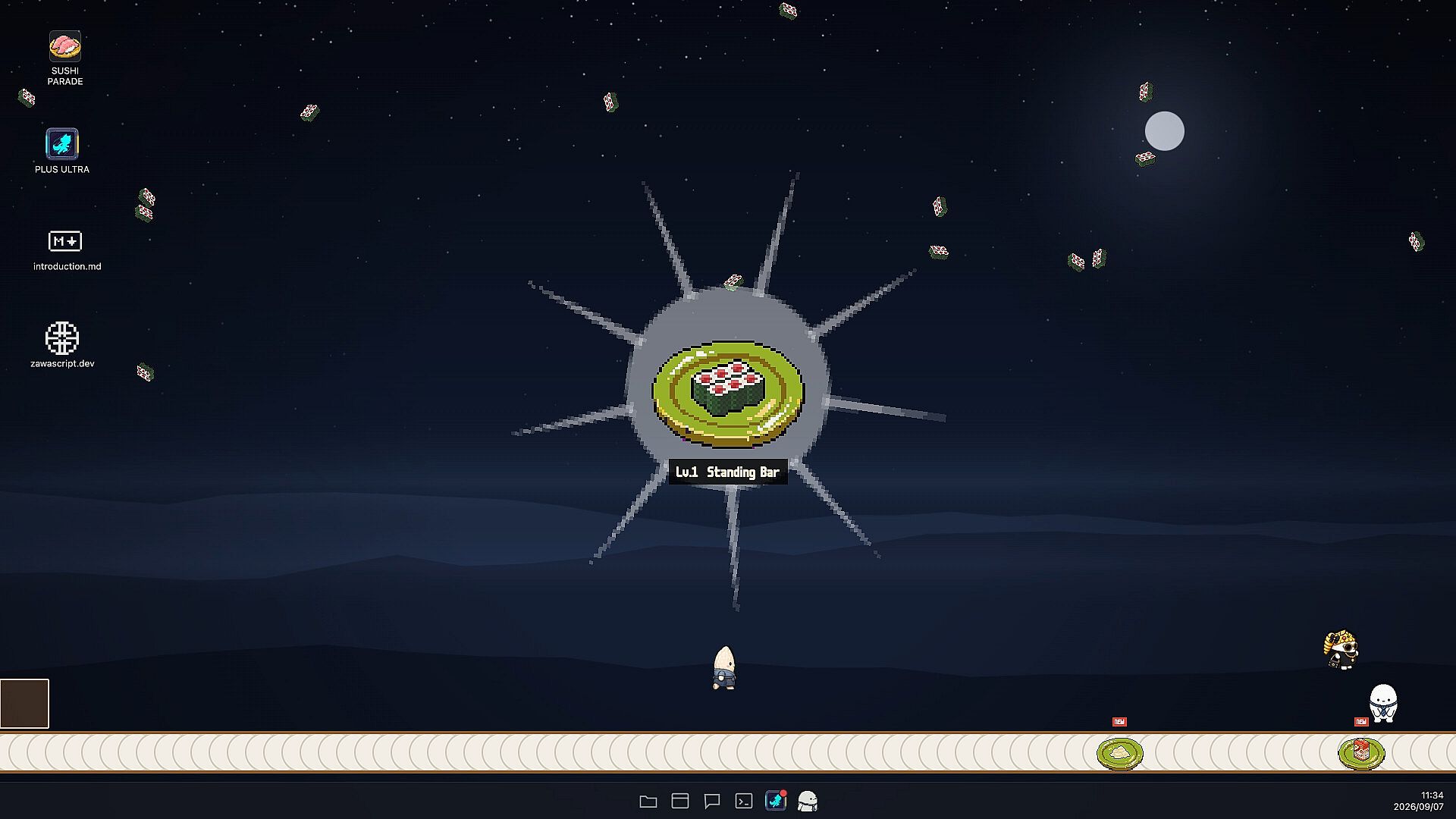
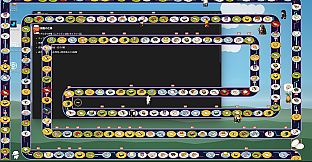
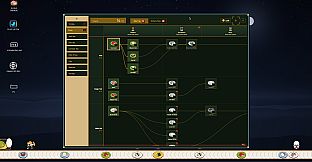
The core loop involves laying out the conveyor belt on a grid that can stretch across the screen in straight lines, curves, or full loops around the monitor edges. Once positioned, the belt runs continuously, carrying plates prepared by hired chefs. Each chef brings unique strengths to the kitchen, allowing players to match them to popular menu items for better output. Customers arrive and select plates according to their tastes, generating coins that fund expansions such as new sushi varieties or additional staff. Players can also eat plates themselves for direct enjoyment or testing. The system emphasizes steady management rather than intense action, with progression tied to unlocking more sushi types and refining the layout for efficient flow.
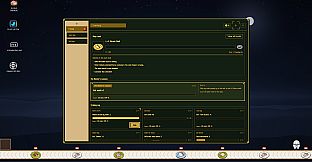
Chefs and customers add personality through their behaviors and preferences. Learning these traits helps maximize coin collection by stocking high-demand items and assigning the right chefs to production. Stocking expands gradually as earnings grow, filling the belt with a wider selection that keeps the parade moving at a satisfying pace. The transparent overlay design lets the restaurant sit beside other applications without interrupting workflow, though users should pause it during sessions with certain anti-cheat protected games to avoid conflicts.
Game Modes
SUSHI PARADE offers a single continuous simulation experience without separate named modes or competitive structures. The entire game revolves around building and maintaining the restaurant in real time, with no distinct campaign, challenge, or multiplayer options. Progression happens organically through repeated play sessions where players adjust layouts, hire staff, and expand the menu. This unified approach keeps focus on the ambient management loop, allowing the shop to run indefinitely in the background once set up.
Customization and Progression
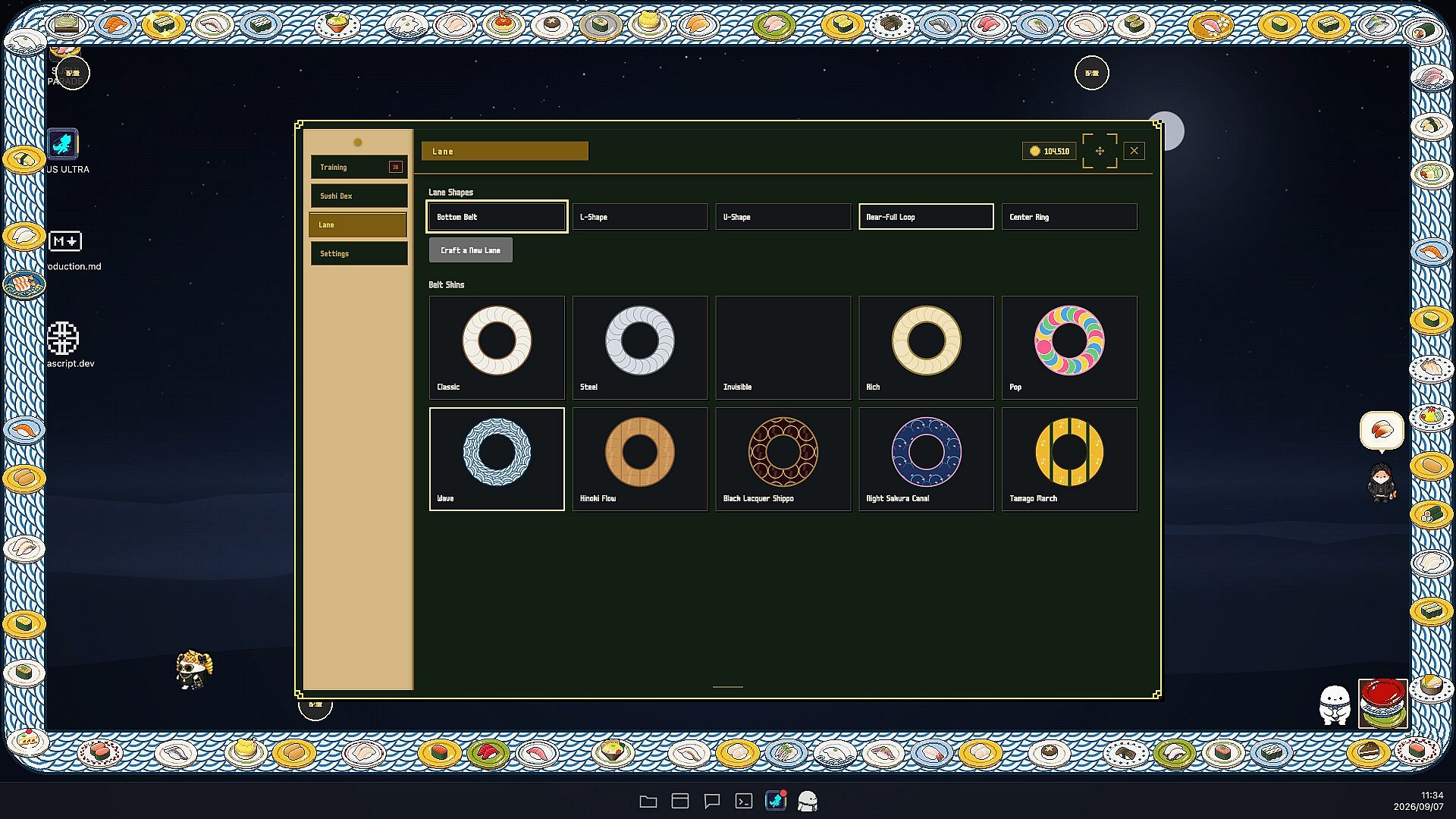
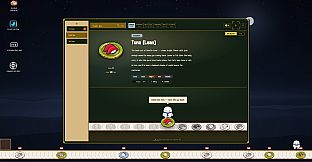
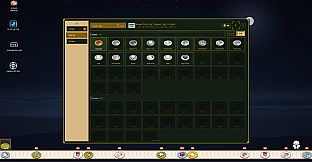
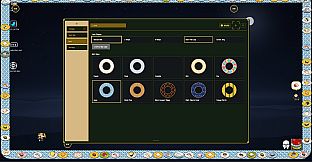
Layout freedom defines much of the appeal. The grid system supports creative belt designs that range from minimal single lines along the screen bottom to elaborate winding paths that circle the display. Multiple lane skins alter the visual style of the conveyor without changing mechanics, giving the restaurant a fresh appearance whenever desired. Sushi collection forms a completion goal, with over 100 pieces ranging from common options like maguro akami to rarer selections such as ankimo. Filling the sushi dex requires consistent stocking and customer service to unlock everything.
Hiring expands the kitchen team while menu growth introduces new plates that appeal to different customer groups. Earnings from satisfied patrons fund these upgrades, creating a steady cycle of observation, adjustment, and reward. The system rewards attention to detail in matching chef specialties with customer favorites, though it remains accessible for shorter or longer sessions alike.
Is It Worth Playing?
SUSHI PARADE suits players who enjoy relaxed simulation games that operate quietly alongside daily computer use. The desktop integration and ambient audio create a low-pressure environment where the restaurant can run for extended periods with minimal intervention once the initial layout and staffing are established. Those drawn to management titles focused on customization and gradual collection will find the belt design tools and sushi variety engaging. The absence of high-stakes challenges or time limits makes it a good fit for background entertainment rather than dedicated play blocks. Availability on PC supports easy access for anyone interested in this style of ambient simulation.