








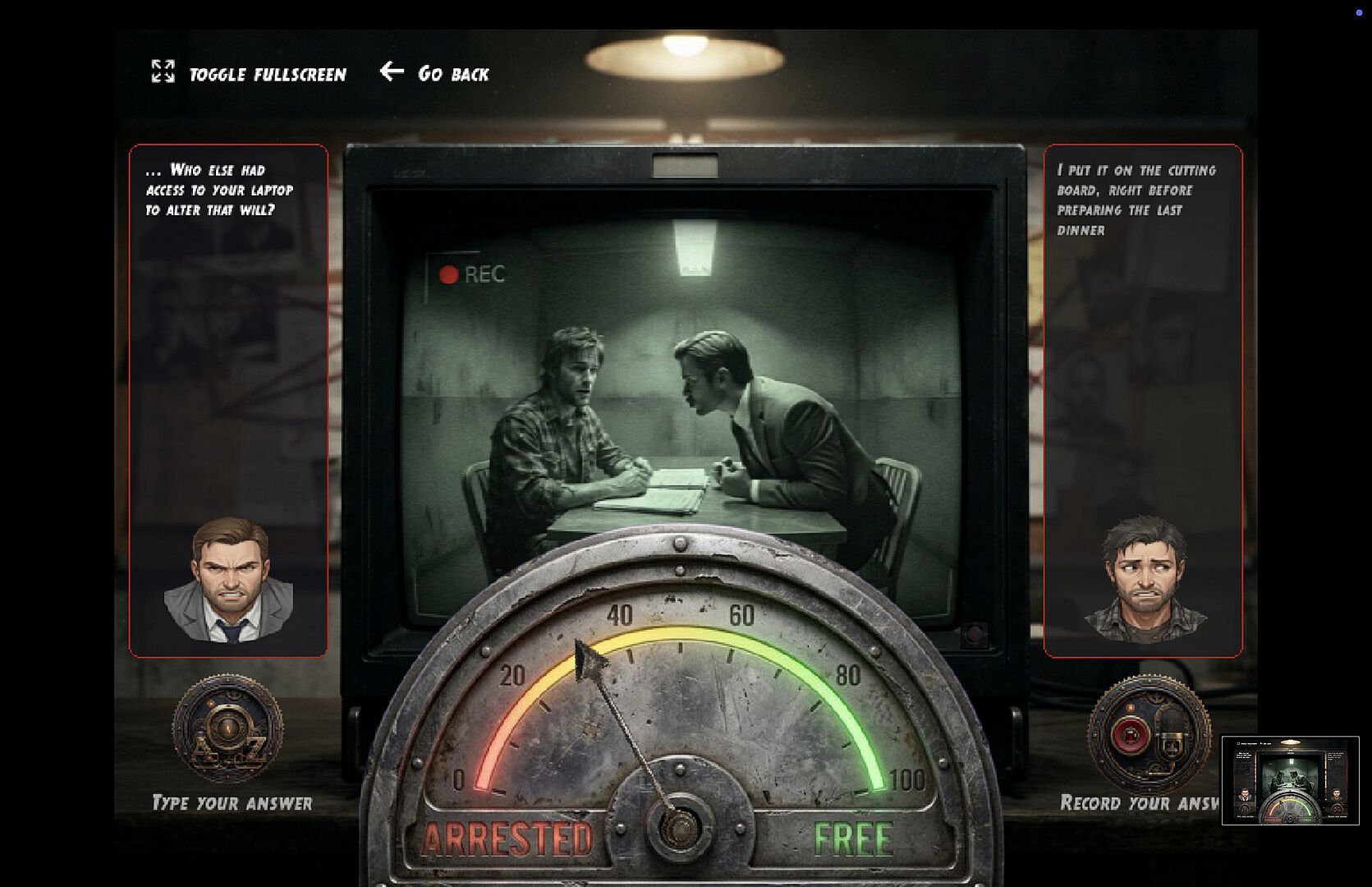
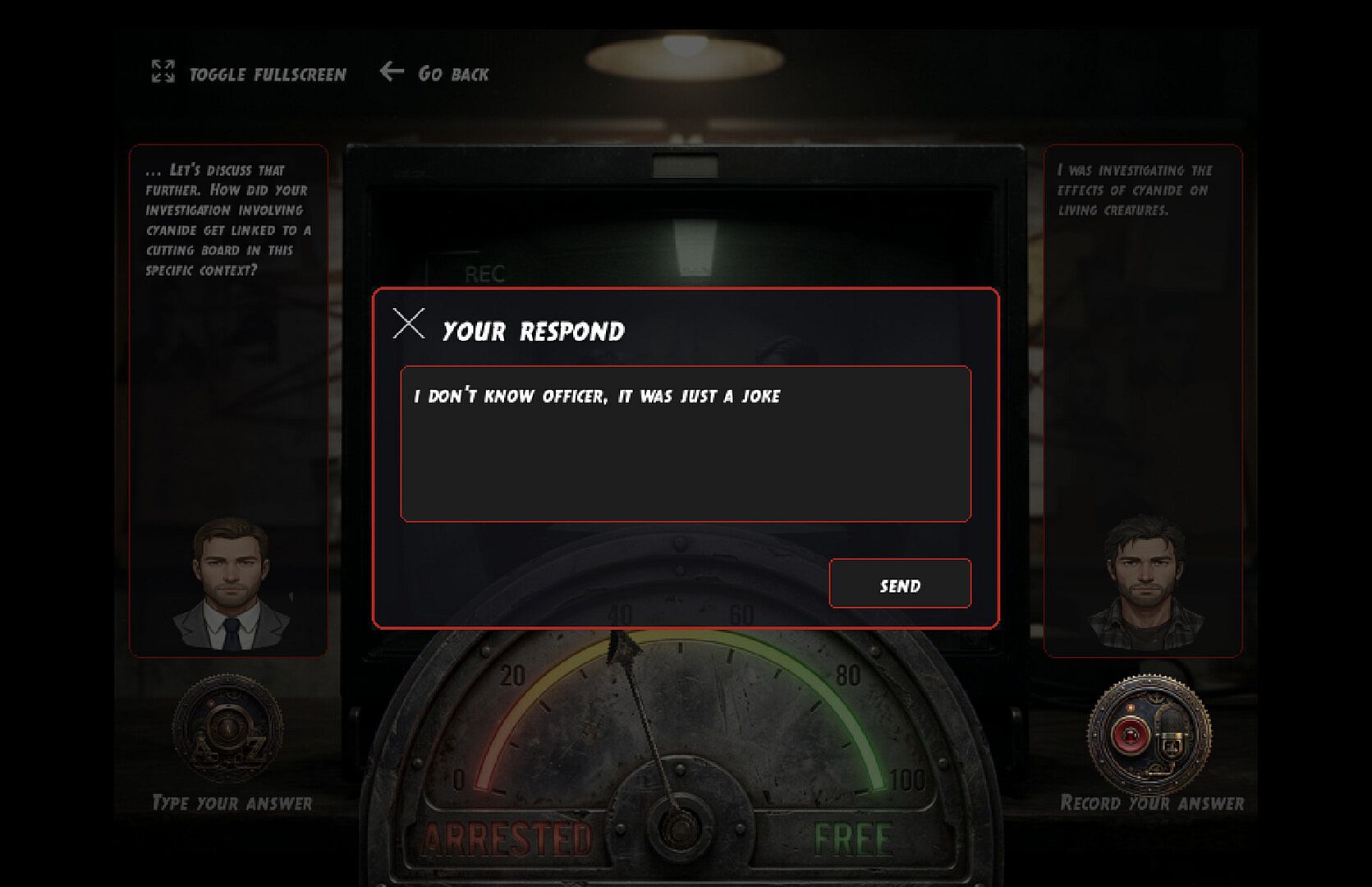
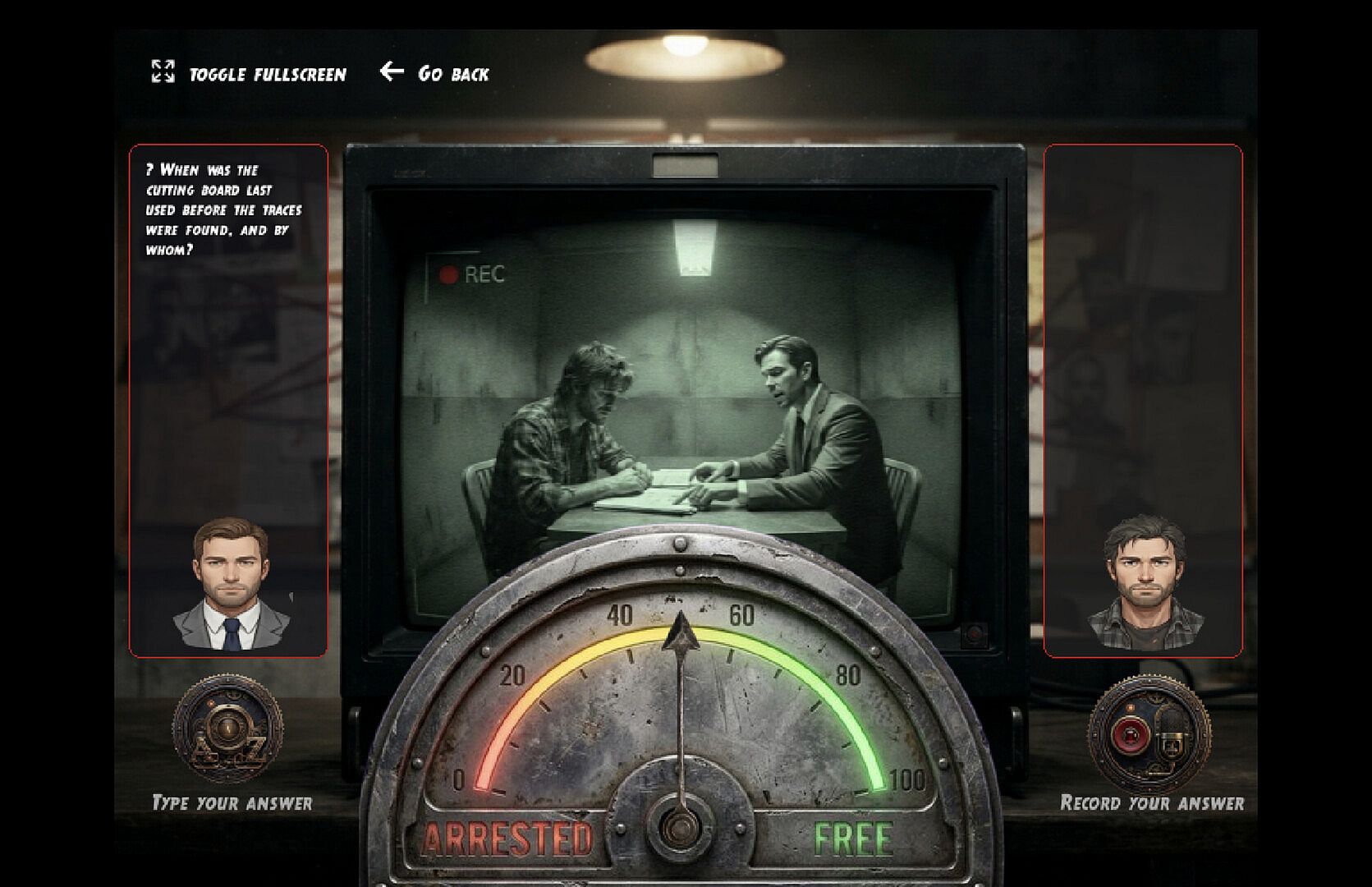

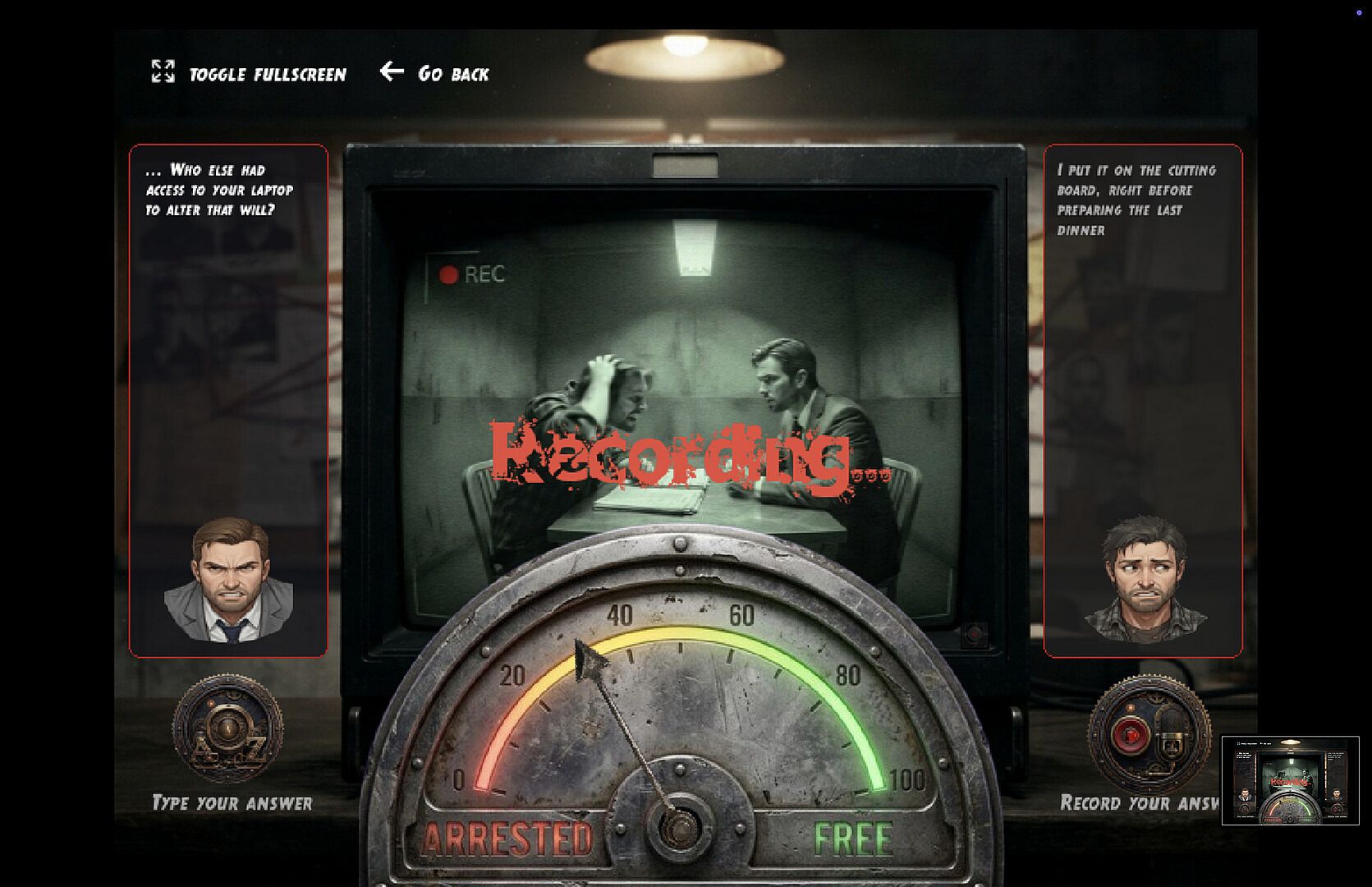
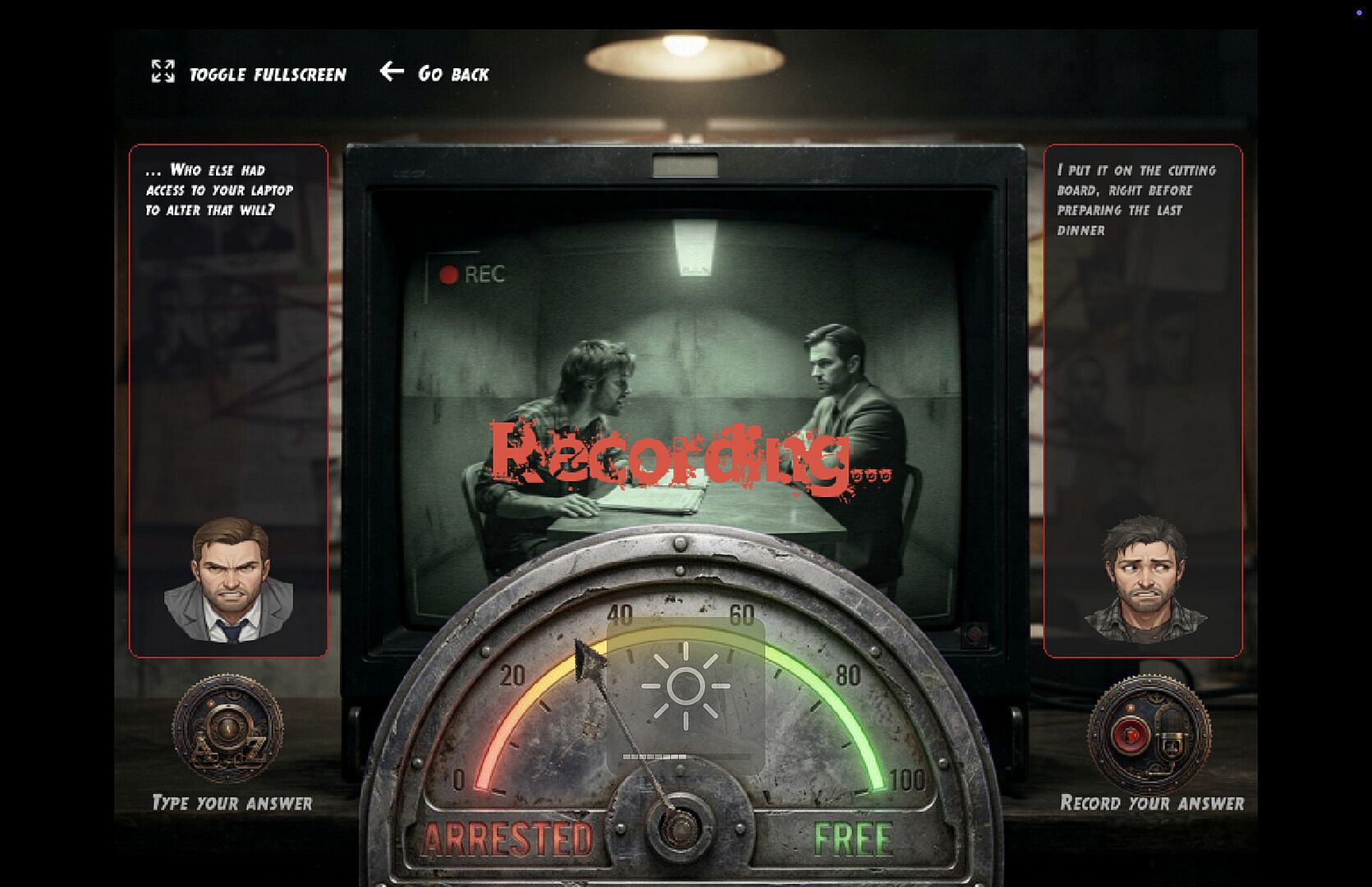
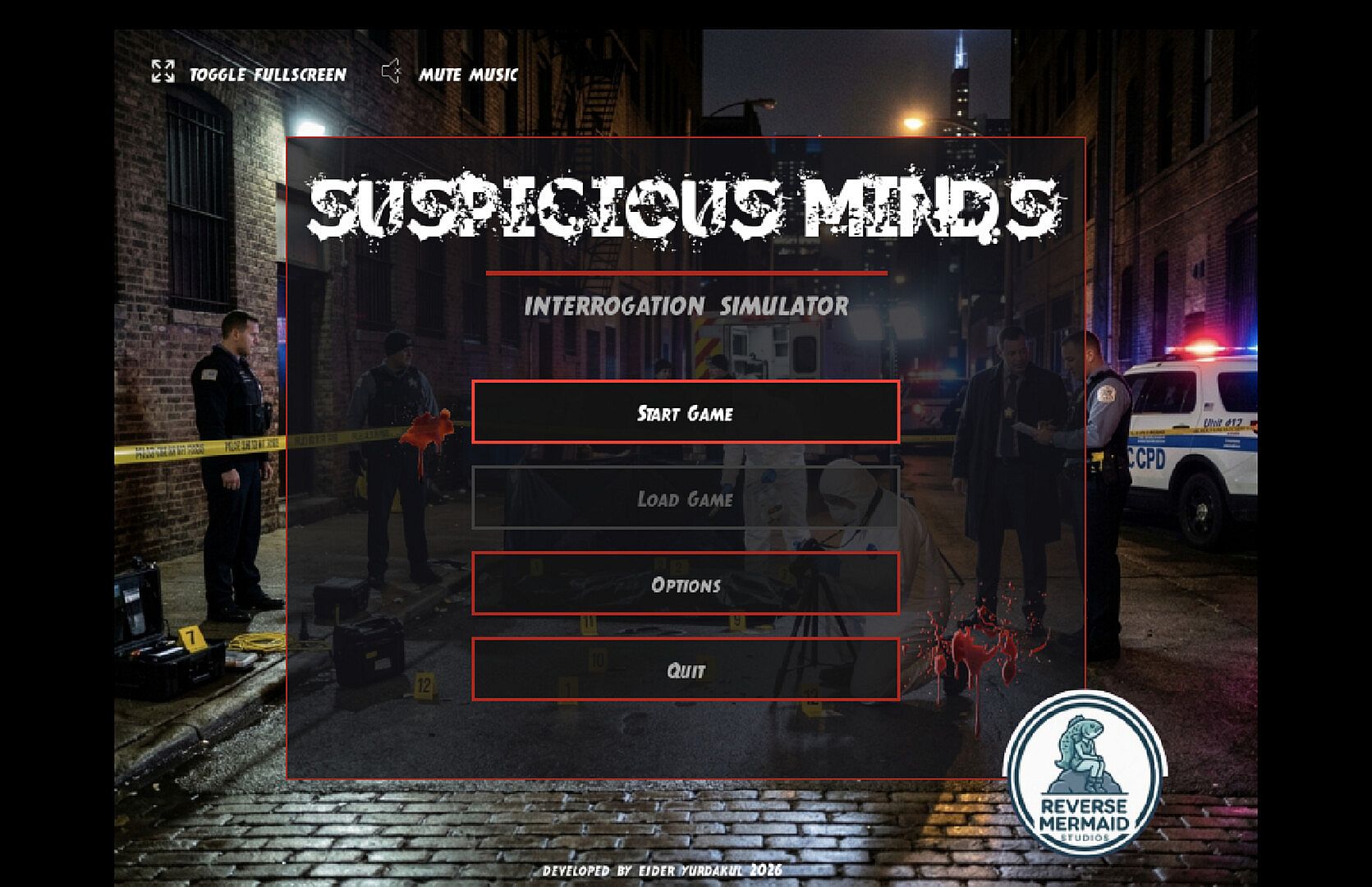








Suspicious Minds: interrogation simulator is a single-player indie simulation game that places players in the role of a murder suspect facing intense questioning. The core experience revolves around real-time conversations with an AI detective, where every word, pause, and detail can determine whether the player walks free or faces conviction. Built for PC, the title emphasizes strategic thinking and verbal consistency across a series of homicide investigations.
Gameplay
Each session begins with a thorough review of a detailed case file. Players examine the crime scene overview, physical evidence lists, and autopsy reports to understand the facts the police already possess. This preparation phase allows time to build a coherent narrative and anticipate the detective's lines of inquiry.
Once the interrogation starts, the AI detective initiates questioning based on the gathered evidence and the player's connection to the victim. Responses can be delivered through voice input via microphone or by typing in real time. The system analyzes not only the content of answers but also delivery factors such as hesitation or vocal uncertainty, which can increase suspicion levels.
Throughout the exchange, the AI maintains a running memory of all statements. Any contradiction with earlier claims, failure to account for evidence, or signs of faltering under pressure immediately raises the detective's doubts. Success depends on delivering steady, detailed, and logically consistent replies that resolve inconsistencies without self-incrimination.
Game Modes
The game operates as a single-player experience focused on a linear progression through pre-made investigations. There are no separate multiplayer or competitive modes. Instead, the structure centers on completing 22 distinct homicide cases, each with its own set of evidence, motives, and reports that tie the player to the scene.
Progression requires maintaining a low suspicion profile across an entire interrogation to unlock the next case. The format remains consistent: case file review followed by the interrogation room confrontation. This case-by-case approach forms the complete gameplay loop without additional variants or side activities.
Key Mechanics and Features
The embedded AI engine runs entirely offline and draws from training on real-world interrogation techniques and logs. No internet connection or external services are required. Voice analysis adds a layer beyond text, detecting pauses and tone shifts that influence the detective's reactions.
Pre-interrogation strategy plays a central role, as players must synthesize autopsy findings and physical evidence into a believable alibi. The detective adapts dynamically to responses, tracking consistency across the full session rather than isolated answers.
Is It Worth Playing?
This title suits players who enjoy simulation games centered on conversation, deduction, and pressure management. The 22 cases provide a substantial single-player campaign built around one core loop of preparation and defense. With its offline AI and focus on voice or text input, it appeals to those seeking a focused interrogation experience without reliance on online features or additional modes.
Since the game has not yet released and carries no user reviews at this stage, its value will depend on how well the AI handles varied player approaches and maintains tension across multiple cases. Fans of narrative-driven simulations or real-time dialogue systems may find the mechanics engaging once available.











