

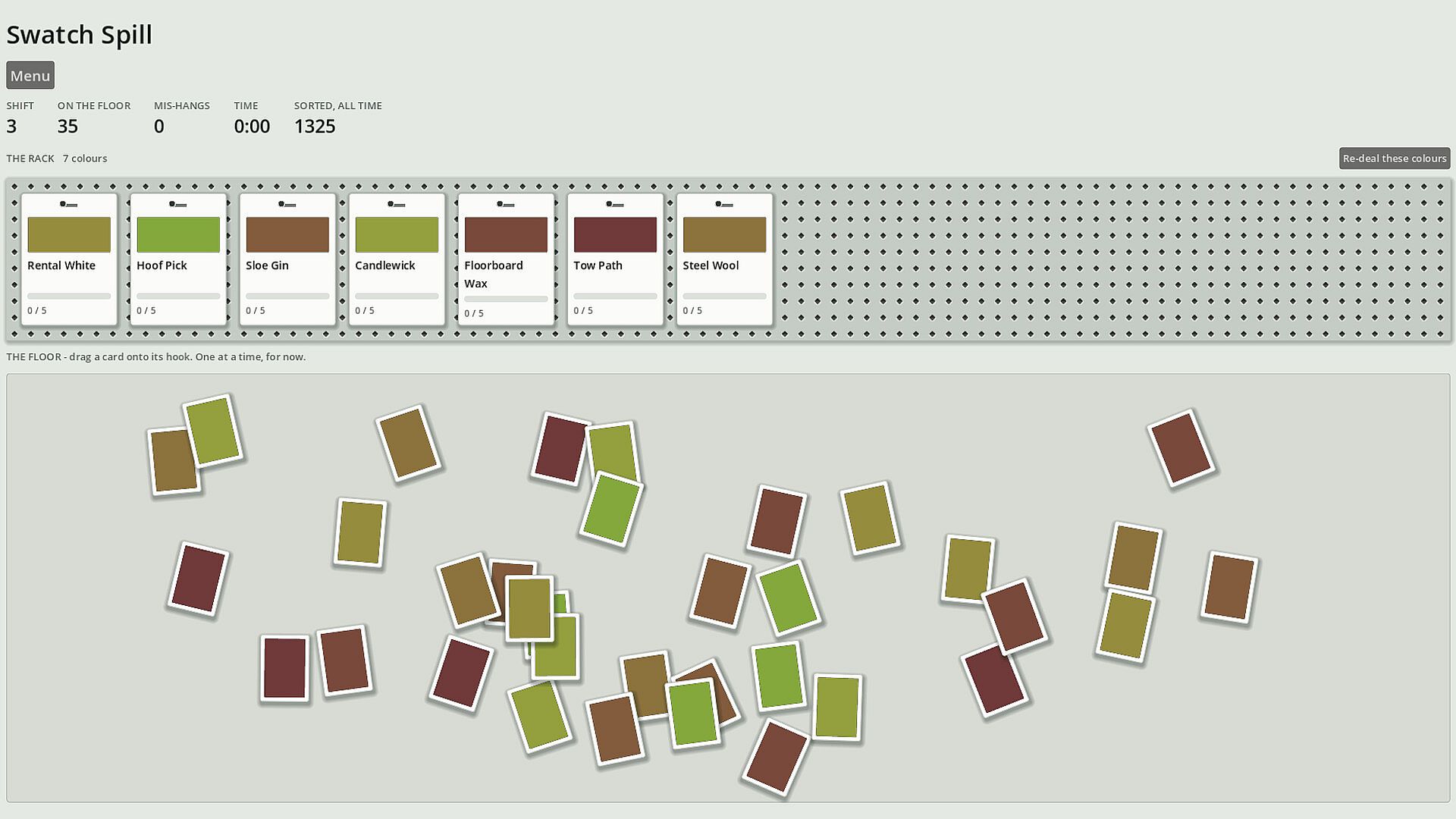
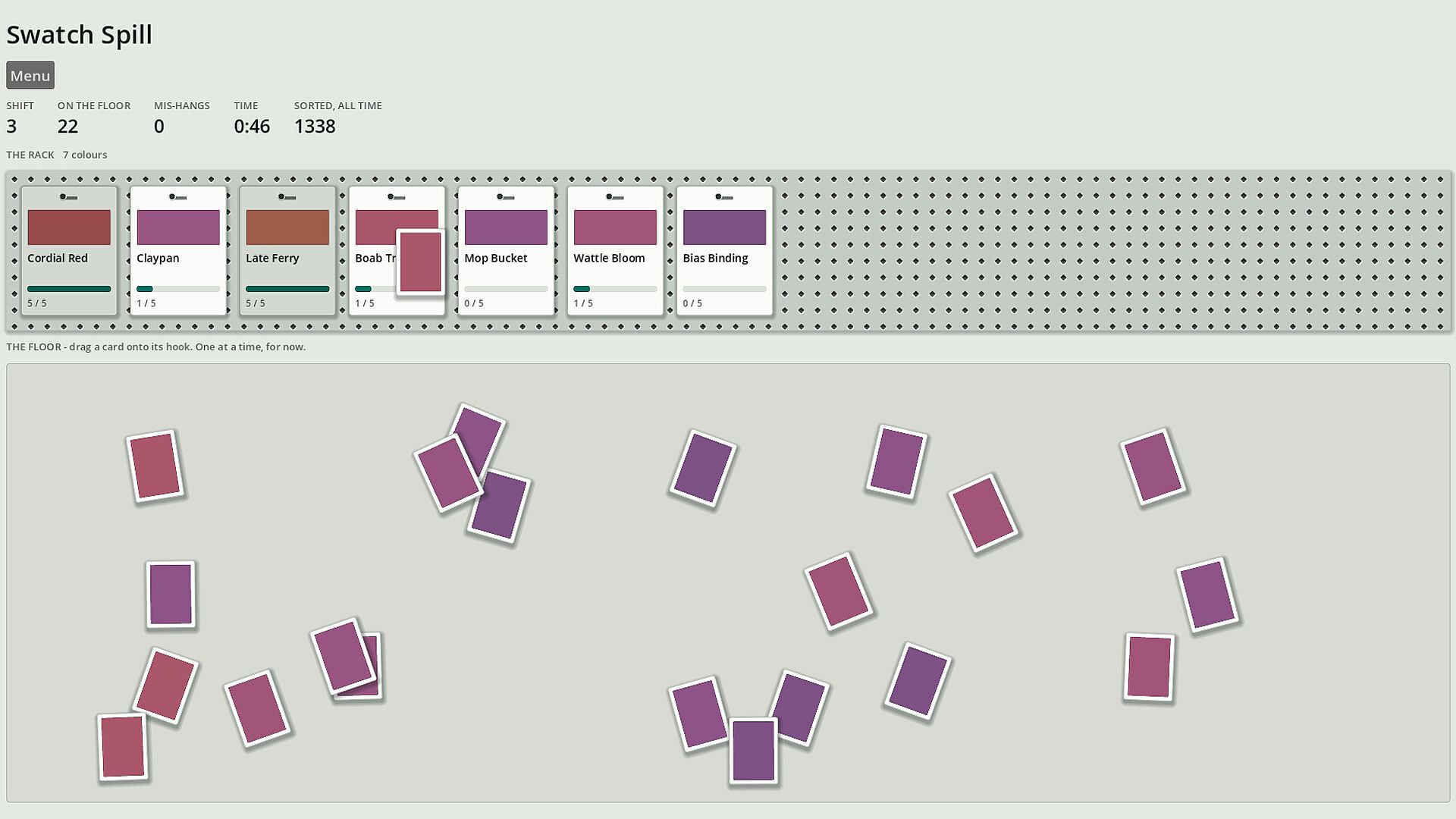
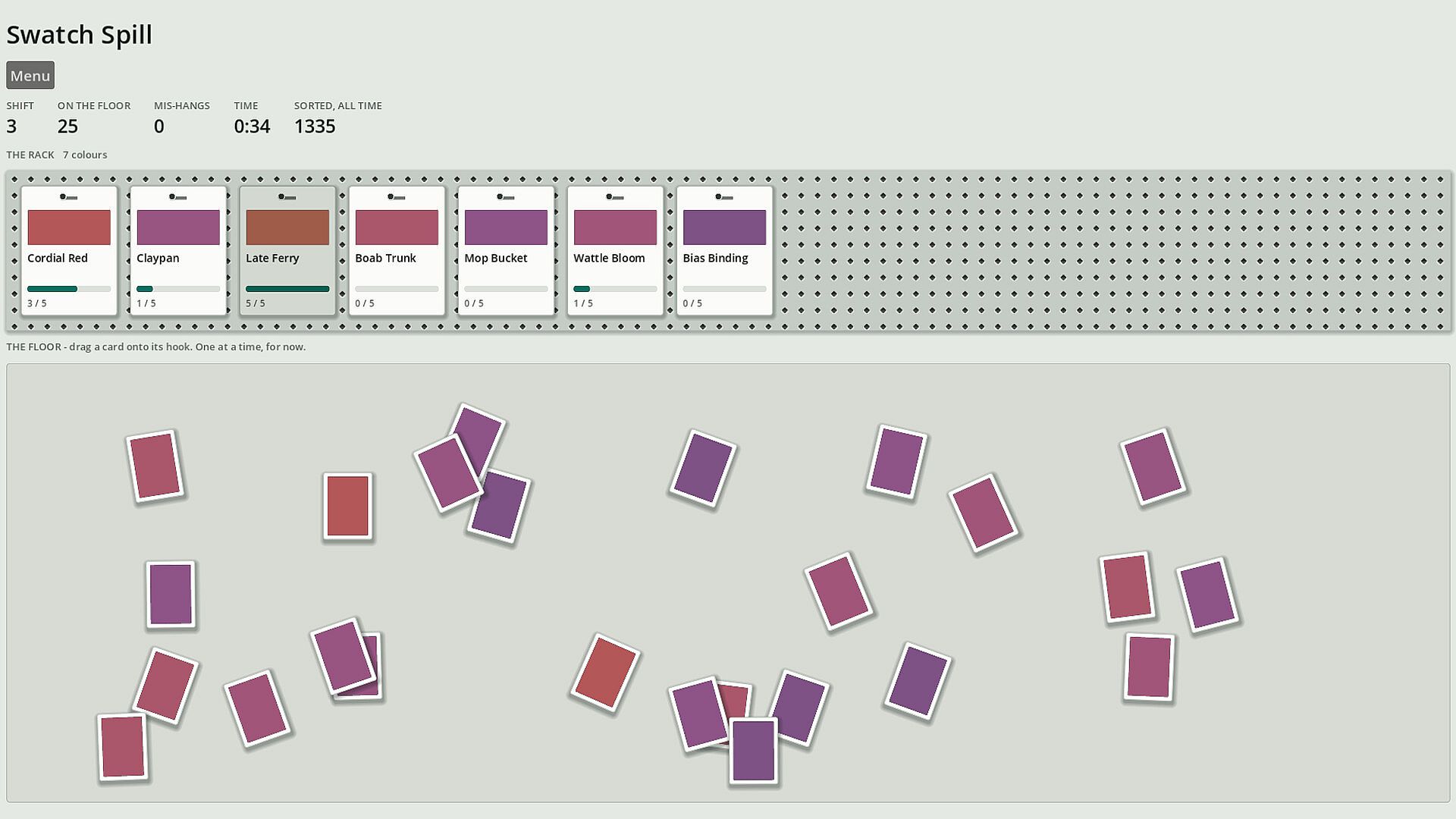
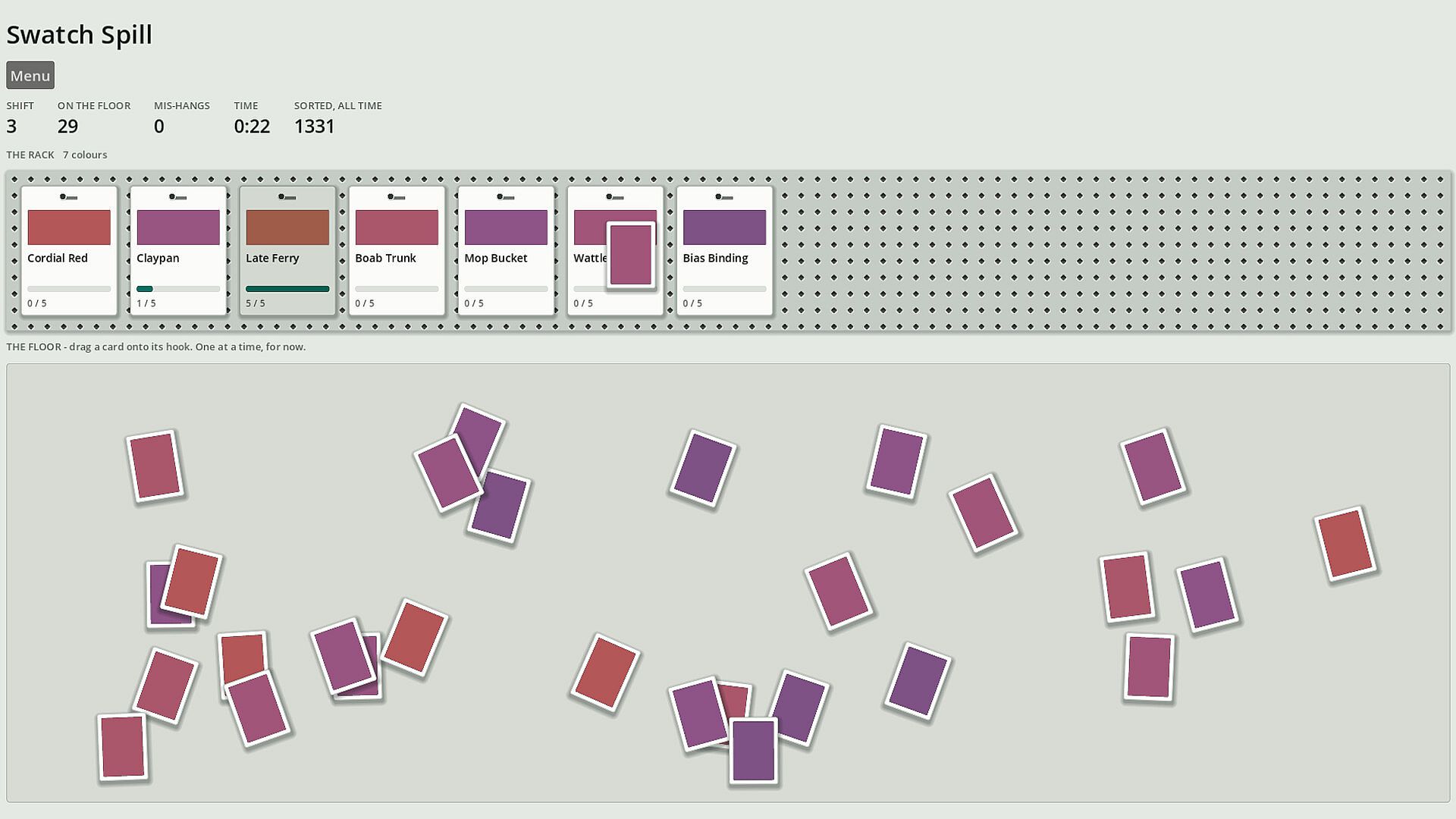
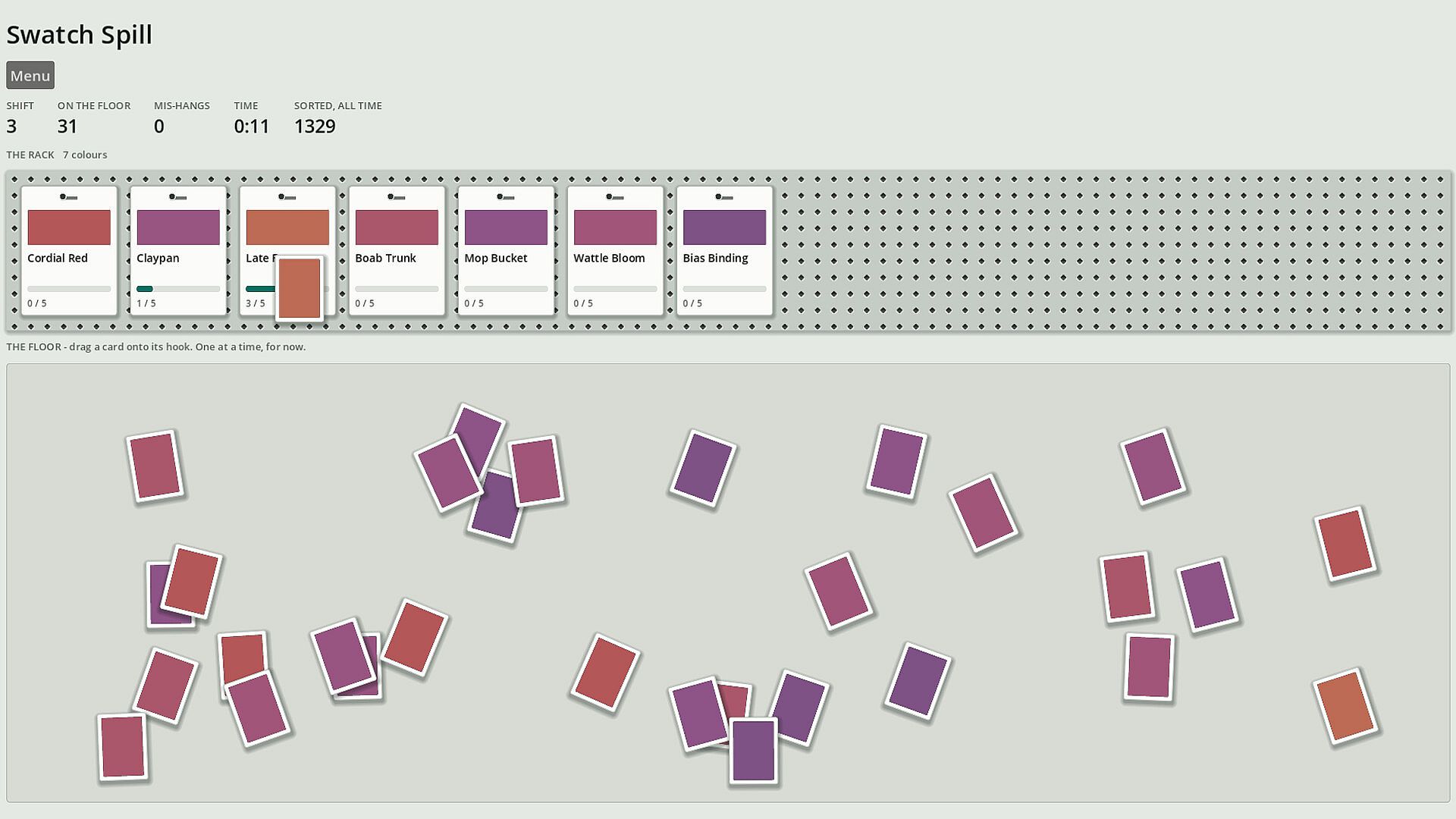
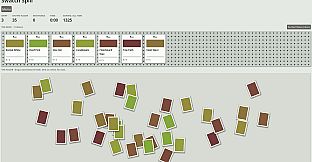

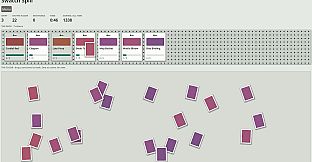
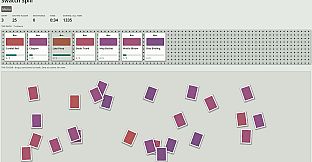
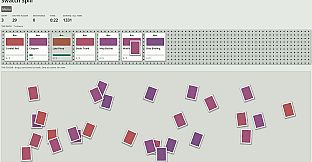
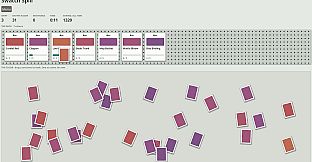


Swatch Spill is an indie puzzle game for PC built around the precise task of sorting paint swatches by color. A wall with pegboard hooks stands ready, and the floor holds scattered color cards. Each hook belongs to a specific shade on the wall, yet many colors sit close enough that only careful comparison reveals the match. The goal is straightforward: return every card to its correct hook without mistakes that send it tumbling back down.
Gameplay
The core loop centers on matching and placement. Cards begin in small groups and grow steadily as the wall expands and additional hooks appear. Early stages involve a modest number of shades, but later sections crowd dozens of near-identical greens, blues, or neutrals together. Players drag individual cards or learn to scoop multiple ones in a single motion, gathering a handful from the pile and sliding them onto a hook at once. A setting allows single-card dragging for those who prefer methodical placement over speed. Mistakes return the card to the floor, preserving the full challenge without removing options.
Progression feels organic. The wall widens and the palette tightens, forcing finer distinctions than the opening levels demand. What starts as simple matching becomes a test of sustained attention once two hundred cards fill the screen. The system rewards observation over speed, and the developer has kept every mechanic transparent so the puzzle remains solvable through attention rather than hidden rules.
Game Modes
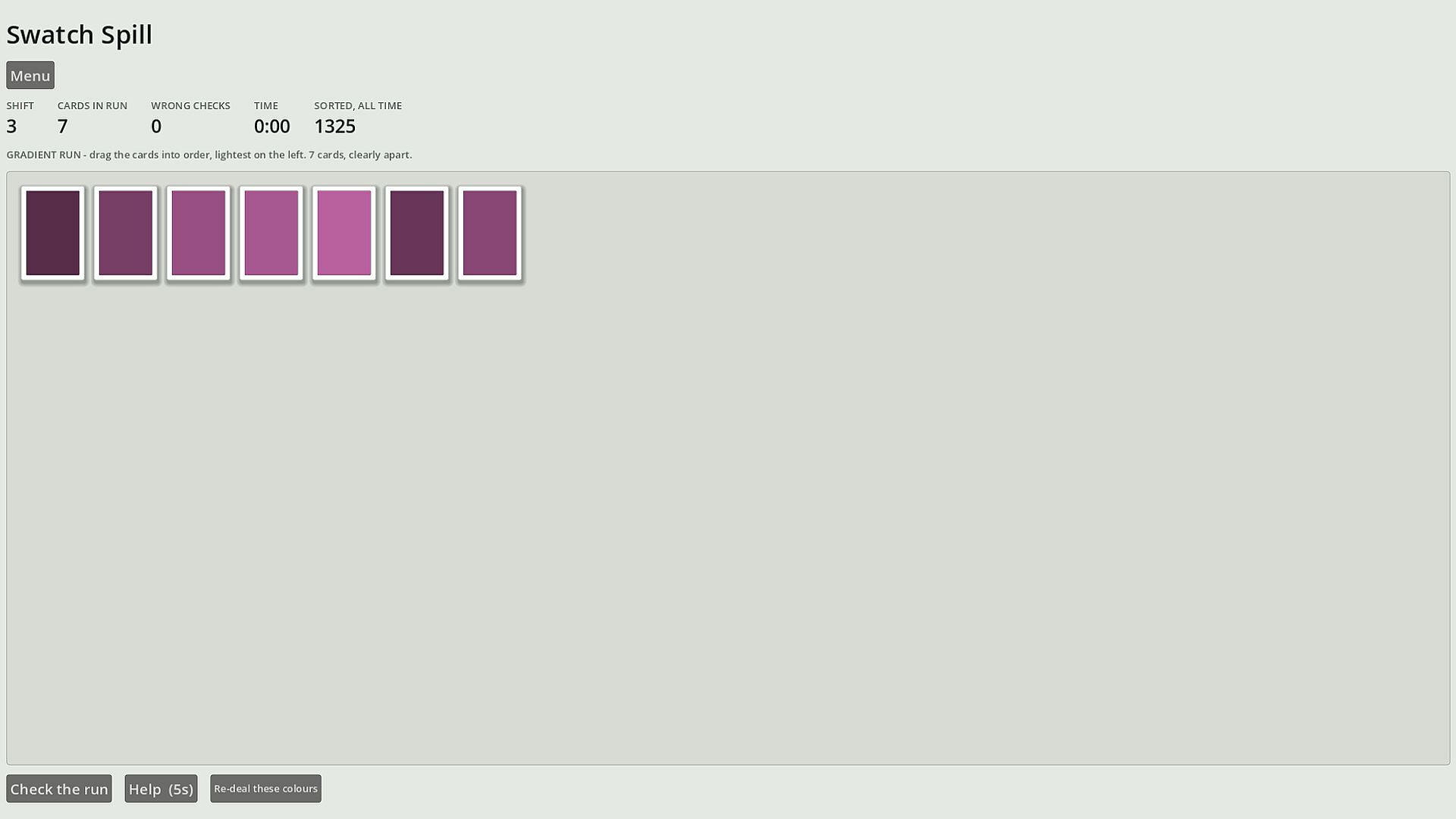
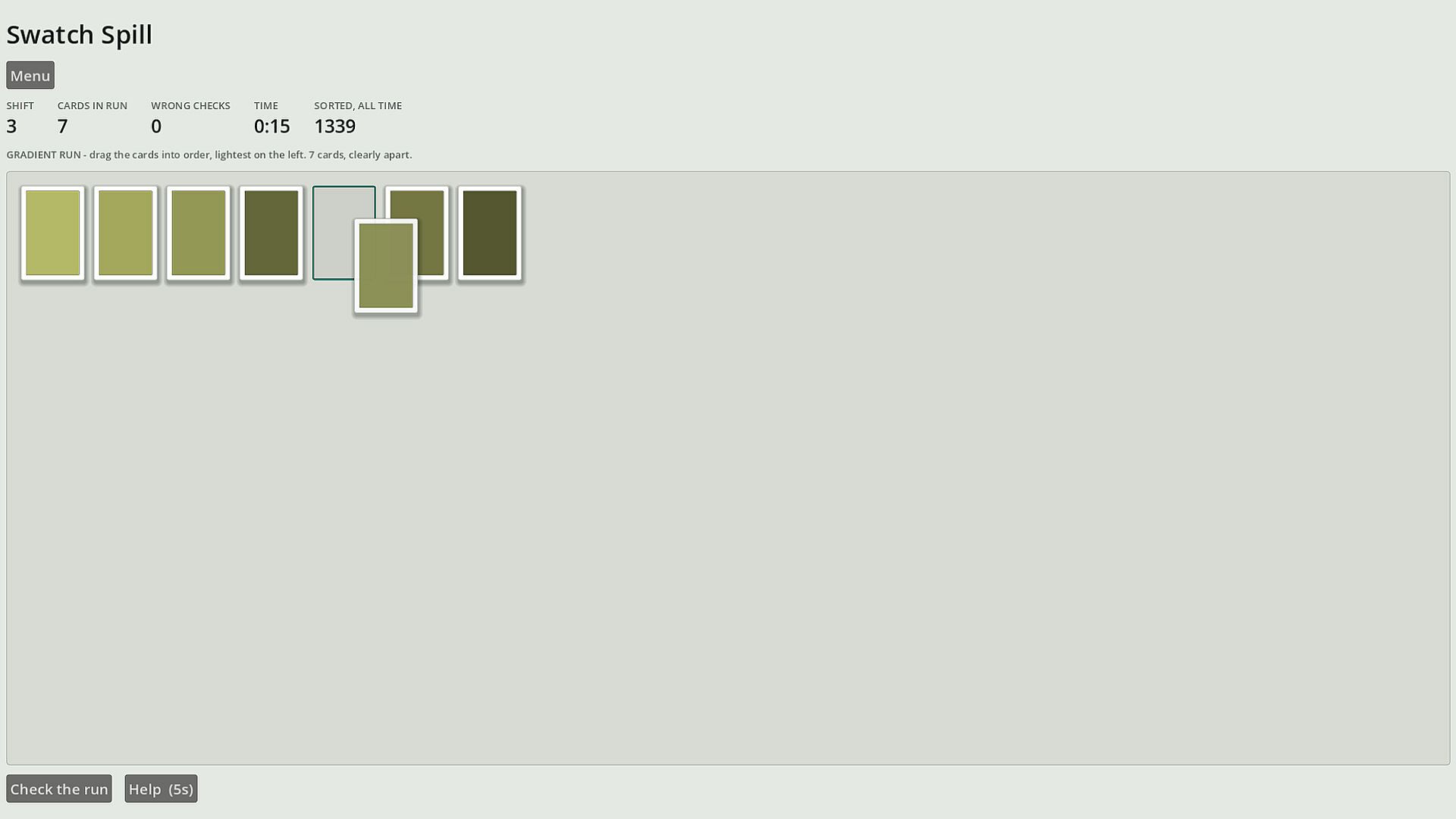
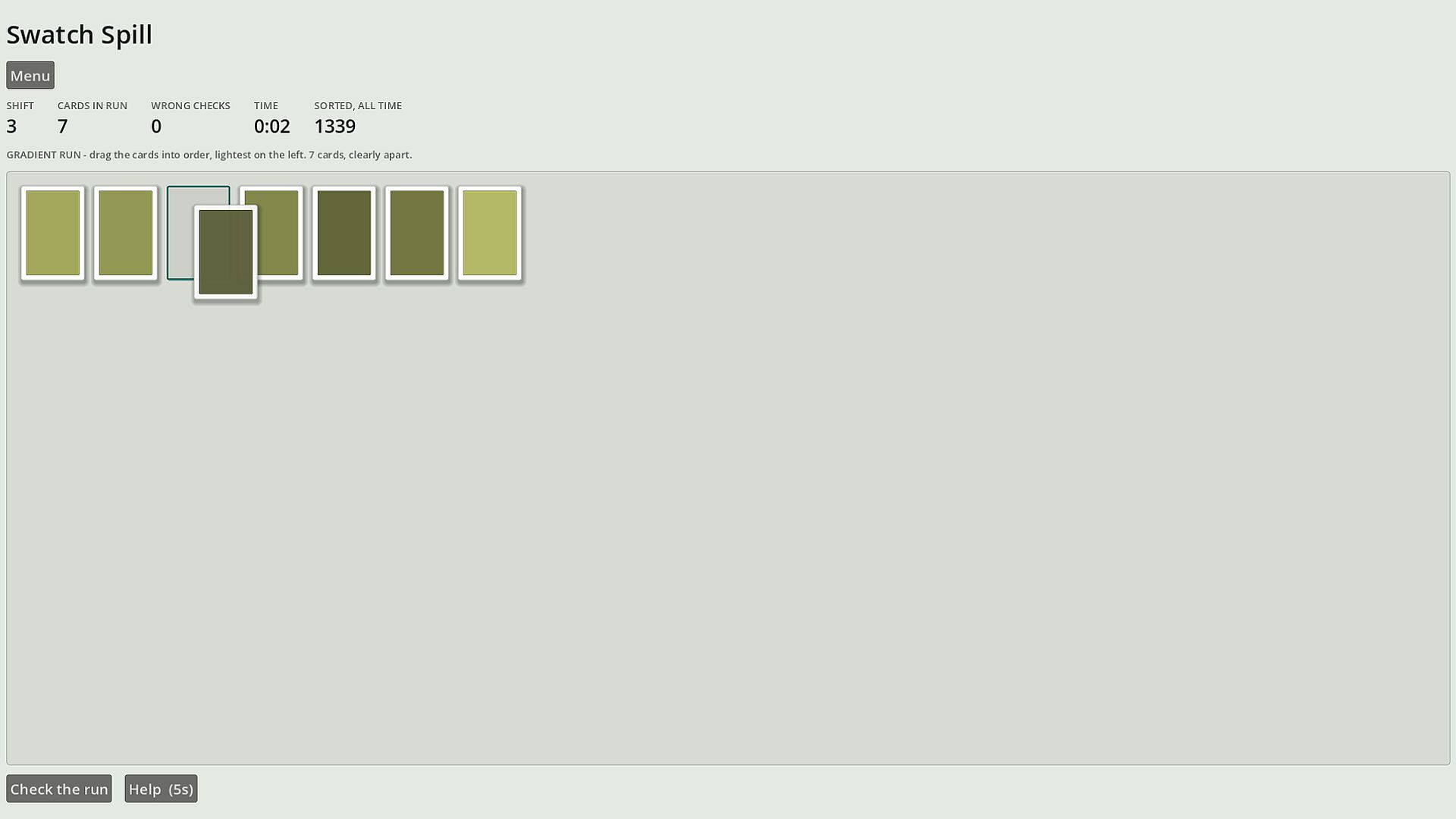
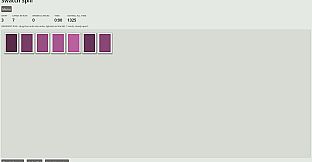
Beyond the main sorting task sits gradient runs, a separate challenge that presents a strip of cards differing by single shades. Players arrange them from lightest to darkest, with sequences reaching up to thirty cards. This mode strips away the wall and hooks entirely, focusing purely on ordering and serving as the most demanding segment in the entire experience. Sessions last only a couple of minutes yet demand the sharpest eye for subtle shifts.
Four color vision modes adjust the palette without labeling cards or simplifying the puzzle. Full color serves standard play, while red-green, blue-yellow, and lightness-only variants rebuild the visible differences along axes that remain distinguishable. These options keep the core challenge intact while accommodating varied perception. An optional clock adds time pressure per card, granting longer allowances for larger shifts rather than imposing fixed limits that grow impossible.
Accessibility and Design Choices
The game includes deliberate support for different visual needs through the vision modes described above. Nothing in the interface filters the scene or provides automatic solutions; instead, the palette itself shifts to maintain the original difficulty. An optional timer respects players who want structure without forcing it on everyone. The absence of any narrative, characters, or external threats keeps attention fixed on the color work itself. The developer notes this is a first project and invites feedback in discussions for potential adjustments.
Mechanics emphasize choice. Scooping speeds up large piles yet remains optional. Single-card mode stays available throughout. Gradient runs function as standalone interludes rather than required progression. These elements create a focused experience that scales with player preference while staying true to the central sorting premise.
Is It Worth Playing?
Swatch Spill suits players who enjoy deliberate, observation-heavy puzzles without story or action elements. The expanding wall and tightening color distinctions provide steady escalation, while gradient runs offer short, intense breaks. Color vision modes and the optional clock broaden access without altering the fundamental challenge. As a compact indie title centered on one clear mechanic, it delivers consistent depth for those drawn to precise matching tasks. Reception centers on its straightforward presentation and the satisfaction of accurate placement once the palette grows demanding. Those seeking lengthy campaigns or varied systems may find the narrow scope limiting, yet the game fulfills its stated purpose cleanly for the right audience.