










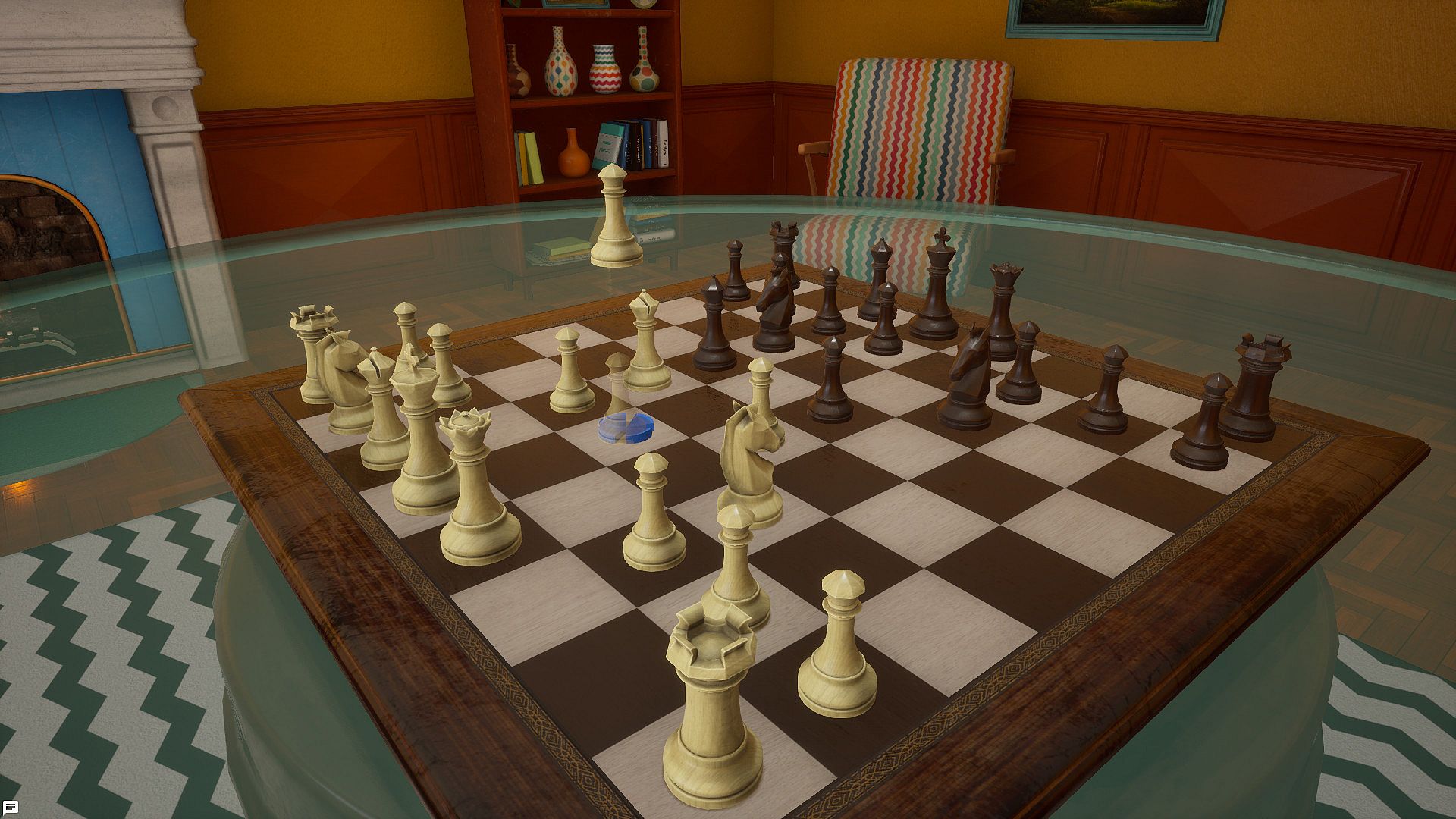
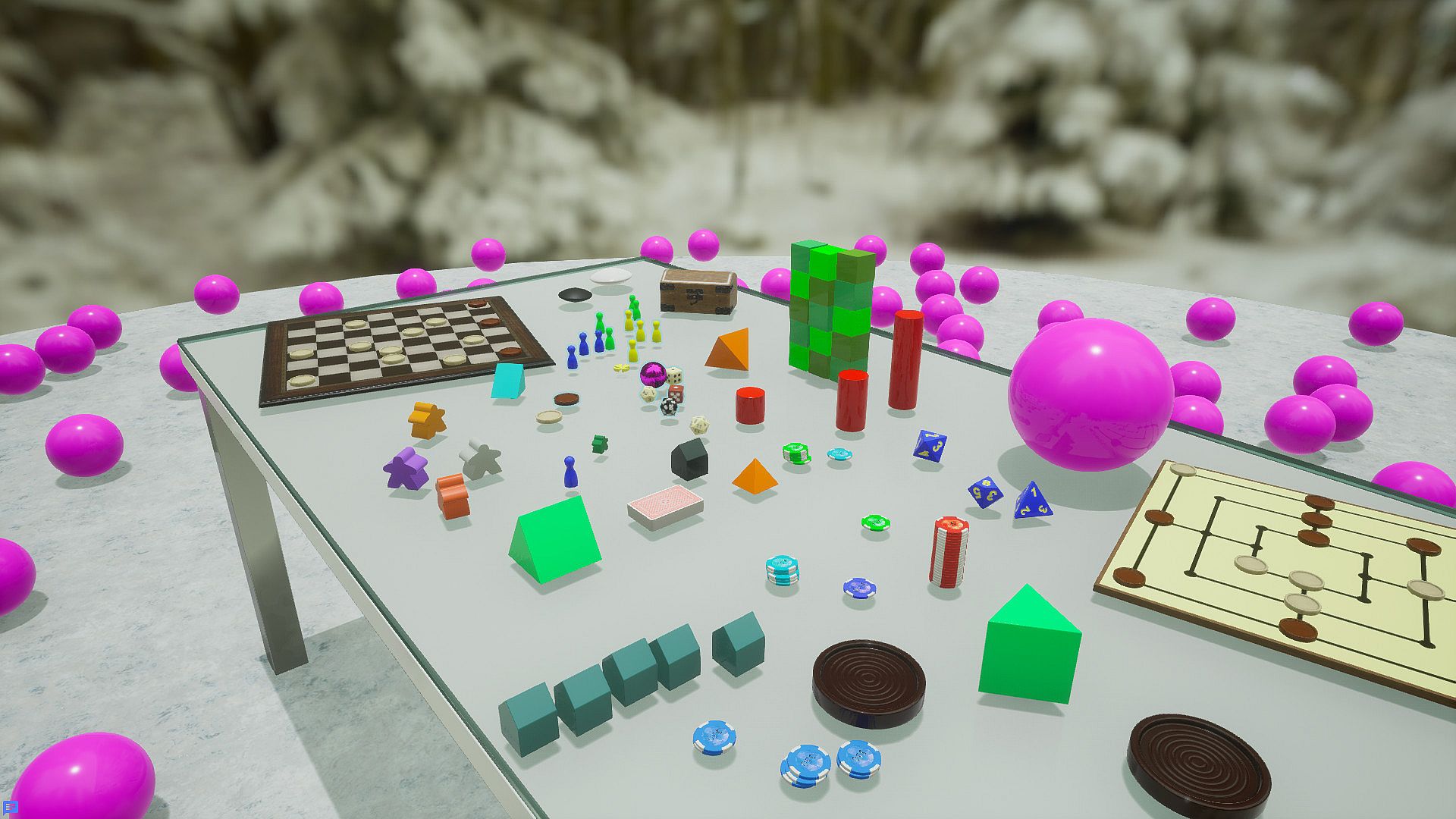
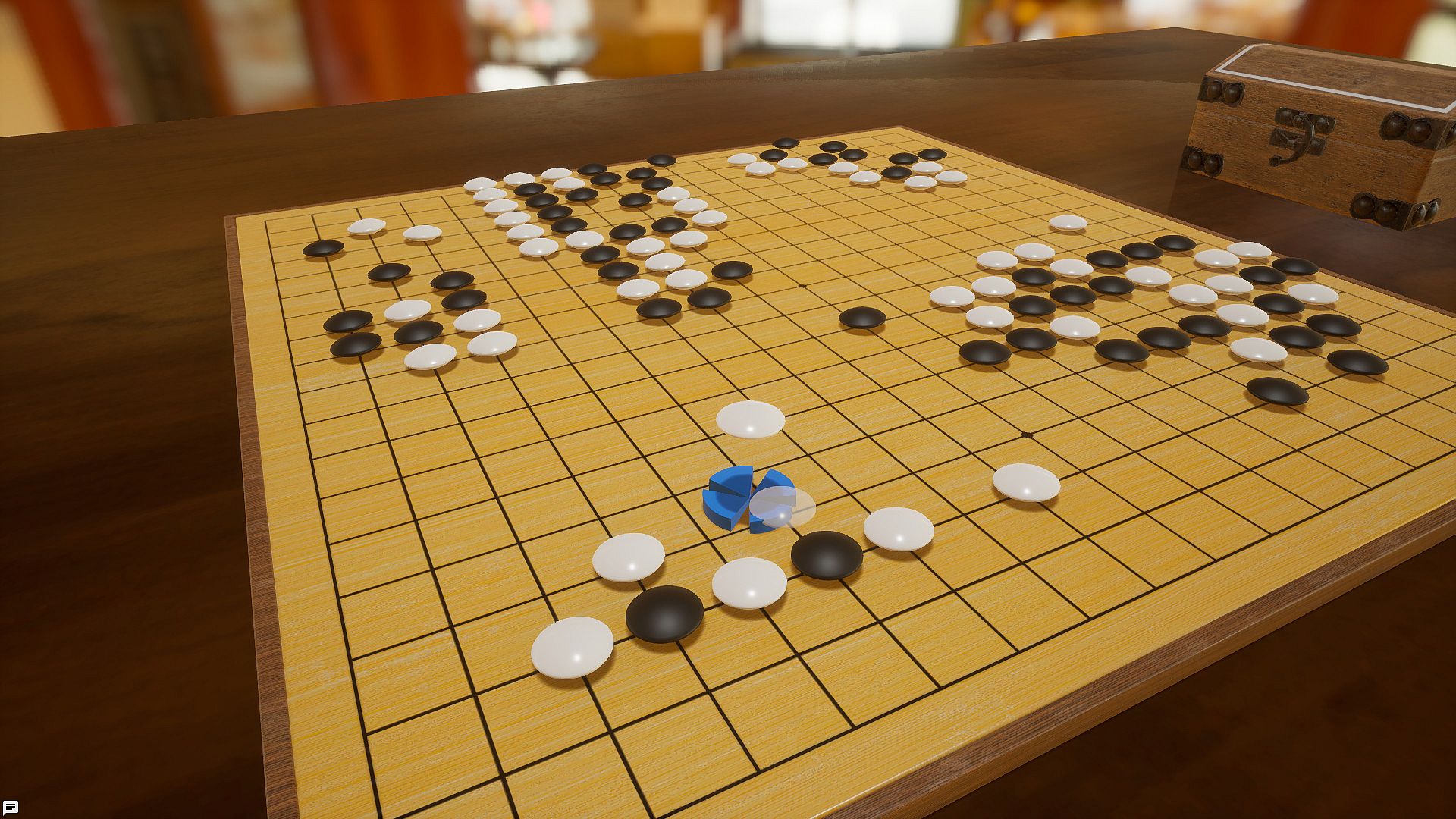
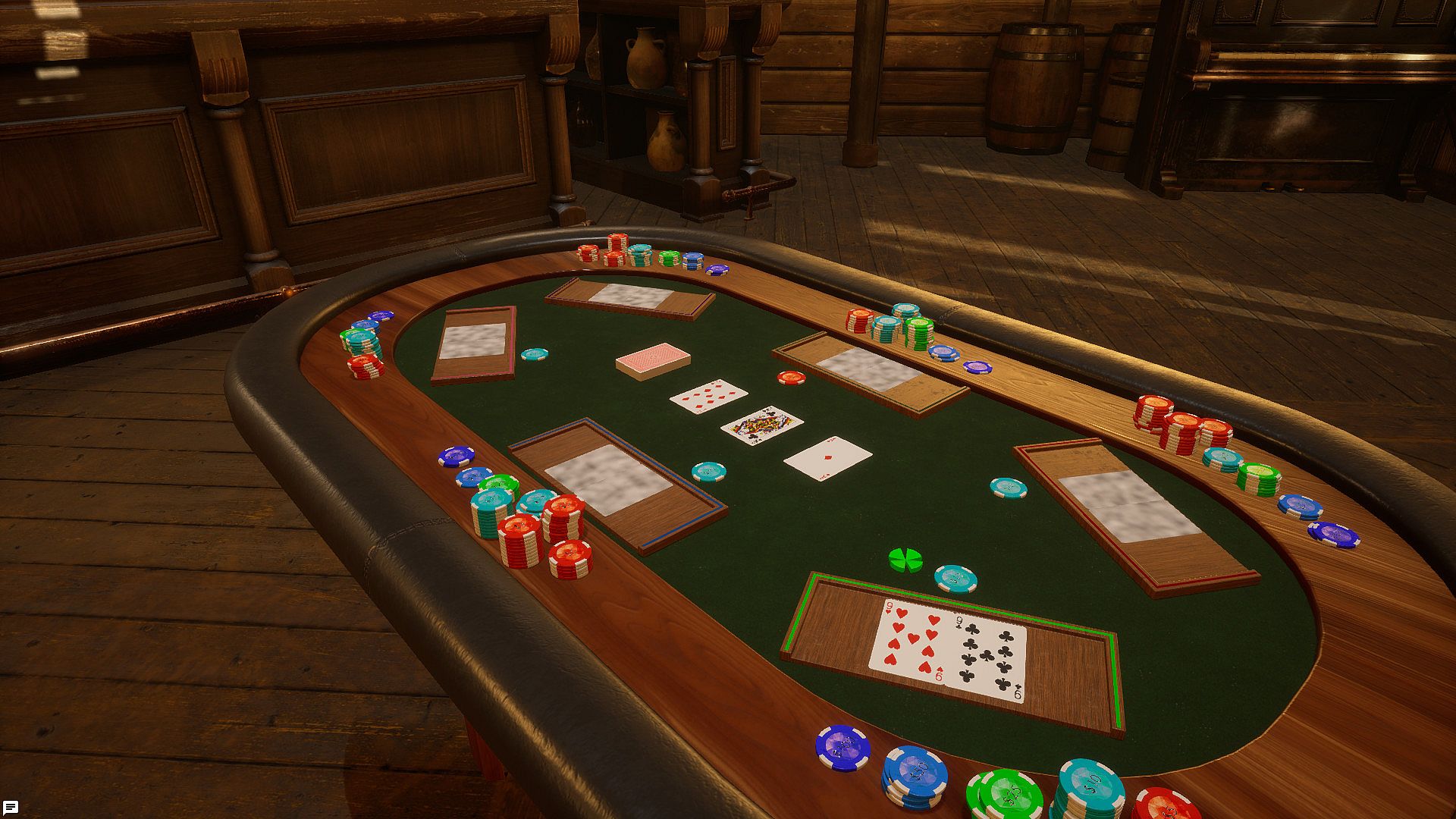
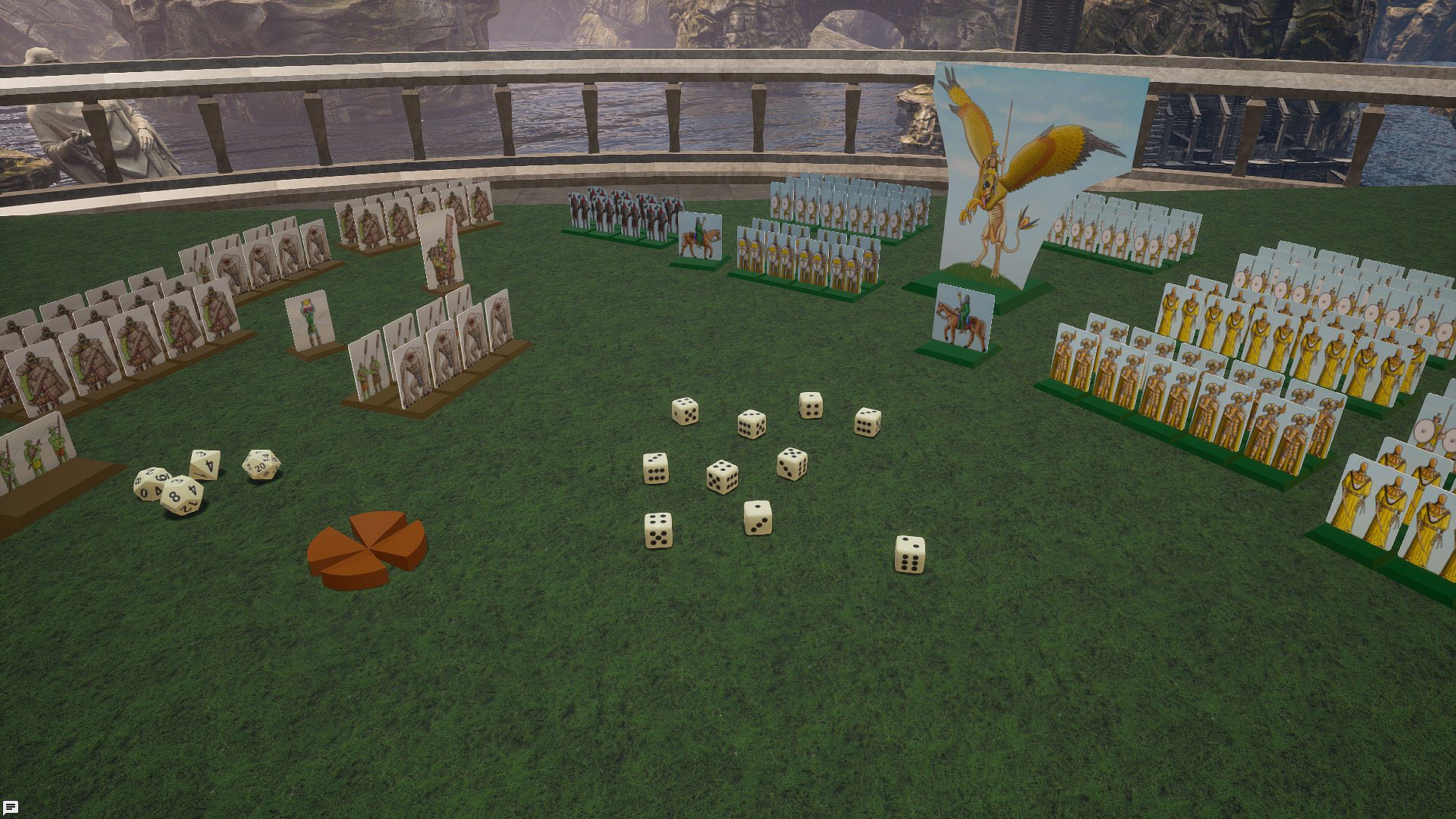
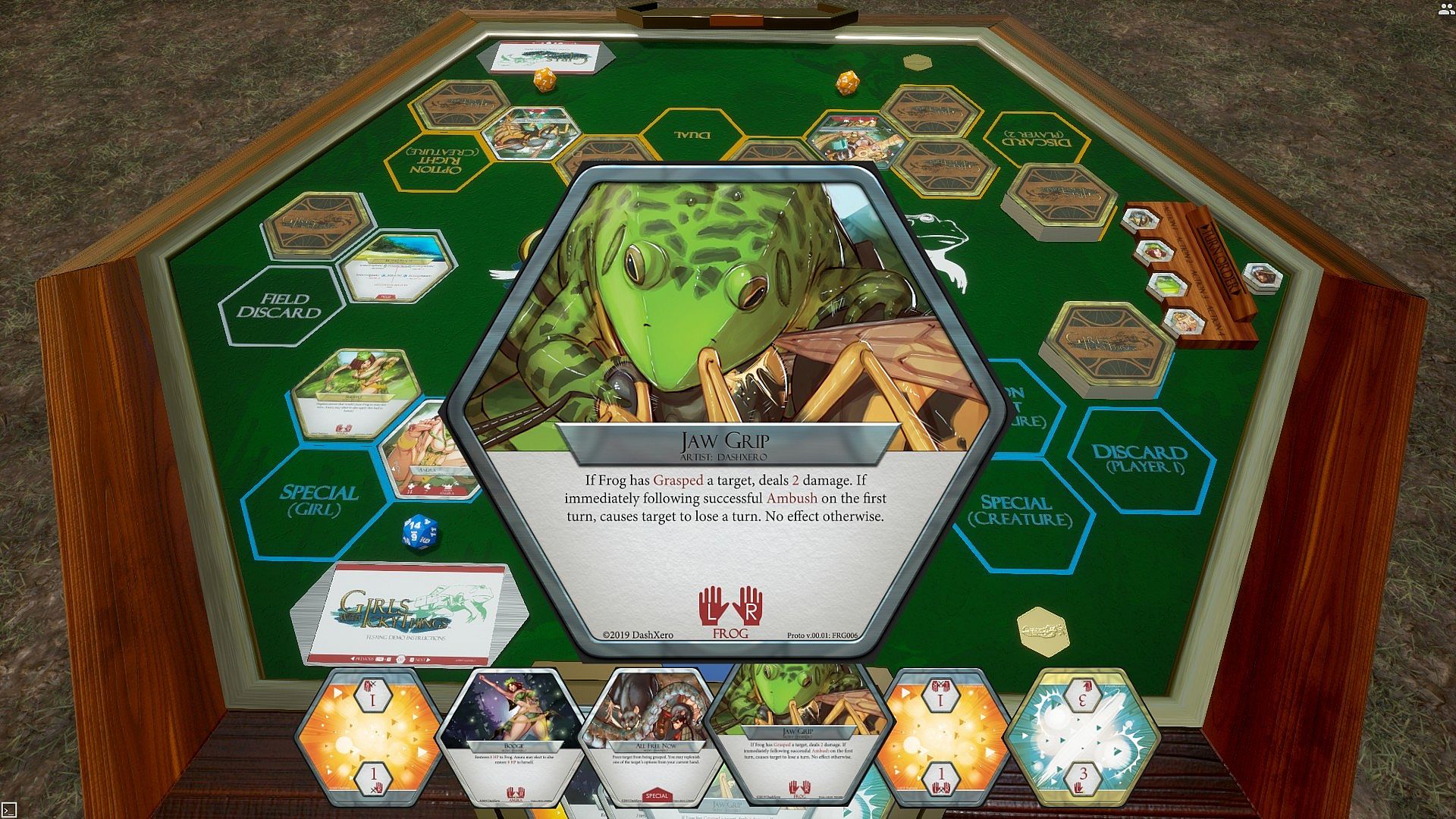
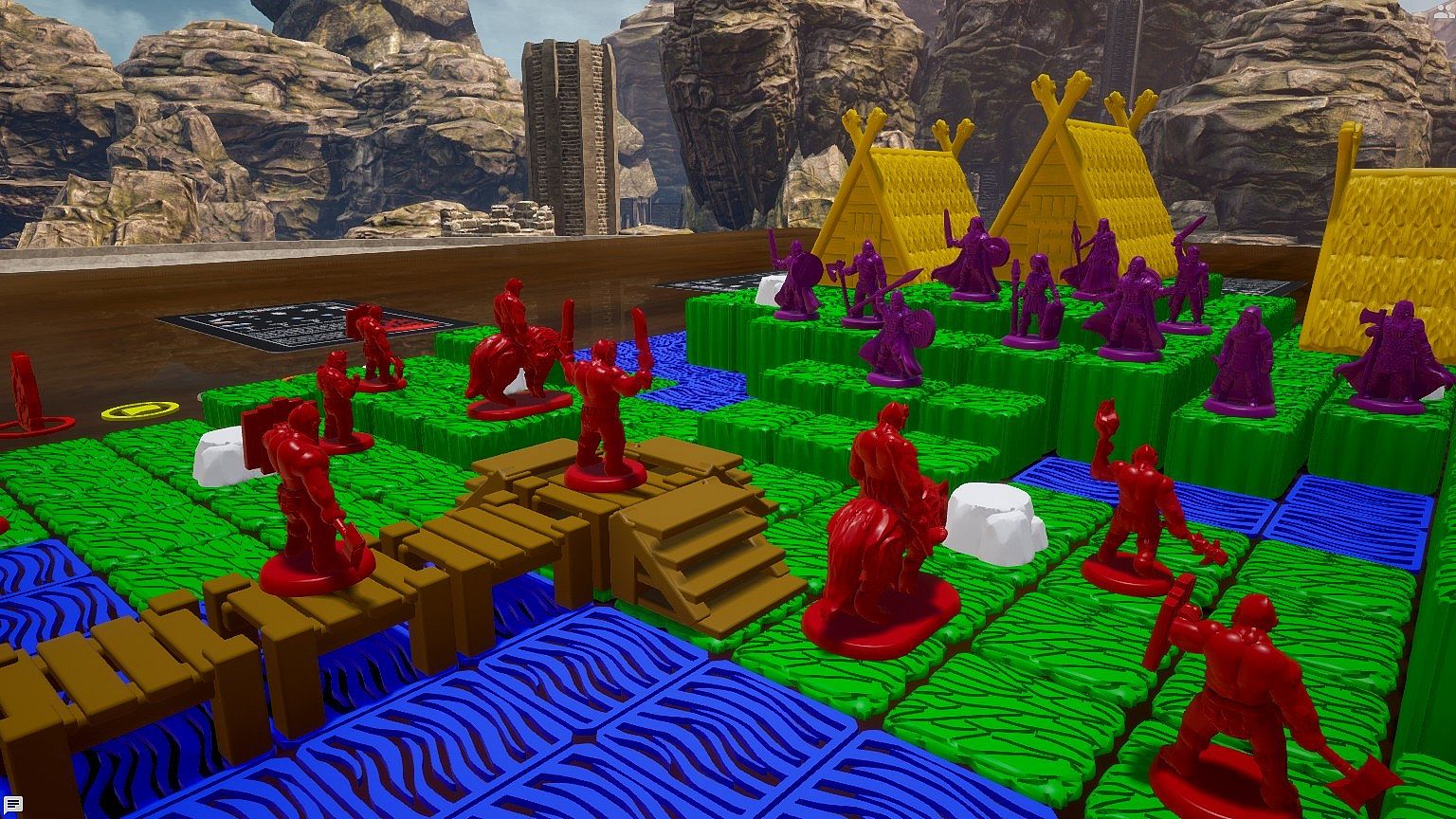
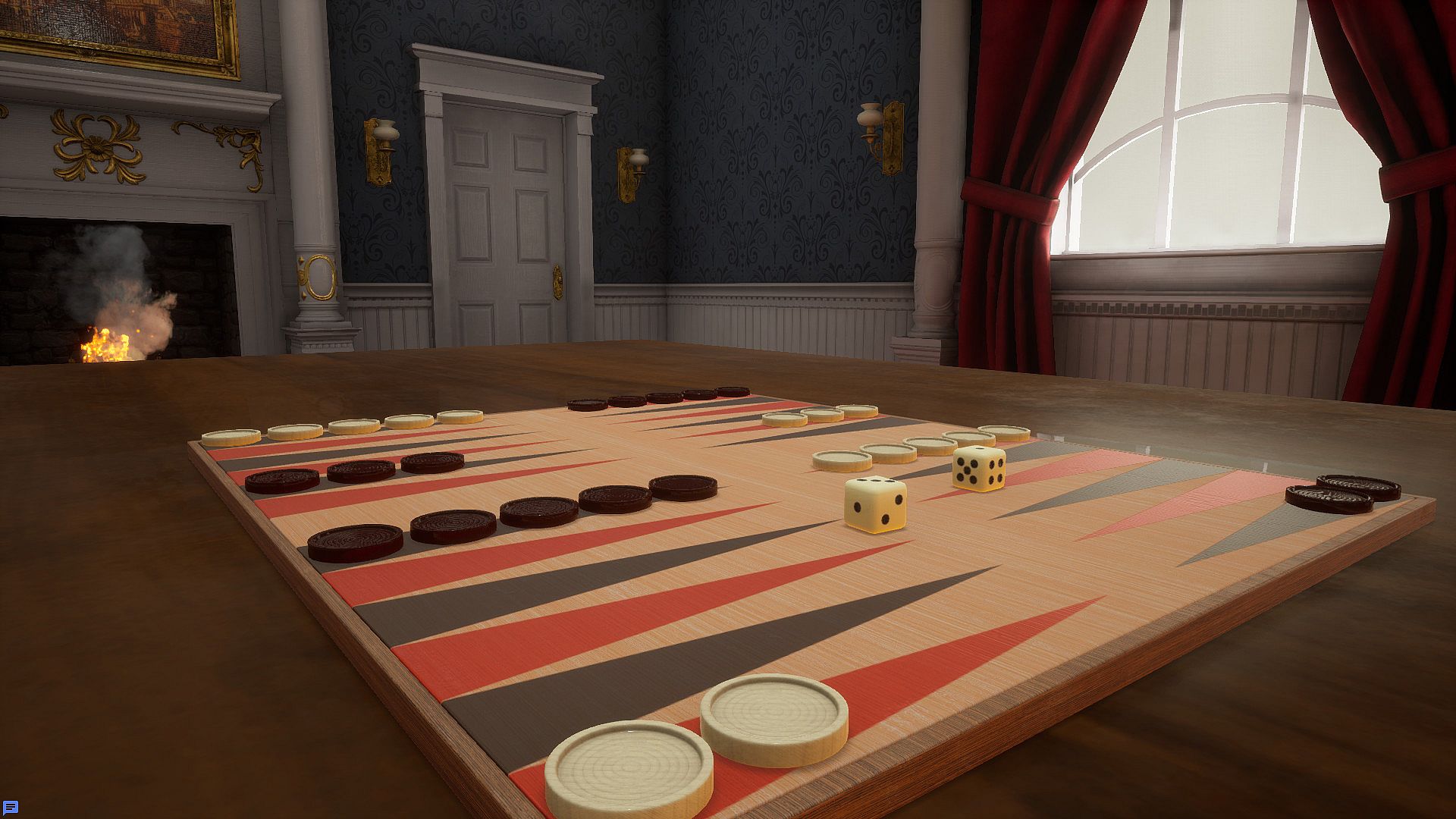
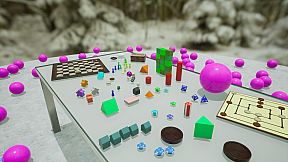
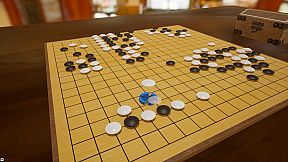
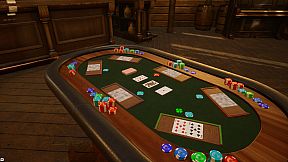
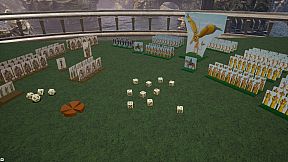
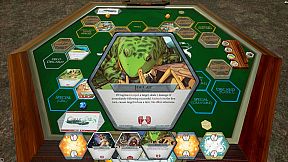
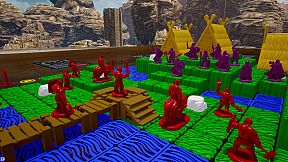
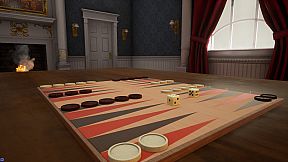
Tabletop Playground is a digital tabletop simulator available on PC that blends strategy, simulation, and casual elements into a flexible platform for recreating or inventing board games. It emphasizes realistic physics and responsive controls to deliver sessions that feel close to physical play, whether on a standard screen or in virtual reality.
Gameplay
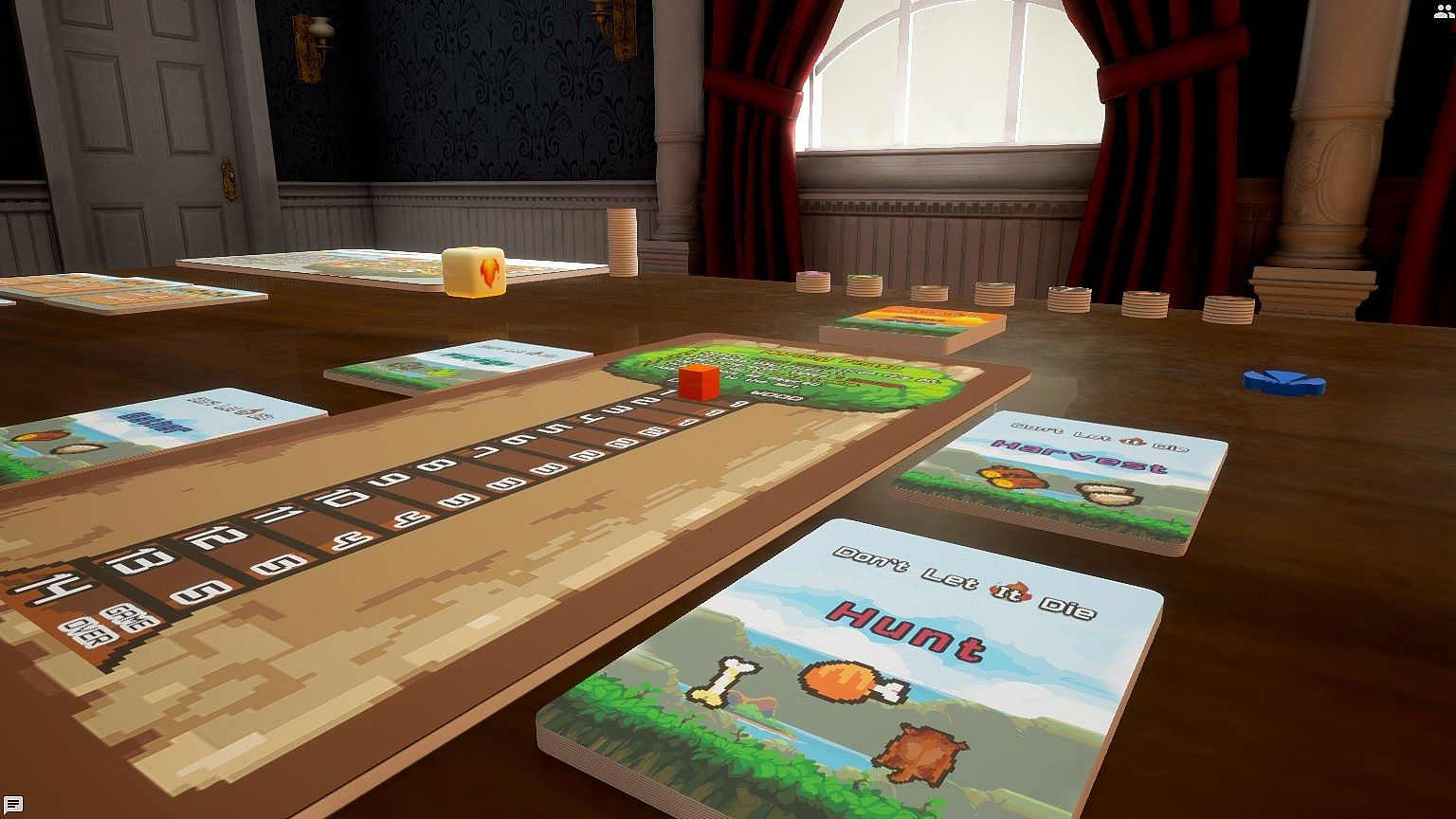
The core loop centers on manipulating game pieces with precise, physics-driven interactions that respond naturally to player input. Users handle dice rolls, card draws, and miniature movements through intuitive controls that maintain fluidity across different input methods, including motion controllers in VR. The experience supports sessions with up to 16 participants online, allowing groups to gather for extended play while saving progress at any point for later resumption.
Specialized tools cater to complex or niche scenarios, such as war-gaming setups. These include options for forming units, measuring distances and angles with custom units, and reviewing histories of movements or dice outcomes. The system runs on Unreal Engine 4, producing detailed models and environments that enhance immersion without requiring advanced hardware beyond standard PC or VR setups.
Game Modes
Play occurs in a flexible sandbox format that accommodates solo sessions, cooperative play, or competitive matches among participants. No predefined campaigns or structured scenarios exist; instead, the focus remains on open-ended recreation of classic games or entirely new designs. Multiplayer supports simultaneous online participation, with features for joining others or hosting private groups across compatible platforms.
Single-player options allow independent experimentation or practice with rulesets. Shared or split-screen elements extend accessibility for local groups, while the overall structure prioritizes adaptability over fixed progression systems.
Customization and Modding
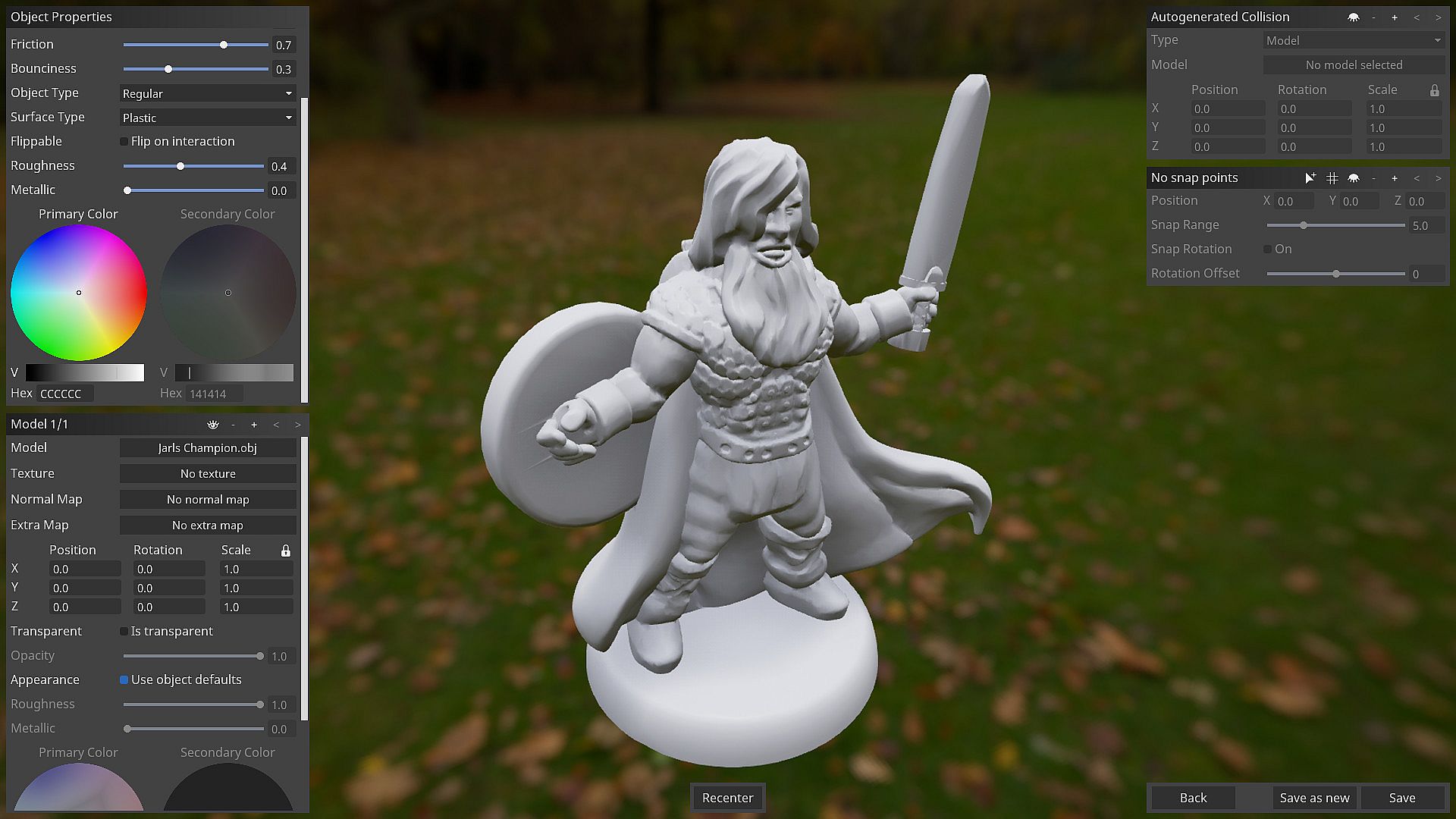
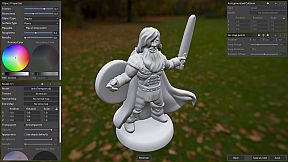
An integrated editor provides tools to modify existing games or build originals from scratch. Adjustments cover rules, piece behaviors, and layouts, with JavaScript scripting enabling advanced logic for complex interactions. Creations upload directly through mod.io integration, making them available for others to download and use in their own sessions.
Players browse and apply mods from within the interface, supporting seamless addition of new content before or during play. This system encourages community-driven expansion, where custom measure tools, game variants, and environmental setups become shareable assets without external steps.
Is It Worth Playing?
Tabletop Playground suits players who value creation and precise digital replication of tabletop experiences over large-scale populated servers. Its strengths lie in the editor's accessibility combined with scripting depth, which appeals to designers and groups seeking tailored rulesets. VR compatibility adds another layer for those equipped with headsets, delivering responsive interactions that translate well from physical play.
Reception highlights the satisfying controls and specialized features for detailed games, though the current player base remains modest, making it ideal for private matches or mod-focused communities rather than spontaneous public lobbies. Those interested in war-gaming tools or ongoing customization will find the most consistent value, especially when sharing or downloading community content. The game continues to receive updates that maintain its core functionality for dedicated users.