

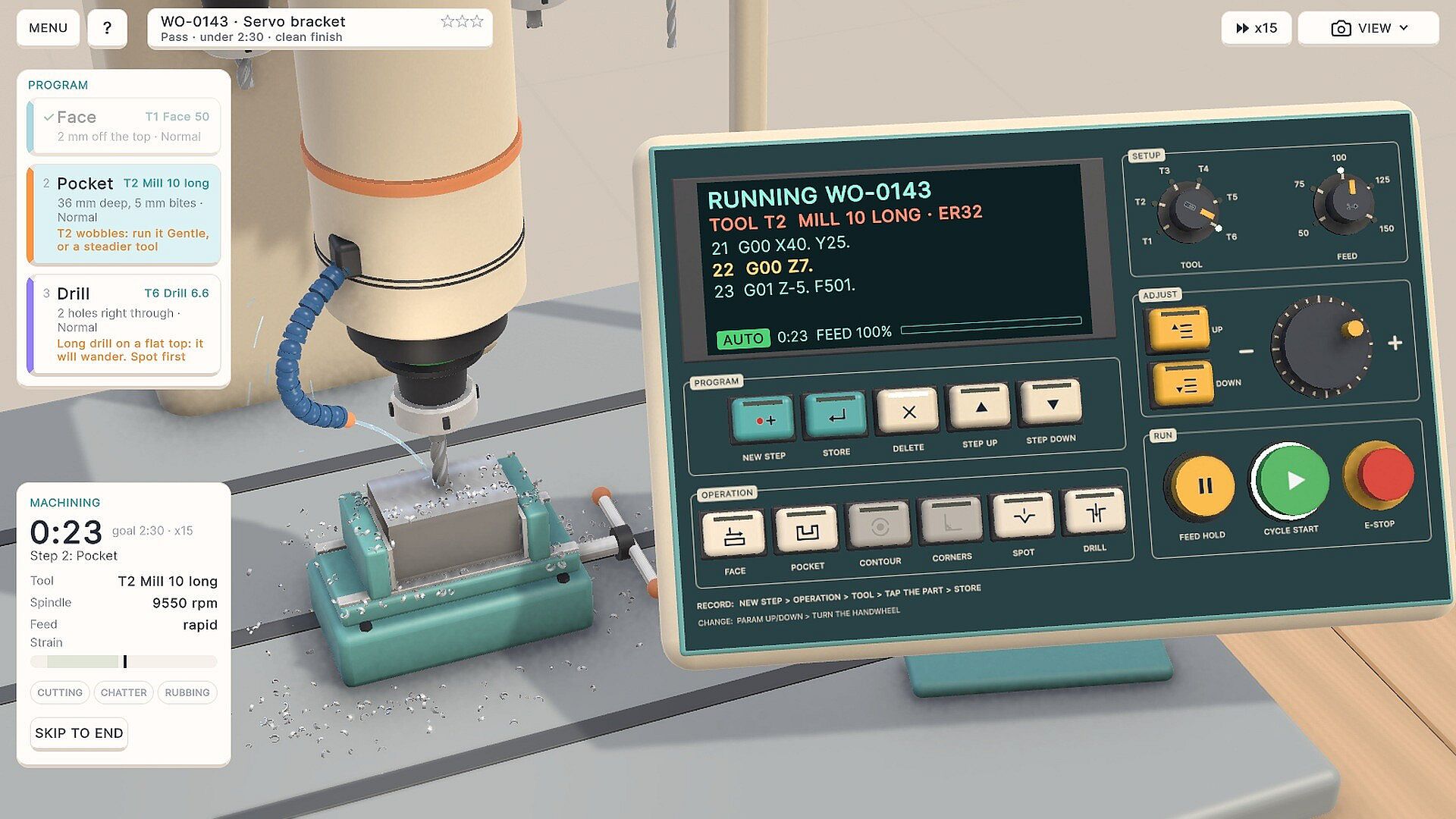
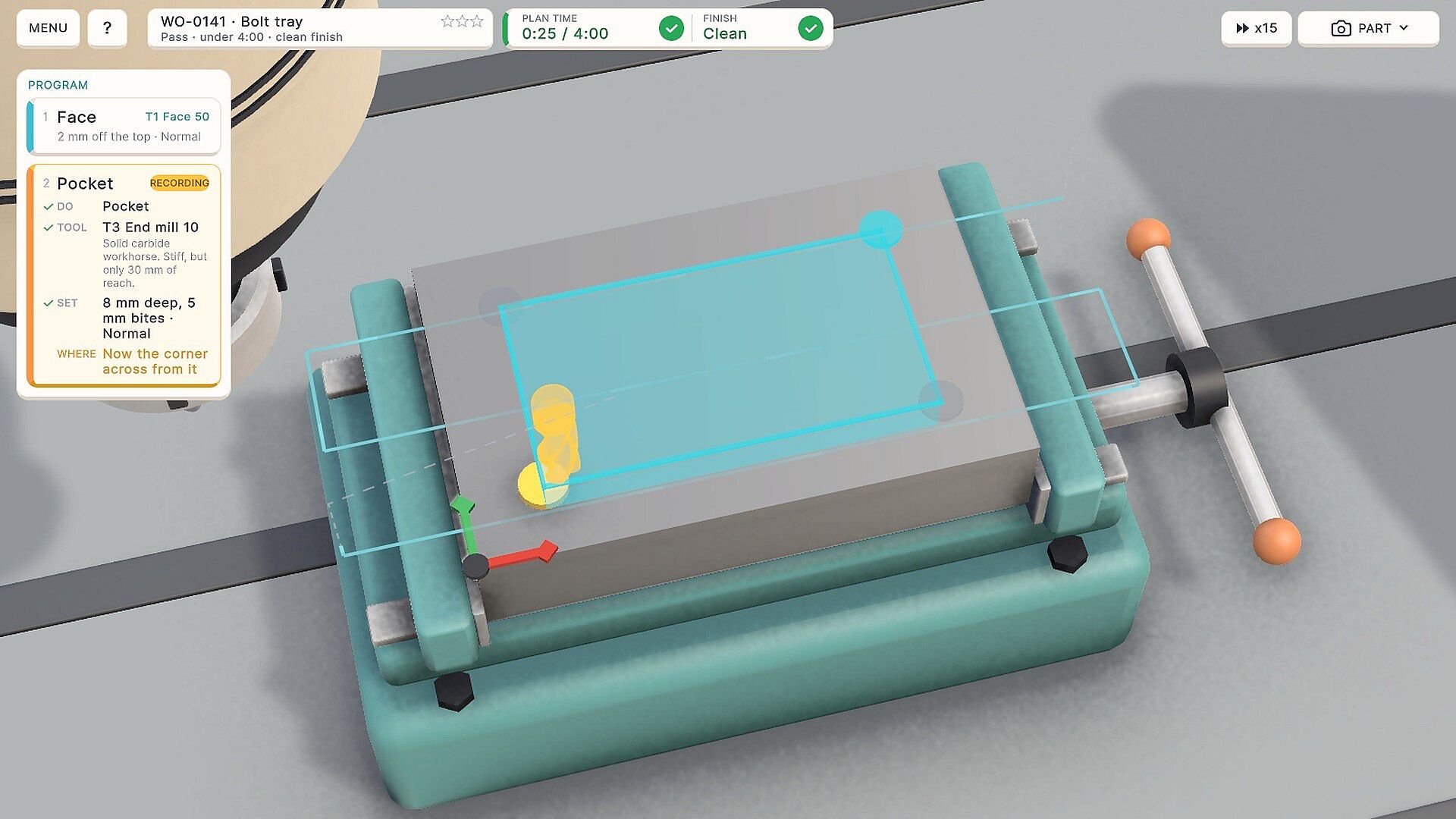
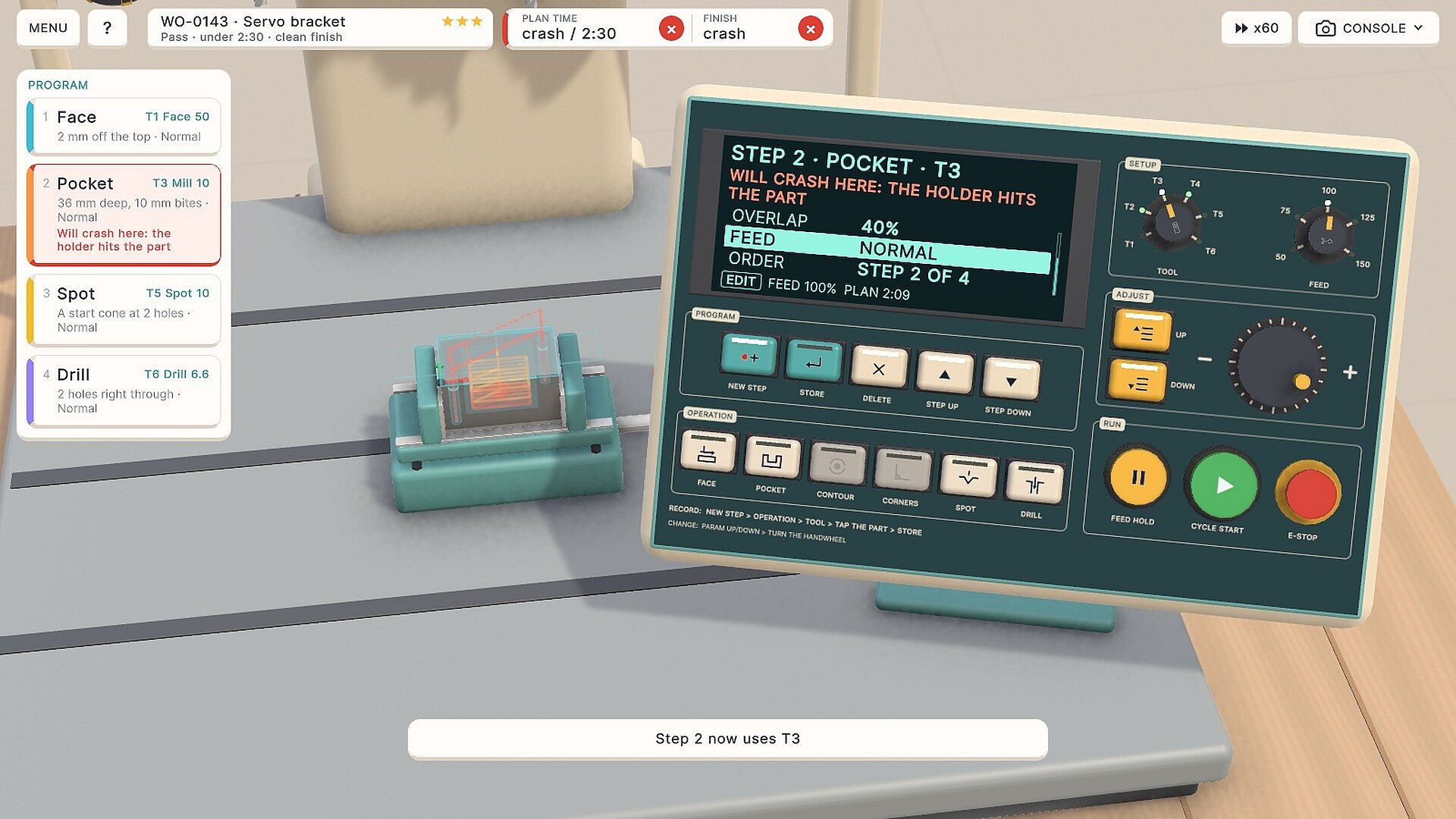
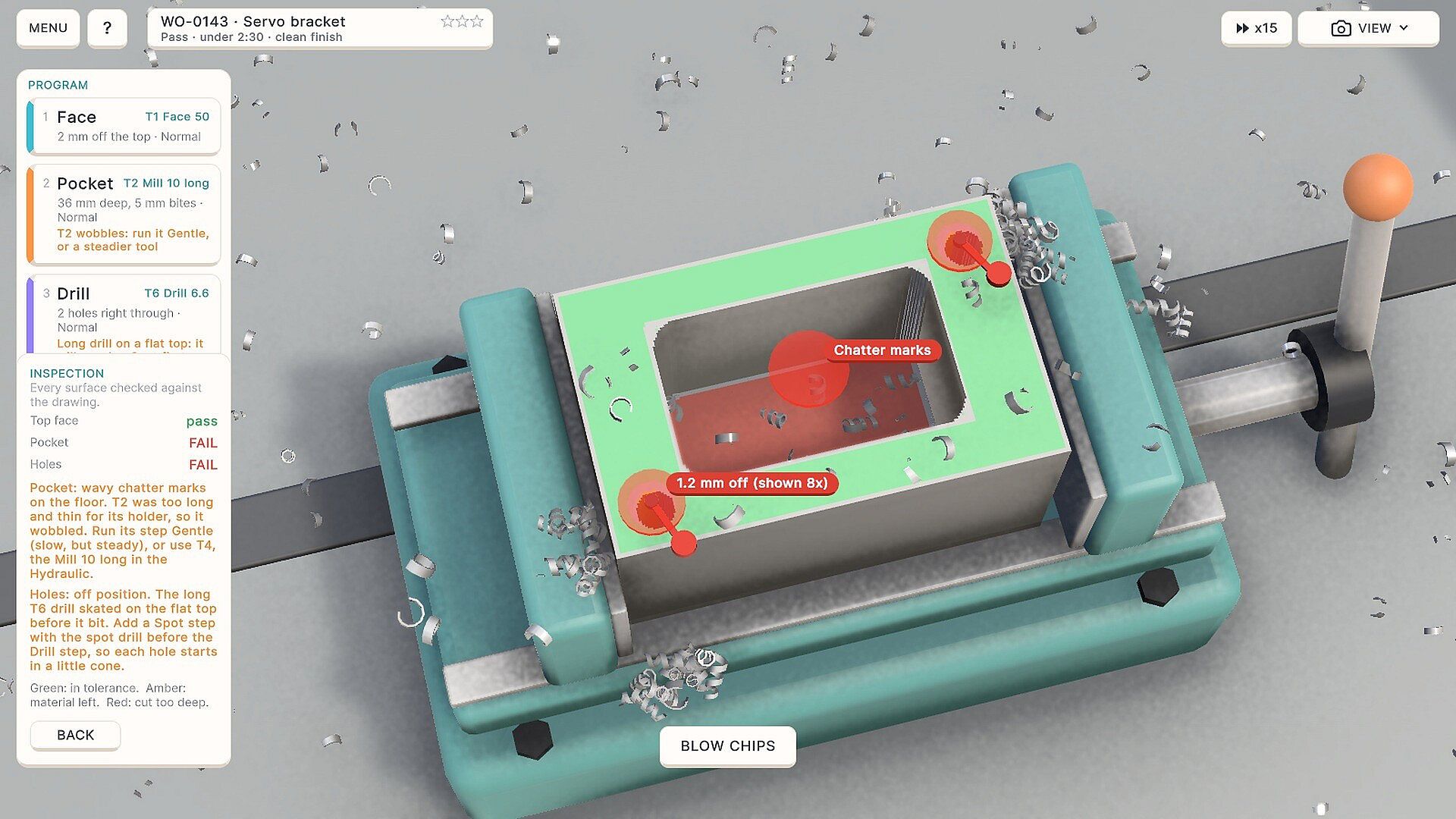
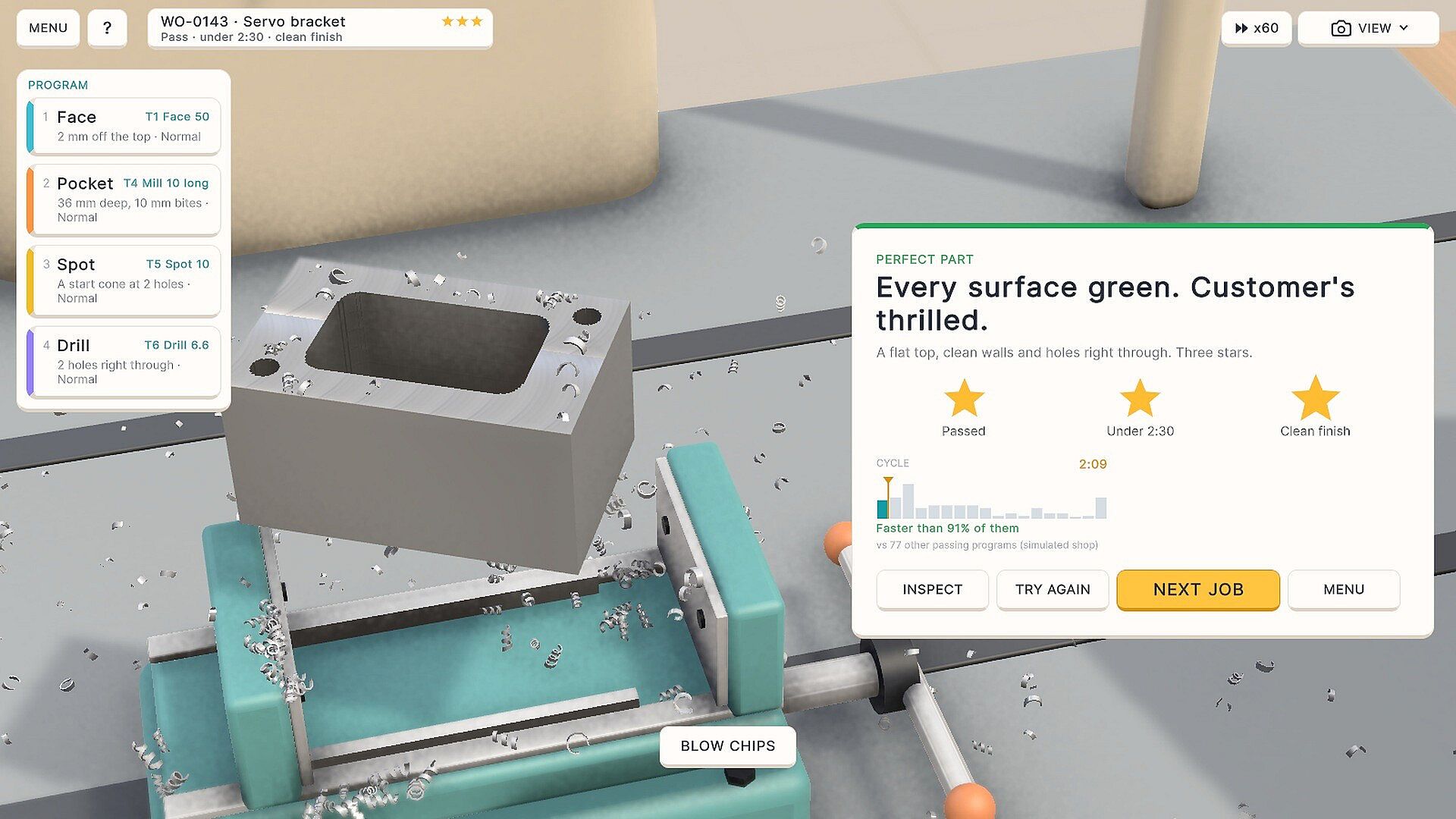
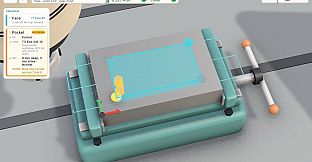
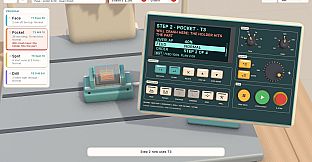
The Perfect Part is an indie casual simulation game built around programming CNC machining operations on PC. Players receive work orders with drawings and tool racks, then sequence steps like facing, pocketing, spotting, and drilling at the machine console. Selecting tools, bite, and feed rates generates real G-code that runs against a virtual block, with an inspector later checking the finished part against specifications.
Gameplay
The core loop centers on planning machining sequences that produce accurate parts while managing real-world variables. A long tool can wobble during cuts, a drill on a flat surface may wander off target, and an oversized holder risks colliding with the workpiece. These physics-based outcomes turn every error into a teaching moment. The machine guard prevents the most catastrophic failures, allowing safe experimentation with different approaches.
Each job requires careful ordering of operations, tool choices, and parameters to achieve clean results. Visual feedback shows the spindle carving material in a stylized soft clay workshop, making the process easy to follow even for those new to machining concepts. The simulation stays grounded in actual G-code behavior without requiring prior programming knowledge.
Game Modes
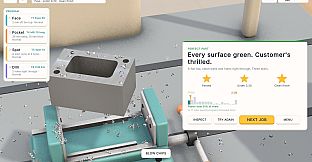
Standard jobs form the main experience, where players tackle specific parts drawn from incoming work orders. Success is measured across three criteria per job: passing the final inspection, completing the work within the target time, and achieving a clean surface finish. Meeting all three earns top marks and reinforces efficient planning habits.
A separate Playground mode lets players place custom shapes onto the stock material and experiment with machining them freely. This open-ended area supports creative testing of tool paths and sequences without the constraints of predefined drawings or time limits.
Learning Through Simulation
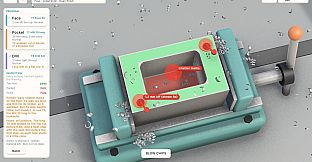
The game emphasizes practical lessons over abstract tutorials. Mistakes such as improper tool selection or incorrect feed rates produce visible defects that the inspector flags, encouraging players to adjust their approach on subsequent attempts. The casual presentation keeps sessions approachable, while the underlying mechanics reflect real machining considerations like tool deflection and collision risks.
Progression comes from mastering increasingly complex parts. Each successful job builds familiarity with sequencing, tool management, and quality control, turning the experience into a steady puzzle of optimization rather than rote repetition.
Is It Worth Playing?
The Perfect Part suits players who enjoy thoughtful single-player simulation and puzzle-style planning. Its focus on CNC operations delivered through an accessible interface makes it appealing for hobbyists interested in manufacturing processes or anyone seeking a relaxing yet precise challenge. With the game still in development and additional machines and parts planned, the current content provides a solid foundation for those drawn to this niche. If the idea of sequencing real machining steps and learning from physical outcomes appeals, it offers a distinctive experience worth following until full release.