


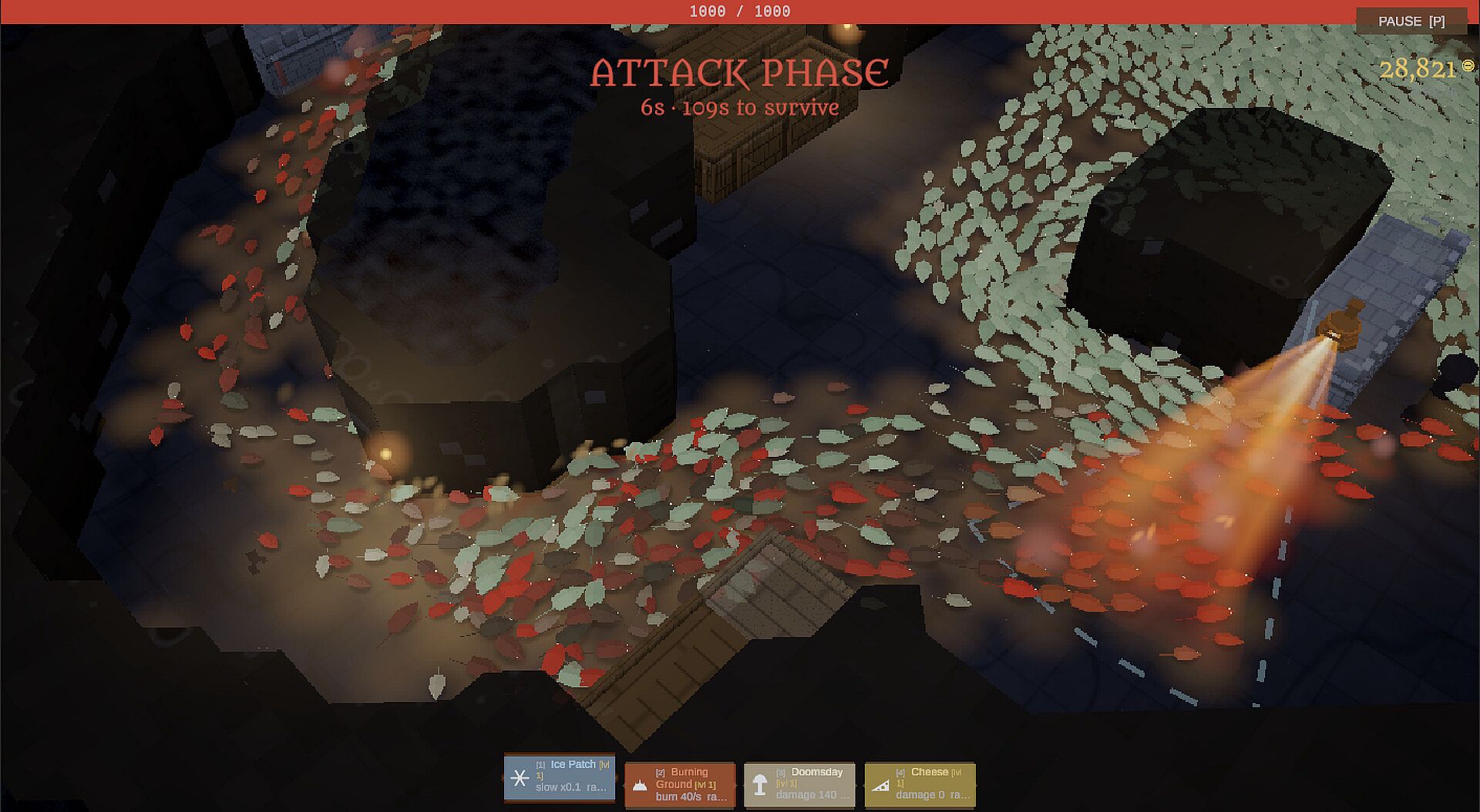
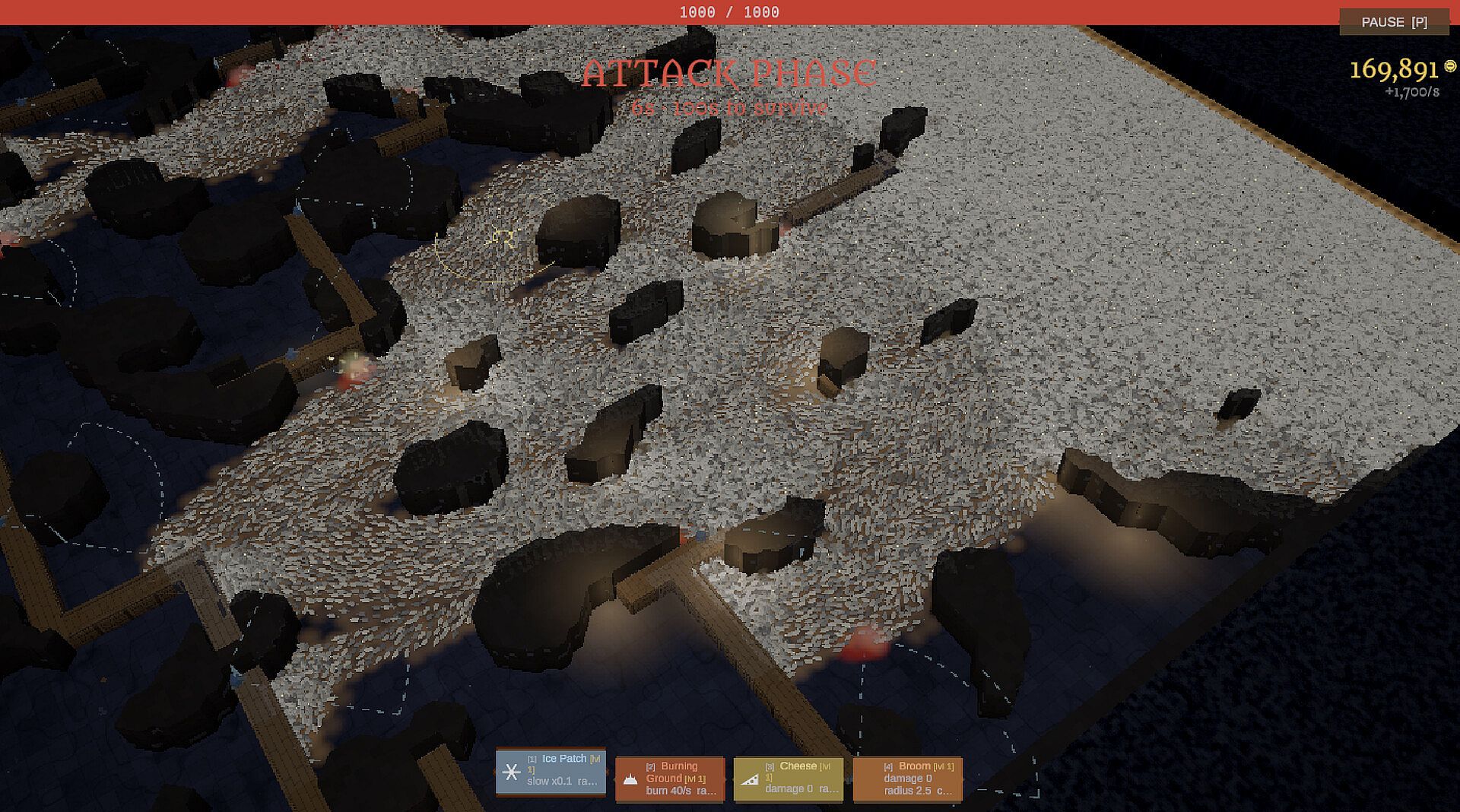
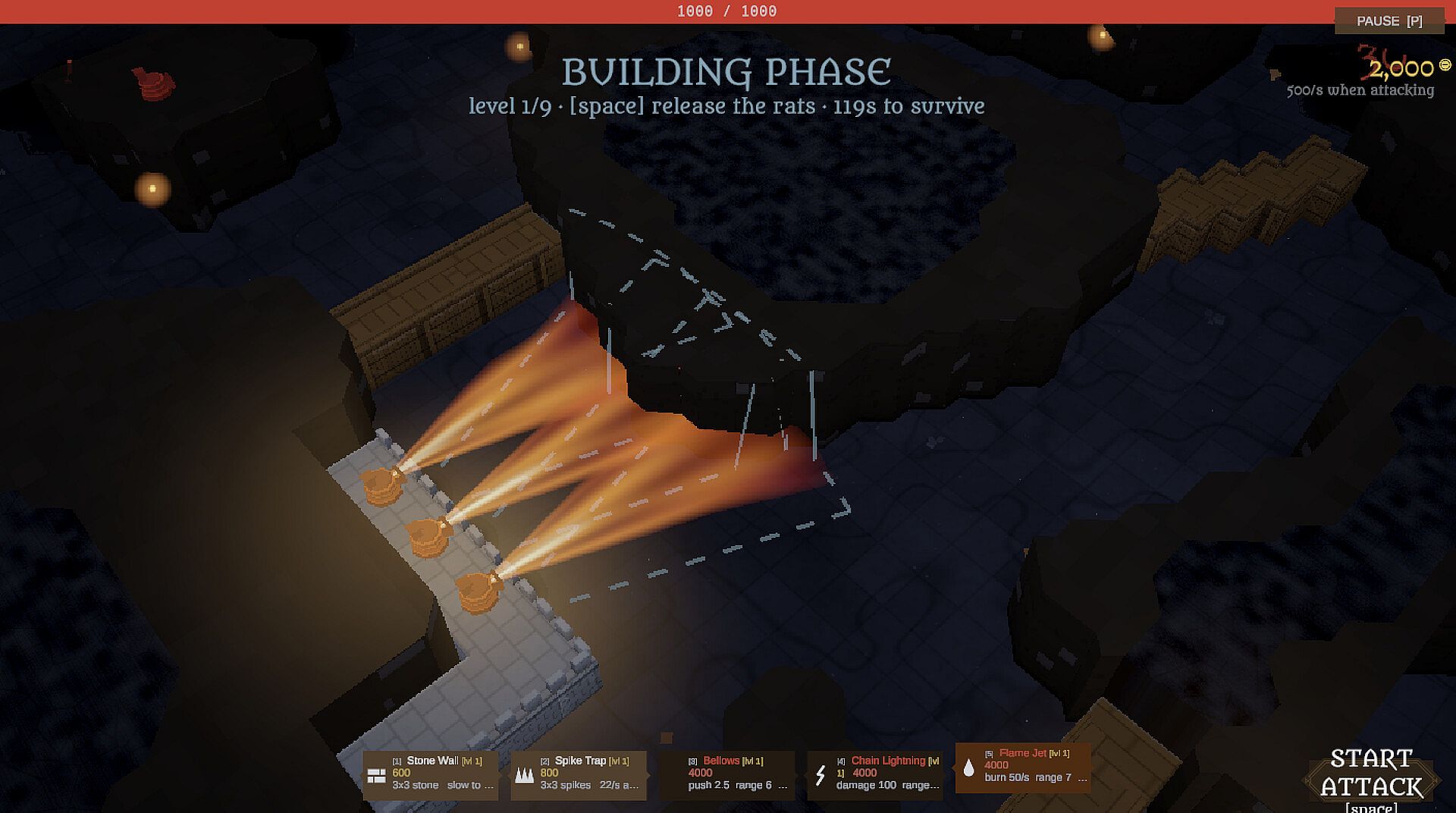
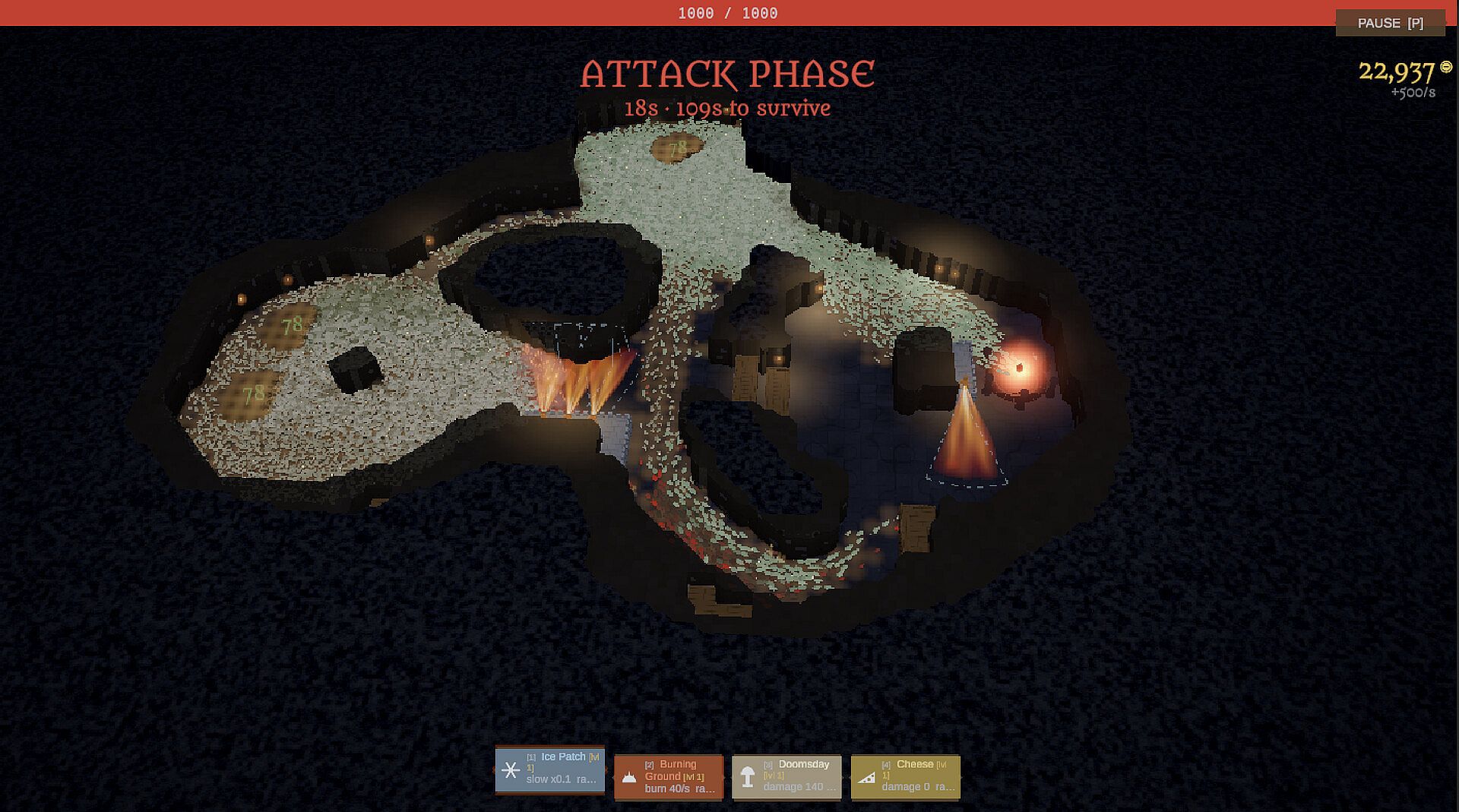
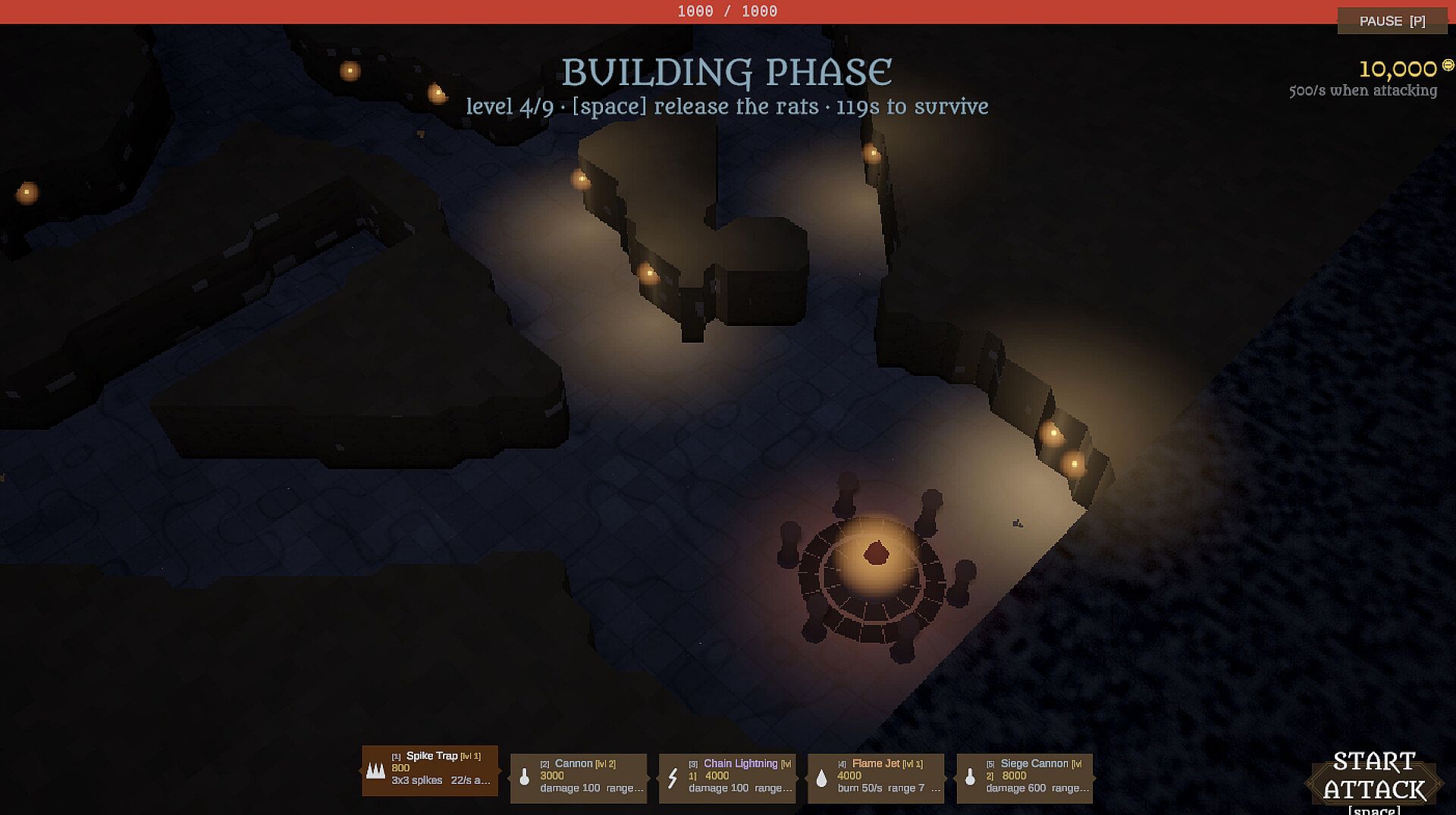
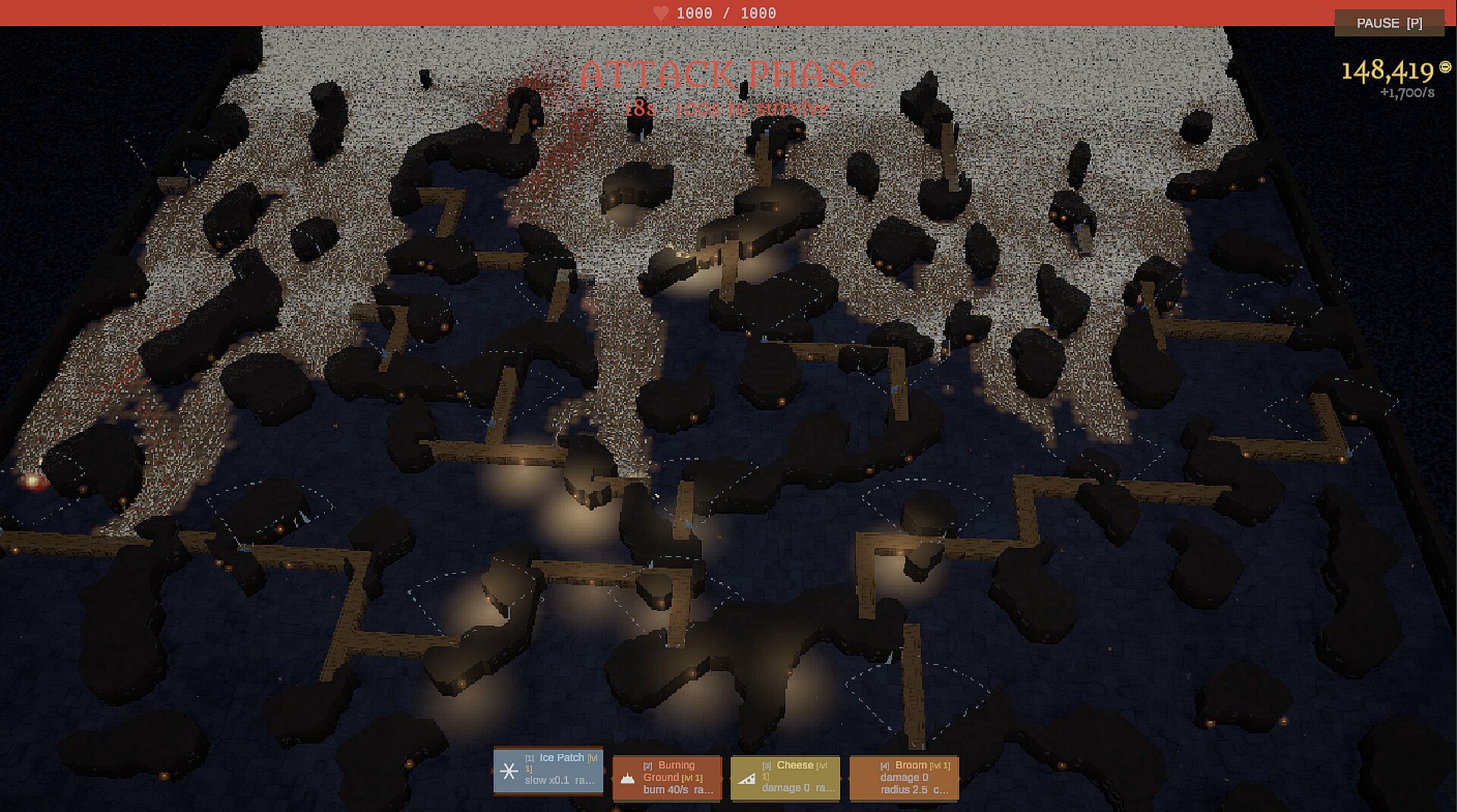
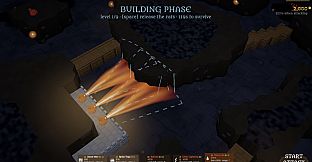
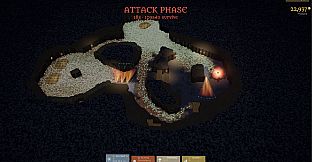
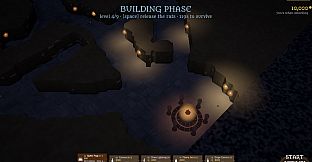
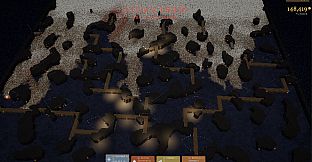
They Eat the Walls is a strategy indie simulation game for PC built around tower defense mechanics where the environment itself becomes part of the challenge. Players construct barriers and place weapons inside a cave system while facing an advancing swarm of rats that treat most materials as food. The core loop centers on preparation between waves followed by active defense as the horde advances.
Gameplay
Players build structures using different materials during quiet periods between waves. Wood provides a quick and inexpensive option that rats consume rapidly. Stone offers greater durability at higher cost. Bedrock remains the only material rats cannot chew through. Cannons come in nine varieties including rapid-fire models, mortars, flame throwers, frost projectors, chain lightning units, and ricocheting beams that bounce off cave surfaces. Seven cooldown abilities support defense, one of which deploys a lure to redirect the entire horde temporarily.
Rats path individually and number in the hundreds of thousands across a single run. When a route around defenses takes too long, individual rats stop and begin eating through walls. Different rat types appear, including variants that chew six times faster than standard ones and others that pose greater threats if they reach the player position. The goal is survival rather than complete elimination of the threat, with the cave remaining active until the encounter concludes.
Game Modes
The experience revolves around a single-player wave defense format. Between waves the cave remains static, allowing unrestricted time to place materials, position cannons, and plan layouts. Once the wave begins, the focus shifts to managing the advancing horde through a combination of static defenses and timed abilities. No additional named modes appear in available information.
Key Mechanics
Pathing decisions drive much of the tension. Rats evaluate routes and switch to chewing when detours prove inefficient. Material choice directly influences breakthrough points because cheaper wood fails first while stone lasts longer. Individual rat behavior means hundreds of thousands of separate entities move and act without grouping into simplified masses. The nine cannons and seven abilities provide variety in how players respond once the horde reaches the prepared area.
Is It Worth Playing?
The game remains listed as coming soon on its Steam page with no user reviews available. Its described systems emphasize a compact tower defense session focused on resource trade-offs and overwhelming numbers rather than long campaigns or multiple play styles. Players interested in short sessions of incremental defense building against individually pathing enemies may find the concept engaging once released. Those seeking extensive multiplayer options or frequent content updates should monitor further announcements from the developer.