

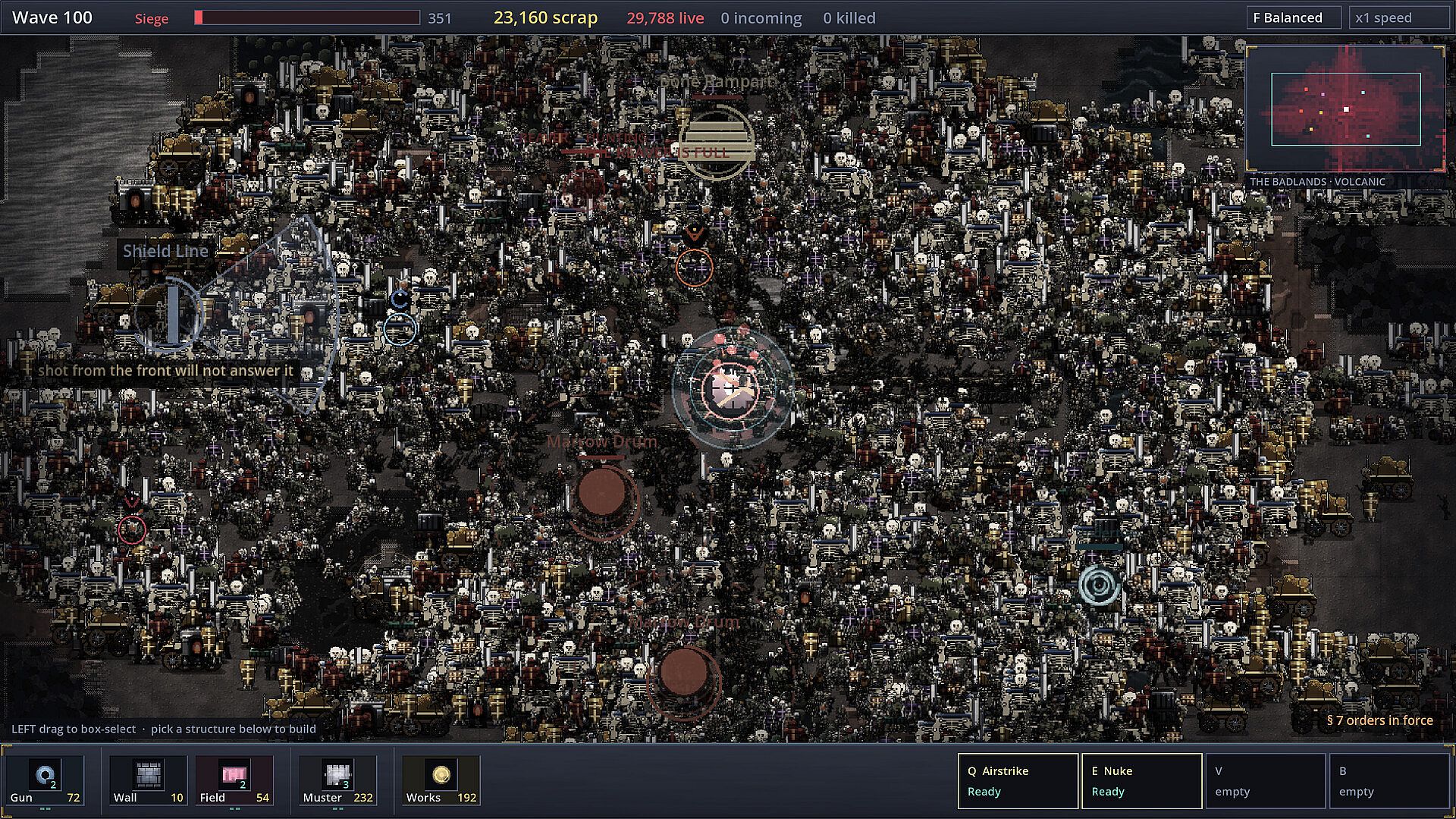
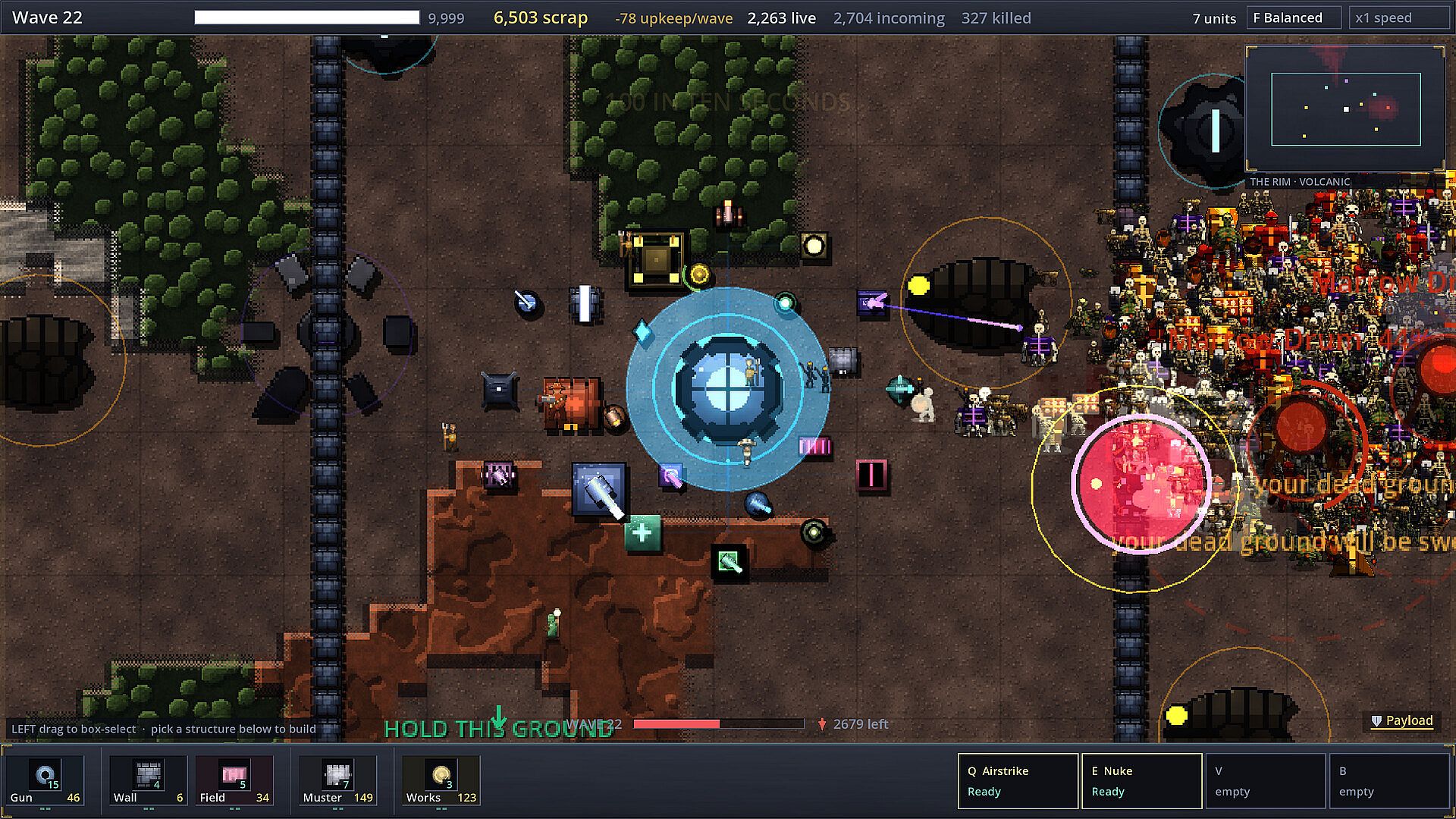
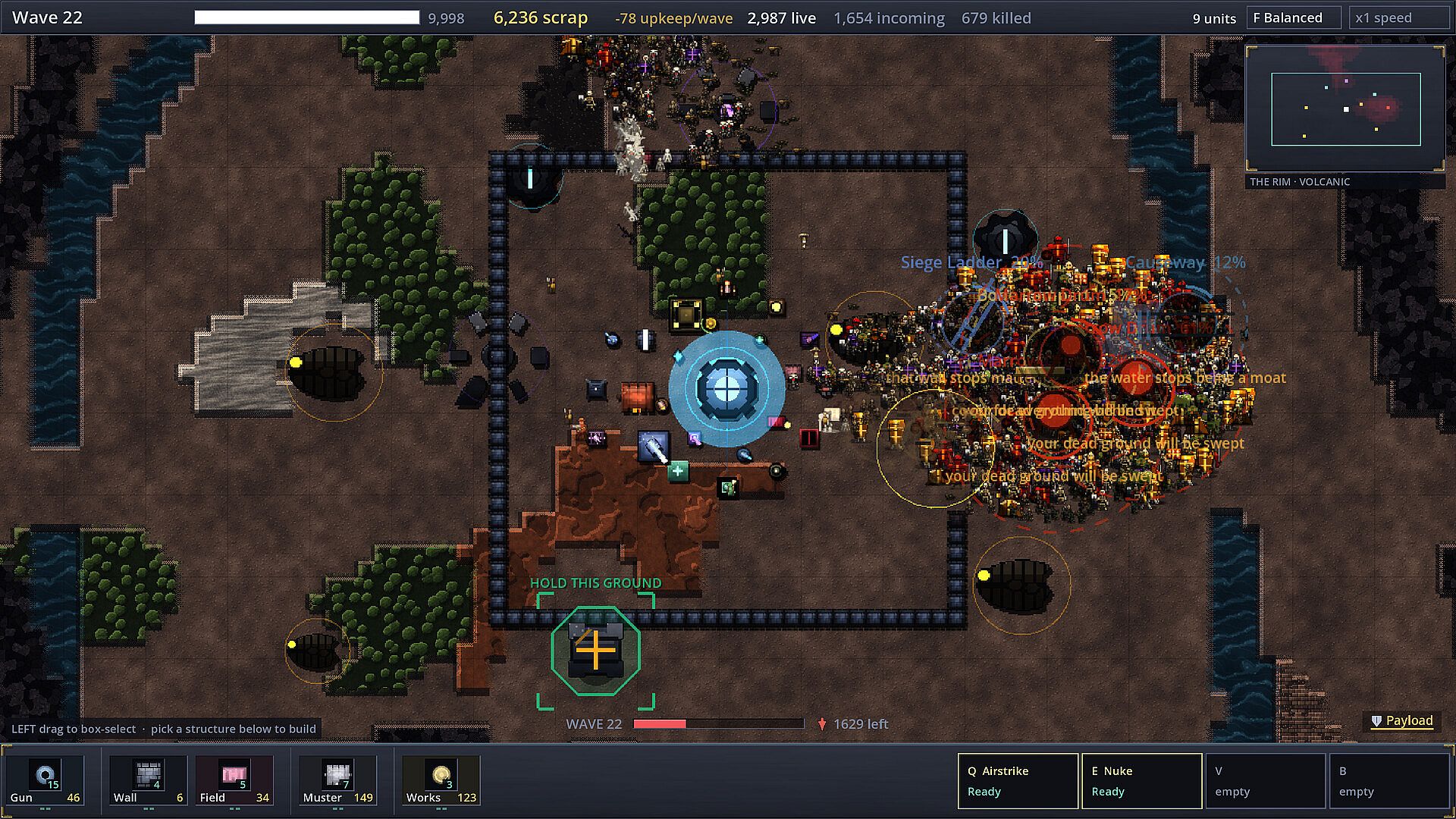
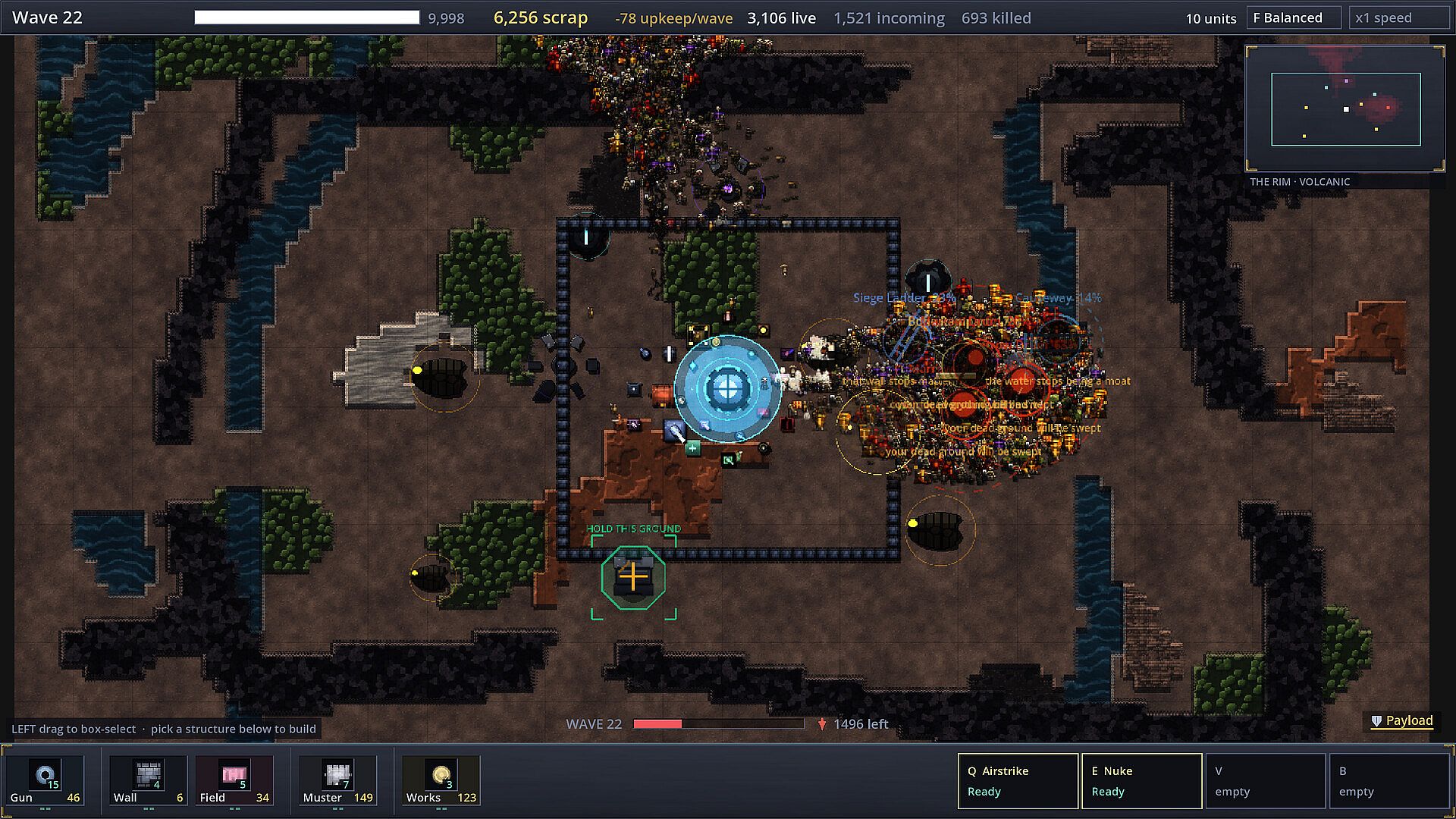
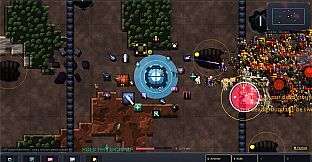
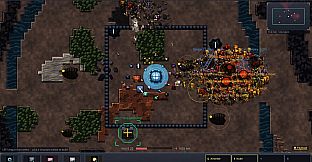
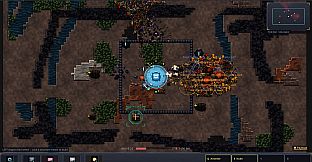
TIDEBREAK: Salt and Bone is a single-player strategy game built around horde defense and roguelite progression. Players hold ground against waves of enemies that increase in size every thirty seconds, using towers and guns to manage the flow across a board that can handle up to thirty thousand enemies in real time. The core loop centers on placing structures to filter incoming threats before they reach the gate, with only seconds to adjust placements as pressure builds.
Gameplay
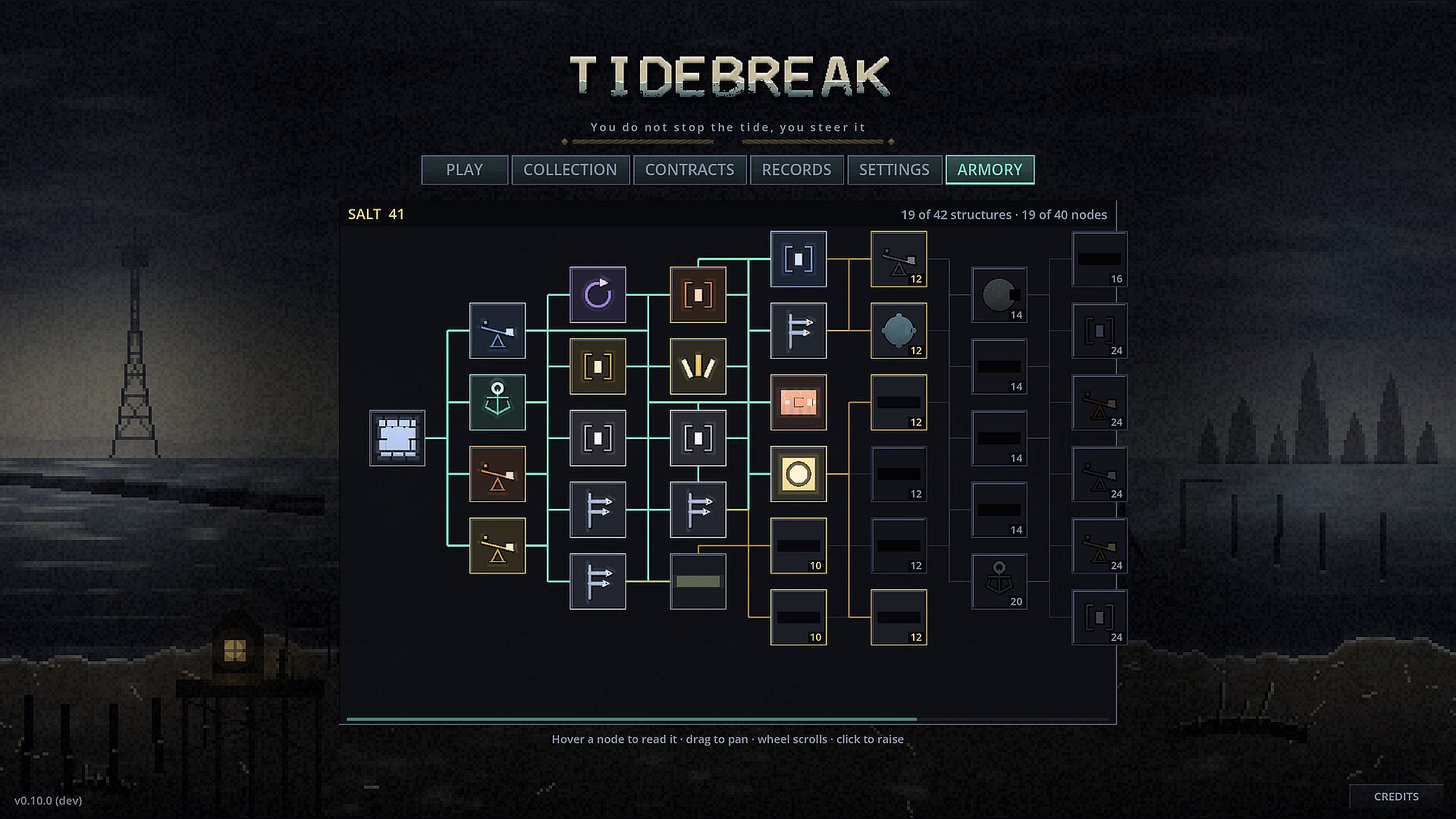
The gameplay revolves around quick decision-making under constant escalation. Fifty towers and a dozen guns provide the tools for defense, but placement must account for shifting weak spots in the horde. Structures filter the flood effectively when positioned correctly, yet a single missed gap can end the run. Procedural generation creates new terrain, visual elements, and audio for each attempt, ensuring no two sessions share the same layout or atmosphere. The economy operates on deterministic rules, so outcomes depend on player choices rather than random variance, and build systems encourage planning that carries forward across attempts. Systems reward foresight in tower selection and positioning while punishing reactive play that fails to address multiple fronts at once.
Game Modes
Two primary modes shape the experience. Campaign mode guides players through structured challenges that introduce mechanics gradually and test cumulative decisions. Endless mode removes those boundaries, allowing runs to extend as far as survival permits and highlighting how build choices scale against ever-larger hordes. Both remain single-player only, with no multiplayer components available.
Procedural Systems and Economy
Every run begins with fresh procedural elements that alter the battlefield and sensory feedback. Terrain layouts change the flow of enemies, while generated sprites and soundtrack keep each session distinct without relying on pre-made assets. The deterministic economy ensures consistent progression curves, so players who optimize placements and upgrades face the same difficulty thresholds as those who experiment less efficiently. This design prevents late-game stagnation by making each wave introduce new pressure points that reward refined strategies over repetition.
Is It Worth Playing?
TIDEBREAK: Salt and Bone suits players who enjoy precise tower placement and long-term build planning in a single-player setting. The real-time horde scale and procedural variety provide repeated attempts that feel distinct, while the deterministic systems promote fair comparisons between runs. Those drawn to strategy games focused on defense against overwhelming numbers will find the core loop engaging, especially when experimenting with the seventeen building types and their distinct roles. The emphasis on compounding decisions makes each session matter without artificial difficulty spikes.